
Traditional Health Beliefs and Practices Chapter 2 Health

Traditional Health Beliefs and Practices Chapter 2
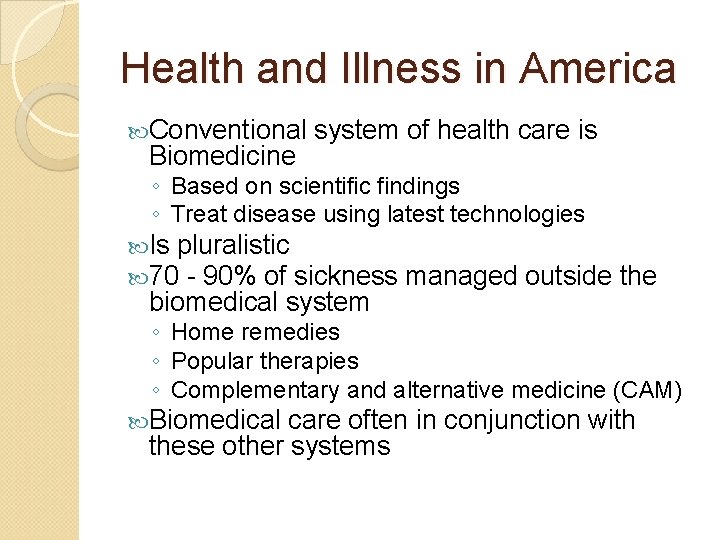
Health and Illness in America Conventional Biomedicine system of health care is ◦ Based on scientific findings ◦ Treat disease using latest technologies Is pluralistic 70 - 90% of sickness biomedical system managed outside the ◦ Home remedies ◦ Popular therapies ◦ Complementary and alternative medicine (CAM) Biomedical care often in conjunction with these other systems
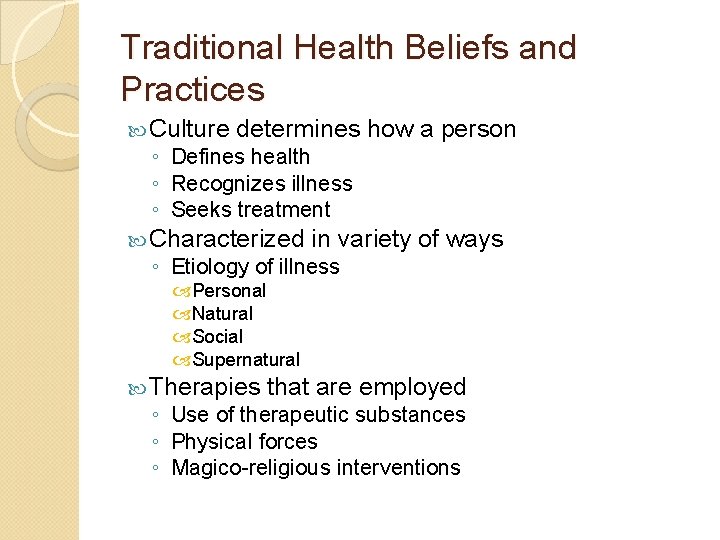
Traditional Health Beliefs and Practices Culture determines how a person ◦ Defines health ◦ Recognizes illness ◦ Seeks treatment Characterized in variety of ways ◦ Etiology of illness Personal Natural Social Supernatural Therapies that are employed ◦ Use of therapeutic substances ◦ Physical forces ◦ Magico-religious interventions
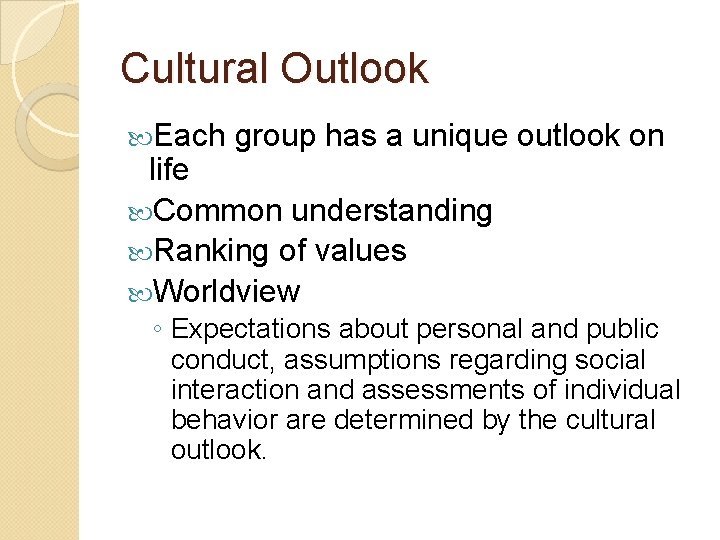
Cultural Outlook Each group has a unique outlook on life Common understanding Ranking of values Worldview ◦ Expectations about personal and public conduct, assumptions regarding social interaction and assessments of individual behavior are determined by the cultural outlook.
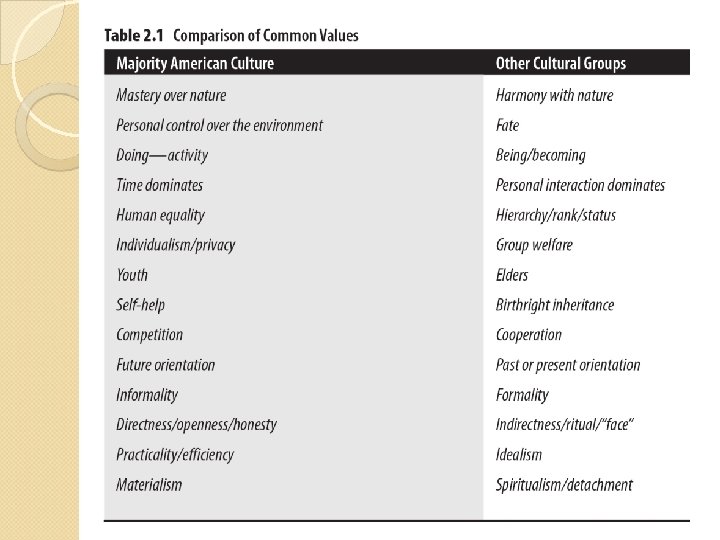
Table 2 -1
Worldview Evident in Health Care Decisions May appear indifferent in terminal illness due to belief in reincarnation Belief in faith healing may contradict health care recommendations Preservation of life vs denial of sustaining care Practitioner decision rather than family decision
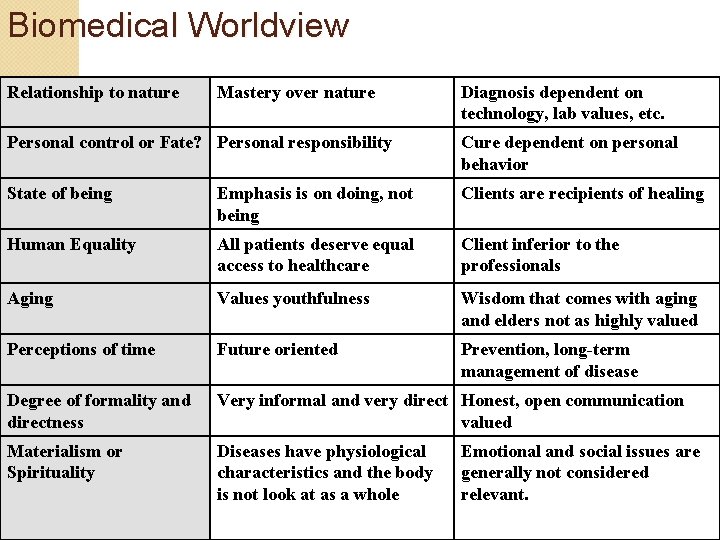
Biomedical Worldview Relationship to nature Mastery over nature Diagnosis dependent on technology, lab values, etc. Personal control or Fate? Personal responsibility Cure dependent on personal behavior State of being Emphasis is on doing, not being Clients are recipients of healing Human Equality All patients deserve equal access to healthcare Client inferior to the professionals Aging Values youthfulness Wisdom that comes with aging and elders not as highly valued Perceptions of time Future oriented Prevention, long-term management of disease Degree of formality and directness Very informal and very direct Honest, open communication valued Materialism or Spirituality Diseases have physiological characteristics and the body is not look at as a whole Emotional and social issues are generally not considered relevant.
What is Health? state of complete physical, mental, and social well-being, not merely an absence of disease or infirmity. ” -World Health Organization (WHO) Other cultures include natural, spiritual and supernatural dimensions of health. Health may be less dependent on symptoms than on the ability to accomplish daily responsibilities. “A
Meaning of Health in Other Cultures Harmony with nature Absence of malevolent environmental forces Living according to God’s will Avoidance of pollution Dependent on relationship with universe Pleasing ancestor spirits Mind-body-soul Can accomplish daily responsibilities

Health Attributes Physical ◦ Skin color ◦ Wt maintenance ◦ Hair sheen Normal body functions ◦ Bowel function ◦ Menstruation Undisturbed sleep Appropriate energy levels Behavioral norms
Body image Perceptions of wt, health, and beauty differ worldwide Thinness important in the US ◦ Historically associated with poor diet and disease ◦ Overweight seen as a character flaw ◦ Many cultures value overweight ◦ Africans, Caribbean Islanders, Filipinos, Mexicans, Middle Easterners, American Indians, Pacific Islanders Values often change with immigration
Health Maintenance 3 broad areas of intercultural agreement on health habits Diet Sufficient rest Cleanliness The definition of each varies within cultures
American Health Habits 3 Meals a Day Daily shower/bath Alcohol? Smoking? Fat Fiber Calcium Fresh fruits/vegs ◦ cruciferous vegs Exercise? Regular health checkups
Health Habits Worldwide Dressing warmly Avoiding going outdoors with wet hair Daily doses of cod liver oil Molasses Natural amulets ◦ Camphor bags ◦ or garlic cloves Faith ◦ Blessings of the ◦ throat ◦ Wearing holy medals

Health Promoting Food Habits Strength Vigor Mental acuity Equilibrium of body and soul
Food Habits: Balance and moderation Quantity of food Strength and vitality Sympathetic quality
Balance: Yin/Yang Often practiced in Asian nations Keeping the body in harmony by use of yin and yang Avoid both extremes in Staples are neutral/balanced Yin ◦ Raw ◦ Soothing ◦ Cooked at low temps ◦ White/light green in color Yang ◦ High caloric ◦ High heat ◦ Spicy ◦ Red-orange-yellow in color
Balance: Hot/Cold From the ancient Greek humoral medicine ◦ ◦ Air: cold Earth: dry Fire: hot Water: moist Four ◦ ◦ Body humors Hot and moist: blood Cold and moist: phlegm Hot and dry: yellow/green bile Cold and dry: black bile
Balance: Hot and Cold Used in the Middle East, parts of Latin America, the Philippines, and India Based on hot/cold aspects of food ◦ ◦ Taste Preparation method Proximity to the sun Balanced to account for personal constitution and weather Body must adjust to hot food before cold can be eaten May be natural world balance or spiritual harmony
Quantity of food In good health ◦ Heavy meals ◦ Ample food ◦ Overweight In illness or poor health ◦ Poor appetite
Strength & vitality Milk builds strong bones Carrots improve eyesight Candy for quick energy Chicken soup is a cure-all Strong foods/weak foods Strengthening foods

Sympathetic quality of food Looks like human body part or organ “You are what you eat” Properties of food incorporated into physical traits Italians drink red wine to improve blood American women use gelatin to strengthen fingernails Ginseng increase strength and stamina Americans eat cabbage-family veggies to reduce risk of cancer Oatmeal and fish to prevent heart disease Belief that fresh or local foods are healthiest

Disease, Illness, and Sickness Illness ◦ Perceptions of and reactions to a physical or psychological condition Disease ◦ Abnormalities or malfunctioning of body organs and systems Sickness ◦ Entire disease-illness process
Becoming sick Who is consulted when one becomes sick? Social legitimization of the illness Sick person is excused from daily obligations Temporary condition
Causes of illness in Biomedicine Immediate causes ◦ Bacterial/vital infections, toxins, tumors, injury Underlying causes ◦ Smoking, high cholesterol, glucose intolerance, nutritional deficiencies Ultimate causes ◦ Hereditary predisposition, environment, obesity
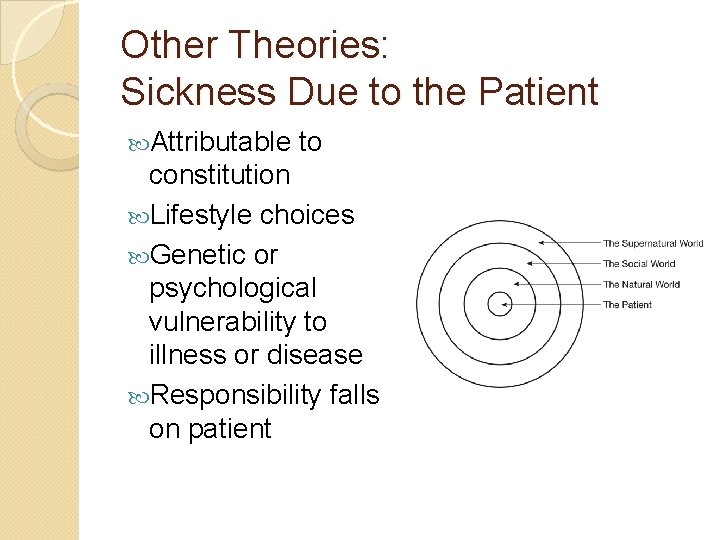
Other Theories: Sickness Due to the Patient Attributable to constitution Lifestyle choices Genetic or psychological vulnerability to illness or disease Responsibility falls on patient
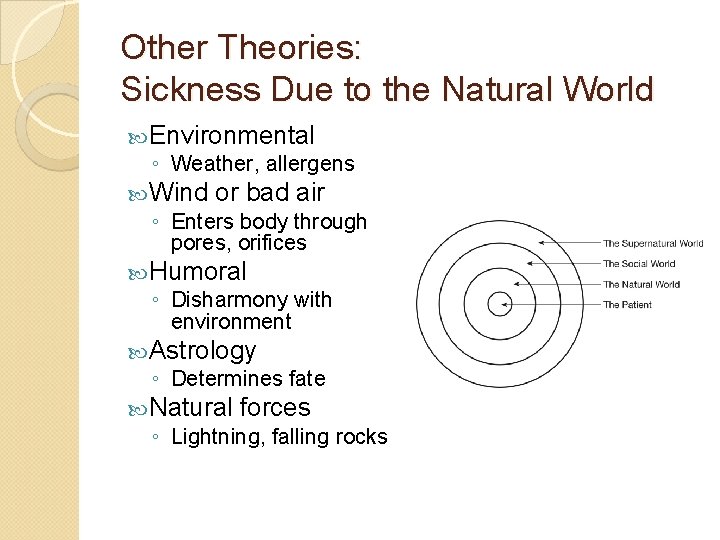
Other Theories: Sickness Due to the Natural World Environmental ◦ Weather, allergens Wind or bad air ◦ Enters body through pores, orifices Humoral ◦ Disharmony with environment Astrology ◦ Determines fate Natural forces ◦ Lightning, falling rocks
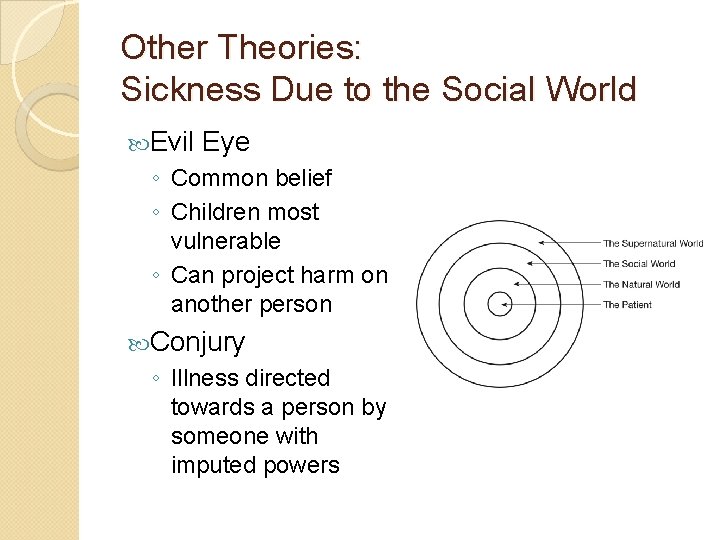
Other Theories: Sickness Due to the Social World Evil Eye ◦ Common belief ◦ Children most vulnerable ◦ Can project harm on another person Conjury ◦ Illness directed towards a person by someone with imputed powers

Other Theories: Sickness Due to the Supernatural World Caused by the actions of gods, spirits, or ghosts of ancestors Spirit possession Malevolent spirits Soul loss
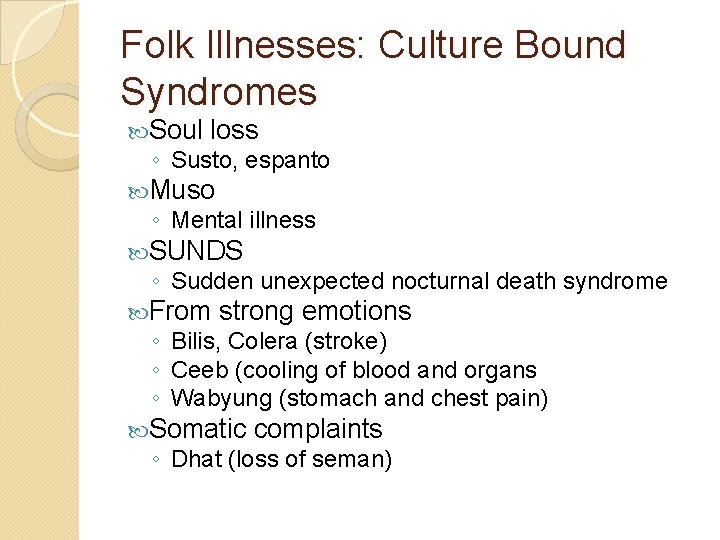
Folk Illnesses: Culture Bound Syndromes Soul loss ◦ Susto, espanto Muso ◦ Mental illness SUNDS ◦ Sudden unexpected nocturnal death syndrome From strong emotions ◦ Bilis, Colera (stroke) ◦ Ceeb (cooling of blood and organs ◦ Wabyung (stomach and chest pain) Somatic complaints ◦ Dhat (loss of seman)

Folk illnesses: Diet related High blood/low blood Imbalance in digestive system ◦ Numbness of extremities Si zhi ma mu ◦ Wad of food stuck Empacho ◦ Paralysis Pasmo Anorexia nervosa and bulimia nervosa
Healing Practices Biomedicine ◦ Diagnose and cure Healing ◦ Addresses the experience of illness ◦ Alleviates infirmities even when disease is not evident ◦ Responds to personal, familial, and social issues surrounding sickness
Seeking Care Biomedicine ◦ Emergency situations ◦ May be rejected due to cost, impersonal, inconvenient or inaccessible Home remedies Professional advice ◦ Depends on Cost Availability Previous care experience Referrals How the patient perceives the problem
Folk healers and Other Alternative Practitioners May provide an understanding of illness within the context of the patient’s worldview Offer care beyond the cure of disease ◦ Sincere sympathy ◦ Renewed hope ◦ See Controversial Practices: Botanical Remedies
Healing Therapies Home remedies ◦ Herbal teas ◦ Megavitamins Popular ◦ ◦ Therapies Chiropractic Homeopathy Hypnosis Massage Professional Therapies Biomedicine Traditional Chinese Medicine Ayurvedic medicine ◦ Ancient Asian ◦ Indian system of ◦ healing
3 Broad Categories Administration of therapeutic substances Application of physical forces or devices Magicoreligious interventions
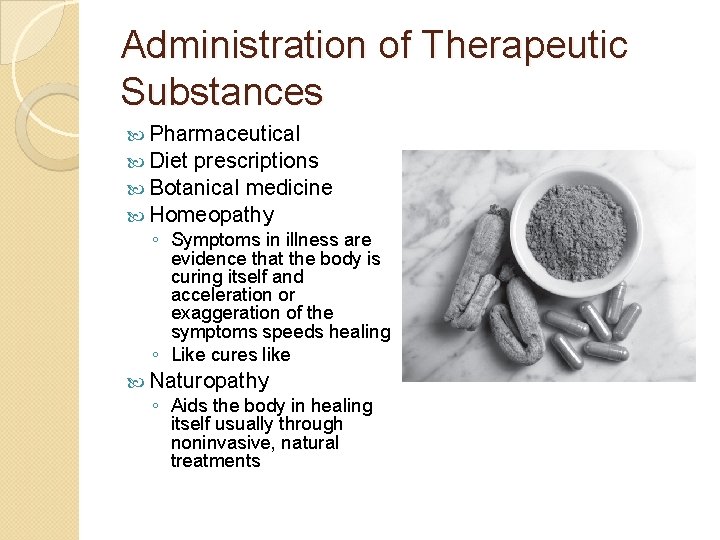
Administration of Therapeutic Substances Pharmaceutical Diet prescriptions Botanical medicine Homeopathy ◦ Symptoms in illness are evidence that the body is curing itself and acceleration or exaggeration of the symptoms speeds healing ◦ Like cures like Naturopathy ◦ Aids the body in healing itself usually through noninvasive, natural treatments
Application of Physical Forces or Devices Chiropractic ◦ Misalignments of the spine Osteopathic ◦ Blood/lymph flow/nerve function improve through manipulation of the musculoskeletal system Massage therapy Acupressure Pinching
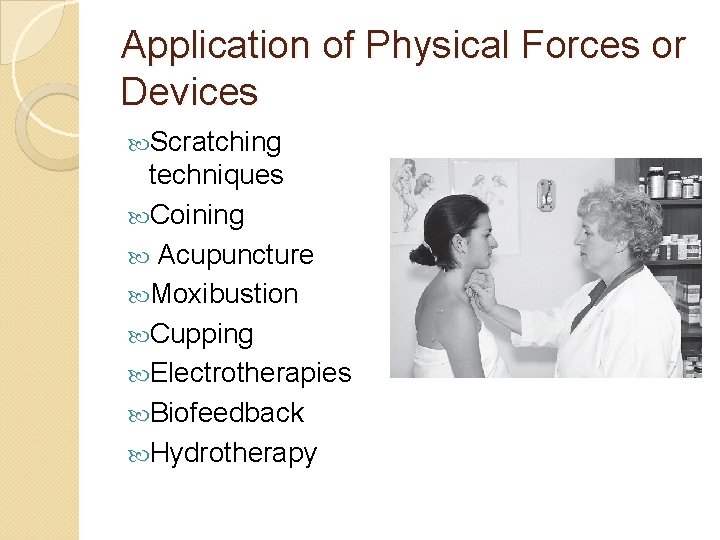
Application of Physical Forces or Devices Scratching techniques Coining Acupuncture Moxibustion Cupping Electrotherapies Biofeedback Hydrotherapy
Magicoreligious Interventions Spiritual healing practices ◦ Appeals to the saints ◦ Pilgrimages ◦ Correct conduct in this and past lives ◦ Virtuous behavior of ancestors ◦ Religious offerings Healing balance occurs through restoration of
Magicoreligious Interventions Actions by an individual ◦ ◦ ◦ Meditation Yoga Visualization or guided imagery Hypnotherapy Sacred ◦ ◦ ◦ healer Faith Healers Cajun traiteurs Powwowing Voodoo Shamans Medicine men
Medical Pluralism Consecutive or concurrent use of multiple health care systems Acculturation is not associated with a rise in the use of biomedical services Widespread in the US Some unconventional therapies are effective ◦ Physiologically or psychologically

Cultural Congruent Care Cultural care preservation and/or maintenance ◦ Can be beneficial/encouraged Cultural care accommodation and/or negotiation ◦ Expectation for care outside biomedical convention Cultural care repatterning or restructuring ◦ Harmful habits
- Slides: 43