
Traditional Growing Rods Versus Magnetically Controlled Growing Rods

- Slides: 19
Traditional Growing Rods Versus Magnetically Controlled Growing Rods in Early Onset Scoliosis: A Case-Matched Two Year Study B. A. Akbarnia, K. Cheung, G. Demirkiran, H. Elsebaie J. Emans, C. Johnston, G. Mundis, H. Noordeen, J. Pawelek M. Shaw, D. Skaggs, P. Sponseller, G. Thompson, M. Yazici, Growing Spine Study Group 7 th Annual International Congress on Early Onset Scoliosis and Growing Spine November 21 -22, 2013 San Diego, CA
Presenter’s Disclosures Author Disclosure Behrooz A. Akbarnia, MD De. Puy Spine (a, b, c), Ellipse (b, c), K 2 M (b), KSpine (b, c), Nuvasive (a, b, c) a. Grants/Research Support b. Consultant c. Stock/Shareholder d. Speakers’ Bureau e. Other Financial Support
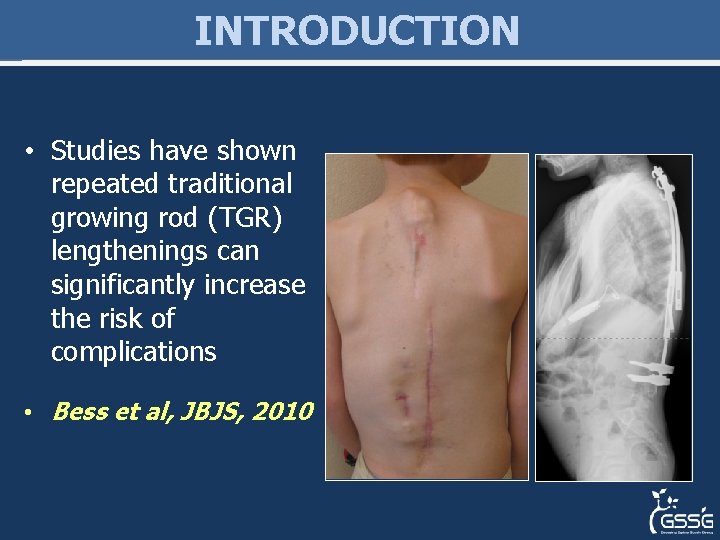
INTRODUCTION • Studies have shown repeated traditional growing rod (TGR) lengthenings can significantly increase the risk of complications • Bess et al, JBJS, 2010
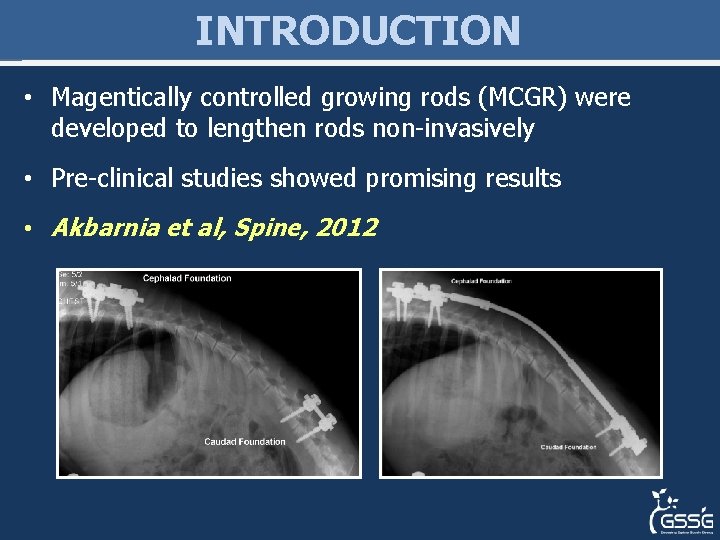
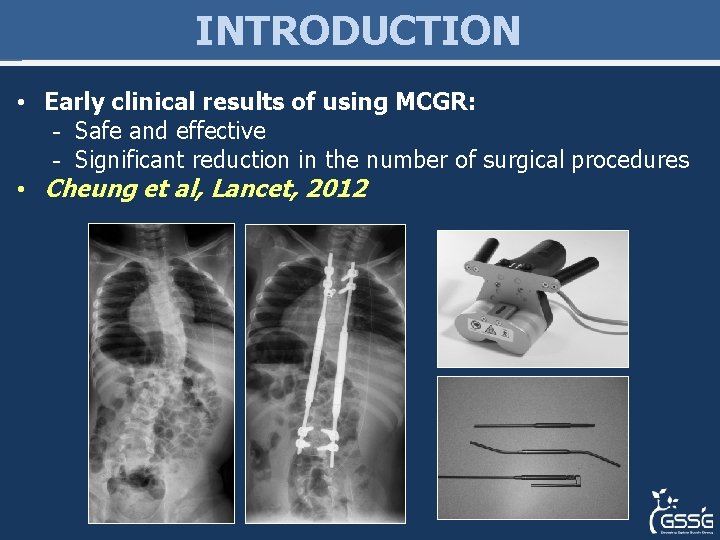
INTRODUCTION • Magentically controlled growing rods (MCGR) were developed to lengthen rods non-invasively • Pre-clinical studies showed promising results • Akbarnia et al, Spine, 2012
INTRODUCTION • Early clinical results of using MCGR: - Safe and effective - Significant reduction in the number of surgical procedures • Cheung et al, Lancet, 2012
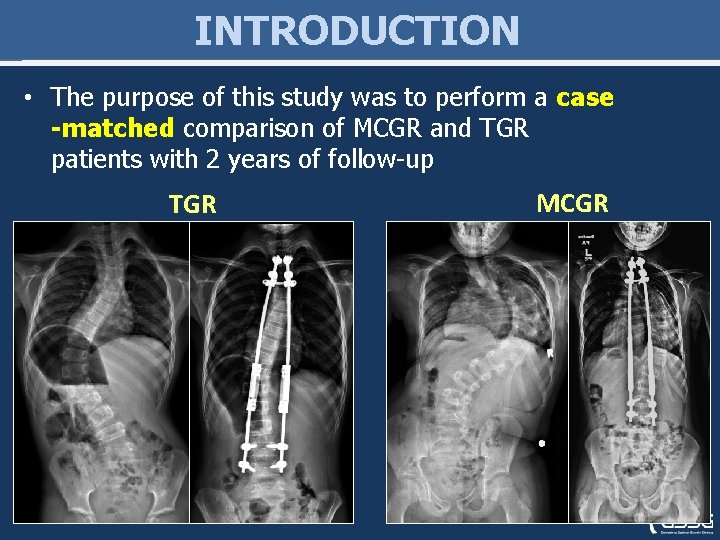
INTRODUCTION • The purpose of this study was to perform a case -matched comparison of MCGR and TGR patients with 2 years of follow-up TGR MCGR
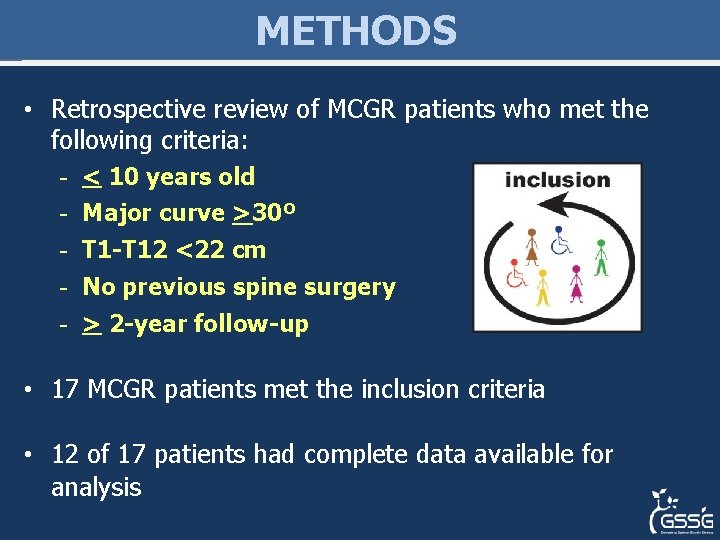
METHODS • Retrospective review of MCGR patients who met the following criteria: - < 10 years old Major curve >30º T 1 -T 12 <22 cm No previous spine surgery > 2 -year follow-up • 17 MCGR patients met the inclusion criteria • 12 of 17 patients had complete data available for analysis
METHODS • Each MCGR patient was matched to a TGR patient by: - Etiology (per C-EOS) Gender Single vs. dual rods Pre-op age (+/-10 months) Pre-op major curve (+/- 20º) • Etiologies were classified per C-EOS (Vitale): - Idiopathic Congenital/Structural Neuromuscular Syndromic • One male MCGR patient was matched to a female TGR patient since a male-male match could not be performed
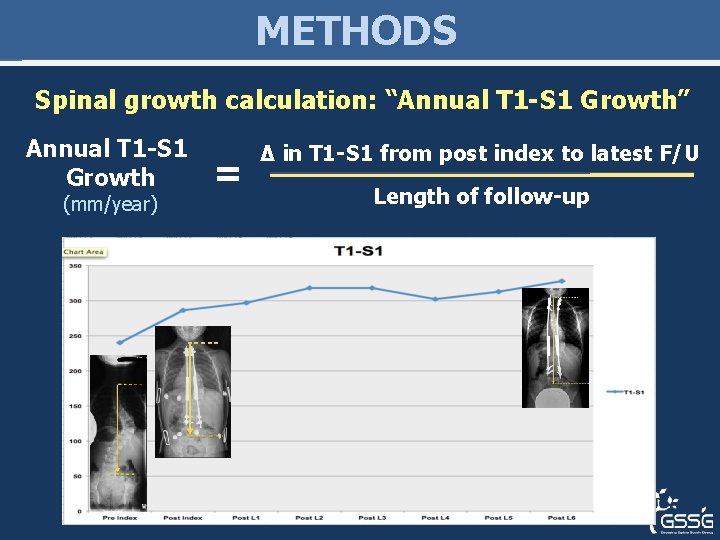
METHODS Spinal growth calculation: “Annual T 1 -S 1 Growth” Annual T 1 -S 1 Growth (mm/year) = Δ in T 1 -S 1 from post index to latest F/U Length of follow-up
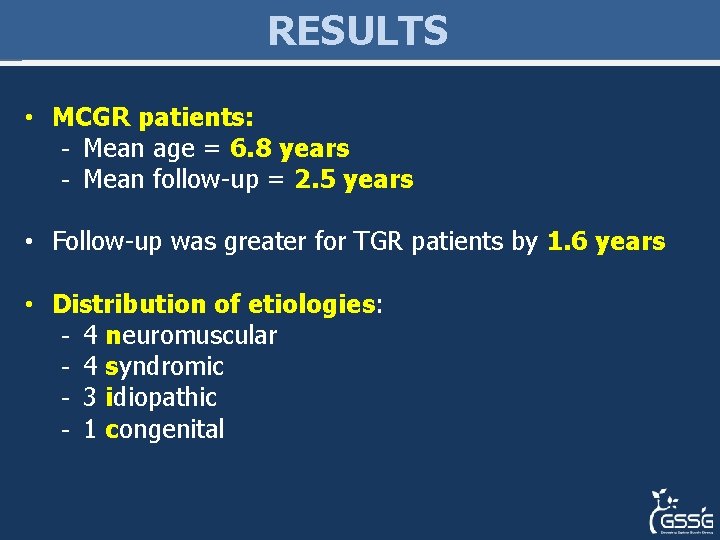
RESULTS • MCGR patients: - Mean age = 6. 8 years - Mean follow-up = 2. 5 years • Follow-up was greater for TGR patients by 1. 6 years • Distribution of etiologies: - 4 neuromuscular - 4 syndromic - 3 idiopathic - 1 congenital
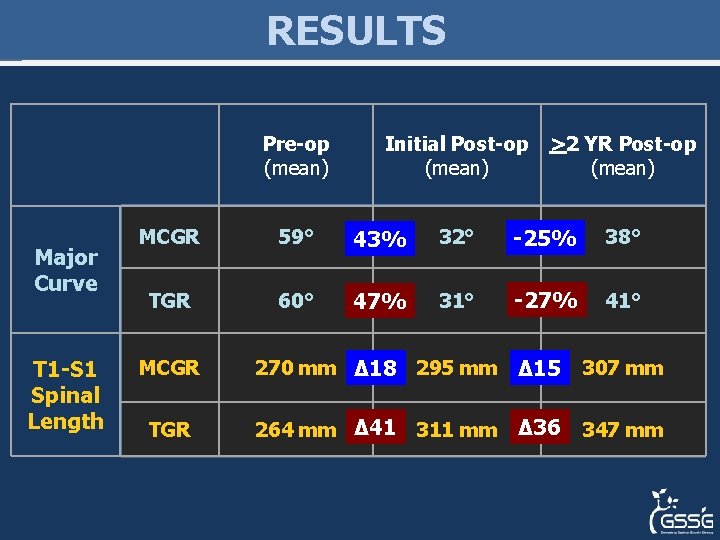
RESULTS Pre-op (mean) Major Curve T 1 -S 1 Spinal Length Initial Post-op (mean) >2 YR Post-op (mean) MCGR 59° 43% 32° -25% 38° TGR 60° 47% 31° -27% 41° MCGR 270 mm Δ 18 295 mm Δ 15 307 mm TGR 264 mm Δ 41 311 mm Δ 36 347 mm
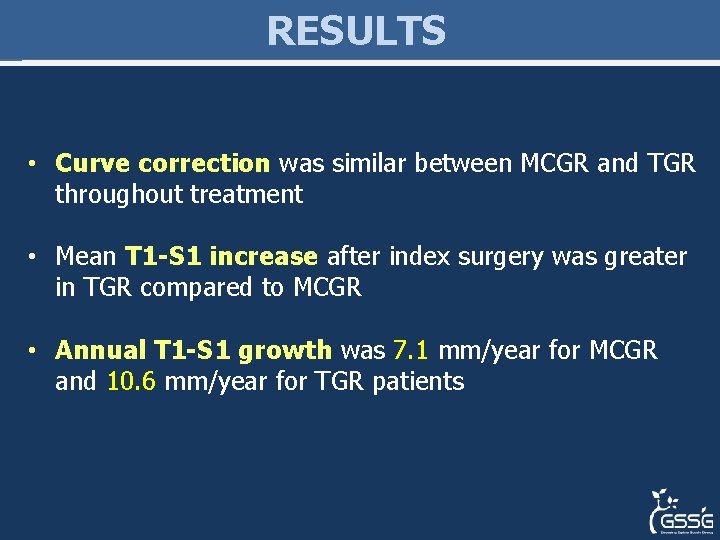
RESULTS • Curve correction was similar between MCGR and TGR throughout treatment • Mean T 1 -S 1 increase after index surgery was greater in TGR compared to MCGR • Annual T 1 -S 1 growth was 7. 1 mm/year for MCGR and 10. 6 mm/year for TGR patients
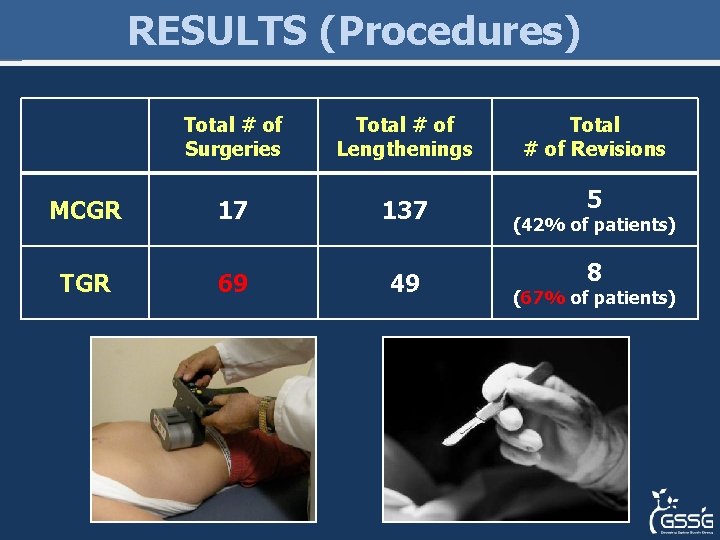
RESULTS (Procedures) Total # of Surgeries Total # of Lengthenings MCGR 17 137 TGR 69 49 Total # of Revisions 5 (42% of patients) 8 (67% of patients)
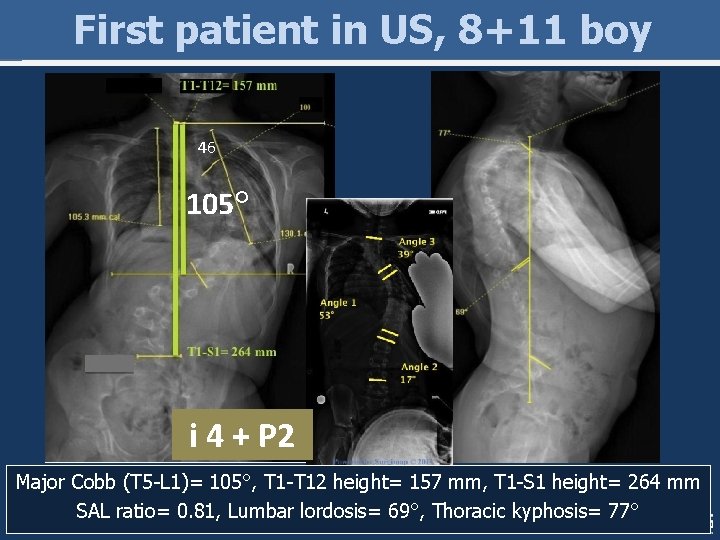
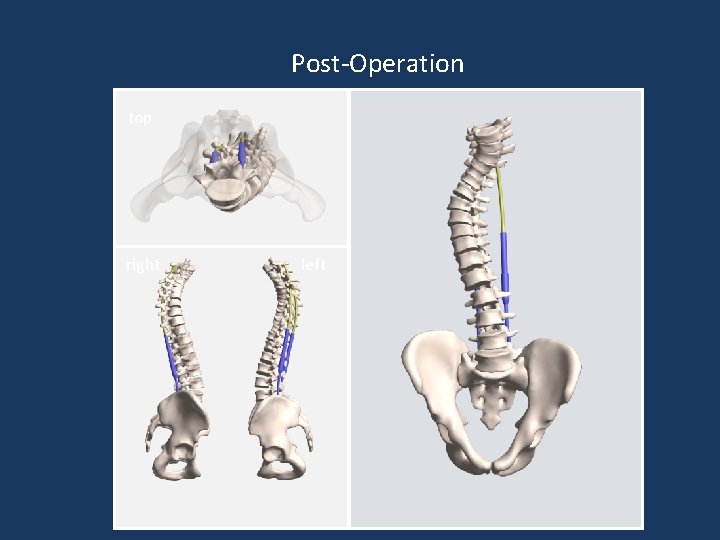
First patient in US, 8+11 boy 46 105° i 4 + P 2 Major Cobb (T 5 -L 1)= 105°, T 1 -T 12 height= 157 mm, T 1 -S 1 height= 264 mm SAL ratio= 0. 81, Lumbar lordosis= 69°, Thoracic kyphosis= 77°
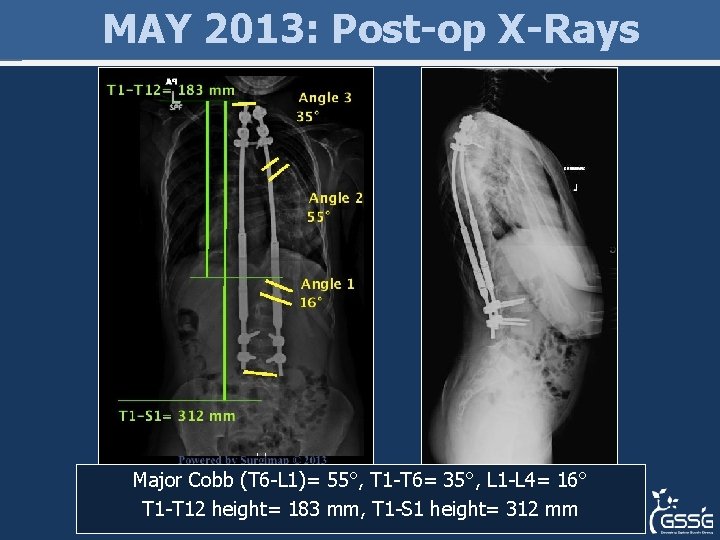
MAY 2013: Post-op X-Rays Major Cobb (T 6 -L 1)= 55°, T 1 -T 6= 35°, L 1 -L 4= 16° T 1 -T 12 height= 183 mm, T 1 -S 1 height= 312 mm
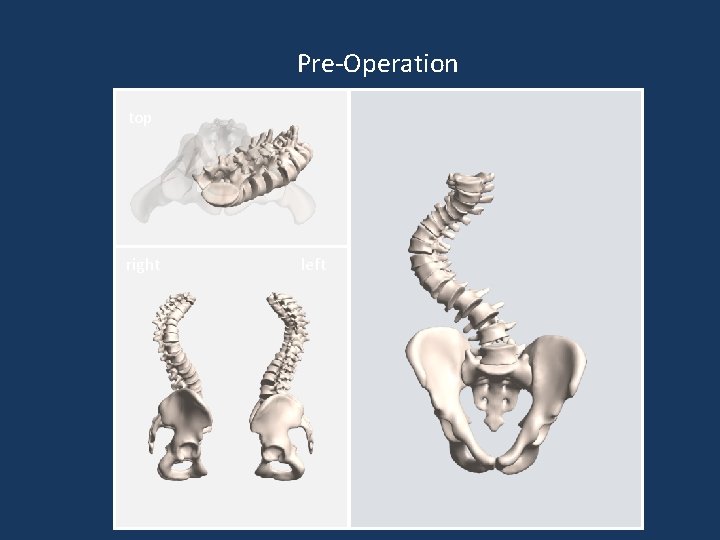
Pre-Operation top right left
Post-Operation top right left
DISCUSSION • In this small yet carefully matched series, major curve correction was similar between MCGR and TGR patients throughout treatment • MCGR patients had 52 fewer surgical procedures than TGR patients • While curve correction was similar, annual T 1 -S 1 growth was 3. 5 mm/year greater in TGR patients compared to MCGR patients
THANK YOU