
Traditional Flint and Steel Striking a hardened piece

- Slides: 6
Traditional Flint and Steel: Striking a hardened piece of carbon steel with a very hard rock, often flint, to generate sparks Flint and Steel Fire
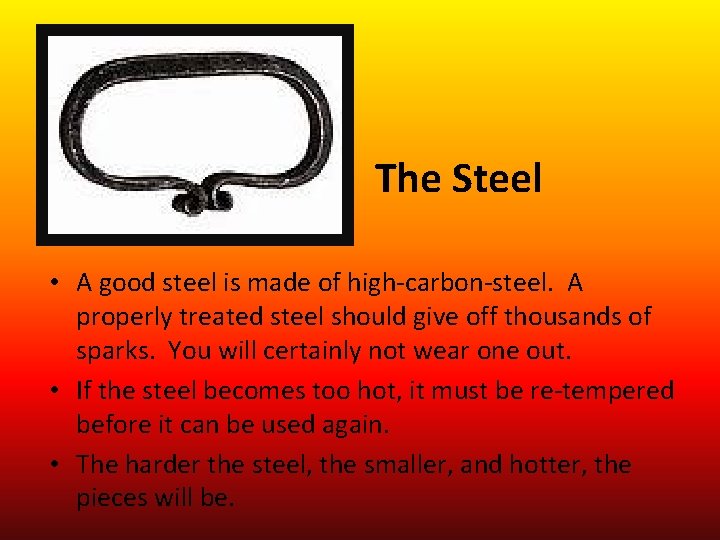
The Steel • A good steel is made of high-carbon-steel. A properly treated steel should give off thousands of sparks. You will certainly not wear one out. • If the steel becomes too hot, it must be re-tempered before it can be used again. • The harder the steel, the smaller, and hotter, the pieces will be.
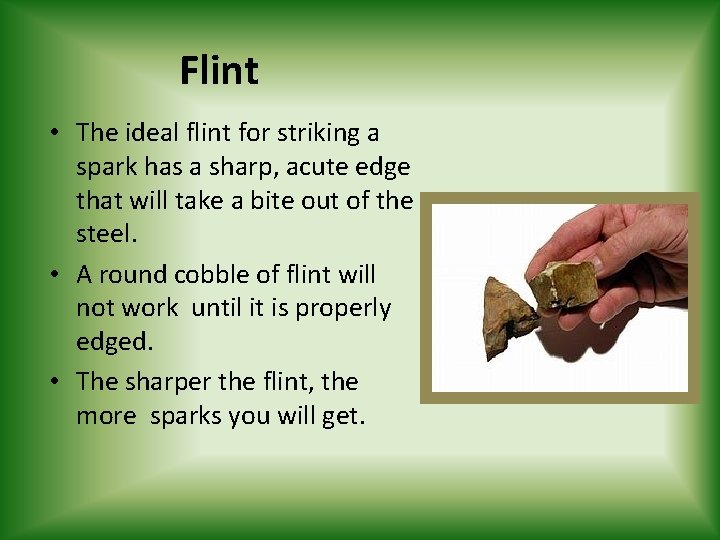
Flint • The ideal flint for striking a spark has a sharp, acute edge that will take a bite out of the steel. • A round cobble of flint will not work until it is properly edged. • The sharper the flint, the more sparks you will get.
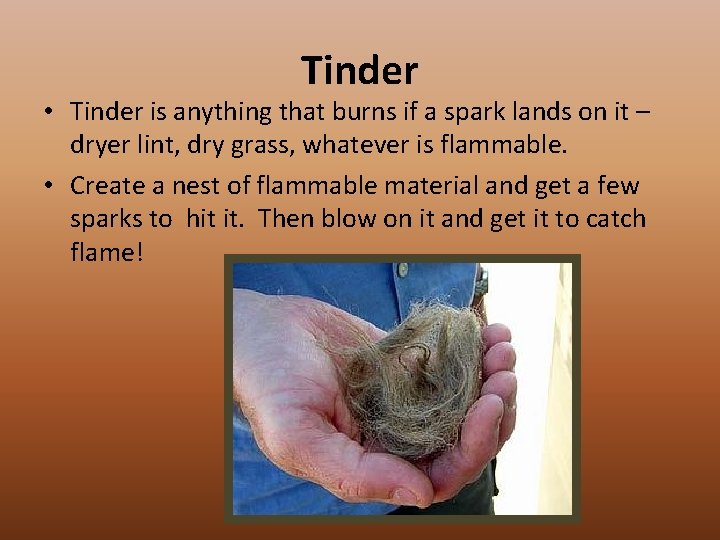
Tinder • Tinder is anything that burns if a spark lands on it – dryer lint, dry grass, whatever is flammable. • Create a nest of flammable material and get a few sparks to hit it. Then blow on it and get it to catch flame!
Challenge: Use Flint and Steel to ignite a tinder bundle and then a Mini Fire on the blacktop! Then, toast a mini-marshmallow
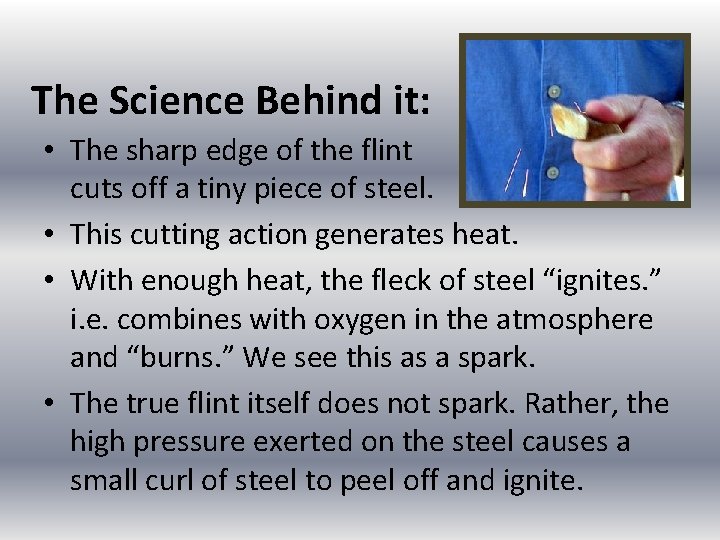
The Science Behind it: • The sharp edge of the flint cuts off a tiny piece of steel. • This cutting action generates heat. • With enough heat, the fleck of steel “ignites. ” i. e. combines with oxygen in the atmosphere and “burns. ” We see this as a spark. • The true flint itself does not spark. Rather, the high pressure exerted on the steel causes a small curl of steel to peel off and ignite.