
tradeoffs in fair redistricting zachary schutzman zschutzy ianzachseas

- Slides: 47
trade-offs in fair redistricting zachary schutzman @zschutzy ianzach@seas. upenn. edu https: //zachschutzman. co
what is redistricting? periodically, we need to redraw
what is redistricting? periodically, we need to redraw congressional districts
what is redistricting? congressional districts state legislative districts periodically, we need to redraw
what is redistricting? congressional districts state legislative districts periodically, we need to redraw county districts judicial districts municipal districts
what is redistricting? congressional districts state legislative districts periodically, we need to redraw county districts judicial districts municipal districts school board districts school attendance zones
what is redistricting? congressional districts state legislative districts periodically, we need to redraw county districts judicial districts municipal districts school board districts school attendance zones library districts voting precincts emergency services districts. . .
what is redistricting? congressional districts state legislative districts periodically, we need to redraw districts are often drawn by people with a personal interest in the outcome county districts judicial districts municipal districts school board districts school attendance zones library districts voting precincts emergency services districts. . .
what is redistricting? congressional districts state legislative districts periodically, we need to redraw districts are often drawn by people with a personal interest in the outcome - state legislators draw their own districts county districts judicial districts municipal districts school board districts school attendance zones library districts voting precincts emergency services districts. . .
what is redistricting? congressional districts state legislative districts periodically, we need to redraw districts are often drawn by people with a personal interest in the outcome - state legislators draw their own districts draw a school zone so my kid and their friends go to the same school county districts judicial districts municipal districts school board districts school attendance zones library districts voting precincts emergency services districts. . .
history of abuse, but unfairness is judged ad hoc and is often hard to articulate
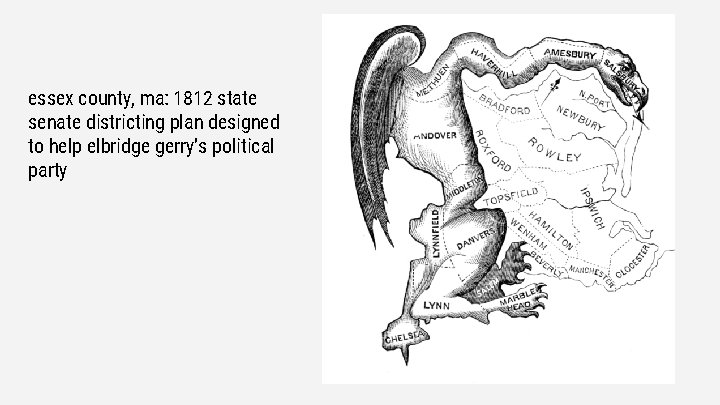
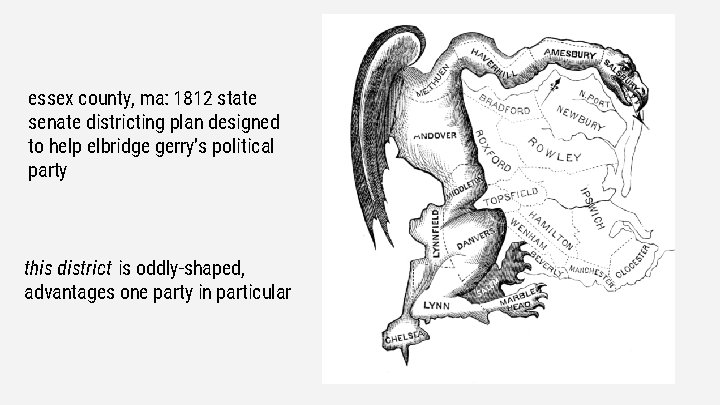
essex county, ma: 1812 state senate districting plan designed to help elbridge gerry’s political party
essex county, ma: 1812 state senate districting plan designed to help elbridge gerry’s political party this district is oddly-shaped, advantages one party in particular
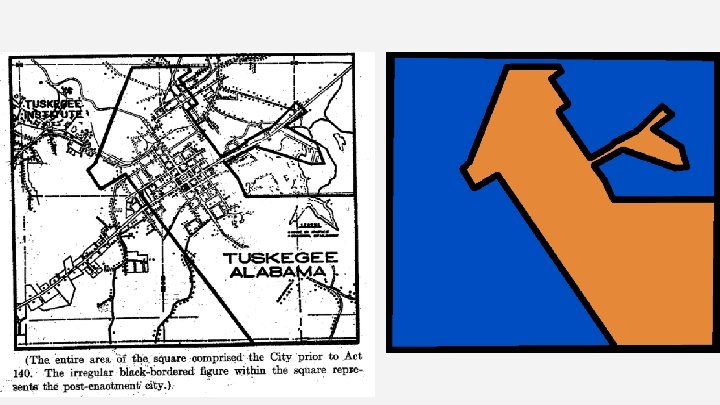
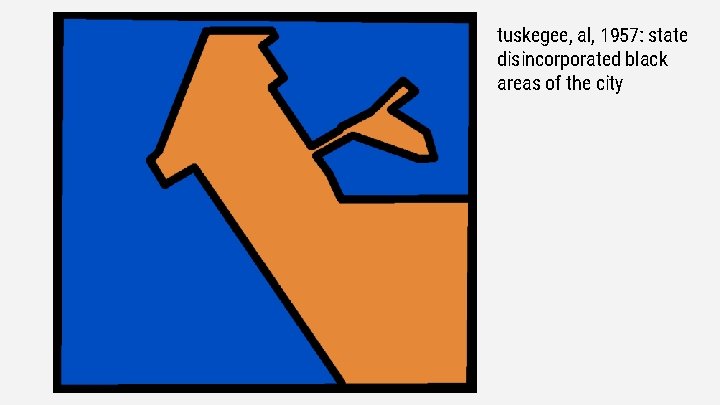
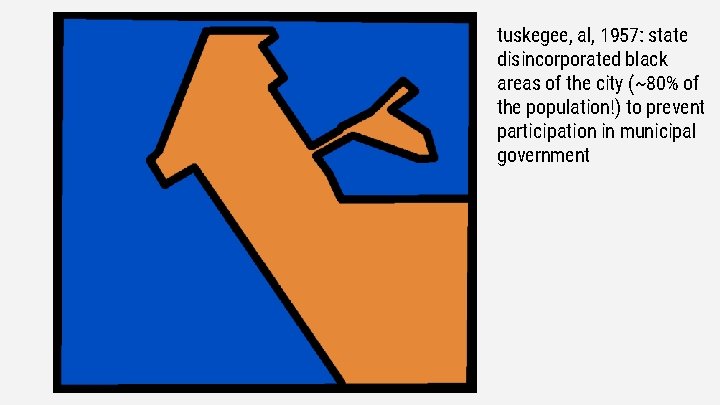
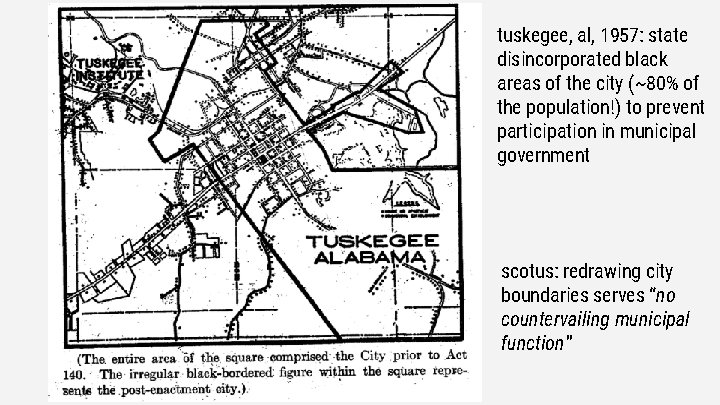
tuskegee, al, 1957: state disincorporated black areas of the city
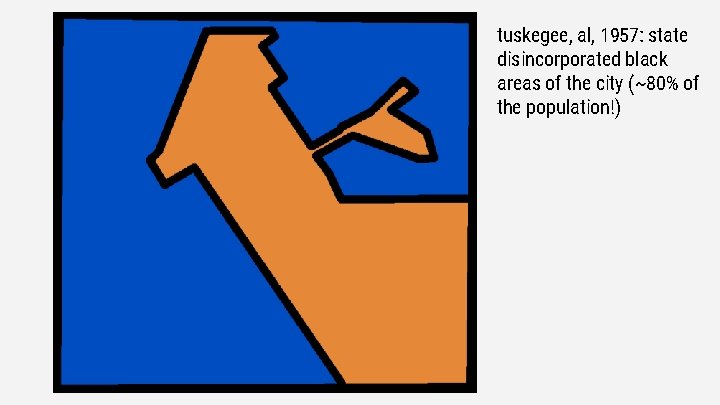
tuskegee, al, 1957: state disincorporated black areas of the city (~80% of the population!)
tuskegee, al, 1957: state disincorporated black areas of the city (~80% of the population!) to prevent participation in municipal government
tuskegee, al, 1957: state disincorporated black areas of the city (~80% of the population!) to prevent participation in municipal government scotus: redrawing city boundaries serves “no countervailing municipal function”
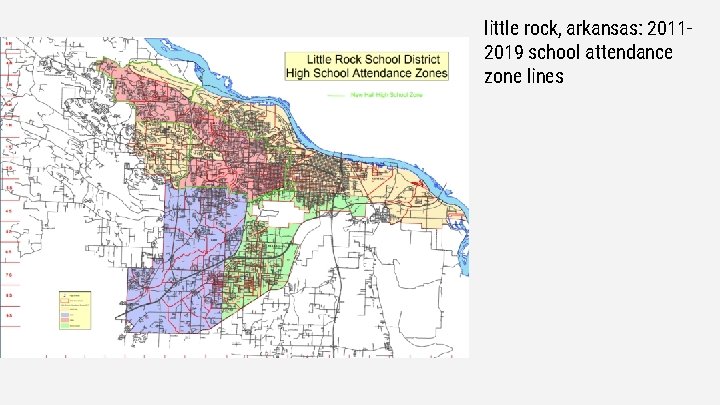
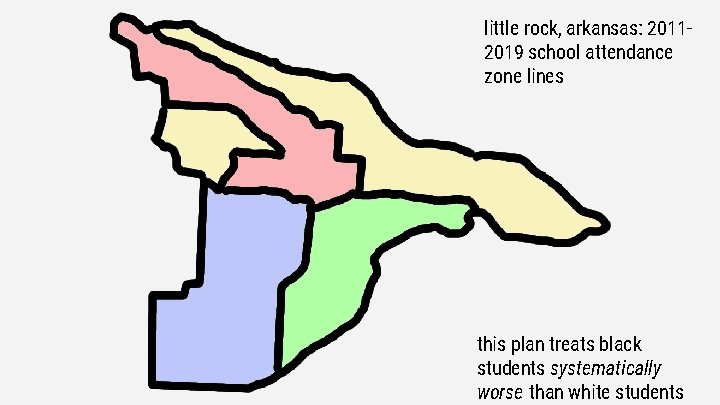
little rock, arkansas: 20112019 school attendance zone lines
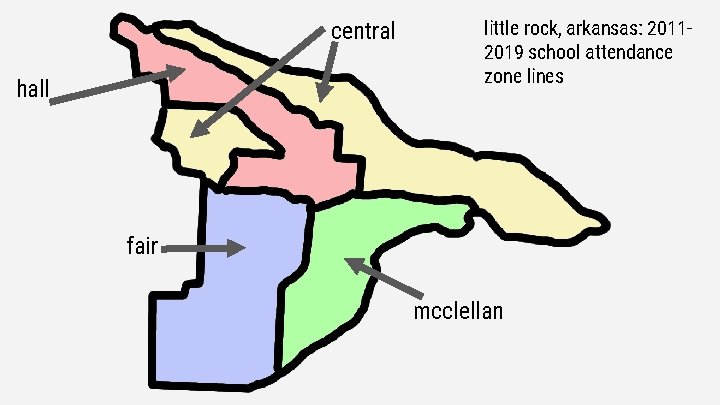
central hall little rock, arkansas: 20112019 school attendance zone lines fair mcclellan
little rock, arkansas: 20112019 school attendance zone lines this plan treats black students systematically worse than white students
“This means, in view of the subtle possibilities for favoritism , that the human element must be removed as completely as possible from the redistricting process. In part, this means that the process should be completely mechanical , so that once set up, there is no room at all for human choice. More than this, [. . . ] it should not be possible to predict in any detail the outcome of the process. ” On the Prevention of Gerrymandering , William Vickrey, 1961
if you can quantify it, you can optimize for it
if you can quantify it, you can optimize for it proposed algorithms since the ‘ 60 s
if you can quantify it, you can optimize for it proposed algorithms since the ‘ 60 s most minimizing some geometric energy
if you can quantify it, you can optimize for it proposed algorithms since the ‘ 60 s most minimizing some geometric energy since vieth (2004), a search for a way to quantify partisan unfairness
if you can quantify it, you can optimize for it proposed algorithms since the ‘ 60 s most minimizing some geometric energy since vieth (2004), a search for a way to quantify partisan unfairness computers caught up in ~2010
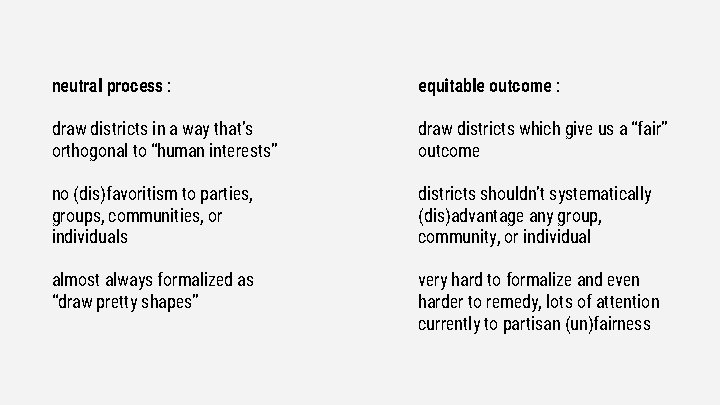
neutral process : draw districts in a way that’s orthogonal to “human interests” no (dis)favoritism to parties, groups, communities, or individuals almost always formalized as “draw pretty shapes”
neutral process : equitable outcome : draw districts in a way that’s orthogonal to “human interests” draw districts which give us a “fair” outcome no (dis)favoritism to parties, groups, communities, or individuals districts shouldn’t systematically (dis)advantage any group, community, or individual almost always formalized as “draw pretty shapes” very hard to formalize and even harder to remedy, lots of attention currently to partisan (un)fairness
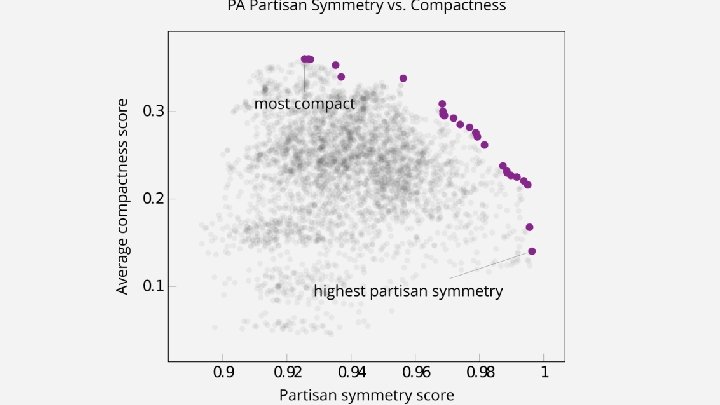
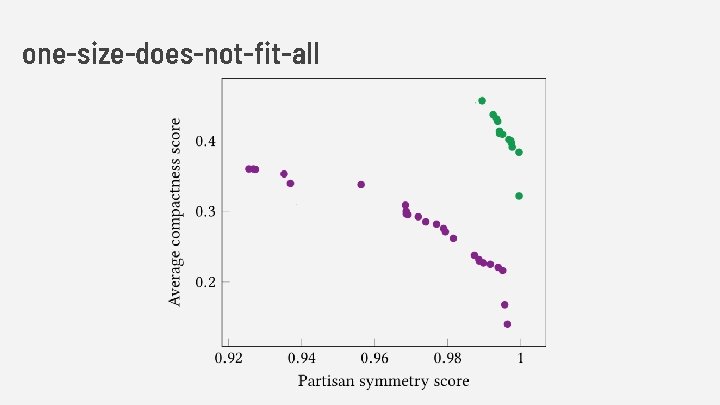
what are the trade-offs between these two frameworks?
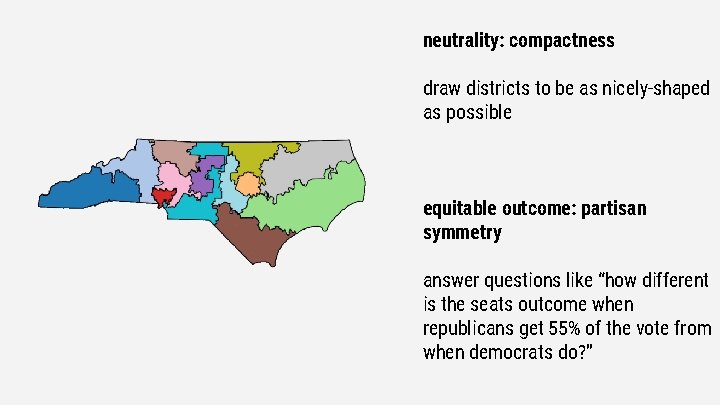
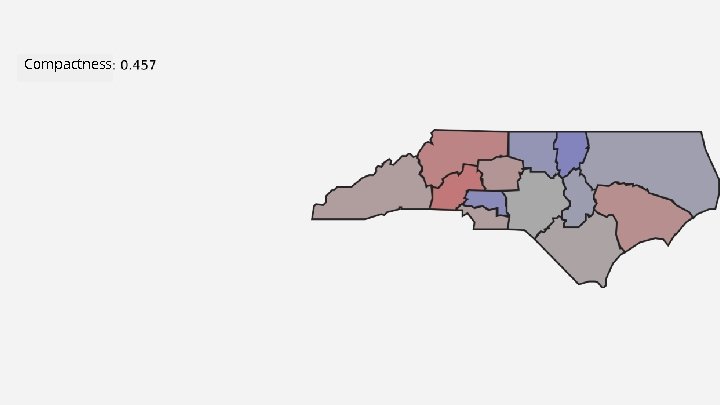
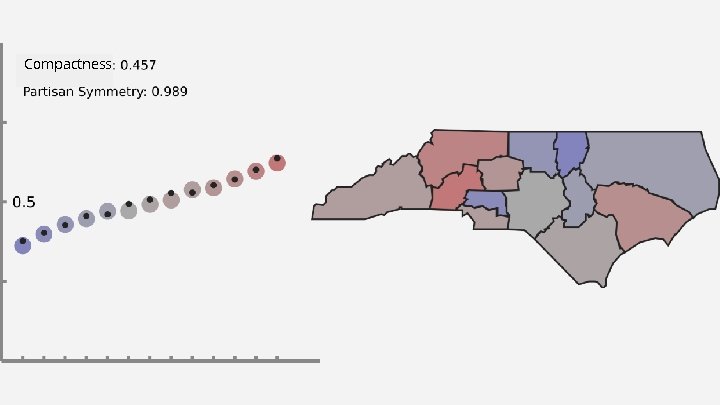
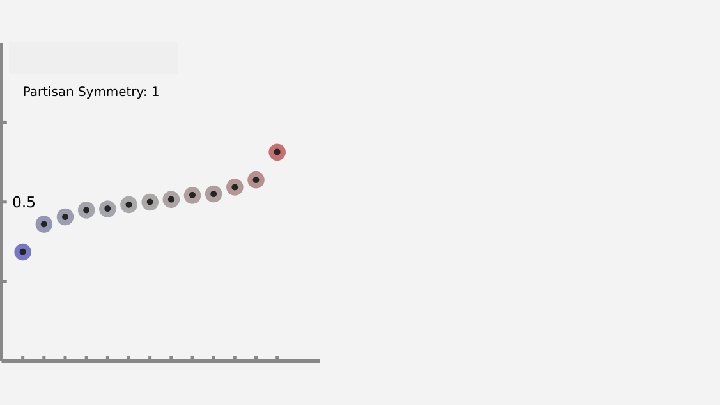
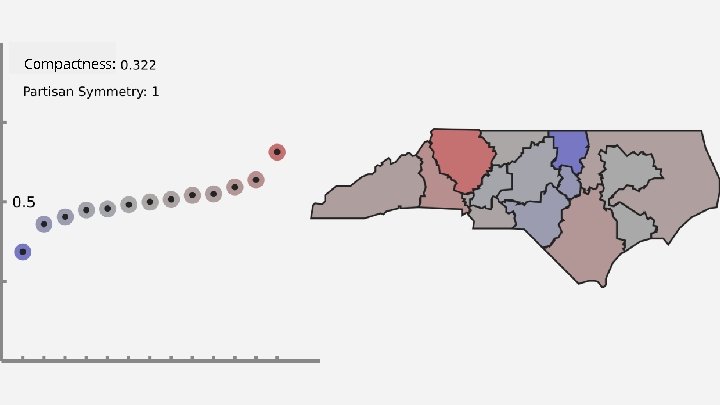
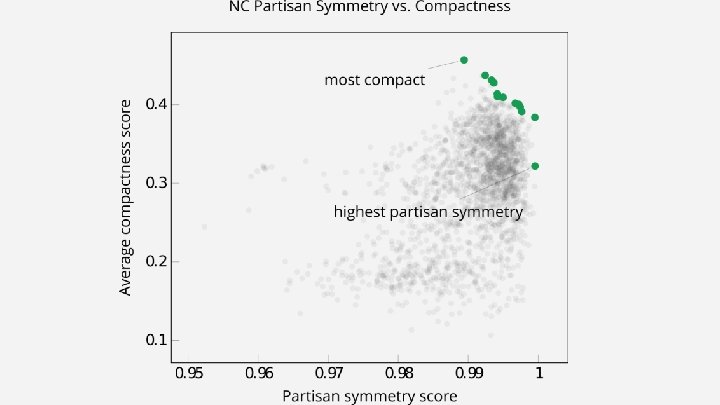
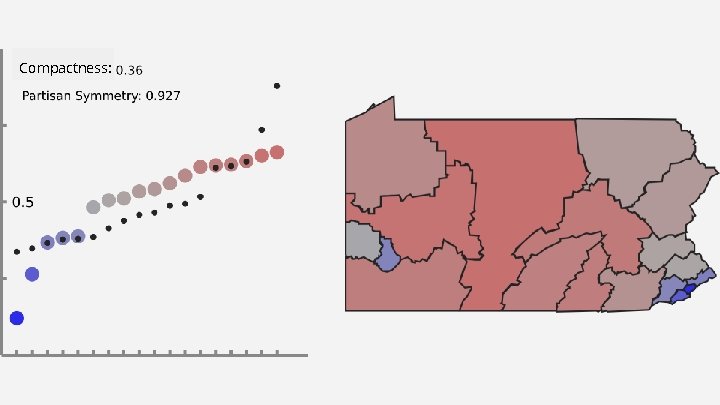
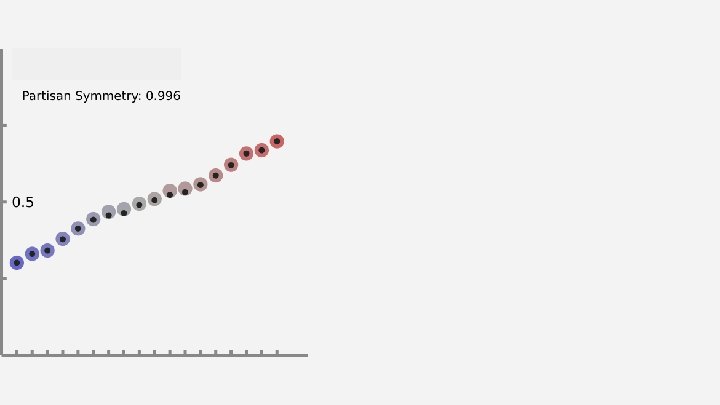
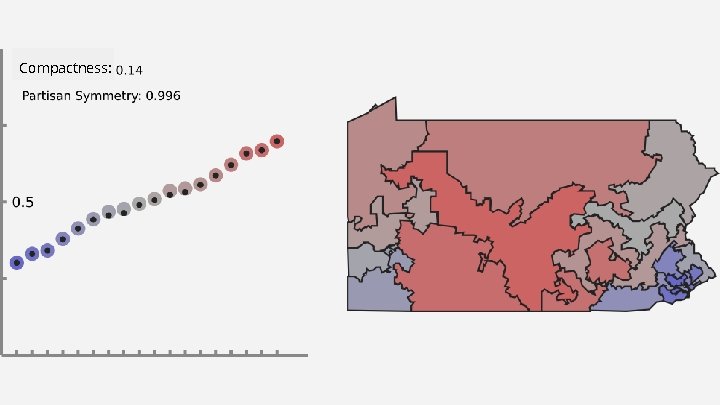
neutrality: compactness draw districts to be as nicely-shaped as possible equitable outcome: partisan symmetry answer questions like “how different is the seats outcome when republicans get 55% of the vote from when democrats do? ”
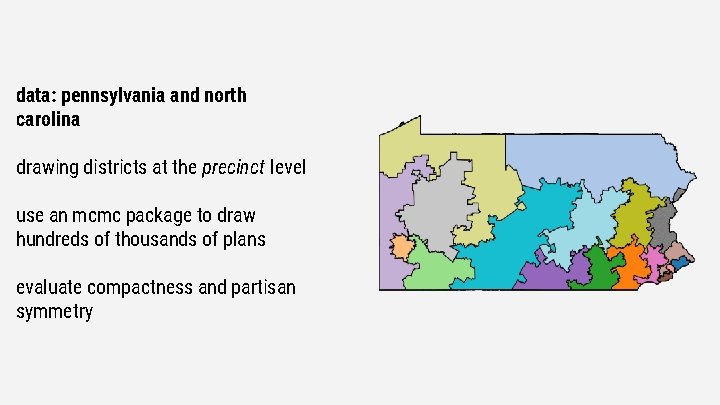
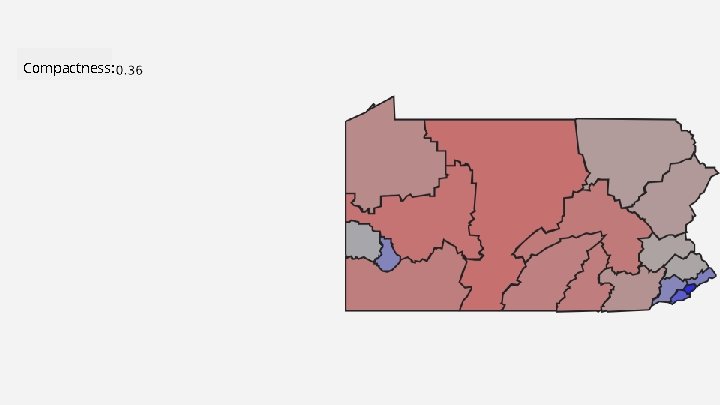
data: pennsylvania and north carolina drawing districts at the precinct level use an mcmc package to draw hundreds of thousands of plans evaluate compactness and partisan symmetry
Compactness
Compactness
Compactness:
Compactness:
Compactness:
Compactness:
algorithmic redistricting is possible
algorithmic redistricting is possible … but its value and impacts are not clear
one-size-does-not-fit-all
other factors are important but hard to operationalize vra compliance defining and preserving communities-of-interest concordance with other legal constraints
thank you! @zschutzy ianzach@seas. upenn. edu https: //zachschutzman. com