
Trade Sustainability Impact Assessment in Support of the

Trade Sustainability Impact Assessment in Support of the Association Agreement Negotiations between the European Union and Mercosur Stakeholder Consultation, Sustainability Roundtable, 20 March 2018
Research Aims Objectives of the SIA: To develop the analysis of expected economic, social, human rights and environmental impacts of the Association Agreement (AA) between the EU and Mercosur. This report includes: • Quantitative and qualitative analysis • Stakeholder consultation contributions
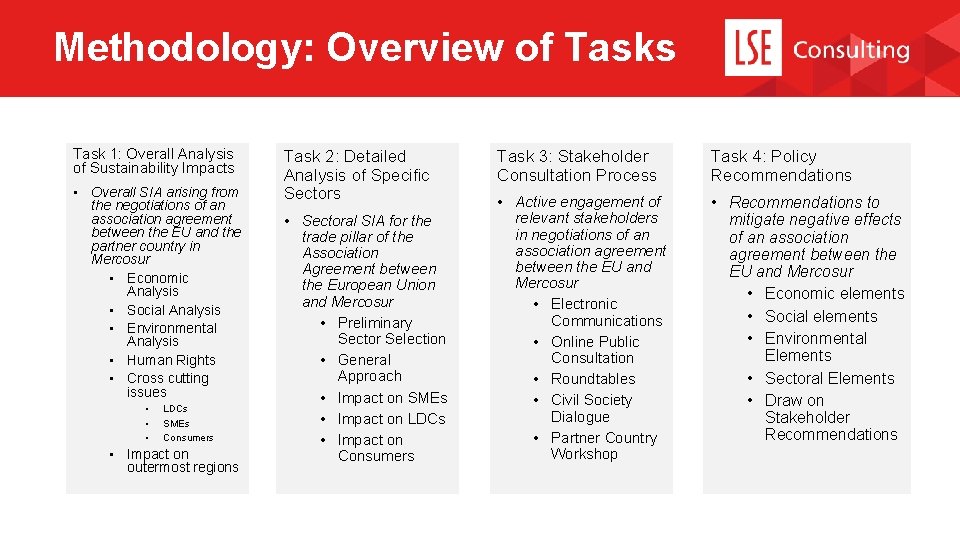
Methodology: Overview of Tasks Task 1: Overall Analysis of Sustainability Impacts • Overall SIA arising from the negotiations of an association agreement between the EU and the partner country in Mercosur • Economic Analysis • Social Analysis • Environmental Analysis • Human Rights • Cross cutting issues • • • LDCs SMEs Consumers • Impact on outermost regions Task 2: Detailed Analysis of Specific Sectors • Sectoral SIA for the trade pillar of the Association Agreement between the European Union and Mercosur • Preliminary Sector Selection • General Approach • Impact on SMEs • Impact on LDCs • Impact on Consumers Task 3: Stakeholder Consultation Process Task 4: Policy Recommendations • Active engagement of relevant stakeholders in negotiations of an association agreement between the EU and Mercosur • Electronic Communications • Online Public Consultation • Roundtables • Civil Society Dialogue • Partner Country Workshop • Recommendations to mitigate negative effects of an association agreement between the EU and Mercosur • Economic elements • Social elements • Environmental Elements • Sectoral Elements • Draw on Stakeholder Recommendations
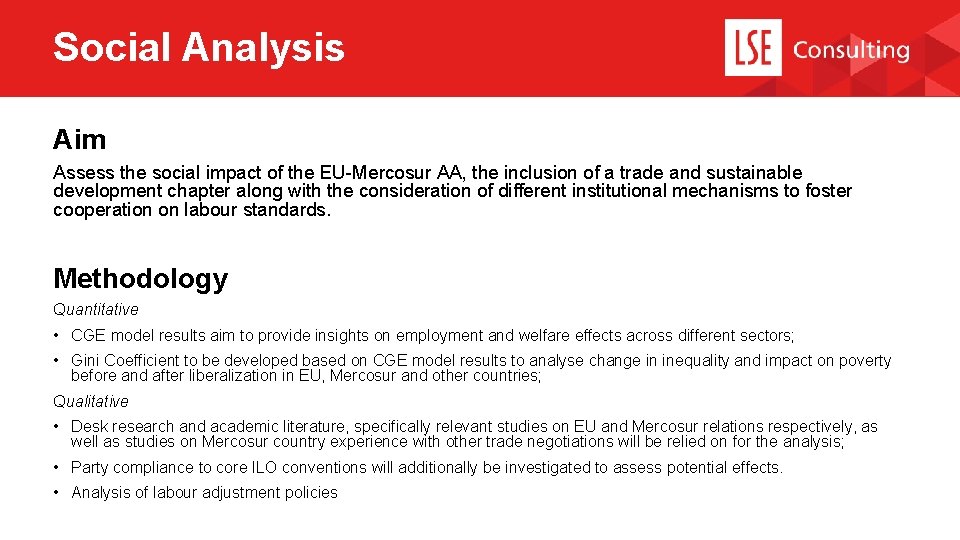
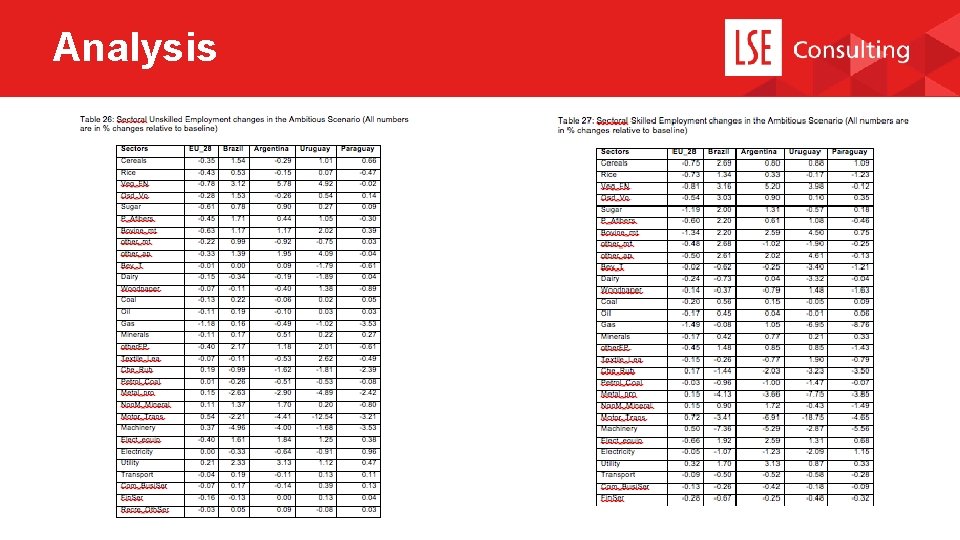
Social Analysis Aim Assess the social impact of the EU-Mercosur AA, the inclusion of a trade and sustainable development chapter along with the consideration of different institutional mechanisms to foster cooperation on labour standards. Methodology Quantitative • CGE model results aim to provide insights on employment and welfare effects across different sectors; • Gini Coefficient to be developed based on CGE model results to analyse change in inequality and impact on poverty before and after liberalization in EU, Mercosur and other countries; Qualitative • Desk research and academic literature, specifically relevant studies on EU and Mercosur relations respectively, as well as studies on Mercosur country experience with other trade negotiations will be relied on for the analysis; • Party compliance to core ILO conventions will additionally be investigated to assess potential effects. • Analysis of labour adjustment policies
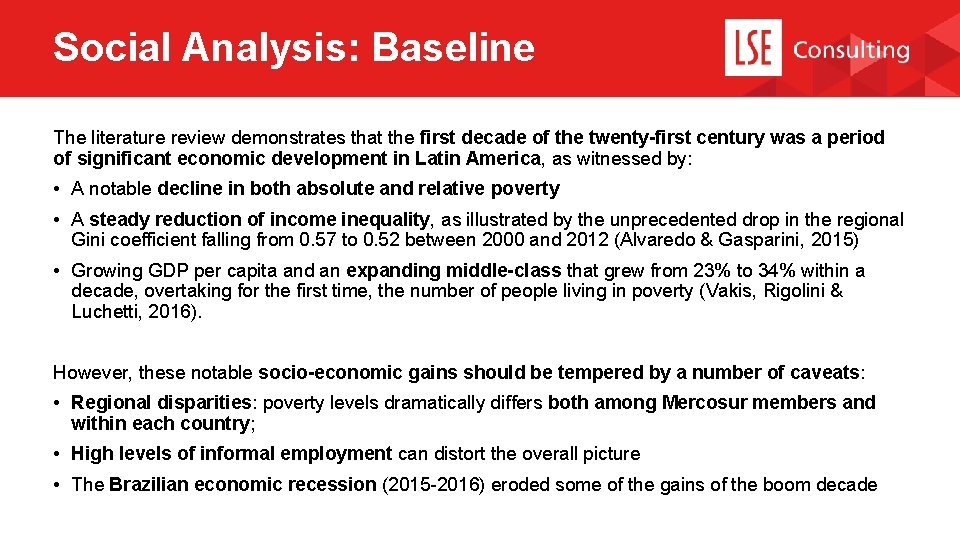
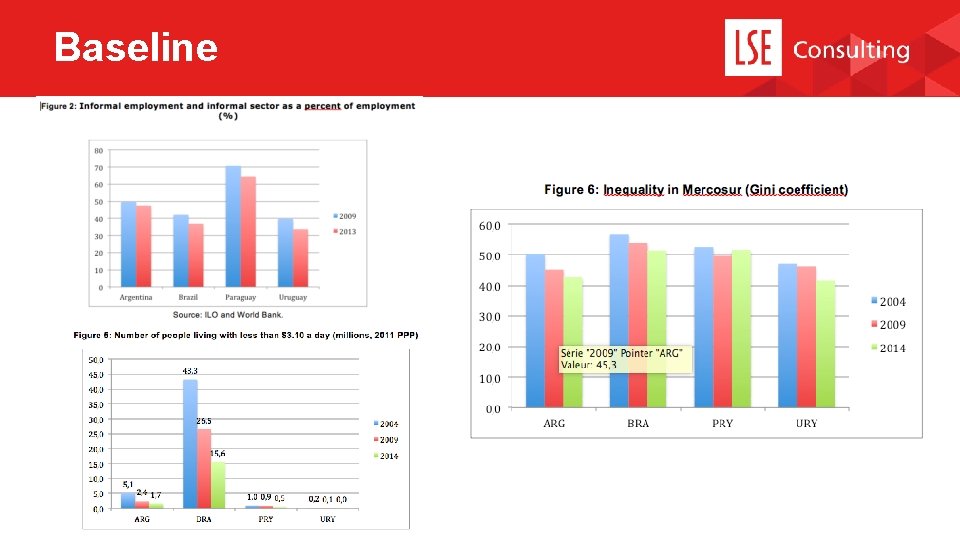
Social Analysis: Baseline The literature review demonstrates that the first decade of the twenty-first century was a period of significant economic development in Latin America, as witnessed by: • A notable decline in both absolute and relative poverty • A steady reduction of income inequality, as illustrated by the unprecedented drop in the regional Gini coefficient falling from 0. 57 to 0. 52 between 2000 and 2012 (Alvaredo & Gasparini, 2015) • Growing GDP per capita and an expanding middle-class that grew from 23% to 34% within a decade, overtaking for the first time, the number of people living in poverty (Vakis, Rigolini & Luchetti, 2016). However, these notable socio-economic gains should be tempered by a number of caveats: • Regional disparities: poverty levels dramatically differs both among Mercosur members and within each country; • High levels of informal employment can distort the overall picture • The Brazilian economic recession (2015 -2016) eroded some of the gains of the boom decade
Baseline
Analysis
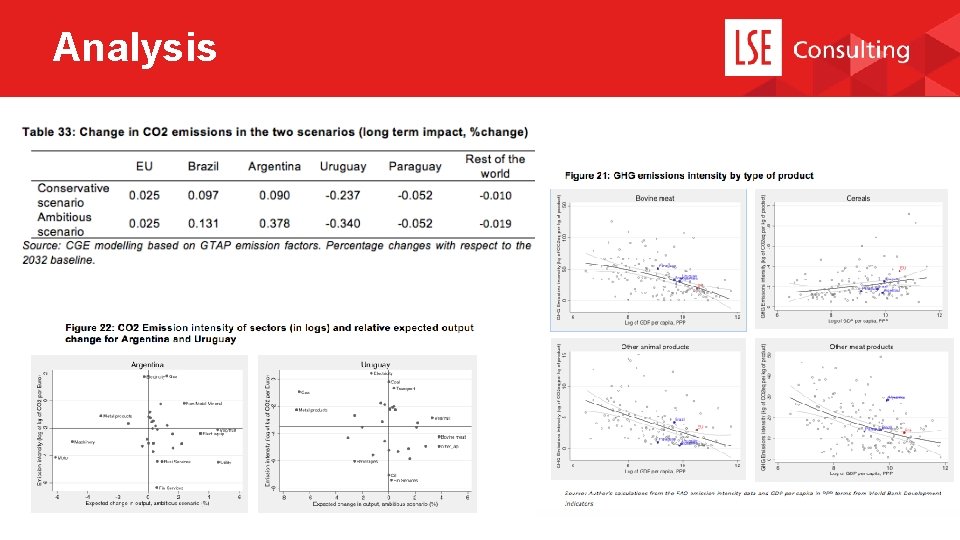
Environmental Analysis Aim The analysis will focus on GHG emission and climate change; energy use; land use; resource use and efficiency; waste production; ecosystems and biodiversity; forestry and trade in environmental goods and services. Methodology Baseline • Benchmark of current environmental Mercosur performance against EU using indicators of environmental quality (i. e. Environmental Performance Index), and overview of current regulations and obligations. Quantitative Analysis • Based on CGE modelling, the study aims to analyse the scale, structural, technology and product effects in terms of both welfare and GHG emissions using the emission intensity factors in GTAP data base and model. • By employing the GTAP POWER dataset and model, results can be explained in terms of changes in various sectors and a Log Mean Divisia Index (LMDI) based on input-output tables will be used for separating these different effects. Qualitative Analysis • Analysis of STD chapter and potential institutional mechanisms • MEA – AA interactions • Results of the stakeholder consultation
Analysis
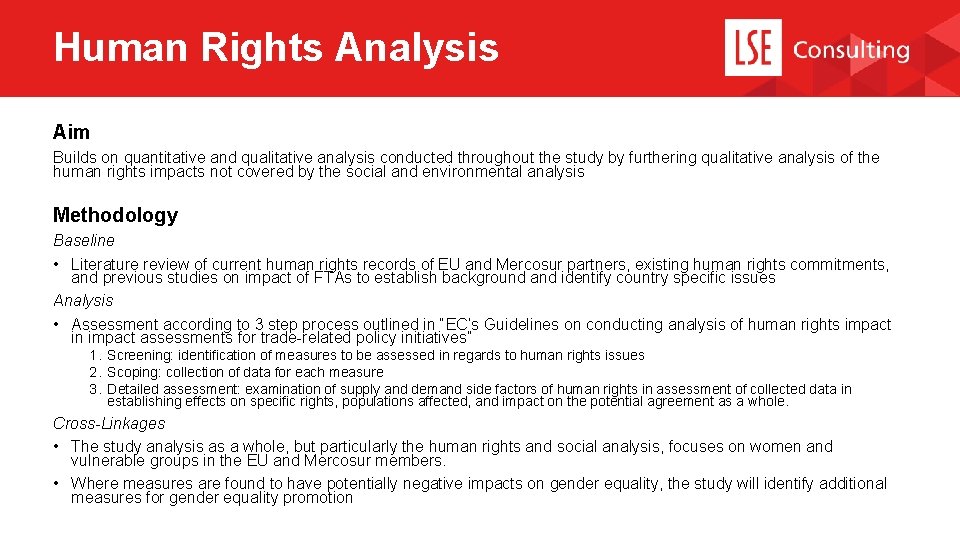
Human Rights Analysis Aim Builds on quantitative and qualitative analysis conducted throughout the study by furthering qualitative analysis of the human rights impacts not covered by the social and environmental analysis Methodology Baseline • Literature review of current human rights records of EU and Mercosur partners, existing human rights commitments, and previous studies on impact of FTAs to establish background and identify country specific issues Analysis • Assessment according to 3 step process outlined in “EC’s Guidelines on conducting analysis of human rights impact in impact assessments for trade-related policy initiatives” 1. Screening: identification of measures to be assessed in regards to human rights issues 2. Scoping: collection of data for each measure 3. Detailed assessment: examination of supply and demand side factors of human rights in assessment of collected data in establishing effects on specific rights, populations affected, and impact on the potential agreement as a whole. Cross-Linkages • The study analysis as a whole, but particularly the human rights and social analysis, focuses on women and vulnerable groups in the EU and Mercosur members. • Where measures are found to have potentially negative impacts on gender equality, the study will identify additional measures for gender equality promotion
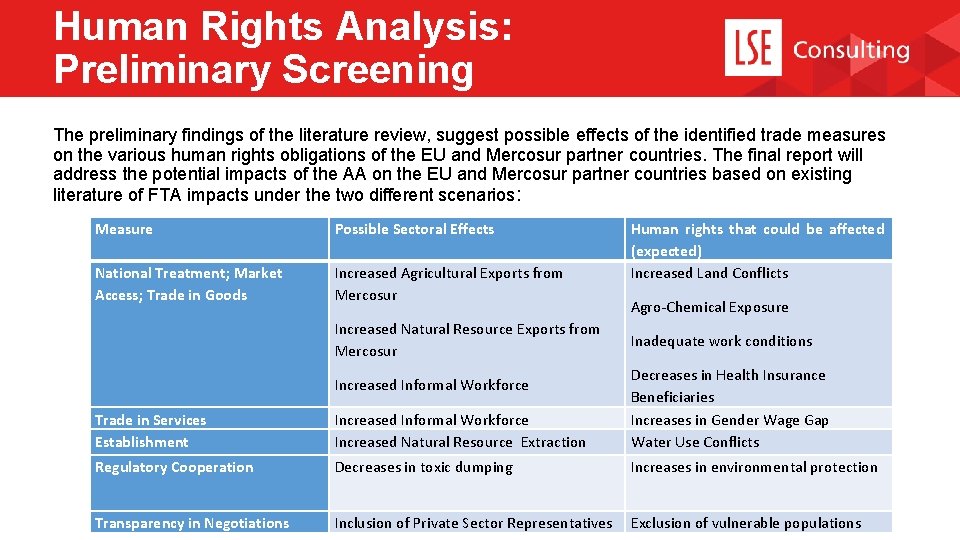
Human Rights Analysis: Preliminary Screening The preliminary findings of the literature review, suggest possible effects of the identified trade measures on the various human rights obligations of the EU and Mercosur partner countries. The final report will address the potential impacts of the AA on the EU and Mercosur partner countries based on existing literature of FTA impacts under the two different scenarios: Measure Possible Sectoral Effects National Treatment; Market Access; Trade in Goods Increased Agricultural Exports from Mercosur Increased Natural Resource Exports from Mercosur Human rights that could be affected (expected) Increased Land Conflicts Agro-Chemical Exposure Inadequate work conditions Trade in Services Establishment Increased Informal Workforce Increased Natural Resource Extraction Decreases in Health Insurance Beneficiaries Increases in Gender Wage Gap Water Use Conflicts Regulatory Cooperation Decreases in toxic dumping Increases in environmental protection Transparency in Negotiations Inclusion of Private Sector Representatives Exclusion of vulnerable populations Increased Informal Workforce
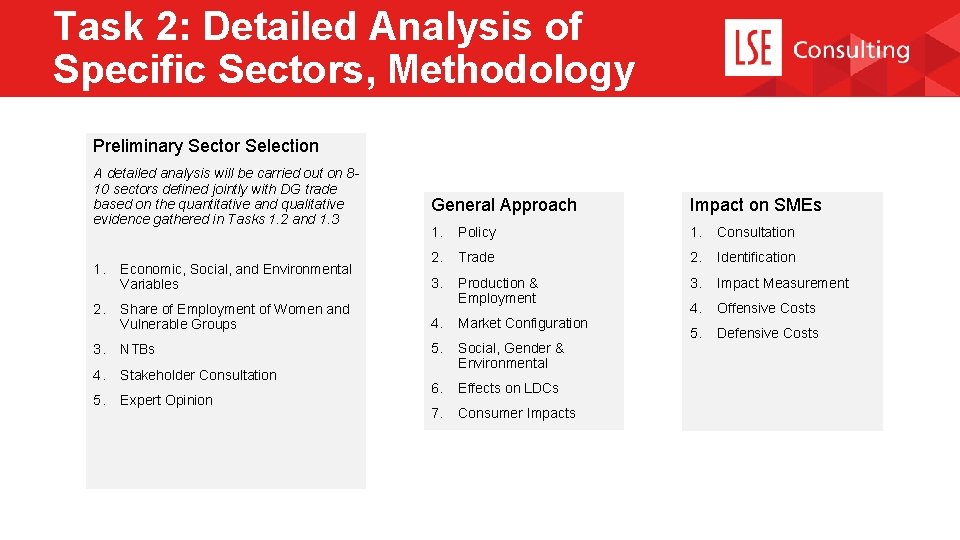
Task 2: Detailed Analysis of Specific Sectors, Methodology Preliminary Sector Selection A detailed analysis will be carried out on 810 sectors defined jointly with DG trade based on the quantitative and qualitative evidence gathered in Tasks 1. 2 and 1. 3 General Approach Impact on SMEs 1. Policy 1. Consultation 2. Trade 2. Identification 3. Production & Employment 3. Impact Measurement 4. Offensive Costs 5. Defensive Costs 1. Economic, Social, and Environmental Variables 2. Share of Employment of Women and Vulnerable Groups 4. Market Configuration 3. NTBs 5. 4. Stakeholder Consultation Social, Gender & Environmental 5. Expert Opinion 6. Effects on LDCs 7. Consumer Impacts
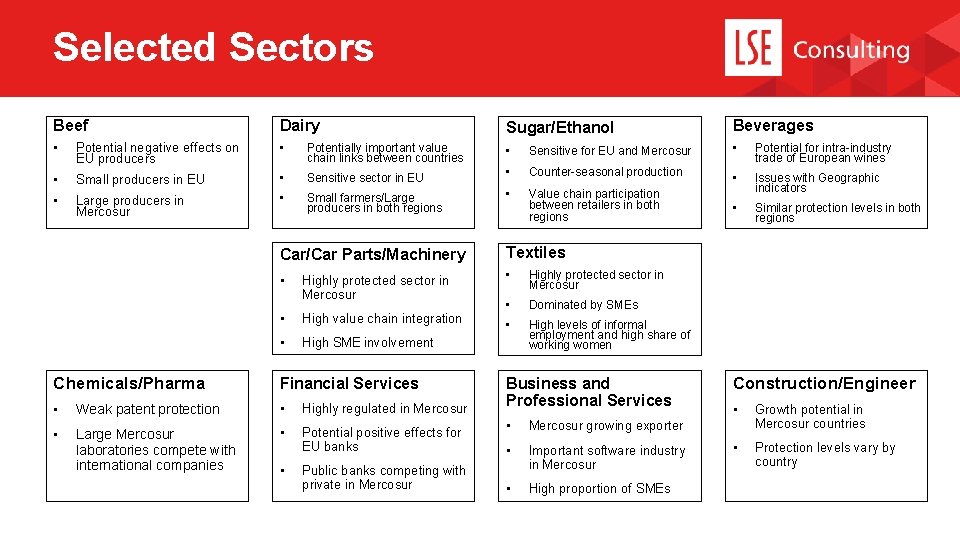
Selected Sectors Beef Dairy Sugar/Ethanol Beverages • Potential negative effects on EU producers • Potentially important value chain links between countries • Sensitive for EU and Mercosur • Potential for intra-industry trade of European wines • Small producers in EU • Sensitive sector in EU • Counter-seasonal production • • Large producers in Mercosur • Small farmers/Large producers in both regions • Value chain participation between retailers in both regions Issues with Geographic indicators • Similar protection levels in both regions Car/Car Parts/Machinery Textiles • Highly protected sector in Mercosur • • Dominated by SMEs High value chain integration • • High SME involvement High levels of informal employment and high share of working women Chemicals/Pharma Financial Services • Weak patent protection • Highly regulated in Mercosur • Large Mercosur laboratories compete with international companies • Potential positive effects for EU banks • Public banks competing with private in Mercosur Business and Professional Services • Mercosur growing exporter • Important software industry in Mercosur • High proportion of SMEs Construction/Engineer • Growth potential in Mercosur countries • Protection levels vary by country
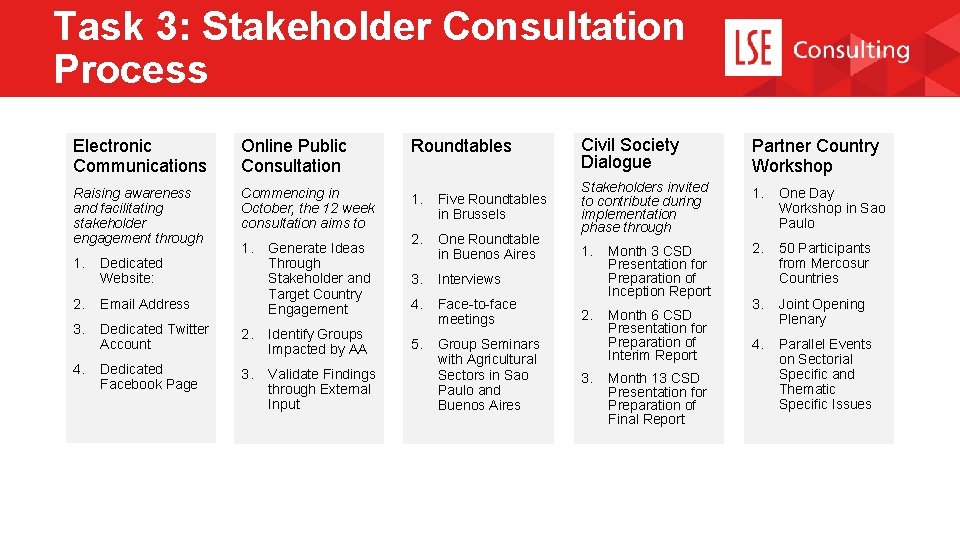
Task 3: Stakeholder Consultation Process Electronic Communications Online Public Consultation Roundtables Raising awareness and facilitating stakeholder engagement through Commencing in October, the 12 week consultation aims to 1. Five Roundtables in Brussels 2. One Roundtable in Buenos Aires 3. Interviews 4. Face-to-face meetings 5. Group Seminars with Agricultural Sectors in Sao Paulo and Buenos Aires 1. Generate Ideas Through Stakeholder and Target Country Engagement 1. Dedicated Website: 2. Email Address 3. Dedicated Twitter Account 2. Identify Groups Impacted by AA 4. Dedicated Facebook Page 3. Validate Findings through External Input Civil Society Dialogue Partner Country Workshop Stakeholders invited to contribute during implementation phase through 1. One Day Workshop in Sao Paulo 1. Month 3 CSD Presentation for Preparation of Inception Report 2. 50 Participants from Mercosur Countries 2. Month 6 CSD Presentation for Preparation of Interim Report 3. Joint Opening Plenary 4. Parallel Events on Sectorial Specific and Thematic Specific Issues 3. Month 13 CSD Presentation for Preparation of Final Report
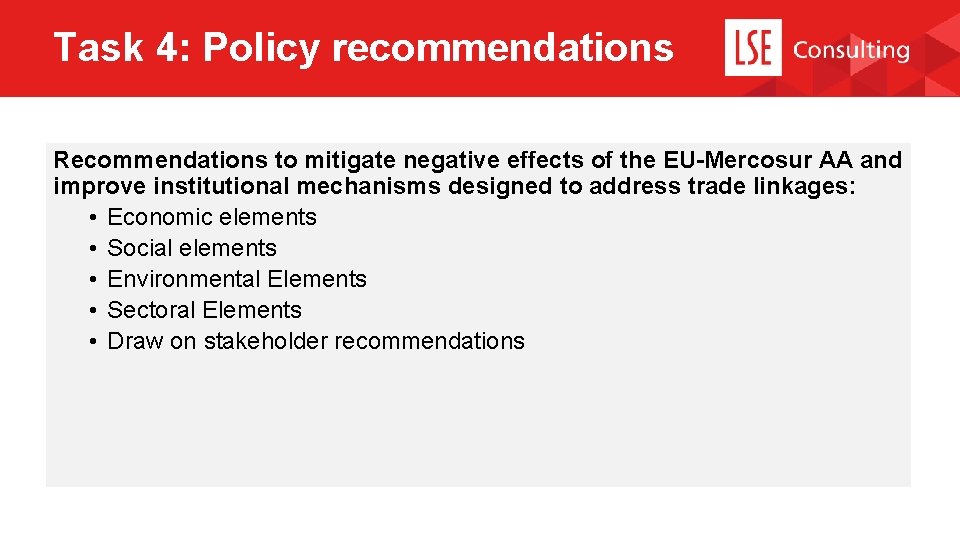
Task 4: Policy recommendations Recommendations to mitigate negative effects of the EU-Mercosur AA and improve institutional mechanisms designed to address trade linkages: • Economic elements • Social elements • Environmental Elements • Sectoral Elements • Draw on stakeholder recommendations
OBJECTIVES OF THIS ROUNDTABLE Drawing from your expertise on social, economic, environmental and human rights issues with the aim of: • Better understanding the impact of the EU-Mercosur AA • Identifying new trade linkages • Formulating policy recommendations to improve institutional mechanisms and mitigate negative effects
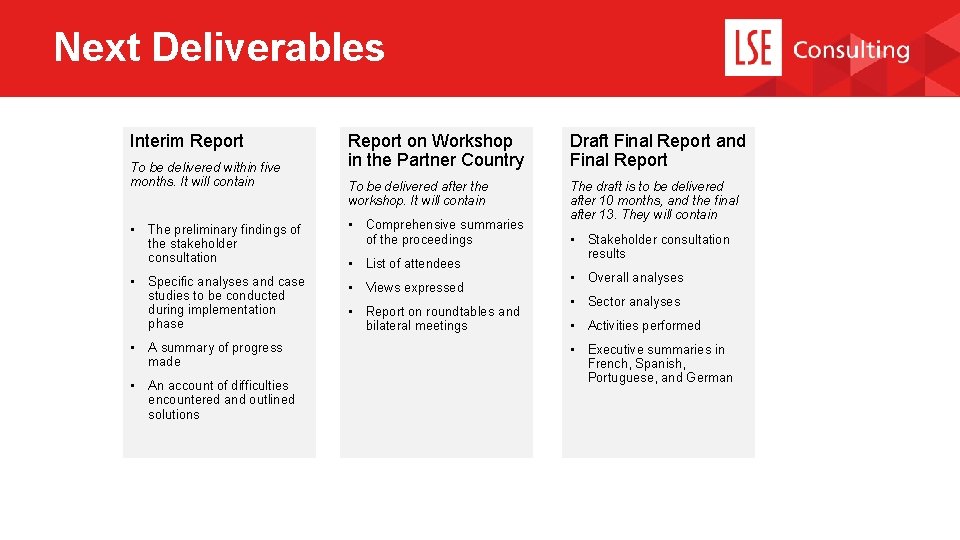
Next Deliverables Interim Report To be delivered within five months. It will contain Report on Workshop in the Partner Country Draft Final Report and Final Report To be delivered after the workshop. It will contain The draft is to be delivered after 10 months, and the final after 13. They will contain • The preliminary findings of the stakeholder consultation • Comprehensive summaries of the proceedings • Specific analyses and case studies to be conducted during implementation phase • Views expressed • A summary of progress made • An account of difficulties encountered and outlined solutions • List of attendees • Report on roundtables and bilateral meetings • Stakeholder consultation results • Overall analyses • Sector analyses • Activities performed • Executive summaries in French, Spanish, Portuguese, and German
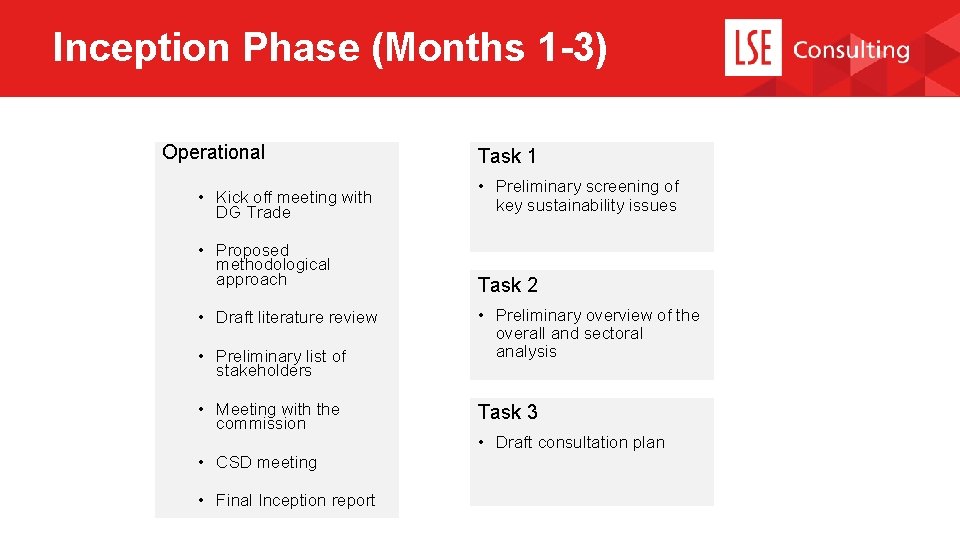
Inception Phase (Months 1 -3) Operational Task 1 • Kick off meeting with DG Trade • Preliminary screening of key sustainability issues • Proposed methodological approach Task 2 • Draft literature review • Preliminary list of stakeholders • Meeting with the commission • CSD meeting • Final Inception report • Preliminary overview of the overall and sectoral analysis Task 3 • Draft consultation plan
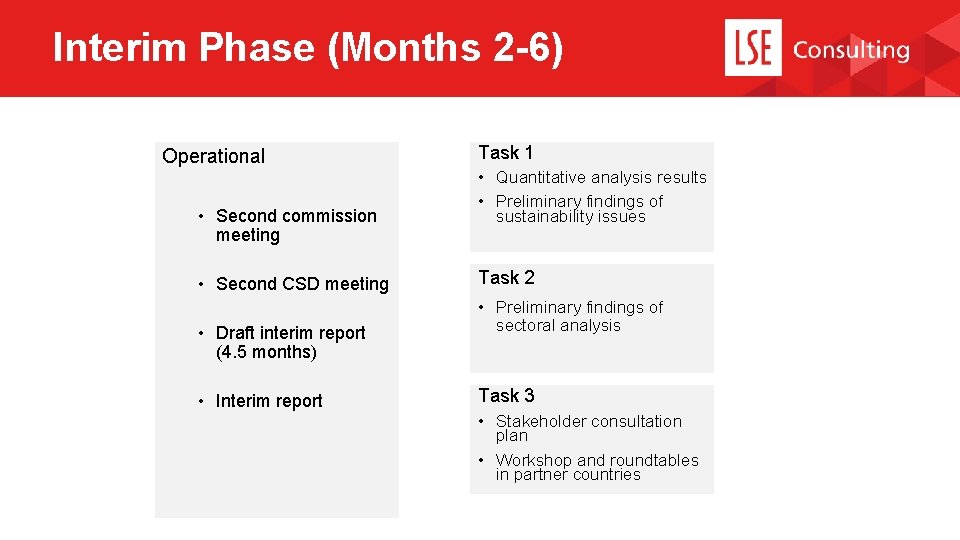
Interim Phase (Months 2 -6) Operational • Second commission meeting • Second CSD meeting • Draft interim report (4. 5 months) • Interim report Task 1 • Quantitative analysis results • Preliminary findings of sustainability issues Task 2 • Preliminary findings of sectoral analysis Task 3 • Stakeholder consultation plan • Workshop and roundtables in partner countries
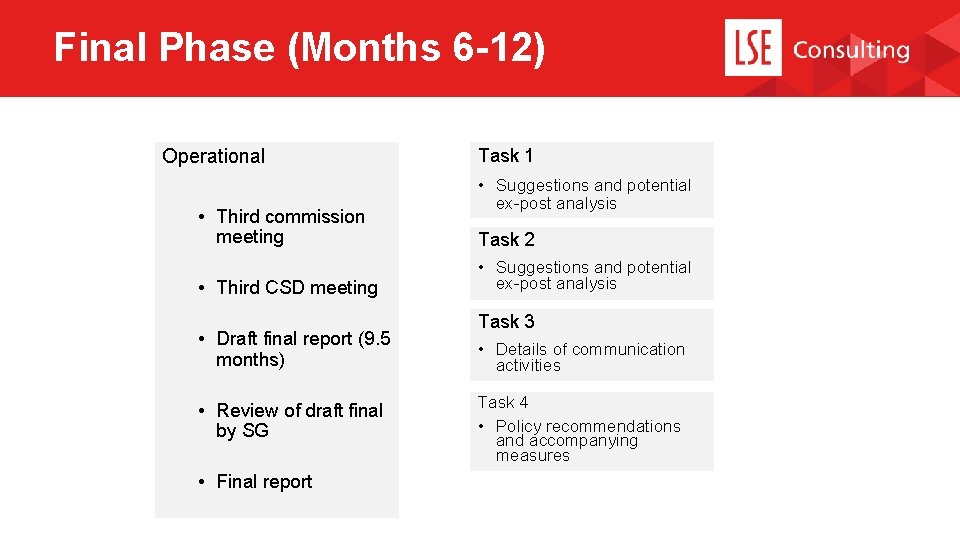
Final Phase (Months 6 -12) Operational • Third commission meeting • Third CSD meeting • Draft final report (9. 5 months) • Review of draft final by SG • Final report Task 1 • Suggestions and potential ex-post analysis Task 2 • Suggestions and potential ex-post analysis Task 3 • Details of communication activities Task 4 • Policy recommendations and accompanying measures
THANK YOU FOR YOUR ATTENTION! More info: http: //www. eumercosursia. com Fill out our survey: http: //www. eumercosursia. com/consultations. html Follow us: Twitter: @SIA_EUMercosur Facebook: https: //www. facebook. com/sia. eumercosur/ Email: mercosur 2018@lse. ac. uk Jean-Baptiste Velut: jean-baptiste. velut@sorbonne-nouvelle. fr
- Slides: 21