
Trade Secrets in the Workplace Institute for Corporate
- Slides: 54
Trade Secrets in the Workplace Institute for Corporate Counsel March 2003 1
Intellectual Property Overview Basic IP Rights • Patents • Copyrights © • Trademarks ™ • Trade Secrets 2
Trade Secret Overview 1. 2. 3. 4. 5. 6. What is a Trade Secret? What is Misappropriation? Penalties for Misappropriation Steps to Protect Trade Secrets Steps to Reduce Misappropriation Risk Questions & Discussion 3
What is a Trade Secret? 4
What is a Trade Secret? • A Trade Secret is Information that: – derives independent economic value, actual or potential, from not being generally known to the public or to others who could derive economic value from its disclosure or use; and – is the subject of reasonable efforts under the circumstances to maintain its secrecy. 5
What is a Trade Secret? “Information” Can Broadly Include: – formulas – patterns – compilations – programs – devices – methods – techniques – processes 6
What is a Trade Secret? • Specific Examples of Information That May Constitute a Trade Secret: – customer and supplier lists – recipes/formulas – computer source code – manufacturing methods – business plans and marketing strategies – pricing and costs – “negative information”/avoiding blind alleys 7
What is Not a Trade Secret? • Specific Examples of Information that Does Not Constitute a Trade Secret – “generally known” – lacking in actual or potential “independent economic value” – “general knowledge, skills and experience” acquired on the job – not subject of reasonable efforts to maintain secrecy 8
Information That Is “Generally Known” • • Observable or apparent product features Scientific principles and laws of nature Standard industry practices Textbook or open literature concepts 9
Information Lacking “Independent Economic Value” • Information of no real economic value or competitive significance • Stale or historic information 10
An Employee’s “General Knowledge, Skills & Experience” • If a chef quits her job to start her own restaurant, what information is she entitled to use? – knowing to oil or butter the pan before cooking? – suitable cooking temperature ranges for certain foods? – specific recipes? 11
What is a Trade Secret? • A Trade Secret is Information that: – derives independent economic value, actual or potential, from not being generally known to the public or to others who could derive economic value from its disclosure or use; and – is the subject of reasonable efforts under the circumstances to maintain its secrecy. 12
What Are “Reasonable Efforts” to Maintain Secrecy? • no hard and fast rules • must be reasonable under the circumstances – a reasonable effort for a major manufacturer may not be reasonable for a garage shop inventor • stay tuned for some practical tips 13
Information Not Subject to Reasonable Secrecy Measures • Information disclosed in patents • Information disclosed in SEC filings • Information disclosed in data books, websites, etc. • Information observable on plant tours • Information disclosed in speeches and articles 14
Potential Loss of Trade Secret Protection • What if an employee distributed the company’s trade secrets to outsiders without authorization? 15
Comparison of Patent and Trade Secret Protection • Patent vs. Trade Secret Protection – limitations on patentability – where overlap, concepts mutually exclusive – public disclosure vs. private information – scope of protection – length of protection 16
Choosing Patent vs. Trade Secret Protection • Ability to sufficiently protect information from disclosure – ease of reverse engineering – risk of inadvertent public disclosure • Need for disclosures to customers or others • Licensing considerations • Cycle Time/Duration of competitive significance • Cost considerations 17
What is Misappropriation? 18
What is Misappropriation? Misappropriation: • Disclosed or used in violation of an obligation of confidentiality • Disclosed or used by one who knows or ought to know it was derived from someone who violated an obligation of confidentiality 19
What is Misappropriation? Misappropriation: • Acquired by improper means • Disclosed or used by one who knows or ought to know it was acquired by someone through improper means 20
What is Misappropriation? Misappropriation: • Disclosed or Used Under Circumstances Where One Knows or Has Reason to Know It was Acquired by Accident or Mistake 21
What is Misappropriation? Inducement • Inducing misappropriation by others • Inducing breach of confidentiality obligations 22
Penalties for Trade Secret Misappropriation 23
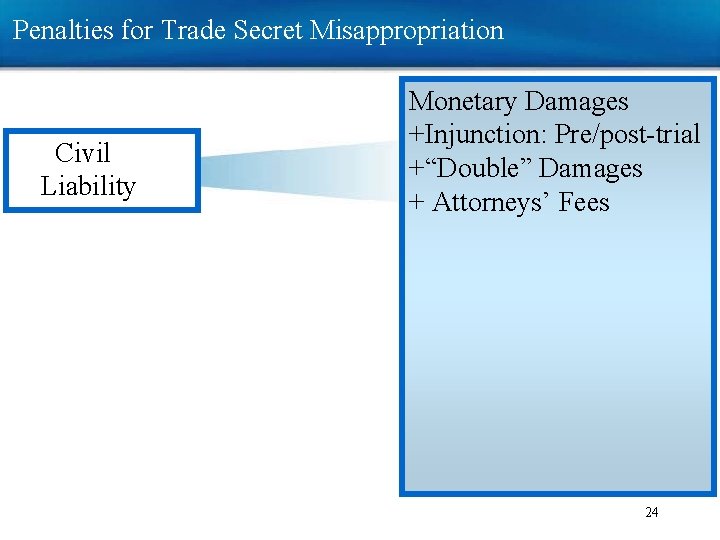
Penalties for Trade Secret Misappropriation Civil Liability Monetary Damages +Injunction: Pre/post-trial +“Double” Damages + Attorneys’ Fees 24
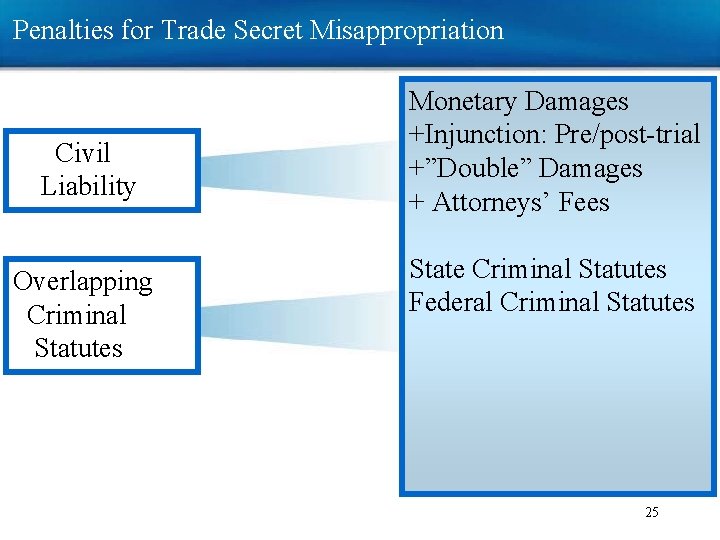
Penalties for Trade Secret Misappropriation Civil Liability Overlapping Criminal Statutes Monetary Damages +Injunction: Pre/post-trial +”Double” Damages + Attorneys’ Fees State Criminal Statutes Federal Criminal Statutes 25
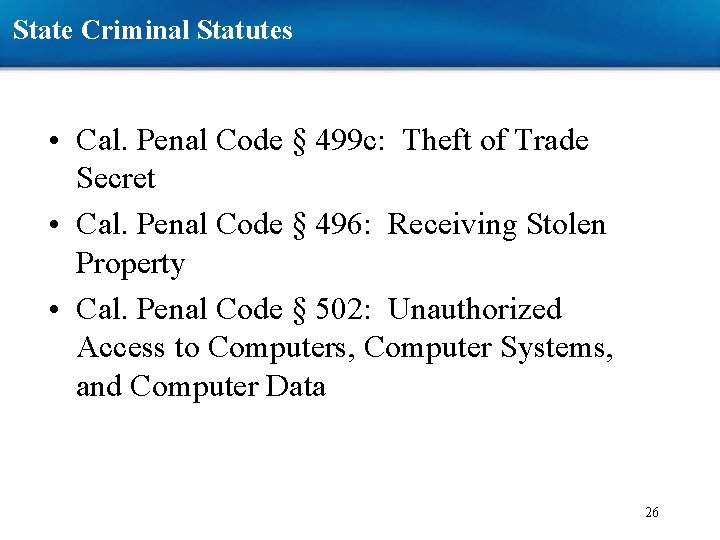
State Criminal Statutes • Cal. Penal Code § 499 c: Theft of Trade Secret • Cal. Penal Code § 496: Receiving Stolen Property • Cal. Penal Code § 502: Unauthorized Access to Computers, Computer Systems, and Computer Data 26
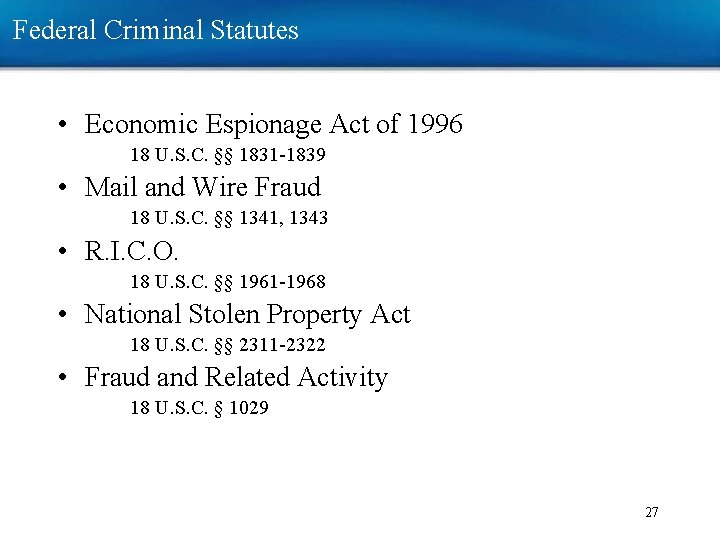
Federal Criminal Statutes • Economic Espionage Act of 1996 18 U. S. C. §§ 1831 -1839 • Mail and Wire Fraud 18 U. S. C. §§ 1341, 1343 • R. I. C. O. 18 U. S. C. §§ 1961 -1968 • National Stolen Property Act 18 U. S. C. §§ 2311 -2322 • Fraud and Related Activity 18 U. S. C. § 1029 27
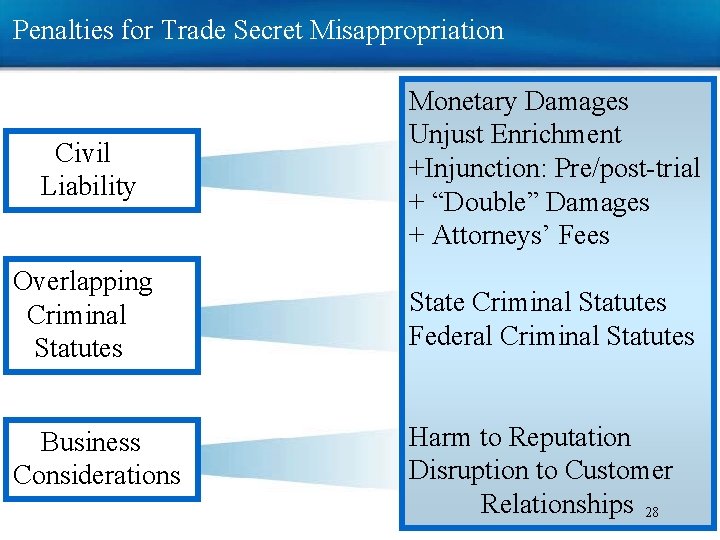
Penalties for Trade Secret Misappropriation Civil Liability Monetary Damages Unjust Enrichment +Injunction: Pre/post-trial + “Double” Damages + Attorneys’ Fees Overlapping Criminal Statutes State Criminal Statutes Federal Criminal Statutes Business Considerations Harm to Reputation Disruption to Customer Relationships 28
Steps to Protect One’s Trade Secrets 29
Steps to Protect One’s Trade Secrets “Just because you’re paranoid Doesn’t mean they’re not after you. ” Nirvana, “Territorial Pissings” from Nevermind 30
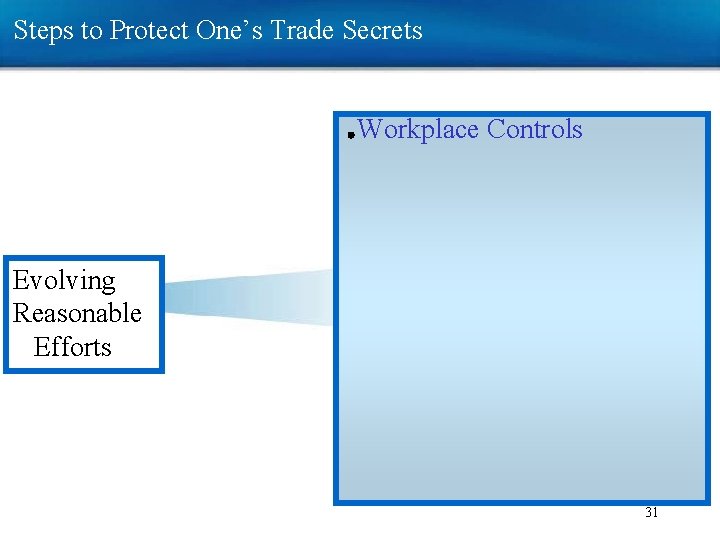
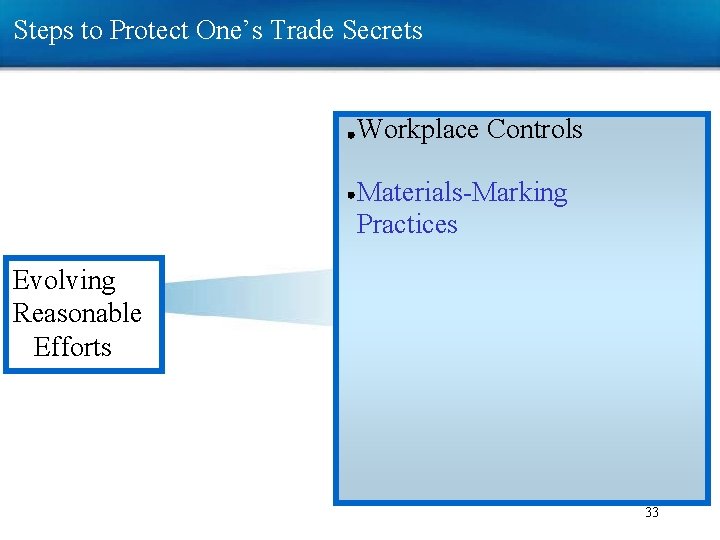
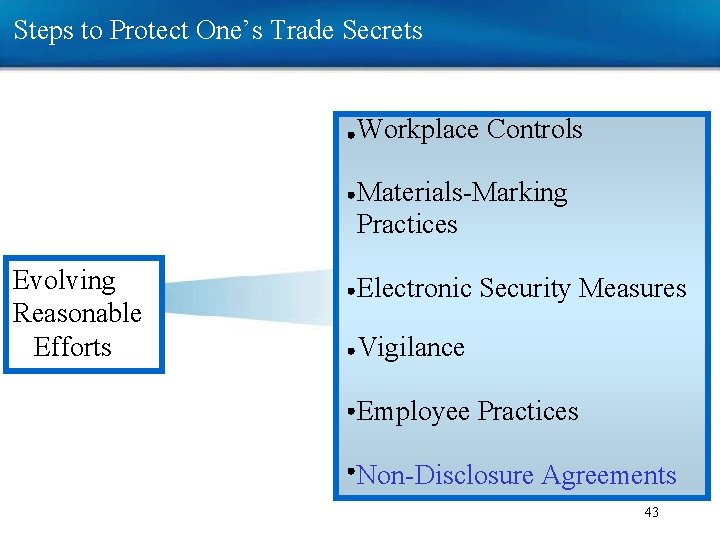
Steps to Protect One’s Trade Secrets Workplace Controls Evolving Reasonable Efforts 31
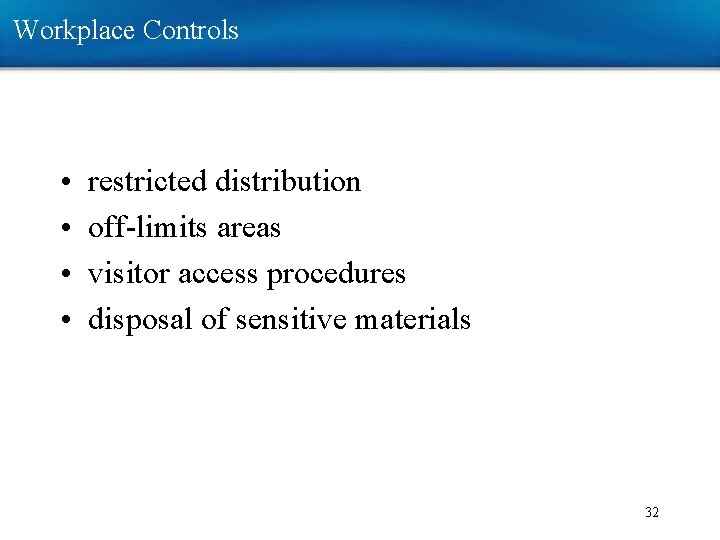
Workplace Controls • • restricted distribution off-limits areas visitor access procedures disposal of sensitive materials 32
Steps to Protect One’s Trade Secrets Workplace Controls Materials-Marking Practices Evolving Reasonable Efforts 33
Materials-Marking Practices • • defined procedure employee training automatic e-mail headers guarding against overuse 34
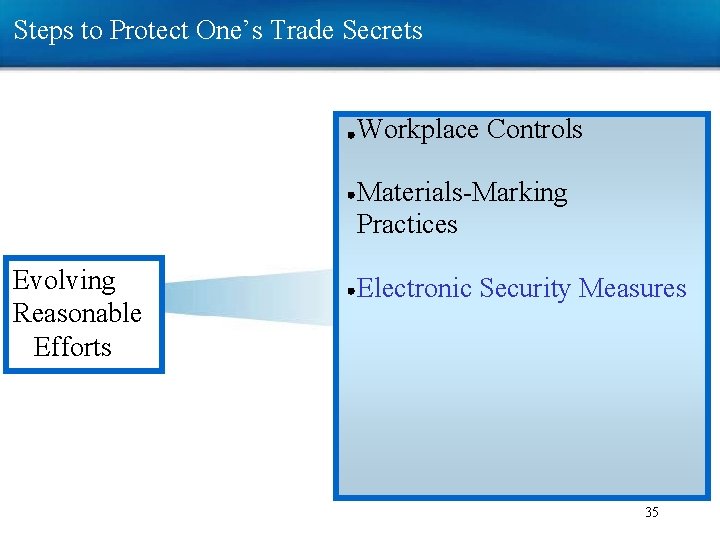
Steps to Protect One’s Trade Secrets Workplace Controls Materials-Marking Practices Evolving Reasonable Efforts Electronic Security Measures 35
Electronic Security Measures Today and Tomorrow • • firewall access cards encryption of transmissions password protection digital watermarks “read-only” email preserving audit trails 36
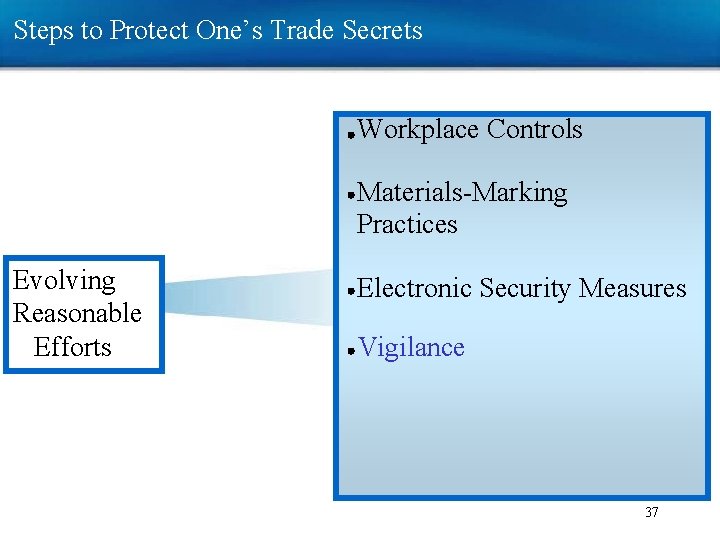
Steps to Protect One’s Trade Secrets Workplace Controls Materials-Marking Practices Evolving Reasonable Efforts Electronic Security Measures Vigilance 37
Vigilance • Assign a Gatekeeper – Attorney or Senior Business Person – Reviews Materials Before Publication or Distribution 38
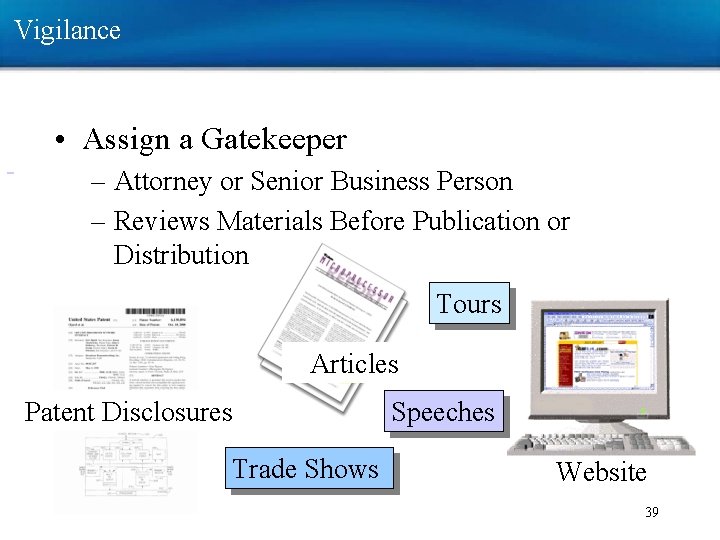
Vigilance • Assign a Gatekeeper – Attorney or Senior Business Person – Reviews Materials Before Publication or Distribution Tours Articles Patent Disclosures Trade Shows Speeches Website 39
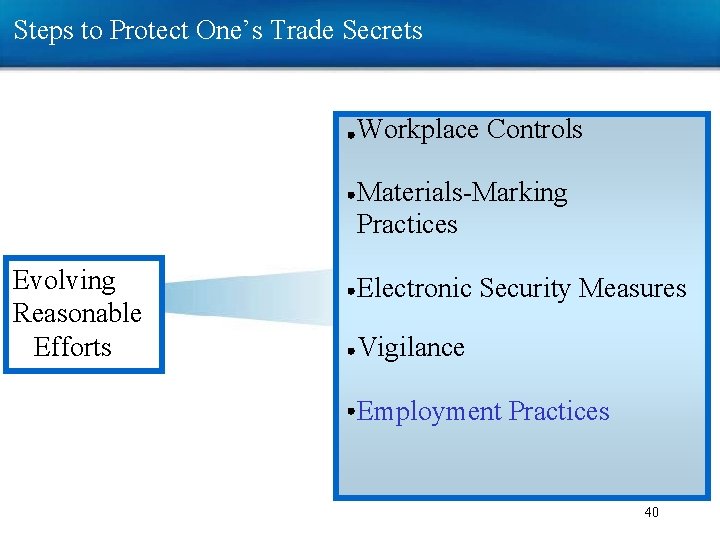
Steps to Protect One’s Trade Secrets Workplace Controls Materials-Marking Practices Evolving Reasonable Efforts Electronic Security Measures Vigilance Employment Practices 40
Employment Practices • Confidentiality Agreements – protect company’s confidential information (whether trade secrets or not) – protect third party’s confidential information given to company – no improper use or disclosure of former employer’s confidential information 41
Employment Practices • Intake Procedures • Employee Handbook and Education • Compliance Procedures • Exit Interviews – return company documents – laptops, email accounts, server access 42
Steps to Protect One’s Trade Secrets Workplace Controls Materials-Marking Practices Evolving Reasonable Efforts Electronic Security Measures Vigilance Employee Practices Non-Disclosure Agreements 43
Typical Non-Disclosure Agreement Terms • Applies to specific information disclosed and designated as “Confidential” • Limits use of the Confidential information to specific purpose • Prohibits disclosure of the Confidential information to third parties • Requires precautions to avoid the inadvertent disclosure of the Confidential information • Requires the return or destruction of Confidential information at a particular time or when the business need for it has passed. 44
Non-Disclosure Agreements • Lots of bad forms out there. Beware! • Provisions to Pay Attention to: – time limits – carve-outs for information “otherwise known” – carve-outs for information “independently developed” • Potential for contamination of important players. • Recordkeeping. 45
Steps to Reduce Misappropriation Risk 46
Setting the Stage • As employees move, so do trade secrets. • Employees are often required to make black and white distinctions in a gray world. • There are no realistic safe harbors. • The name of the game is minimizing and managing risk. 47
Step 1: “Do The Right Thing, and Act Like It. ” • Do your own work. • Be open and honest in describing your conduct. • If you have a problem. . . – take appropriate prompt action – seek Legal Department advice – don’t ignore it or procrastinate 48
Step 2: Use Prudent Hiring Procedures • Hire based on your needs and the candidate’s skills • Be straightforward and honest in approach • Credibility and integrity count • Do your homework 49
Step 3: Implement Prudent Employment Policies • Implement policies requiring respect for others’ intellectual property rights. • Discuss those policies openly, and make sure your employees know you’re serious. • Respect your employee’s judgment on the limits of what he can and cannot do or discuss. 50
Step 4: Document Independent Development • Make and preserve your record. • Consider taking a snapshot of work in progress. • Consider hiring a respected, neutral expert. 51
Step 5: Think Carefully! • In litigation, everything you do may be scrutinized. • Perfectly legitimate and ordinary business conduct may be distorted and twisted. • Be cognizant of how things can be mischaracterized or cast in the worst possible light. 52
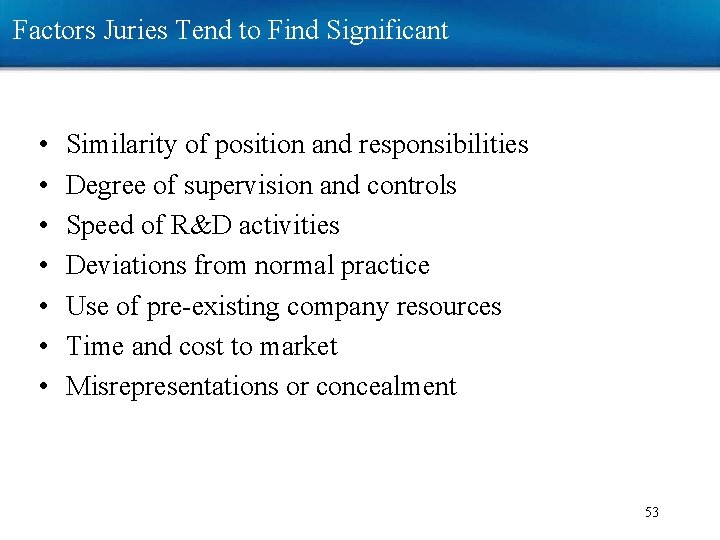
Factors Juries Tend to Find Significant • • Similarity of position and responsibilities Degree of supervision and controls Speed of R&D activities Deviations from normal practice Use of pre-existing company resources Time and cost to market Misrepresentations or concealment 53
Trade Secrets in the Workplace Mark A. Samuels www. omm. com 54