
Trade and Civilization Citation C N Trueman Ancient
- Slides: 17
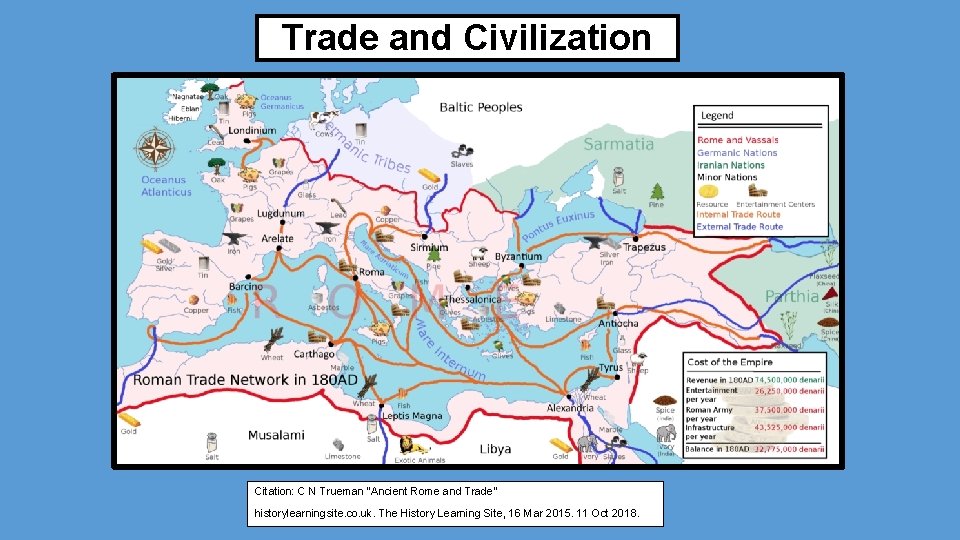
Trade and Civilization Citation: C N Trueman "Ancient Rome and Trade” historylearningsite. co. uk. The History Learning Site, 16 Mar 2015. 11 Oct 2018.
The Relevance of Trade and Civilization 1. Civilizations have always been defined through the creation of monumental settlements in which works of art and science express the values of a society. Examples include Nineveh, Babylon, Ur, Luxor and Gizeh, Athens, and Rome, among others. 2. Urban settlements provide both the intercourse of ideas as well as the exchange of goods and services. They permit the accumulation of knowledge on which future contours of civilization emerge. 3. Without trade, cities would cease to exist. The arteries through which both goods and ideas have exchanged would soon fall into ruin, as would the expansion of knowledge and culture. 4. At the time of the Roman Empire, wealth increased through the spread of commerce. Commercial expansion was supported by a system of laws and political institutions that served as the basis of contractual relations over a broad geographical space. Rome, which at its height is thought to have supported a population of one million, was but one of several major urban centers where physical monuments, works of literature and art, as well as the evolution of philosophic ideas could flourish. 5. By the sixth century, Roman civilization had fallen into dictatorship and corruption. Invading tribes, mostly from the northern frontier regions, hoped to enjoy the benefits of Roman prosperity but who did not share the value of supporting the essential institutions that made it possible. Falling literacy rates produced a climate of fear in which superstition displaced previous advances in science and knowledge in general. 6. As Roman civilization fell into decline, the expansion of militant Islam from 570 to 750 accelerated the collapse of Mediterranean trade that had one served the economic growth of Western Europe. The expansion of Islam into the Iberian Peninsula would come to serve as a means through which ideas from ancient Greece and other civilizations would re-enter European culture.
The Collapse of Early Trade in Europe 1. With the collapse of Roman, centralized governmental institutions dissolved into contentious groups. They included the emerging Catholic church and its dissenters, lords who through local force built relatively self-sufficient communities, and on serfs who tilled the land. 2. Material well-being in Europe sank to unprecedented low levels in which famine, disease, and warfare were common occurrences. Such was the feudal system of the early Middle Ages, and which began to dissolve only with the European Crusades and the revival of Mediterranean trade. 3. The revival of trade set the foundations of the Renaissance and the rise of Western European nation-states that would reshape global relations in the centuries that followed. 4. Ongoing research sheds new light on the role of trade in the evolution of European economic, political and social institutions.
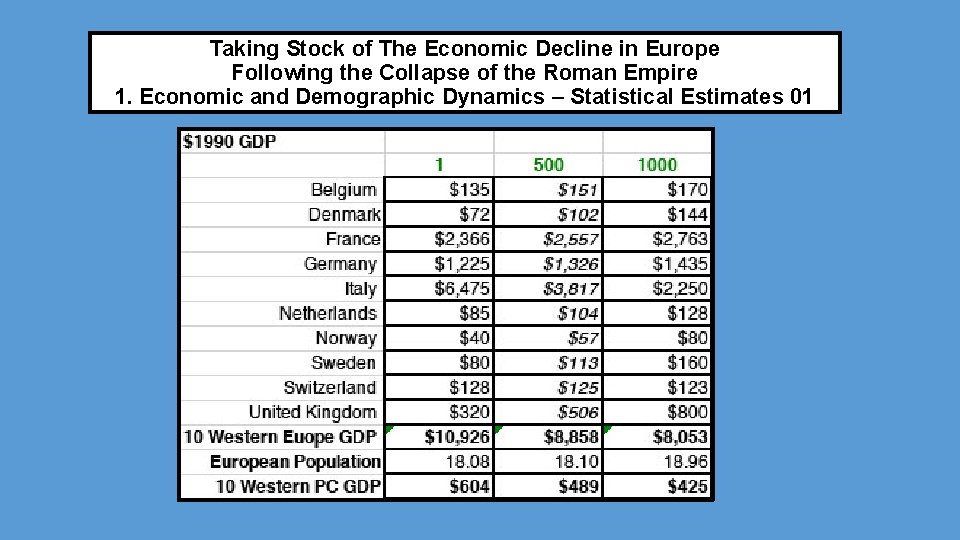
Taking Stock of The Economic Decline in Europe Following the Collapse of the Roman Empire 1. Economic and Demographic Dynamics – Statistical Estimates 01
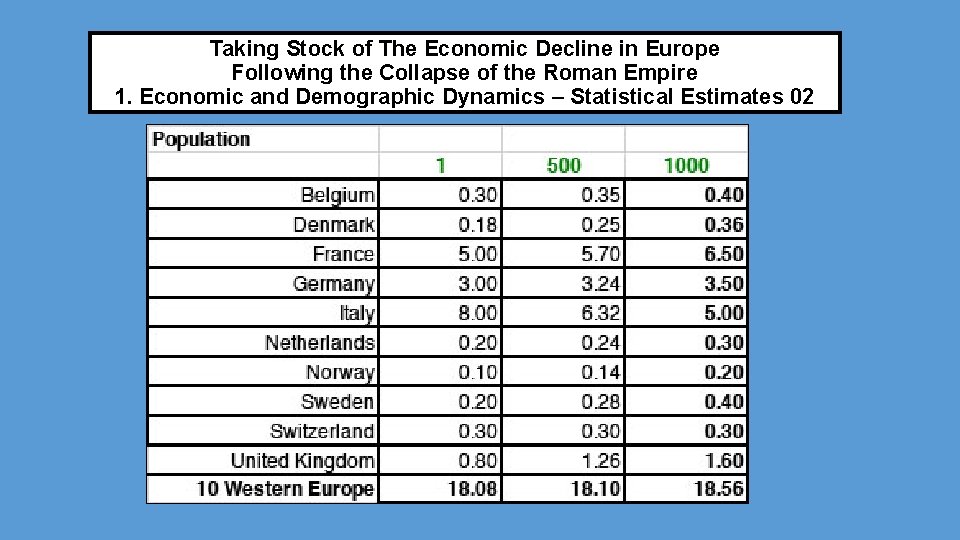
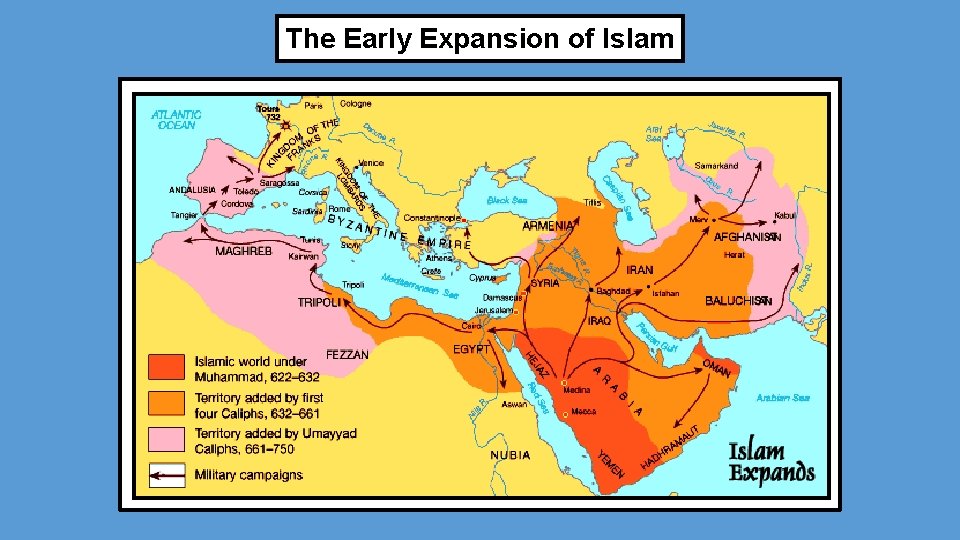
Taking Stock of The Economic Decline in Europe Following the Collapse of the Roman Empire 1. Economic and Demographic Dynamics – Statistical Estimates 02
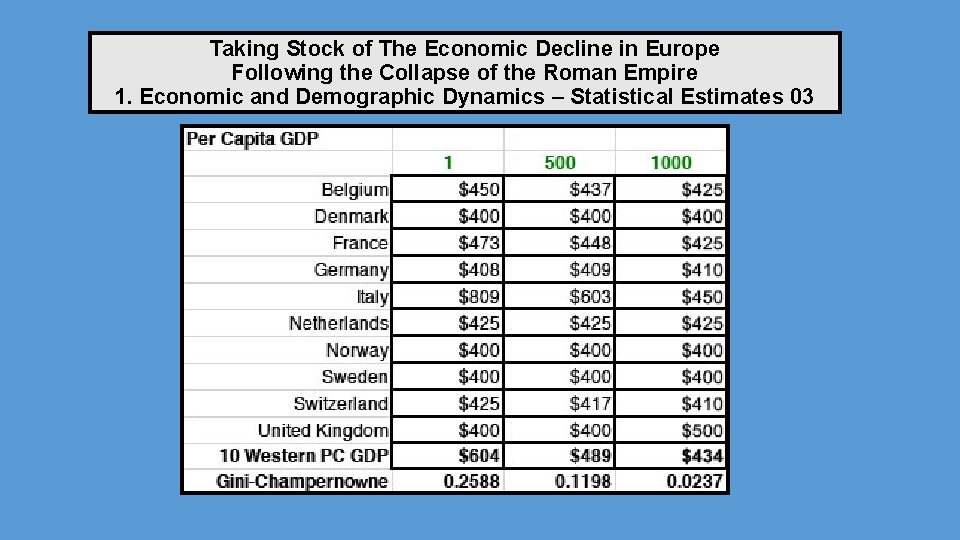
Taking Stock of The Economic Decline in Europe Following the Collapse of the Roman Empire 1. Economic and Demographic Dynamics – Statistical Estimates 03
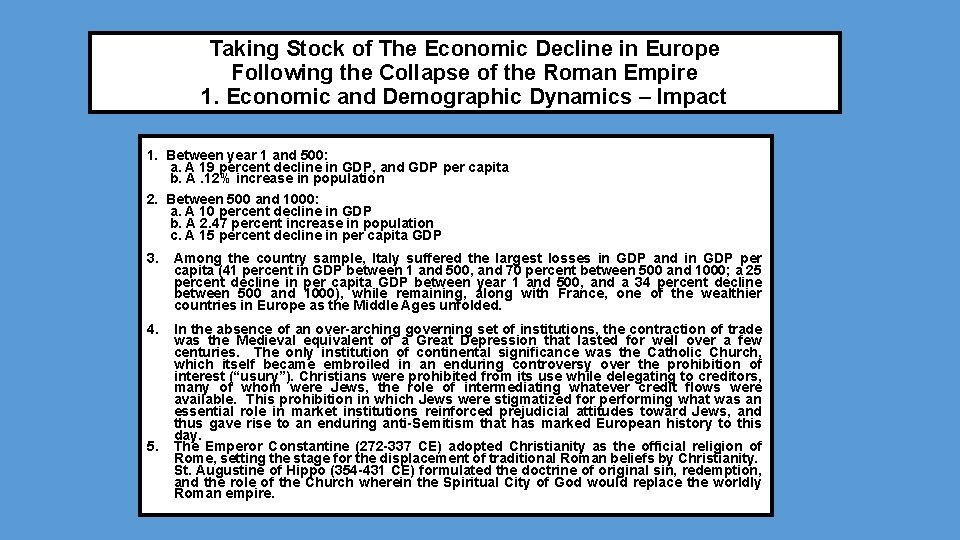
Taking Stock of The Economic Decline in Europe Following the Collapse of the Roman Empire 1. Economic and Demographic Dynamics – Impact 1. Between year 1 and 500: a. A 19 percent decline in GDP, and GDP per capita b. A. 12% increase in population 2. Between 500 and 1000: a. A 10 percent decline in GDP b. A 2. 47 percent increase in population c. A 15 percent decline in per capita GDP 3. Among the country sample, Italy suffered the largest losses in GDP and in GDP per capita (41 percent in GDP between 1 and 500, and 70 percent between 500 and 1000; a 25 percent decline in per capita GDP between year 1 and 500, and a 34 percent decline between 500 and 1000), while remaining, along with France, one of the wealthier countries in Europe as the Middle Ages unfolded. 4. In the absence of an over-arching governing set of institutions, the contraction of trade was the Medieval equivalent of a Great Depression that lasted for well over a few centuries. The only institution of continental significance was the Catholic Church, which itself became embroiled in an enduring controversy over the prohibition of interest (“usury”). Christians were prohibited from its use while delegating to creditors, many of whom were Jews, the role of intermediating whatever credit flows were available. This prohibition in which Jews were stigmatized for performing what was an essential role in market institutions reinforced prejudicial attitudes toward Jews, and thus gave rise to an enduring anti-Semitism that has marked European history to this day. The Emperor Constantine (272 -337 CE) adopted Christianity as the official religion of Rome, setting the stage for the displacement of traditional Roman beliefs by Christianity. St. Augustine of Hippo (354 -431 CE) formulated the doctrine of original sin, redemption, and the role of the Church wherein the Spiritual City of God would replace the worldly Roman empire. 5.
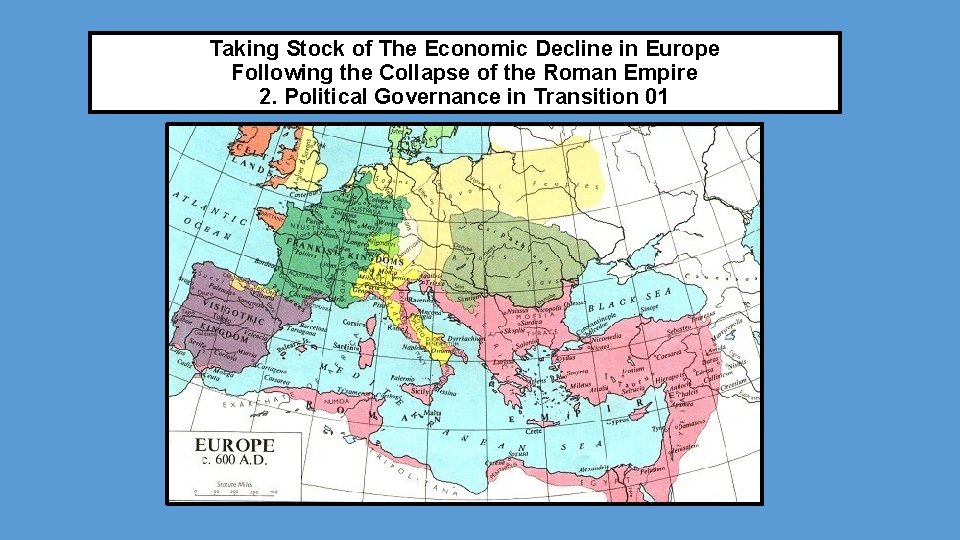
Taking Stock of The Economic Decline in Europe Following the Collapse of the Roman Empire 2. Political Governance in Transition 01
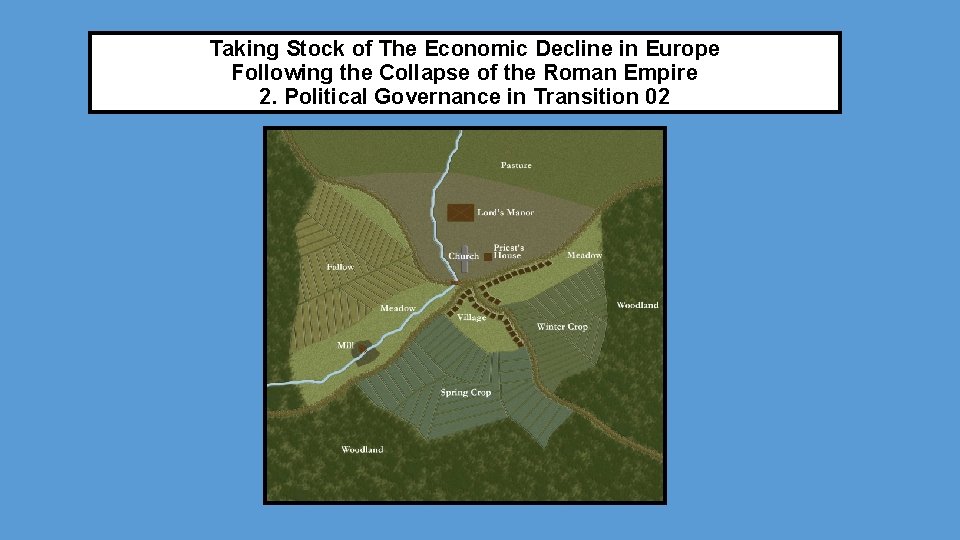
Taking Stock of The Economic Decline in Europe Following the Collapse of the Roman Empire 2. Political Governance in Transition 02
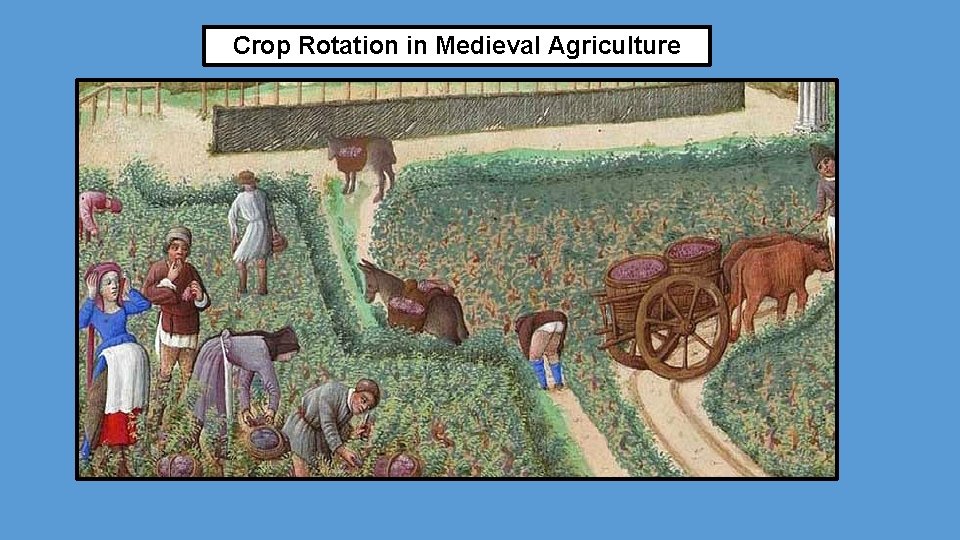
Crop Rotation in Medieval Agriculture
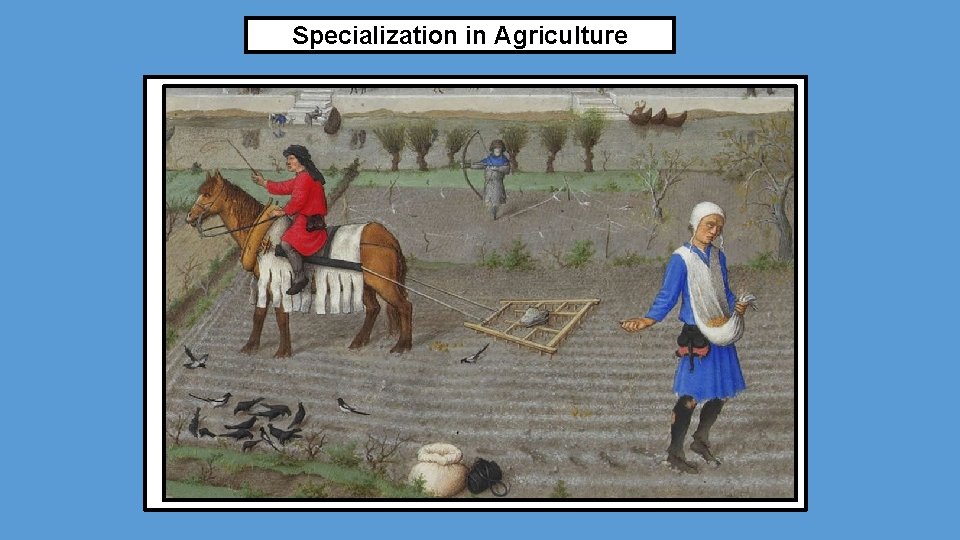
Specialization in Agriculture
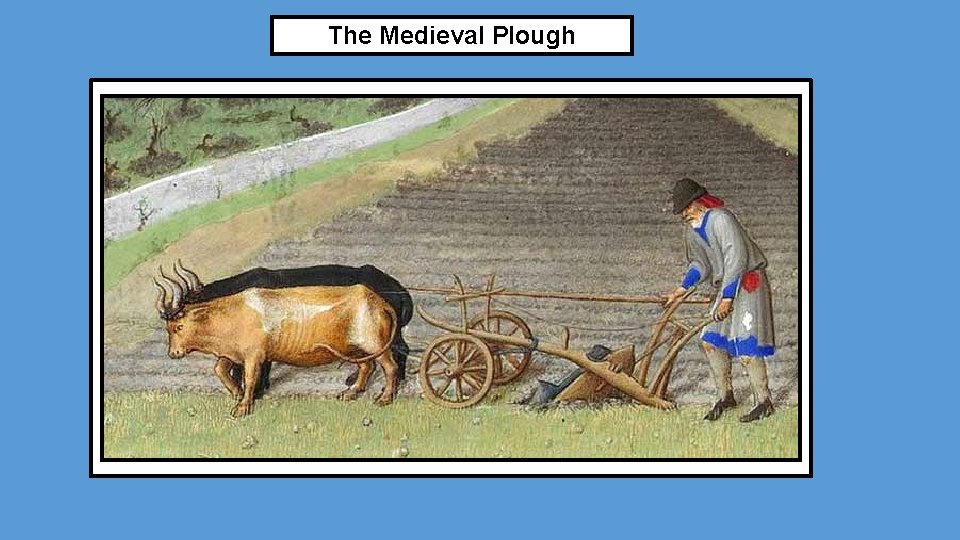
The Medieval Plough
The Early Expansion of Islam
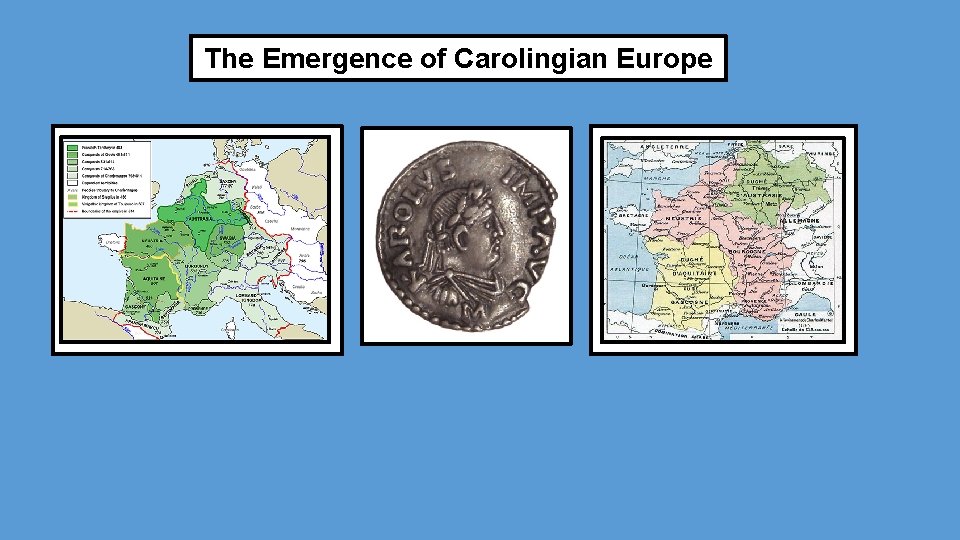
The Carolingian Renaissance Charlemagne and the Holy Roman Empire Charlemagne (742 -814), who learned to read and write late in life, was instrumental in recreating boundaries that were not known since the days of the Roman Empire. Acceding as King of the Franks (768), then King of the Lombards (774), and finally the Holy Roman Empire (800), he provided a transitional form of secular governance that looked to his role as protector of the Christian faith as providing the necessary foundations of political legitimacy. It provided for a time a model of governance, but leaving open the balance of religious and secular authority. Building on the successful redoubt of Moslem (“Saracen”) forces by Charles Martel in the Battle of Tours in 732, Charlemagne was able to extend the physical boundaries of what became the Holy Roman Empire, and from which commerce enjoyed a period of economic revival. Coins from Roman times still circulated in Europe but Charlemagne, as others would do, struck a series of coins to stimulate the level of economic activity.
The Emergence of Carolingian Europe
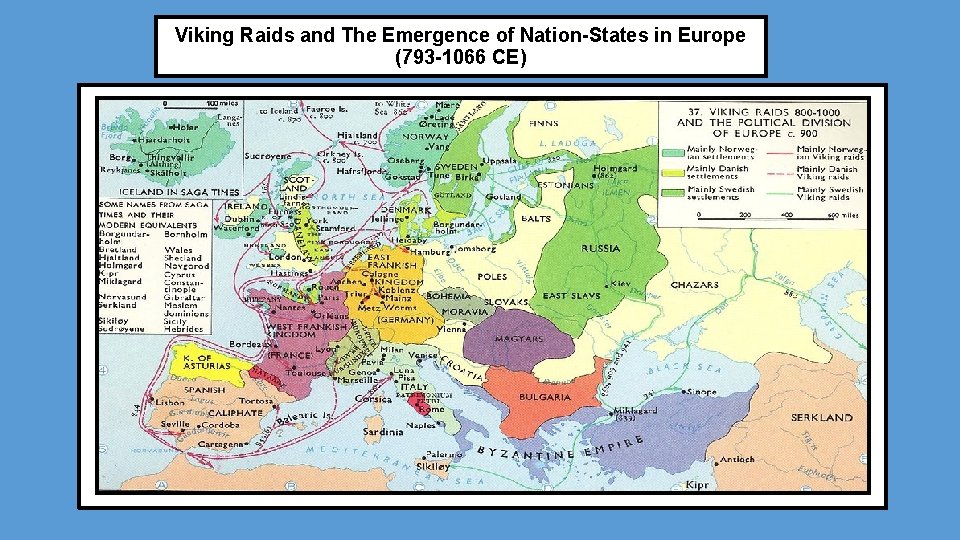
Viking Raids and The Emergence of Nation-States in Europe (793 -1066 CE)
Trade, Religion, and Nation-States in Flux Whether trade was circumscribed by the collapse of Roman authority, by the spread of Islam across the Mediterranean, or by period raids of the Vikings, what is clear is that political authority in Europe in the early Middle Ages was largely contested terrain. Duchies, early monarchies, and the Church vied for the authority to regulate the patterns of trade. Viking raids, driven as much by economic hardship as by adventure, would lead to the discovery and settlement of Greenland (ca. 985) and at L’Anse aux Meadows in Labrador (ca. 997). These settlements flourished during the last warming period, but were progressively abandoned with the onset of the Little Ice Age (1200 -1600). What accelerated the retreat was the invasion of England by William the Conqueror, himself a descendant of Norse settlers along the Atlantic coast of France. In the Battle of Hastings (1066), William defeated the Anglo-Saxon King of England, commemorated in the Bayeux Tapestry. The French defeat of England set the stage for the rivalry between England France that would erupt during the 100 Years War (1337 -1453), but which would later set the stage for global trading empires that have shaped the world ever since. Whenever political stability emerged, trade soon followed. When not beset by warfare and disease, the economic development of Europe would otherwise flourish.