
Tracking impact of software for a REF case

- Slides: 18
Tracking impact of software for a REF case study: Experiences from the Tex. Gen project Louise Brown
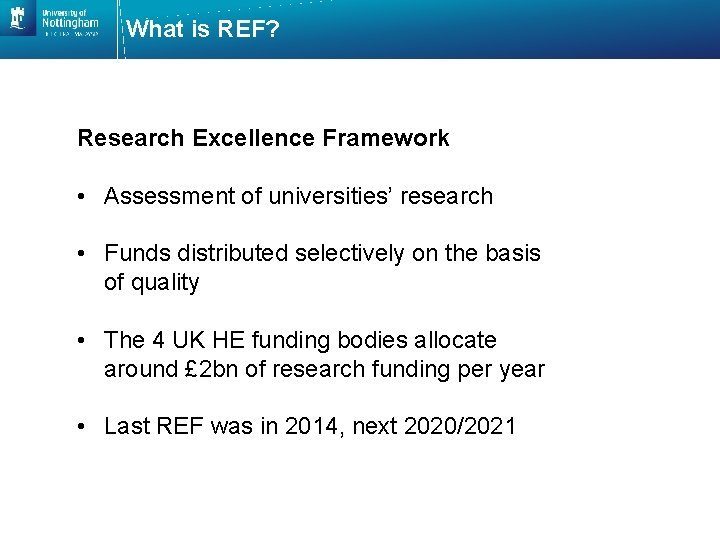
What is REF? Research Excellence Framework • Assessment of universities’ research • Funds distributed selectively on the basis of quality • The 4 UK HE funding bodies allocate around £ 2 bn of research funding per year • Last REF was in 2014, next 2020/2021
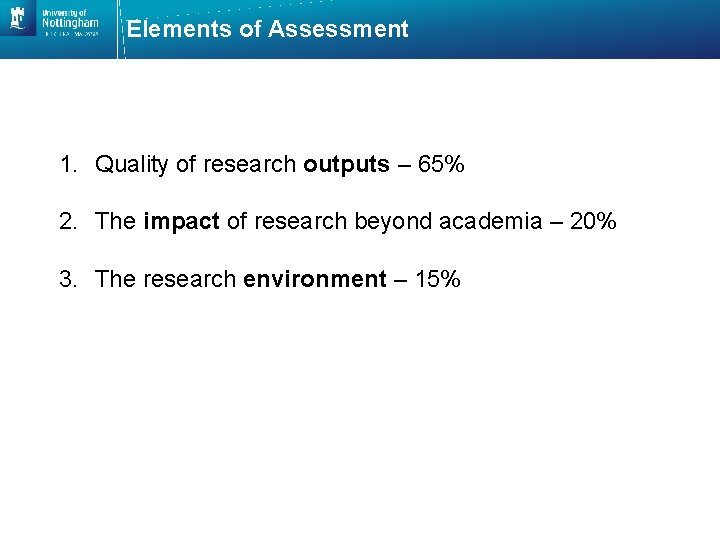
Elements of Assessment 1. Quality of research outputs – 65% 2. The impact of research beyond academia – 20% 3. The research environment – 15%
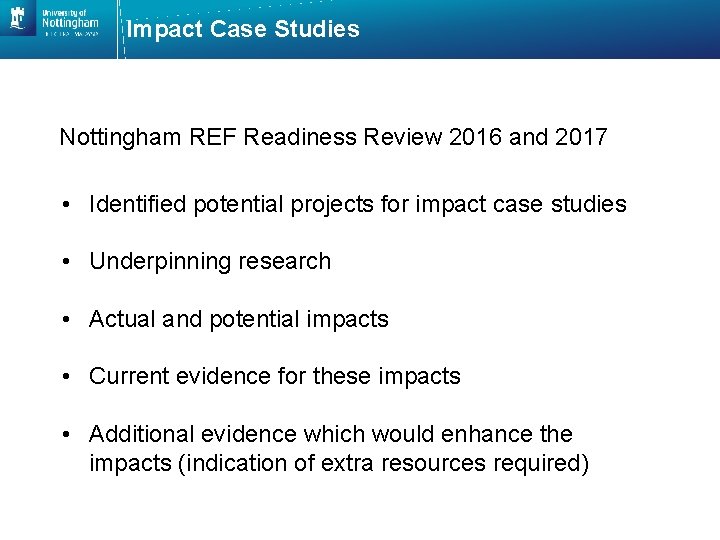
Impact Case Studies Nottingham REF Readiness Review 2016 and 2017 • Identified potential projects for impact case studies • Underpinning research • Actual and potential impacts • Current evidence for these impacts • Additional evidence which would enhance the impacts (indication of extra resources required)
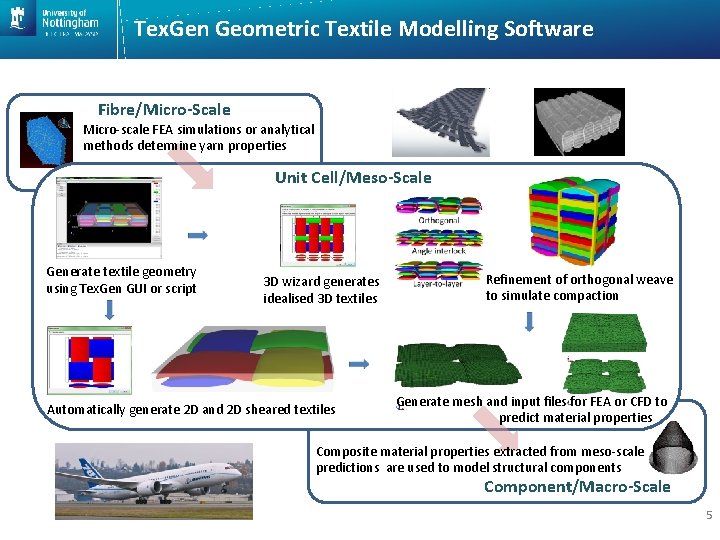
Tex. Gen Geometric Textile Modelling Software Fibre/Micro-Scale Micro-scale FEA simulations or analytical methods determine yarn properties Unit Cell/Meso-Scale Generate textile geometry using Tex. Gen GUI or script 3 D wizard generates idealised 3 D textiles Automatically generate 2 D and 2 D sheared textiles Refinement of orthogonal weave to simulate compaction Generate mesh and input files for FEA or CFD to predict material properties Composite material properties extracted from meso-scale predictions are used to model structural components Component/Macro-Scale 5
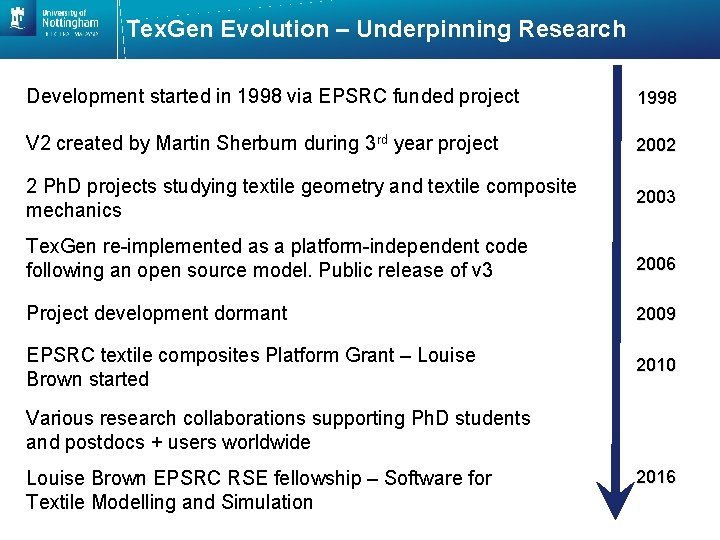
Tex. Gen Evolution – Underpinning Research Development started in 1998 via EPSRC funded project 1998 V 2 created by Martin Sherburn during 3 rd year project 2002 2 Ph. D projects studying textile geometry and textile composite mechanics 2003 Tex. Gen re-implemented as a platform-independent code following an open source model. Public release of v 3 2006 Project development dormant 2009 EPSRC textile composites Platform Grant – Louise Brown started 2010 Various research collaborations supporting Ph. D students and postdocs + users worldwide Louise Brown EPSRC RSE fellowship – Software for Textile Modelling and Simulation 2016
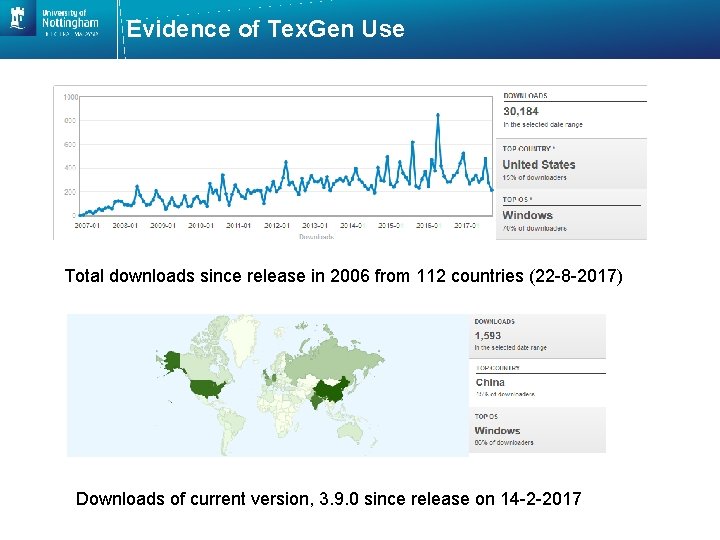
Evidence of Tex. Gen Use Total downloads since release in 2006 from 112 countries (22 -8 -2017) Downloads of current version, 3. 9. 0 since release on 14 -2 -2017
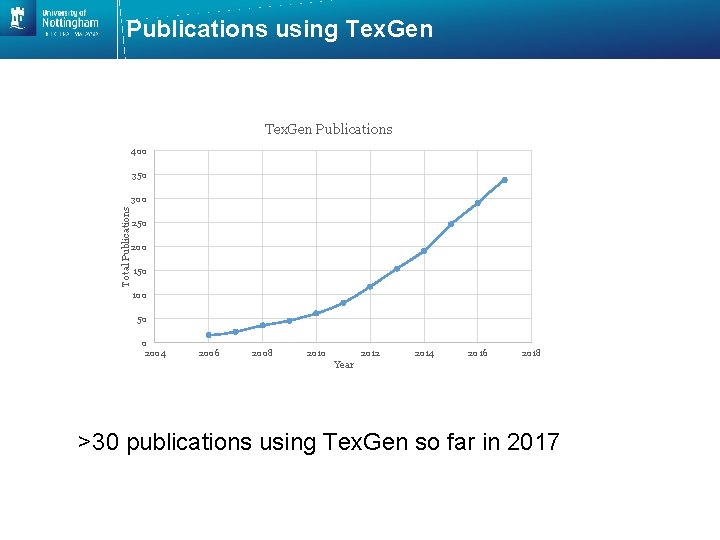
Publications using Tex. Gen Publications 400 350 Total Publications 300 250 200 150 100 50 0 2004 2006 2008 2010 2012 2014 2016 2018 Year >30 publications using Tex. Gen so far in 2017
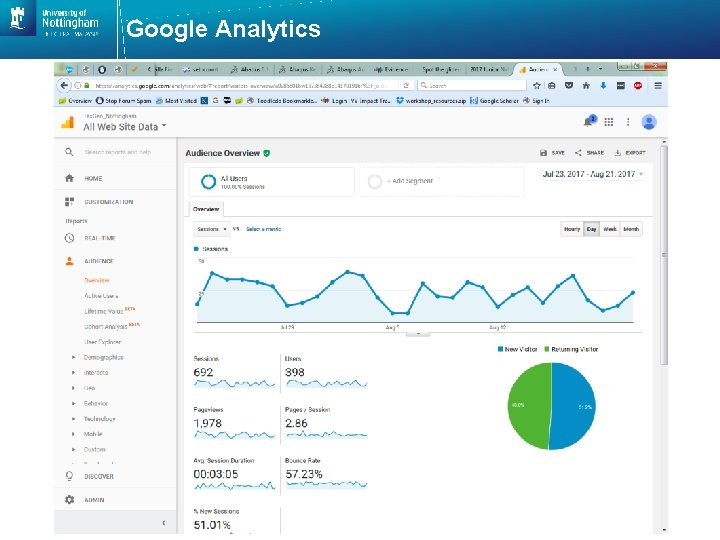
Google Analytics
Impact Tracker – Collecting Evidence
Resources Required to Gather Evidence Person time needed to create a tracking facility where the software is hosted Person time to profile from the forum who additional users may be Person time needed to gather evidence of use by firms – evidence that composite reinforcement with textiles has been modelled and chosen as a result of Tex. Gen and metric on time/cost saving
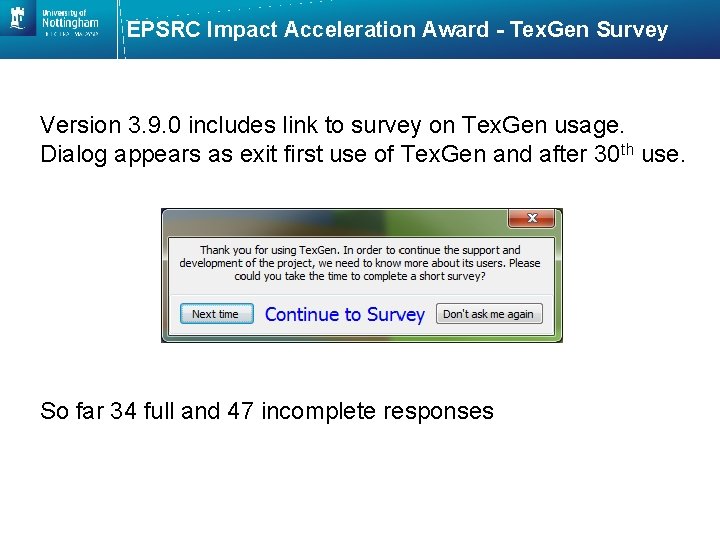
EPSRC Impact Acceleration Award - Tex. Gen Survey Version 3. 9. 0 includes link to survey on Tex. Gen usage. Dialog appears as exit first use of Tex. Gen and after 30 th use. So far 34 full and 47 incomplete responses
Follow-on project Additional funding paid for a PDRA for one month • Literature search • Contact partners from past projects • Follow up survey responses • Write article to widen awareness
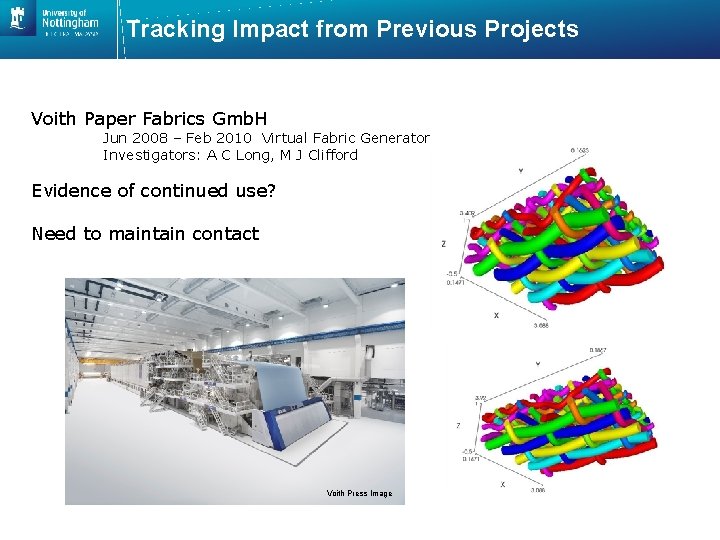
Tracking Impact from Previous Projects Voith Paper Fabrics Gmb. H Jun 2008 – Feb 2010 Virtual Fabric Generator Investigators: A C Long, M J Clifford Evidence of continued use? Need to maintain contact Voith Press Image
Gathering Evidence from Survey Responses Initial email contact Follow-up phone conversation • Confidentiality • Application • Impacts – what difference has using Tex. Gen made? • Possible collaboration opportunities • People were very happy to talk • Appreciative of open source software • Very appreciative of help on forum
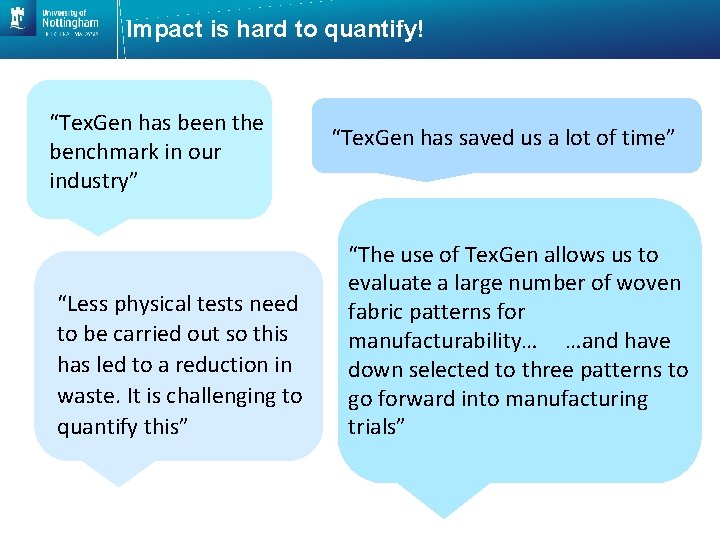
Impact is hard to quantify! “Tex. Gen has been the benchmark in our industry” “Less physical tests need to be carried out so this has led to a reduction in waste. It is challenging to quantify this” “Tex. Gen has saved us a lot of time” “The use of Tex. Gen allows us to evaluate a large number of woven fabric patterns for manufacturability… …and have down selected to three patterns to go forward into manufacturing trials”
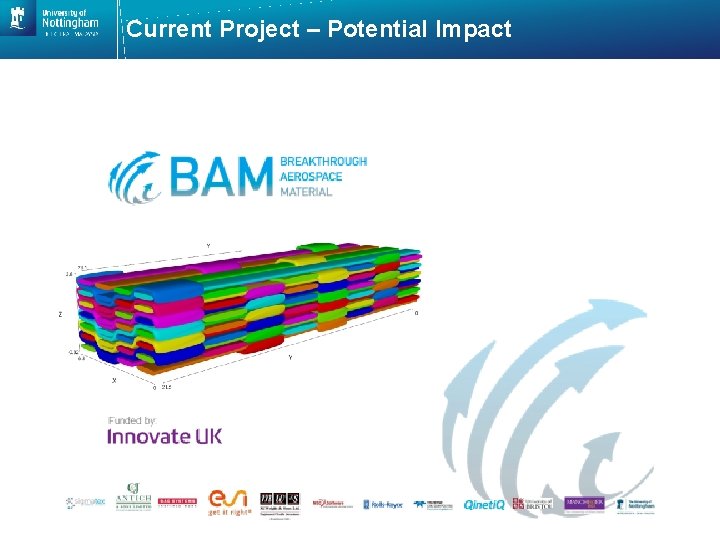
Current Project – Potential Impact
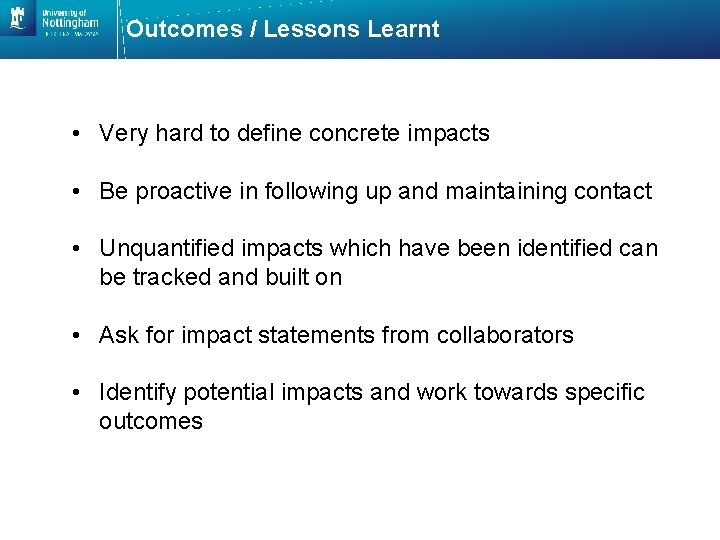
Outcomes / Lessons Learnt • Very hard to define concrete impacts • Be proactive in following up and maintaining contact • Unquantified impacts which have been identified can be tracked and built on • Ask for impact statements from collaborators • Identify potential impacts and work towards specific outcomes