
Tracer Study of the Transition of NCV Students


- Slides: 23
Tracer Study of the Transition of NCV Students from TVET Colleges to the Labour Market – NSA Funding 23 November 2016
Background: NCV courses in TVET colleges • TVET colleges formally constituted in 2002. • Sector comprises 50 new FET colleges with 165 campus sites were established across the nine provinces. • Colleges offered NATED courses and since 2007 they offer the National Certificate Vocational (NCV) courses. • NATED and NCV provide training at levels 2, 3 and 4 on the NQF and are open to those who have completed at least Grade 9. • NCV was initially intended to replace the NATED courses. But this has not happened • Enrolment in the NCV - 130 000 to 150 000 for the last 5 years. • Massive growth in NATED courses - now four times that of the NCV.
Background to NCV research • Key challenge faced by DHET: how to manage the envisaged expansion of the TVET colleges without destabilising the sector. • Lack of reliable data around the role of TVET Colleges in relation to the supply of skills - key weakness. • In order to fill this gap, a research project was commissioned and designed to provide data specifically related to NCV on: • the status of colleges in relation to meeting the needs of young schools leavers and • the challenges that colleges face in effectively preparing youth for the labour market.
Research Design • The research was designed to comprise two waves • WAVE 1: An in-college survey of NCV students (NCV 2 -4) was conducted in 30 TVET colleges (122 campuses) in 2010. • Aim of Wave 1: • Understand learner backgrounds • Factors bringing them to TVET colleges • Experience in TVET college • Role of TVET colleges in preparing the youth for labour market • In total 18 131 learners were surveyed.
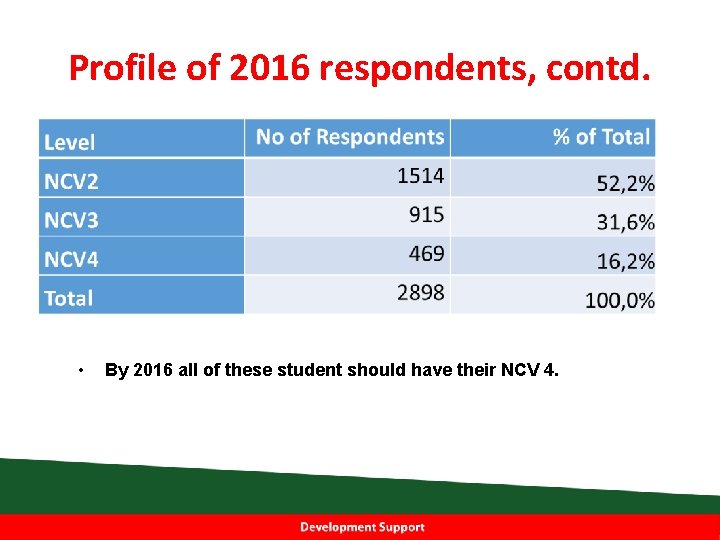
Research design: Wave 2 WAVE 2: A tracer survey of the same students after a period of time. • Contact details collected during 2010 survey • Aim of Wave 2: • examine experiences on leaving TVET colleges and entering the labour market. • Population -18 131 students surveyed in 2010. • Phase 1 - 9 000 individuals randomly selected and interviewed • Phase 2 - Balance of 8387 interviewed • The survey was carried out telephonically • 2 898 agreed to participate, a response rate of 34. 6%
Wave 2 • Wave 2 obtained data on: • Transition pathways • Employment opportunities • Income range of those that are employed • Role of the college in preparing the student to get a job.
Profile of 2016 respondents • 54. 4% were female and 45. 5% were male. This is similar to the gender breakdown of the 18 131 who participated in 2010. • 22. 8% living in Gauteng followed by Mpumalanga (18. 4%) and Kwa. Zulu-Natal (14. 7%). • Most respondents (61. 0%) still living in the town or city where they studied in 2010. • Those that moved, was to be back home.
Profile of 2015 respondents, contd. • Most respondents live with family members, in particular with one or both parents (48. 9%). A small proportion (15. 7%) live alone and some live with their spouse (6. 7%). • 55. 7% live in households that comprise between 2 and 6 people, while 4% live in households made up of 10 or more people. • 70. 1% live in a separate stand or yard, while 5. 1% live in informal accommodation or traditional dwellings.
Profile of 2016 respondents, contd. • By 2016 all of these student should have their NCV 4.
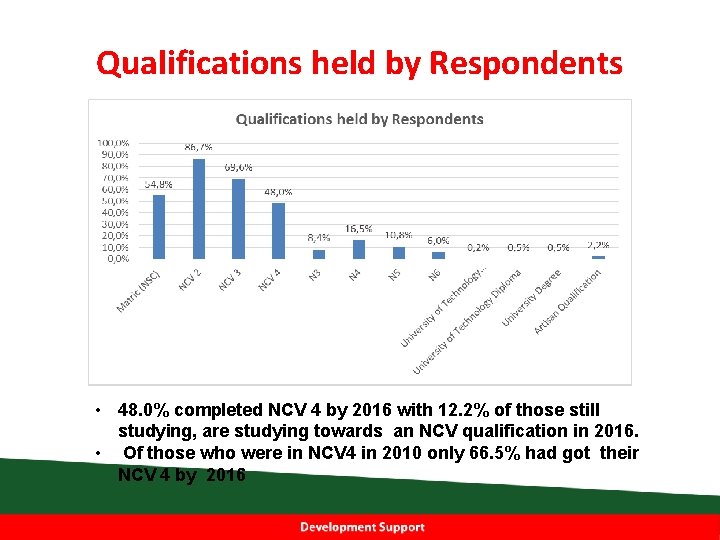
Qualifications held by Respondents • 48. 0% completed NCV 4 by 2016 with 12. 2% of those still studying, are studying towards an NCV qualification in 2016. • Of those who were in NCV 4 in 2010 only 66. 5% had got their NCV 4 by 2016
Reasons for not completing NCV 4 • Lack of finance is the main reason given for not completing the NCV qualification (50. 7%). • But more than 50% of those surveyed in 2016 had government bursaries in 2010. • Bursary would have continued if they finished each year in stipulated time. • Clearly most of the students are not able to complete their studies in the stipulated time and had to fund for their own studies. • Other reasons given for not completing the NCV qualification included: Got a job (7. 8%); Wrong Course for Me (5. 2); moved to N 4 (8. 3%).
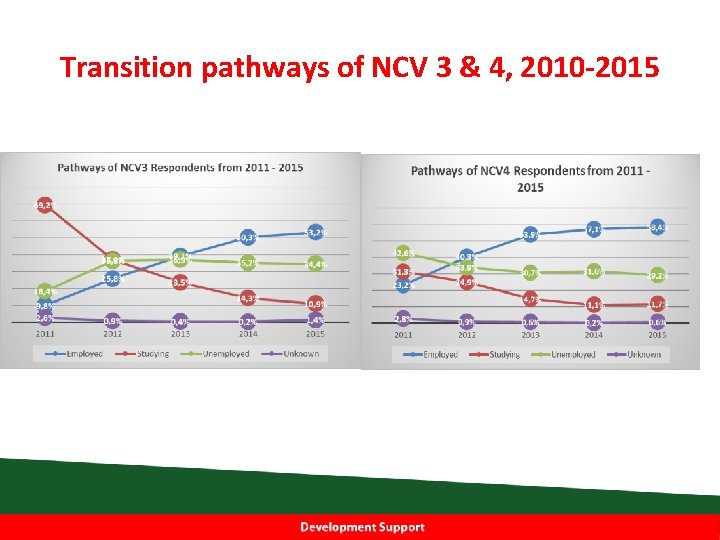
Transition pathways of NCV 3 & 4, 2010 -2015
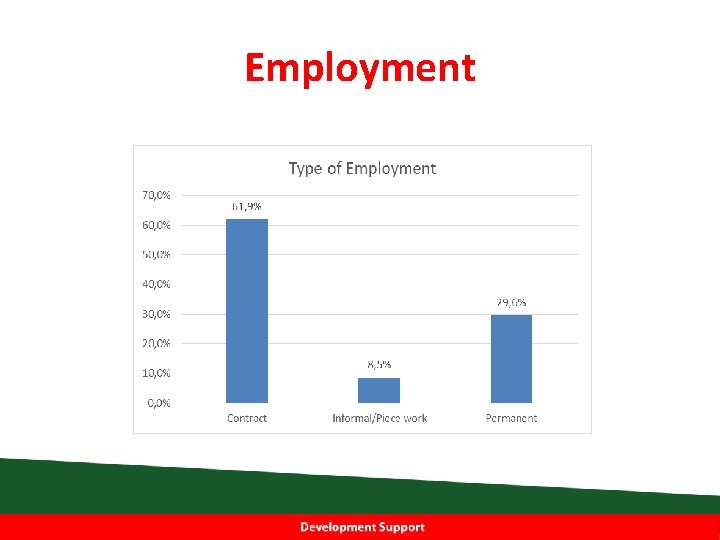
Employment
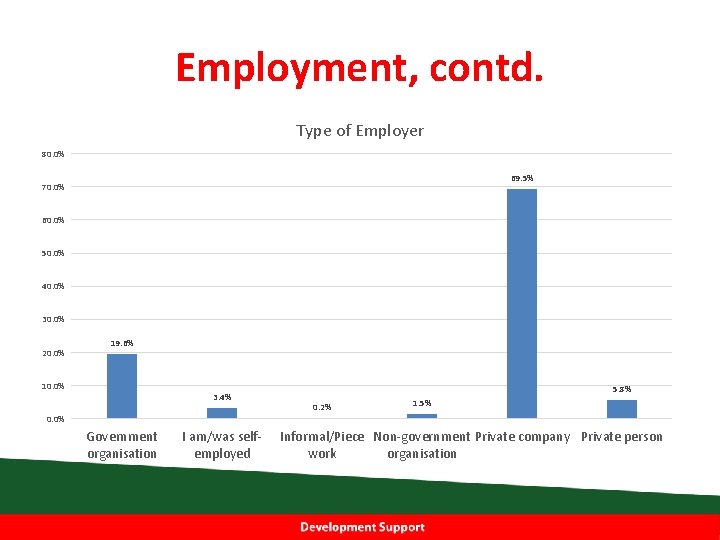
Employment, contd. Type of Employer 80. 0% 69. 5% 70. 0% 60. 0% 50. 0% 40. 0% 30. 0% 20. 0% 19. 6% 10. 0% 3. 4% 5. 8% 0. 2% 1. 5% 0. 0% Government organisation I am/was selfemployed Informal/Piece Non-government Private company Private person work organisation
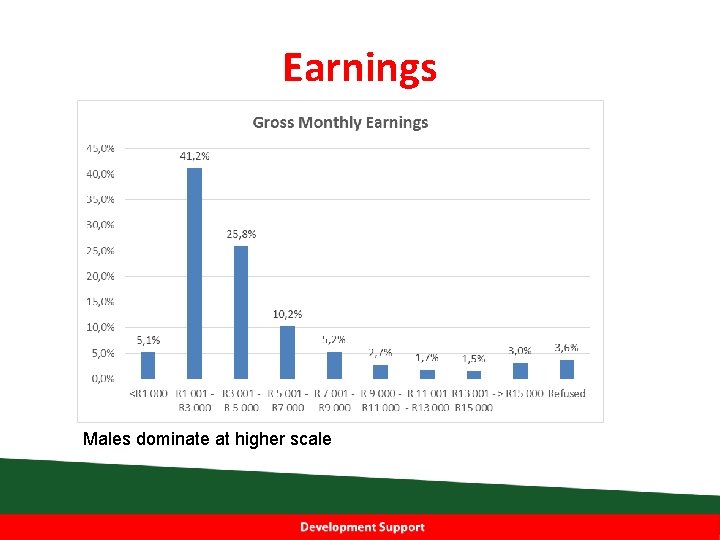
Earnings Males dominate at higher scale
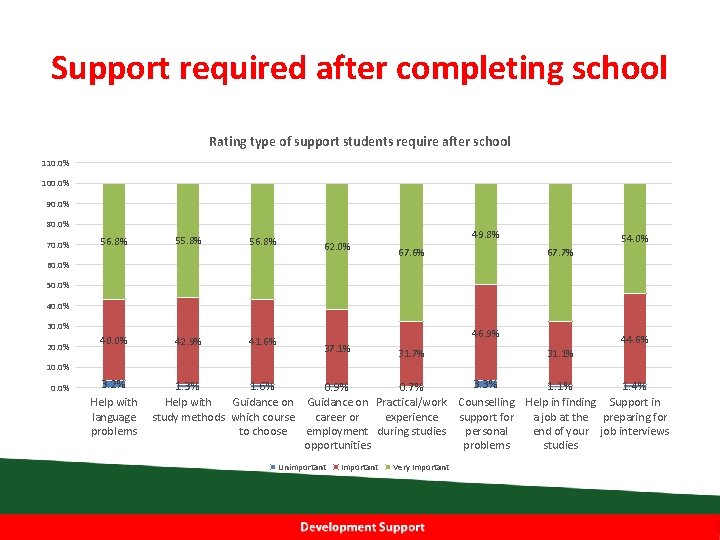
Support required after completing school Rating type of support students require after school 110. 0% 100. 0% 90. 0% 80. 0% 70. 0% 56. 8% 55. 8% 56. 8% 40. 0% 42. 9% 41. 6% 62. 0% 49. 8% 67. 6% 54. 0% 67. 7% 60. 0% 50. 0% 40. 0% 30. 0% 20. 0% 46. 9% 37. 1% 31. 7% 44. 6% 31. 1% 10. 0% 3. 2% Help with language problems 3. 3% 1. 6% 1. 4% 1. 3% 1. 1% 0. 9% 0. 7% Help with Guidance on Practical/work Counselling Help in finding Support in study methods which course career or experience support for a job at the preparing for to choose employment during studies personal end of your job interviews opportunities problems studies Unimportant Important Very Important
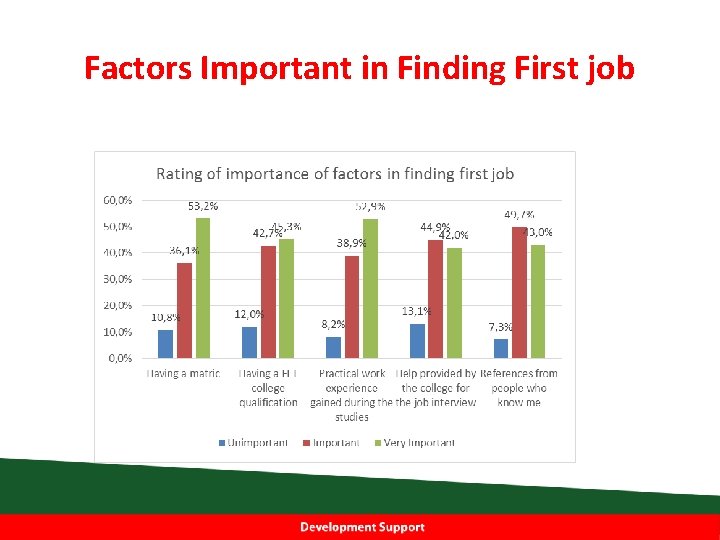
Factors Important in Finding First job
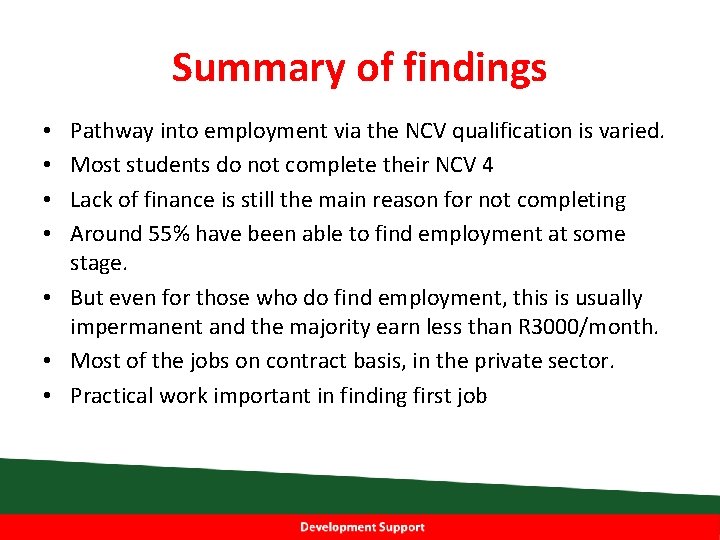
Summary of findings Pathway into employment via the NCV qualification is varied. Most students do not complete their NCV 4 Lack of finance is still the main reason for not completing Around 55% have been able to find employment at some stage. • But even for those who do find employment, this is usually impermanent and the majority earn less than R 3000/month. • Most of the jobs on contract basis, in the private sector. • Practical work important in finding first job • •
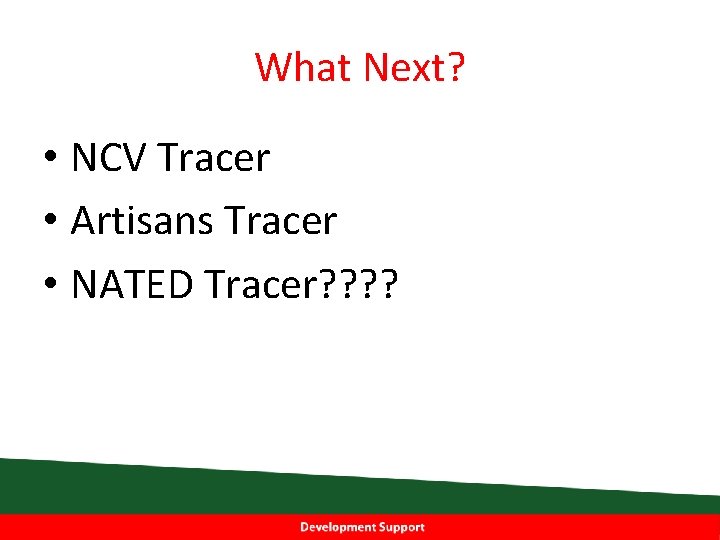
What Next? • NCV Tracer • Artisans Tracer • NATED Tracer? ?
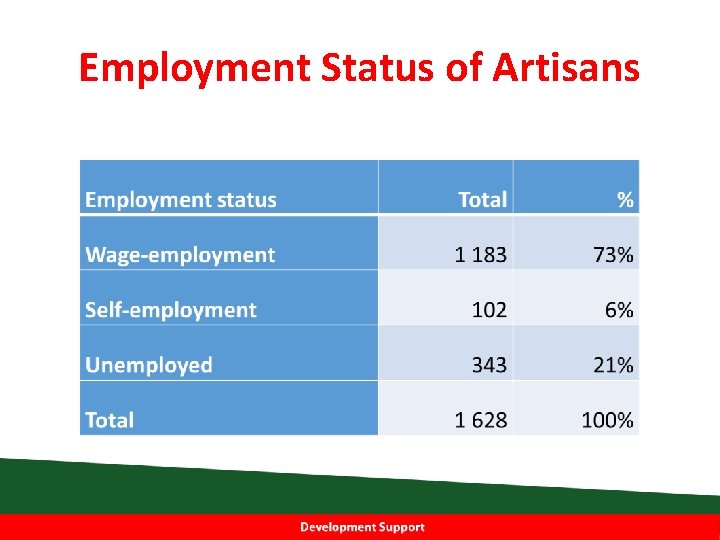
Employment Status of Artisans
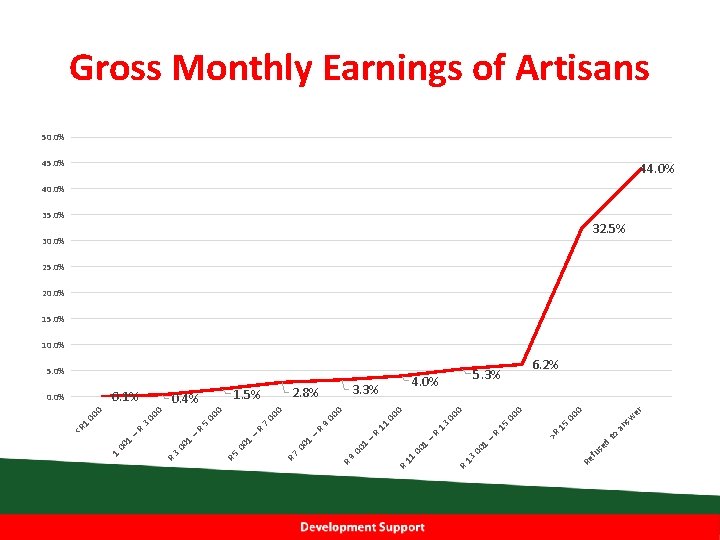
R ef 30. 0% er 35. 0% sw an to ed us 00 0 15 4. 0% 5. 3% > R 00 00 5 0 R 1 01 – 3 0 R 1 3. 3% 1 3 0 00 5. 0% – R 01 R 11 0 2. 8% R 11 0 01 – 9 0 R 1. 5% 00 0 9 1 – R 0 0 R 7 00 0 0. 4% 7 1 – R 0 0 R 5 0. 1% 00 0 5 1 – R 0 0 R 3 00 3 0 R 00 1 – 0. 0% 1 0 R 1 0 0 < Gross Monthly Earnings of Artisans 50. 0% 45. 0% 44. 0% 40. 0% 32. 5% 25. 0% 20. 0% 15. 0% 10. 0% 6. 2%
NATED Tracer Study • SSACI, JET and REAL Centre • Two thirds of enrolment • N 3 and N 6 exit points
THANK YOU https: //www. facebook. com/National-Skills-Authority-1727503367470656/ Website: www. nationalskillsauthority. org. za https: //twitter. com/skillsauthority Telephone: 012 312 5420