
Traceability of red meat from farm to fork
Traceability of red meat – from farm to fork www. foodafactoflife. org. uk © Food – a fact of life 2019
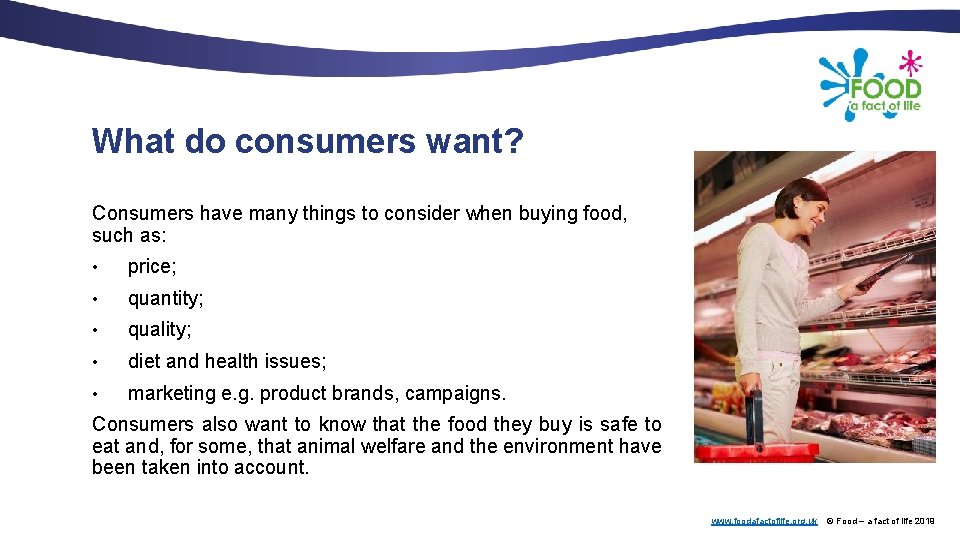
What do consumers want? Consumers have many things to consider when buying food, such as: • price; • quantity; • quality; • diet and health issues; • marketing e. g. product brands, campaigns. Consumers also want to know that the food they buy is safe to eat and, for some, that animal welfare and the environment have been taken into account. www. foodafactoflife. org. uk © Food – a fact of life 2019
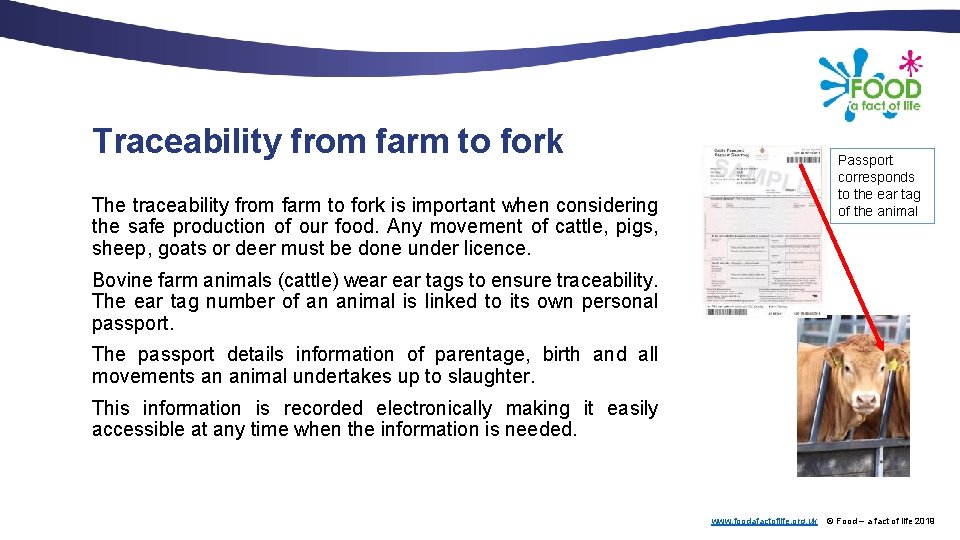
Traceability from farm to fork Passport corresponds to the ear tag of the animal The traceability from farm to fork is important when considering the safe production of our food. Any movement of cattle, pigs, sheep, goats or deer must be done under licence. Bovine farm animals (cattle) wear tags to ensure traceability. The ear tag number of an animal is linked to its own personal passport. The passport details information of parentage, birth and all movements an animal undertakes up to slaughter. This information is recorded electronically making it easily accessible at any time when the information is needed. www. foodafactoflife. org. uk © Food – a fact of life 2019
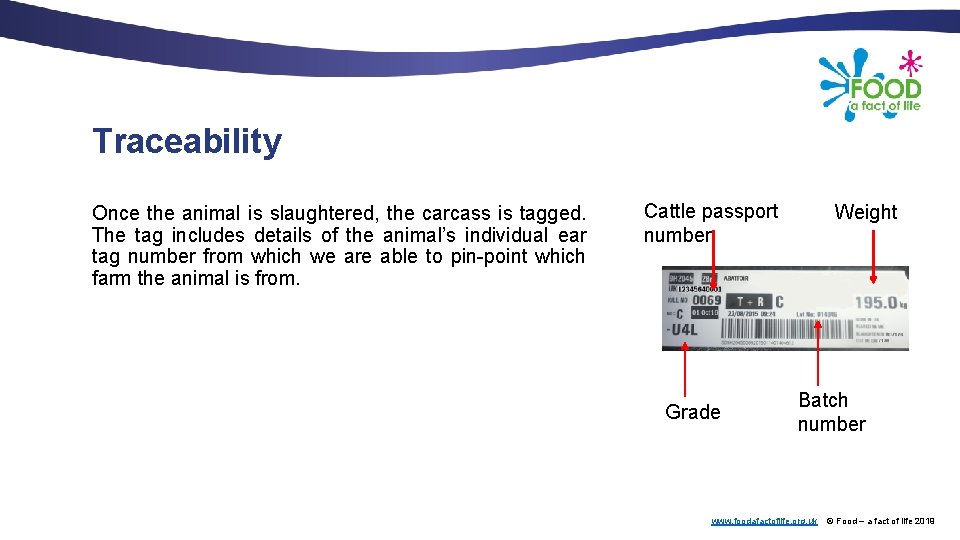
Traceability Once the animal is slaughtered, the carcass is tagged. The tag includes details of the animal’s individual ear tag number from which we are able to pin-point which farm the animal is from. Cattle passport number Grade Weight Batch number www. foodafactoflife. org. uk © Food – a fact of life 2019
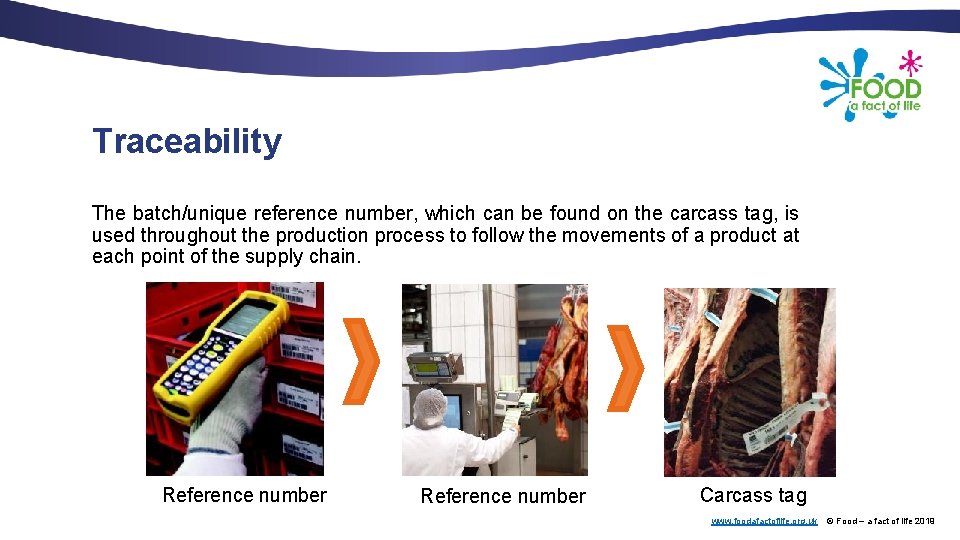
Traceability The batch/unique reference number, which can be found on the carcass tag, is used throughout the production process to follow the movements of a product at each point of the supply chain. Reference number Carcass tag www. foodafactoflife. org. uk © Food – a fact of life 2019
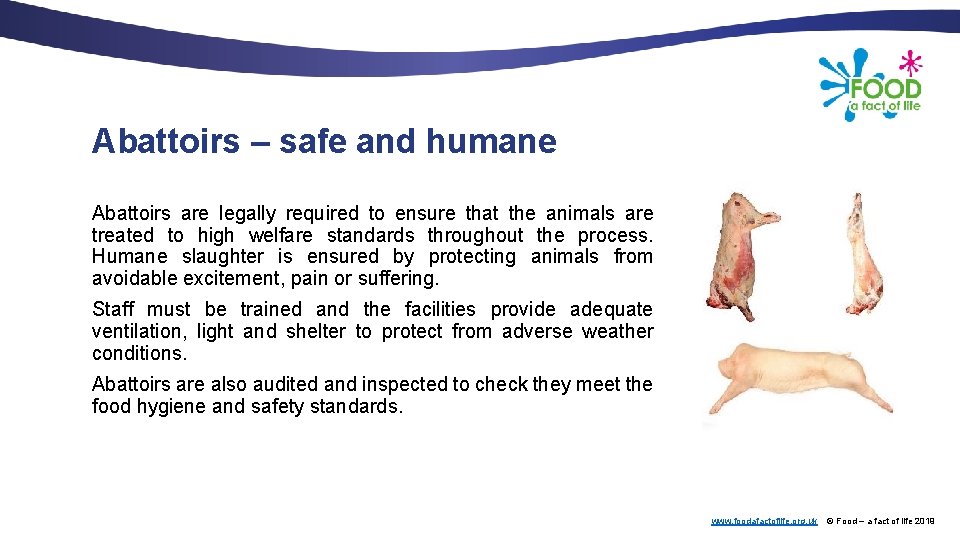
Abattoirs – safe and humane Abattoirs are legally required to ensure that the animals are treated to high welfare standards throughout the process. Humane slaughter is ensured by protecting animals from avoidable excitement, pain or suffering. Staff must be trained and the facilities provide adequate ventilation, light and shelter to protect from adverse weather conditions. Abattoirs are also audited and inspected to check they meet the food hygiene and safety standards. www. foodafactoflife. org. uk © Food – a fact of life 2019
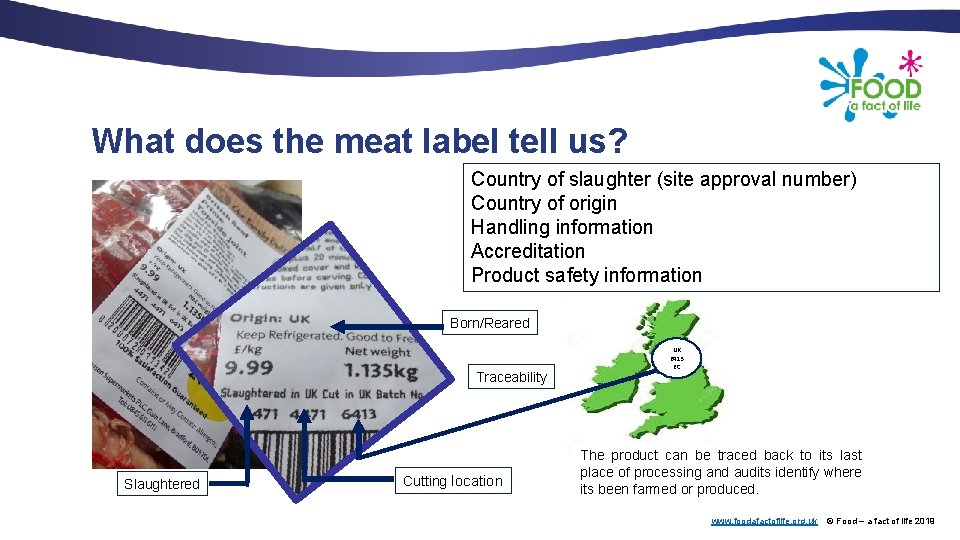
What does the meat label tell us? Country of slaughter (site approval number) Country of origin Handling information Accreditation Product safety information Born/Reared Traceability Slaughtered Cutting location UK 6413 EC The product can be traced back to its last place of processing and audits identify where its been farmed or produced. www. foodafactoflife. org. uk © Food – a fact of life 2019
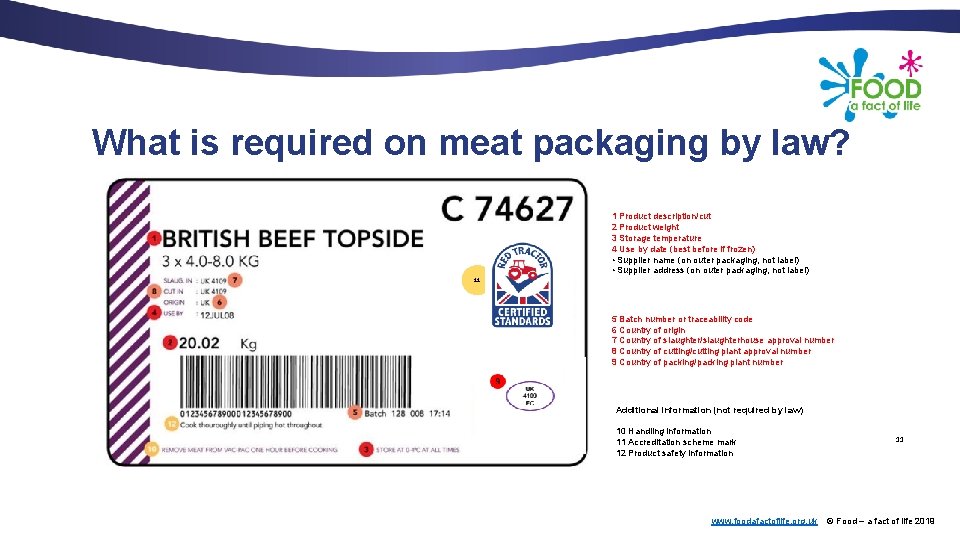
What is required on meat packaging by law? 1 Product description/cut 2 Product weight 3 Storage temperature 4 Use by date (best before if frozen) • Supplier name (on outer packaging, not label) • Supplier address (on outer packaging, not label) 11 5 Batch number or traceability code 6 Country of origin 7 Country of slaughter/slaughterhouse approval number 8 Country of cutting/cutting plant approval number 9 Country of packing/packing plant number Additional information (not required by law) 10 Handling information 11 Accreditation scheme mark 12 Product safety information www. foodafactoflife. org. uk 11 © Food – a fact of life 2019
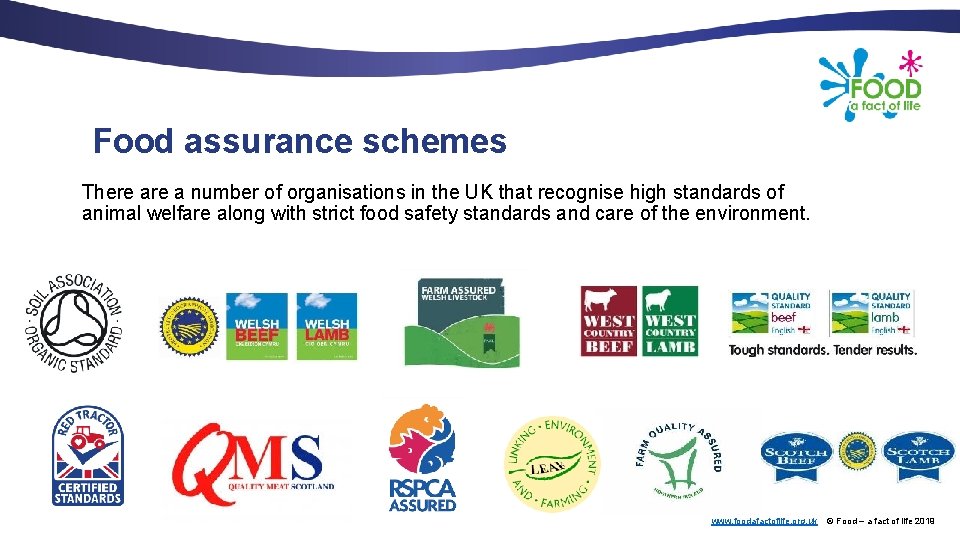
Food assurance schemes There a number of organisations in the UK that recognise high standards of animal welfare along with strict food safety standards and care of the environment. www. foodafactoflife. org. uk © Food – a fact of life 2019
Traceability of red meat – from farm to fork For further information, go to: www. foodafactoflife. org. uk © Food – a fact of life 2019
- Slides: 10