
Trace Evidence Fibers Wherever he steps whatever he
Trace Evidence Fibers “Wherever he steps, whatever he touches, whatever he leaves even unconsciously, will serve as silent witness against him. Not only his fingerprints or his footprints, but his hair, the fibers from his clothes…all of these and more bear mute witness against him. This is evidence that does not forget. ” Paul L. Kirk, forensic scientist (1902 – 1970)
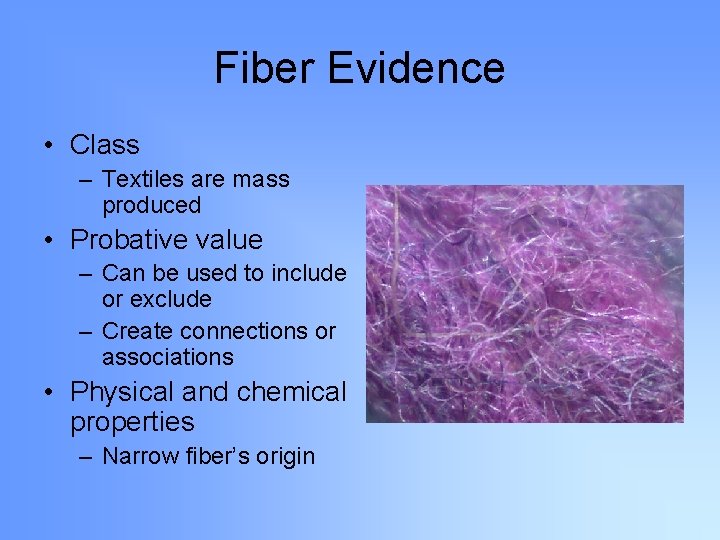
Fiber Evidence • Class – Textiles are mass produced • Probative value – Can be used to include or exclude – Create connections or associations • Physical and chemical properties – Narrow fiber’s origin
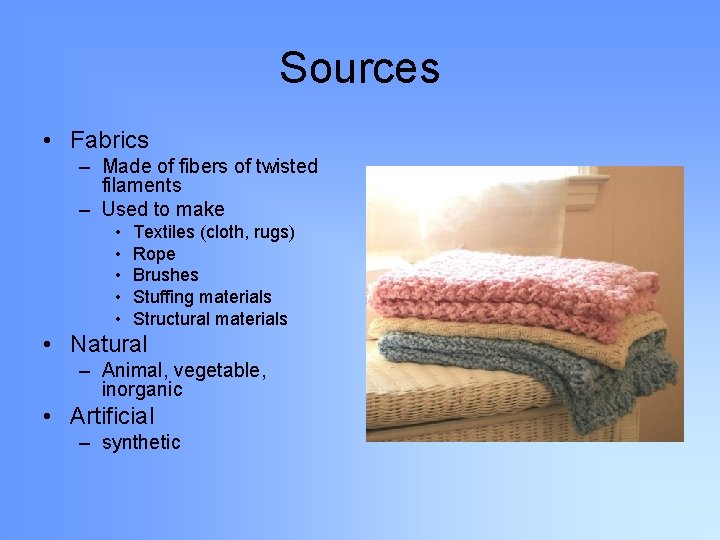
Sources • Fabrics – Made of fibers of twisted filaments – Used to make • • • Textiles (cloth, rugs) Rope Brushes Stuffing materials Structural materials • Natural – Animal, vegetable, inorganic • Artificial – synthetic
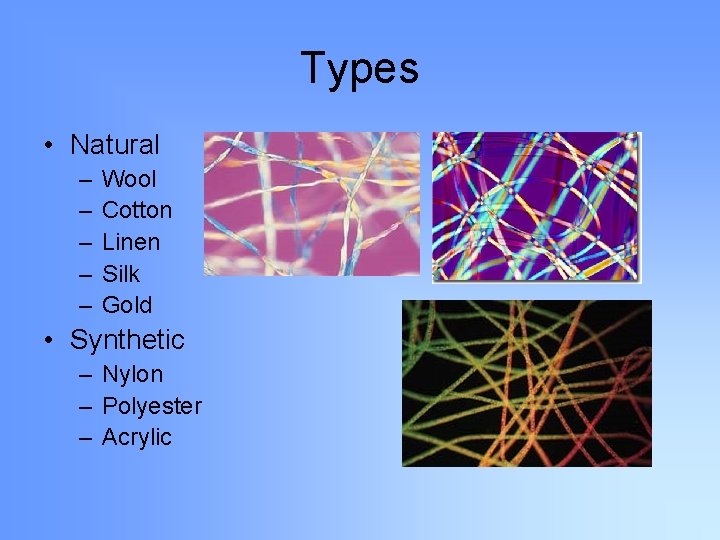
Types • Natural – – – Wool Cotton Linen Silk Gold • Synthetic – Nylon – Polyester – Acrylic
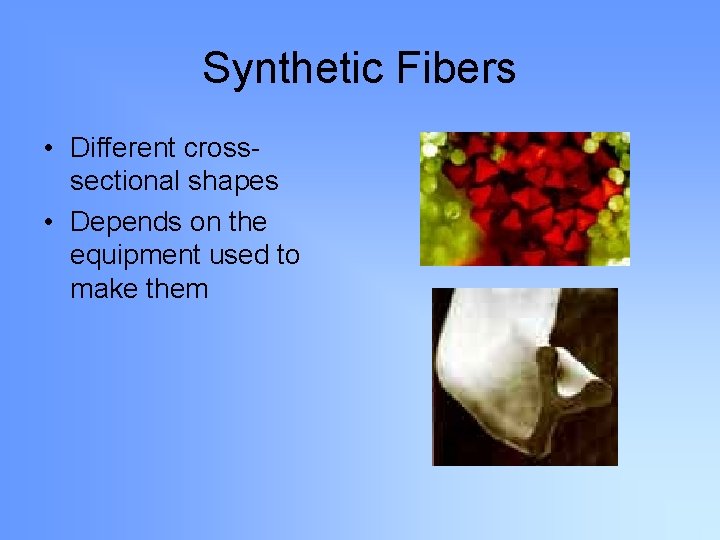
Synthetic Fibers • Different crosssectional shapes • Depends on the equipment used to make them

Chemical Structure • Polymers • Wool and silk – Protein • Cotton – Cellulose • Linen – Cellulose, but fibers longer • Synthetic – Plastic-based – Have different properties that distinguish them
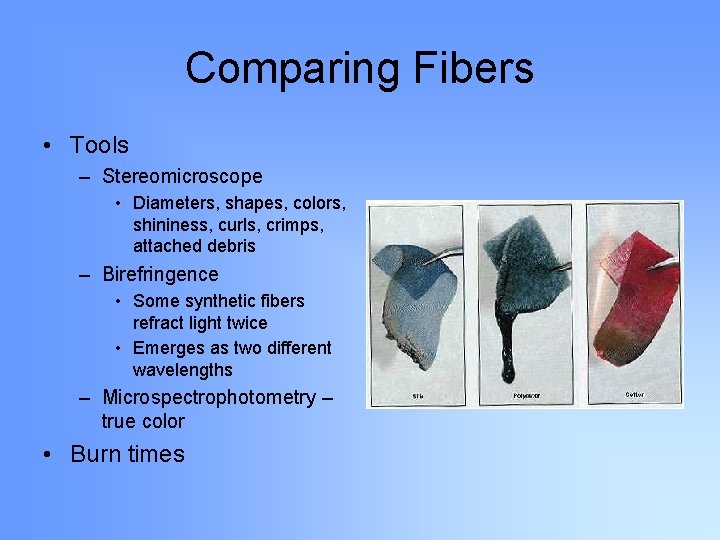
Comparing Fibers • Tools – Stereomicroscope • Diameters, shapes, colors, shininess, curls, crimps, attached debris – Birefringence • Some synthetic fibers refract light twice • Emerges as two different wavelengths – Microspectrophotometry – true color • Burn times
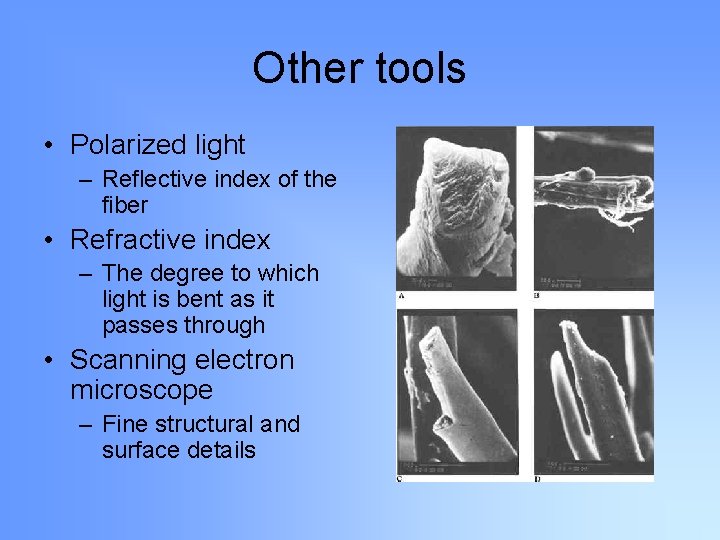
Other tools • Polarized light – Reflective index of the fiber • Refractive index – The degree to which light is bent as it passes through • Scanning electron microscope – Fine structural and surface details
- Slides: 8