
Trace Evidence Fiber Fibers Used in forensic science
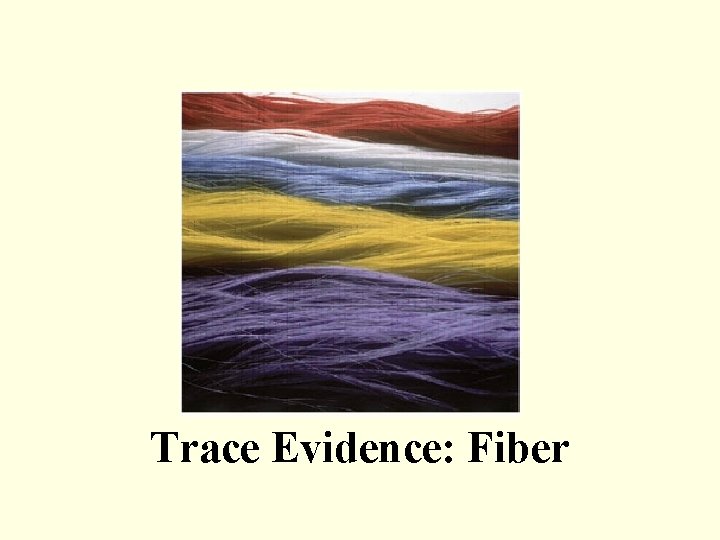
Trace Evidence: Fiber
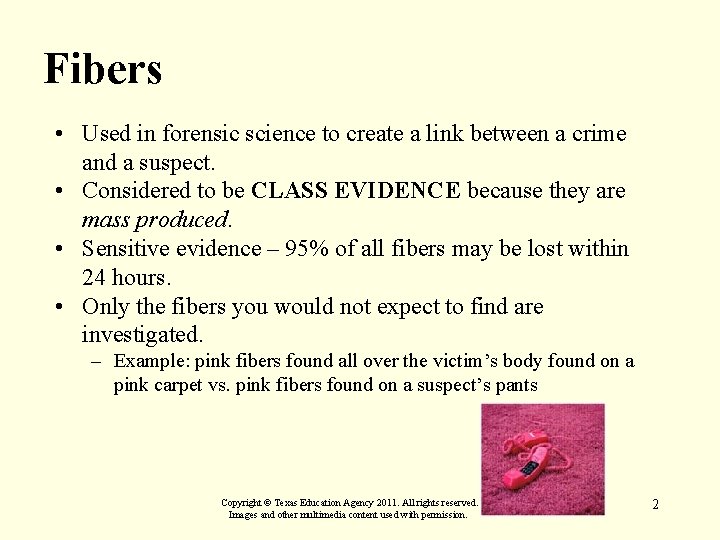
Fibers • Used in forensic science to create a link between a crime and a suspect. • Considered to be CLASS EVIDENCE because they are mass produced. • Sensitive evidence – 95% of all fibers may be lost within 24 hours. • Only the fibers you would not expect to find are investigated. – Example: pink fibers found all over the victim’s body found on a pink carpet vs. pink fibers found on a suspect’s pants Copyright © Texas Education Agency 2011. All rights reserved. Images and other multimedia content used with permission. 2
Sources • Fibers can originate from many sources: – Carpet – Clothing – Linen – Furniture – Insulation – Rope/ligature – Tape Copyright © Texas Education Agency 2011. All rights reserved. Images and other multimedia content used with permission. 3
Two Types of Fibers • Natural – derived from plants, minerals, or animal hair • Synthetic – manmade Copyright © Texas Education Agency 2011. All rights reserved. Images and other multimedia content used with permission. 4
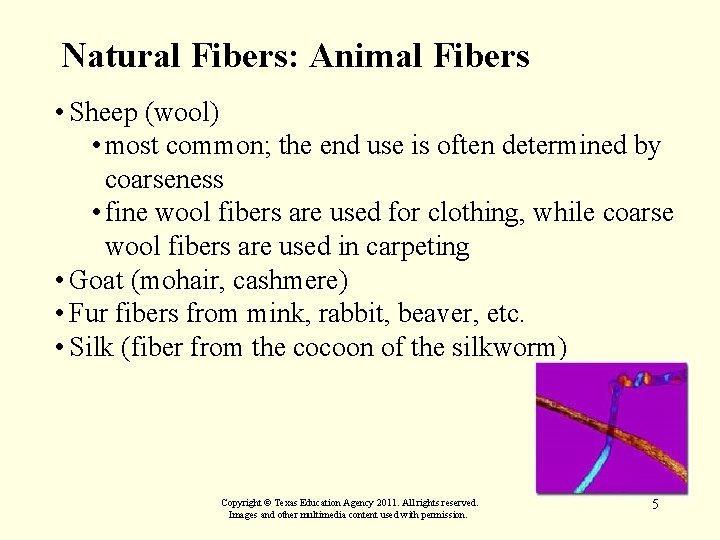
Natural Fibers: Animal Fibers • Sheep (wool) • most common; the end use is often determined by coarseness • fine wool fibers are used for clothing, while coarse wool fibers are used in carpeting • Goat (mohair, cashmere) • Fur fibers from mink, rabbit, beaver, etc. • Silk (fiber from the cocoon of the silkworm) Copyright © Texas Education Agency 2011. All rights reserved. Images and other multimedia content used with permission. 5
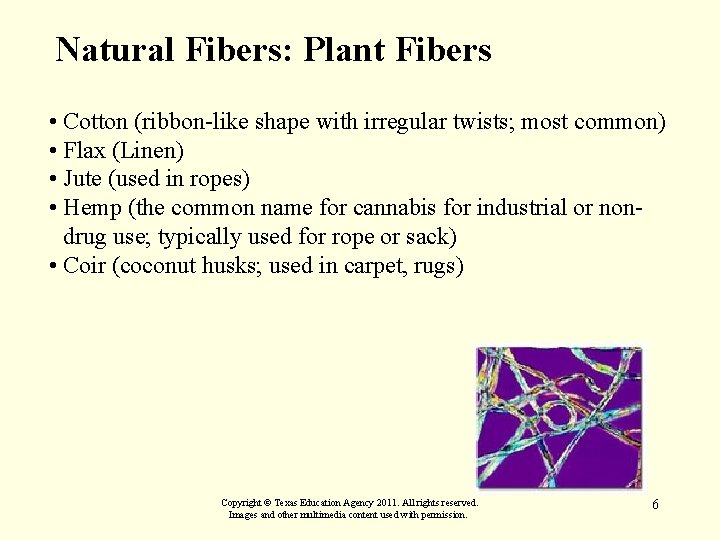
Natural Fibers: Plant Fibers • Cotton (ribbon-like shape with irregular twists; most common) • Flax (Linen) • Jute (used in ropes) • Hemp (the common name for cannabis for industrial or nondrug use; typically used for rope or sack) • Coir (coconut husks; used in carpet, rugs) Copyright © Texas Education Agency 2011. All rights reserved. Images and other multimedia content used with permission. 6
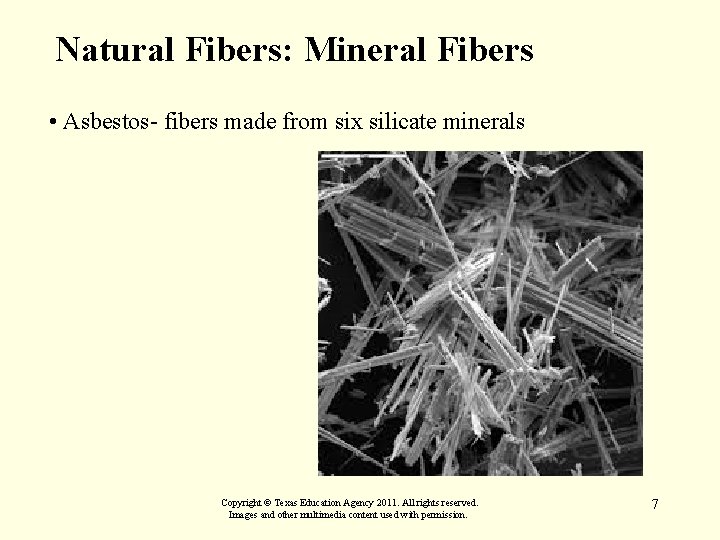
Natural Fibers: Mineral Fibers • Asbestos- fibers made from six silicate minerals Copyright © Texas Education Agency 2011. All rights reserved. Images and other multimedia content used with permission. 7
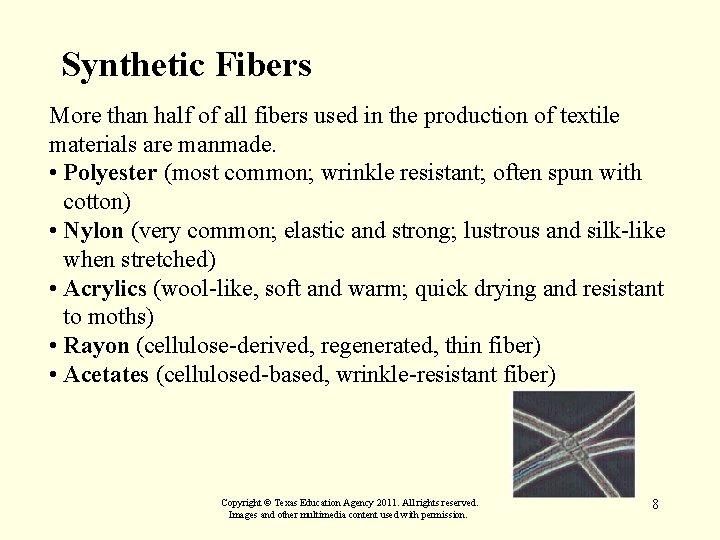
Synthetic Fibers More than half of all fibers used in the production of textile materials are manmade. • Polyester (most common; wrinkle resistant; often spun with cotton) • Nylon (very common; elastic and strong; lustrous and silk-like when stretched) • Acrylics (wool-like, soft and warm; quick drying and resistant to moths) • Rayon (cellulose-derived, regenerated, thin fiber) • Acetates (cellulosed-based, wrinkle-resistant fiber) Copyright © Texas Education Agency 2011. All rights reserved. Images and other multimedia content used with permission. 8
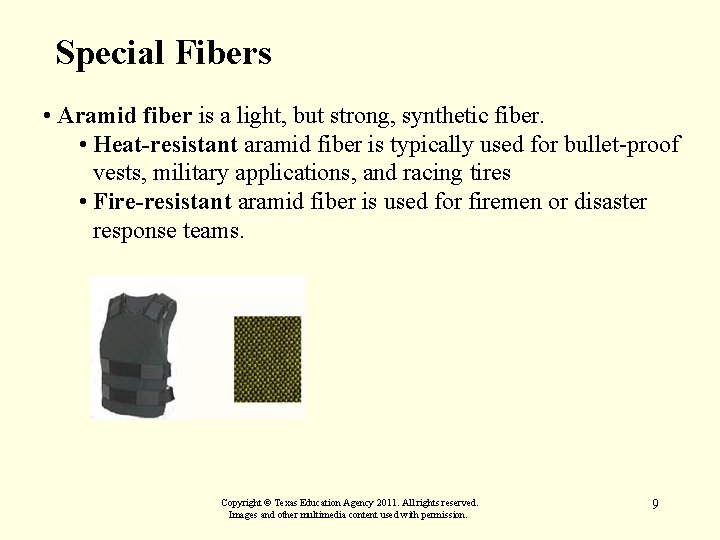
Special Fibers • Aramid fiber is a light, but strong, synthetic fiber. • Heat-resistant aramid fiber is typically used for bullet-proof vests, military applications, and racing tires • Fire-resistant aramid fiber is used for firemen or disaster response teams. Copyright © Texas Education Agency 2011. All rights reserved. Images and other multimedia content used with permission. 9
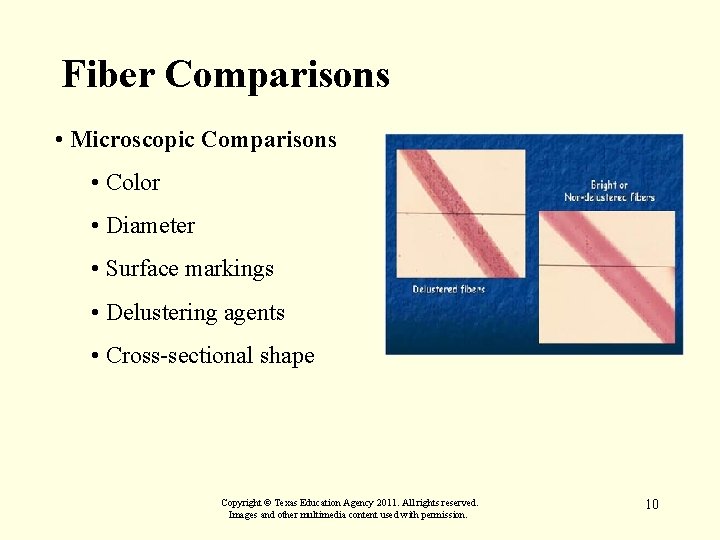
Fiber Comparisons • Microscopic Comparisons • Color • Diameter • Surface markings • Delustering agents • Cross-sectional shape Copyright © Texas Education Agency 2011. All rights reserved. Images and other multimedia content used with permission. 10
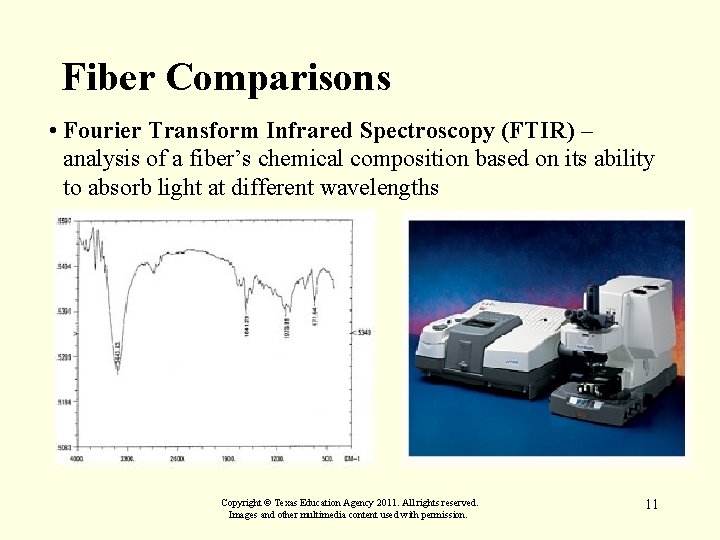
Fiber Comparisons • Fourier Transform Infrared Spectroscopy (FTIR) – analysis of a fiber’s chemical composition based on its ability to absorb light at different wavelengths Copyright © Texas Education Agency 2011. All rights reserved. Images and other multimedia content used with permission. 11
Significance of Fiber Evidence Two Possible Conclusions in Fiber Comparisons • The Questioned fiber could have originated from the Known sample. • The Questioned fiber did not originate from the Known source. • The number of fibers is directly proportional to the likelihood of actual contact (i. e. , the greater the number of fibers, the more likely that contact actually occurred. ) Copyright © Texas Education Agency 2011. All rights reserved. Images and other multimedia content used with permission. 12
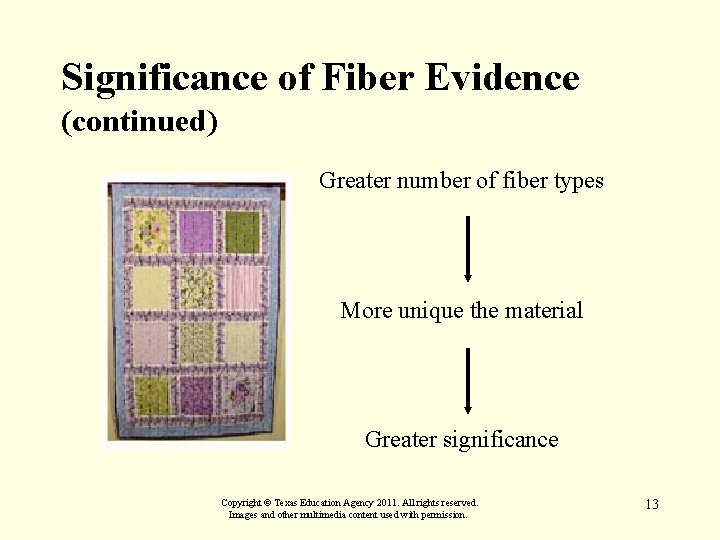
Significance of Fiber Evidence (continued) Greater number of fiber types More unique the material Greater significance Copyright © Texas Education Agency 2011. All rights reserved. Images and other multimedia content used with permission. 13
- Slides: 13