
TRACC TRansport ACCessibility at RegionalLocal Scale and Patterns
TRACC TRansport ACCessibility at Regional/Local Scale and Patterns in Europe ESPON 2013 Programme - Open Seminar European Territorial Evidence-for EU Cohesion Policy and Programming 13 -14 June 2012 Aalborg, Denmark
TPG 1. Spiekermann & Wegener, Urban and Regional Research (S&W), Dortmund, Germany (Lead Partner) 2. Charles University in Prague, Department of Social Geography and Regional Development, Prague, Czech Republic 3. RRG Spatial Planning and Geoinformation, Oldenburg, Germany 4. Mcrit, Barcelona, Spain 5. University of Oulu, Department of Geography, Oulu, Finland 6. TRT Trasporti e Territorio, Milan, Italy 7. S. Leszczycki Institute of Geography and Spatial Organisation Polish Academy of Sciences, Warsaw, Poland
Main objectives • to take up and update the results of existing studies on accessibility at the European scale using most recent available network and socio-economic data, • to extend the range of accessibility indicators by further indicators responding to new policy questions and further developing the quality and validity of the existing indicators, • to extend the spatial resolution of accessibility indicators by calculating, besides European accessibility, also global and regional accessibility, • to explore the likely impacts of available policies at the European and national scale to improve global, European and regional accessibility in the light of new challenges, such as globalisation, energy scarcity and climate change.
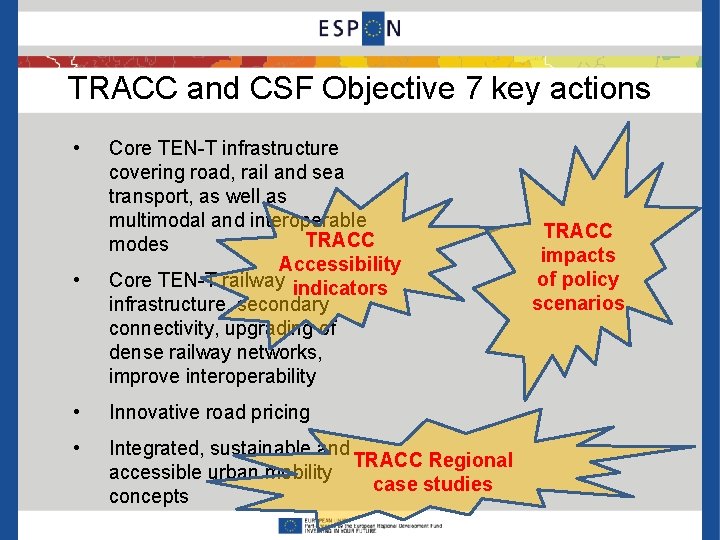
TRACC and CSF Objective 7 key actions • • Core TEN-T infrastructure covering road, rail and sea transport, as well as multimodal and interoperable TRACC modes Accessibility Core TEN-T railway indicators infrastructure, secondary connectivity, upgrading of dense railway networks, improve interoperability • Innovative road pricing • Integrated, sustainable and TRACC Regional accessible urban mobility case studies concepts TRACC impacts of policy scenarios
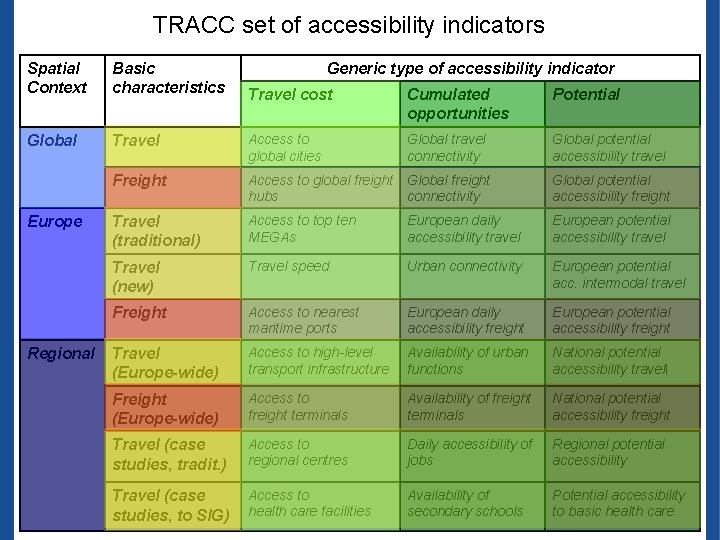
TRACC set of accessibility indicators Spatial Context Basic characteristics Global Europe Regional Generic type of accessibility indicator Travel cost Cumulated opportunities Potential Travel Access to global cities Global travel connectivity Global potential accessibility travel Freight Access to global freight hubs Global freight connectivity Global potential accessibility freight Travel (traditional) Access to top ten MEGAs European daily accessibility travel European potential accessibility travel Travel (new) Travel speed Urban connectivity European potential acc. intermodal travel Freight Access to nearest maritime ports European daily accessibility freight European potential accessibility freight Travel (Europe-wide) Access to high-level transport infrastructure Availability of urban functions National potential accessibility travell Freight (Europe-wide) Access to freight terminals Availability of freight terminals National potential accessibility freight Travel (case studies, tradit. ) Access to regional centres Daily accessibility of jobs Regional potential accessibility Travel (case studies, to SIG) Access to health care facilities Availability of secondary schools Potential accessibility to basic health care
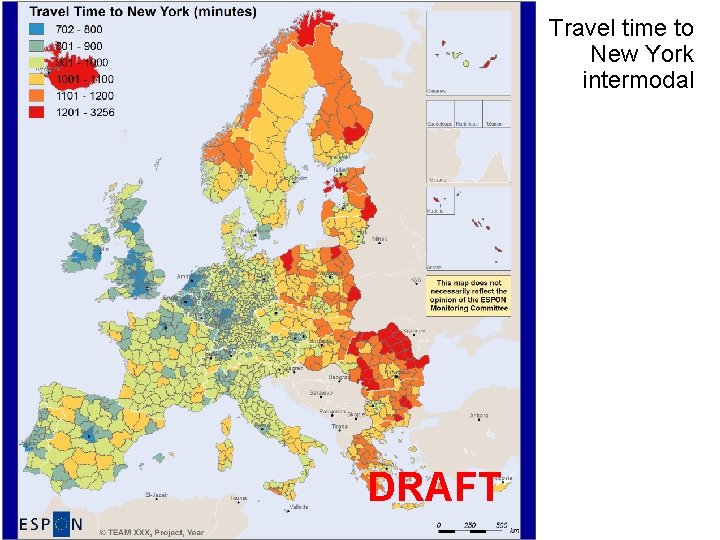
Travel time to New York intermodal DRAFT
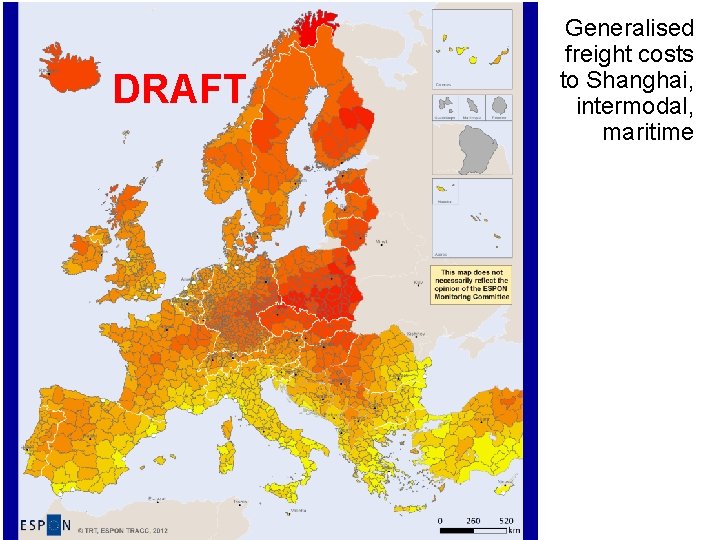
DRAFT Generalised freight costs to Shanghai, intermodal, maritime
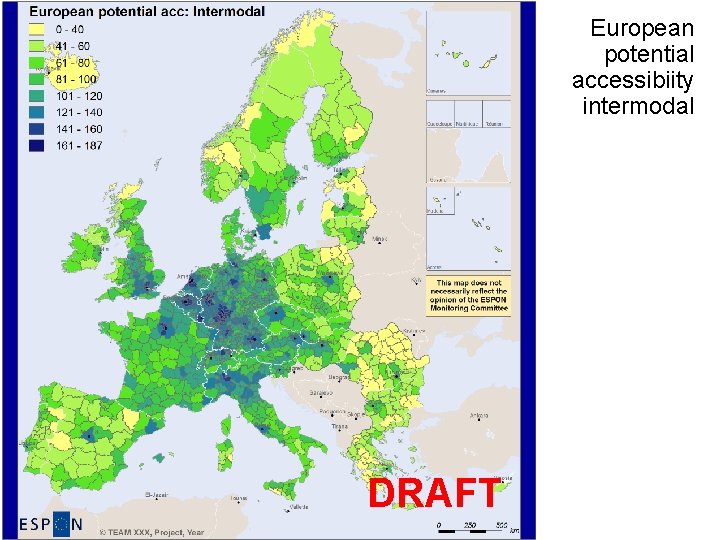
European potential accessibiity intermodal DRAFT
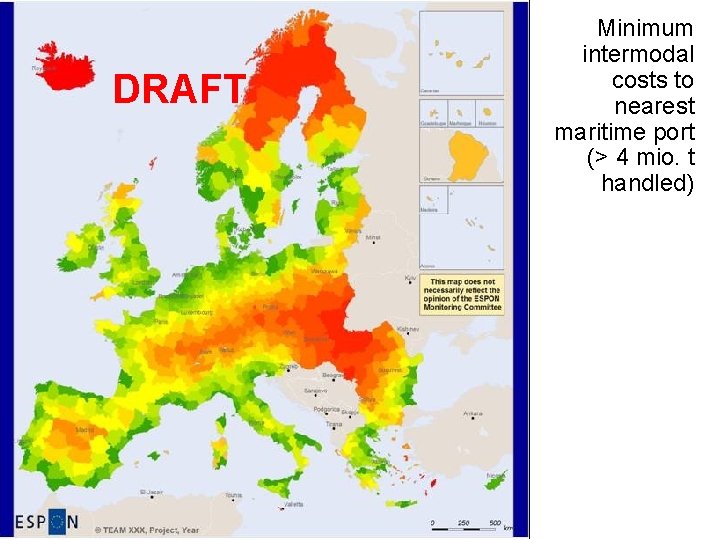
Minimum intermodal costs to nearest maritime port (> 4 mio. t handled) DRAFT
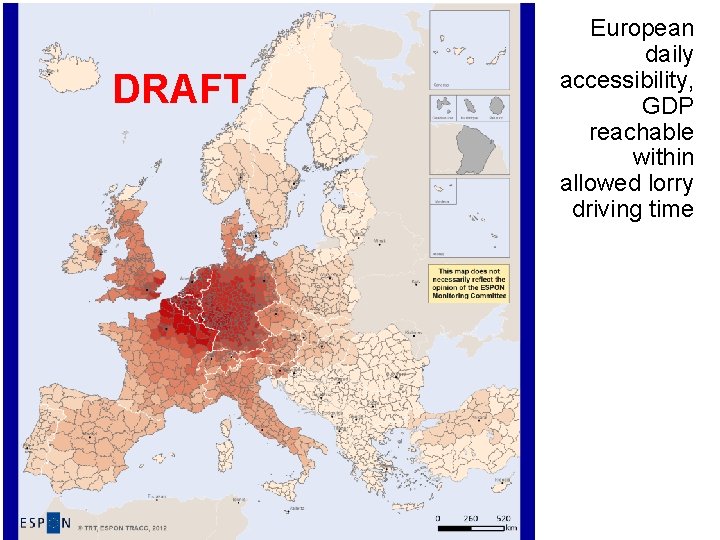
DRAFT European daily accessibility, GDP reachable within allowed lorry driving time
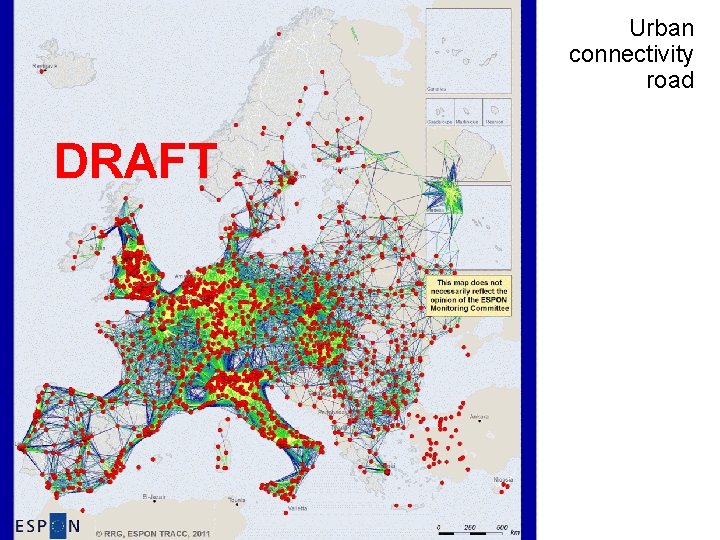
Urban connectivity road

TRACC Regional case studies
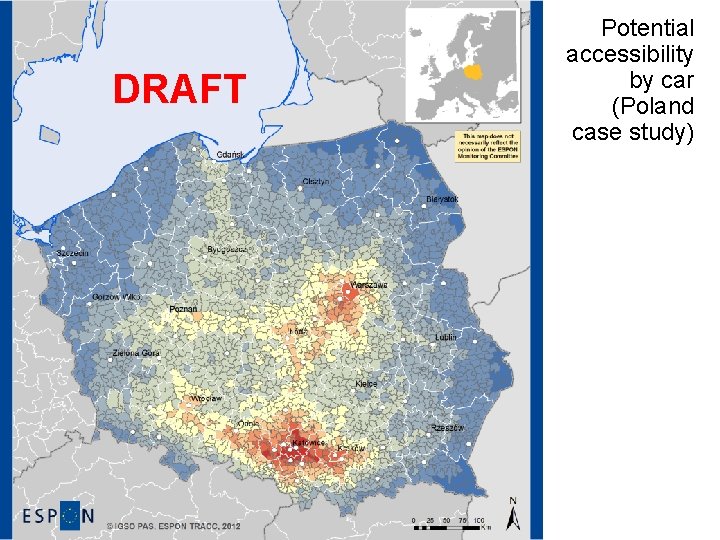
DRAFT Potential accessibility by car (Poland case study)
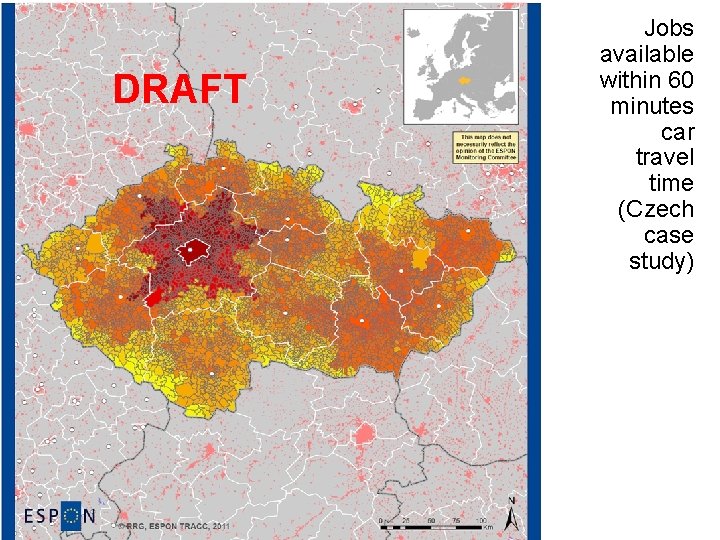
DRAFT Jobs available within 60 minutes car travel time (Czech case study)
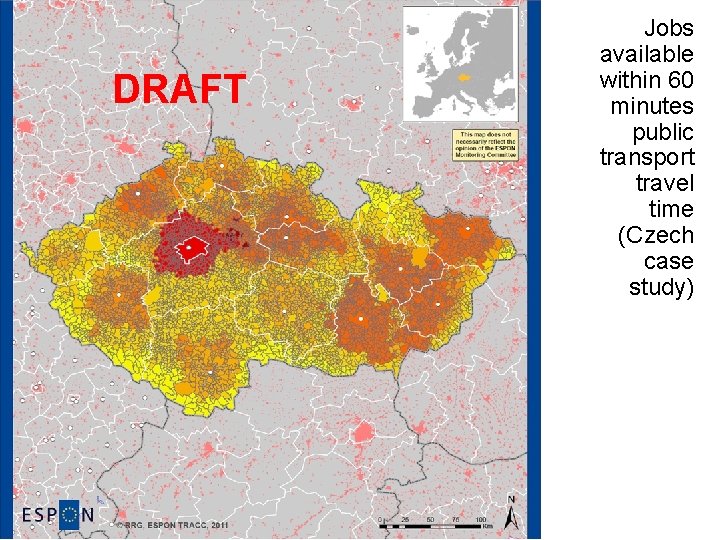
DRAFT Jobs available within 60 minutes public transport travel time (Czech case study)
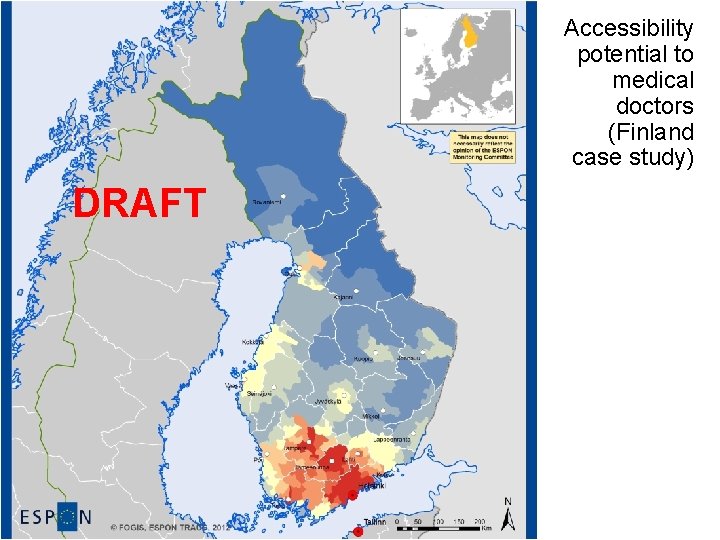
Accessibility potential to medical doctors (Finland case study) DRAFT
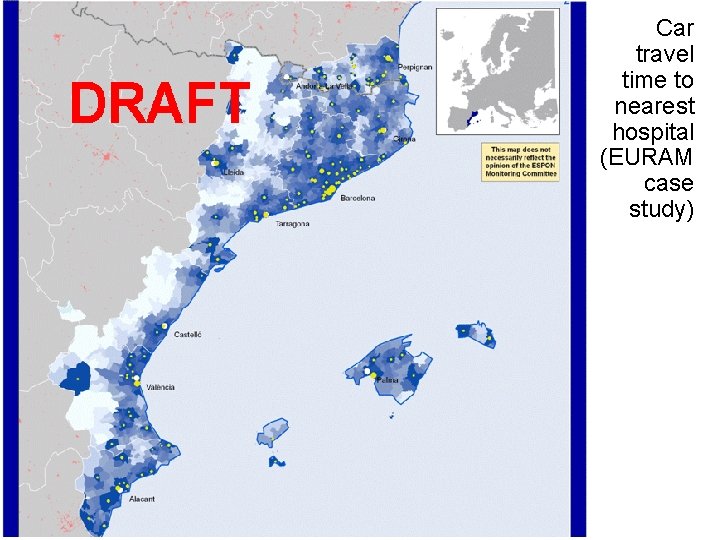
Car travel time to nearest hospital (EURAM case study)
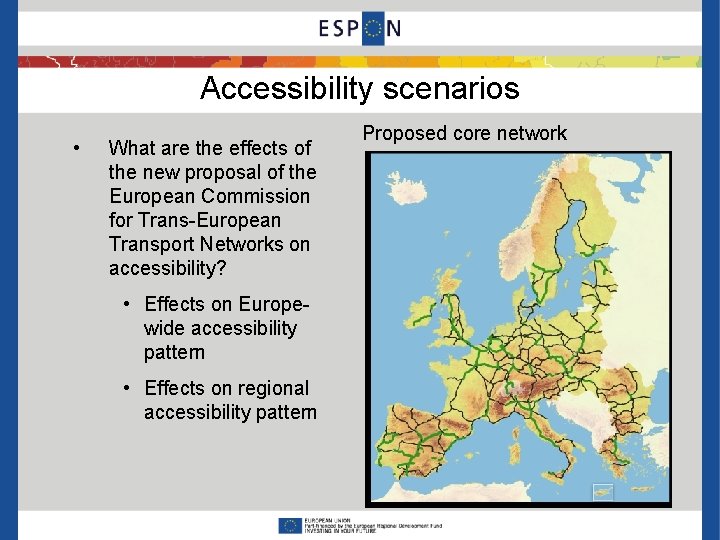
Accessibility scenarios • What are the effects of the new proposal of the European Commission for Trans-European Transport Networks on accessibility? • Effects on Europewide accessibility pattern • Effects on regional accessibility pattern Proposed core network
Impact analysis and scenarios • Analysis of the relationship between accessibility and economic development and environmental indicators over time. • Consistent set of long-term scenarios of European transport. • Likely spatial impacts of European transport scenarios up to the year 2030 (regional accessibility, regional economic development, territorial cohesion, polycentricity, environmental impacts).
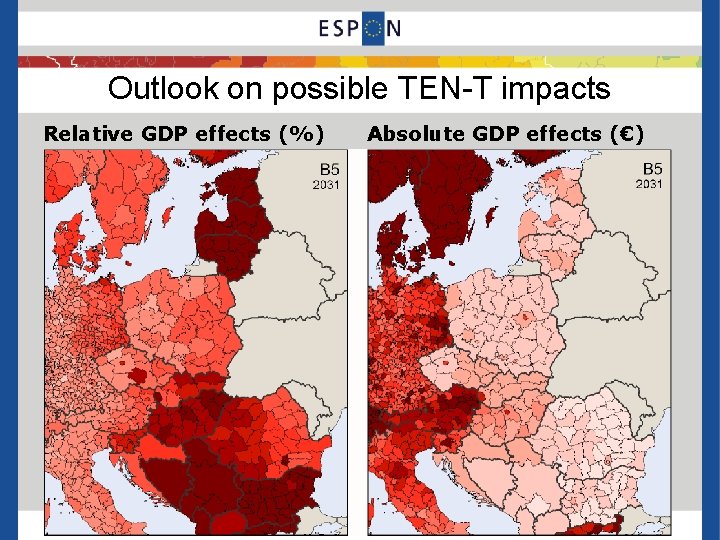
Outlook on possible TEN-T impacts Relative GDP effects (%) Absolute GDP effects (€)
- Slides: 20