
Trabeculectomy MMC Audit Mark Chiang Clinical Research Fellow

Trabeculectomy + MMC Audit Mark Chiang, Clinical Research Fellow Mr. Peter Shah, Consultant Ophthalmic Surgeon Good Hope Hospital
Aim • To assess success and complication rates of trabeculectomies augmented with mitomycin C • To compare results to the National Trabeculectomy Survey • To define the characteristics of patients undergoing trabeculectomy with MMC

Methods • Prospective database of consecutive patients undergoing trabeculectomy + MMC under care of Mr. Peter Shah • Data collected • Demographics • Pre-operative, operative and follow-up data
Results • Total number of eyes = 123 • Note retrieval 100% • 2004 Data update 99%
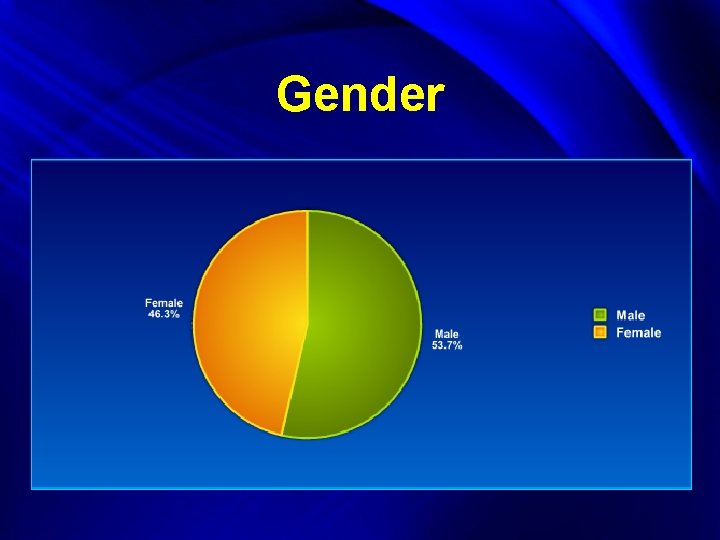
Gender

Age at surgery • Mean age = 55. 6 years
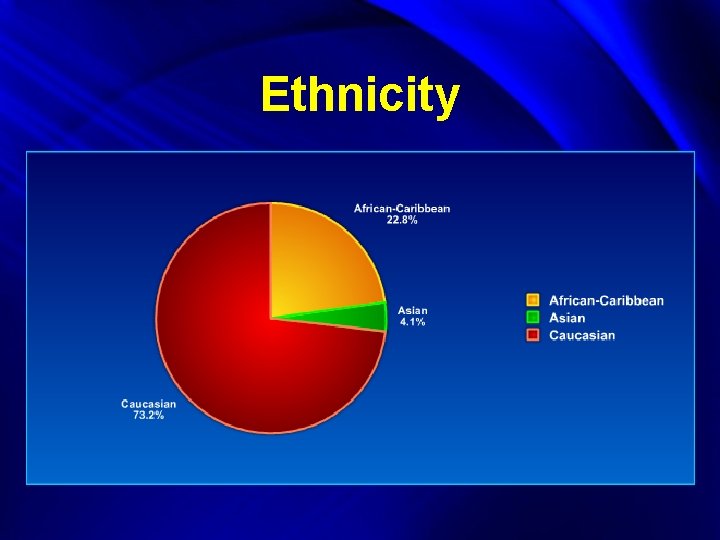
Ethnicity

Glaucoma type
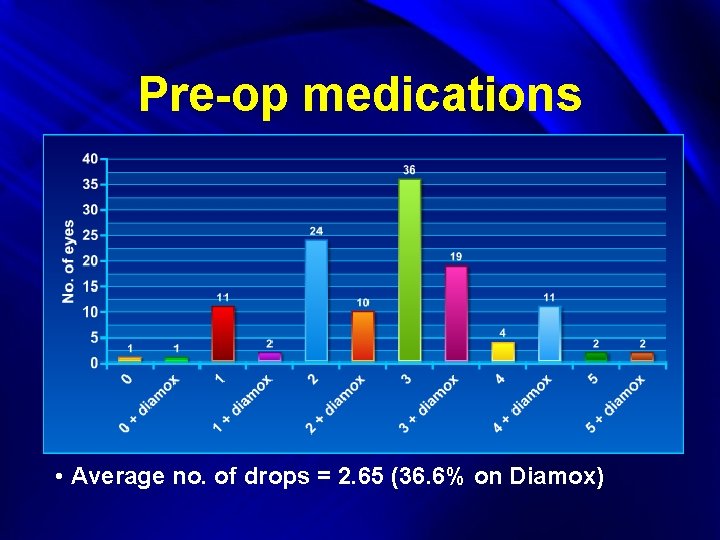
Pre-op medications • Average no. of drops = 2. 65 (36. 6% on Diamox)
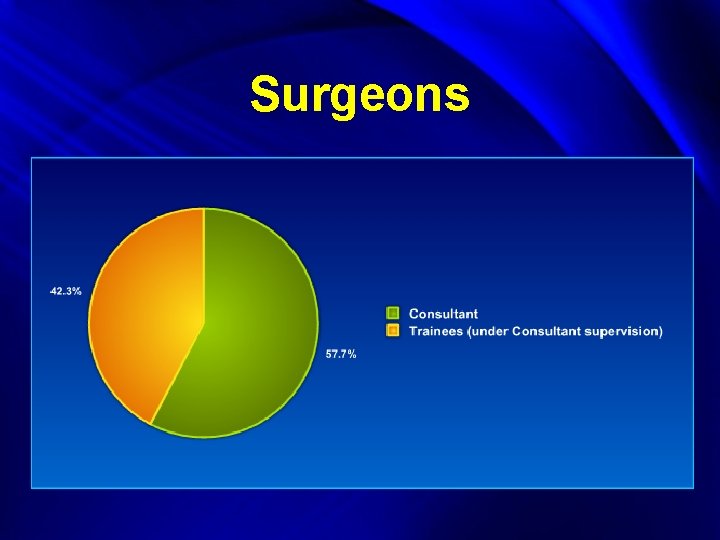
Surgeons
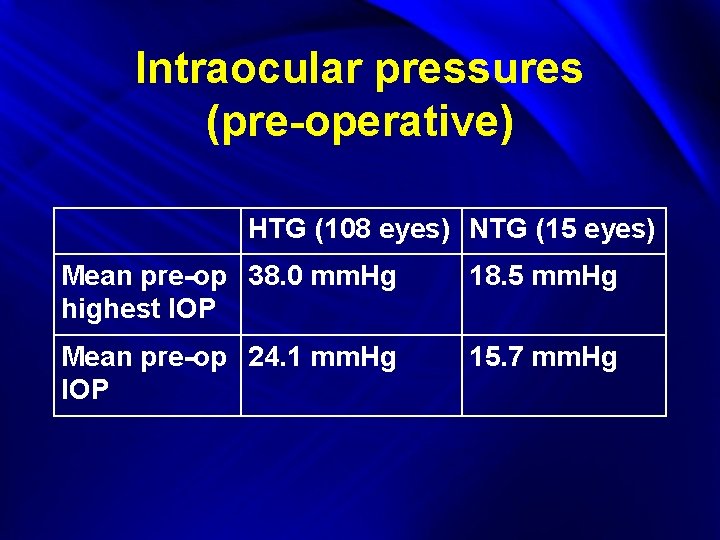
Intraocular pressures (pre-operative) HTG (108 eyes) NTG (15 eyes) Mean pre-op 38. 0 mm. Hg highest IOP 18. 5 mm. Hg Mean pre-op 24. 1 mm. Hg IOP 15. 7 mm. Hg
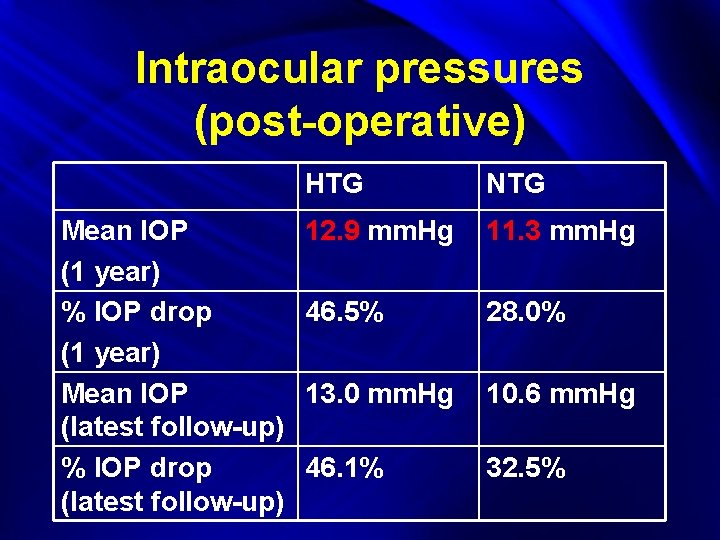
Intraocular pressures (post-operative) Mean IOP (1 year) % IOP drop (1 year) Mean IOP (latest follow-up) % IOP drop (latest follow-up) HTG NTG 12. 9 mm. Hg 11. 3 mm. Hg 46. 5% 28. 0% 13. 0 mm. Hg 10. 6 mm. Hg 46. 1% 32. 5%
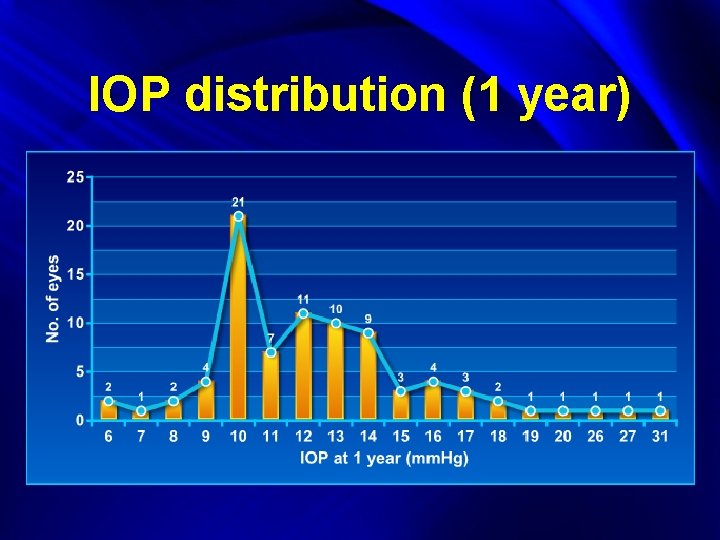
IOP distribution (1 year)
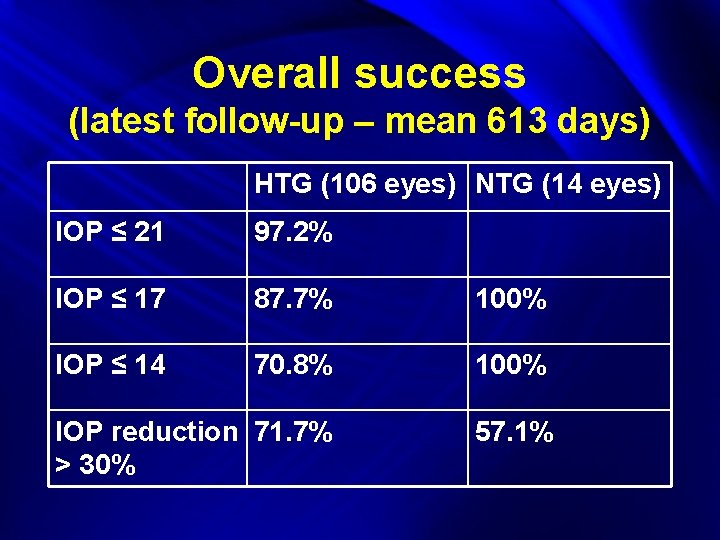
Overall success (latest follow-up – mean 613 days) HTG (106 eyes) NTG (14 eyes) IOP ≤ 21 97. 2% IOP ≤ 17 87. 7% 100% IOP ≤ 14 70. 8% 100% IOP reduction 71. 7% > 30% 57. 1%
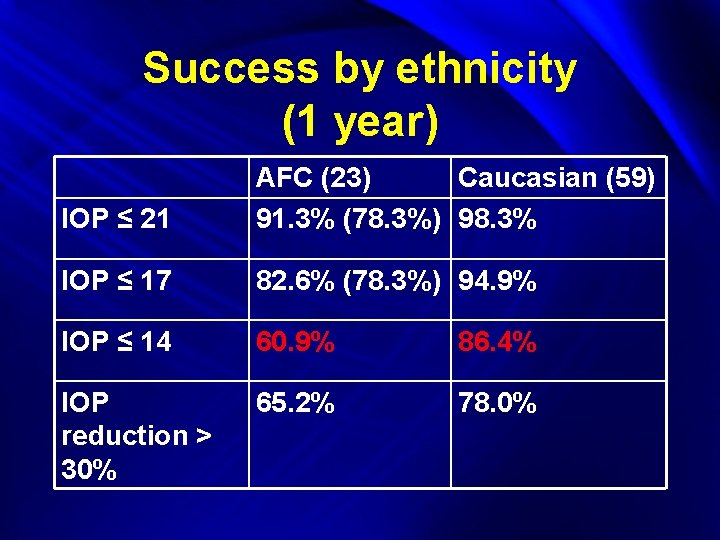
Success by ethnicity (1 year) IOP ≤ 21 AFC (23) Caucasian (59) 91. 3% (78. 3%) 98. 3% IOP ≤ 17 82. 6% (78. 3%) 94. 9% IOP ≤ 14 60. 9% 86. 4% IOP reduction > 30% 65. 2% 78. 0%
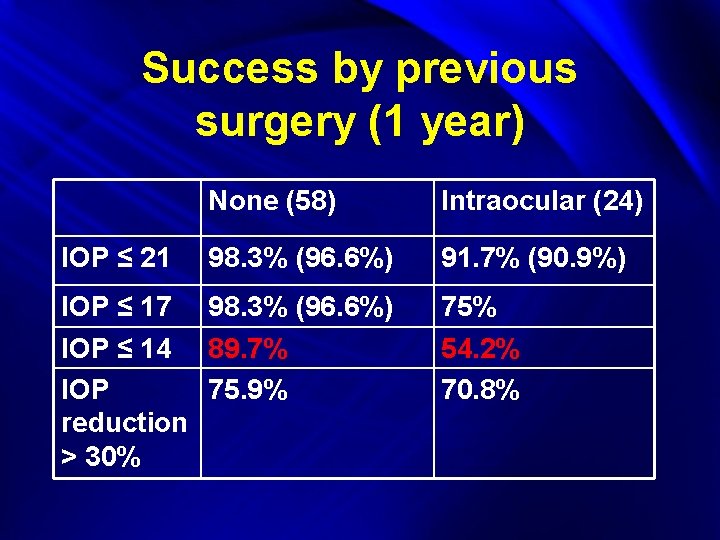
Success by previous surgery (1 year) None (58) Intraocular (24) IOP ≤ 21 98. 3% (96. 6%) 91. 7% (90. 9%) IOP ≤ 17 98. 3% (96. 6%) 75% IOP ≤ 14 89. 7% IOP 75. 9% reduction > 30% 54. 2% 70. 8%
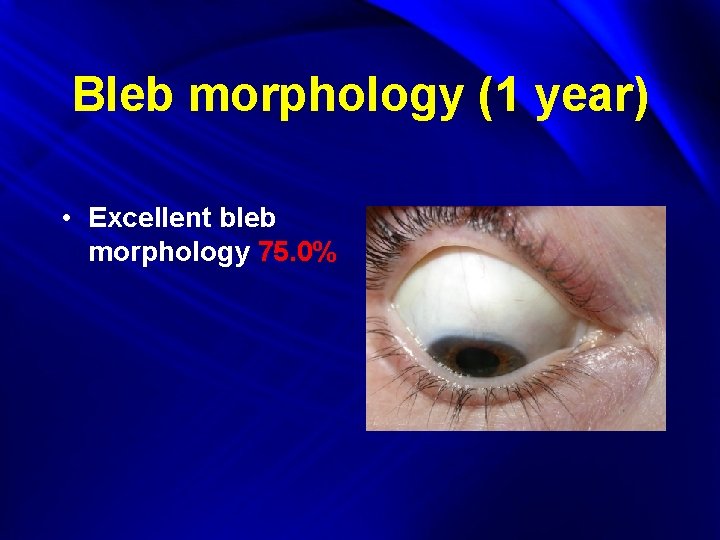
Bleb morphology (1 year) • Excellent bleb morphology 75. 0%
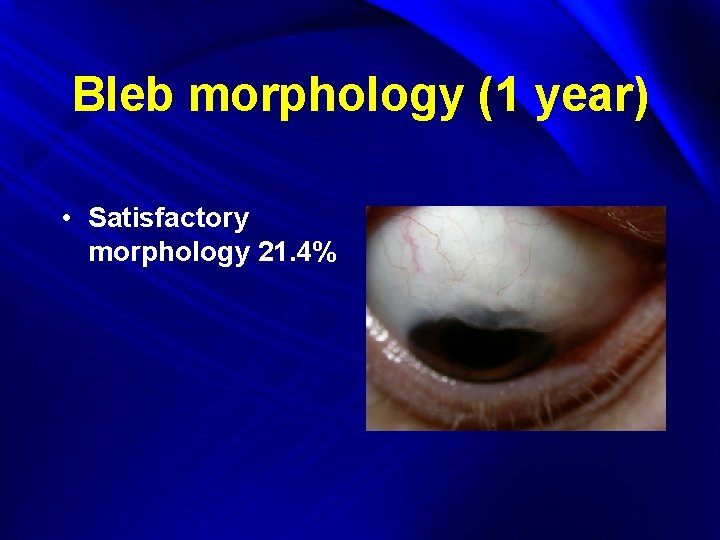
Bleb morphology (1 year) • Satisfactory morphology 21. 4%
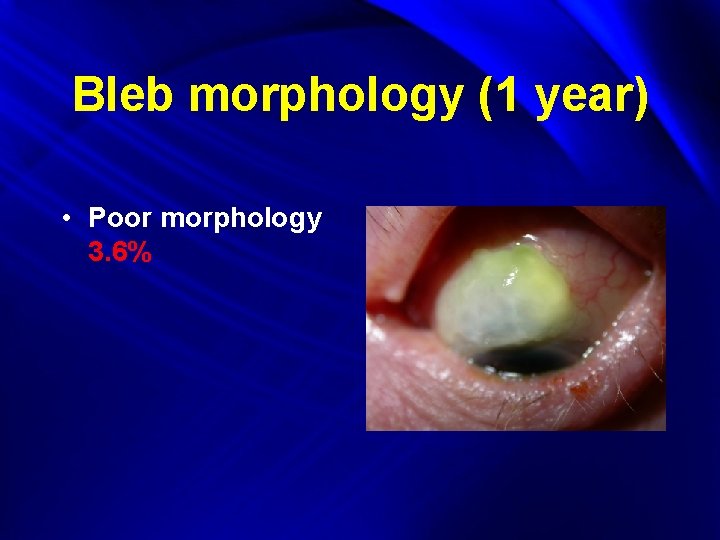
Bleb morphology (1 year) • Poor morphology 3. 6%
Bleb Needling Revision • • • 13. 8% of patients (17/123) 64. 7% males Mean pre-op highest IOP 40. 7 mm. Hg 47. 1% on Diamox pre-operatively 47. 1% had previous intraocular surgery 41. 2% required topical drops at latest follow-up • 35. 3% African-Caribbean
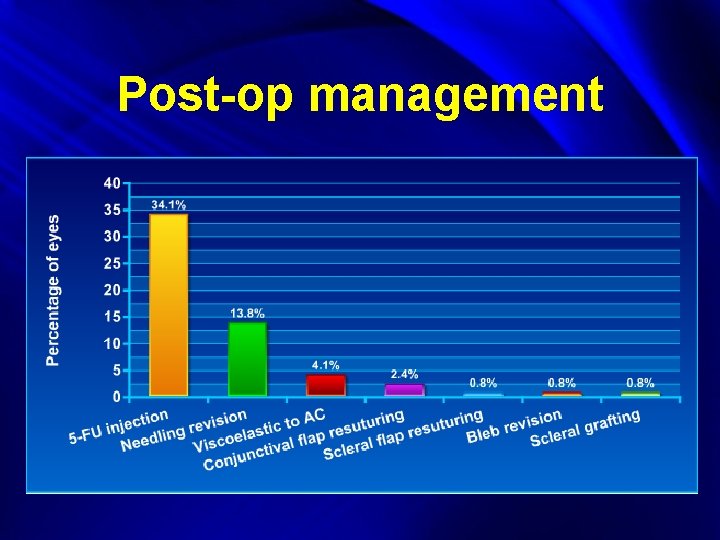
Post-op management
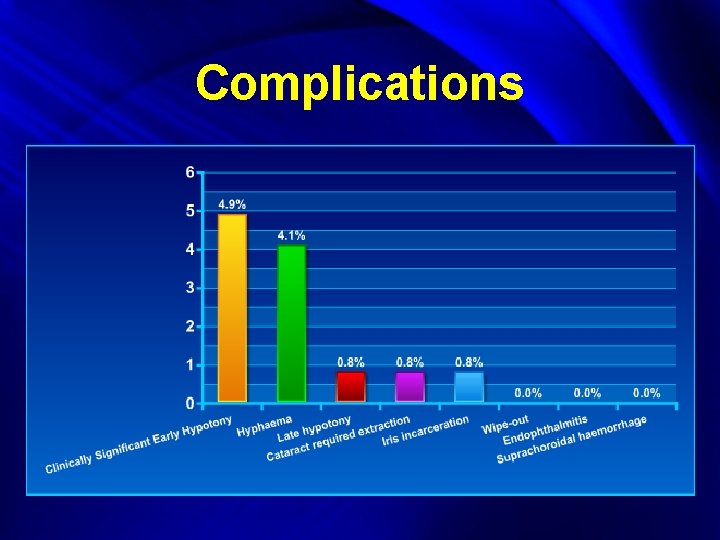
Complications
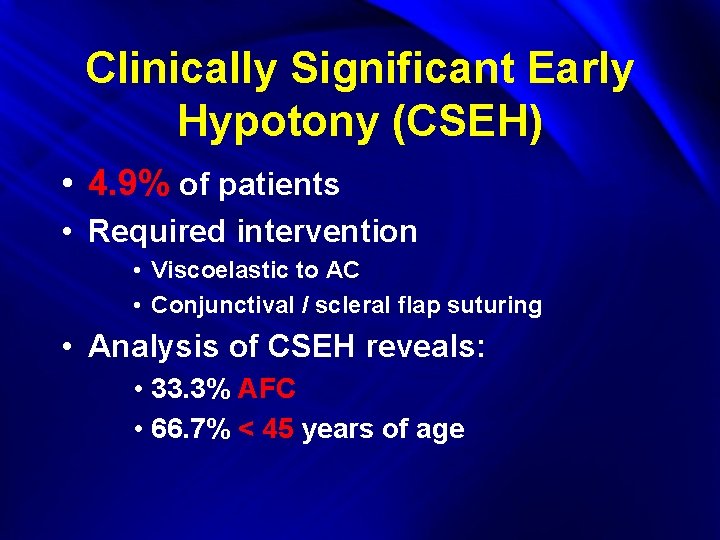
Clinically Significant Early Hypotony (CSEH) • 4. 9% of patients • Required intervention • Viscoelastic to AC • Conjunctival / scleral flap suturing • Analysis of CSEH reveals: • 33. 3% AFC • 66. 7% < 45 years of age
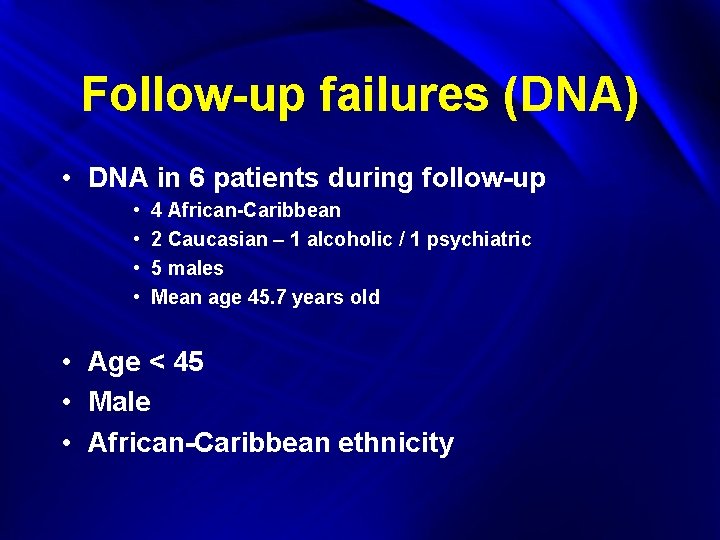
Follow-up failures (DNA) • DNA in 6 patients during follow-up • • 4 African-Caribbean 2 Caucasian – 1 alcoholic / 1 psychiatric 5 males Mean age 45. 7 years old • Age < 45 • Male • African-Caribbean ethnicity
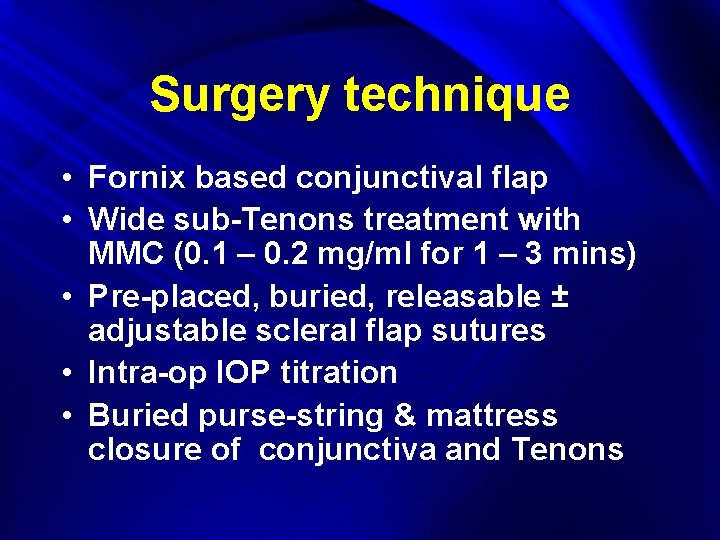
Surgery technique • Fornix based conjunctival flap • Wide sub-Tenons treatment with MMC (0. 1 – 0. 2 mg/ml for 1 – 3 mins) • Pre-placed, buried, releasable ± adjustable scleral flap sutures • Intra-op IOP titration • Buried purse-string & mattress closure of conjunctiva and Tenons
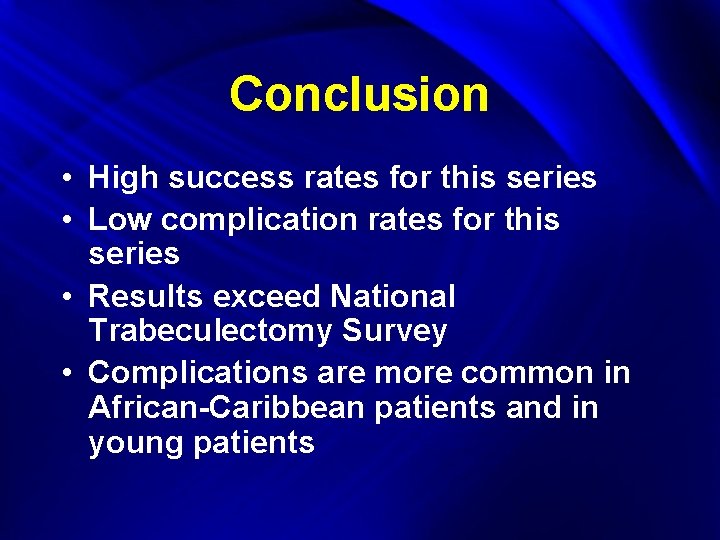
Conclusion • High success rates for this series • Low complication rates for this series • Results exceed National Trabeculectomy Survey • Complications are more common in African-Caribbean patients and in young patients
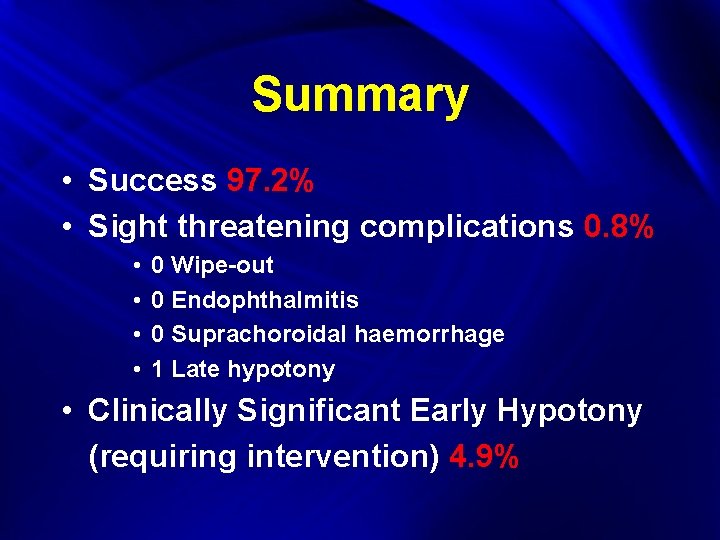
Summary • Success 97. 2% • Sight threatening complications 0. 8% • • 0 Wipe-out 0 Endophthalmitis 0 Suprachoroidal haemorrhage 1 Late hypotony • Clinically Significant Early Hypotony (requiring intervention) 4. 9%
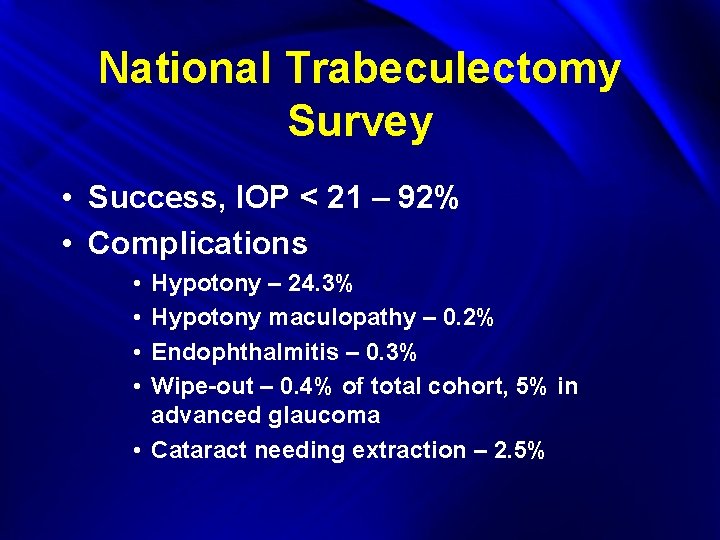
National Trabeculectomy Survey • Success, IOP < 21 – 92% • Complications • • Hypotony – 24. 3% Hypotony maculopathy – 0. 2% Endophthalmitis – 0. 3% Wipe-out – 0. 4% of total cohort, 5% in advanced glaucoma • Cataract needing extraction – 2. 5%
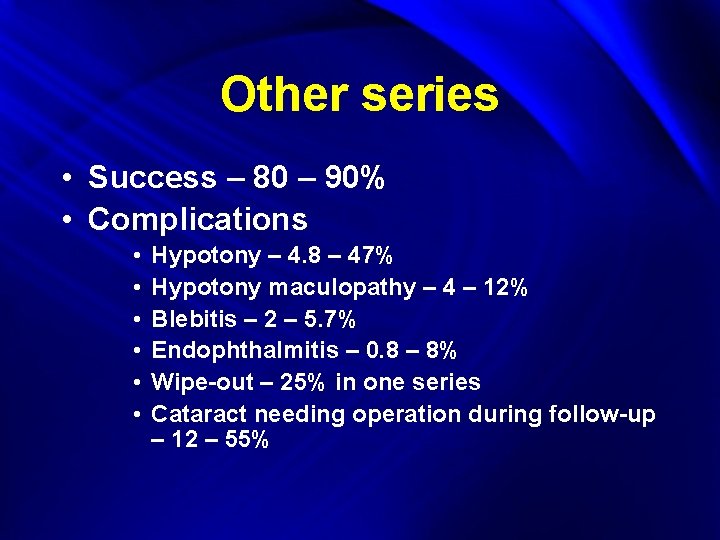
Other series • Success – 80 – 90% • Complications • • • Hypotony – 4. 8 – 47% Hypotony maculopathy – 4 – 12% Blebitis – 2 – 5. 7% Endophthalmitis – 0. 8 – 8% Wipe-out – 25% in one series Cataract needing operation during follow-up – 12 – 55%

BUT!!
It’s only possible with • Good pre-operative, peri-operative and intensive post-operative care • Good success with lower doses of MMC but 34% post-op 5 -FU and 14% bleb needling revision
Discussion points • Trabeculectomy with MMC is a complex operation requiring high degree of manual dexterity and extensive glaucoma experience • Suggest Fellowship training for all surgeons performing this operation • With close Consultant supervision, high success rates for Fellows in training
Actions • Continue long-term analysis of series • Target African-Caribbean and JOAG patients for intensive intervention • Improve patient information • Consider glaucoma support nurse help • These results only possible with continued Fellow support
Pearls • Identify thin tissues pre-op • • Small peritomy Stromal hydration Careful closure ? No MMC • Thin Tissues + Leak = Early Failure
Pearls • In AFC / thick tissues need early (<10 days) high flow into sub-Tenon space • May need to remove both releasables
Pearls • Thin conj and Tenons – need thick scleral flap to control aqueous outflow
Pearls • JOAGs get hypotony • Need early surgical intervention • Beware of the young!

- Slides: 38