
TPR and Peripheral Pulses PN 1 Nursing Skill
- Slides: 18
TPR and Peripheral Pulses PN 1 Nursing Skill Labs
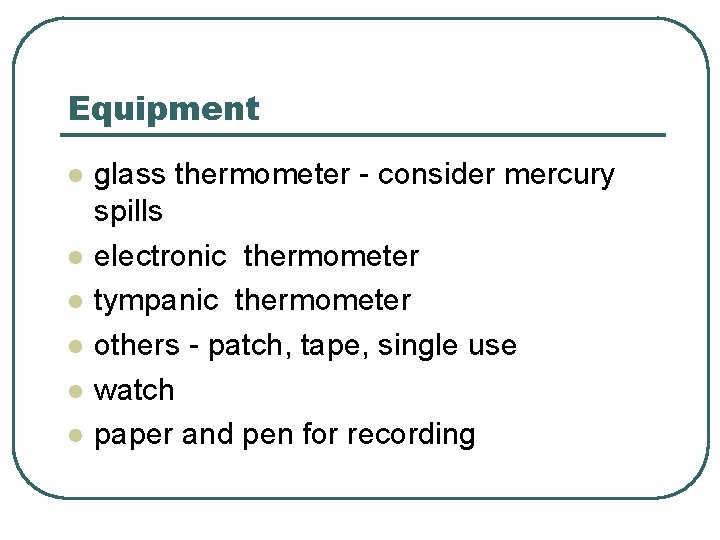
Equipment l l l glass thermometer - consider mercury spills electronic thermometer tympanic thermometer others - patch, tape, single use watch paper and pen for recording
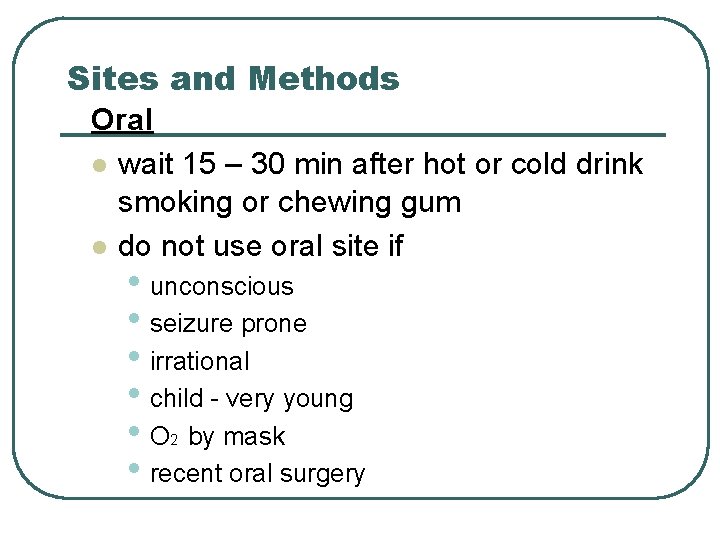
Sites and Methods Oral l wait 15 – 30 min after hot or cold drink smoking or chewing gum l do not use oral site if • unconscious • seizure prone • irrational • child - very young • O by mask • recent oral surgery 2
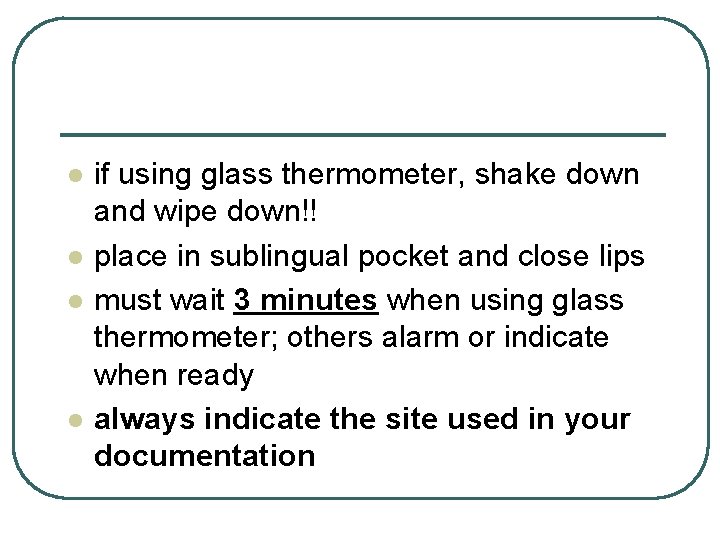
l l if using glass thermometer, shake down and wipe down!! place in sublingual pocket and close lips must wait 3 minutes when using glass thermometer; others alarm or indicate when ready always indicate the site used in your documentation
Rectal (not used for newborns!!) l shake down and wipe glass thermometer and insert 1 1/2 inches (adults) after lubricating well!!! (check depth depending on age/size) - hold 2 -3 mins l hold thermometer in place to ensure accurate reading l considered most accurate reflection of core temp
Axilla l if using glass thermometer, shake, wipe and hold for 10 mins l make sure axilla is dry l place tip of thermometer in center of axilla and place arm close to body l considered as accurate as oral or rectal when done correctly
Tympanic l pull pina up and back (for adults) l most common site currently used l uses infrared sensers l does not actually touch the typmanic membrane
Factors affecting Pulse Rate & Rhythm Tachycardia l pulse of 100 - 180 bpm l may be caused by pain, emotions, exercise, prolonged heat, decreased blood pressure, pyrexia, reduced O 2 in blood, some medications
Bradycardia l pulse below 60 bpm l pulse is generally slower at rest l may be related to thin body size, gender ( males slower than females), increased age and some medications l this is often considered normal for people in great physical shape!!
Equipment l l l l Stethoscope, doppler, cardiac monitor cleanse earpieces with alcohol swab warm before use point ear pieces toward nose ensure bell is “on” bell – low freq. Heart & BP diaphragm – hi freq. Resp & bowel sounds watch with second hand
Sites and methods l l l never use your thumb to palpate a pulse use the pads of three middle fingers count for 1 full minute exception - if peripheral pulse irregular or abnormal for that patient repeat at apical site and count for 1 full minute Pulse deficit = difference between apical and radial pulse
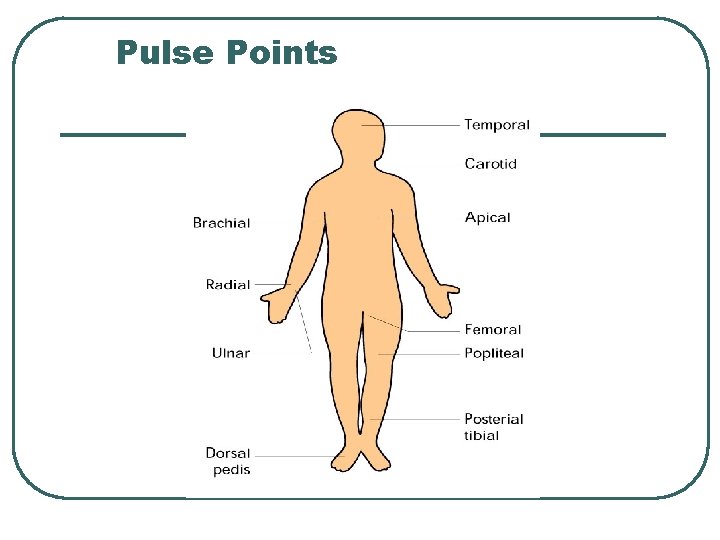
l l l Radial • ease of access, circulation of hand • make sure arm is resting comfortably Carotid • most easily palpable if blood pressure is low (only palpate one side at a time) Apical • audible with stethoscope • measured at 5 th intercostal space, slightly left of pts. midclavicular line
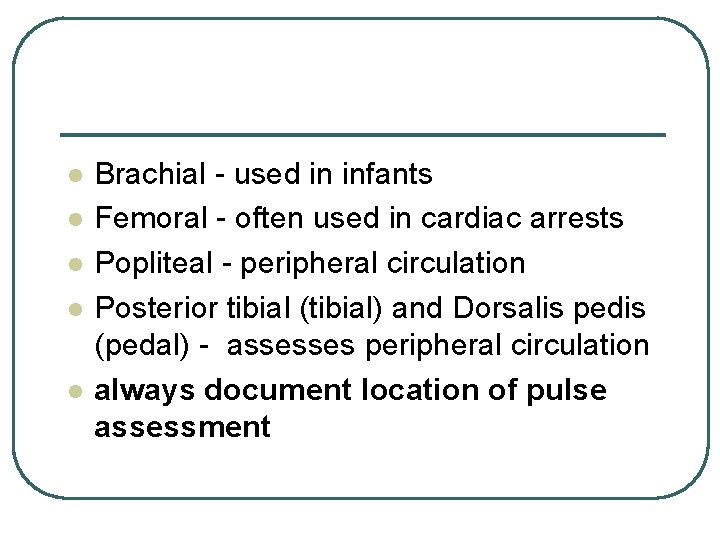
l l l Brachial - used in infants Femoral - often used in cardiac arrests Popliteal - peripheral circulation Posterior tibial (tibial) and Dorsalis pedis (pedal) - assesses peripheral circulation always document location of pulse assessment
Pulse Points
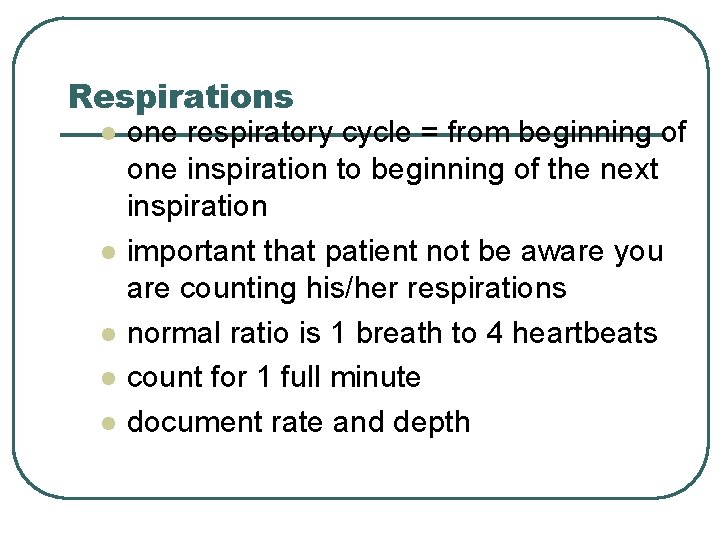
Respirations l l l one respiratory cycle = from beginning of one inspiration to beginning of the next inspiration important that patient not be aware you are counting his/her respirations normal ratio is 1 breath to 4 heartbeats count for 1 full minute document rate and depth
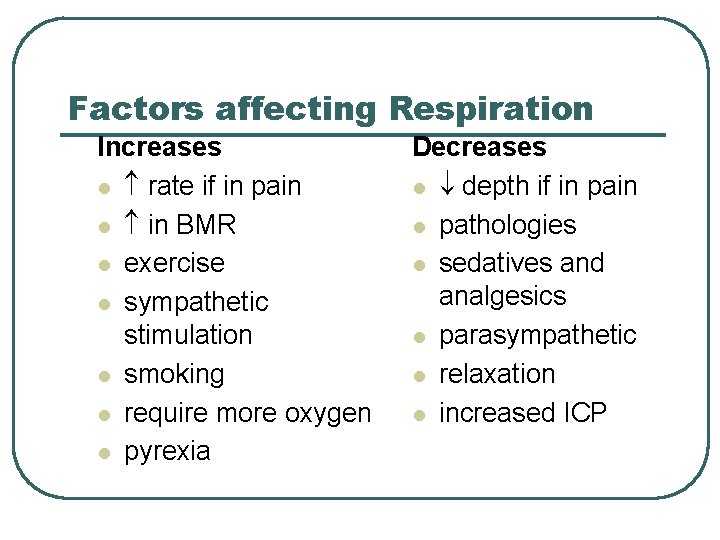
Factors affecting Respiration Increases l rate if in pain l in BMR l exercise l sympathetic stimulation l smoking l require more oxygen l pyrexia Decreases l depth if in pain l pathologies l sedatives and analgesics l parasympathetic l relaxation l increased ICP
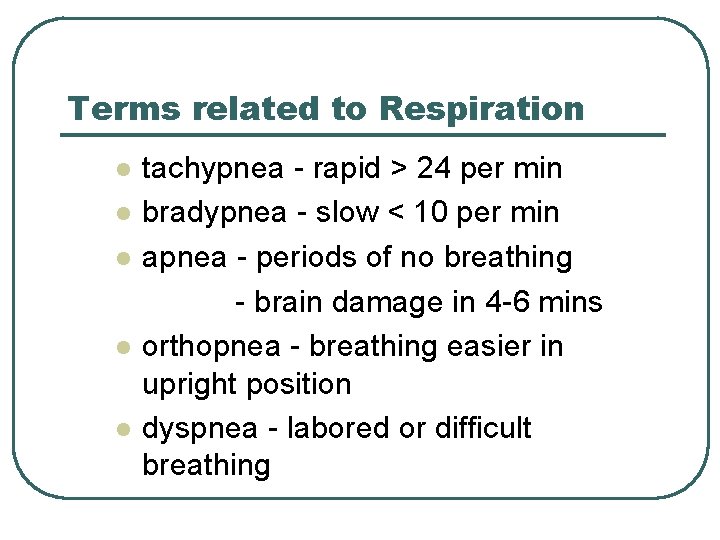
Terms related to Respiration l l l tachypnea - rapid > 24 per min bradypnea - slow < 10 per min apnea - periods of no breathing - brain damage in 4 -6 mins orthopnea - breathing easier in upright position dyspnea - labored or difficult breathing
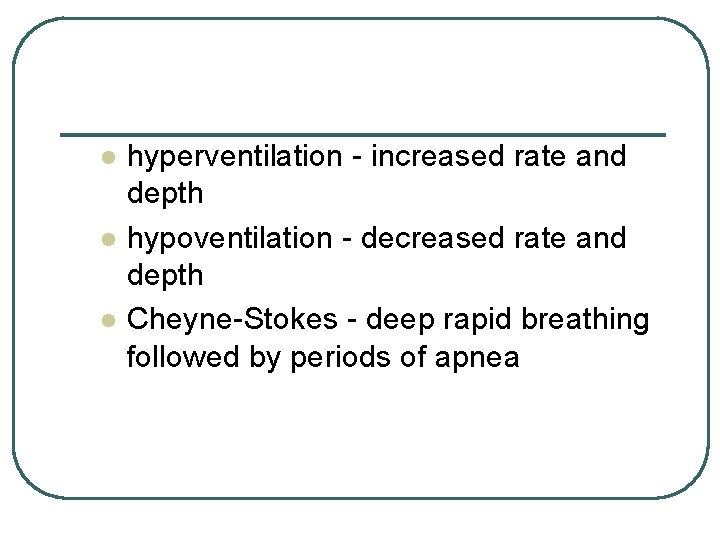
l l l hyperventilation - increased rate and depth hypoventilation - decreased rate and depth Cheyne-Stokes - deep rapid breathing followed by periods of apnea