
TPI TEACHING PROFICIENCY INDEX How the TPI frames

- Slides: 20
TPI TEACHING PROFICIENCY INDEX
How the TPI “frames” supervised teaching experience for Volunteers. O There is a well-designed system that helps me improve as a teacher and tells me how to do it. O The system tells me that becoming a teacher is an ongoing process that takes time—just like language learning. O The system tells me what kinds of improvement will take time.
How TPI Frames (continued) O The system gives Volunteers, staff, and counterparts a common ground to talk about teaching practice. O Because of the system, staff feedback is concrete, and by providing “How to Improve” by domain & level, I know specific actions & practical steps I can take to improve. O The systems helps me focus on being a good teacher.
What Kind of Teaching Can Be Observed? O Direct teaching or co-teaching as long as the Volunteer is observed teaching for half of the class O When co-teaching the evaluation focuses exclusively on the Volunteer (although counterpart actions that affect the delivery of lesson can be taken into account (positively) in the evaluation of the Volunteer
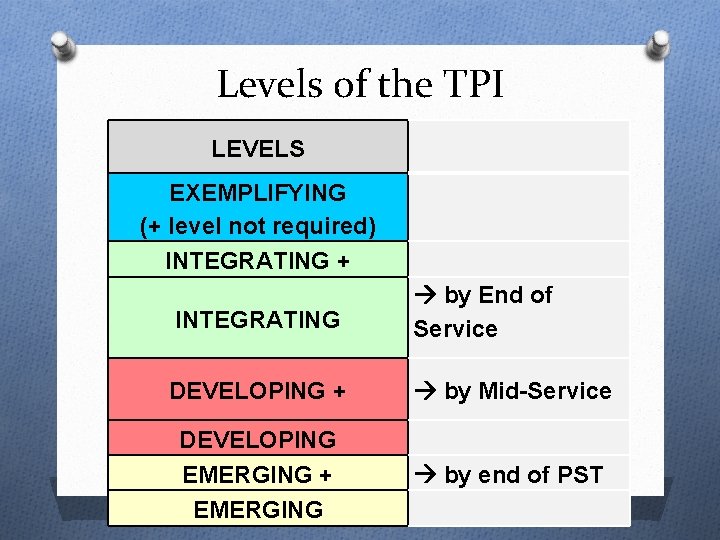
Levels of the TPI LEVELS EXEMPLIFYING (+ level not required) INTEGRATING + INTEGRATING by End of Service DEVELOPING + DEVELOPING EMERGING + EMERGING by Mid-Service by end of PST
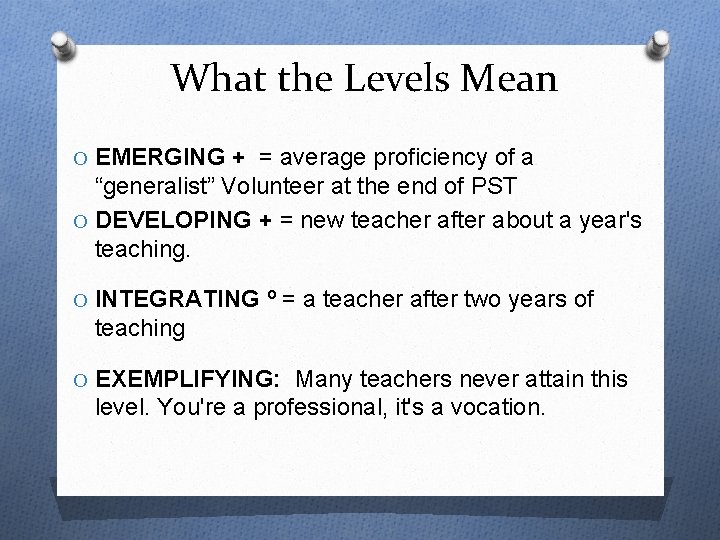
What the Levels Mean O EMERGING + = average proficiency of a “generalist” Volunteer at the end of PST O DEVELOPING + = new teacher after about a year's teaching. O INTEGRATING º = a teacher after two years of teaching O EXEMPLIFYING: Many teachers never attain this level. You're a professional, it's a vocation.
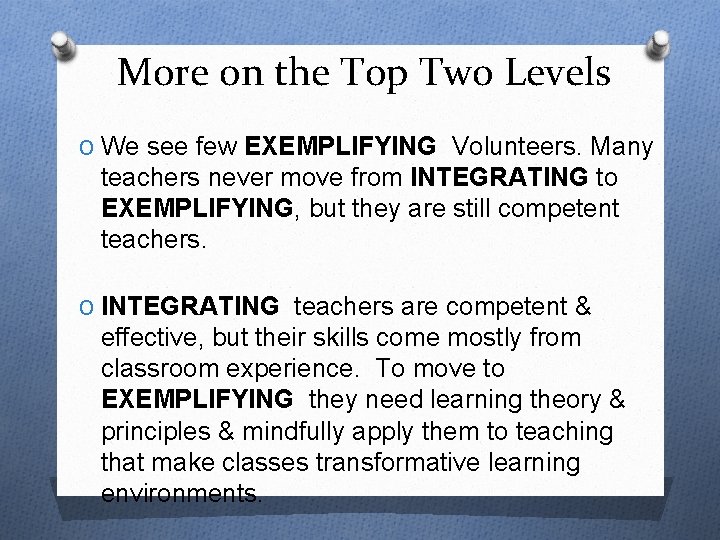
More on the Top Two Levels O We see few EXEMPLIFYING Volunteers. Many teachers never move from INTEGRATING to EXEMPLIFYING, but they are still competent teachers. O INTEGRATING teachers are competent & effective, but their skills come mostly from classroom experience. To move to EXEMPLIFYING they need learning theory & principles & mindfully apply them to teaching that make classes transformative learning environments.
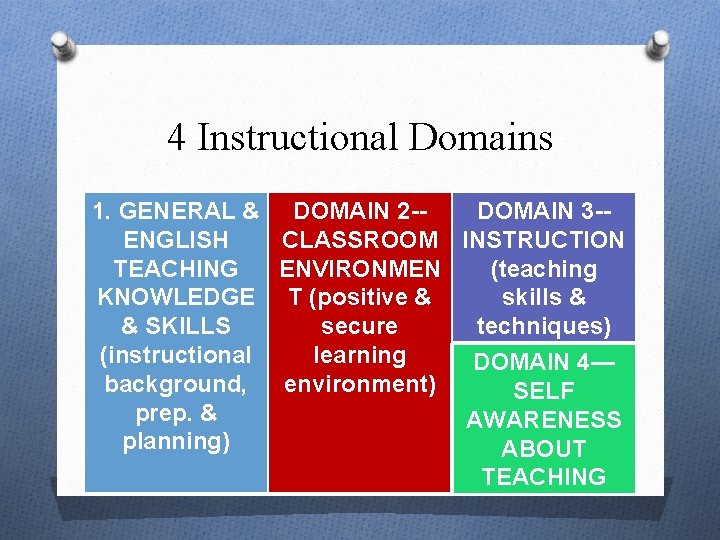
4 Instructional Domains 1. GENERAL & ENGLISH TEACHING KNOWLEDGE & SKILLS (instructional background, prep. & planning) DOMAIN 2 -DOMAIN 3 -CLASSROOM INSTRUCTION ENVIRONMEN (teaching T (positive & skills & secure techniques) learning DOMAIN 4— environment) SELF AWARENESS ABOUT TEACHING
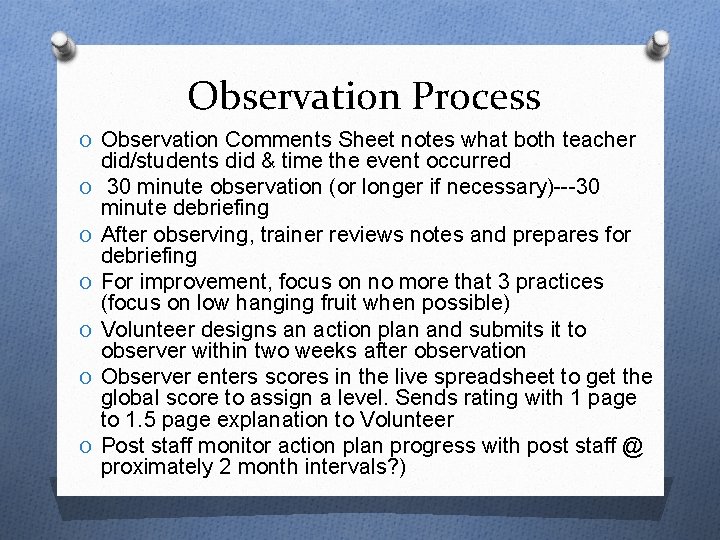
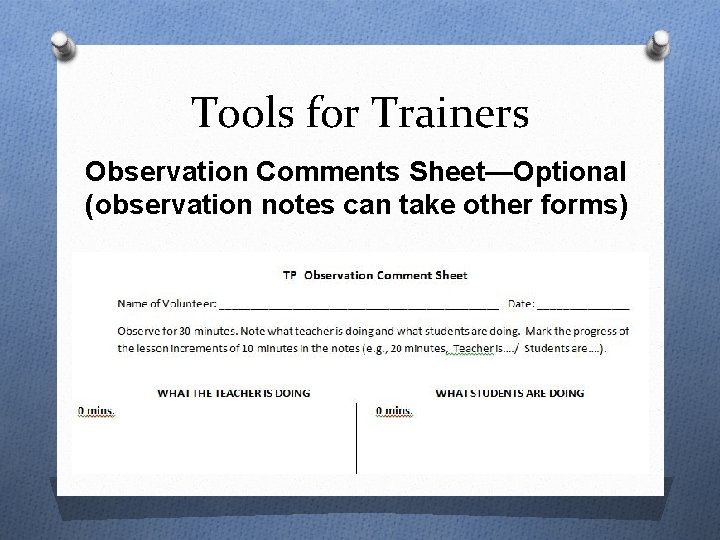
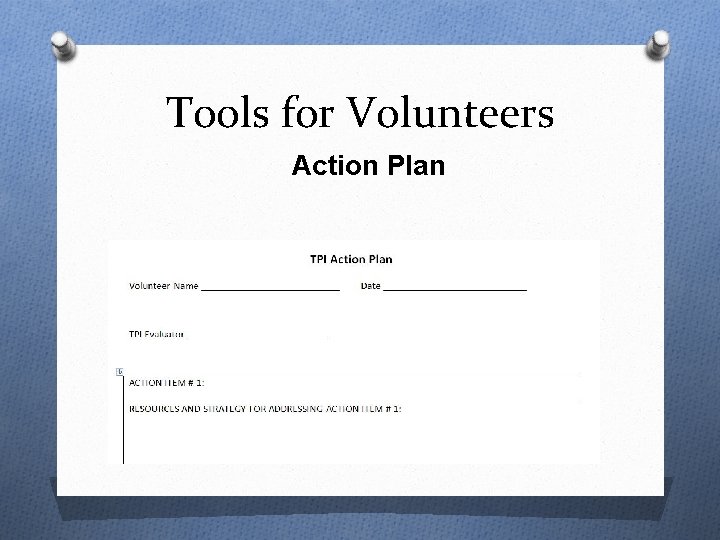
Observation Process O Observation Comments Sheet notes what both teacher O O O did/students did & time the event occurred 30 minute observation (or longer if necessary)---30 minute debriefing After observing, trainer reviews notes and prepares for debriefing For improvement, focus on no more that 3 practices (focus on low hanging fruit when possible) Volunteer designs an action plan and submits it to observer within two weeks after observation Observer enters scores in the live spreadsheet to get the global score to assign a level. Sends rating with 1 page to 1. 5 page explanation to Volunteer Post staff monitor action plan progress with post staff @ proximately 2 month intervals? )
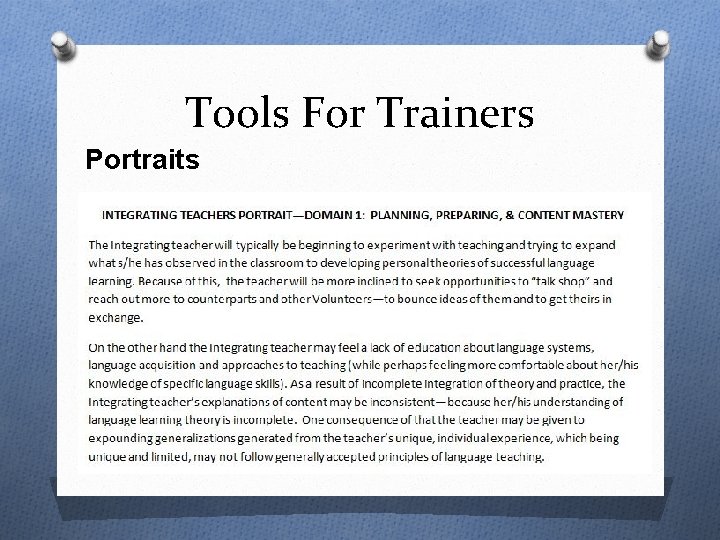
Tools For Trainers Portraits
Tools for Trainers Observation Comments Sheet—Optional (observation notes can take other forms)
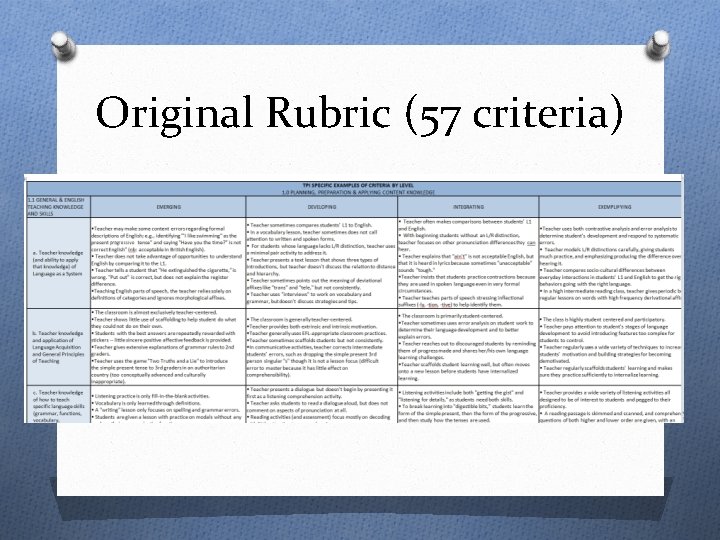
Original Rubric (57 criteria)
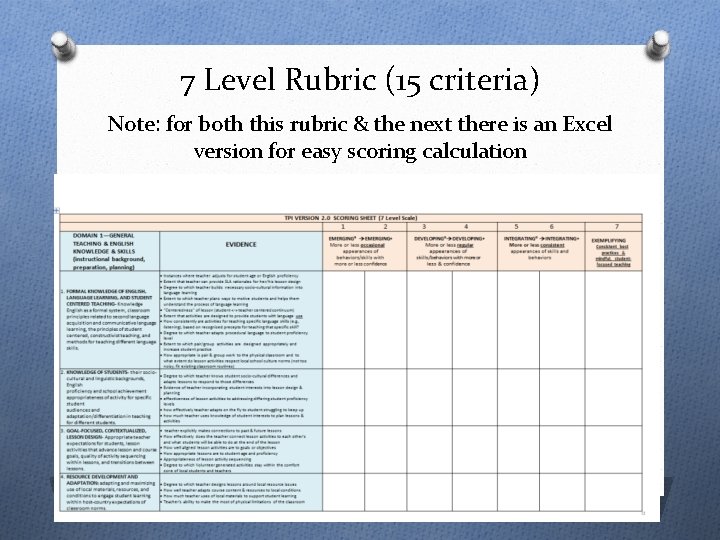
7 Level Rubric (15 criteria) Note: for both this rubric & the next there is an Excel version for easy scoring calculation
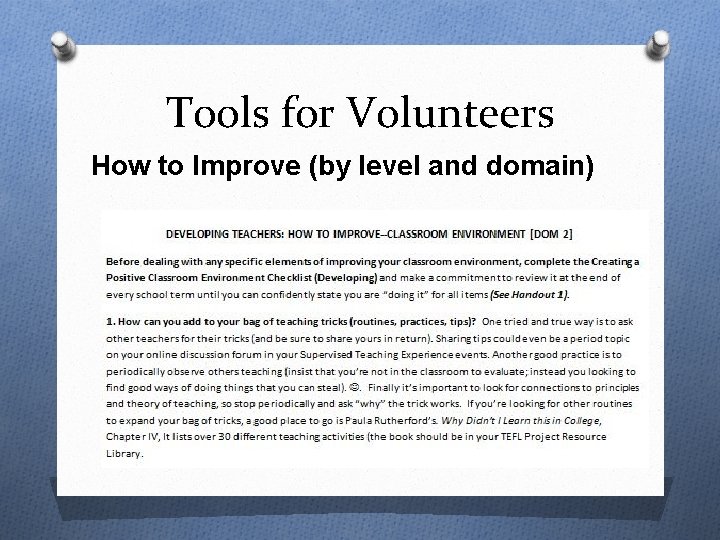
Tools for Volunteers How to Improve (by level and domain)
Tools for Volunteers Action Plan
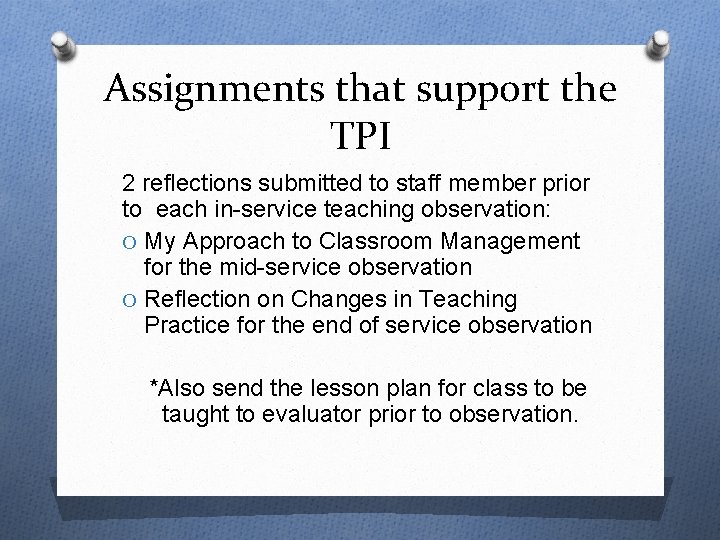
Assignments that support the TPI 2 reflections submitted to staff member prior to each in-service teaching observation: O My Approach to Classroom Management for the mid-service observation O Reflection on Changes in Teaching Practice for the end of service observation *Also send the lesson plan for class to be taught to evaluator prior to observation.
Tools for Volunteers O Each “How to Improve” guide has a checklist PCVs can use to see where they are when the start and then check back later to evaluate their programs. O The TEFL Resource Library (did you get it? )
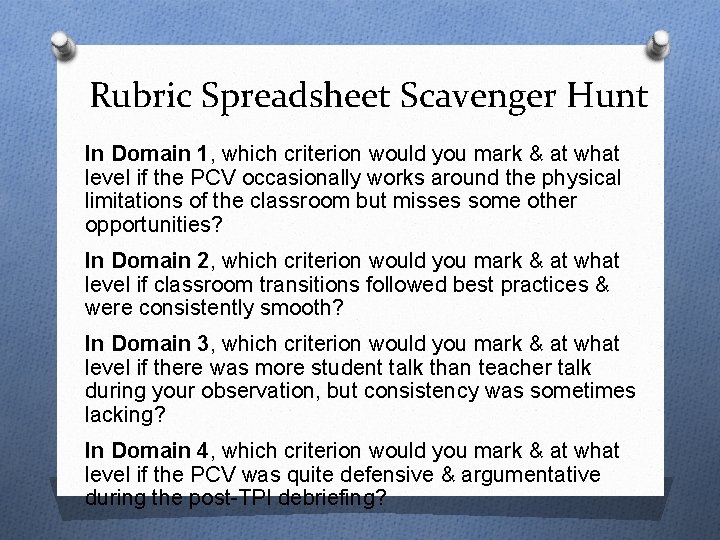
Rubric Spreadsheet Scavenger Hunt In Domain 1, which criterion would you mark & at what level if the PCV occasionally works around the physical limitations of the classroom but misses some other opportunities? In Domain 2, which criterion would you mark & at what level if classroom transitions followed best practices & were consistently smooth? In Domain 3, which criterion would you mark & at what level if there was more student talk than teacher talk during your observation, but consistency was sometimes lacking? In Domain 4, which criterion would you mark & at what level if the PCV was quite defensive & argumentative during the post-TPI debriefing?
Benefits O More rigorous O More specific feedback from trainer O Specific guidance on how to improve for Volunteers O All see professional development takes time and commitment O All take the TPI seriously (as they do the LPI) O Gives all a common language to talk about teaching O Moves observation debriefings from “you have to do better about this, ” to “these steps will improve your teaching”
Try the TPI on a Teaching Video O Use only Domain 3 in the interests of time (since domain 3 is about “instruction” it is more directly observed than some other domains) O You’ll watch about 15 minutes of the video. O Score what you saw and then compare your results with a partner. If you rated the video differently can you negotiate to come to consensus?