
Toxoplasmosis in twenty minutes Michael Addidle Clinical Microbiologist
Toxoplasmosis in twenty minutes Michael Addidle Clinical Microbiologist Pathlab
Preview Background knowledge n Toxoplasmosis in immunocompetent host n Congenital toxoplasmosis n Toxoplasmosis in an immunocompromised patient (HIV) n Ocular toxoplasmosis n Take Home Messages n
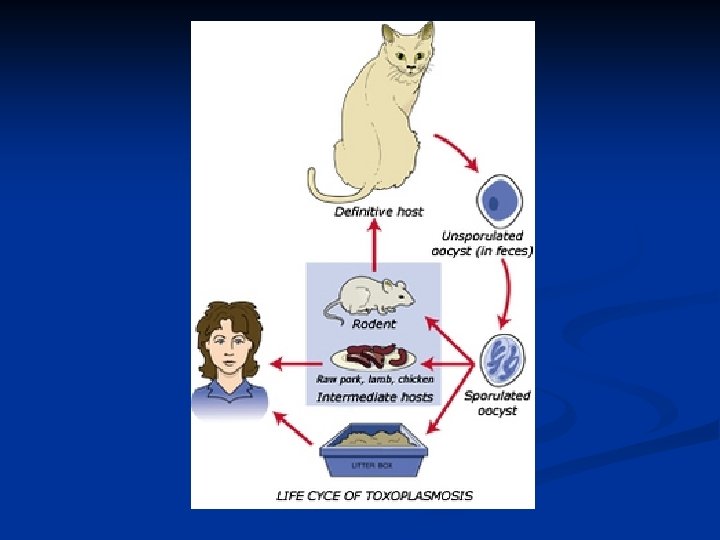
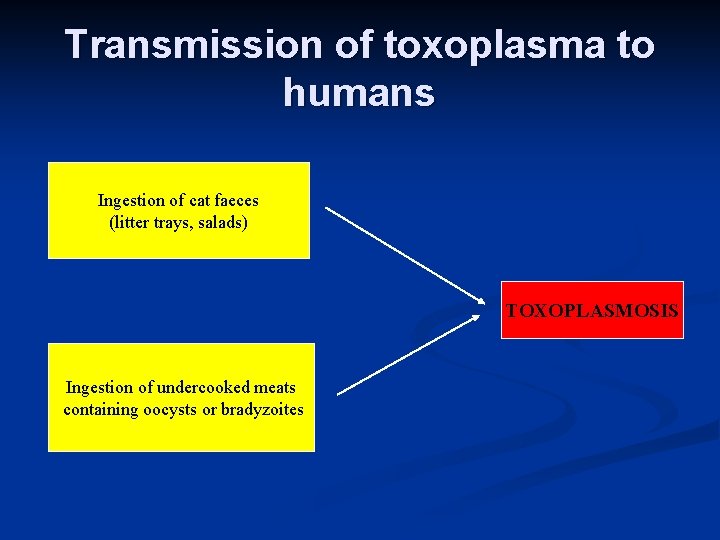
Transmission of toxoplasma to humans Ingestion of cat faeces (litter trays, salads) TOXOPLASMOSIS Ingestion of undercooked meats containing oocysts or bradyzoites
Case vignette: 25 year old male presents with 2 week history of malaise and marked bilateral cervical lymphadenopathy n n What is the differential? What tests should be done? • Relative lymphocytosis, mild transaminitis, Toxo Ig. M +ve and Toxo Ig. G positive. EBV(VCA) and CMV Ig. M negative. HIV negative • Is the diagnosis of toxoplasmosis correct. ? • Should the patient be treated? • How long will the toxoplasma Ig. M be positive for? In immunocompetent individuals acute toxoplasmosis asymptomatic in up to 80% of individuals.
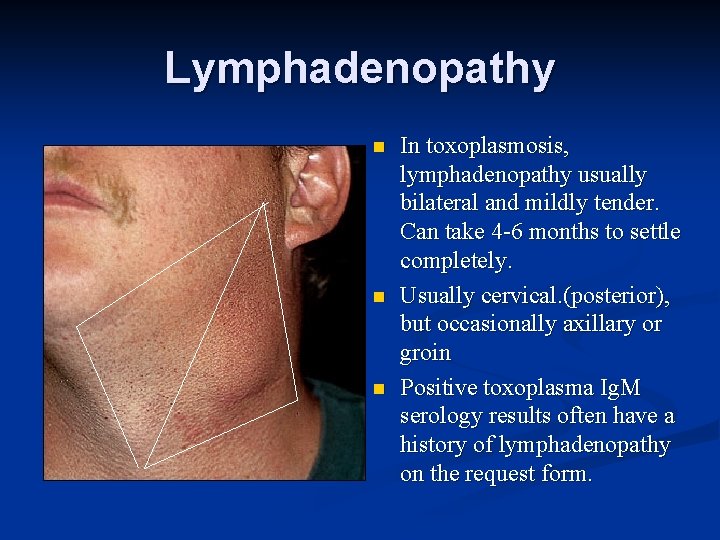
Lymphadenopathy n n n In toxoplasmosis, lymphadenopathy usually bilateral and mildly tender. Can take 4 -6 months to settle completely. Usually cervical. (posterior), but occasionally axillary or groin Positive toxoplasma Ig. M serology results often have a history of lymphadenopathy on the request form.
Pitfalls in toxoplasma serology Summary Beware cross reactive Toxoplasma Ig. Ms from strong positive EBV or CMV Ig. Ms n A toxoplasma Ig. M may hang around for anything up to 2 years n Unusual to get a Ig. M positive Ig. G negative toxo result. n
Case Vignette: 29 yr old pregnant(13/40) lady with cervical lympadenopathy and fever. She has just got a kitten for the impending new arrival. What tests would you order? n FBC, LFTs, EBV, CMV, Toxo serology, HIV. n Toxoplasma Ig. M positive, Toxoplasma Ig. G positive. HIV, CMV and EBV serology negative. n
Is the foetus at risk? Yes n Risk of toxoplasma transmission from mother to baby increases with gestational age. 6% at 13 weeks to 72% at 36 weeks. n Risk of serious symptoms/foetal damage resulting from congenital infection is highest in early pregnancy and decreases with gestational age. n
What further investigations would you carry out? n n Ensure EBV and CMV serology is negative. Go back and check Toxoplasma serology on the booking bloods. Refer to Obstetrician Check Toxoplasma Ig. G avidity (Antibodies gradually become more avid (strength of attachment to antigen) as time from primary infection increases, therefore high avidity more likely to represent remote/distant infection. This is useful because of the length of time that Toxo Ig. M remains positive for)
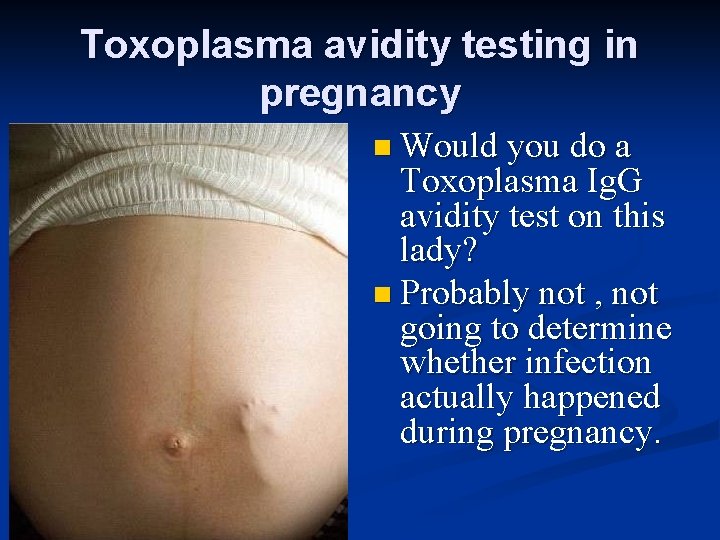
Toxoplasma avidity testing in pregnancy n Would you do a Toxoplasma Ig. G avidity test on this lady? n Probably not , not going to determine whether infection actually happened during pregnancy.
Obstetric follow up n n n If congenital toxoplasmosis is suspected on basis of serology, obstetrician will monitor by serial ultrasounds and offer amniocentesis at 2022 wks. Spiramycin until term for pregnant mother with proven toxoplasma infection… unless If congenital infection of foetus is confirmed by PCR of amniotic fluid then treatment of mother with pyrimethamine and sulphadiazine instead. (and baby will need treated as well when born)
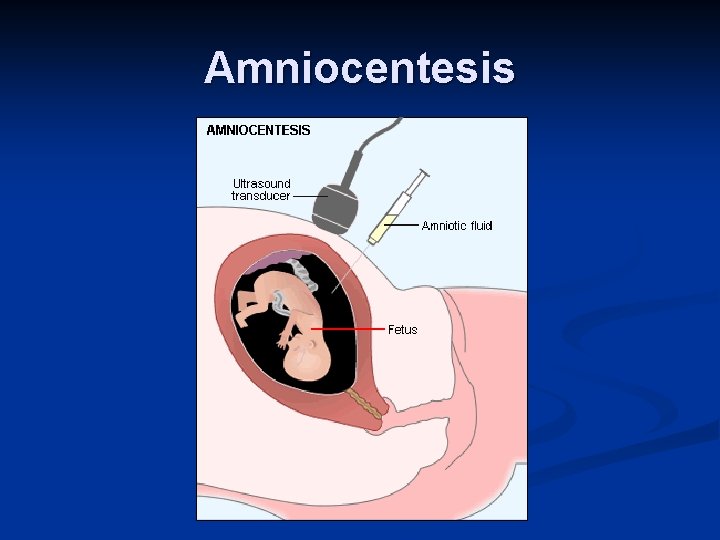
Amniocentesis
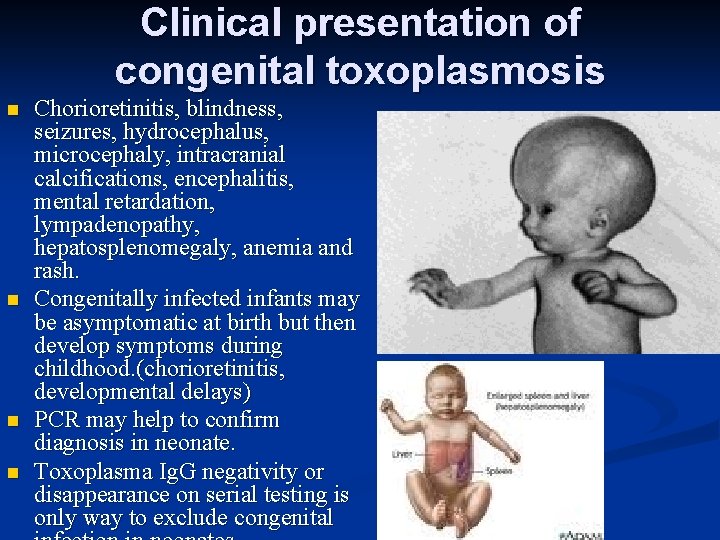
Clinical presentation of congenital toxoplasmosis n n Chorioretinitis, blindness, seizures, hydrocephalus, microcephaly, intracranial calcifications, encephalitis, mental retardation, lympadenopathy, hepatosplenomegaly, anemia and rash. Congenitally infected infants may be asymptomatic at birth but then develop symptoms during childhood. (chorioretinitis, developmental delays) PCR may help to confirm diagnosis in neonate. Toxoplasma Ig. G negativity or disappearance on serial testing is only way to exclude congenital
28 year old HIV patient presents with 3 week history of headache, fever and focal seizures of his right arm. Compliance with anti-retrovirals has been poor. What is the differential diagnosis? Cryptococcal meningitis, TB, cerebral toxoplasmosis, lymphoma n What investigations would you perform? n CT Brain CD 4 count (usually less than 100 in HIV cerebral toxo), toxoplasma serology. CSF examination including cryptococcal antigen and TB culture. Consider toxoplasma PCR on CSF based on CD 4 count and radiological findings.
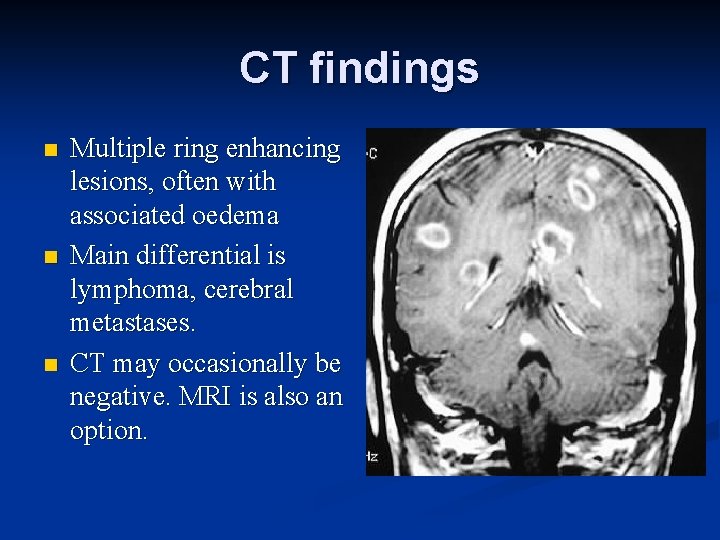
CT findings n n n Multiple ring enhancing lesions, often with associated oedema Main differential is lymphoma, cerebral metastases. CT may occasionally be negative. MRI is also an option.
Edinburgh in the Early 90’s n n HIV rife amongst the IDU population. Whole ward dedicated to AIDS related illness at the Edinburgh ID hospital (Amongst patients, PCP most common but always a few with cryptococcal meningitis and cerebral toxoplasmosis)
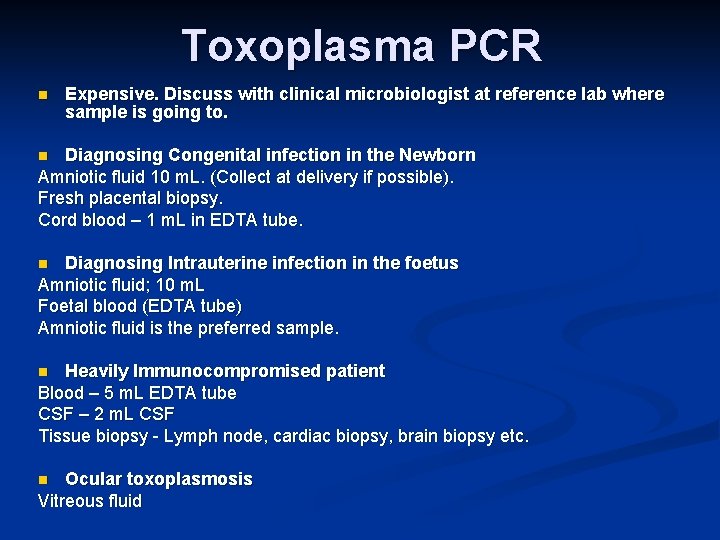
Toxoplasma PCR n Expensive. Discuss with clinical microbiologist at reference lab where sample is going to. Diagnosing Congenital infection in the Newborn Amniotic fluid 10 m. L. (Collect at delivery if possible). Fresh placental biopsy. Cord blood – 1 m. L in EDTA tube. n Diagnosing Intrauterine infection in the foetus Amniotic fluid; 10 m. L Foetal blood (EDTA tube) Amniotic fluid is the preferred sample. n Heavily Immunocompromised patient Blood – 5 m. L EDTA tube CSF – 2 m. L CSF Tissue biopsy - Lymph node, cardiac biopsy, brain biopsy etc. n Ocular toxoplasmosis Vitreous fluid n
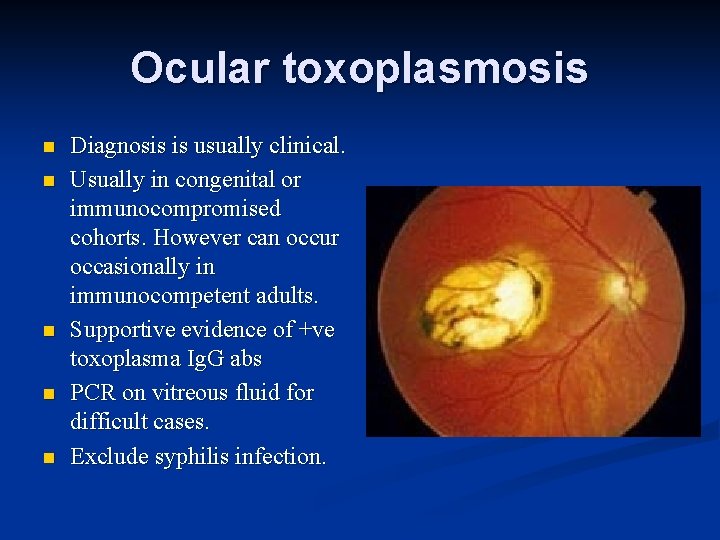
Ocular toxoplasmosis n n n Diagnosis is usually clinical. Usually in congenital or immunocompromised cohorts. However can occur occasionally in immunocompetent adults. Supportive evidence of +ve toxoplasma Ig. G abs PCR on vitreous fluid for difficult cases. Exclude syphilis infection.
Take Home Messages Toxoplasmosis is not uncommon n Be aware of the relative importance of toxoplasmosis in different clinical scenarios eg immunocompetent, congenital, immunocompromised. n Be aware of the tests that are available for diagnosis, including the Ig. G avidity test and the PCR test and when they are best utilised. n Be sure a positive Toxoplasma Ig. M is genuine. n
- Slides: 21