
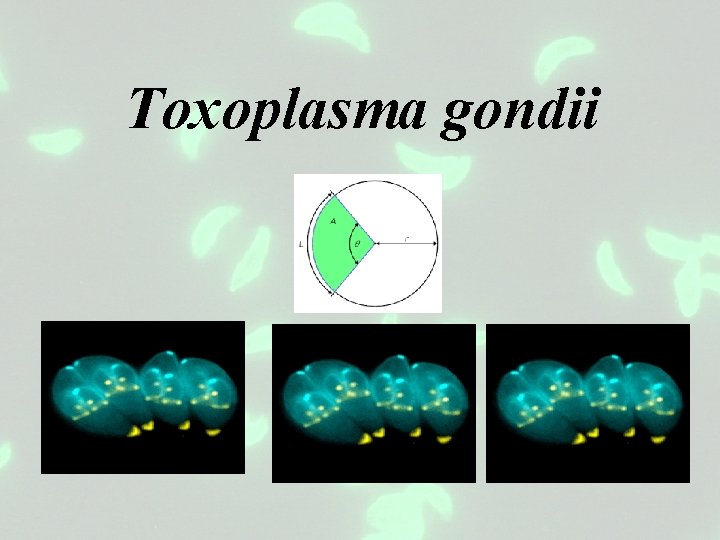
Toxoplasma gondii Toxoplasma gondii is one of the
- Slides: 24
Toxoplasma gondii
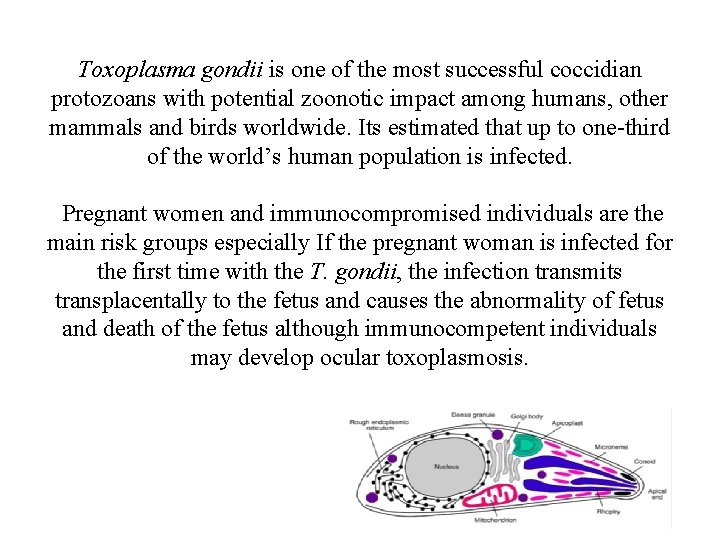
Toxoplasma gondii is one of the most successful coccidian protozoans with potential zoonotic impact among humans, other mammals and birds worldwide. Its estimated that up to one-third of the world’s human population is infected. Pregnant women and immunocompromised individuals are the main risk groups especially If the pregnant woman is infected for the first time with the T. gondii, the infection transmits transplacentally to the fetus and causes the abnormality of fetus and death of the fetus although immunocompetent individuals may develop ocular toxoplasmosis.
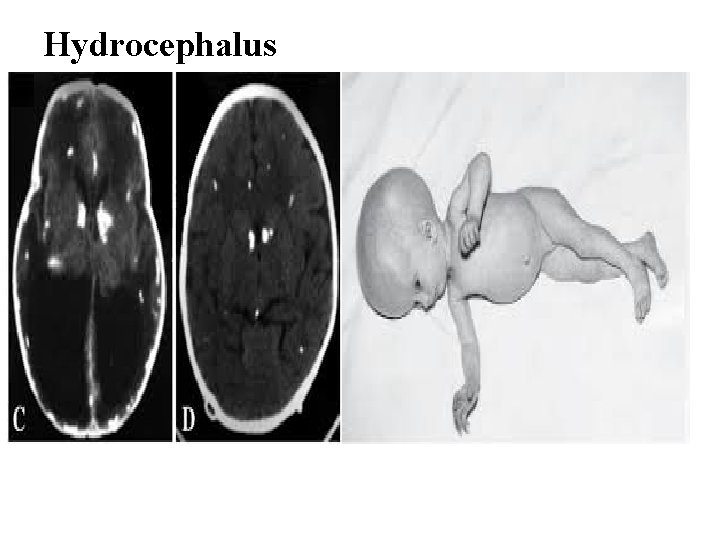
Hydrocephalus
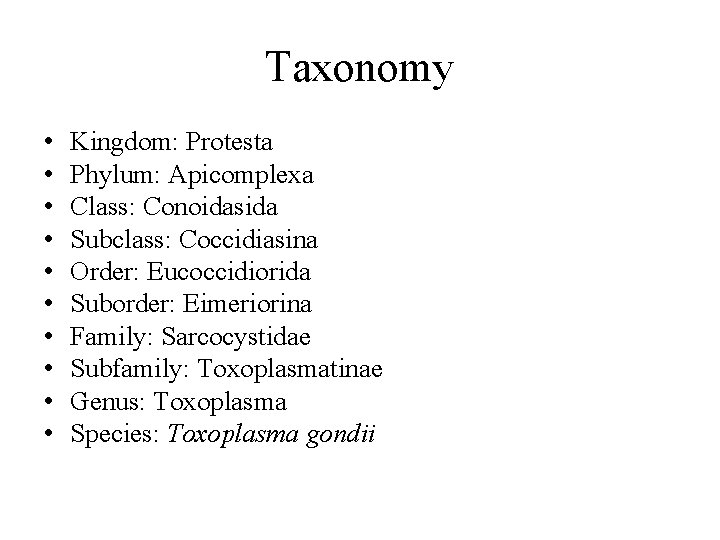
Taxonomy • • • Kingdom: Protesta Phylum: Apicomplexa Class: Conoidasida Subclass: Coccidiasina Order: Eucoccidiorida Suborder: Eimeriorina Family: Sarcocystidae Subfamily: Toxoplasmatinae Genus: Toxoplasma Species: Toxoplasma gondii
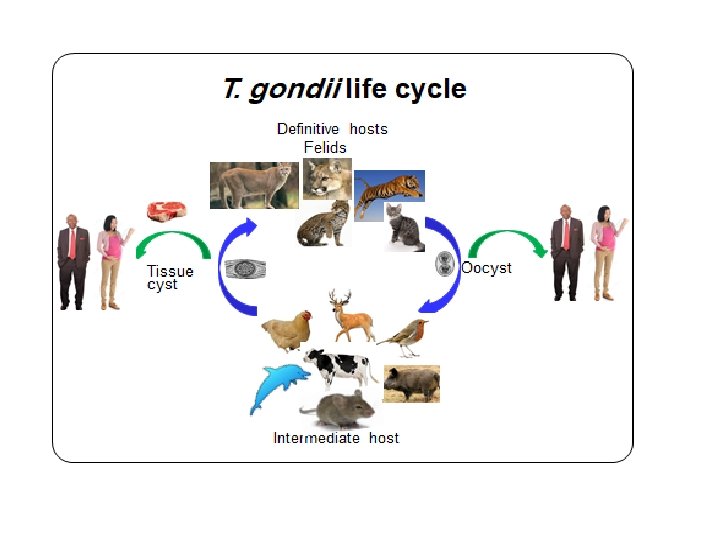
Life Cycle of Toxoplasma gondii q Felids serve as the definitive host for T. gondii in which sexual reproduction occurs. Oocyst shedding has observed in a wide range of feline species, from domestic cats to Siberian tigers. q The life cycle of the parasite includes an asexual reproduction in the intermediate hosts (mammals and birds) and sexual reproduction in the definitive host (feline). q Ingestion of sporulated oocysts by drinking water or eating unwashed vegetables, eating raw or undercooked meat containing tissue cysts are the main transmission routes in humans and animals.
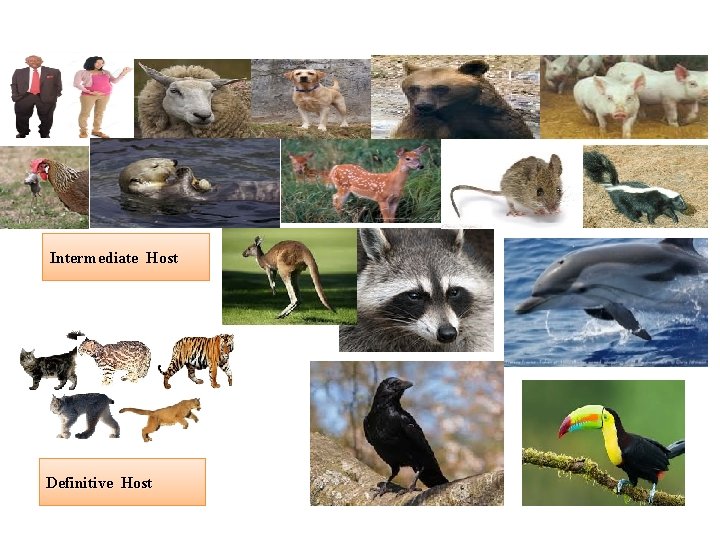
q The second allows for transmission between intermediate hosts without necessitating the involvement of feline species. q The range of intermediate hosts in which T. gondii has been identified - including animals as diverse as humans, rats, dogs, black bears, pigs, sheep, crows, toucans, sea otters, raccoons, striped skunks, chickens, kangaroos and dolphins –is broad enough to suggest that all mammals and birds may serve as intermediate hosts
Intermediate Host Definitive Host
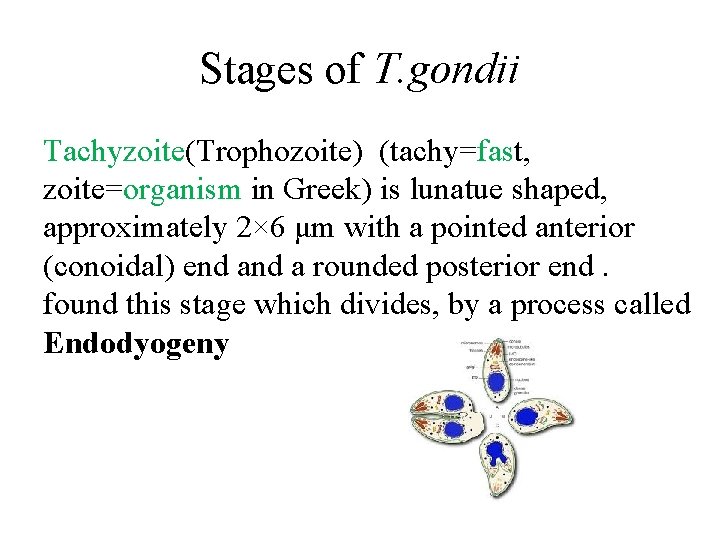
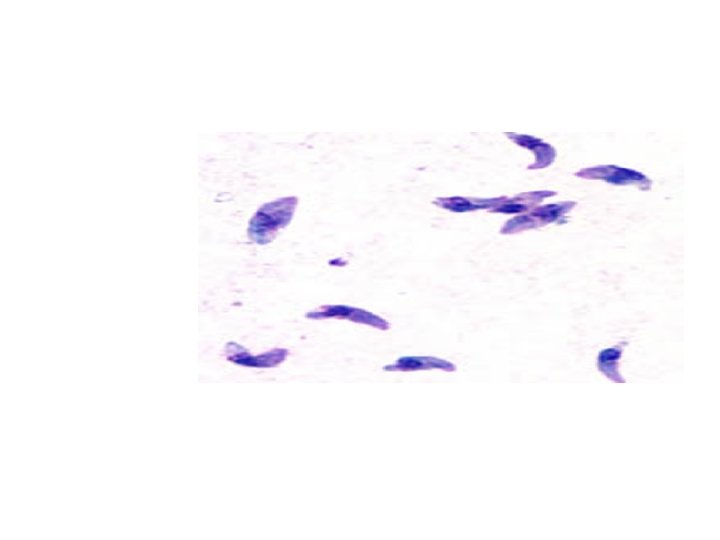
Stages of T. gondii Tachyzoite(Trophozoite) (tachy=fast, zoite=organism in Greek) is lunatue shaped, approximately 2× 6 μm with a pointed anterior (conoidal) end a rounded posterior end. found this stage which divides, by a process called Endodyogeny
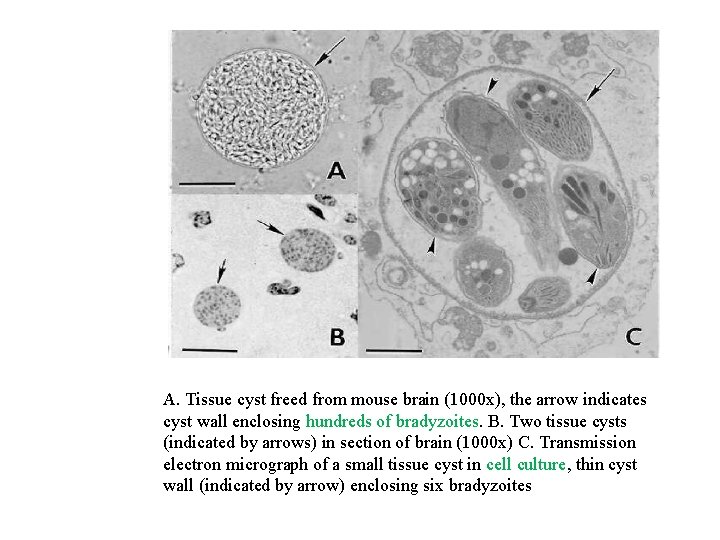
Bradyzoite and Tissue Cysts q The term ‘bradyzoite’ (Brady = slow, zoite=organism in Greek) was proposed by Frenkel (1973) to describe the stage encysted in tissues. Bradyzoites are also called cystozoites. q Suggested that cysts should be called tissue cysts to avoid confusion with oocysts. Lainson (1958) was the first who identified the encysted stage of the parasite. Tissue cyst is enclosed by an elastic cyst wall, that varies in size; may be as small as 5μm in diameter and contain only two bradyzoites. While older ones may include thousands of organisms.
q. In the brain the cysts are often spheroidal and rarely reach a diameter of 70μm, whereas, intramuscular cysts are elongated and may be 100 μm long. Although tissue cysts may develop in visceral organs, including the lungs, liver, and kidneys, they are more prevalent in the neural and muscular tissues.
A. Tissue cyst freed from mouse brain (1000 x), the arrow indicates cyst wall enclosing hundreds of bradyzoites. B. Two tissue cysts (indicated by arrows) in section of brain (1000 x) C. Transmission electron micrograph of a small tissue cyst in cell culture, thin cyst wall (indicated by arrow) enclosing six bradyzoites
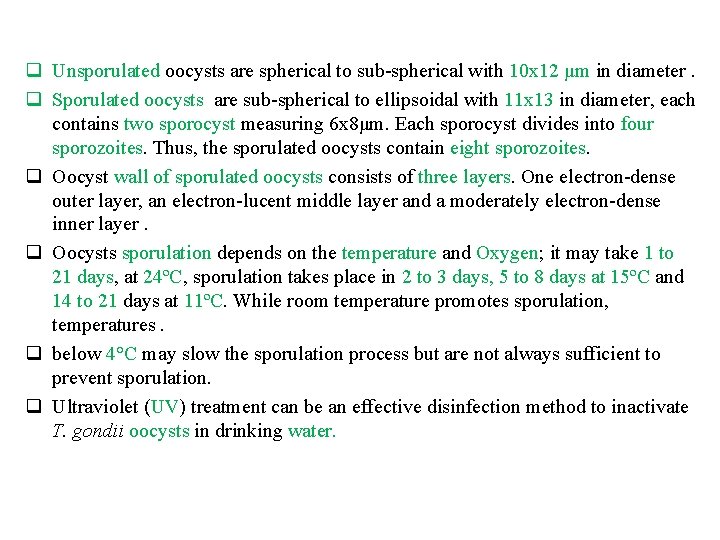
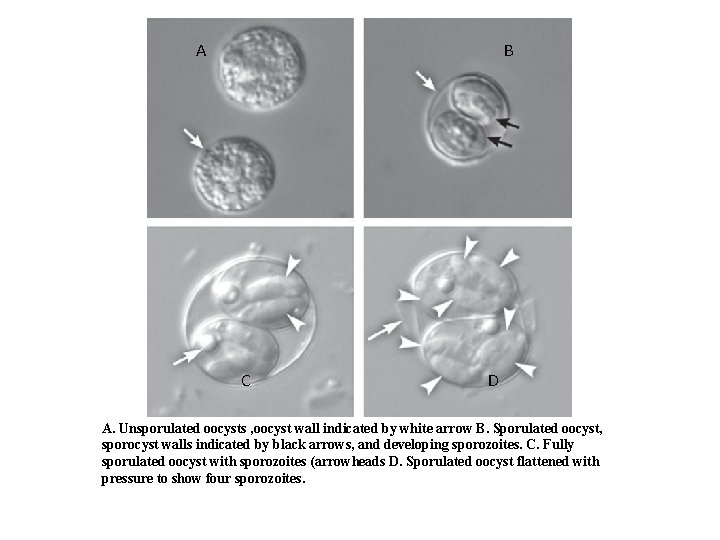
q Unsporulated oocysts are spherical to sub-spherical with 10 x 12 μm in diameter. q Sporulated oocysts are sub-spherical to ellipsoidal with 11 x 13 in diameter, each contains two sporocyst measuring 6 x 8μm. Each sporocyst divides into four sporozoites. Thus, the sporulated oocysts contain eight sporozoites. q Oocyst wall of sporulated oocysts consists of three layers. One electron-dense outer layer, an electron-lucent middle layer and a moderately electron-dense inner layer. q Oocysts sporulation depends on the temperature and Oxygen; it may take 1 to 21 days, at 24ºC, sporulation takes place in 2 to 3 days, 5 to 8 days at 15ºC and 14 to 21 days at 11ºC. While room temperature promotes sporulation, temperatures. q below 4°C may slow the sporulation process but are not always sufficient to prevent sporulation. q Ultraviolet (UV) treatment can be an effective disinfection method to inactivate T. gondii oocysts in drinking water.
A B C D A. Unsporulated oocysts , oocyst wall indicated by white arrow B. Sporulated oocyst, sporocyst walls indicated by black arrows, and developing sporozoites. C. Fully sporulated oocyst with sporozoites (arrowheads D. Sporulated oocyst flattened with pressure to show four sporozoites.
Main and Rare Transmission Routes q The main routes are the vertical and horizontal transmission. In humans, congenital toxoplasmosis is the main concern measured as vertical route; the transfer happened from mother to fetus. Horizontal transmission occurs by the ingestion of tissue cysts in raw or poorly cooked meat, intake of food or water contaminated with mature oocysts feco-orally. q Rarely transmission can occur by needle stick injury, organ transplantation and blood transfusion from a seropositive donors to the seronegative recipients.
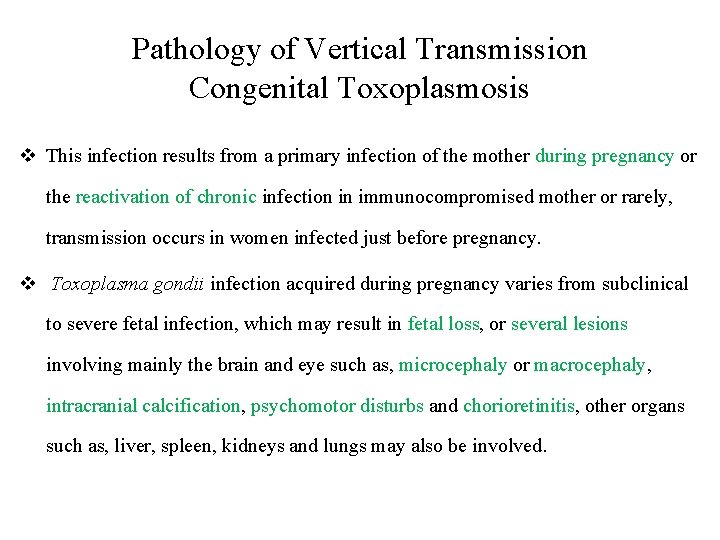
Pathology of Vertical Transmission Congenital Toxoplasmosis v This infection results from a primary infection of the mother during pregnancy or the reactivation of chronic infection in immunocompromised mother or rarely, transmission occurs in women infected just before pregnancy. v Toxoplasma gondii infection acquired during pregnancy varies from subclinical to severe fetal infection, which may result in fetal loss, or several lesions involving mainly the brain and eye such as, microcephaly or macrocephaly, intracranial calcification, psychomotor disturbs and chorioretinitis, other organs such as, liver, spleen, kidneys and lungs may also be involved.
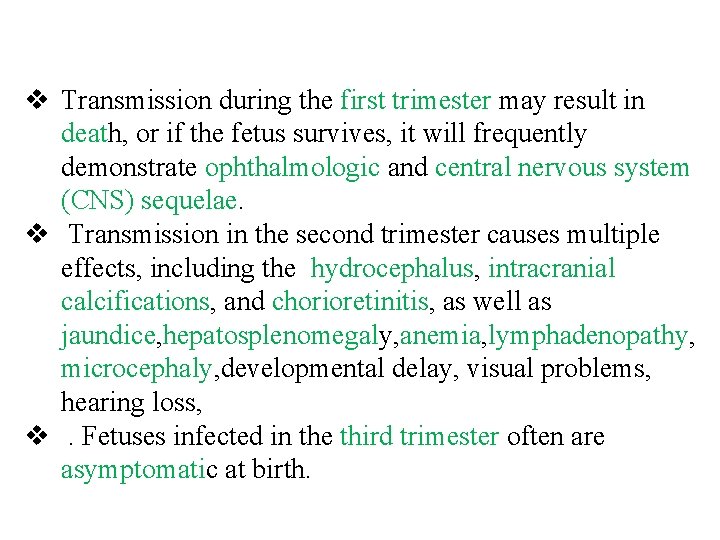
v Transmission during the first trimester may result in death, or if the fetus survives, it will frequently demonstrate ophthalmologic and central nervous system (CNS) sequelae. v Transmission in the second trimester causes multiple effects, including the hydrocephalus, intracranial calcifications, and chorioretinitis, as well as jaundice, hepatosplenomegaly, anemia, lymphadenopathy, microcephaly, developmental delay, visual problems, hearing loss, v. Fetuses infected in the third trimester often are asymptomatic at birth.
Lab Diagnosis 1. 2. 3. 4. 5. Sabin-Feldman Dye Test Latex Agglutination Test (LAT) Modified Agglutination Test Enzyme-linked Immunosorbent Assay (ELISA) Enzyme Linked Fluorescent immunoassay (ELFA). 6. ECL(COBAS) 7. Indirect Immunofluorescent Antibody Test
8. Indirect Hemagglutination Test 9. Complement Fixation test 10. Fast Dipstick Dye Immunoassay 11. Wastern Blooting 12. Culturing Toxoplasma gondii 13. Molecular technique.
Control and Prevention of T. gondii To prevent infection of humans with T. gondii 1. Hands should be washed thoroughly with soap and water after handling meat. 2. All cutting boards , sink tops, knives, and other materials coming in contact with uncooked meat should be washed with soap and water. 3. The meat of any animal should be cooked thoroughly until internal temperature has reached 66 o. C before human or animal consumption, and tasting meat.
4. Cooking times will vary with the thickness and the type of the cut of meat; microwave cooking is unreliable for killing T. gondii. 5. Freezing meat to an internal temperature of – 12 C is effective in killing tissue cysts. and freezing meat overnight in a household freezer is effective and good technique for killing most tissue.
6. Pregnant women should avoid contact with cats, soil, and raw meat. 7. Pet cats should be fed only dry, canned, or cooked food. 8. The cat litter should be emptied every day (to prevent sporulation of oocysts), preferably not by a pregnant woman. 9. Gloves should be worn while gardening, changing cat litter, and handling soil potentially contaminated with cat feces, owners must be advised to keep dogs away from the cat litter box to prevent ingestion of and passage through of oocysts.
10. Vegetables should be washed thoroughly before eating because they may become contaminated with cat feces. 11. Irradiation with high-pressure processing at 400 mega Pascal(Mpa) is effective in killing tissue cysts. 12. To prevent infection in cats, they should never be fed uncooked meat, hunting. There is no need to feed raw meat to cats; trashcans should be also covered to prevent scavenging.