
TOXICOLOGY A HISTORY History of Drugs and the
- Slides: 36
TOXICOLOGY: A HISTORY History of Drugs and the Legislation made to control them
BEFORE WE CAN LEARN HISTORY… • We need to learn drug classifications and categories
DRUG CATEGORIES: • Depressants • Stimulants • Hallucinogens • Date-rape drugs • Steroids
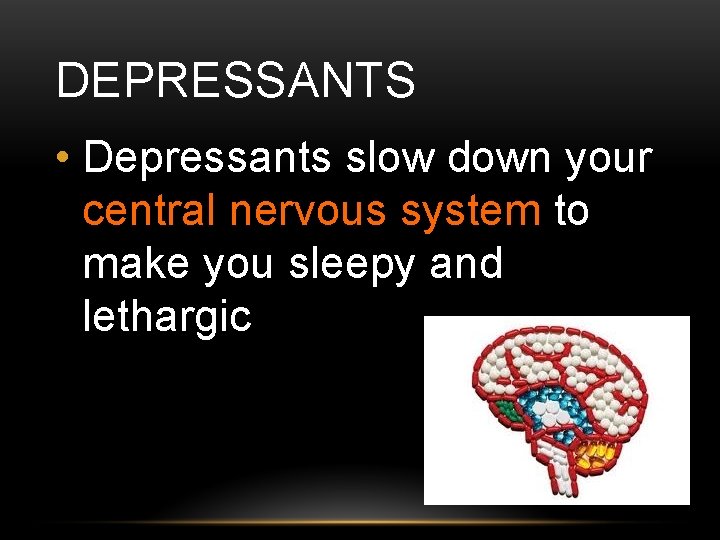
DEPRESSANTS • Depressants slow down your central nervous system to make you sleepy and lethargic
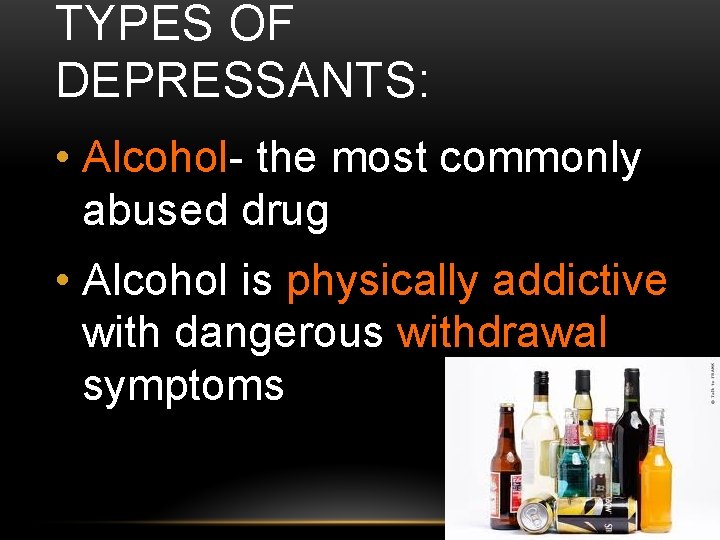
TYPES OF DEPRESSANTS: • Alcohol- the most commonly abused drug • Alcohol is physically addictive with dangerous withdrawal symptoms
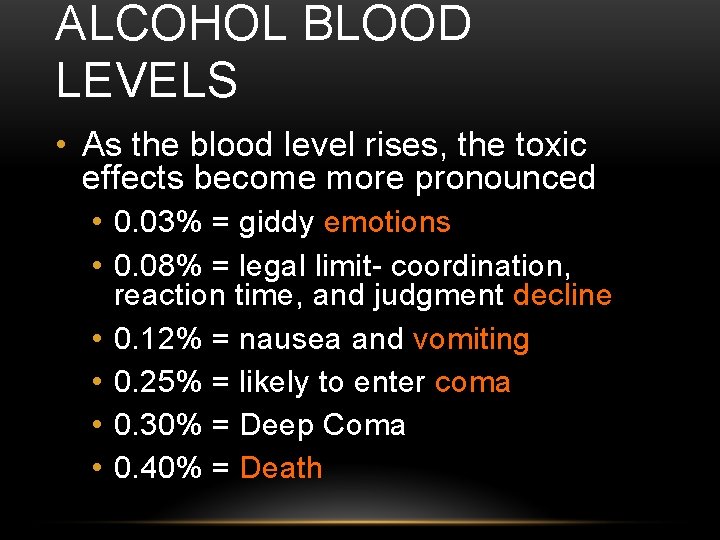
ALCOHOL BLOOD LEVELS • As the blood level rises, the toxic effects become more pronounced • 0. 03% = giddy emotions • 0. 08% = legal limit- coordination, reaction time, and judgment decline • 0. 12% = nausea and vomiting • 0. 25% = likely to enter coma • 0. 30% = Deep Coma • 0. 40% = Death
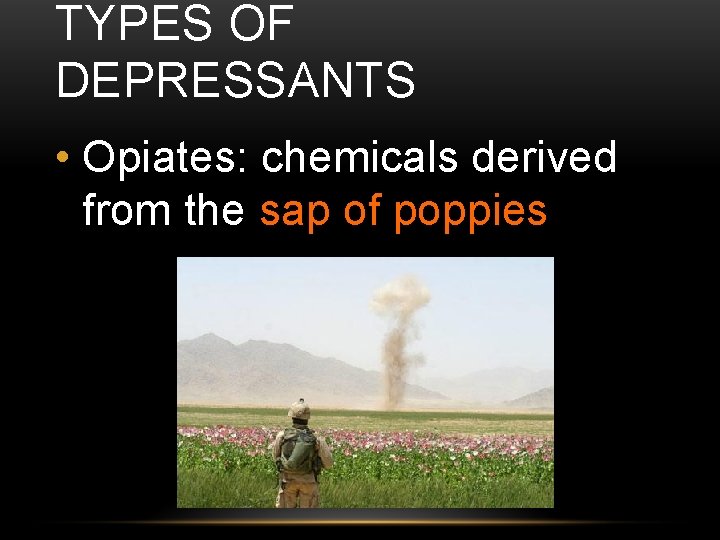
TYPES OF DEPRESSANTS • Opiates: chemicals derived from the sap of poppies
OPIATES • Opiates: • Are Narcotic Sedatives (sleep producing) • Are Analgesics (pain relieving) • Produce: • Euphoria • Lethargy • Coma and Death (in large doses)
EXAMPLES OF OPIATES: • • • Morphine Codeine Heroine Hydrocodone (vicodine) Oxycodone (oxycotton) Methadone
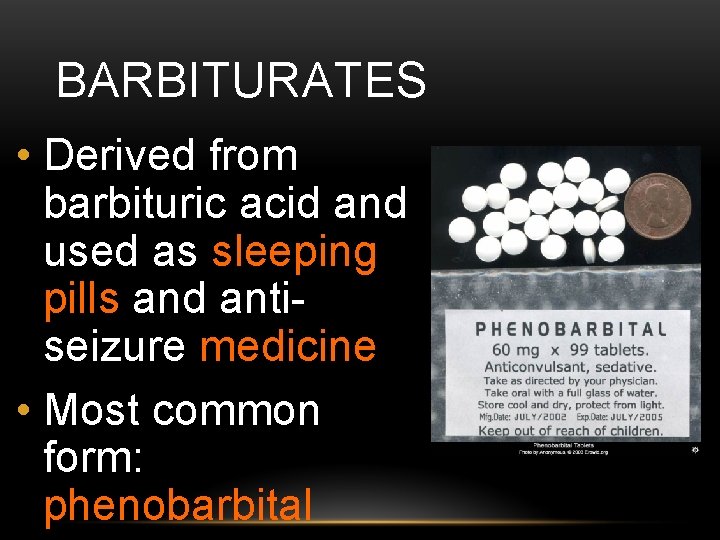
BARBITURATES • Derived from barbituric acid and used as sleeping pills and antiseizure medicine • Most common form: phenobarbital
STIMULANTS • Stimulants increase alertness, lessen fatigue, and suppress appetite. • With continued use, they cause: irritability, anxiousness, aggressive behavior, paranoia, fatigue, and depression
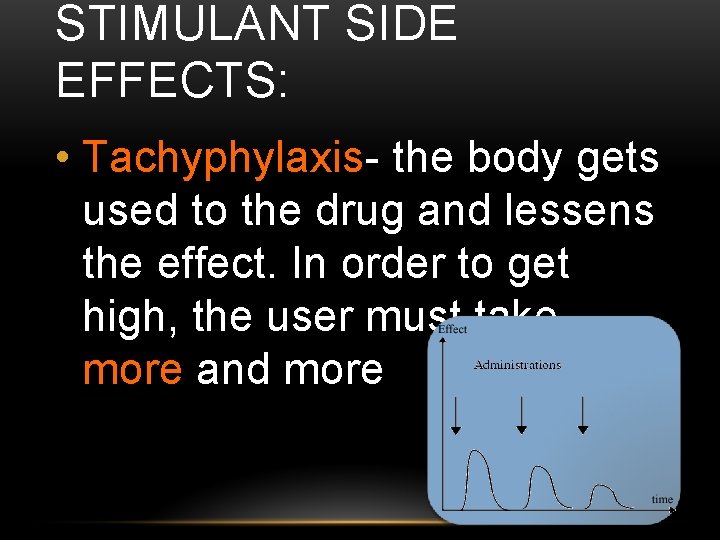
STIMULANT SIDE EFFECTS: • Tachyphylaxis- the body gets used to the drug and lessens the effect. In order to get high, the user must take more and more
TYPE OF STIMULANTS • Amphetamines- increases the levels of hormones in the body • Meth (methamphetamines)
EXAMPLES OF STIMULANTS: • • Xanthine (Xanax) Caffeine Nicotine Meth Ephedrine/Pseudoephedrine Adderall MDA and MDMA Cocaine
HALLUCINOGENS • Alter perceptions and mood, lead to delusional thinking, and cause hallucinations
HALLUCINATION V. DELUSION • Hallucination: sensory experience that isn’t real and may affect any or all of the senses • Delusion: false beliefs that have little or no basis in reality
TYPES OF HALLUCINOGENS: • Marijuana • Cacti and Mushrooms • Chemicals
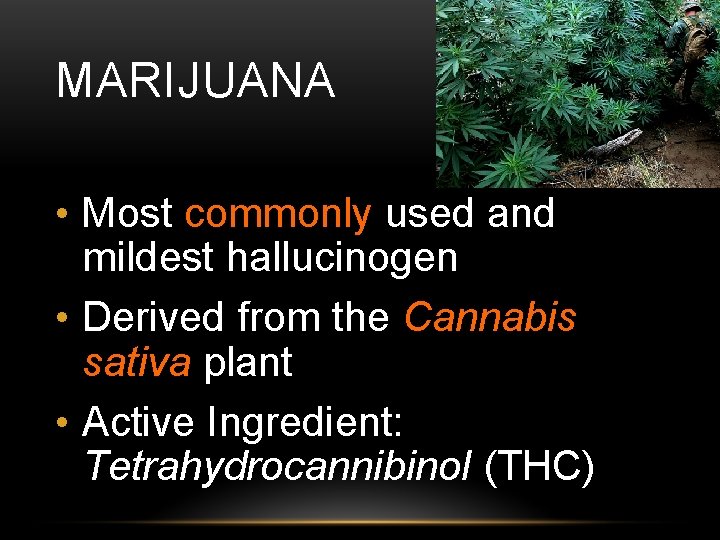
MARIJUANA • Most commonly used and mildest hallucinogen • Derived from the Cannabis sativa plant • Active Ingredient: Tetrahydrocannibinol (THC)
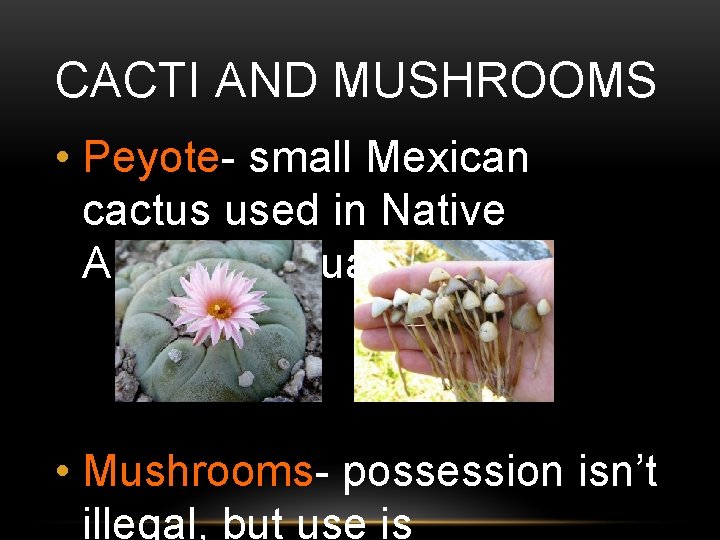
CACTI AND MUSHROOMS • Peyote- small Mexican cactus used in Native American rituals • Mushrooms- possession isn’t illegal, but use is
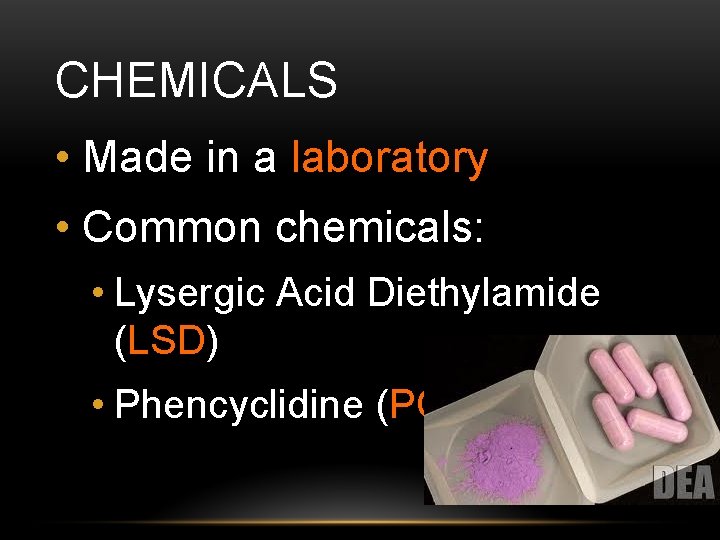
CHEMICALS • Made in a laboratory • Common chemicals: • Lysergic Acid Diethylamide (LSD) • Phencyclidine (PCP)
DATE-RAPE DRUGS • Cause: • Sedation • Compliance • Poor Judgment • Memory Loss
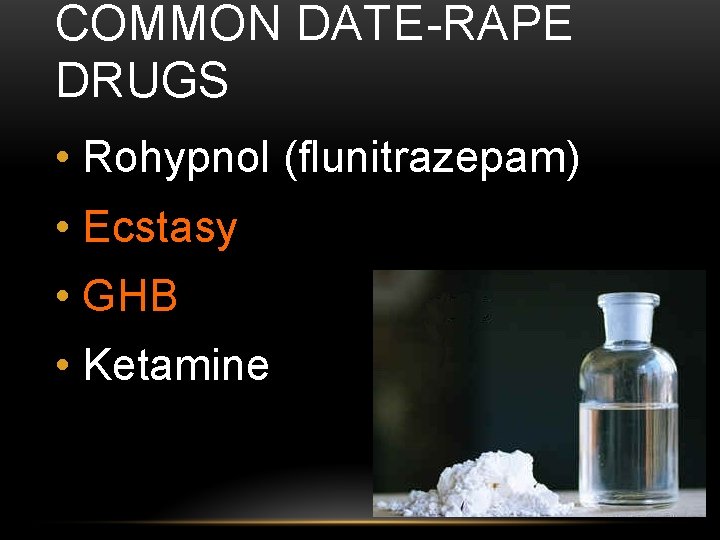
COMMON DATE-RAPE DRUGS • Rohypnol (flunitrazepam) • Ecstasy • GHB • Ketamine
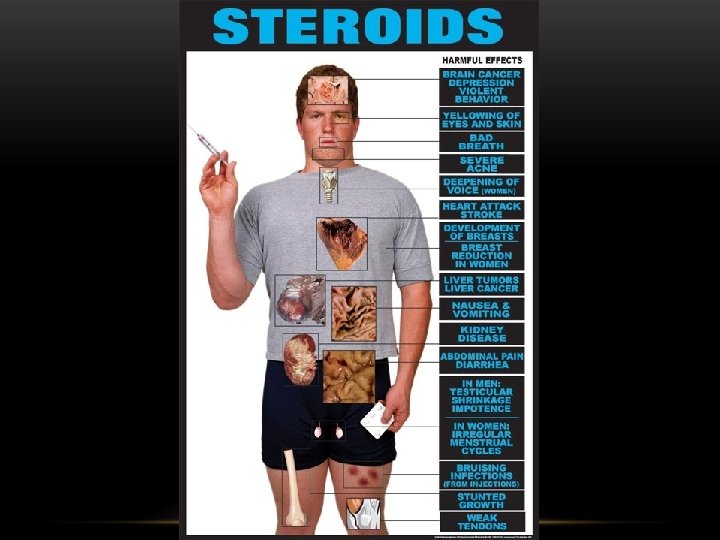
STEROIDS • Appear natural in small amounts • Cause muscle growth, increased strength, and improved reflexes when taken in large amounts
NEGATIVE EFFECTS OF STEROIDS • Hair Loss • Impotence • Liver Damage • Aggressive Behavior
CONTROLLED SUBSTANCES ACT • 1970 act- made manufacture, importation, possession, use and distribution of certain substances regulated
SCHEDULE I CONTROLLED SUBSTANCE • High potential for abuse • No accepted medical use • Lack of safety for use of the drug
EXAMPLES OF SCHEDULE I • GHB • Heroin • LSD • Marijuana • Mescaline
SCHEDULE II CONTROLLED SUBSTANCE • High potential for abuse • Has a currently accepted medical use • Abuse of drug may lead to dependence
EXAMPLES OF SCHEDULE II • • • Cocaine Opium Oxycodone Morphine Adderall Vicodin
SCHEDULE III CONTROLLED SUBSTANCE • Has potential for abuse less than other drugs in I and II • Currently accepted as medical treatment • Abuse may lead to moderate or low dependence
EXAMPLES OF SCHEDULE III • Anabolic Steroids • Ketamine • Codeine when mixed with pain killer
SCHEDULE IV CONTROLLED SUBSTANCE • Low potential for abuse • Currently accepted as medical treatment • Lead to limited dependence
EXAMPLES OF SCHEDULE IV • Phenobarbital • Nuvigil (stimulant)
SCHEDULE V CONTROLLED SUBSTANCE • Low potential for abuse (lower than any other schedule) • Currently accepted as medical treatment • Very limited dependence
EXAMPLES OF SCHEDULE V • Cough suppressants with codeine