
Toxic Oil Syndrome A new disease A perspective
- Slides: 22
Toxic Oil Syndrome: A new disease A perspective of interaction between host and environment Manuel Posada de la Paz, M. D. Toxic Oil Research Centre Centro de Investigación sobre el Síndrome del Aceite Tóxico (CISAT) Instituto de Salud Carlos III
In 1981 when the epidemic started, and in my position as a specialist in internal medicine I had to face a strange lung disease. Inmediately, my colleagues and I were surprised by an illness with the appearance of an infectious disease but presenting a clinical course that could not be improved by the use of antibiotics. Most of our patients came from the same family and same geographical areas. The evolution of the disease with scleroderma and neuropathy arouse my interest as we had been working in scleroderma and this situation gave us the opportunity to try to know what could be the cause and pathogenesis of this type of illness Later, I was involved in clinical investigation and finally I was introduced in the epidemiology field. Since then, I have been devoted to the study of the etiology and pathogenesis of this interesting disease.
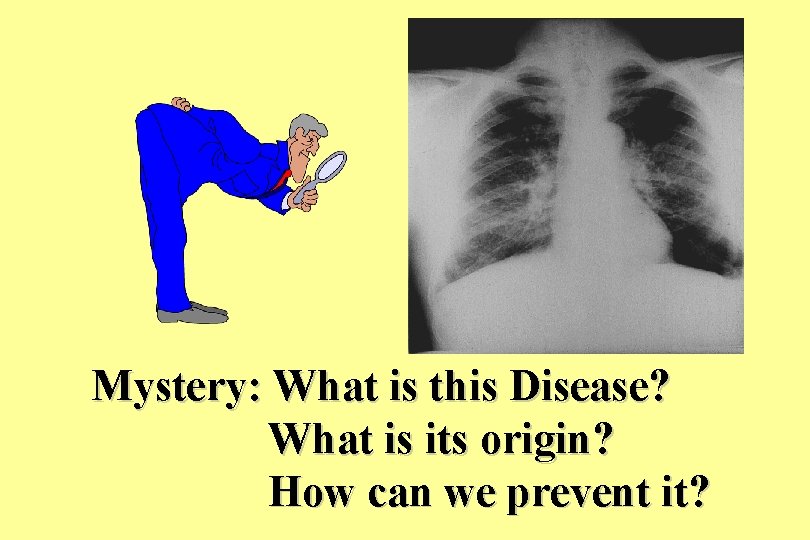
Mystery: What is this Disease? What is its origin? How can we prevent it?
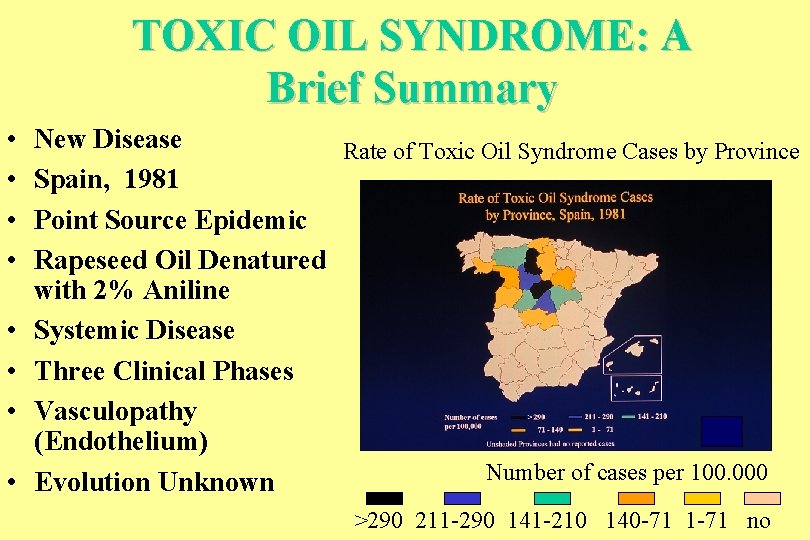
TOXIC OIL SYNDROME: A Brief Summary • • New Disease Rate of Toxic Oil Syndrome Cases by Province Spain, 1981 Point Source Epidemic Rapeseed Oil Denatured with 2% Aniline Systemic Disease Three Clinical Phases Vasculopathy (Endothelium) Number of cases per 100. 000 Evolution Unknown >290 211 -290 141 -210 140 -71 1 -71 no
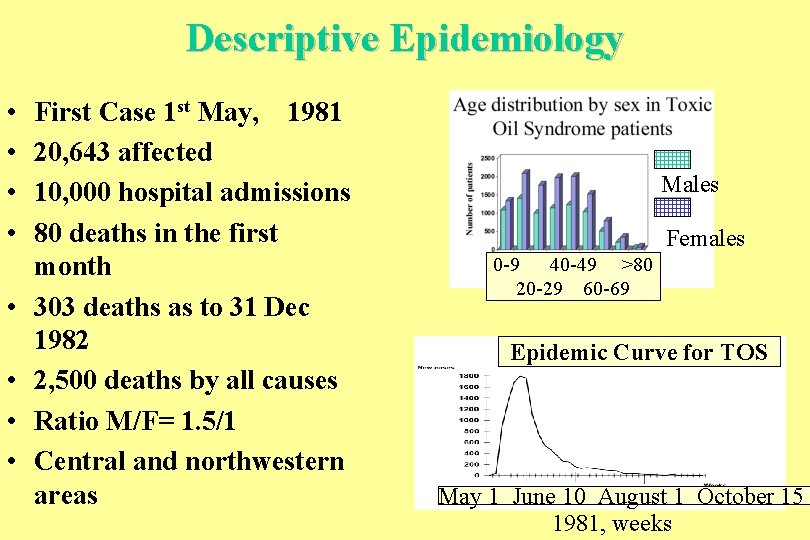
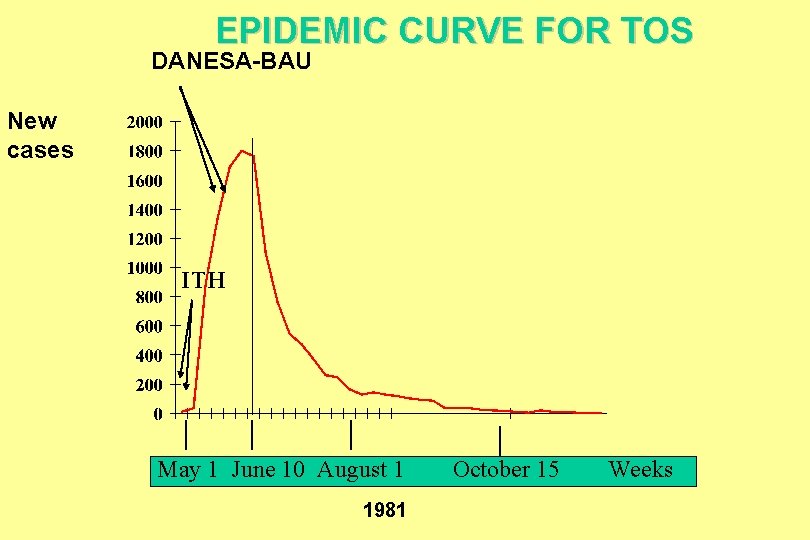
Descriptive Epidemiology • • First Case 1 st May, 1981 20, 643 affected 10, 000 hospital admissions 80 deaths in the first month 303 deaths as to 31 Dec 1982 2, 500 deaths by all causes Ratio M/F= 1. 5/1 Central and northwestern areas Males Females 0 -9 40 -49 >80 20 -29 60 -69 Epidemic Curve for TOS May 1 June 10 August 1 October 15 1981, weeks
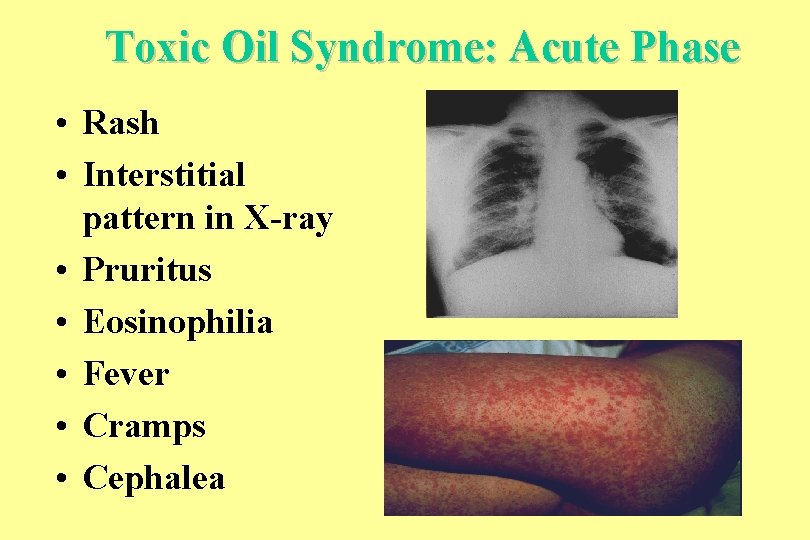
Toxic Oil Syndrome: Acute Phase • Rash • Interstitial pattern in X-ray • Pruritus • Eosinophilia • Fever • Cramps • Cephalea
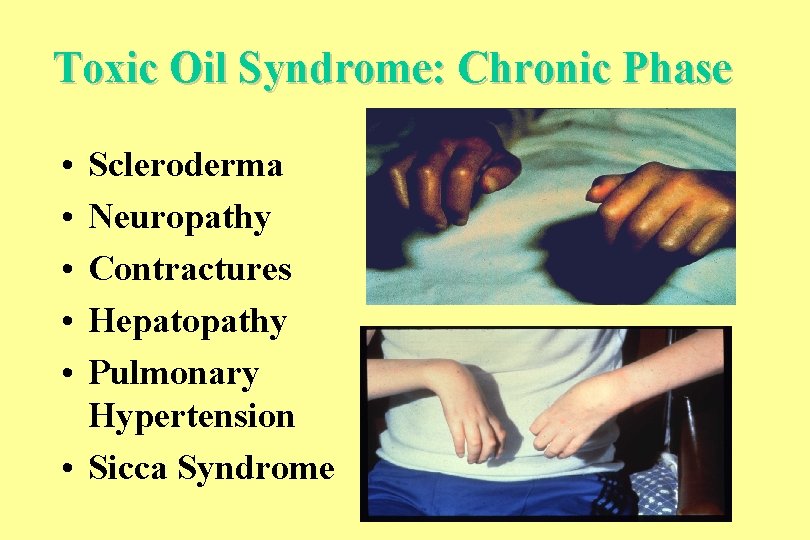
Toxic Oil Syndrome: Chronic Phase • • • Scleroderma Neuropathy Contractures Hepatopathy Pulmonary Hypertension • Sicca Syndrome
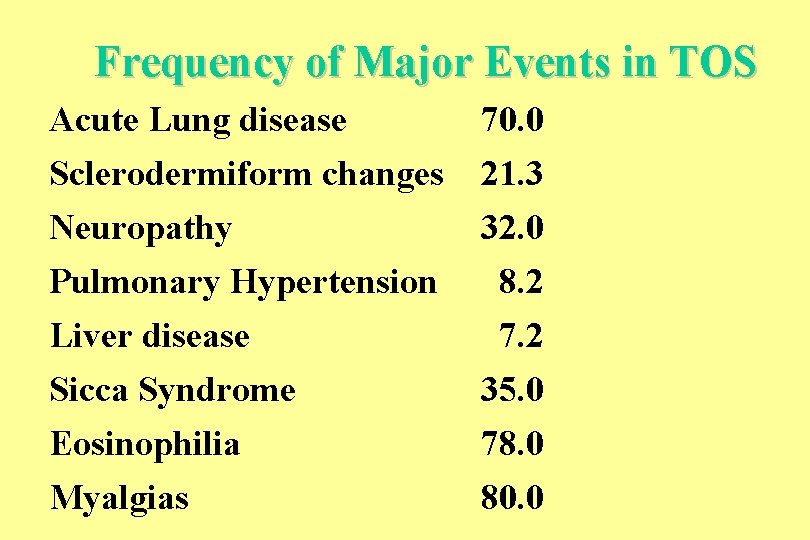
Frequency of Major Events in TOS Acute Lung disease Sclerodermiform changes Neuropathy Pulmonary Hypertension Liver disease Sicca Syndrome Eosinophilia Myalgias 70. 0 21. 3 32. 0 8. 2 7. 2 35. 0 78. 0 80. 0
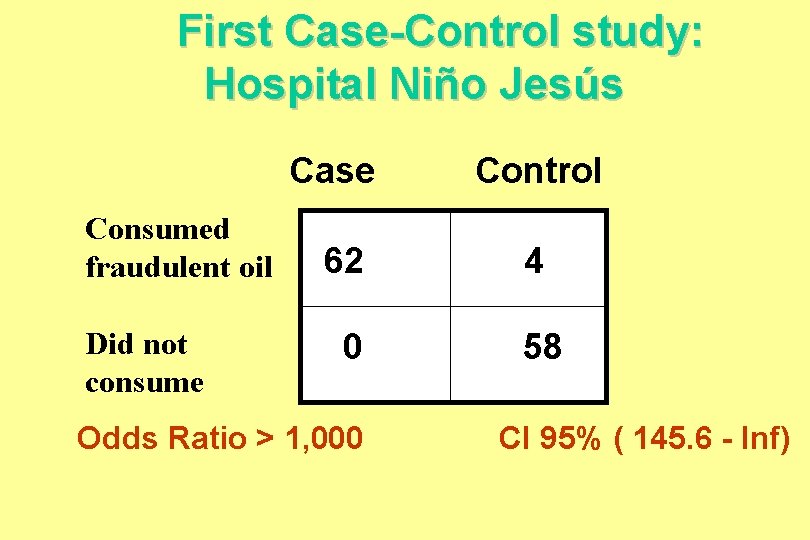
First Case-Control study: Hospital Niño Jesús Case Consumed fraudulent oil Did not consume Control 62 4 0 58 Odds Ratio > 1, 000 CI 95% ( 145. 6 - Inf)
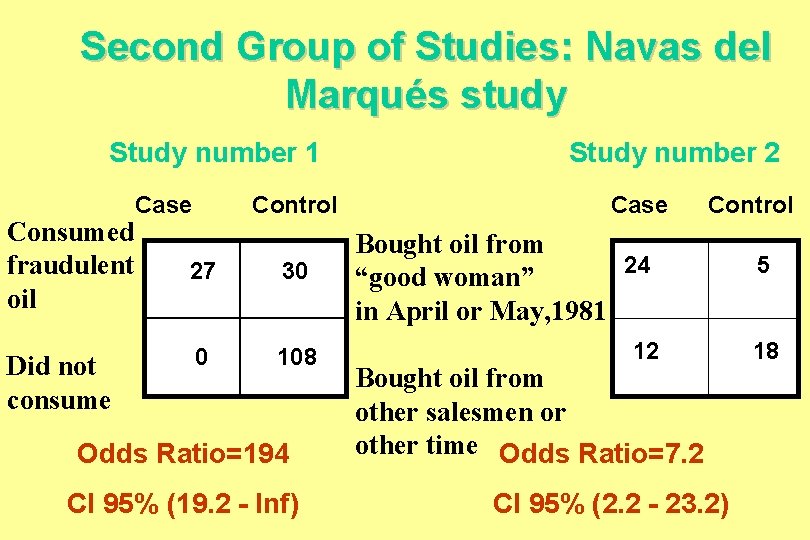
Second Group of Studies: Navas del Marqués study Study number 1 Consumed fraudulent oil Did not consume Case Control 27 30 0 108 Odds Ratio=194 CI 95% (19. 2 - Inf) Study number 2 Case Control Bought oil from 24 “good woman” in April or May, 1981 12 Bought oil from other salesmen or other time Odds Ratio=7. 2 CI 95% (2. 2 - 23. 2) 5 18
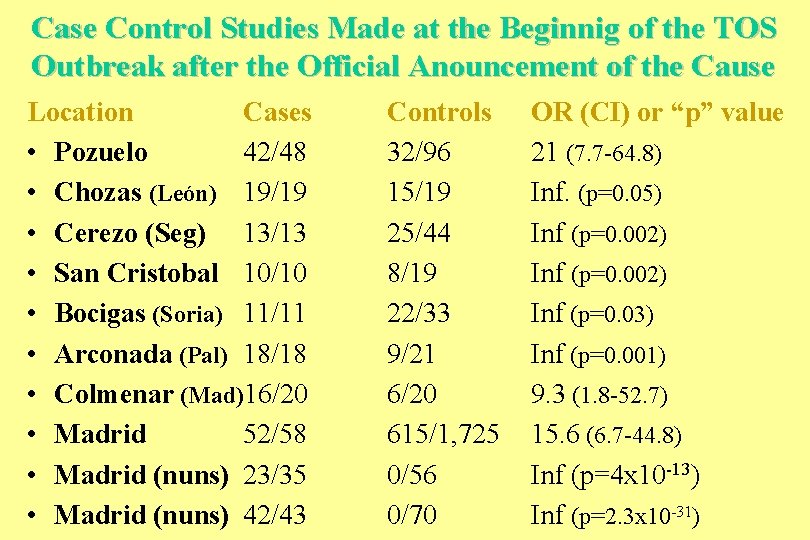
Case Control Studies Made at the Beginnig of the TOS Outbreak after the Official Anouncement of the Cause Location Cases • Pozuelo 42/48 • Chozas (León) 19/19 • Cerezo (Seg) 13/13 • San Cristobal 10/10 • Bocigas (Soria) 11/11 • Arconada (Pal) 18/18 • Colmenar (Mad)16/20 • Madrid 52/58 • Madrid (nuns) 23/35 • Madrid (nuns) 42/43 Controls 32/96 15/19 25/44 8/19 22/33 9/21 6/20 615/1, 725 0/56 0/70 OR (CI) or “p” value 21 (7. 7 -64. 8) Inf. (p=0. 05) Inf (p=0. 002) Inf (p=0. 03) Inf (p=0. 001) 9. 3 (1. 8 -52. 7) 15. 6 (6. 7 -44. 8) Inf (p=4 x 10 -13) Inf (p=2. 3 x 10 -31)
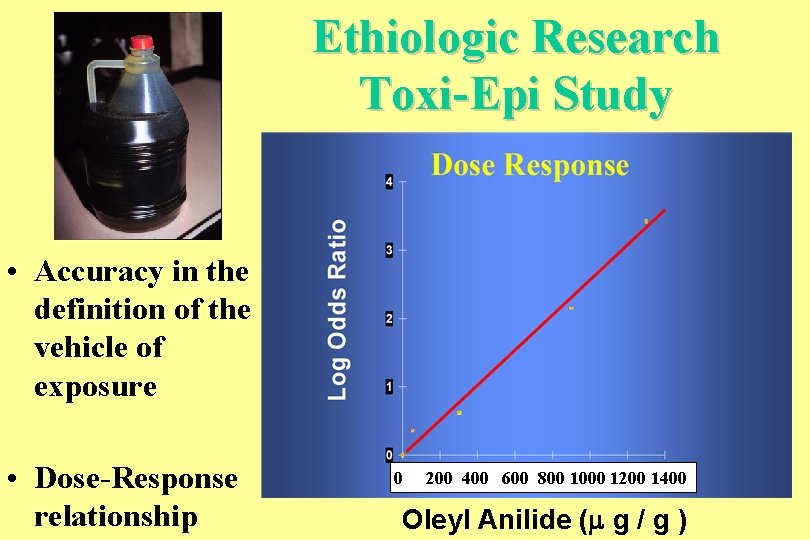
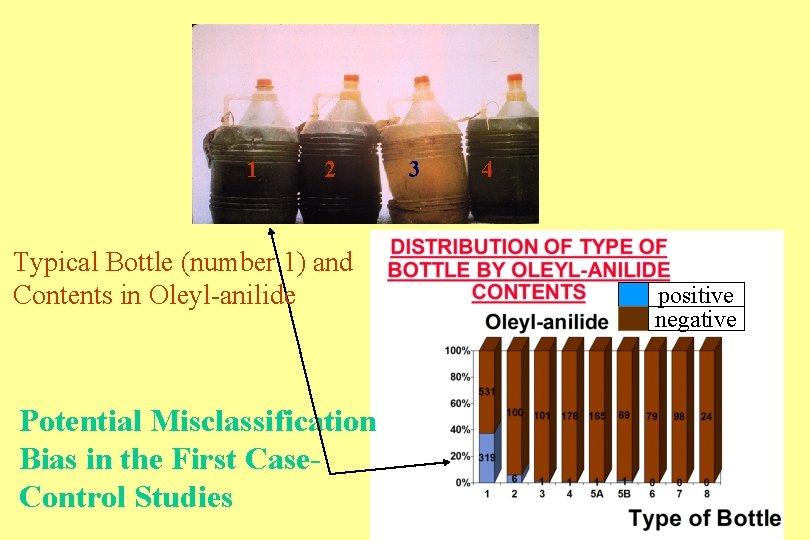
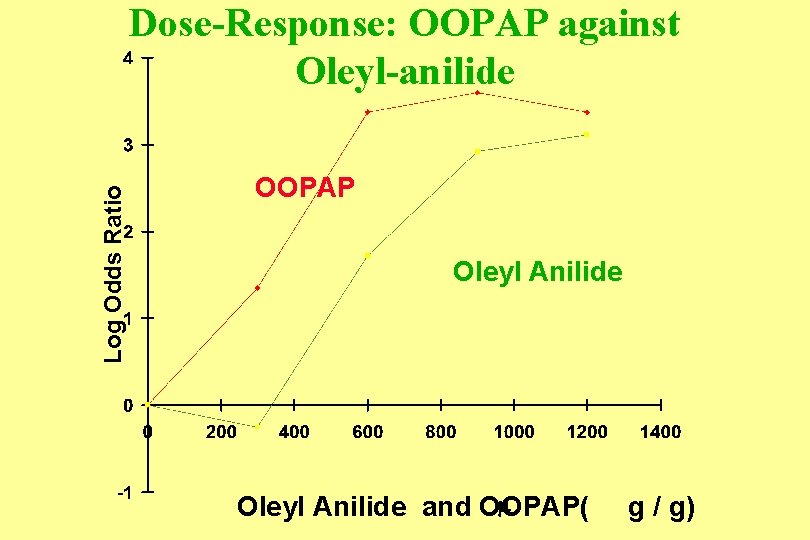
Ethiologic Research Toxi-Epi Study • Accuracy in the definition of the vehicle of exposure • Dose-Response relationship 0 200 400 600 800 1000 1200 1400 Oleyl Anilide (m g / g )
1 2 Typical Bottle (number 1) and Contents in Oleyl-anilide Potential Misclassification Bias in the First Case. Control Studies 3 4 positive negative
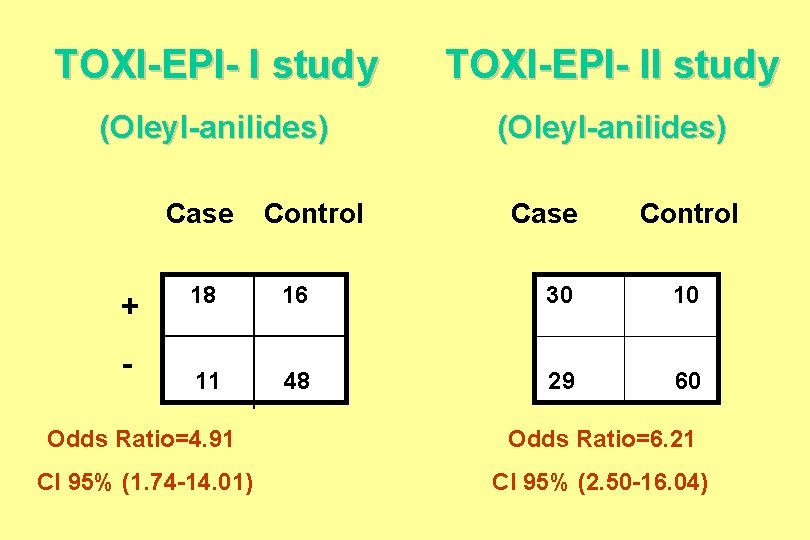
TOXI-EPI- I study TOXI-EPI- II study (Oleyl-anilides) Case + - Control Case Control 18 16 30 10 11 48 29 60 Odds Ratio=4. 91 Odds Ratio=6. 21 CI 95% (1. 74 -14. 01) CI 95% (2. 50 -16. 04)
Log Odds Ratio Dose-Response: OOPAP against Oleyl-anilide OOPAP Oleyl Anilide m Oleyl Anilide and OOPAP( g / g)
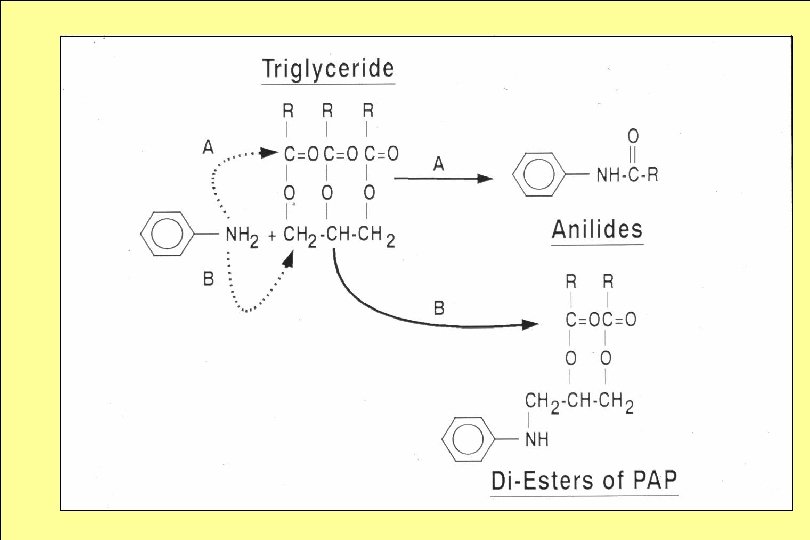
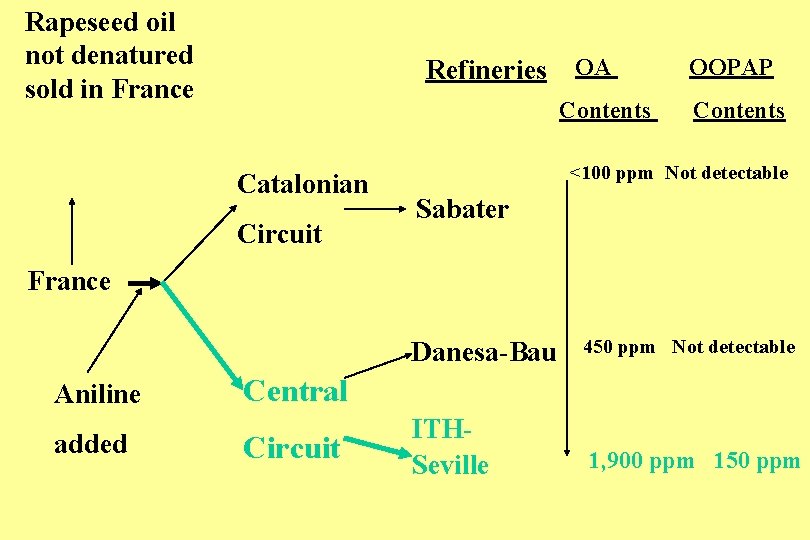
Rapeseed oil not denatured sold in France Refineries OA Contents Catalonian Circuit OOPAP Contents <100 ppm Not detectable Sabater France Aniline added Danesa-Bau 450 ppm Not detectable ITHSeville 1, 900 ppm 150 ppm Central Circuit
EPIDEMIC CURVE FOR TOS DANESA-BAU New cases ITH May 1 June 10 10 August 1 1 May 1 1981 October 15 15 Weeks
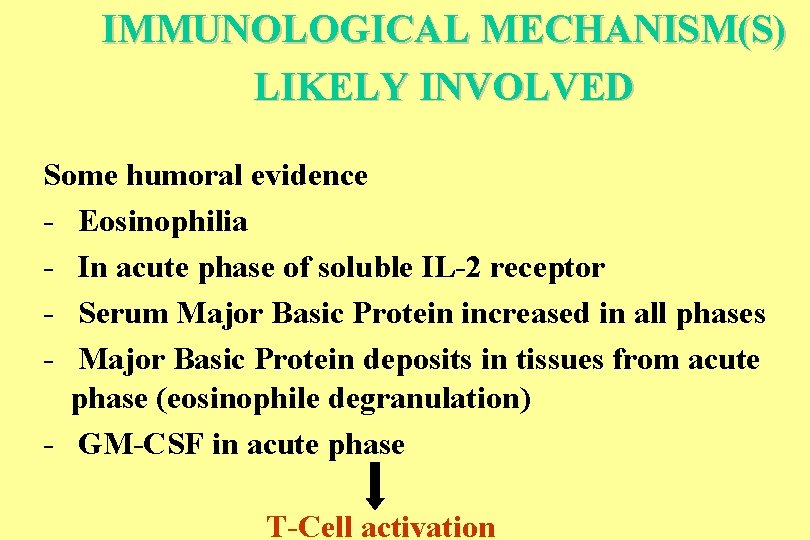
IMMUNOLOGICAL MECHANISM(S) LIKELY INVOLVED Some humoral evidence - Eosinophilia - In acute phase of soluble IL-2 receptor - Serum Major Basic Protein increased in all phases - Major Basic Protein deposits in tissues from acute phase (eosinophile degranulation) - GM-CSF in acute phase T-Cell activation
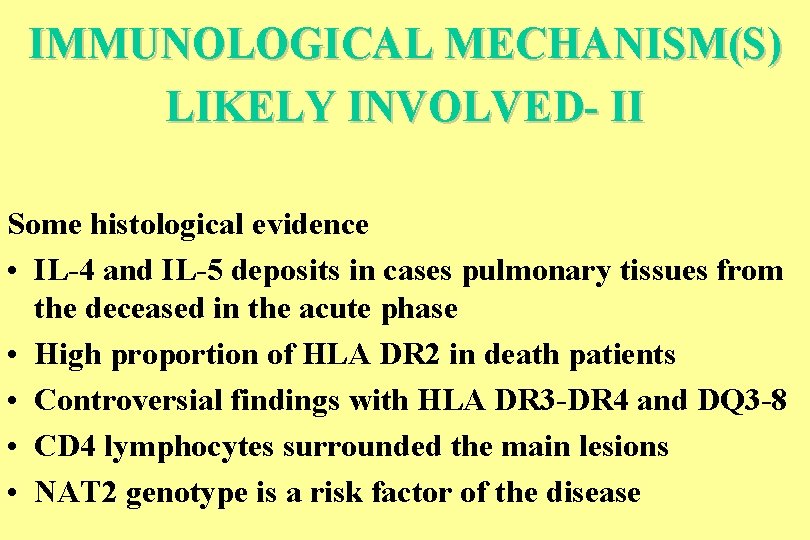
IMMUNOLOGICAL MECHANISM(S) LIKELY INVOLVED- II Some histological evidence • IL-4 and IL-5 deposits in cases pulmonary tissues from the deceased in the acute phase • High proportion of HLA DR 2 in death patients • Controversial findings with HLA DR 3 -DR 4 and DQ 3 -8 • CD 4 lymphocytes surrounded the main lesions • NAT 2 genotype is a risk factor of the disease
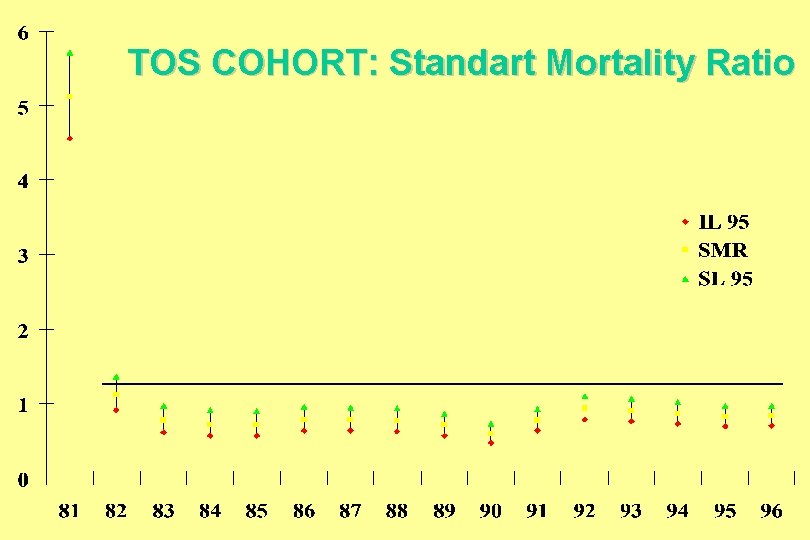
TOS COHORT: Standart Mortality Ratio
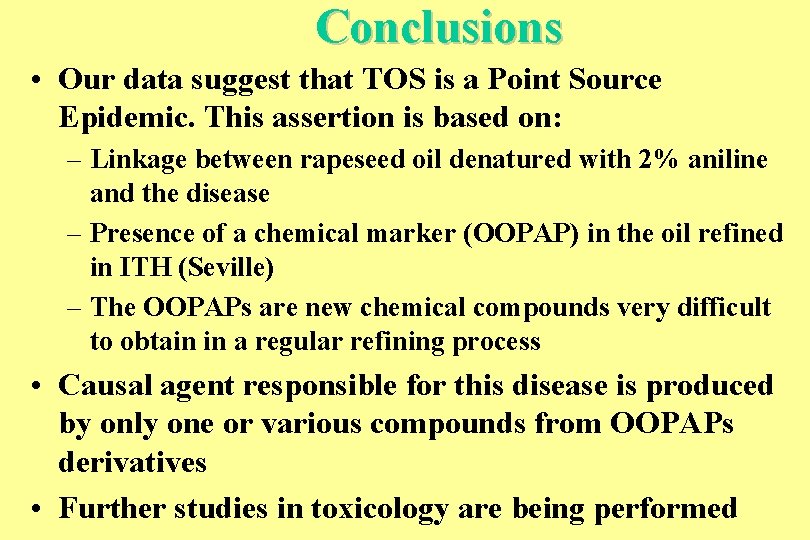
Conclusions • Our data suggest that TOS is a Point Source Epidemic. This assertion is based on: – Linkage between rapeseed oil denatured with 2% aniline and the disease – Presence of a chemical marker (OOPAP) in the oil refined in ITH (Seville) – The OOPAPs are new chemical compounds very difficult to obtain in a regular refining process • Causal agent responsible for this disease is produced by only one or various compounds from OOPAPs derivatives • Further studies in toxicology are being performed