
Towards the Open Geospatial Web Chris Holmes Architectures
Towards the Open Geospatial Web –Chris Holmes
“Architectures of Participation” – Coined by Tim O’Reilly
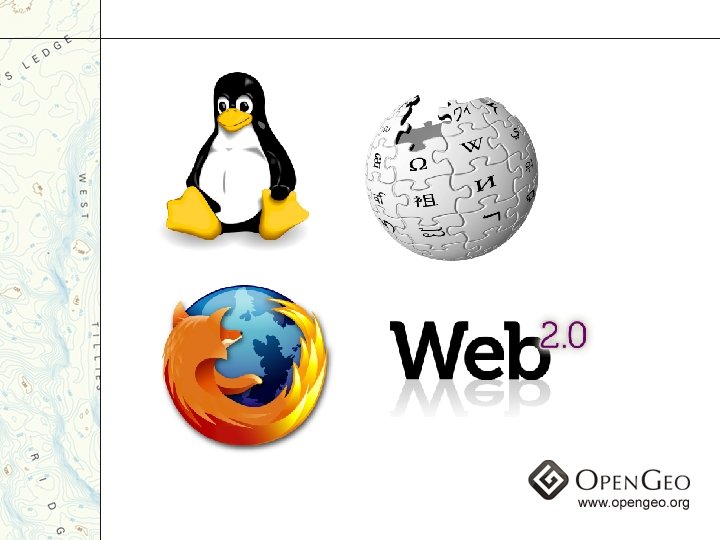
An “Architecture of Participation” is both social and technical, leveraging the skills and energy of users as much as possible to cooperate in building something bigger than any single person or organization could alone.
Architectures of Participation Software: The first domain to see benefits The process can be applied to other fields
Geospatial Data Creation Sharing
Geo Data Sharing… Primary Goal “…the sources, systems, network linkages, standards, and institutional issues involved in delivering spatiallyrelated data from many different sources to the widest possible group of potential users at affordable costs. ” – Groot & Mc. Laughlin 2000
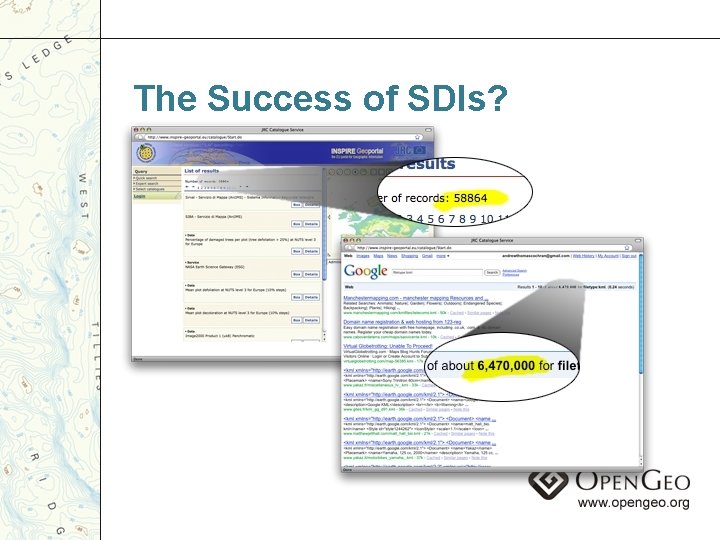
The Success of SDIs?
Factors for Success Compelling Initiative User at the Center User Responsibility No Barriers or Difficulty
Contribute to Compelling Initiative. • • • Mandated law != useful Few real users No recognition No reward for the effort Try again in five years? vs.
Contribute to Compelling Initiative • • Quickly add data to quality map Ease of customization Recognition: Shared, emailed, blogged about… Indexed & Searchable
Users as Contributors • Consumers ≠ Producers • Data from “official” sources • Metadata takes training • GIS Professionals Only
Maps Users as Contributors • Consumers = Producers • Everyone encouraged to contribute • Community members grow in to experts • Even used for ‘real GIS’ …it’s easier than getting on an SDI
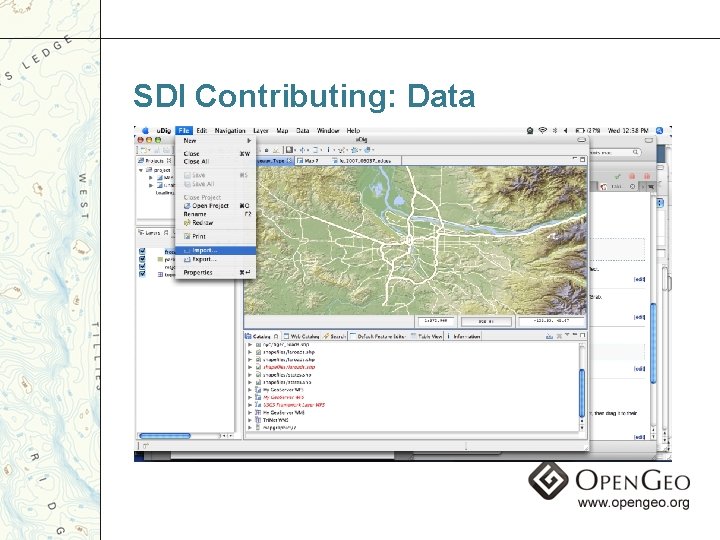
SDI Contributing: Data
Hardware
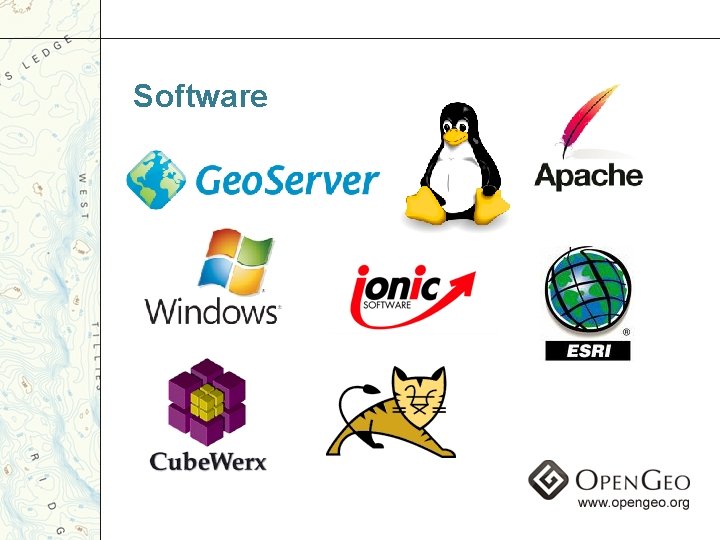
Software
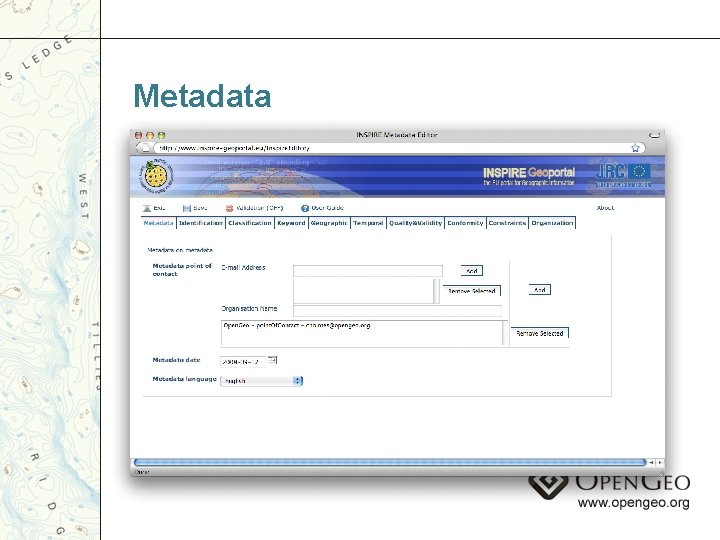
Metadata
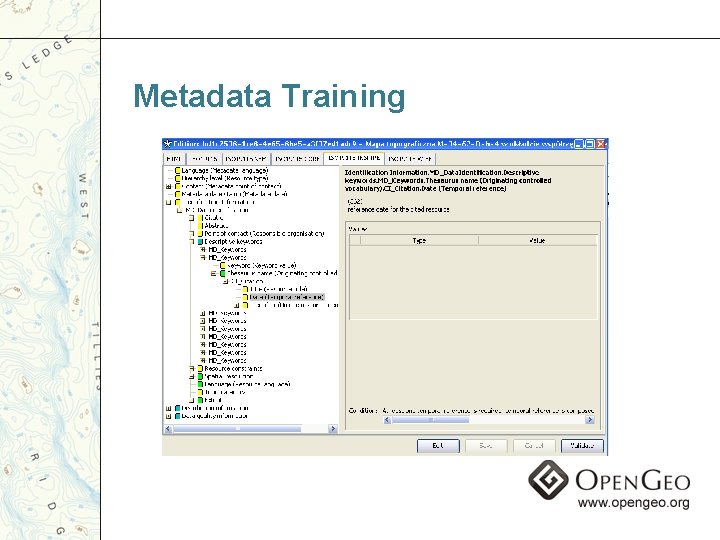
Metadata Training
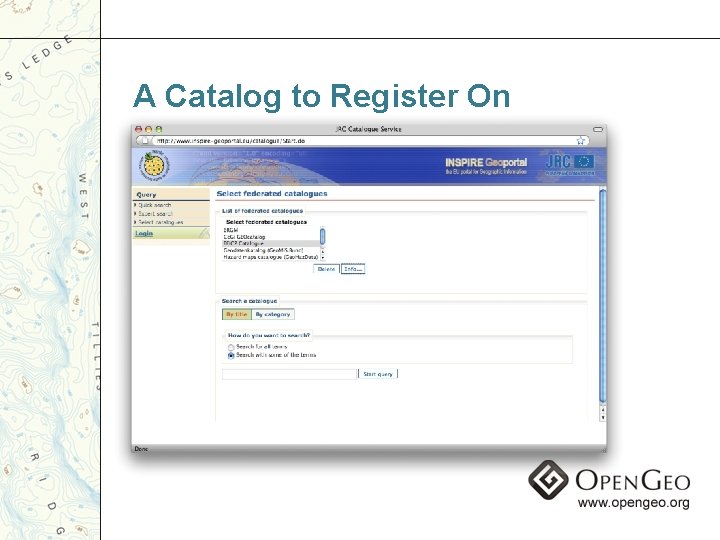
A Catalog to Register On
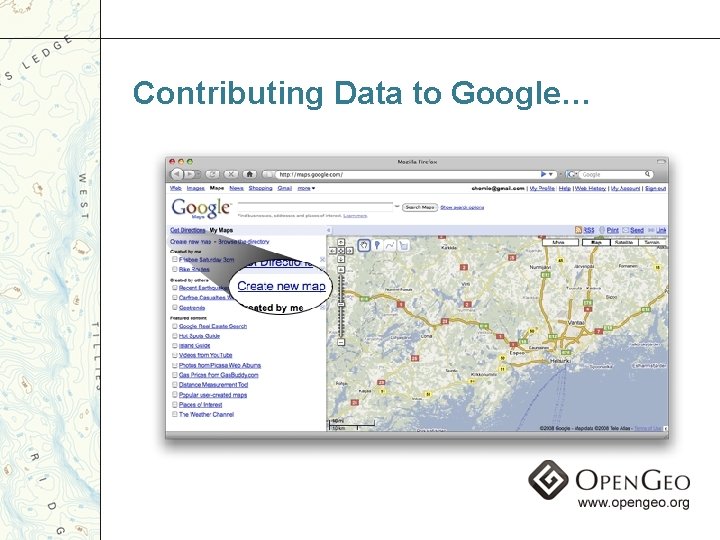
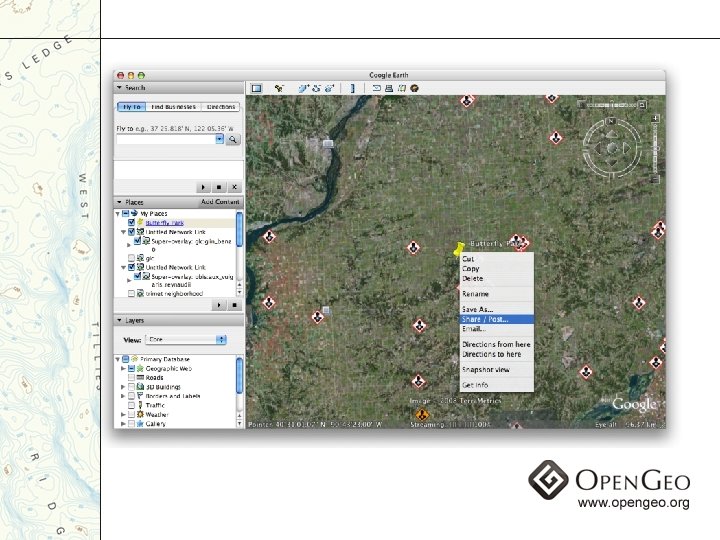
Contributing Data to Google…
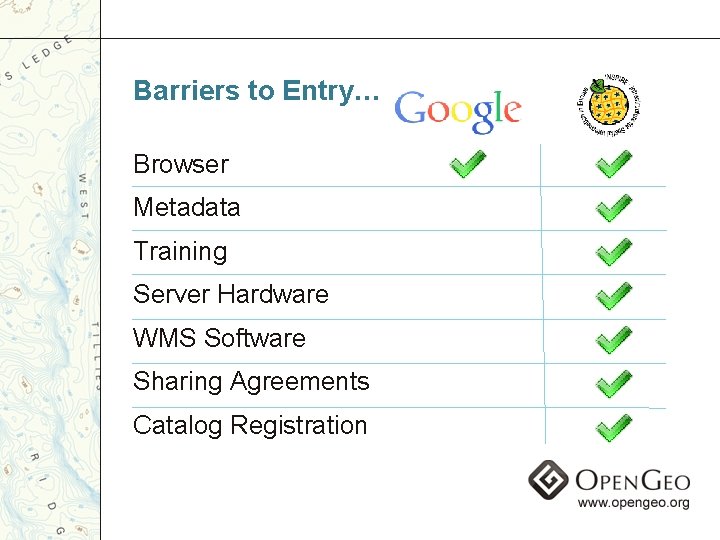
Barriers to Entry… Browser Metadata Training Server Hardware WMS Software Sharing Agreements Catalog Registration
Does user contribution alone make an SDI?
Let commercial players run SDI? • SDI’s are a public good • Commercial players have profit motive • Commercial players seek monopoly DANGER: Governments are handing over data without opening it to anyone else!
Towards the Open Geo Web Inclusive Infrastructure Single “Geo Web” Project Unlimited Potential Build on existing Architectures of Participation
Principles: Towards the Open Geo Web Not just policies, requirements & mandates Align incentives to create a single Geospatial Web
Geospatial Data Creation Sharing
Geo Data Creation: Open. Street. Map. Share™ • Is already here…
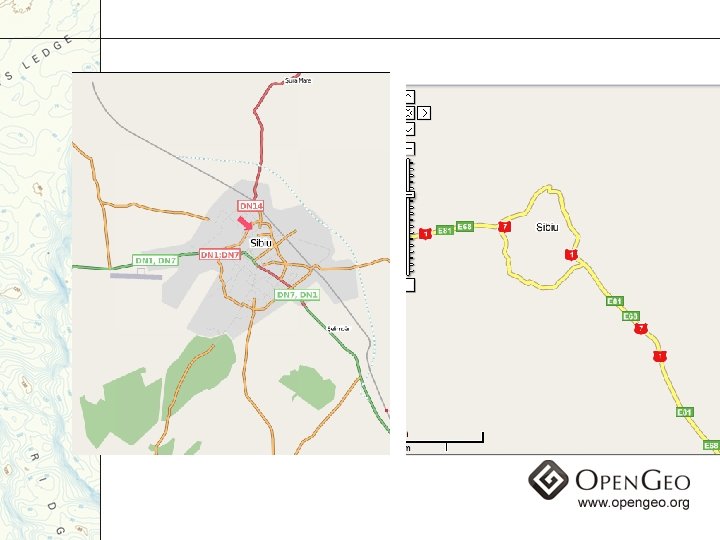
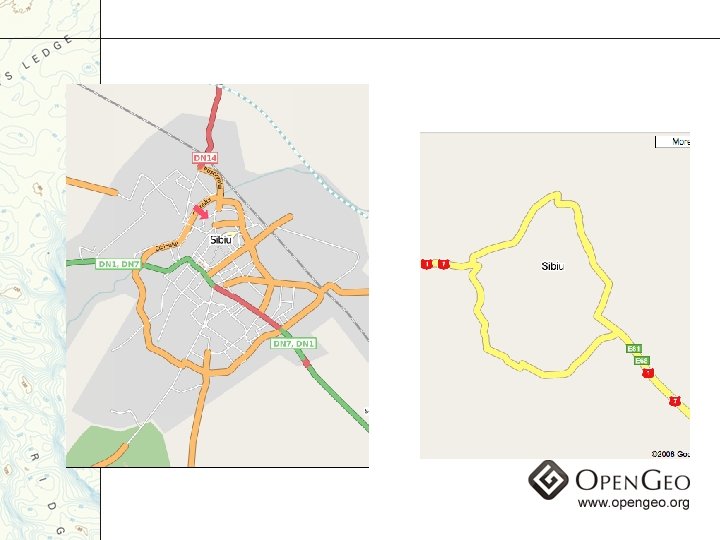
…Though far from mature • Licensing is a big problem • Tools are unsophisticated • Few different workflow options • But huge potential has been proven
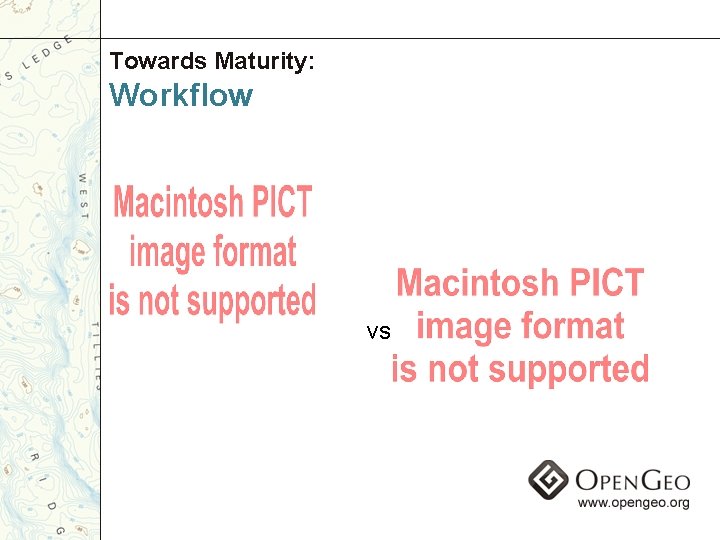
Towards Maturity: Workflow vs
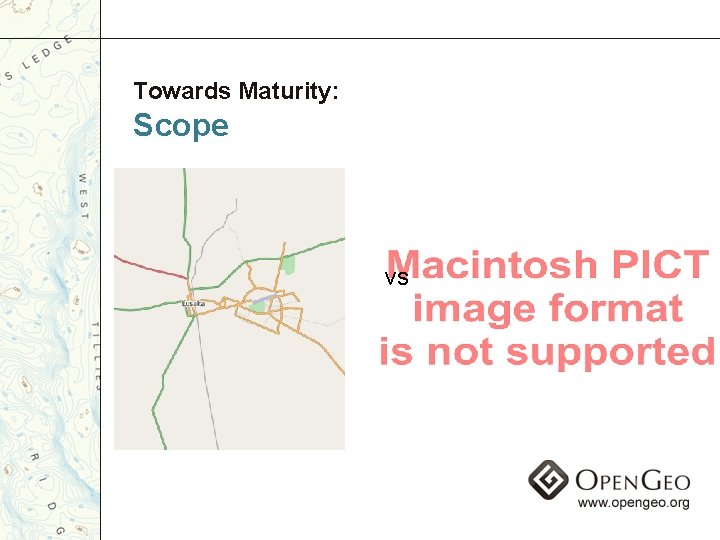
Towards Maturity: Scope vs
Towards Maturity: Tools • Compatibility with GIS tools • Advanced workflow management Sandboxes, approval before acceptance Automatic validation (topology, required fields) Branches and merging with Conflict Resolution Automatic change notification email / rss • Automatic feature extraction: GPS tracks and Satellite images
Towards Maturity: Licensing For Geodata?
Towards Maturity: Cooperation • Align efforts so that amateur, commercial, NGO and governmental creators all naturally collaborate • Figure out workflows, tools and licenses that work for everyone • Put NMCAs at the center, incentivizing updates to core layers (from citizens and companies) • Towards living data, constantly evolving authoritative and always up to date
Towards Maturity: The role of the NMCA • Natural leader, the most experience capturing and maintaining the highest quality data • Must build upon success of accurate and official maps with latest techniques to improve with participation • Look to derive revenue from services around the data • Use Open Source Business models as examples
Learning from Open Source Business • Hosted Services Geocoding Route finding Custom Tiles Hosting additional layers, etc. • Guarantee of accuracy • Value add packaging - formats, documentation, software • Subscription to latest updates
Build on other Architectures of Participation Map. Share™ • Don’t go it alone Align their success with yours
Beyond Portals • Web Portals went out of fashion in 2001 • ‘Geo. Web Node’ = Geo. Portal 2. 0 • Geo. Portal goal: find existing data • Geo. Web Node goal: increase creation and sharing of data • End goal of both is easier to find and use data
No more Aquariums!
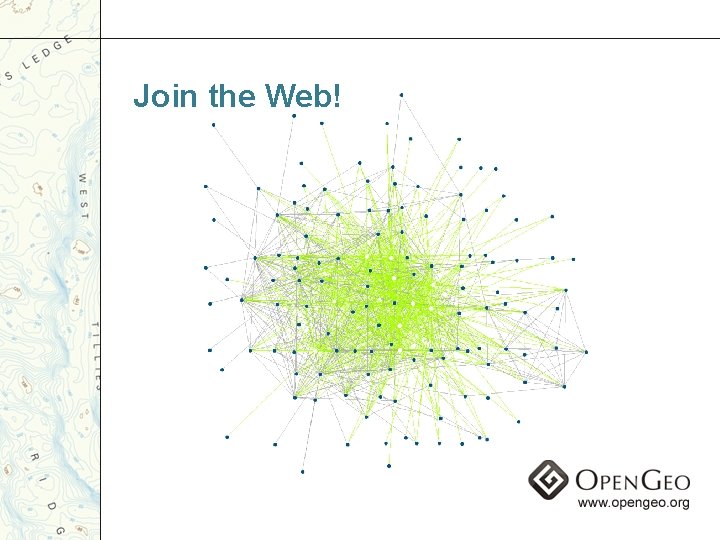
Join the Web!
A Geo Web Node
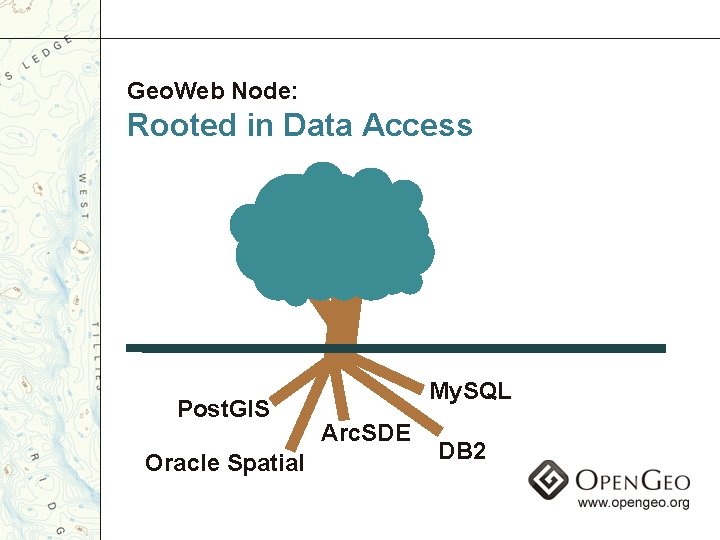
Geo. Web Node: Rooted in Data Access Post. GIS Oracle Spatial My. SQL Arc. SDE DB 2
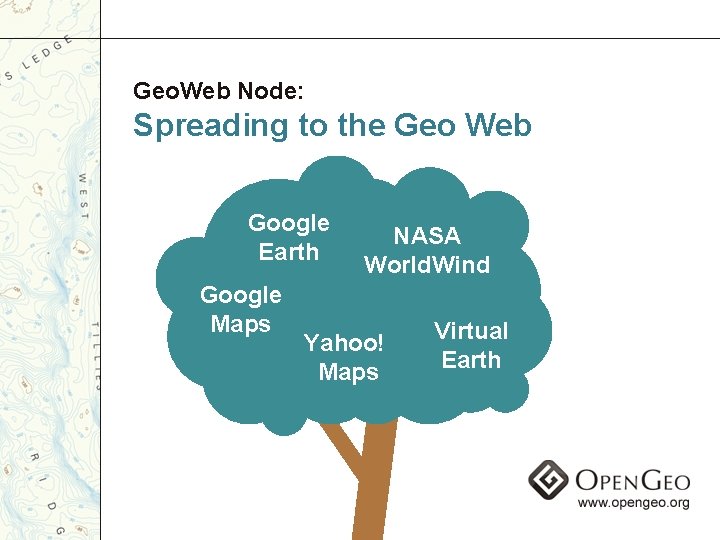
Geo. Web Node: Spreading to the Geo Web Google Earth Google Maps NASA World. Wind Yahoo! Maps Virtual Earth
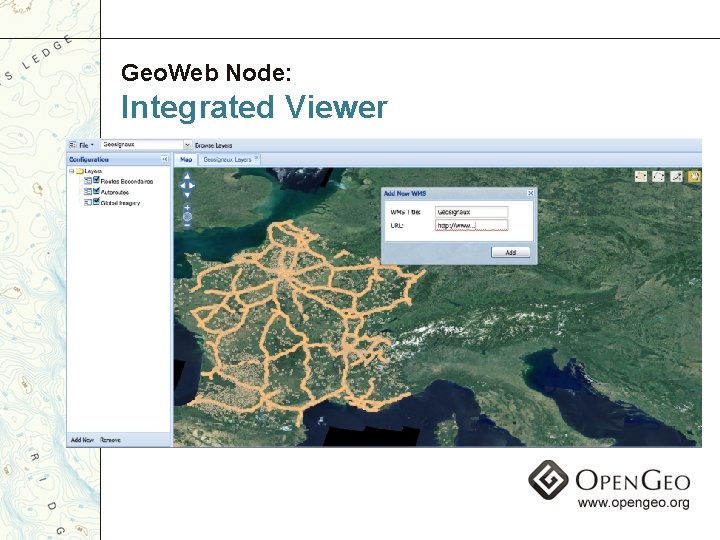
Geo. Web Node: Integrated Viewer
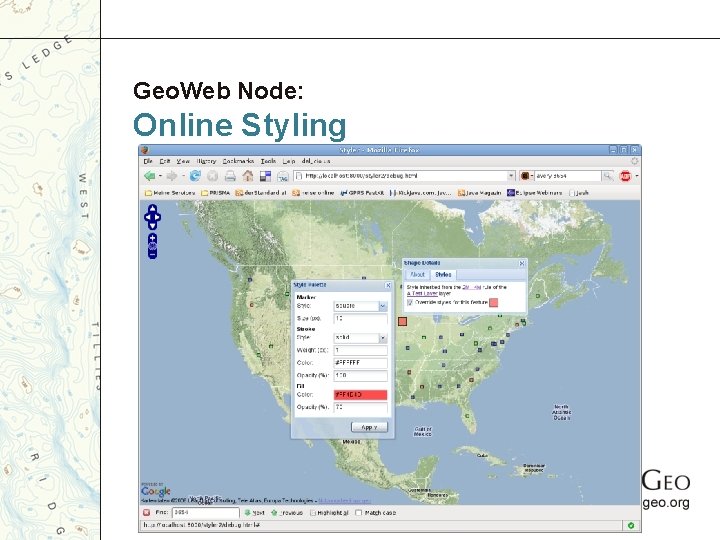
Geo. Web Node: Online Styling
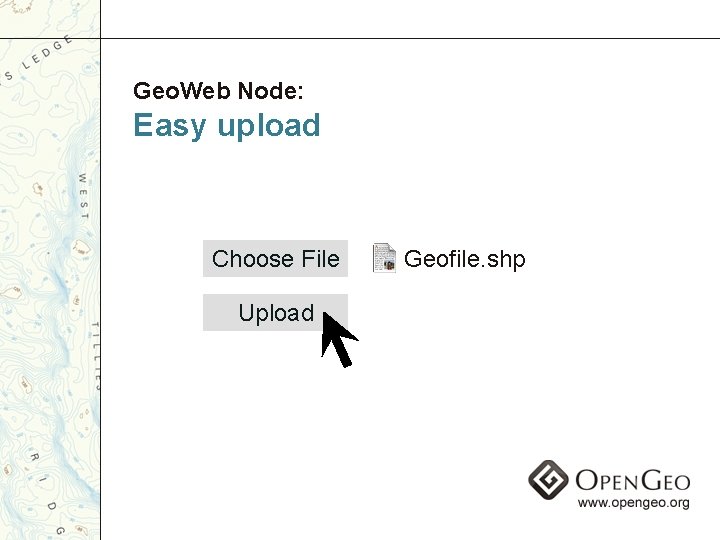
Geo. Web Node: Easy upload Choose File Upload Geofile. shp
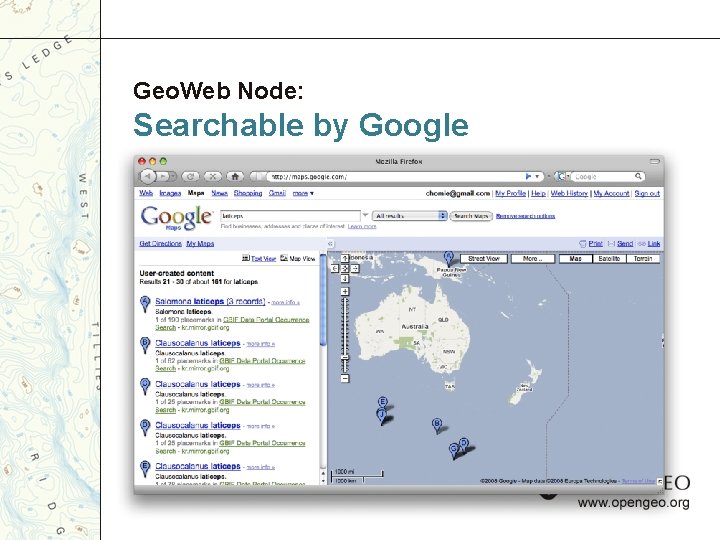
Geo. Web Node: Searchable by Google
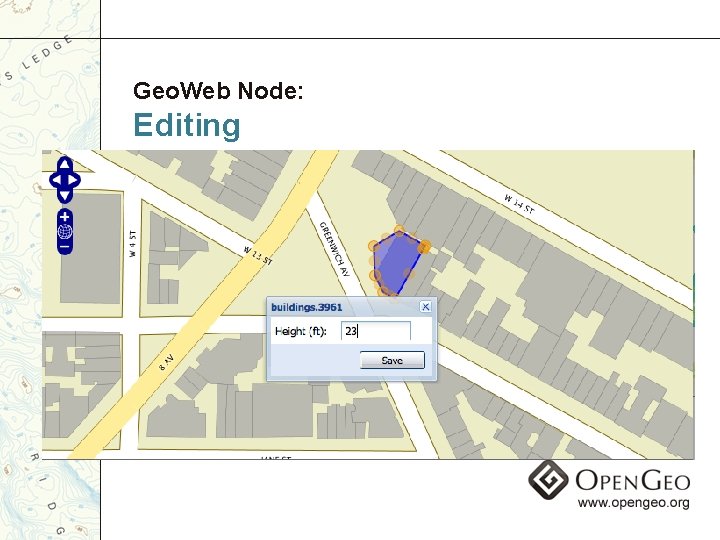
Geo. Web Node: Editing
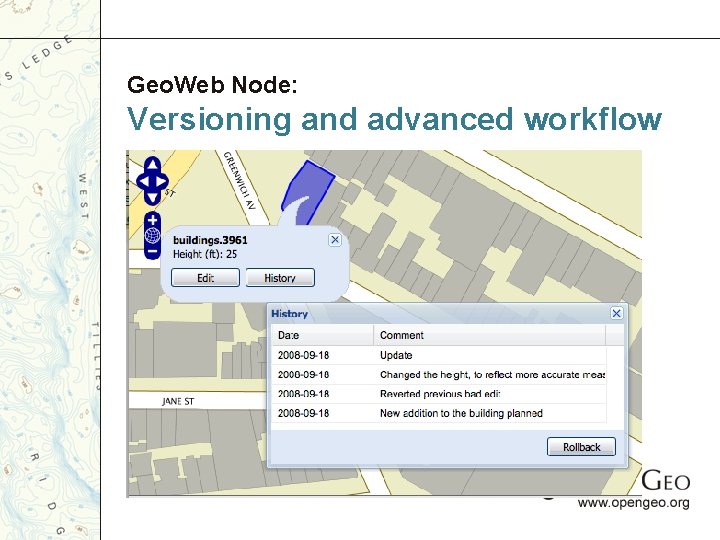
Geo. Web Node: Versioning and advanced workflow
Geo. Web Node: User accounts • User statistics • Comments, ratings, tags • Collaborative Filtering • Rankings of best ‘views’ and data sets contributed • Highest rated, most viewed, most shared
Geo. Web Node: Metadata • Derive from user actions • Don’t require metadata to put out data • Wiki type editing of metadata • Automatically available with the Catalog standards
Where to put these nodes? • Everywhere! • Anywhere you might put a portal • Anywhere you have an ‘Enterprise GIS System’ • Anywhere people share data with each other • Handling all these use cases will evolve Geo. Web nodes to be truly useful
Proprietary vs. Open Source Nodes • Implementation of standards is the most important • Open Source has advantages – Keep vendors honest with standards – Technical innovation by all – Increasing returns on investment
Open vs Closed Geo Data • Most important thing is that data is accessible in all standard formats • But the Geo Web will be built on Open Data – Google has proven this – An open base will lead to more contributions on top
Official vs. User-contributed Data One Infrastructure Limited User Permissions Optional Commenting & Rating
The Future: Beyond Portals • The future is users • Geo Participation – GIS Professionals – Amateur Neo Geographers – Anyone with a locative device • Technology & Community
My Geo. Web Goal Let’s build a Geo Web that’s so compelling and easy-to-use that everyone: Citizens, Governments, NGO’s and Companies all naturally collaborate towards the same infrastructure for public good.
What you can do: • Go beyond portals, build National Geo Web Nodes with free hosting for open contributors • Try opening data in open source / share alike and/or non-commercial ways, align incentives back • Look for new business further up the value chain, just selling data may not last • Partner with companies who are correcting data and moving up the value chain, don’t go it alone • Experiment with participation, both internally and externally
Learn more… www. geoserver. org www. opengeo. org www. cholmes. wordpress. com This work is licensed under a Creative Commons Share Alike Attribution License. Please attribute Chris Holmes, and keep the Open. Geo. org logo on all slides, unless alternate permission is given. Contact cholmes@opengeo. org for more information
- Slides: 61