
Towards Optimal Design of Seismic Array For Earthquake
- Slides: 13
Towards Optimal Design of Seismic Array For Earthquake Source Imaging Lingsen Meng UC Berkeley Seismological Laboratory Pablo Ampuero Caltech Seismo Lab
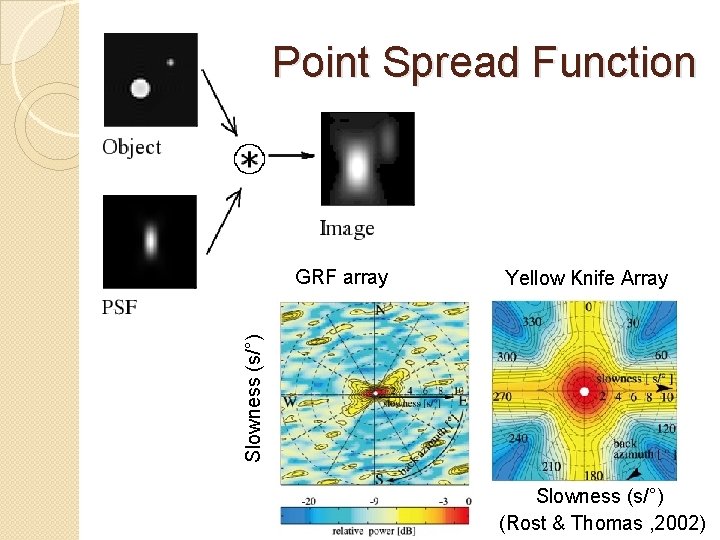
Point Spread Function Yellow Knife Array Slowness (s/°) GRF array Slowness (s/°) (Rost & Thomas , 2002)
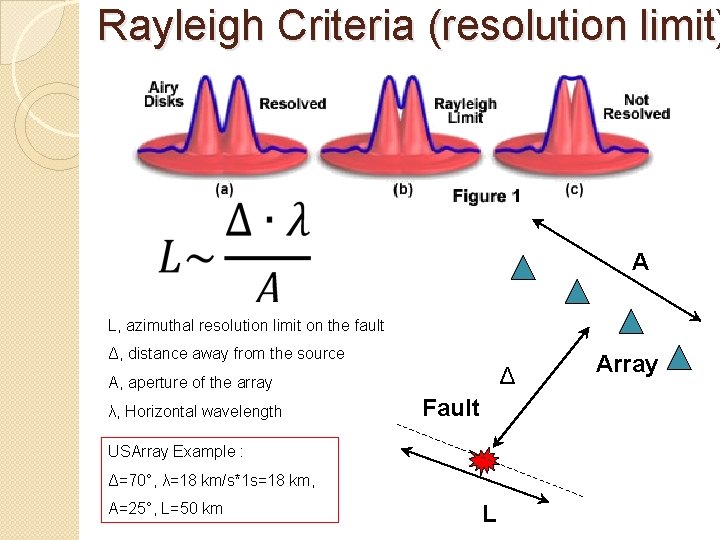
Rayleigh Criteria (resolution limit) A L, azimuthal resolution limit on the fault Δ, distance away from the source Δ A, aperture of the array λ, Horizontal wavelength Fault USArray Example : Δ=70°, λ=18 km/s*1 s=18 km, A=25°, L=50 km L Array
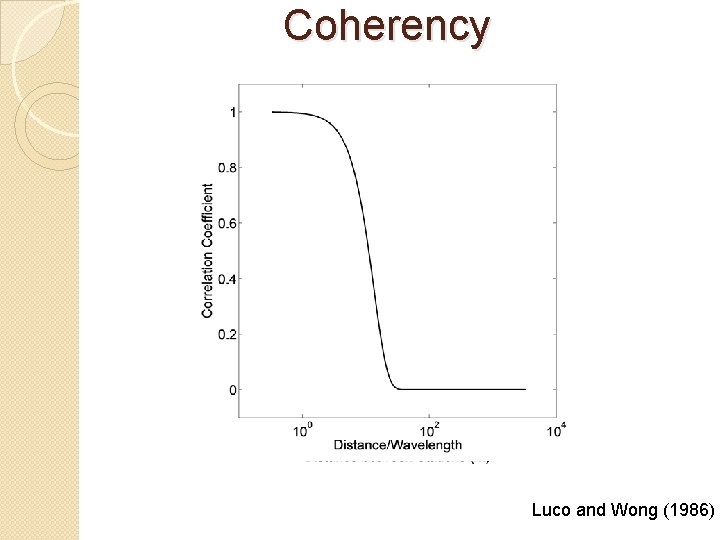
Coherency 100 Hz 1 Hz Luco and Wong (1986)
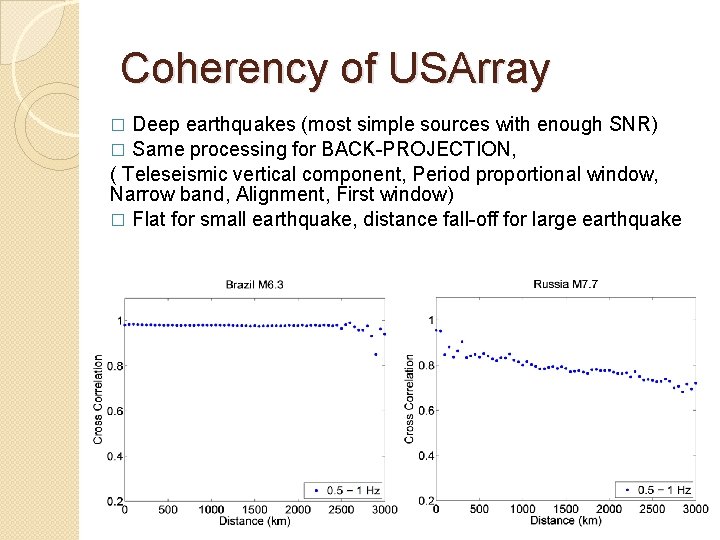
Coherency of USArray Deep earthquakes (most simple sources with enough SNR) � Same processing for BACK-PROJECTION, ( Teleseismic vertical component, Period proportional window, Narrow band, Alignment, First window) � Flat for small earthquake, distance fall-off for large earthquake �
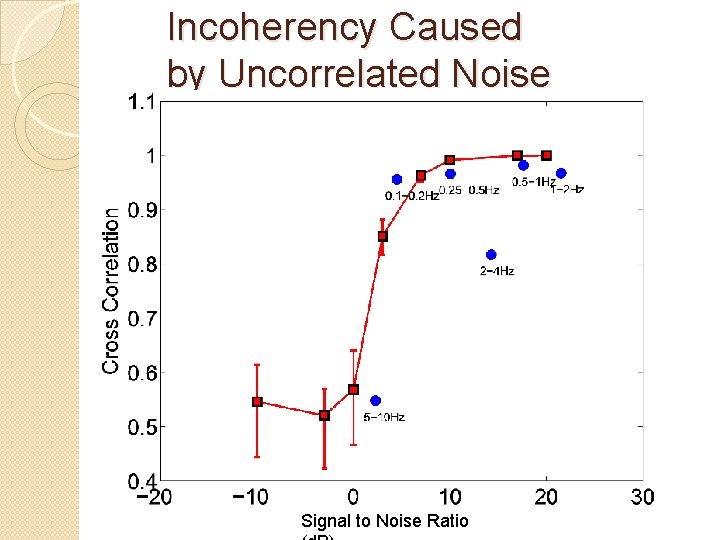
Incoherency Caused by Uncorrelated Noise Signal to Noise Ratio
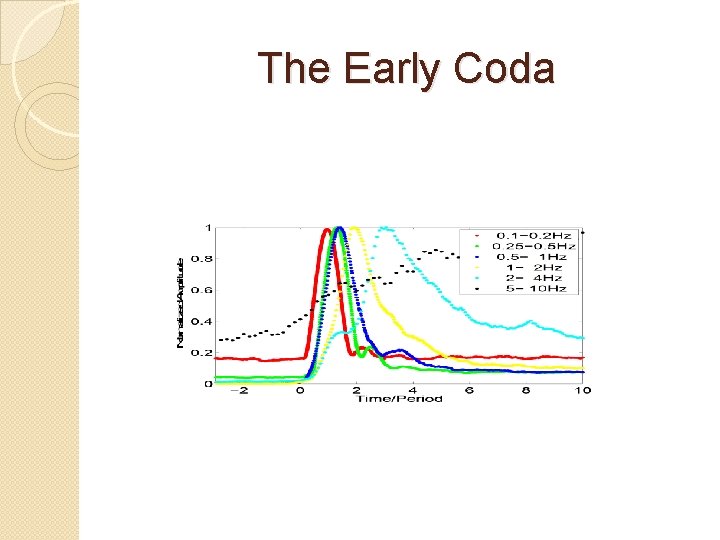
Implications �Coherency falls off due to finite source �The first arrival window is coherent up to 5 hz across US Array �Coherency is not a problem for source imaging (If the early coda decays fast enough) �Consideration of resolution (size), Aliasing (spacing) and SNR (borehole) for conventional array design �Adapting array processing to finite source effect (alignment with small earthquaks)
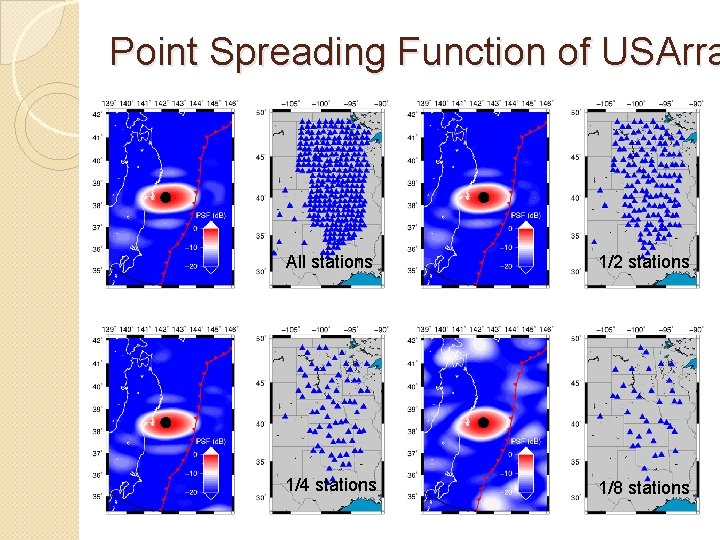
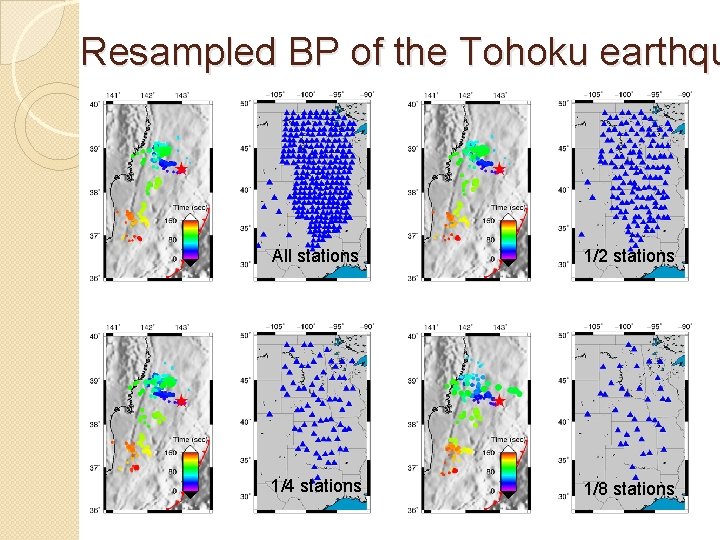
Point Spreading Function of USArra All stations 1/2 stations 1/4 stations 1/8 stations
Resampled BP of the Tohoku earthqu All stations 1/2 stations 1/4 stations 1/8 stations
The Early Coda
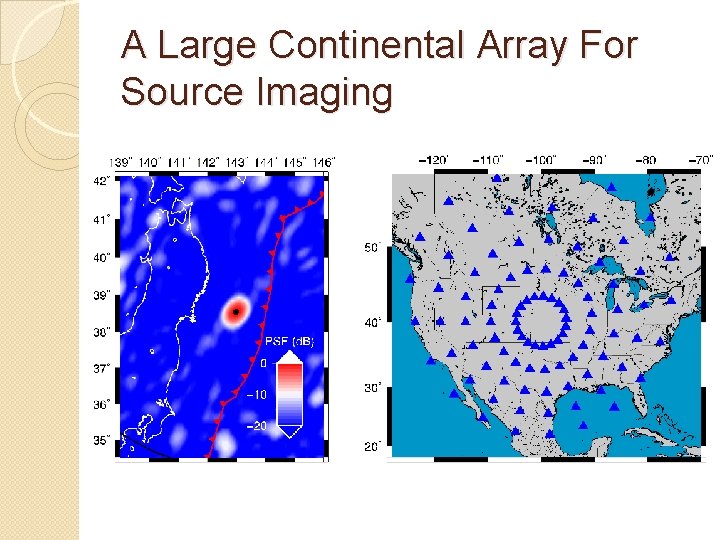
A Large Continental Array For Source Imaging
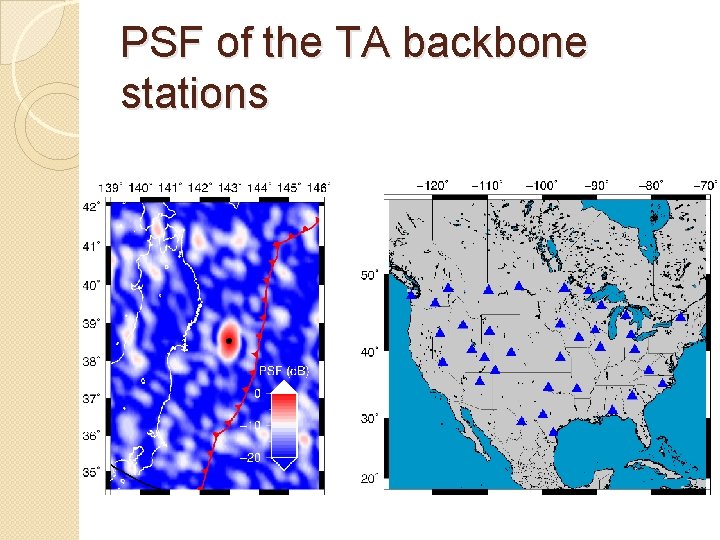
PSF of the TA backbone stations
Discussion � Large scale array is coherent up to high frequency for the first window � Design future arrays according to Resolution, Aliasing and SNR � How much does the early coda matters? � How fast does the coherency decay with time? � How much SNR does we gain by increasing the number of stations ? � How much does the source velocity structure matters?