
Towards modeling for Large Software Repositories Raula Gaikovina
- Slides: 35
Towards modeling for Large Software Repositories Raula Gaikovina Kula Research Assistant Professor Software Engineering Laboratory Osaka University 1
Structure of the Talk • My Background • SARF Project • Current Work • Current Unpublished Idea and Work • Two Published Work 2
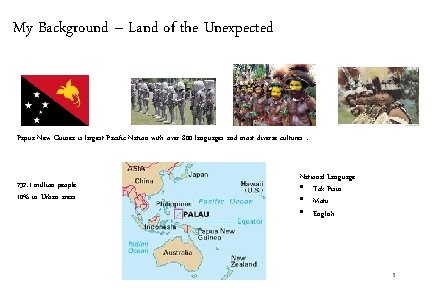
My Background – Land of the Unexpected Papua New Guinea is largest Pacific Nation with over 800 languages and most diverse cultures… 732. 1 million people 10% in Urban areas National Language • Tok Pisin • Motu • English 3
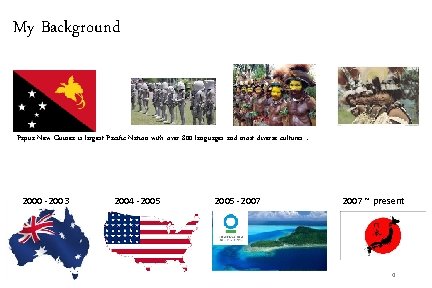
My Background Papua New Guinea is largest Pacific Nation with over 800 languages and most diverse cultures… 2000 -2003 2004 -2005 -2007 ~ present 4
Research in Japan MEXT scholar Masters of Engineering - 2010 Ph. D in Engineering – 2013 Software Design • Software Process • Repository Mining • Micro Process Analysis Research Project Assistant Professor (Kakenhi Project) - 2013 Software Engineering • Software Reuse • Code Clones • Software Licenses 5
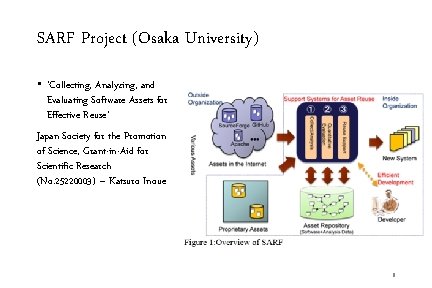
SARF Project (Osaka University) • ‘Collecting, Analyzing, and Evaluating Software Assets for Effective Reuse’ Japan Society for the Promotion of Science, Grant-in-Aid for Scientific Research (No. 25220003) – Katsuro Inoue 6
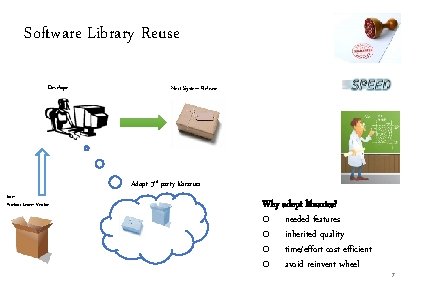
Software Library Reuse Developer Next System Release Adopt 3 rd party libraries from Previous System Version Why adopt libraries? o needed features o inherited quality o time/effort cost efficient o avoid reinvent wheel 7
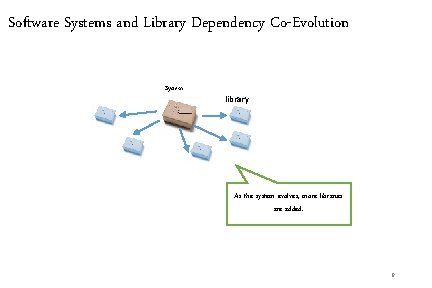
Software Systems and Library Dependency Co-Evolution System library As the system evolves, more libraries are added. 8
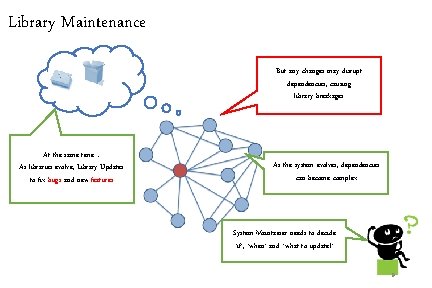
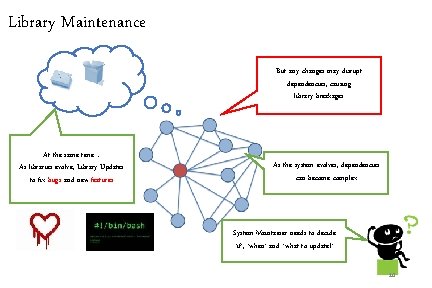
Library Maintenance But any changes may disrupt dependencies, causing library breakages At the same time… As libraries evolve, Library Updates to fix bugs and new features As the system evolves, dependencies can become complex System Maintainer needs to decide `if’, `when’ and `what to update? ’ 9
Library Maintenance But any changes may disrupt dependencies, causing library breakages At the same time… As libraries evolve, Library Updates to fix bugs and new features As the system evolves, dependencies can become complex System Maintainer needs to decide `if’, `when’ and `what to update? ’ 10
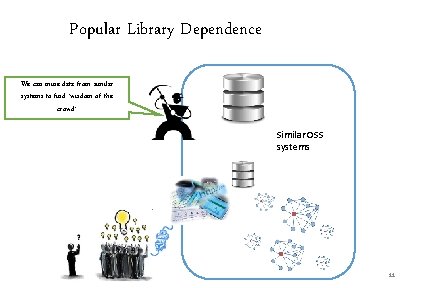
Popular Library Dependence We can mine data from similar systems to find `wisdom of the crowd’ Similar OSS systems 11
12
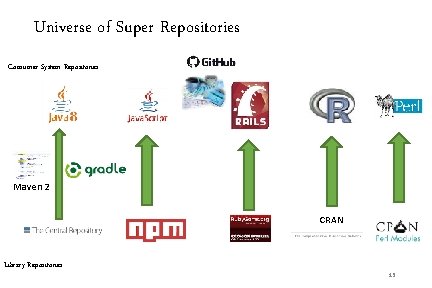
Universe of Super Repositories Consumer System Repositories Maven 2 CRAN Library Repositories 13
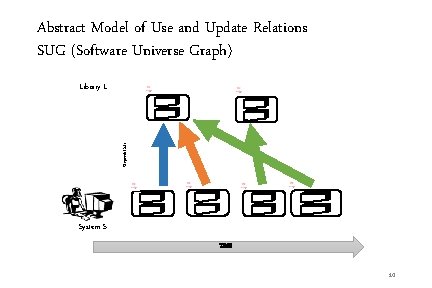
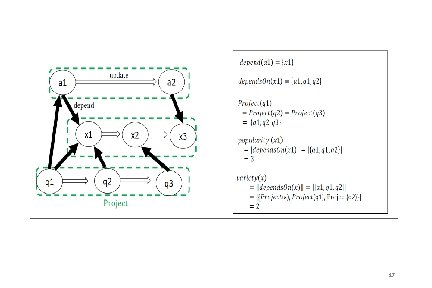
Abstract Model of Use and Update Relations SUG (Software Universe Graph) Depends(S, L) Library L System S TIME 14
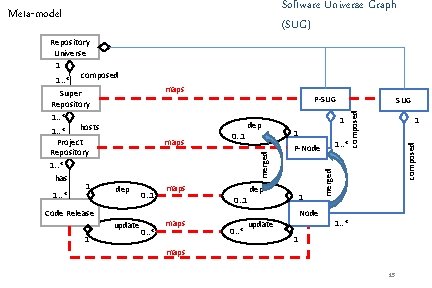
Software Universe Graph (SUG) Meta-model maps P-SUG dep 0. . 1 Code Release update 1 0. . * maps 0. . 1 maps 1 1 dep 1 Node 0. . * 1. . * P-Node update 1 composed 0. . 1 merged maps dep composed 1. . * hosts 1. . * Project Repository 1. . * has 1 1. . * SUG merged Repository Universe 1 composed 1. . * Super Repository 1. . * 1 maps 15
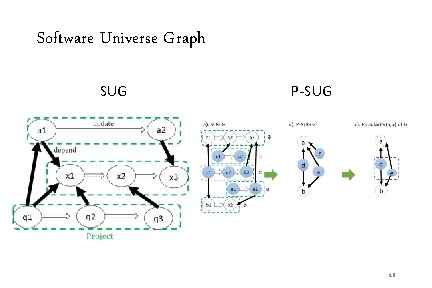
Software Universe Graph SUG P-SUG 16
17
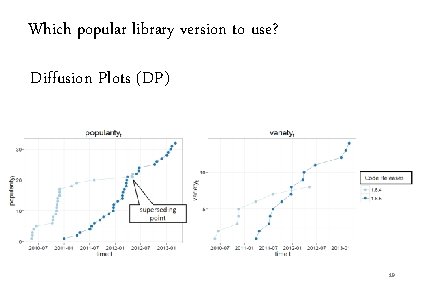
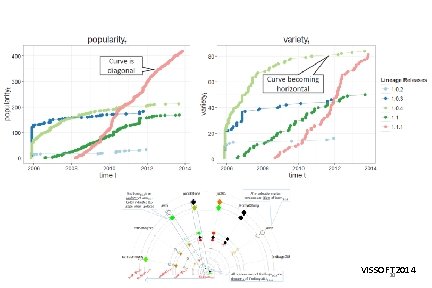
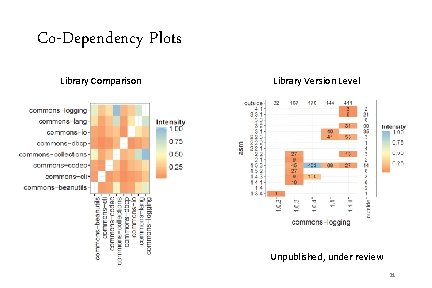
SUG Query related to Popular Library Dependence and Adoption • Adoption-Diffusion Popularity (when is the best time to adopt /abandon versions): Historic dependency and update trends. • Variety Popularity: Grouped by the same product • Co-Dependency (sets of libraries commonly used together): • Combinations of co-dependence sets of libraries (SUG and P-SUG) • Co-dependency value ranking. 18
Which popular library version to use? Diffusion Plots (DP) 19
VISSOFT 2014 20
Co-Dependency Plots Library Comparison Library Version Level Unpublished, under review 21
Two Related Published Works Different Combinations of Libraries Trust and Latency to adopt the latest release 22
Trust of a Library: A Study of the Latency to Adopt the Latest Maven Release Raula Gaikovina Kula, Daniel German, Takashi Ishio, Katsuro Inoue Osaka University, Japan SANER 2015 -ERA Track 10/15/2021 23
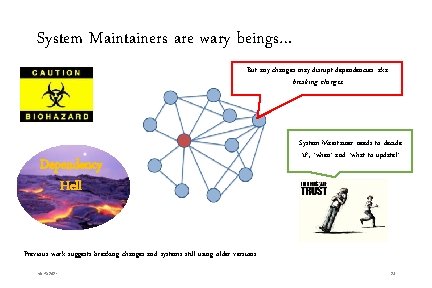
System Maintainers are wary beings… But any changes may disrupt dependencies: aka breaking changes Dependency Hell System Maintainer needs to decide `if’, `when’ and `what to update? ’ Previous work suggests breaking changes and systems still using older versions 10/15/2021 24
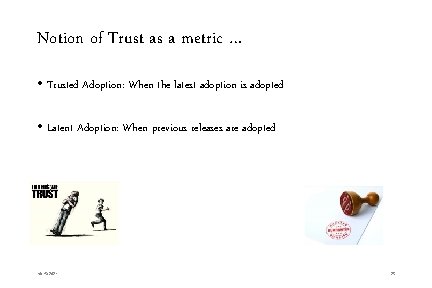
Notion of Trust as a metric … • Trusted Adoption: When the latest adoption is adopted • Latent Adoption: When previous releases are adopted 10/15/2021 25
4 types of trust 1. 2. ‘Do exactly what it says’ – • Functional and non-functional specification üMajor: Minor: Patch üAPI Documentation ‘Play with others’ – • Volatile to current system environment ü Incompatibilities with other library transitive and non-transitive dependencies 10/15/2021 26
4 types of trust 3. ‘Prior Engagements’ – • Loyalty to a release version based on previous experiences. ü Wary of other new libraries and rather stick to familiar libraries 4. ‘Tried and tested’ – • Common belief that the latest release may contain untested bugs. ü Prefer to adopt release versions 1 or 2 releases behind the latest. 10/15/2021 27
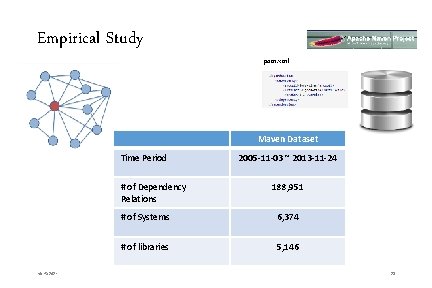
Empirical Study pom. xml Maven Dataset Time Period # of Dependency Relations 10/15/2021 2005 -11 -03 ~ 2013 -11 -24 188, 951 # of Systems 6, 374 # of libraries 5, 146 28
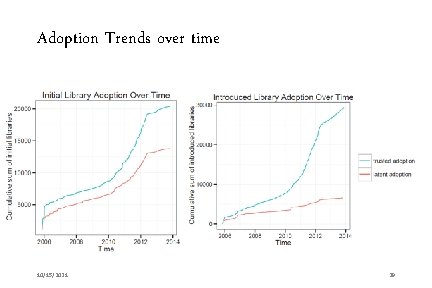
Adoption Trends over time 10/15/2021 29
Study RQs 1. How much ‘latent adoption’ exists? It is common, almost 40% at initial conception as compared to introduced. 2. What is the current trend of maintainers trust? Over time, maintainers are more inclined to adopt the latest release (trusted dependency adoptions). 10/15/2021 30
Ver. XCombo Yuki Yano, Raula Gaikovina Kula, Takashi Ishio, Katsuro Inoue ICPC 2015 (to be presented next week) Osaka University, Japan
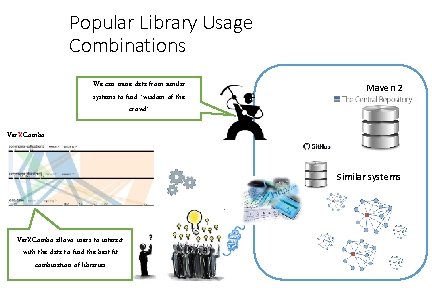
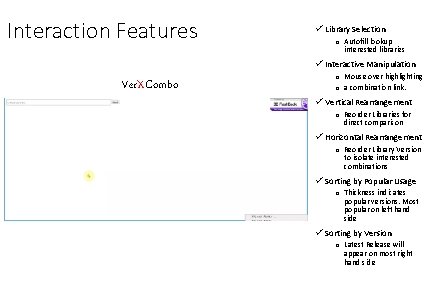
Popular Library Usage Combinations We can mine data from similar systems to find `wisdom of the crowd’ Maven 2 Ver. XCombo Similar systems Ver. XCombo allows users to interact with the data to find the best-fit combination of libraries
Interaction Features ü Library Selection o Autofill lookup interested libraries ü Interactive Manipulation Ver. XCombo o Mouse over highlighting o a combination link. ü Vertical Rearrangement o Reorder Libraries for direct comparison ü Horizontal Rearrangement o Reorder Library Version to isolate interested combinations ü Sorting by Popular Usage o Thickness indicates popular versions. Most popular on left hand side ü Sorting by Version o Latest Release will appear on most right hand side
Challenges and Research Ideas • Validation of the Visualizations and Modelling • Library Compatibility and Latency to Version Adoption • Library Combinations. • Library code level analysis. 34
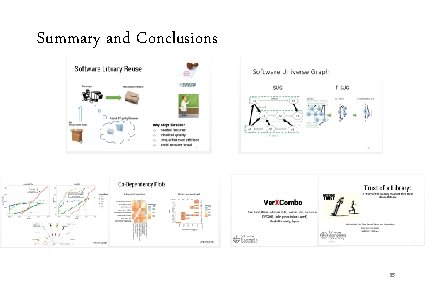
Summary and Conclusions 35