
Towards Ethical Maturity Connecting theory selfawareness and practice

- Slides: 18
Towards Ethical Maturity: Connecting theory, selfawareness, and practice in ethics courses Cris Wildermuth, Ed. D - Drake University Linda G. Olson, Ph. D - University of Denver
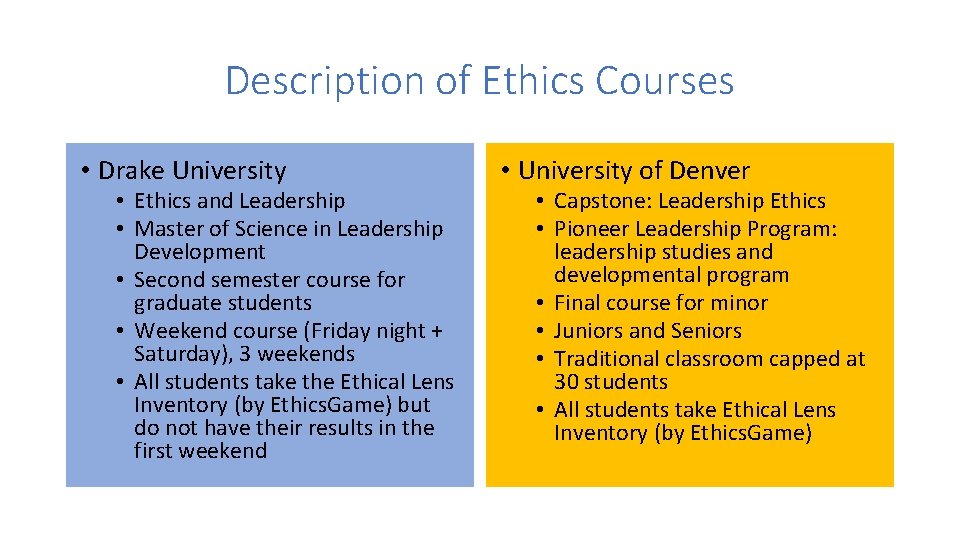
Description of Ethics Courses • Drake University • Ethics and Leadership • Master of Science in Leadership Development • Second semester course for graduate students • Weekend course (Friday night + Saturday), 3 weekends • All students take the Ethical Lens Inventory (by Ethics. Game) but do not have their results in the first weekend • University of Denver • Capstone: Leadership Ethics • Pioneer Leadership Program: leadership studies and developmental program • Final course for minor • Juniors and Seniors • Traditional classroom capped at 30 students • All students take Ethical Lens Inventory (by Ethics. Game)
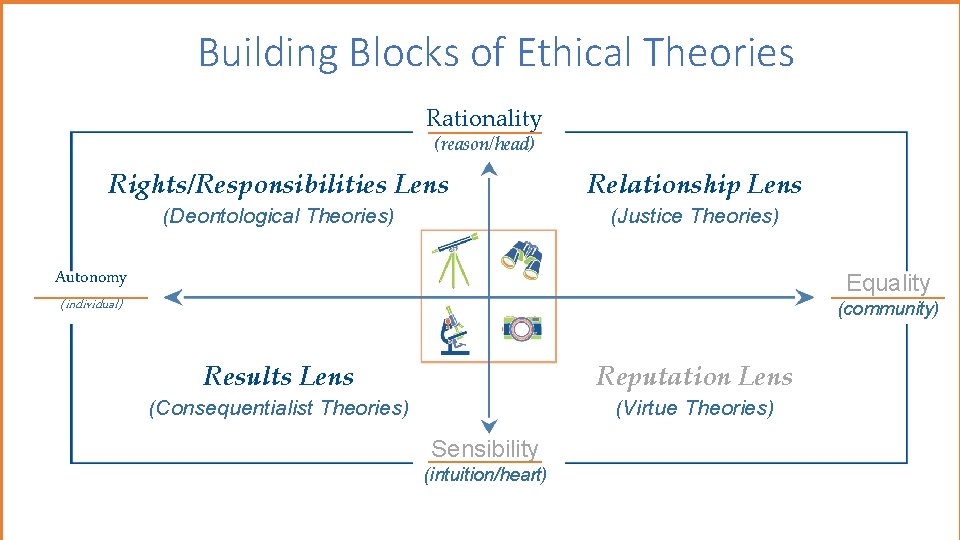
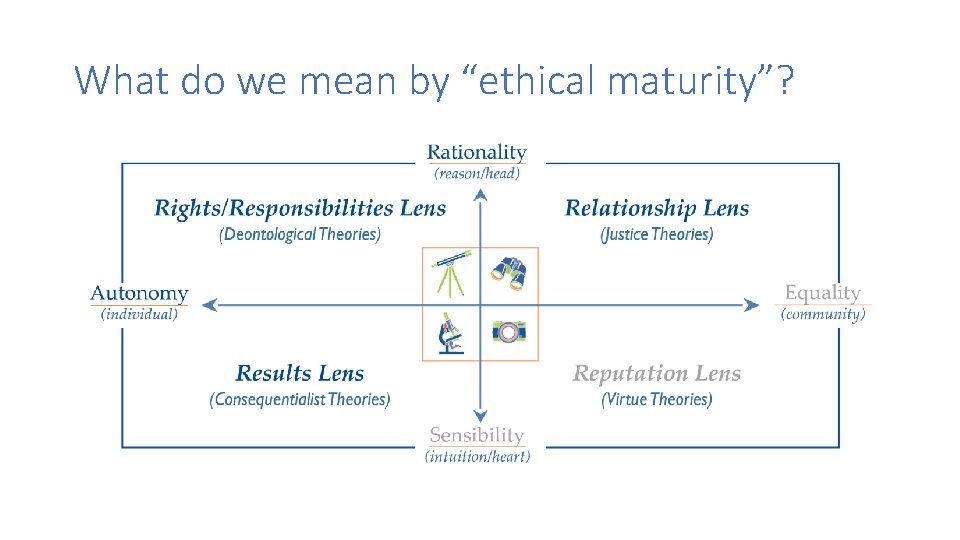
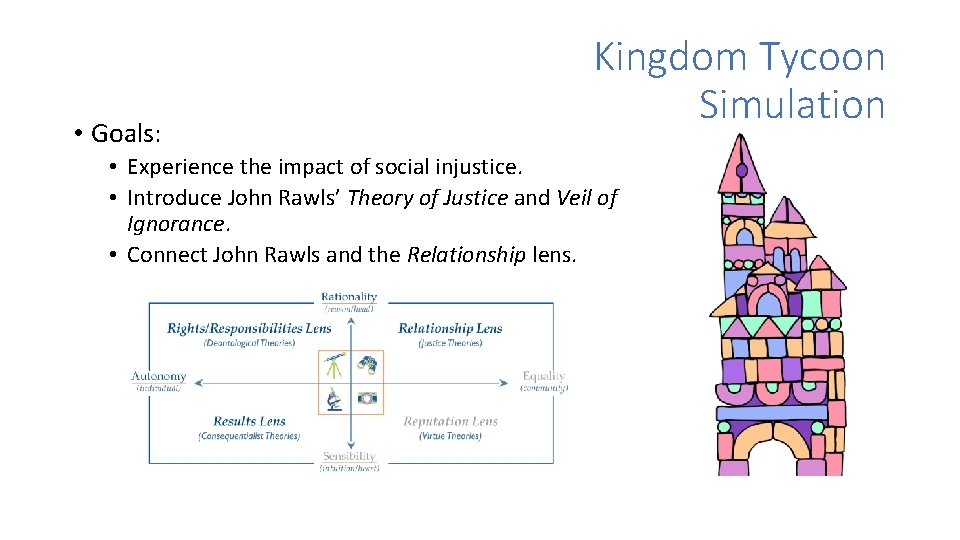
Building Blocks of Ethical Theories Rationality (reason/head) Rights/Responsibilities Lens Relationship Lens (Deontological Theories) (Justice Theories) Autonomy Equality (individual) (community) Results Lens Reputation Lens (Consequentialist Theories) (Virtue Theories) Sensibility (intuition/heart)
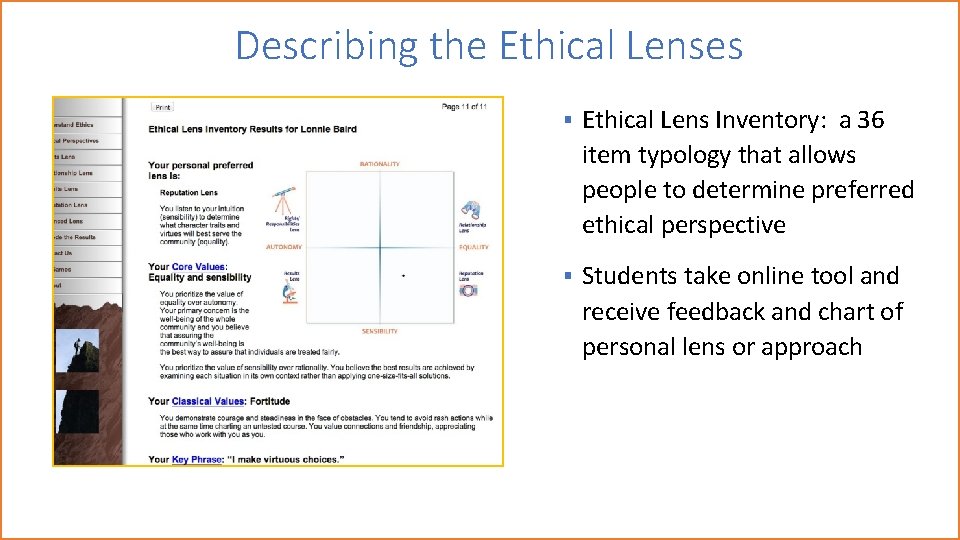
Describing the Ethical Lenses § Ethical Lens Inventory: a 36 item typology that allows people to determine preferred ethical perspective § Students take online tool and receive feedback and chart of personal lens or approach
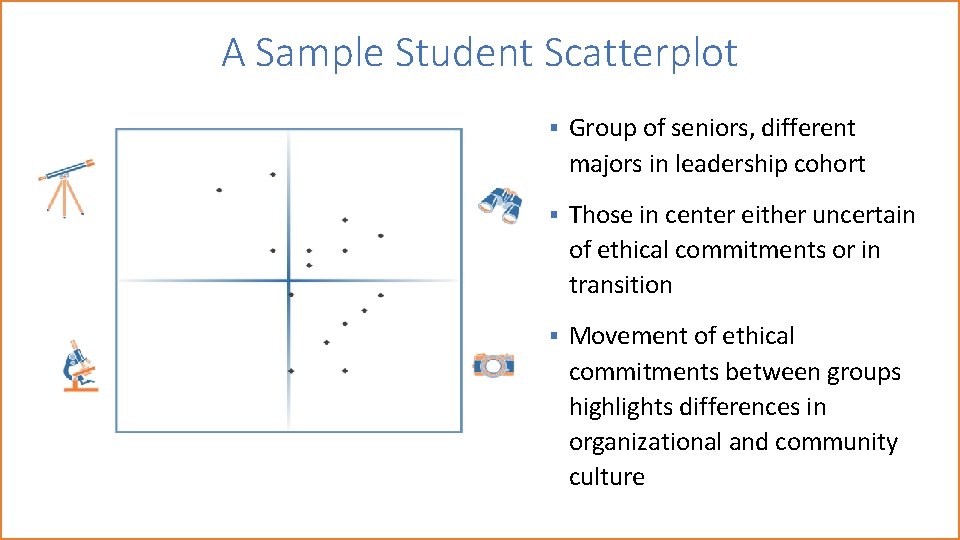
A Sample Student Scatterplot § Group of seniors, different majors in leadership cohort § Those in center either uncertain of ethical commitments or in transition § Movement of ethical commitments between groups highlights differences in organizational and community culture
What do we mean by “ethical maturity”?
• Preparation starts before the beginning of the semester. • Students investigate a current ethical dilemma (something in the news, for which plenty of information is available). • Students read Justice, by Michael Sandel, and learn about Utilitarianism and Deontology. • Note: At this point, students do not yet have information on the 4 lenses. Ethical Trial Cris Wildermuth
• Students are divided into Lawyers, Prosecutors, Judges, and Jury. • Lawyers and Prosecutors focus on one theory as they prepare their opening statements and questions to their “witnesses. ” • The Judges and Jury review both theories and plan the criteria they will use to evaluate the presentations. Ethical Trial Cris Wildermuth
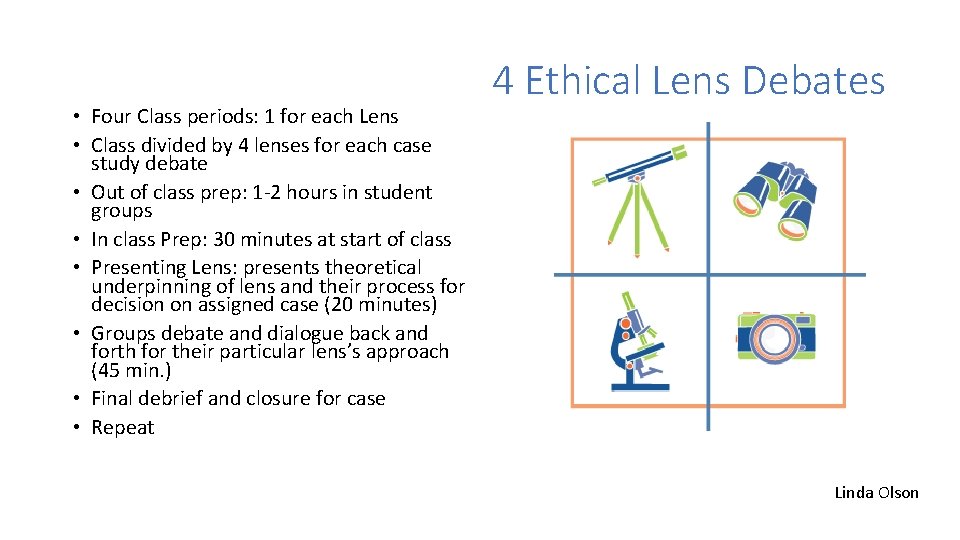
• Four Class periods: 1 for each Lens • Class divided by 4 lenses for each case study debate • Out of class prep: 1 -2 hours in student groups • In class Prep: 30 minutes at start of class • Presenting Lens: presents theoretical underpinning of lens and their process for decision on assigned case (20 minutes) • Groups debate and dialogue back and forth for their particular lens’s approach (45 min. ) • Final debrief and closure for case • Repeat 4 Ethical Lens Debates Linda Olson
Memo to your Children & Personal Code of Ethics • Write a memo to your children or to people whom you love. • What should they do when you are gone? • Identify key values from the memo. • Develop a personal Code of Ethics. For next year: Connect the Personal Code of Ethics to the lessons learned through the Ethics Lens Inventory Cris Wildermuth
• Goals: Kingdom Tycoon Simulation • Experience the impact of social injustice. • Introduce John Rawls’ Theory of Justice and Veil of Ignorance. • Connect John Rawls and the Relationship lens.
Kingdom Tycoons Simulation • Students play a simple card exchange game. • Divide the class into “dukes, ” “knights, ” and “peasants”(according to results). • Students may believe they joined those groups out of merit, but the cards were “rigged. ” • Students in the different groups receive different resources to perform a task (build a “Lego® Kingdom”). • Towards the end of the game, students decide on a different “Constitution. ” Cris Wildermuth
Kingdom Tycoon Slides
Movie Analysis Paper • Select a movie or episode in a TV series. • Describe the episode and key dilemma faced by one or more characters. • Select at least two lenses with which to analyze the dilemma. • Students must clearly state what they would do to solve the dilemma – and why. Cris Wildermuth
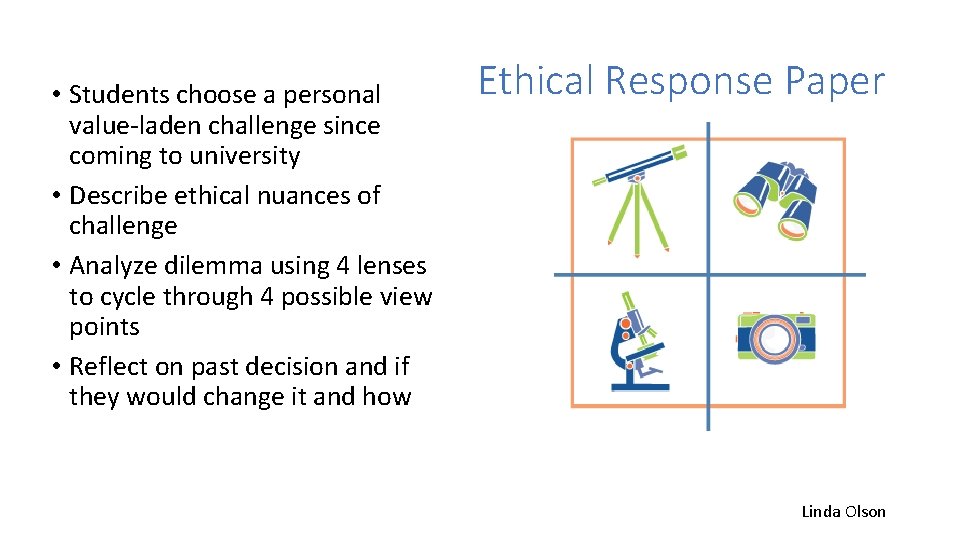
• Students choose a personal value-laden challenge since coming to university • Describe ethical nuances of challenge • Analyze dilemma using 4 lenses to cycle through 4 possible view points • Reflect on past decision and if they would change it and how Ethical Response Paper Linda Olson
• Articulate Personal Leadership definition with moral dimensions • Identify personal values in code of ethics • Create goals for reflective practices • Create goals for continued leadership development and accountability • Letter to self in 1 -2 years • Updated resume with value statements Leadership Manifesto Linda Olson
Conclusion Why do this? Is ethics education worth it? Can we move toward more ethical maturity?
References • Baird. (2011). Everyday ethics (2 nd ed. ). Englewood, CO: Ethics. Game Press. • Baird (2016). Ethics. Game. Retrieved from https: //www. ethicsgame. com/exec/site/eli. html. • Johnson, C. E. (2013). Meeting the ethical challenges of leadership: casting light or shadow (5 th ed. ). Los Angeles, CA: Sage Publications, Inc. • Oddo, A. R. (1997). A framework for teaching business ethics. Journal of Business Ethics, 16(3), 293– 297.