
Towards an outcomefocused model of scrutiny and improvement

- Slides: 28
Towards an outcome-focused model of scrutiny and improvement Rami Okasha Executive Director of Strategy and Improvement Care Inspectorate, Scotland @ramiokasha
Formal name: “Social Care and Social Work Improvement Scotland” Two separate organisations
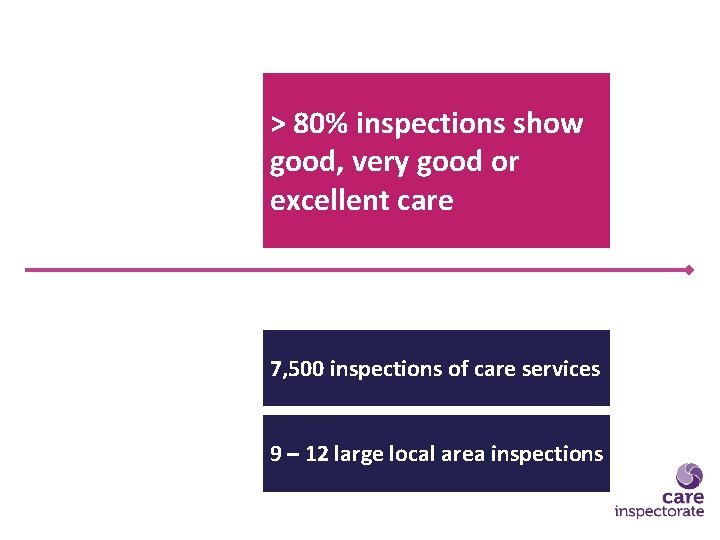
> 80% inspections show good, very good or excellent care 7, 500 inspections of care services 9 – 12 large local area inspections
London 2016
… slow, impoverished, scientificallyunfounded methods You want quality? You define it, you measure it, and then you act on the deficient few… you close them… Reliance on inspection does not work.
Inspection does not achieve continual, never-ending, pervasive improvement. It doesn't foster creativity, learning or pride. It poisons them. The main harvest of inspection isn't learning. It is fear.
London conference, April 2017
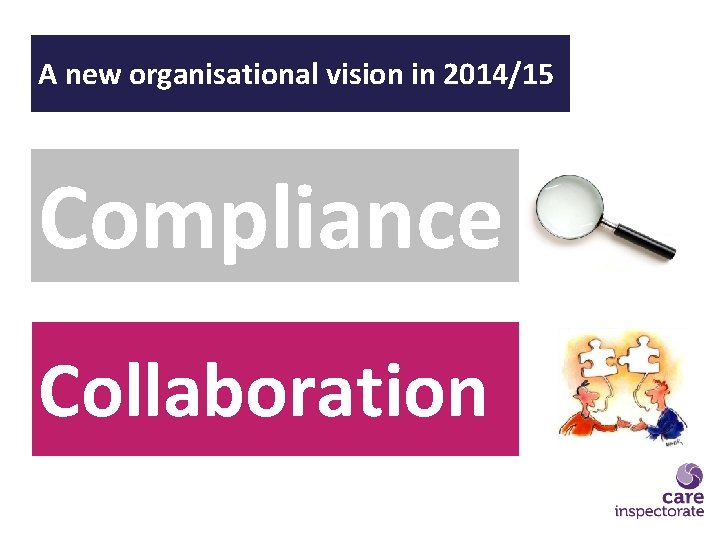
A new organisational vision in 2014/15 Compliance Collaboration
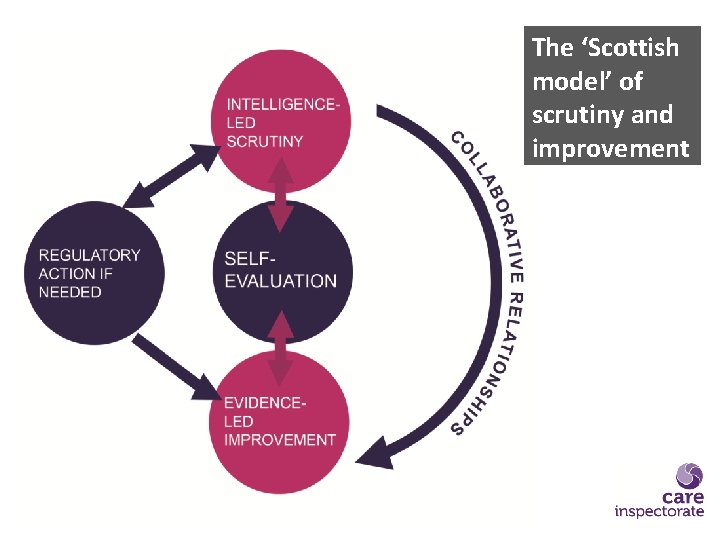
The ‘Scottish model’ of scrutiny and improvement
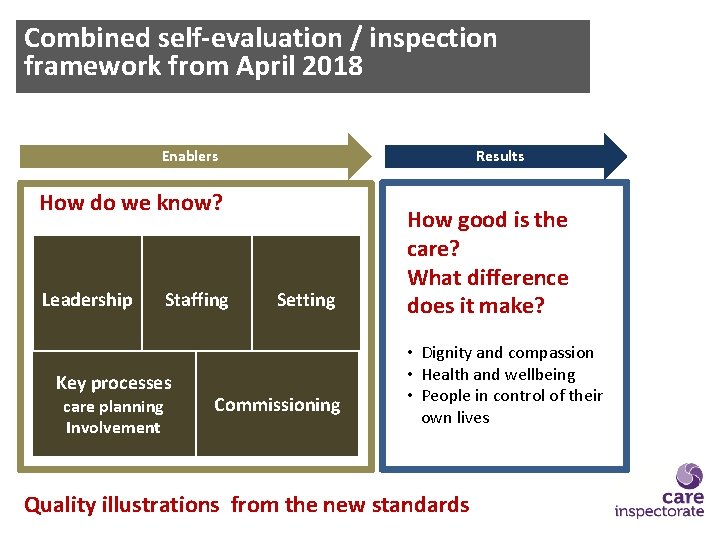
What are you doing wrong? Are you doing this right? Evidence what you are doing works well. Focus on supporting improvement Are the outcomes good? Is the leadership good? Are key processes in place? Combined self-evaluation / inspection framework from April 2018
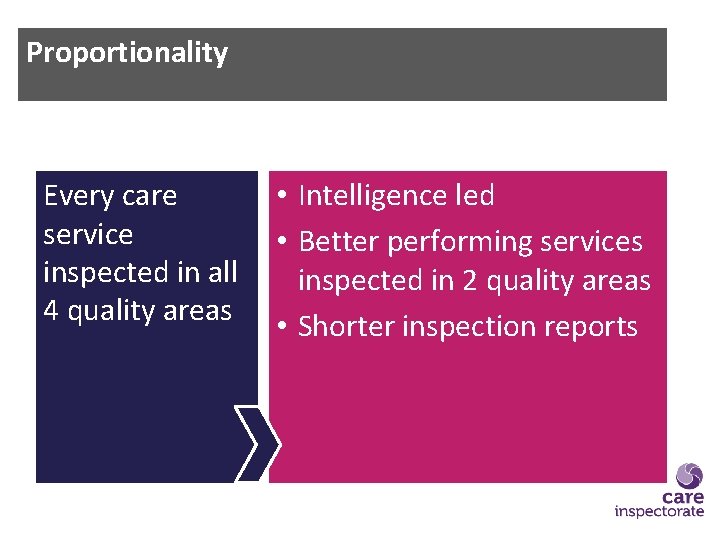
Proportionality Every care service inspected in all 4 quality areas • Intelligence led • Better performing services inspected in 2 quality areas • Shorter inspection reports
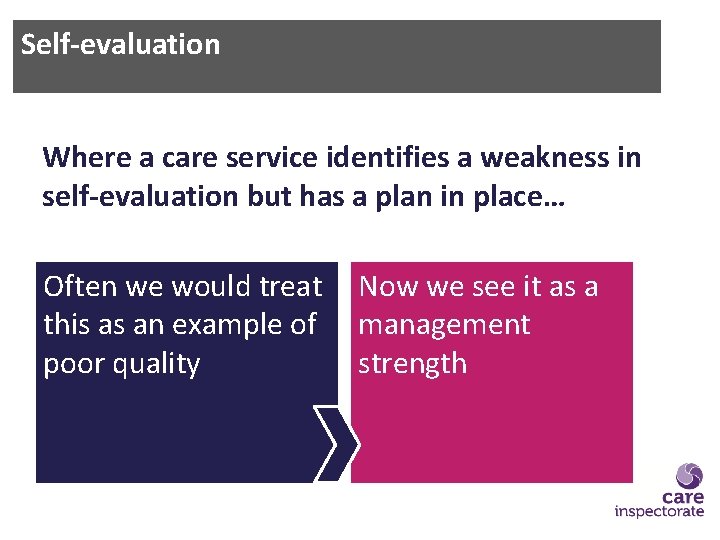
Self-evaluation Where a care service identifies a weakness in self-evaluation but has a plan in place… Often we would treat this as an example of poor quality Now we see it as a management strength
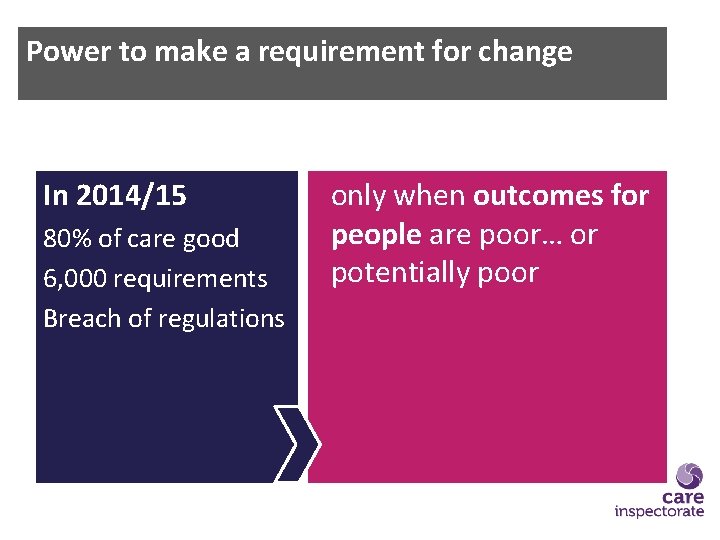
Power to make a requirement for change In 2014/15 80% of care good 6, 000 requirements Breach of regulations only when outcomes for people are poor… or potentially poor
More observation of people’s care • Read policies • Check procedures • Inspections start by speaking to people • Short Observational Framework for Inspectors (SOFI)
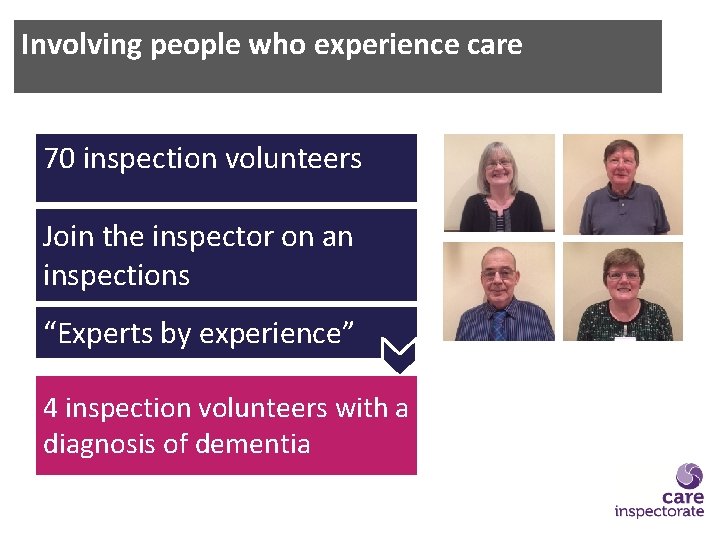
Involving people who experience care 70 inspection volunteers Join the inspector on an inspections “Experts by experience” 4 inspection volunteers with a diagnosis of dementia
Supporting improvement Expert health team Support inspections Expert improvement support team Support after an inspection National / local improvement programmes
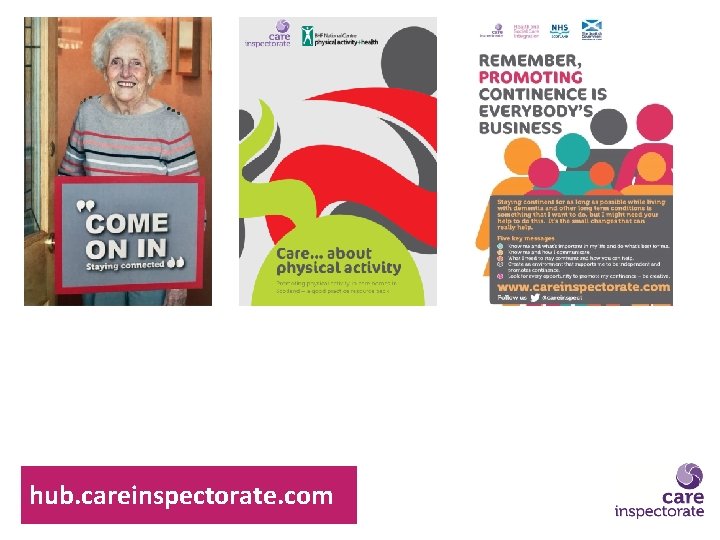
hub. careinspectorate. com
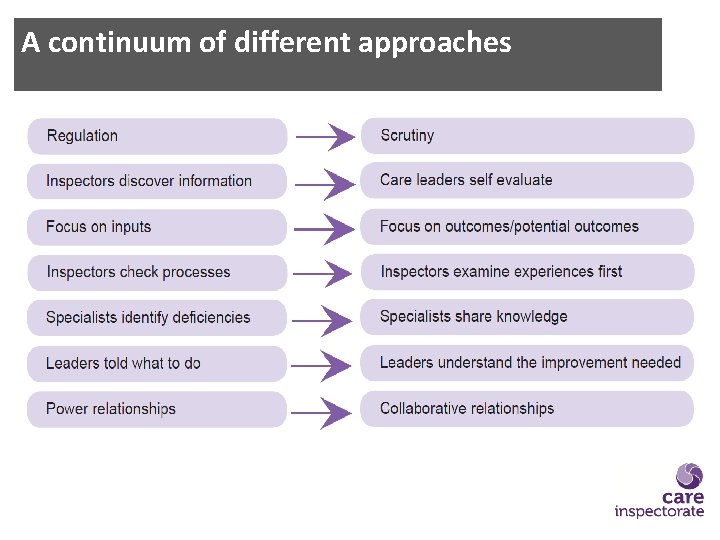
A continuum of different approaches
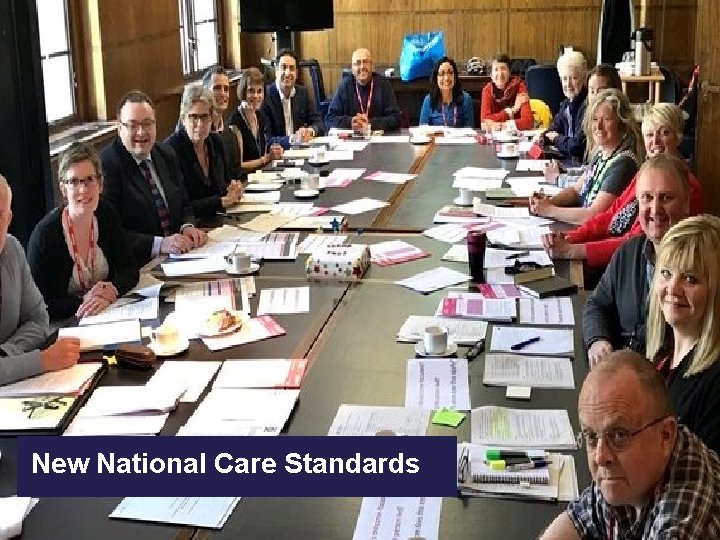
New National Care Standards
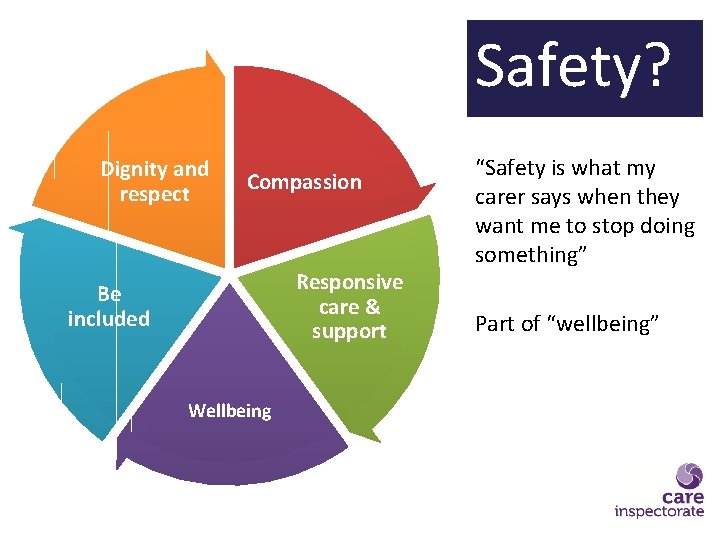
Safety? Dignity and respect Compassion Responsive care & support Be included Wellbeing “Safety is what my carer says when they want me to stop doing something” Part of “wellbeing”
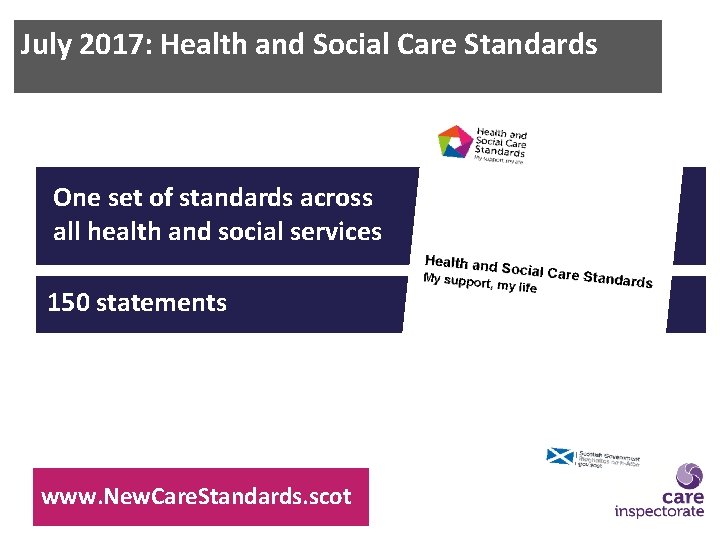
July 2017: Health and Social Care Standards One set of standards across all health and social services 150 statements www. New. Care. Standards. scot
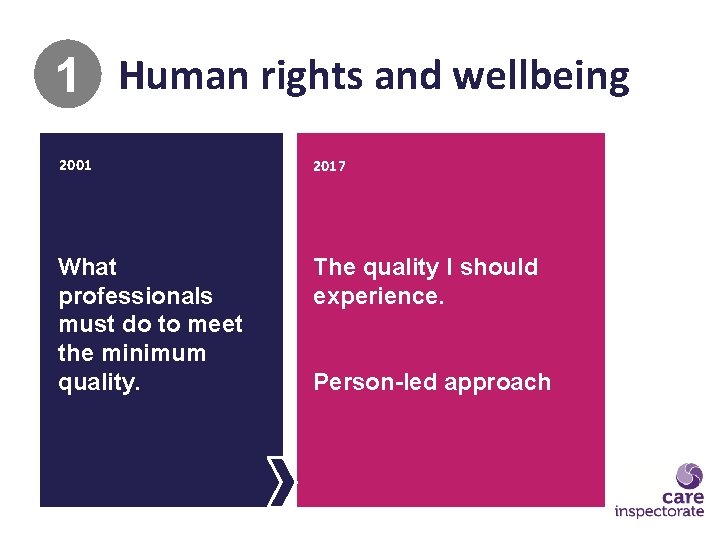
1 Human rights and wellbeing 2001 2017 What professionals must do to meet the minimum quality. The quality I should experience. Person-led approach
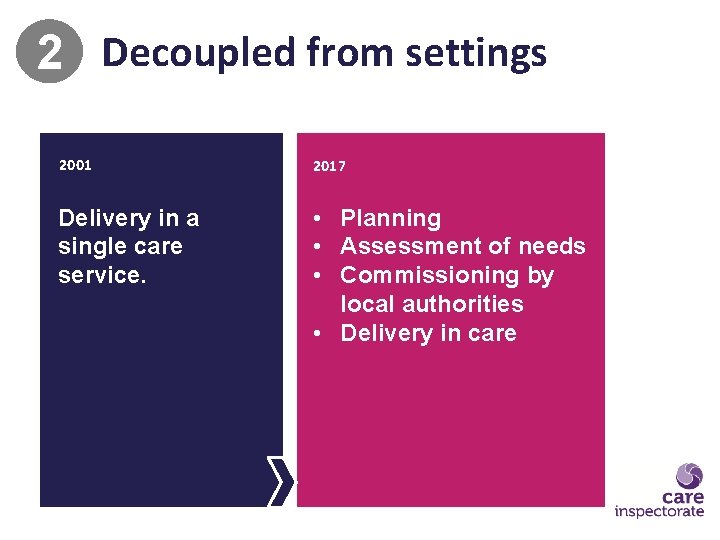
2 Decoupled from settings 2001 2017 Delivery in a single care service. • Planning • Assessment of needs • Commissioning by local authorities • Delivery in care
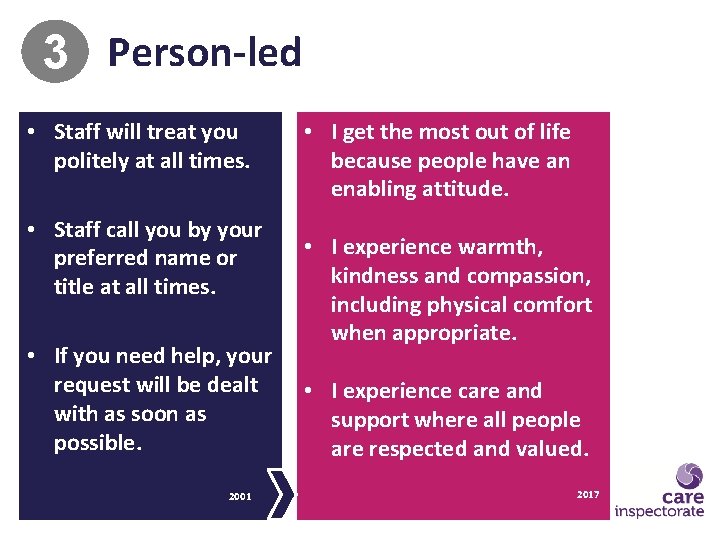
3 Person-led • Staff will treat you politely at all times. • Staff call you by your preferred name or title at all times. • If you need help, your request will be dealt with as soon as possible. 2001 • I get the most out of life because people have an enabling attitude. • I experience warmth, kindness and compassion, including physical comfort when appropriate. • I experience care and support where all people are respected and valued. 2017
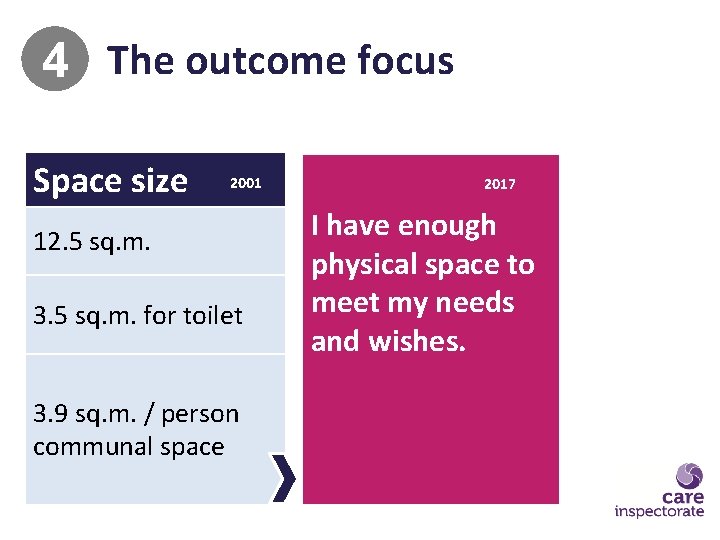
4 The outcome focus Space size 2001 12. 5 sq. m. 3. 5 sq. m. for toilet 3. 9 sq. m. / person communal space 2017 I have enough physical space to meet my needs and wishes.
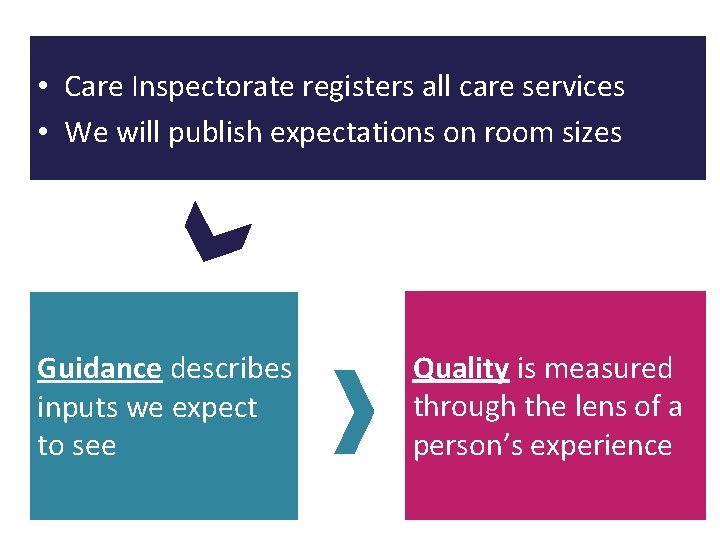
• Care Inspectorate registers all care services • We will publish expectations on room sizes Guidance describes inputs we expect to see Quality is measured through the lens of a person’s experience
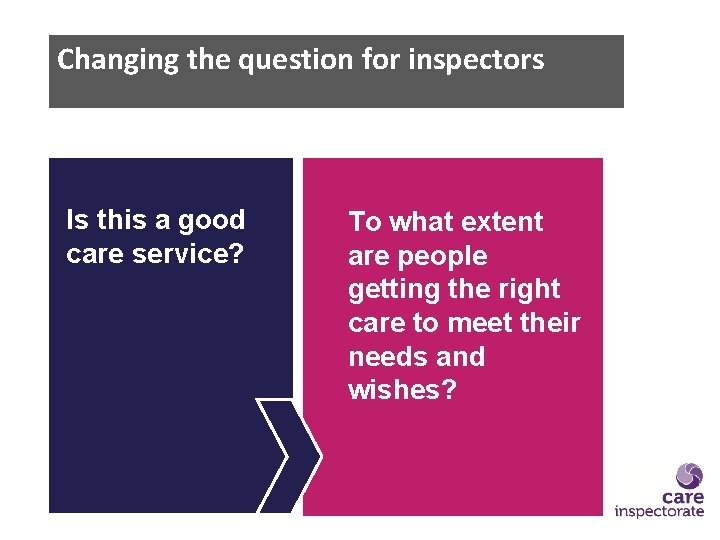
Changing the question for inspectors Is this a good care service? To what extent are people getting the right care to meet their needs and wishes?
Combined self-evaluation / inspection framework from April 2018 Enablers Results How do we know? Leadership Staffing Key processes care planning Involvement Setting Commissioning How good is the care? What difference does it make? • Dignity and compassion • Health and wellbeing • People in control of their own lives Quality illustrations from the new standards