
Towards a UNESCO Recommendation on Open Science Building
Towards a UNESCO Recommendation on Open Science Building a Global Consensus on Open Science UNESCO Natural Science Sector
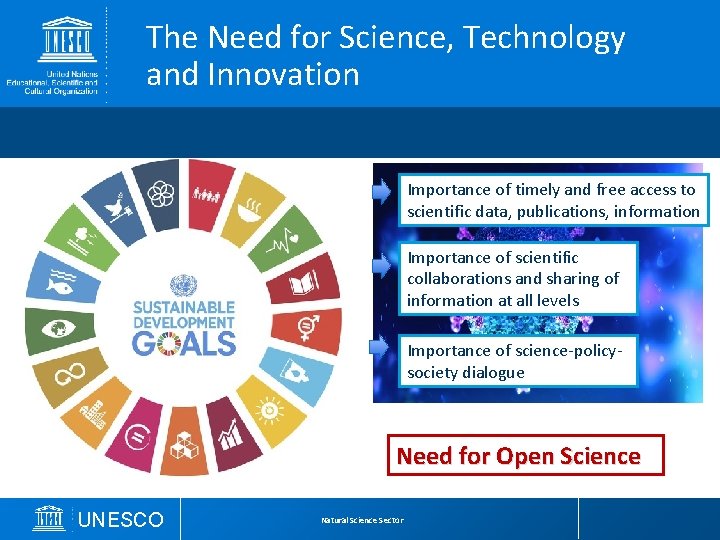
The Need for Science, Technology and Innovation Importance of timely and free access to scientific data, publications, information Importance of scientific collaborations and sharing of information at all levels Importance of science-policysociety dialogue Need for Open Science UNESCO Natural Science Sector
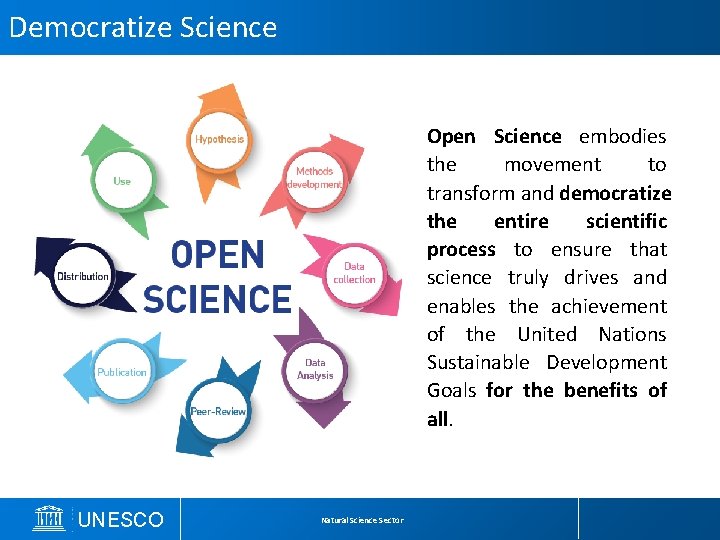
Democratize Science Open Science embodies the movement to transform and democratize the entire scientific process to ensure that science truly drives and enables the achievement of the United Nations Sustainable Development Goals for the benefits of all. UNESCO Natural Science Sector
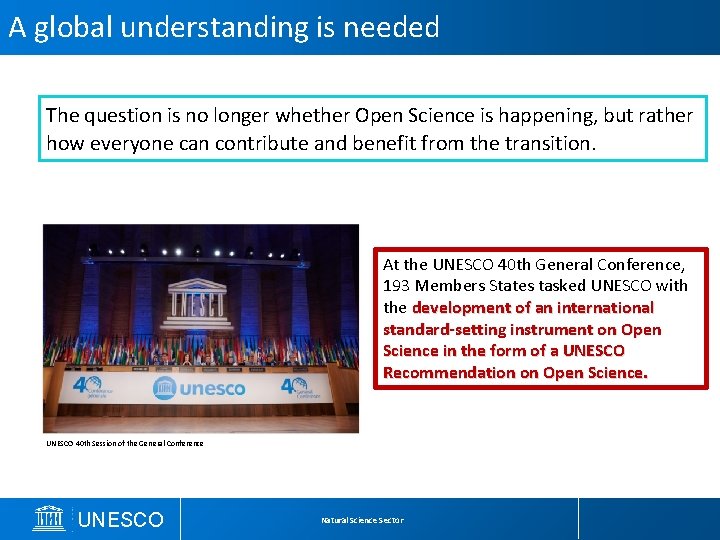
A global understanding is needed The question is no longer whether Open Science is happening, but rather how everyone can contribute and benefit from the transition. At the UNESCO 40 th General Conference, 193 Members States tasked UNESCO with the development of an international standard-setting instrument on Open Science in the form of a UNESCO Recommendation on Open Science. UNESCO 40 th Session of the General Conference UNESCO Natural Science Sector
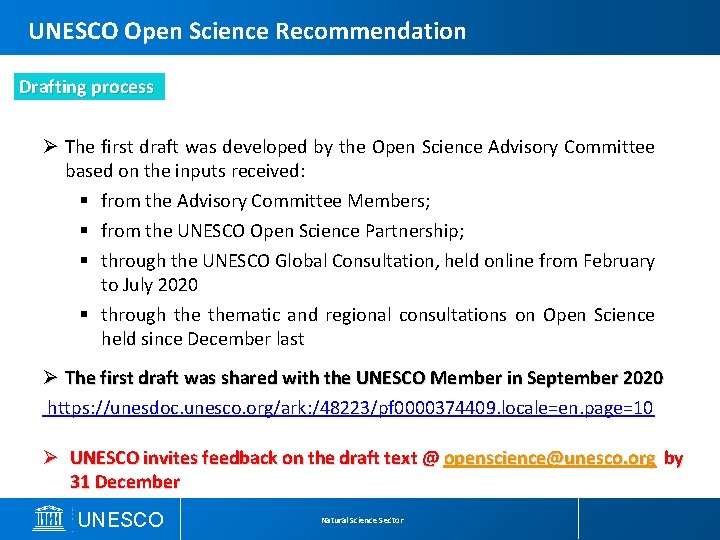
UNESCO Open Science Recommendation Drafting process Ø The first draft was developed by the Open Science Advisory Committee based on the inputs received: § from the Advisory Committee Members; § from the UNESCO Open Science Partnership; § through the UNESCO Global Consultation, held online from February to July 2020 § through thematic and regional consultations on Open Science held since December last Ø The first draft was shared with the UNESCO Member in September 2020 https: //unesdoc. unesco. org/ark: /48223/pf 0000374409. locale=en. page=10 Ø UNESCO invites feedback on the draft text @ openscience@unesco. org by 31 December UNESCO Natural Science Sector
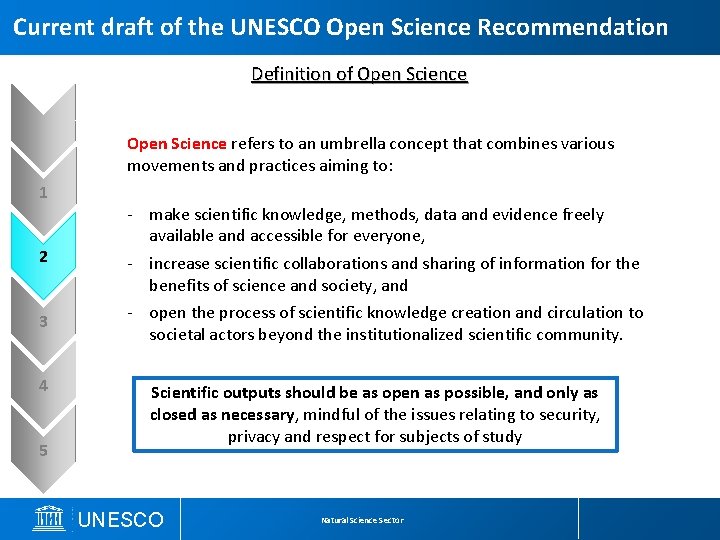
Current draft of the UNESCO Open Science Recommendation Definition of Open Science refers to an umbrella concept that combines various movements and practices aiming to: 1 2 3 4 5 - make scientific knowledge, methods, data and evidence freely available and accessible for everyone, - increase scientific collaborations and sharing of information for the benefits of science and society, and - open the process of scientific knowledge creation and circulation to societal actors beyond the institutionalized scientific community. Scientific outputs should be as open as possible, and only as closed as necessary, mindful of the issues relating to security, privacy and respect for subjects of study UNESCO Natural Science Sector
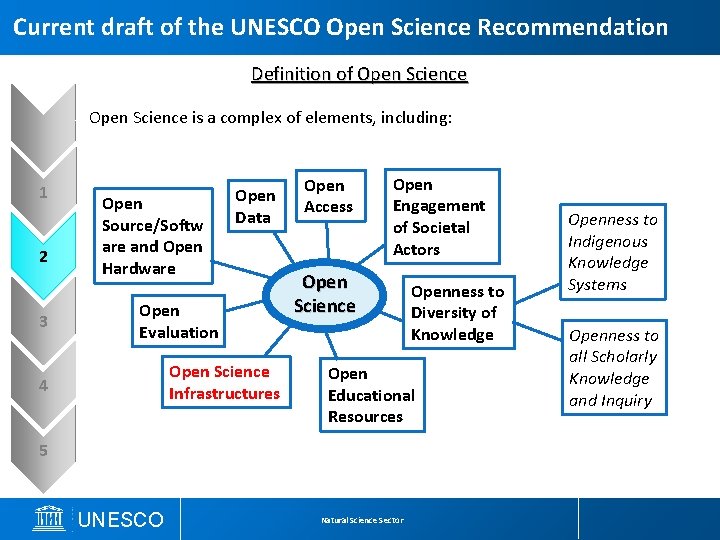
Current draft of the UNESCO Open Science Recommendation Definition of Open Science is a complex of elements, including: 1 2 3 Open Source/Softw are and Open Hardware Open Data Open Evaluation Open Science Infrastructures 4 Open Access Open Engagement of Societal Actors Open Science Open Educational Resources 5 UNESCO Openness to Diversity of Knowledge Natural Science Sector Openness to Indigenous Knowledge Systems Openness to all Scholarly Knowledge and Inquiry
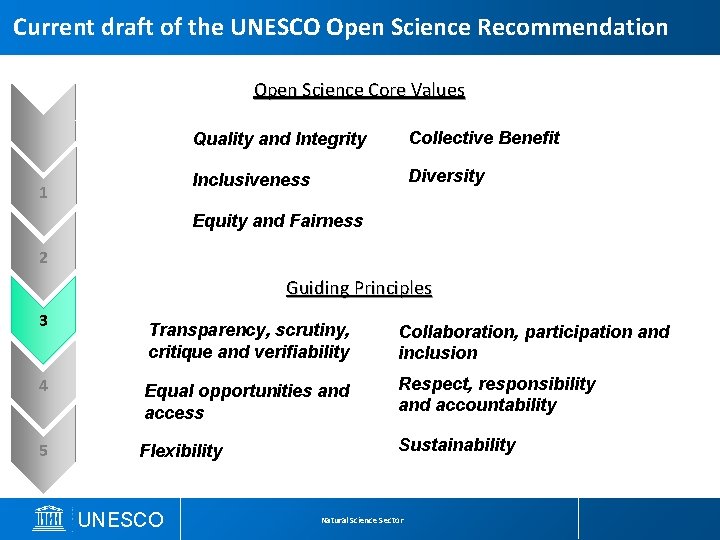
Current draft of the UNESCO Open Science Recommendation Open Science Core Values 1 Quality and Integrity Collective Benefit Inclusiveness Diversity Equity and Fairness 2 Guiding Principles 3 Transparency, scrutiny, critique and verifiability Collaboration, participation and inclusion 4 Equal opportunities and access Respect, responsibility and accountability 5 Flexibility Sustainability UNESCO Natural Science Sector
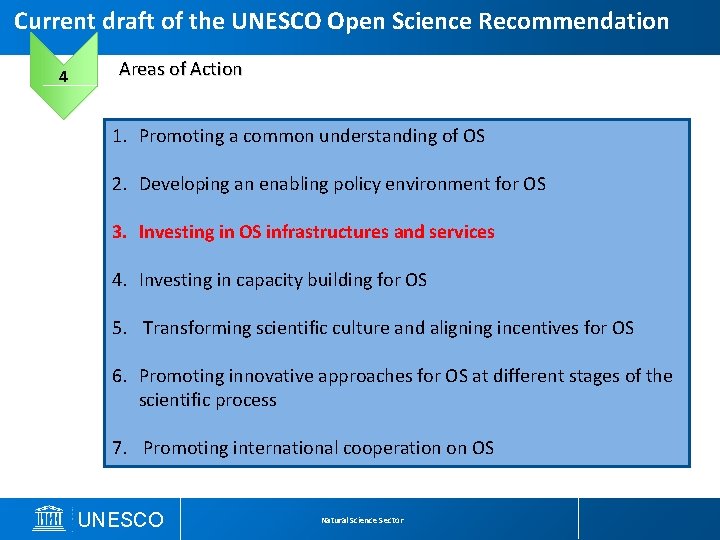
Current draft of the UNESCO Open Science Recommendation 4 Areas of Action 1. Promoting a common understanding of OS 2. Developing an enabling policy environment for OS 3. Investing in OS infrastructures and services 4. Investing in capacity building for OS 5. Transforming scientific culture and aligning incentives for OS 6. Promoting innovative approaches for OS at different stages of the scientific process 7. Promoting international cooperation on OS UNESCO Natural Science Sector
Investing in Open Science infrastructures • Community-led, interoperable, inclusive, interconnected and sustainable digital infrastructures and computing facilities to ensure long-term preservation, stewardship, and community control of research products. • Community agreements should define community practices for data sharing, data formats, metadata standards, ontologies and terminologies, tools and infrastructure. • Technical requirements for every digital object of significance for science, whether a datum, a dataset, metadata, code, a publication should also be addressed. • Certain core specifications, such as for example the FAIR and CARE principles for data stewardship. UNESCO Natural Science Sector
Investing in Open Science infrastructures • Joint strategies for shared, multinational, regional Open Science platforms to provide coordinated support for interoperability from the perspective of policy, practices and technical specifications. • Platforms for exchanges and co-creation of knowledge between scientists and society • Monitoring and information systems to complement national, regional and global data and information systems. UNESCO Natural Science Sector
- Slides: 11