
Towards a new generation of Digital Repository of
- Slides: 19
Towards a new generation of Digital Repository of Scientific Institutes Błażej Betański Poznań Supercomputing and Networking Center
Towards a new generation of Digital Repository of Scientific Institutes Open Resources in the Digital Repository of Scientific Institutes (OZw. RCIN) • Digital Repository of Scientific Institutes (DRSI) has been established in 2010 as a collective initiative of 16 scientific institutes from Poland. The main objective of this initiative is to provide to the research community a country -level, multidisciplinary digital repository composed of archival materials, scientific publications, research documentation and cultural heritage content. • In 2018 a country-level, EU co-funded project named OZw. RCIN, has been initiated in order to improve DRSI. The project sets out several objectives that can be reduced to a general statement about sharing, archiving and disseminating public sector information
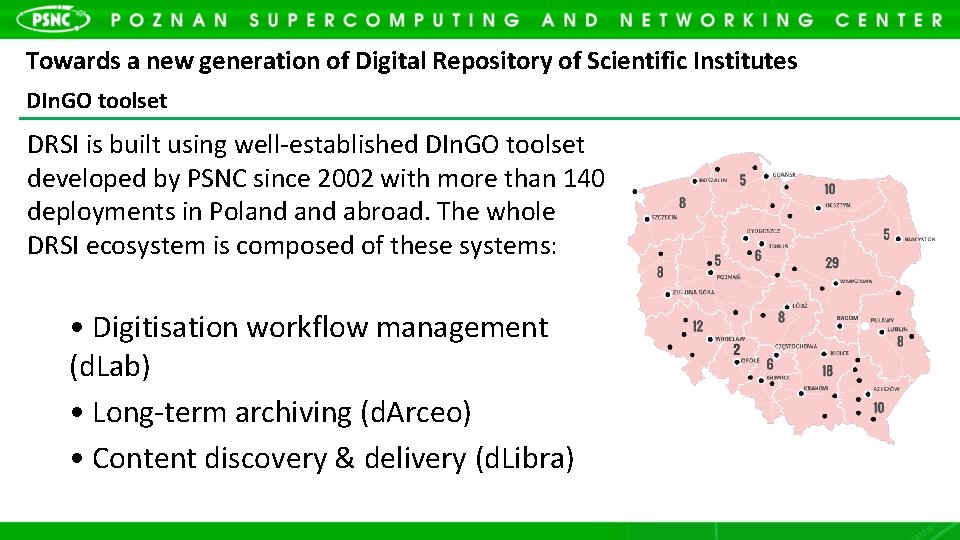
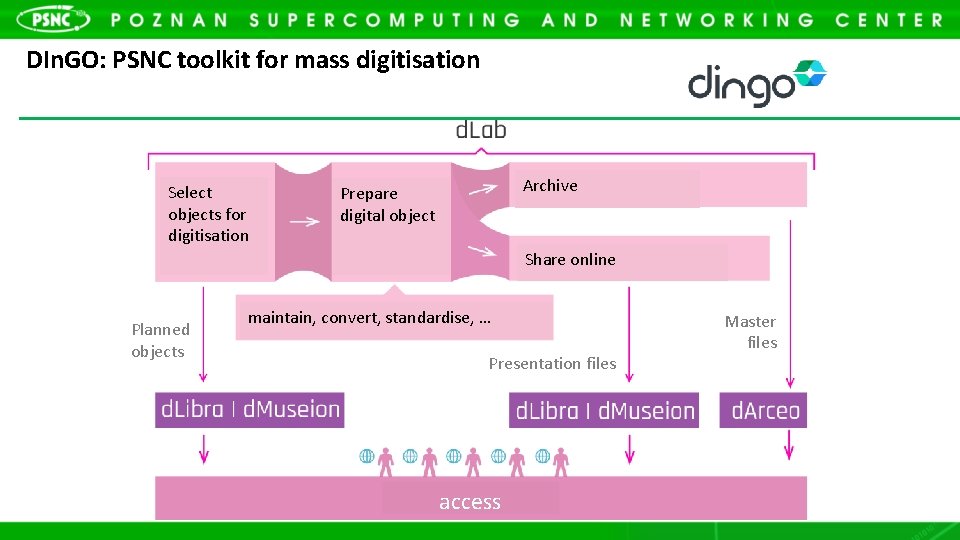
Towards a new generation of Digital Repository of Scientific Institutes DIn. GO toolset DRSI is built using well-established DIn. GO toolset developed by PSNC since 2002 with more than 140 deployments in Poland abroad. The whole DRSI ecosystem is composed of these systems: • Digitisation workflow management (d. Lab) • Long-term archiving (d. Arceo) • Content discovery & delivery (d. Libra)
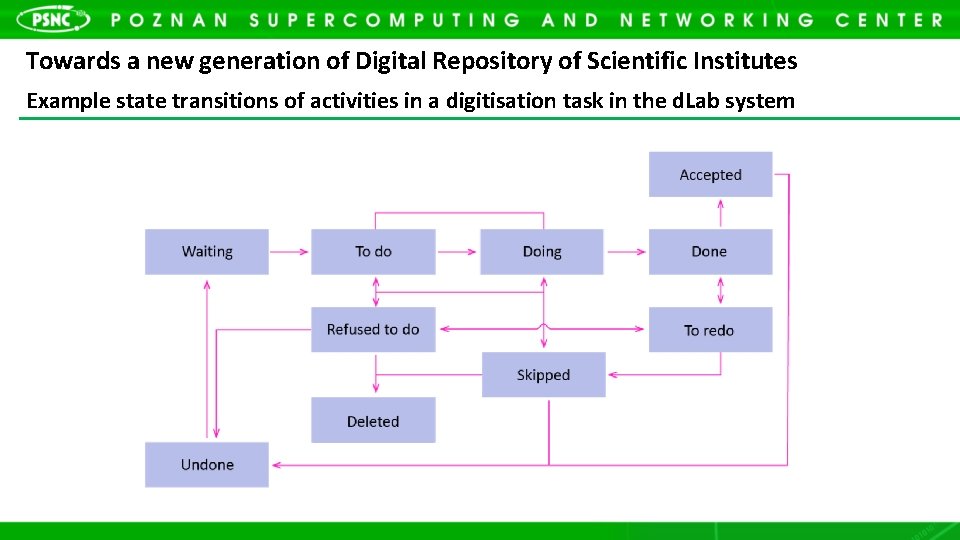
Towards a new generation of Digital Repository of Scientific Institutes DIn. GO toolset d. Lab is a powerful, flexible and extensible system for managing the digitization process, which facilitates the organization of work related to digitization, supports users in performing assigned tasks, and allows monitoring of progress using the reporting system.
Towards a new generation of Digital Repository of Scientific Institutes Example state transitions of activities in a digitisation task in the d. Lab system
Towards a new generation of Digital Repository of Scientific Institutes DIn. GO toolset d. Arceo is a long term archiving system developed since 2011. Dedicated to long-term storage of various data formats, including graphics, text and audiovisual materials. Complies with the recognized and global OAIS standard. Used in practice in Polish culture and science institutions. Supports various data warehouses including the PLATON U 4 service.
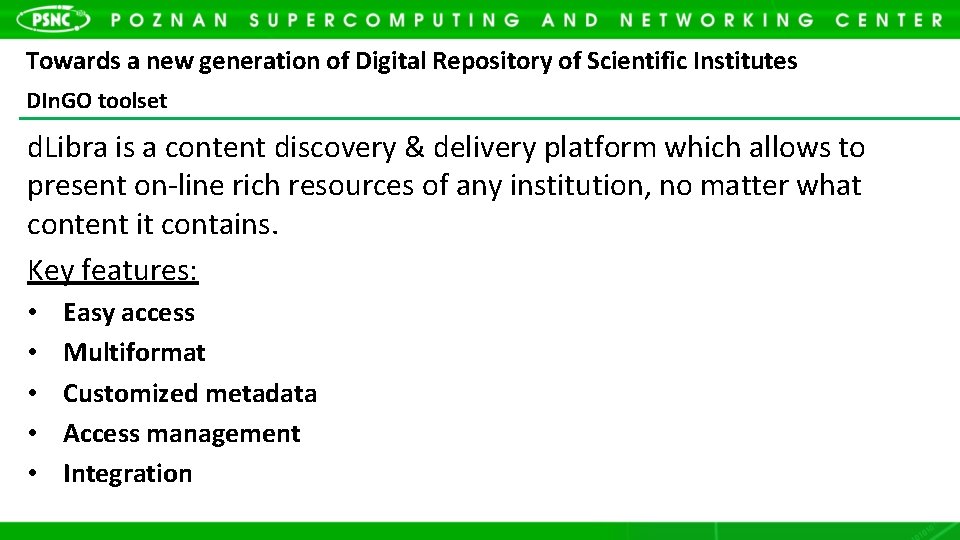
Towards a new generation of Digital Repository of Scientific Institutes DIn. GO toolset d. Libra is a content discovery & delivery platform which allows to present on-line rich resources of any institution, no matter what content it contains. Key features: • • • Easy access Multiformat Customized metadata Access management Integration
DIn. GO: PSNC toolkit for mass digitisation Select objects for digitisation Archive Prepare digital object Share online Planned objects maintain, convert, standardise, … Presentation files access Master files
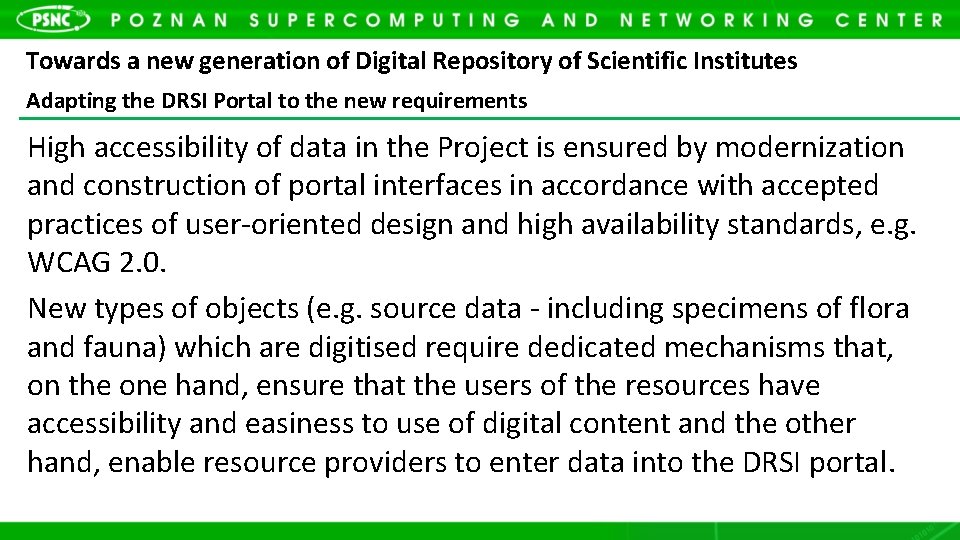
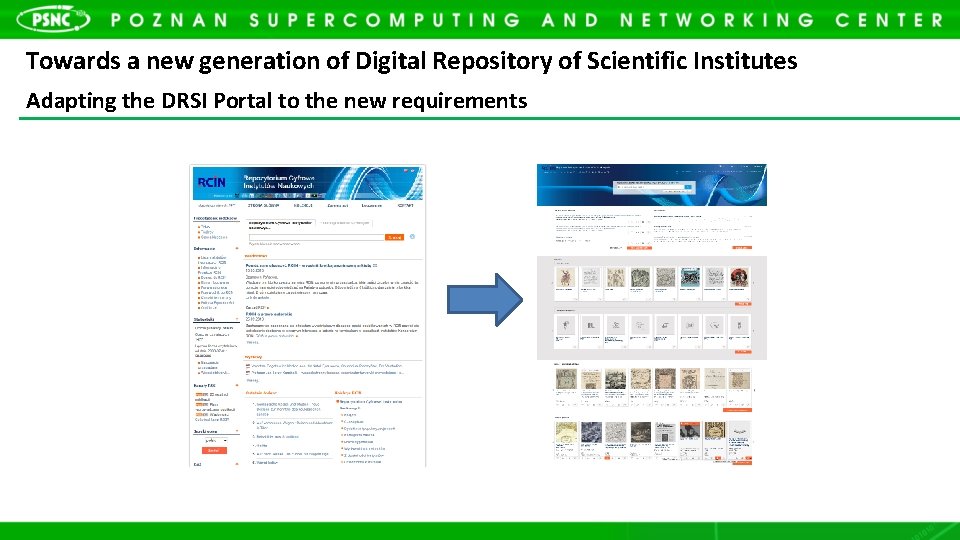
Towards a new generation of Digital Repository of Scientific Institutes Adapting the DRSI Portal to the new requirements High accessibility of data in the Project is ensured by modernization and construction of portal interfaces in accordance with accepted practices of user-oriented design and high availability standards, e. g. WCAG 2. 0. New types of objects (e. g. source data - including specimens of flora and fauna) which are digitised require dedicated mechanisms that, on the one hand, ensure that the users of the resources have accessibility and easiness to use of digital content and the other hand, enable resource providers to enter data into the DRSI portal.
Towards a new generation of Digital Repository of Scientific Institutes Adapting the DRSI Portal to the new requirements
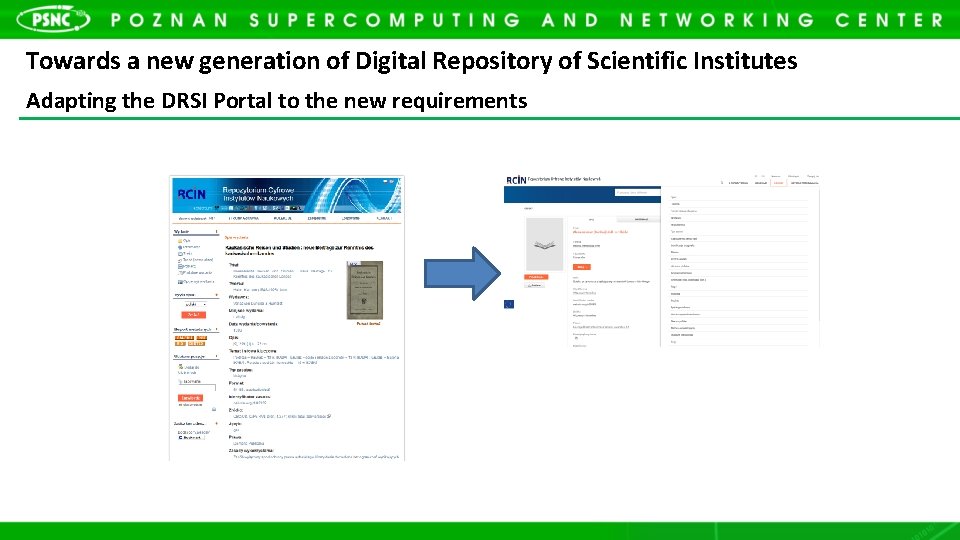
Towards a new generation of Digital Repository of Scientific Institutes Adapting the DRSI Portal to the new requirements
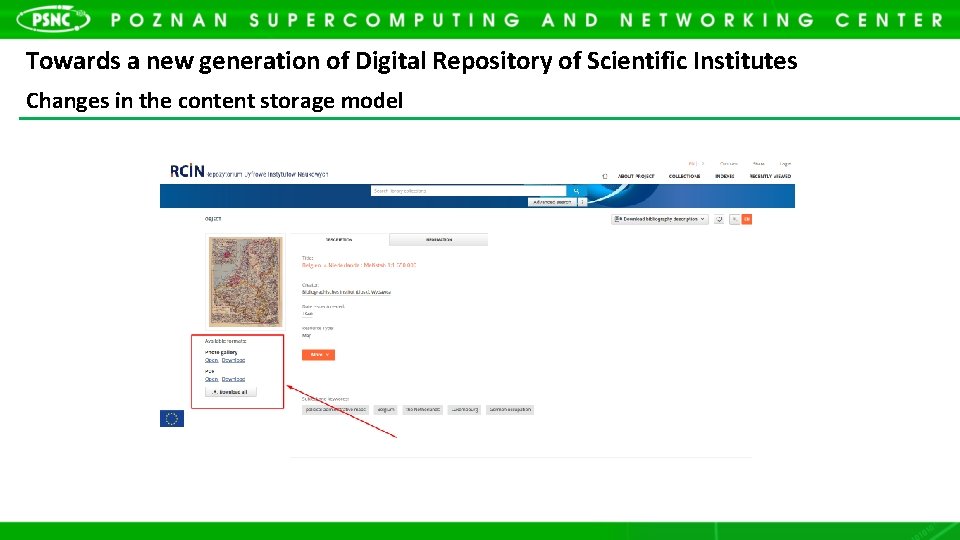
Towards a new generation of Digital Repository of Scientific Institutes Changes in the content storage model The way the content in the Digital Repository is handled, due to its complexity has forced a change of approach to the way it is processed in the system. The support for hierarchical directories was implemented which now provides informations about the content format, adjusted to the defined data types.
Towards a new generation of Digital Repository of Scientific Institutes Changes in the content storage model
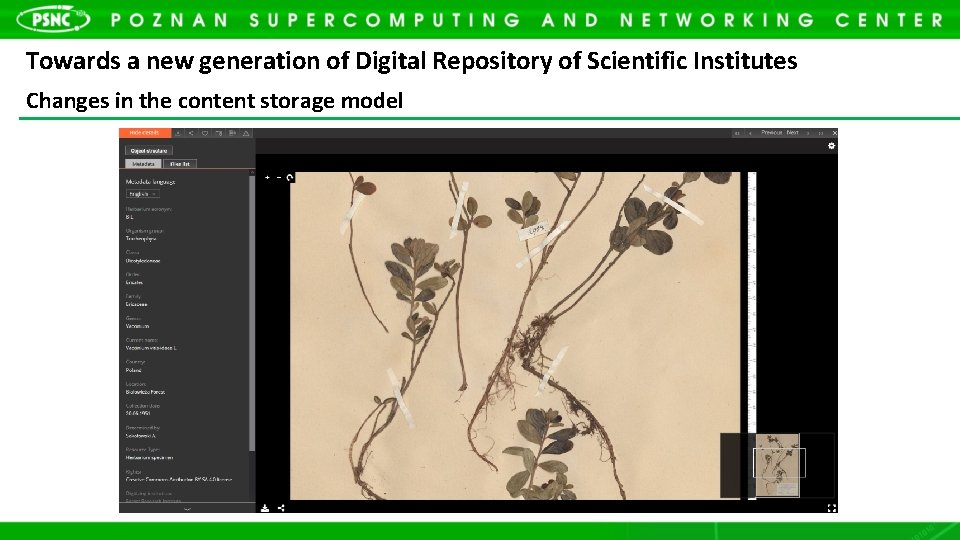
Towards a new generation of Digital Repository of Scientific Institutes Changes in the presentation of objects The mechanism of presenting graphic content was extended by the content served by the IIIF server built in the Repository. The way of presenting all graphic materials has been unified and is now presented through Universal Viewer.
Towards a new generation of Digital Repository of Scientific Institutes Changes in the content storage model
Towards a new generation of Digital Repository of Scientific Institutes Unique identification of resources by DOI The functionality of the DRSI has been extended by the mechanism of automatic assigning of permanent Digital Object Identifiers (DOI) which should improve access to scientific data
Towards a new generation of Digital Repository of Scientific Institutes Knowledge base The Knowledge base aggregates the scientific activities of the participating institutes and its employees to present them for individual institutes. A data model has been developed to store information of the scientific activities of the participating institutes.
Towards a new generation of Digital Repository of Scientific Institutes Conclusions Although the project includes institutions representing various fields of science, DIn. GO Toolset has made it possible to present their collections and digital objects in a unified form with the preservation of their individual charisma in a clear and convenient way to browse.
Thank you for your attention! Błażej Betański (betanski@man. poznan. pl) Digital Libraries and Knowledge Platforms Department, Network Services Division, PSNC