
Towards a Biosphere to Create and Monitor Environmental
Towards a Biosphere to Create and Monitor Environmental Conditions Biosphere Observation e. Xperiment The
Outline I. II. IV. Previous Existing Biosphere Experiments Biological Aspects Engineering of the BOX Question
PART I Previous Existing Biosphere Experiments
Previous Existing Biosphere Experiments n n Bios-3 Beachworld Biosphere 2 Laboratory Biosphere
Previous Existing Biosphere Experiments Bios-3 n Bios-1 was constructed in 1965 n Siberian city of Krasnoyarsk n Modified in 1968 and called Bios-2 n 1972, Bios-3 was created § § Underground facility split into four sections Each phytotron uses 20 vertical xenon lamps Air tanks regulate air pressure Possibly could not exist on Mars: n lightweight, pressurized structure
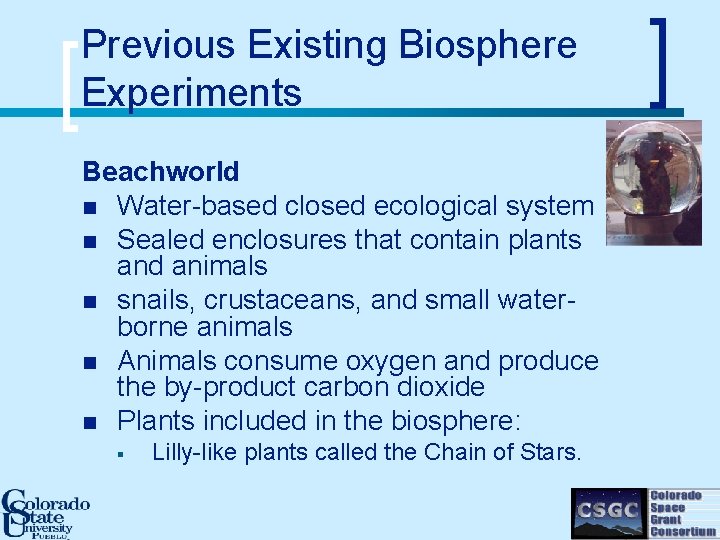
Previous Existing Biosphere Experiments Beachworld n Water-based closed ecological system n Sealed enclosures that contain plants and animals n snails, crustaceans, and small waterborne animals n Animals consume oxygen and produce the by-product carbon dioxide n Plants included in the biosphere: § Lilly-like plants called the Chain of Stars.
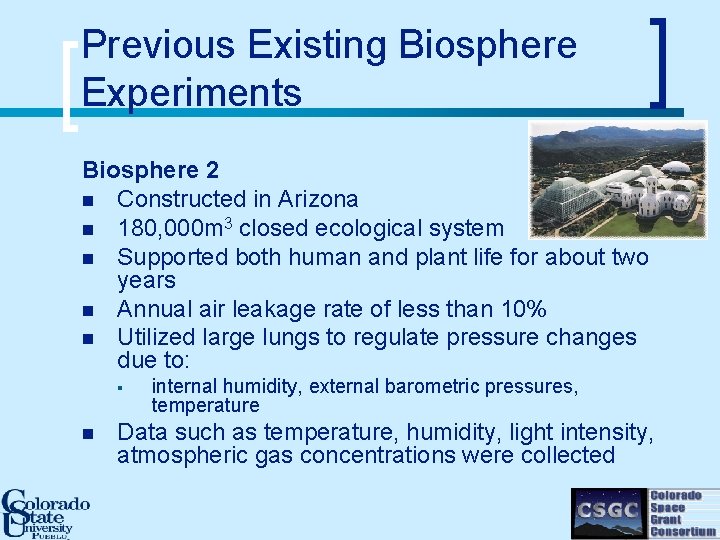
Previous Existing Biosphere Experiments Biosphere 2 n Constructed in Arizona n 180, 000 m 3 closed ecological system n Supported both human and plant life for about two years n Annual air leakage rate of less than 10% n Utilized large lungs to regulate pressure changes due to: § n internal humidity, external barometric pressures, temperature Data such as temperature, humidity, light intensity, atmospheric gas concentrations were collected
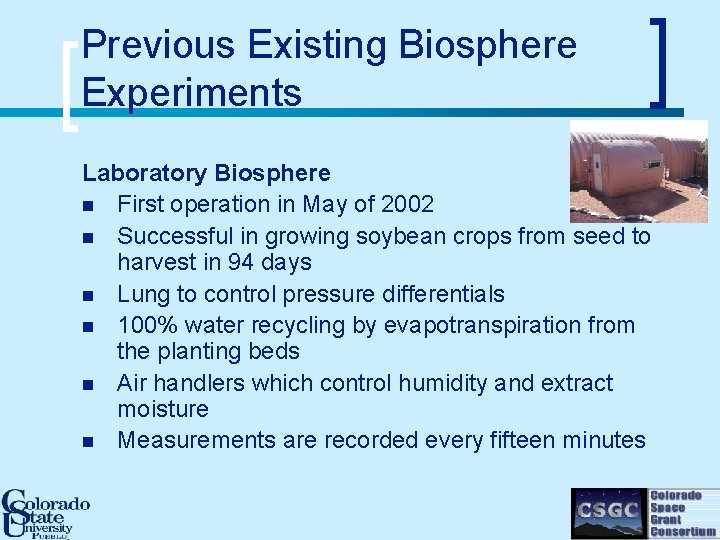
Previous Existing Biosphere Experiments Laboratory Biosphere n First operation in May of 2002 n Successful in growing soybean crops from seed to harvest in 94 days n Lung to control pressure differentials n 100% water recycling by evapotranspiration from the planting beds n Air handlers which control humidity and extract moisture n Measurements are recorded every fifteen minutes
PART II Biological Aspects
Biological Aspects n Plant Life Representation, Arabidopsis Thaliana n Maximizing Photosynthesis, Minimizing Aerobic Respiration n Internal Design and Ecology
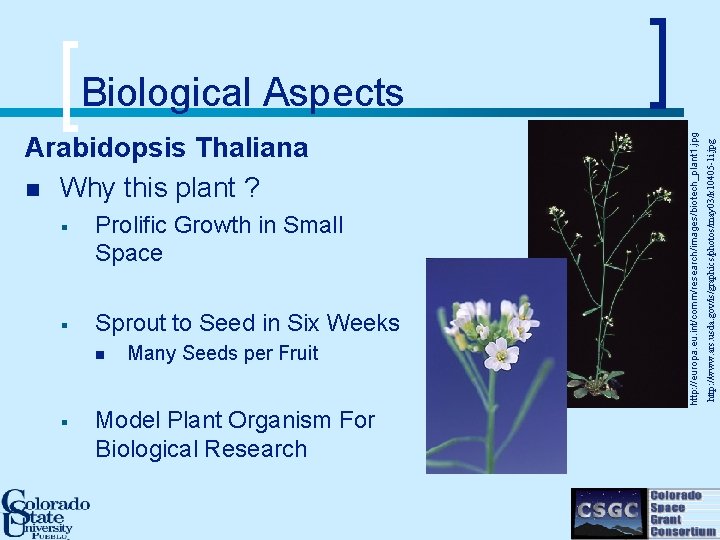
§ Prolific Growth in Small Space § Sprout to Seed in Six Weeks n § Many Seeds per Fruit Model Plant Organism For Biological Research http: //www. ars. usda. gov/is/graphics/photos/may 03/k 10405 -1 i. jpg Arabidopsis Thaliana n Why this plant ? http: //europa. eu. int/comm/research/images/biotech_plant 1. jpg Biological Aspects
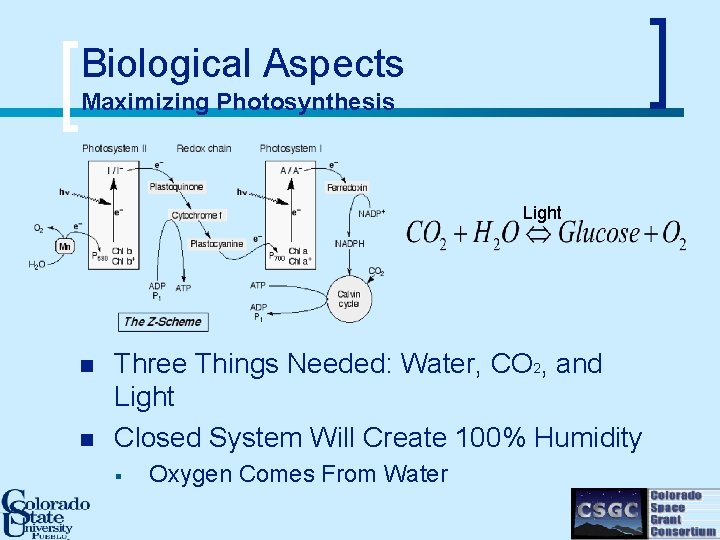
Biological Aspects Maximizing Photosynthesis Light n n Three Things Needed: Water, CO 2, and Light Closed System Will Create 100% Humidity § Oxygen Comes From Water
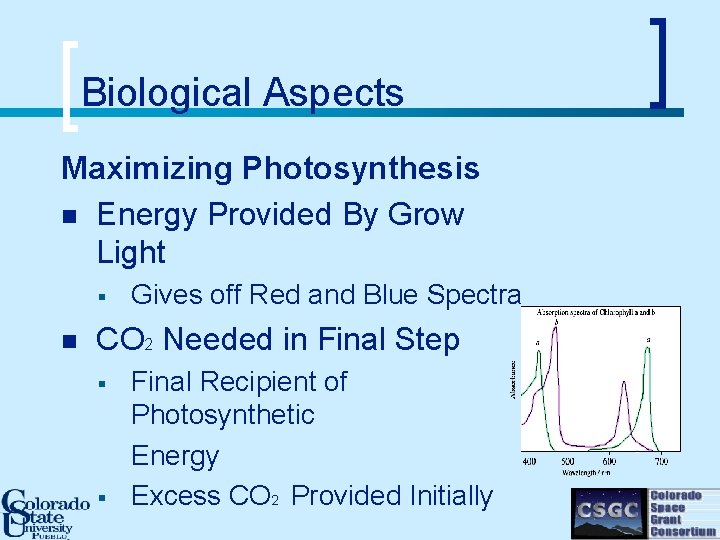
Biological Aspects Maximizing Photosynthesis n Energy Provided By Grow Light § n Gives off Red and Blue Spectra CO 2 Needed in Final Step § § Final Recipient of Photosynthetic Energy Excess CO 2 Provided Initially
Biological Aspects Minimizing Aerobic Respiration n Reducing Non-Plant Life Forms § n All Animals and Insects Use Aerobic Respiration Only allow for Bacteria in Soil § Can Process Heavy Metals to Useable Forms
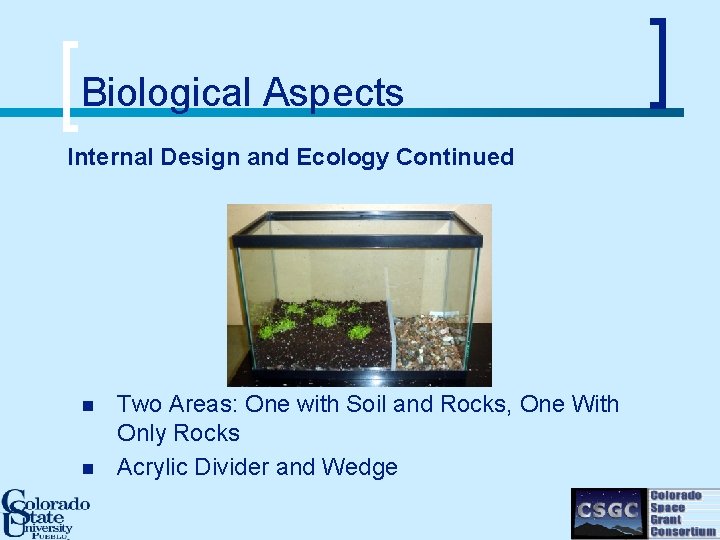
Biological Aspects Internal Design and Ecology Continued n n Two Areas: One with Soil and Rocks, One With Only Rocks Acrylic Divider and Wedge
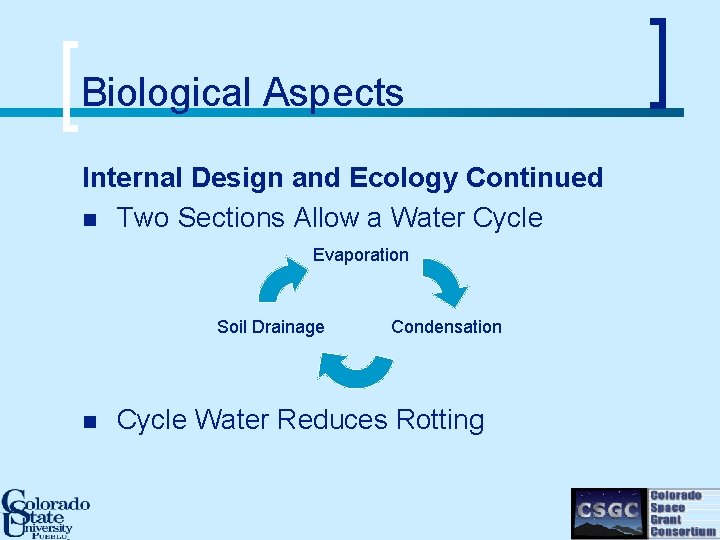
Biological Aspects Internal Design and Ecology Continued n Two Sections Allow a Water Cycle Evaporation Soil Drainage n Condensation Cycle Water Reduces Rotting
PART III Engineering of the BOX
Engineering of the BOX n n n n Benefits of using a small Size Material (The use of a Terrarium) Sealing of the Terrarium Light source Equipment Organization inside the Biosphere Lungs
Engineering of the BOX n Why the small size? § § § Leakage Rate Observational Area System Complexity
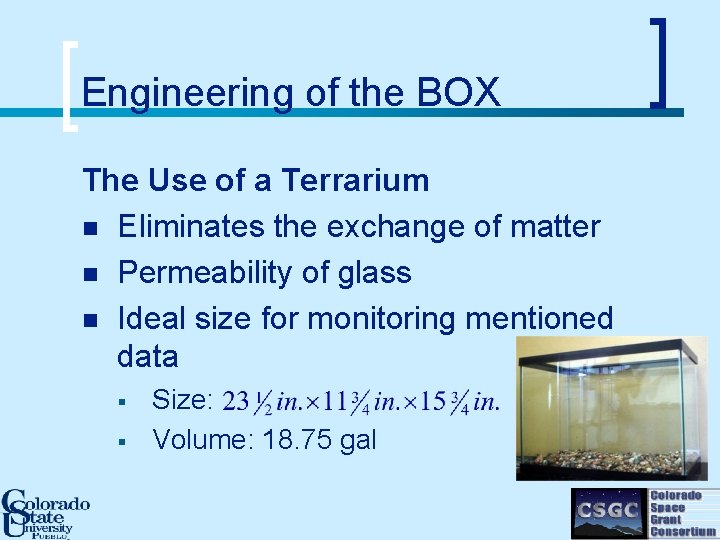
Engineering of the BOX The Use of a Terrarium n Eliminates the exchange of matter n Permeability of glass n Ideal size for monitoring mentioned data § § Size: Volume: 18. 75 gal
Engineering of the BOX Sealing of the Terrarium n n POLYMETHYLMETHACRYLATE Qubitac sealant

Engineering of the BOX Light Source n Hydrofarm n 125 W Fluorescent grow light n 6400 k bulb n Produces little heat n Better color rendering properties n Mounted 2 inches above top of Biosphere
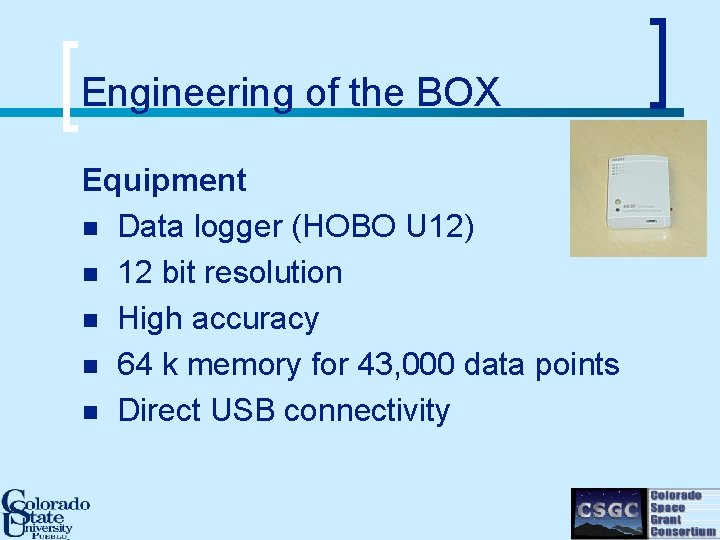
Engineering of the BOX Equipment n Data logger (HOBO U 12) n 12 bit resolution n High accuracy n 64 k memory for 43, 000 data points n Direct USB connectivity
Engineering of the BOX Equipment n Oxygen Sensor (SO-B 0 -250, Electrovac) n Range of 0. 1% - 25. 0% the O 2 content n Analyzation unit (EDAB-M 1, Electrovac) n Converts signal from O 2 sensor to a linearized output signal between 0 V-2. 5 V DC. n CO 2 Control Wizard Injection System n Used to set up initial conditions
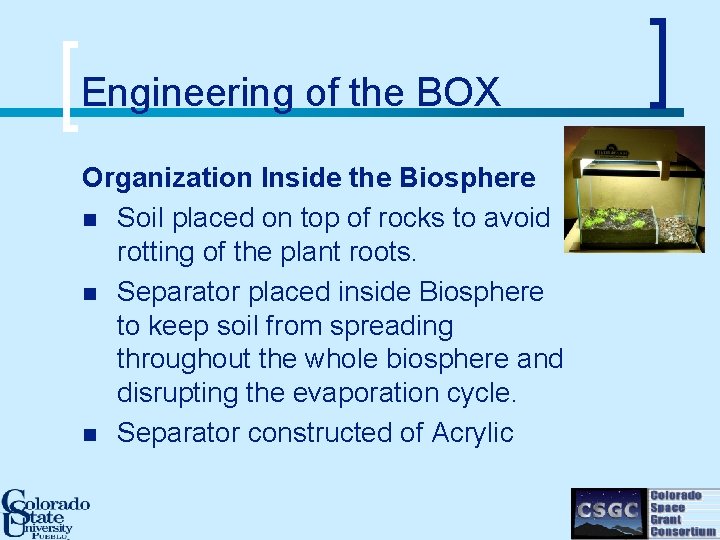
Engineering of the BOX Organization Inside the Biosphere n Soil placed on top of rocks to avoid rotting of the plant roots. n Separator placed inside Biosphere to keep soil from spreading throughout the whole biosphere and disrupting the evaporation cycle. n Separator constructed of Acrylic
Engineering of the BOX Organization Inside the Biosphere n Fan n Solar driven n Used to move the air inside the Biosphere so that plants keep cool.
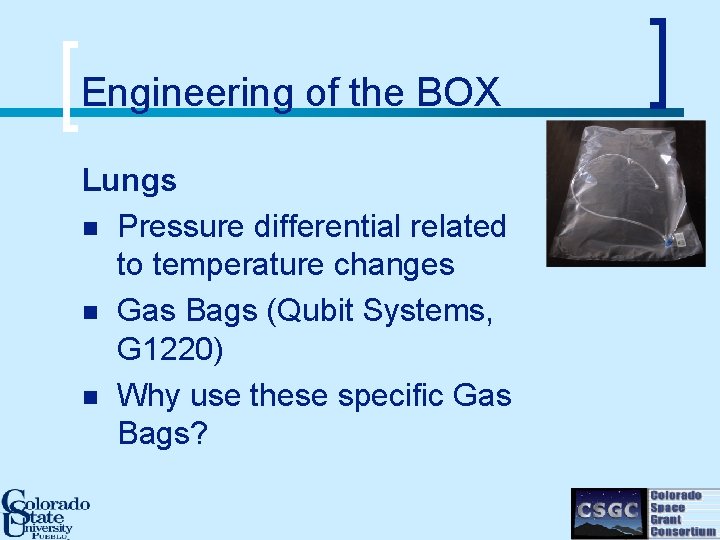
Engineering of the BOX Lungs n Pressure differential related to temperature changes n Gas Bags (Qubit Systems, G 1220) n Why use these specific Gas Bags?
Questions ?
- Slides: 28