
Tourism in Libya Start By Ahmed Hanish CS
Tourism in Libya Start By: Ahmed Hanish CS 110
• Archeological Sites • Roman Sites • Greek Sites • Tripoli • Sahara Desert • Statistics THE END
• Cultural tourism is arguably Libya's biggest draw as a tourism destination • There are five UNESCO World Heritage Sites in the country, three of which are classical ruins: • The Roman cities of Sabratha • Leptis Magna in Western Libya • the Greek ruins of Cyrene in the East are big tourist attractions home
Back
Back
Back
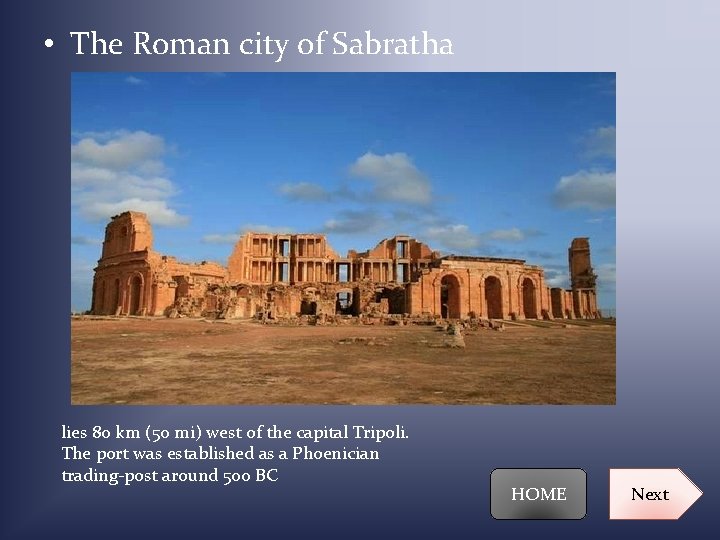
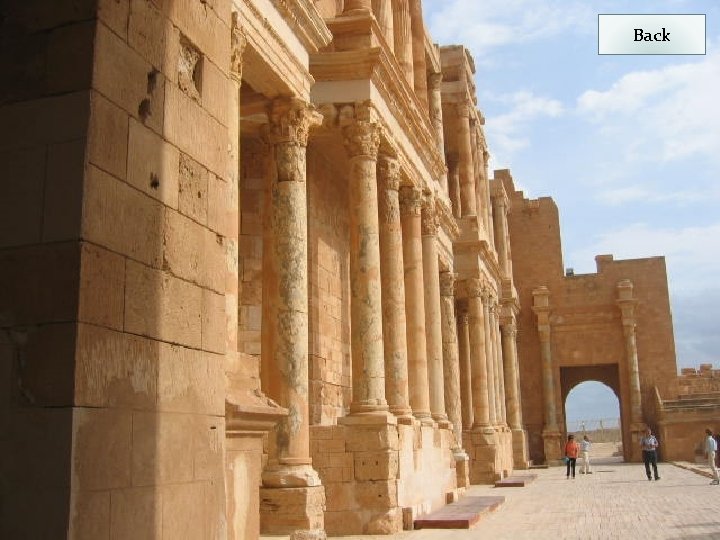
• The Roman city of Sabratha lies 80 km (50 mi) west of the capital Tripoli. The port was established as a Phoenician trading-post around 500 BC HOME Next
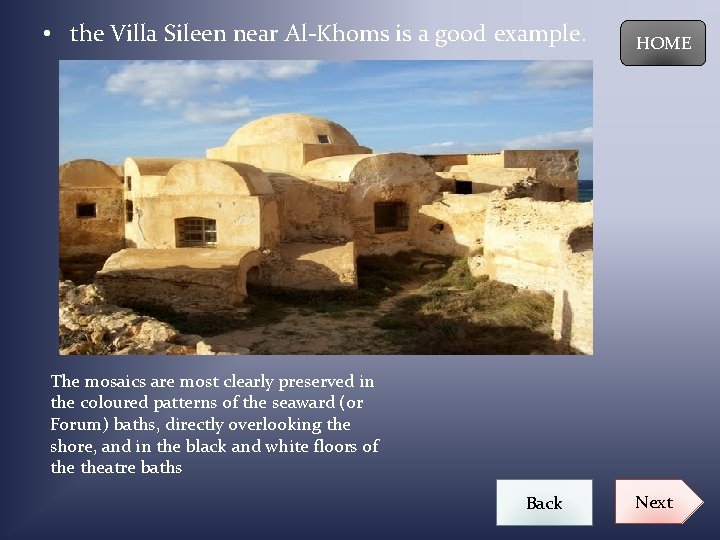
• the Villa Sileen near Al-Khoms is a good example. HOME The mosaics are most clearly preserved in the coloured patterns of the seaward (or Forum) baths, directly overlooking the shore, and in the black and white floors of theatre baths Back Next
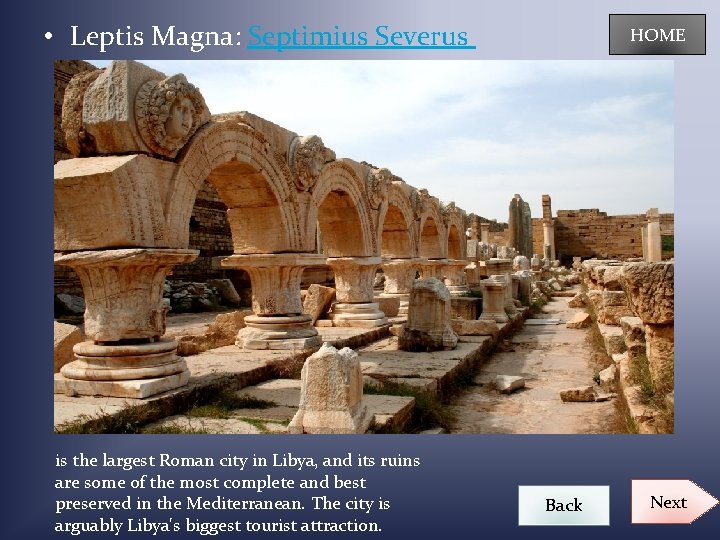
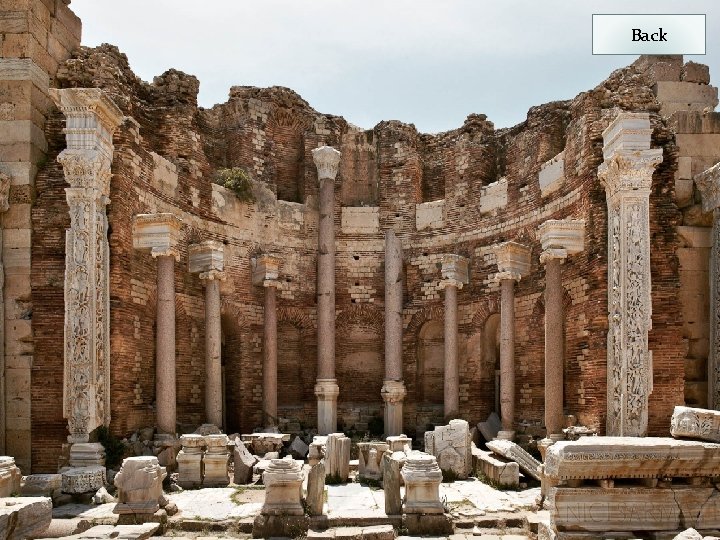
• Leptis Magna: Septimius Severus is the largest Roman city in Libya, and its ruins are some of the most complete and best preserved in the Mediterranean. The city is arguably Libya's biggest tourist attraction. HOME Back Next
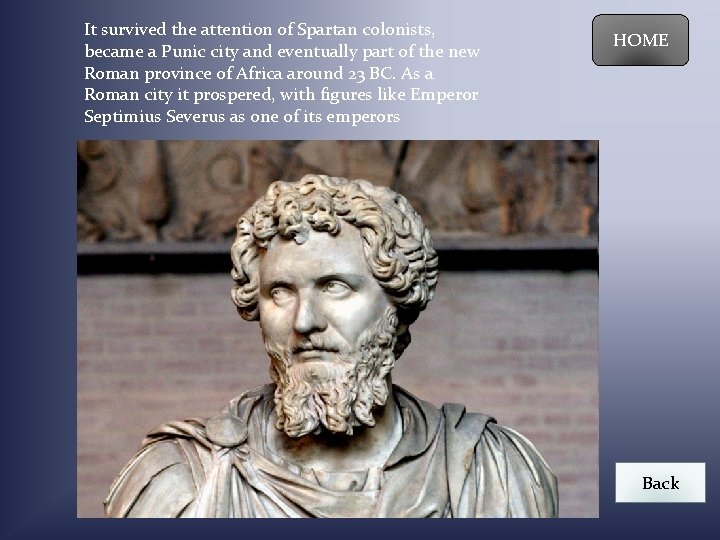
It survived the attention of Spartan colonists, became a Punic city and eventually part of the new Roman province of Africa around 23 BC. As a Roman city it prospered, with figures like Emperor Septimius Severus as one of its emperors HOME Back
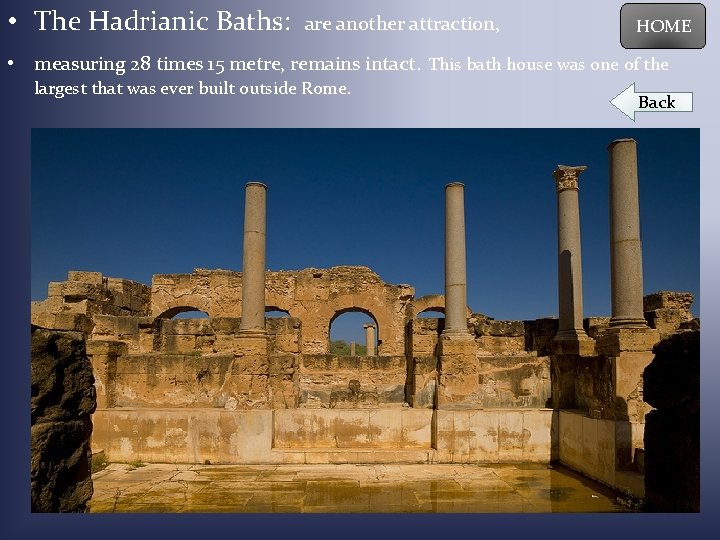
• The Hadrianic Baths: are another attraction, HOME • measuring 28 times 15 metre, remains intact. This bath house was one of the largest that was ever built outside Rome. Back
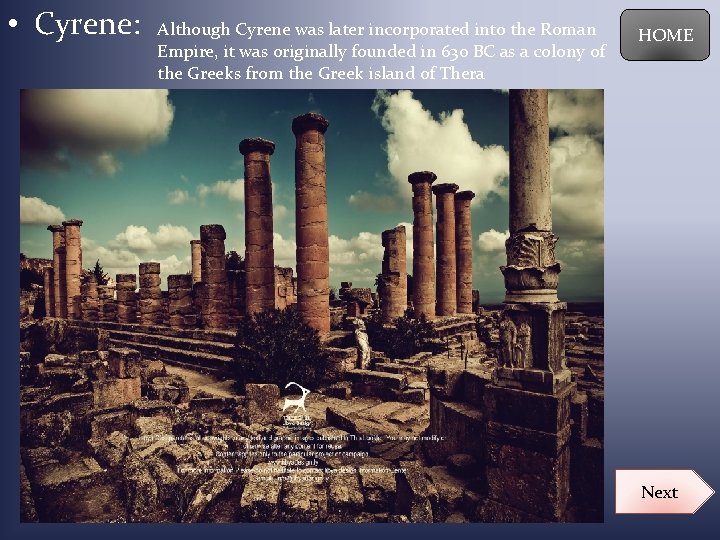
• Cyrene: Although Cyrene was later incorporated into the Roman Empire, it was originally founded in 630 BC as a colony of the Greeks from the Greek island of Thera HOME Next
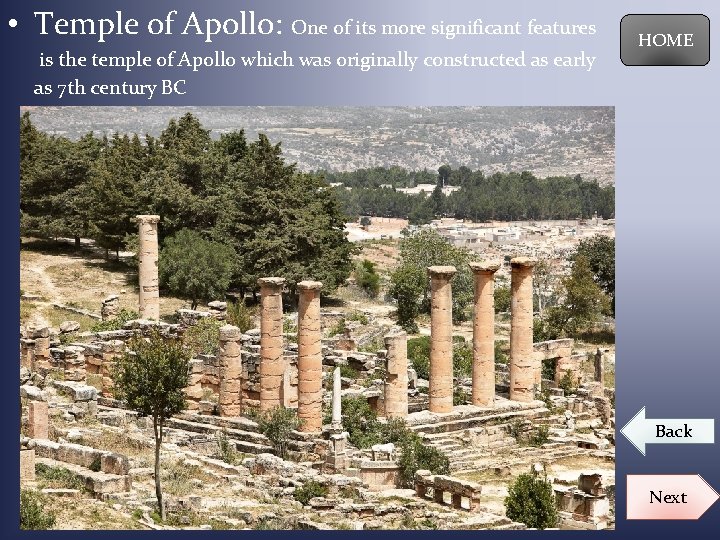
• Temple of Apollo: One of its more significant features is the temple of Apollo which was originally constructed as early as 7 th century BC HOME Back Next
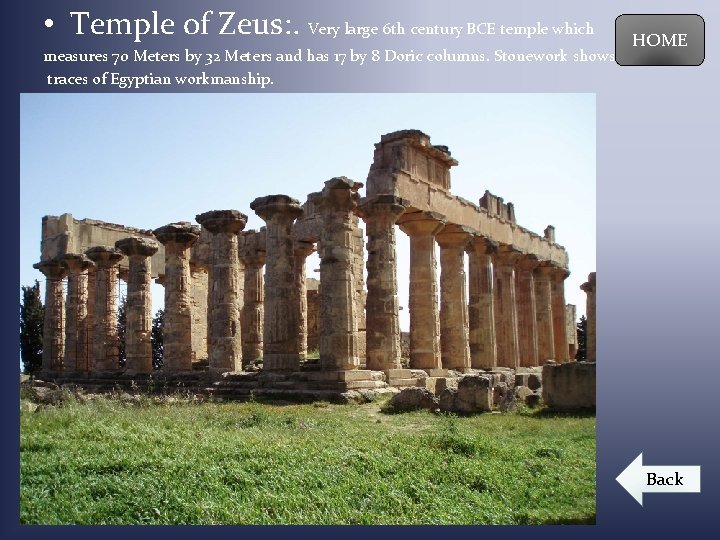
• Temple of Zeus: . Very large 6 th century BCE temple which measures 70 Meters by 32 Meters and has 17 by 8 Doric columns. Stonework shows traces of Egyptian workmanship. HOME Back
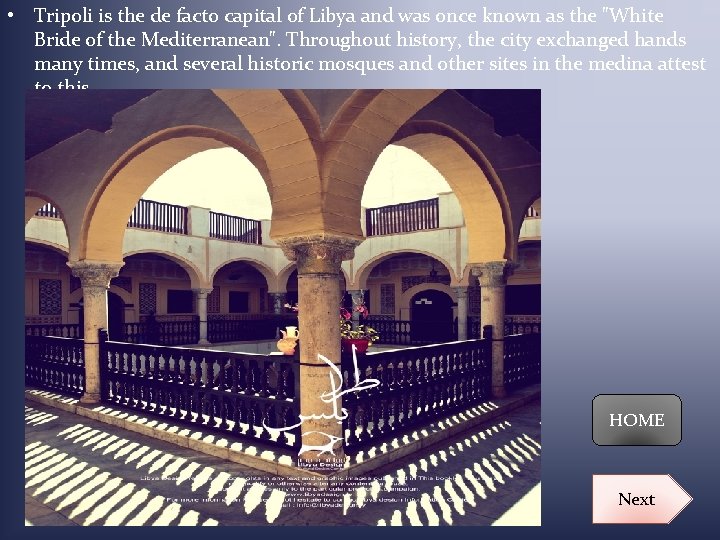
• Tripoli is the de facto capital of Libya and was once known as the "White Bride of the Mediterranean". Throughout history, the city exchanged hands many times, and several historic mosques and other sites in the medina attest to this HOME Next
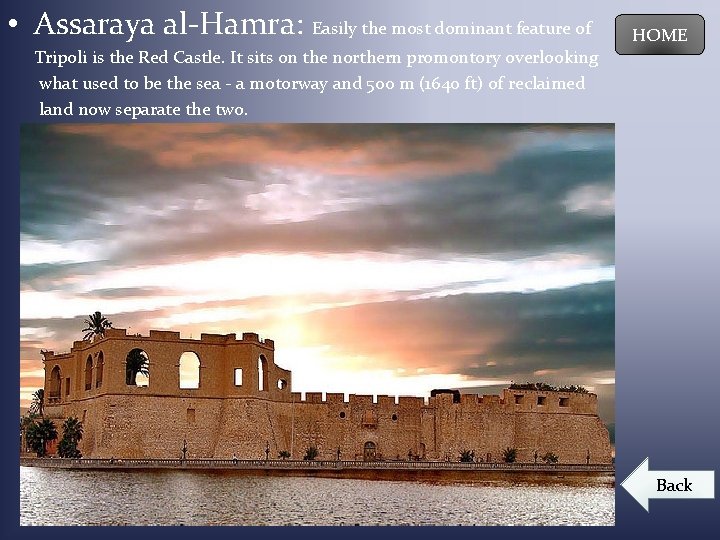
• Assaraya al-Hamra: Easily the most dominant feature of HOME Tripoli is the Red Castle. It sits on the northern promontory overlooking what used to be the sea - a motorway and 500 m (1640 ft) of reclaimed land now separate the two. Back
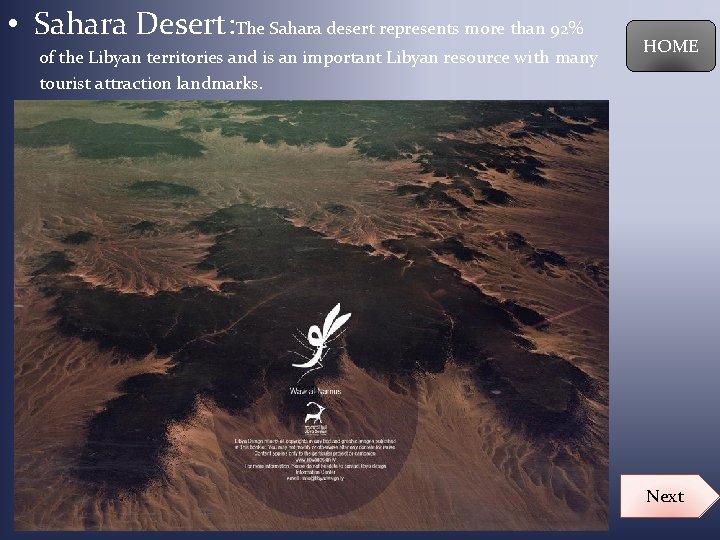
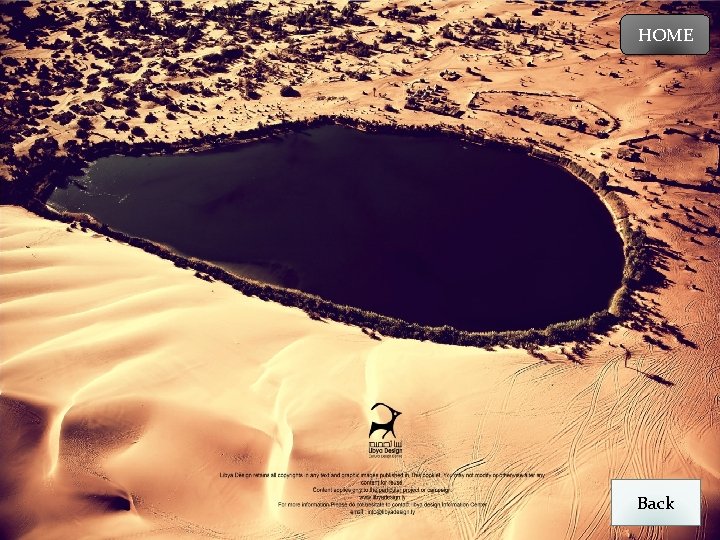
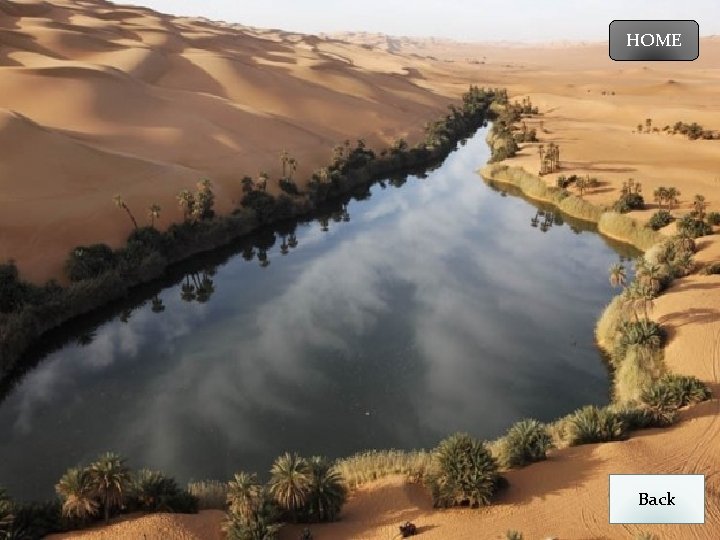
• Sahara Desert: The Sahara desert represents more than 92% of the Libyan territories and is an important Libyan resource with many tourist attraction landmarks. HOME Next
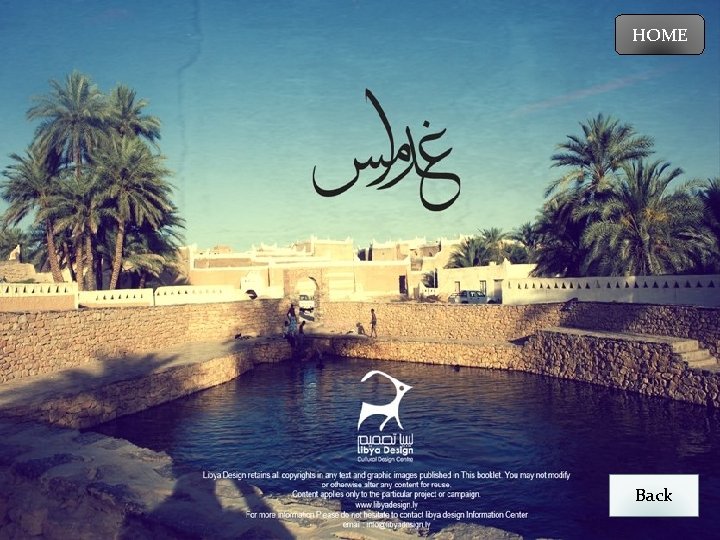
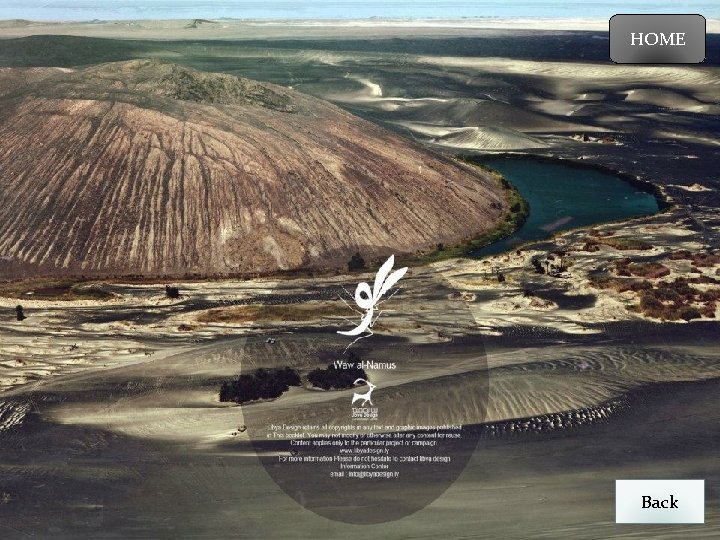
• The oases are considered in general among the most HOME important desert tourist landmarks distinguished by their natural beauty. The oases are surrounded with sand dunes, and sometimes with lakes, which make all thereof distinct tourist attractive landscapes. • Ghadames oasis • Um Al-Maa Oasis • Waw Al-Namus oasis • Gaber O’on oasis Back
HOME Back
HOME Back
HOME Back
HOME Back
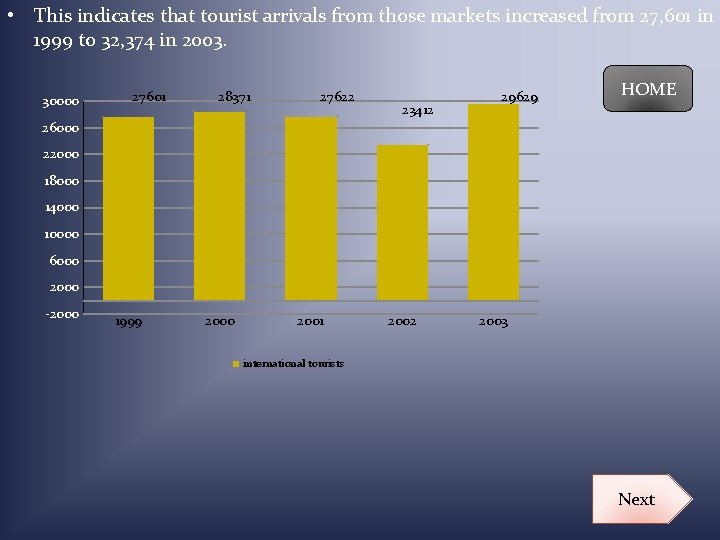
• This indicates that tourist arrivals from those markets increased from 27, 601 in 1999 to 32, 374 in 2003. 30000 27601 28371 27622 23412 29629 HOME 26000 22000 18000 14000 10000 6000 2000 -2000 1999 2000 2001 2002 2003 international tourists Next
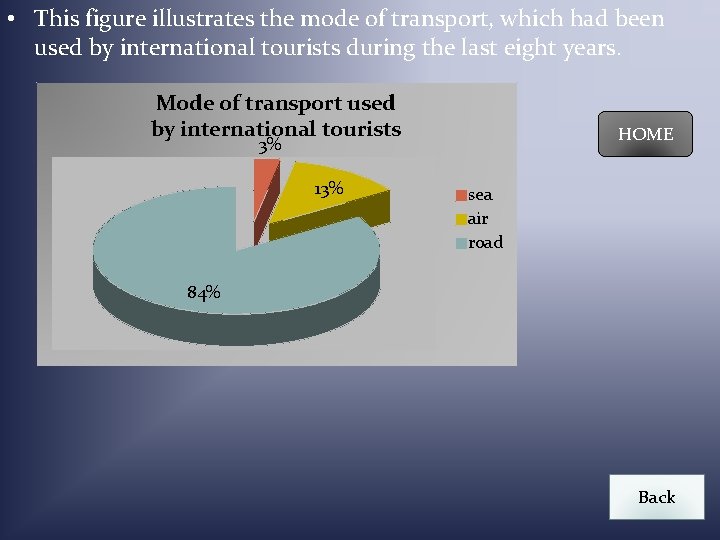
• This figure illustrates the mode of transport, which had been used by international tourists during the last eight years. Mode of transport used by international tourists HOME 3% 13% sea air road 84% Back

Restart Finished… I hope you enjoyed it!!!
- Slides: 25