
Tourism Concepts Models u The advantages of models






- Slides: 28
Tourism Concepts & Models u The advantages of models over definitions is that certain complexities inherent in tourism can be more easily expressed or represented in a model with a dynamic & multidimensional capacity as opposed to the more static definitions.
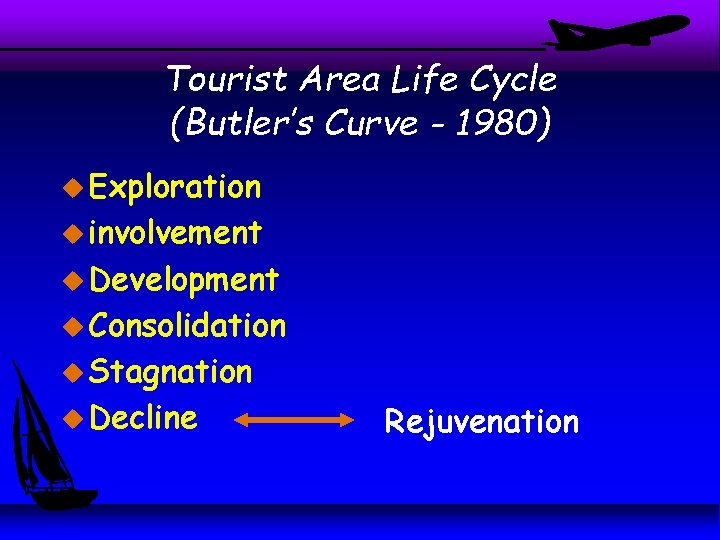
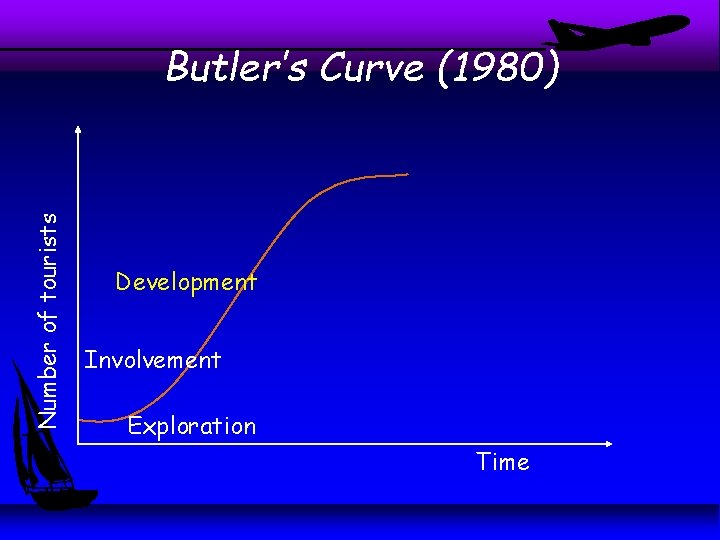
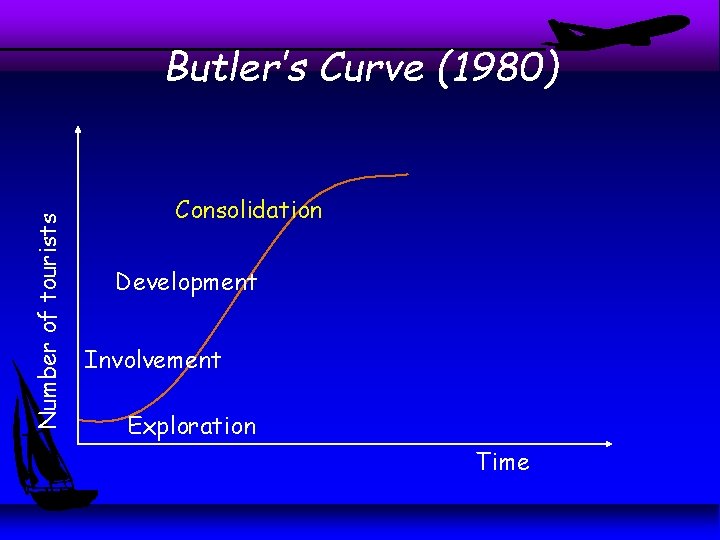
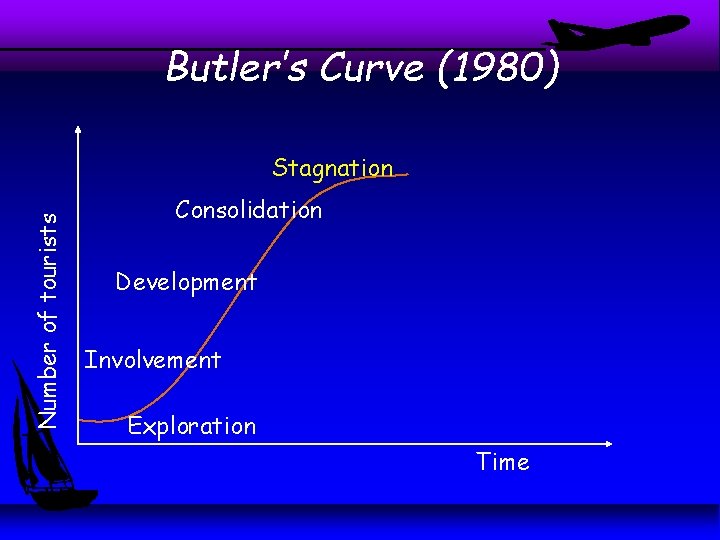
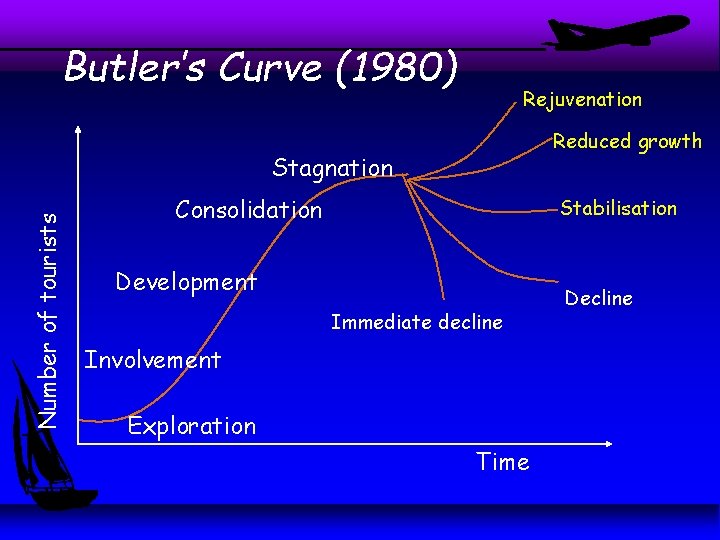
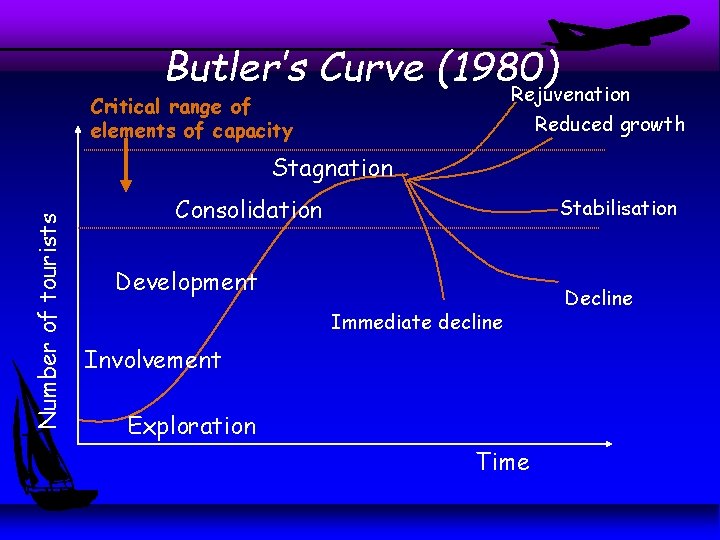
Tourist Area Life Cycle (Butler’s Curve - 1980) u Exploration u involvement u Development u Consolidation u Stagnation u Decline Rejuvenation
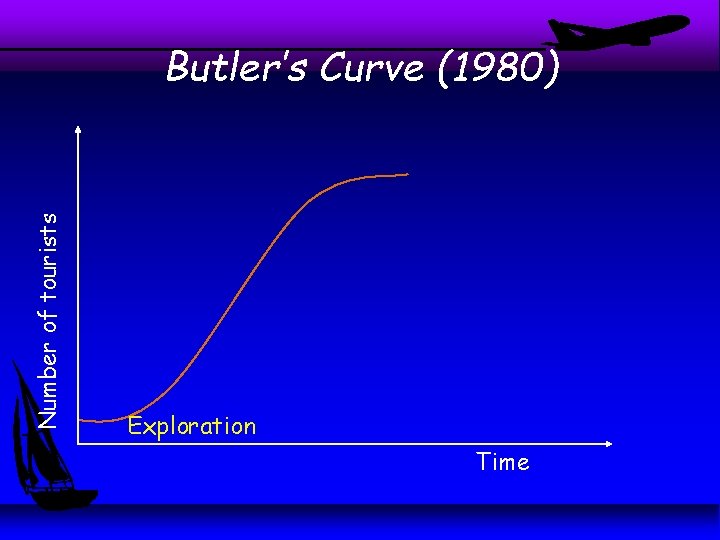
Number of tourists Butler’s Curve (1980) Exploration Time
Exploration u characterised by small numbers of tourists u adventurous u visit “new” places u attracted by some unique feature u few tourist facilities reliance on local facilities u high level of contact between tourist & host u small impact on the host community.
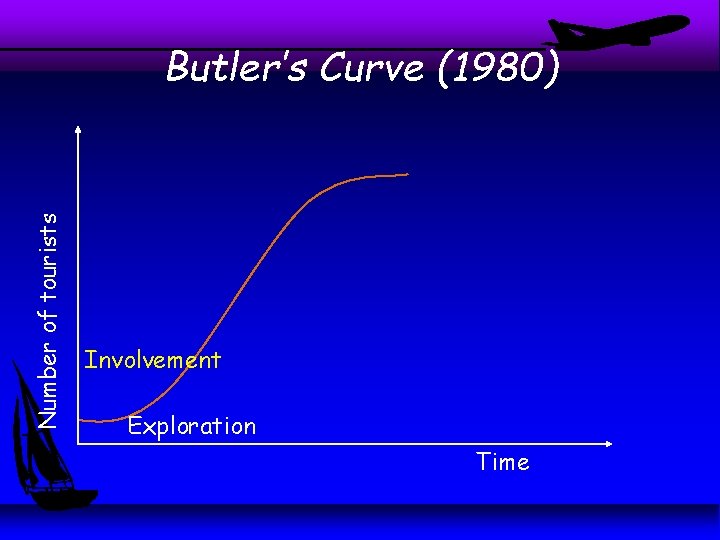
Number of tourists Butler’s Curve (1980) Involvement Exploration Time
u local Involvement residents begin to provide facilities for tourists u high degree of contact between tourists & locals u locals may start to change usual patterns to accommodate tourists u pressure on local government to provide more & better facilities for tourists.
Number of tourists Butler’s Curve (1980) Development Involvement Exploration Time
u tourism Development market: well-defined because of promotion at tourist generating areas u local control of facilities & development of tourism starts to decline u international organisations take root (Holiday Inn) u physical nature of resort changes (not universally accepted) u number of tourists approaches (or exceeds) local population (take notice at this point, can start to see negative impacts) u type of tourist mainstream, conservative
Number of tourists Butler’s Curve (1980) Consolidation Development Involvement Exploration Time
u rate Consolidation of increase of tourist arrivals starts to decline (even though absolute numbers may still grow). u number of tourists now exceeds local population u marketing & promotion well developed u market is almost saturated, therefore new development/building slows down u growing discontent among host population
Butler’s Curve (1980) Number of tourists Stagnation Consolidation Development Involvement Exploration Time
u peak Stagnation number of visitors has been reached (carrying capacity) u environmental, social & economic problems (beach erosion, local businesses sold, dissatisfaction with locals) u area is not as popular with tourists (beach is dirty, crowded, not enough parking) u original features which attracted tourists in the first place will have been supplemented by new “attractions”. (theme parks, museums, bungee jumping, something that wasn’t there before)
Butler’s Curve (1980) Number of tourists Stagnation Consolidation Development Decline Immediate decline Involvement Exploration Time
Immediate Decline & Decline u immediate decline: an abrupt death of the resort u decline: a more gradual decline, where number of visitors gradually tapers off u infrastructure changes (hotels converted to condominiums because not enough visitors) u local population begins to buy tourist facilities because of affordability
Butler’s Curve (1980) Rejuvenation Reduced growth Number of tourists Stagnation Consolidation Stabilisation Development Immediate decline Involvement Exploration Time Decline
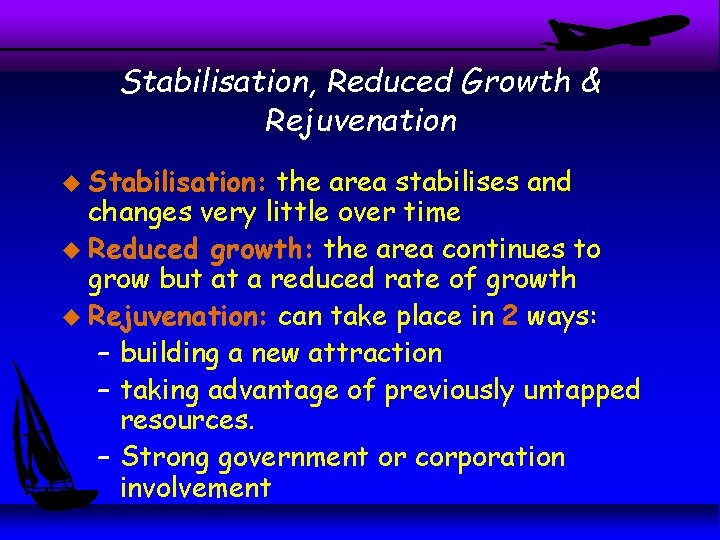
Stabilisation, Reduced Growth & Rejuvenation u Stabilisation: the area stabilises and changes very little over time u Reduced growth: the area continues to grow but at a reduced rate of growth u Rejuvenation: can take place in 2 ways: – building a new attraction – taking advantage of previously untapped resources. – Strong government or corporation involvement
Butler’s Curve (1980) Rejuvenation Critical range of elements of capacity Reduced growth Number of tourists Stagnation Consolidation Stabilisation Development Immediate decline Involvement Exploration Time Decline
Critical Range of Elements of Capacity u This is the stage when carrying capacities become critical (cc has been reached) u can be exceeded or managed u Tourism Carrying Capacity: The number of visitors that an area can accommodate before negative impacts occur, either in the physical environment, the psychological attitude of the tourists, or the social acceptance level of the hosts. • Assumes destination went through all stages (exploration)
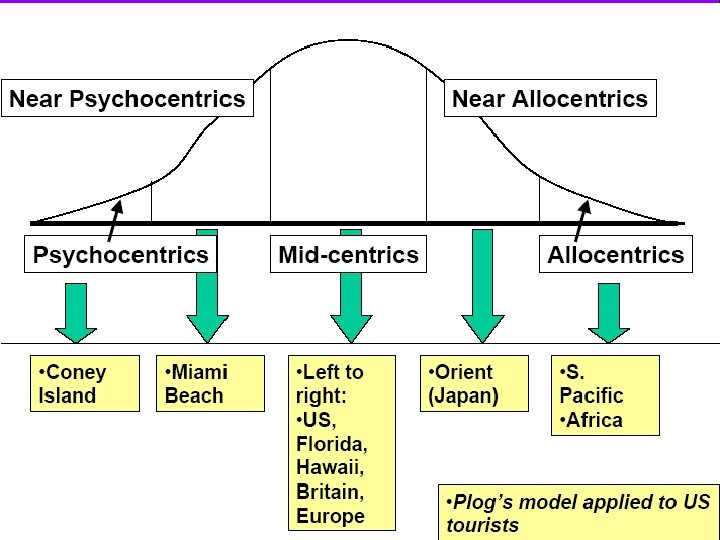
Psychograph Mass Tourists Near Allocentrics Near Psychocentrics Psycocentrics Midcentrics Allocentrics
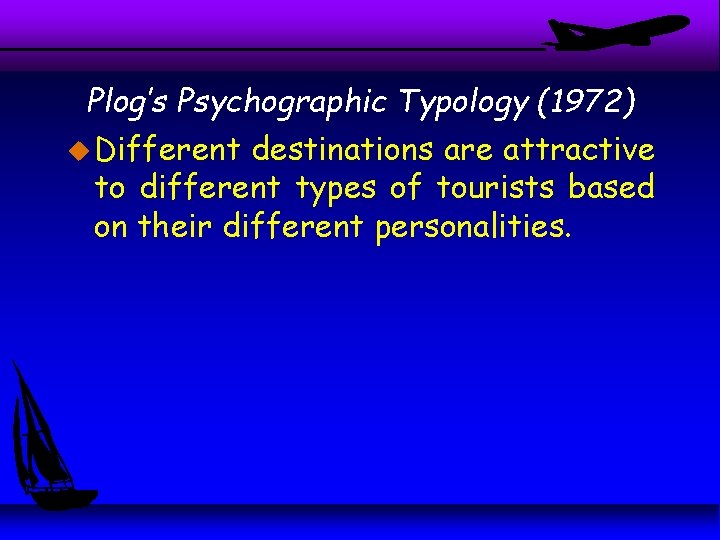
Plog’s Psychographic Typology (1972) u Different destinations are attractive to different types of tourists based on their different personalities.
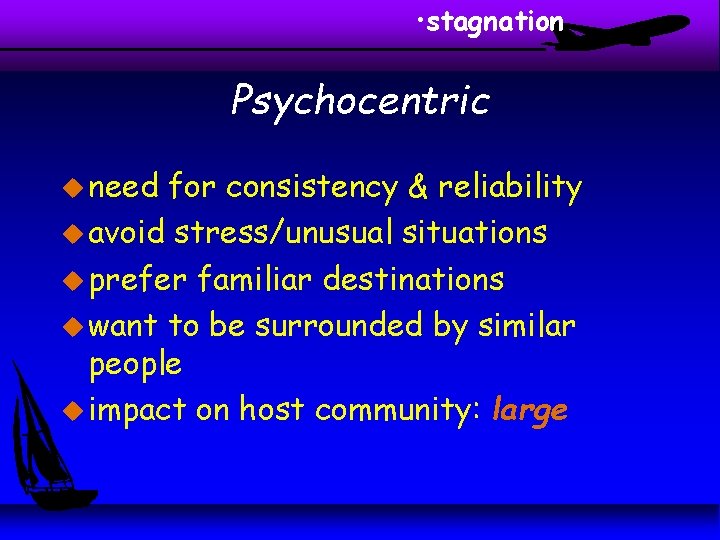
• stagnation Psychocentric u need for consistency & reliability u avoid stress/unusual situations u prefer familiar destinations u want to be surrounded by similar people u impact on host community: large
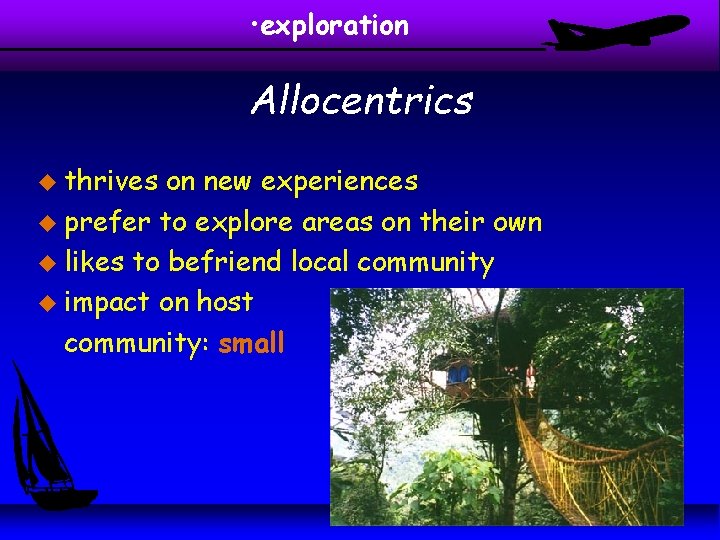
• exploration Allocentrics u thrives on new experiences u prefer to explore areas on their own u likes to befriend local community u impact on host community: small
Mid-centric u fall between psychocentrics & allocentrics u looks for familiarity u prefers to be with friends/relatives u not overly adventurous, but willing to try new things • People may visit a place, but not fall under a certain category
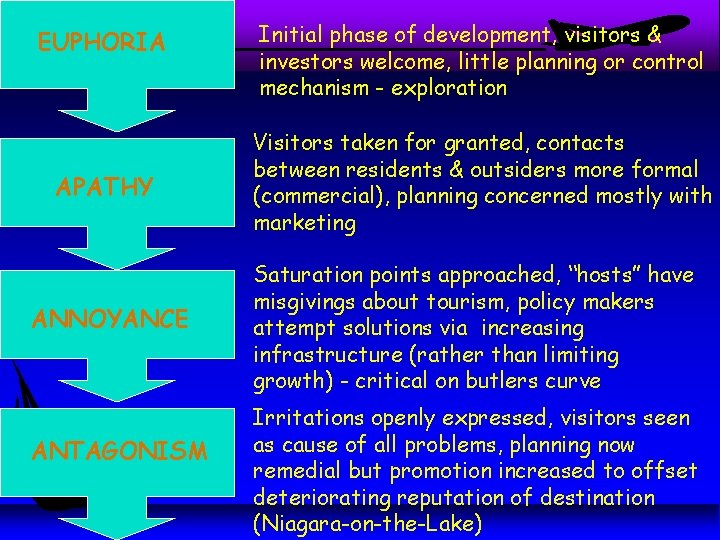
DOXEY’S “IRRIDEX” u direct link between increased community irritation & continual tourism development
EUPHORIA APATHY ANNOYANCE ANTAGONISM Initial phase of development, visitors & investors welcome, little planning or control mechanism - exploration Visitors taken for granted, contacts between residents & outsiders more formal (commercial), planning concerned mostly with marketing Saturation points approached, “hosts” have misgivings about tourism, policy makers attempt solutions via increasing infrastructure (rather than limiting growth) - critical on butlers curve Irritations openly expressed, visitors seen as cause of all problems, planning now remedial but promotion increased to offset deteriorating reputation of destination (Niagara-on-the-Lake)
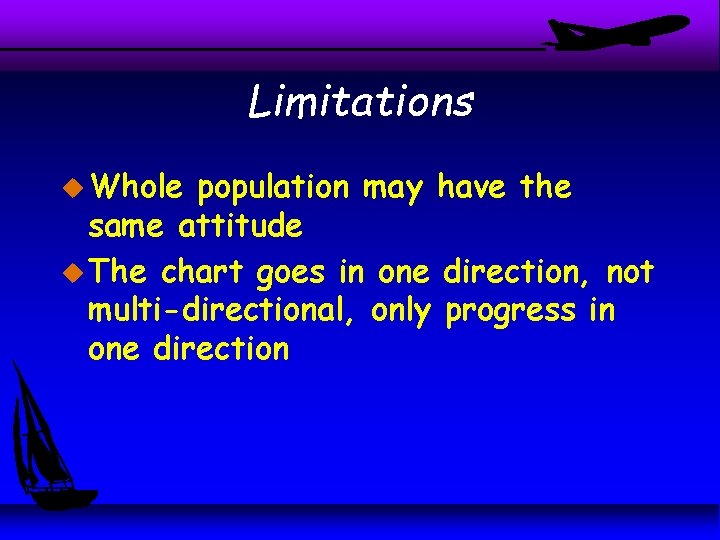
Limitations u Whole population may have the same attitude u The chart goes in one direction, not multi-directional, only progress in one direction
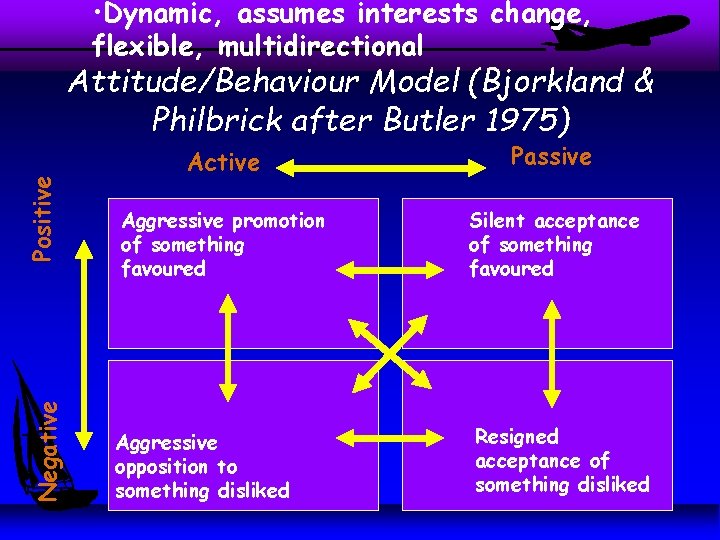
• Dynamic, assumes interests change, flexible, multidirectional Negative Positive Attitude/Behaviour Model (Bjorkland & Philbrick after Butler 1975) Active Passive Aggressive promotion of something favoured Silent acceptance of something favoured Aggressive opposition to something disliked Resigned acceptance of something disliked