
Tourettes Syndrome What is a Tic A tic
- Slides: 13
Tourette’s Syndrome
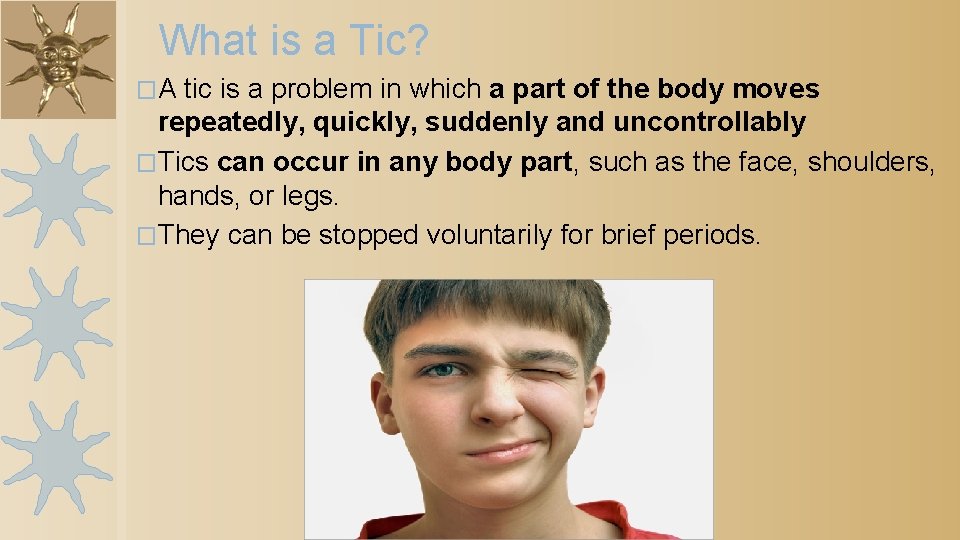
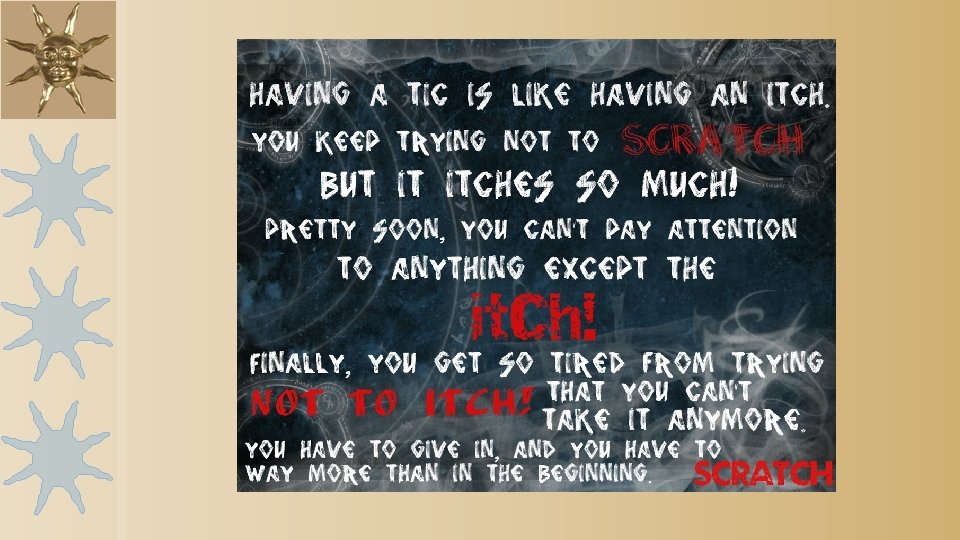
What is a Tic? �A tic is a problem in which a part of the body moves repeatedly, quickly, suddenly and uncontrollably �Tics can occur in any body part, such as the face, shoulders, hands, or legs. �They can be stopped voluntarily for brief periods.
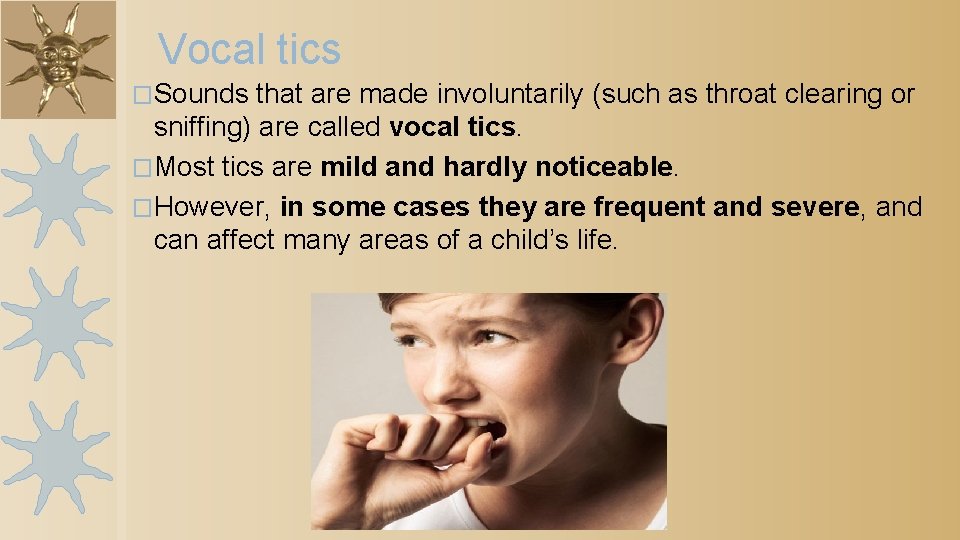
Vocal tics �Sounds that are made involuntarily (such as throat clearing or sniffing) are called vocal tics. �Most tics are mild and hardly noticeable. �However, in some cases they are frequent and severe, and can affect many areas of a child’s life.
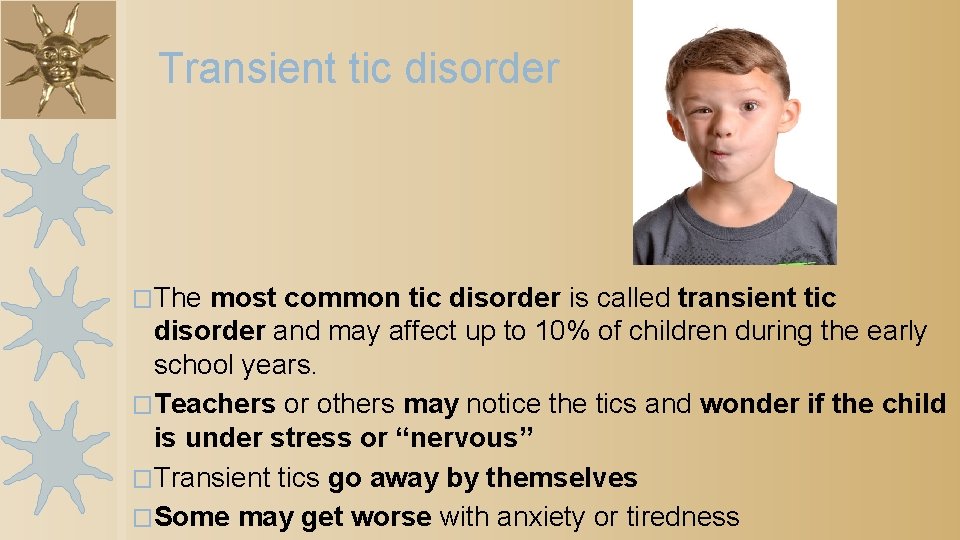
Transient tic disorder �The most common tic disorder is called transient tic disorder and may affect up to 10% of children during the early school years. �Teachers or others may notice the tics and wonder if the child is under stress or “nervous” �Transient tics go away by themselves �Some may get worse with anxiety or tiredness
Chronic Tics �Some tics do not go away �Tics which last one year or more are called “chronic tics” �Chronic tics affect less than 1% of children and may be related to a special, more unusual tic disorder called Tourette’s Syndrome
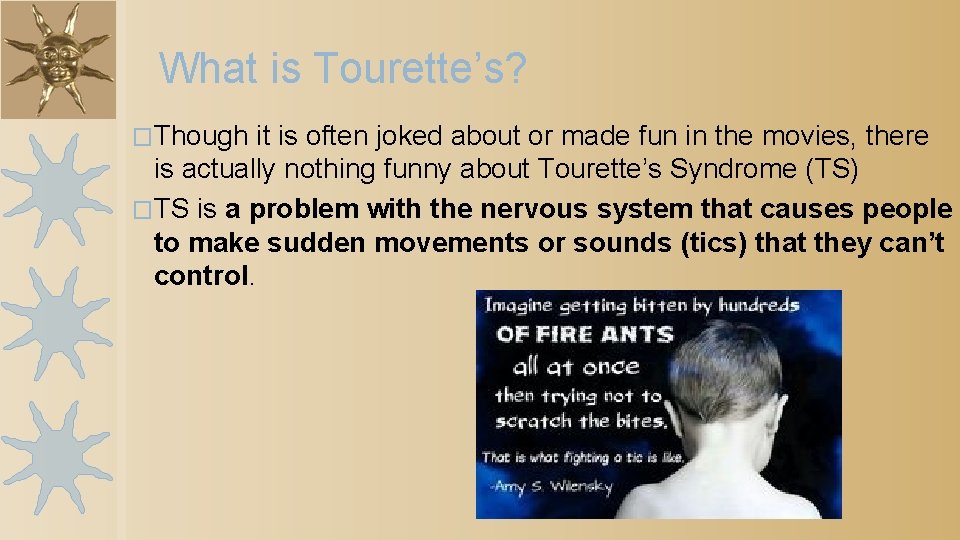
What is Tourette’s? �Though it is often joked about or made fun in the movies, there is actually nothing funny about Tourette’s Syndrome (TS) �TS is a problem with the nervous system that causes people to make sudden movements or sounds (tics) that they can’t control.
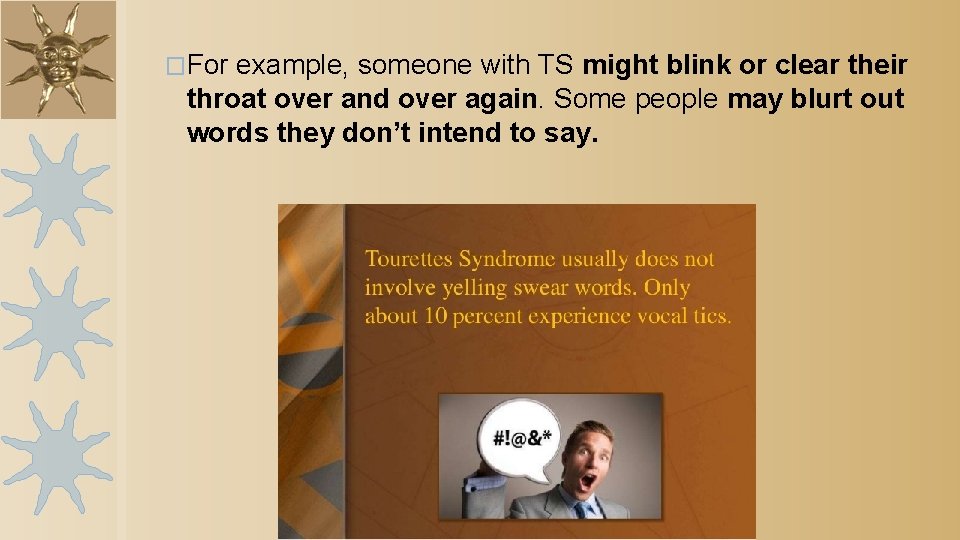
�For example, someone with TS might blink or clear their throat over and over again. Some people may blurt out words they don’t intend to say.
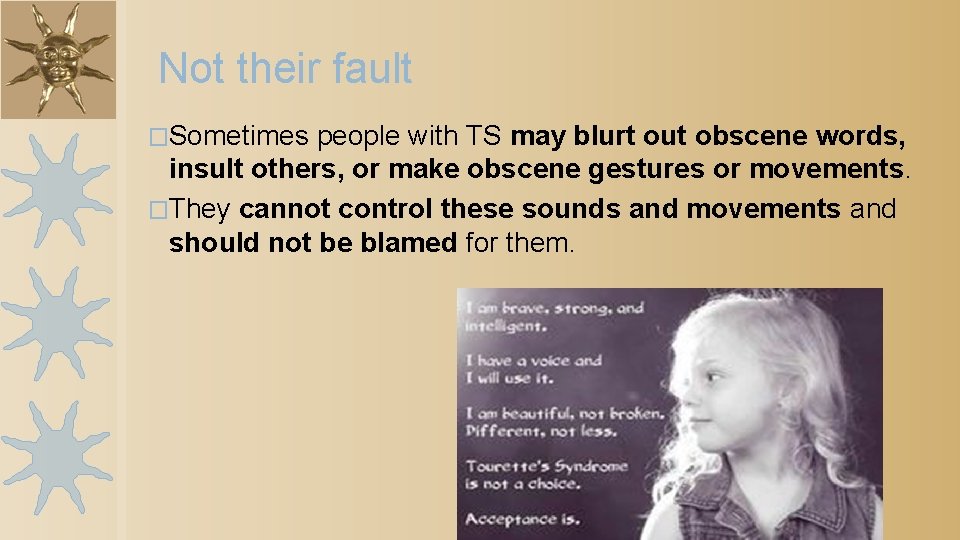
Not their fault �Sometimes people with TS may blurt out obscene words, insult others, or make obscene gestures or movements. �They cannot control these sounds and movements and should not be blamed for them.
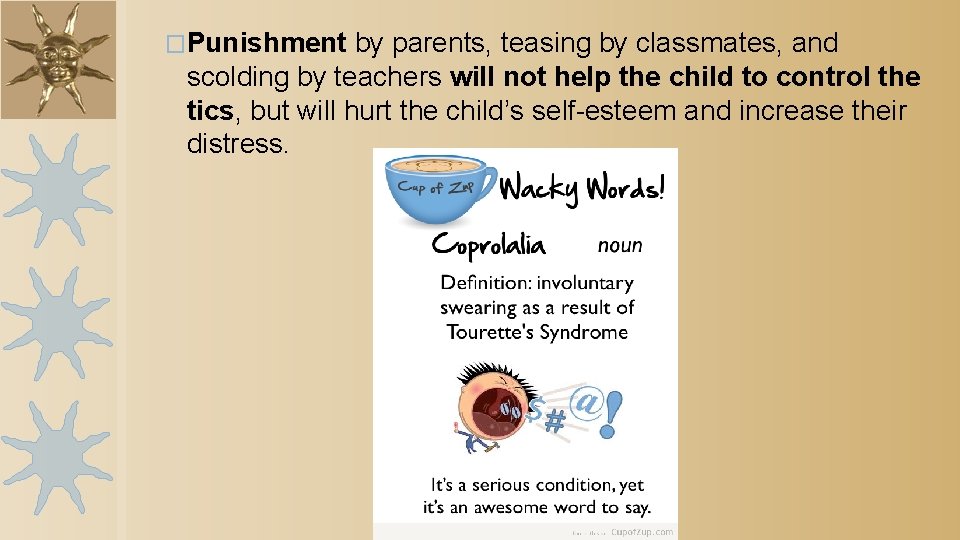
�Punishment by parents, teasing by classmates, and scolding by teachers will not help the child to control the tics, but will hurt the child’s self-esteem and increase their distress.
Who gets it? �About 100, 000 Americans have full-blown TS, but more people have a milder form of the disease. �More boys than girls get it. �It often starts in childhood, and symptoms often get better as children grow up. For some people, they go away completely.
What Causes TS? �Tourette’s has been linked to different parts of the brain, particularly the area that helps control body movements. �Doctor’s don’t know exactly what causes these problems in the brain, but genes probably play a role. It’s likely that there is more than one cause. �People who have family members with Tourette’s are more likely to get it themselves, but people in the same family may have different symptoms.