
TOUR TO THE CELLS THE JOURNEY OF LIFE


- Slides: 19
TOUR TO THE CELLS THE JOURNEY OF LIFE PLANT AND ANIMAL CELLS IMAGES
OH THAT IS GREAT WE CAN NOW LEARN AND KNOW WHAT IS CELLS
INTRODUCTION • This discussion was all about Plants and Animal Cells that is presented through media. This oine of the technological based Power. Point that trully love by the students. This media includes pictures, videos, and web explanations of a certains topic. The students not just learned academically but also in the affective side of their life.
PLACE TO VISIT PLANT CELL ANIMAL CELL
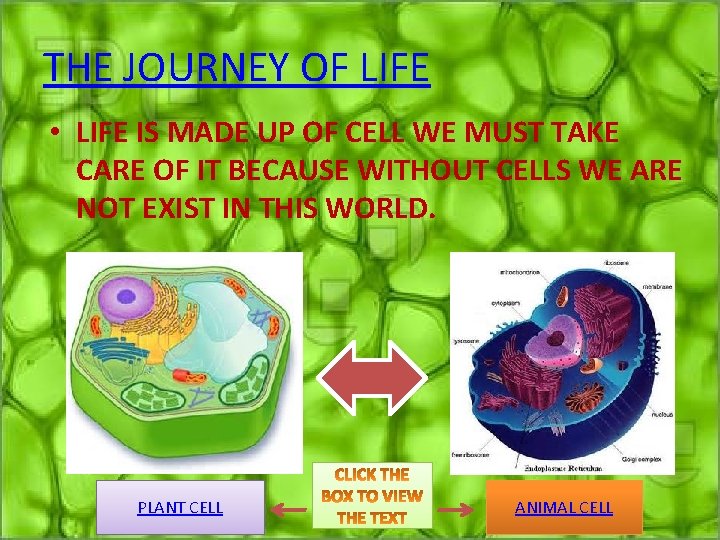
THE JOURNEY OF LIFE • LIFE IS MADE UP OF CELL WE MUST TAKE CARE OF IT BECAUSE WITHOUT CELLS WE ARE NOT EXIST IN THIS WORLD. PLANT CELL ANIMAL CELL
PLANT CELL BACK • Cell Membrane: A thin layer that surrounds the cell. • Cell Wall: A rigid layer that surrounds the cell membrane of a plant cell. • Chloroplast: (KLOR-o-plast) A cell structure in which photosynthesis takes place, and it contains the chloropyll. • Chlorophyll: (KLOR-a-fil) A green substance in plant cells that helps to make food. • Cytoplasm: (SIGH-ta-plaz-em) The jellylike liquid in cells where activities take place. • Nucleus: (NEW-kle-us) The dark structure inside the cell that controls the cell's activities and contains material such as DNA. • Photosynthesis: (foto-SIN-thi-sis) The process when plants use lights energy to make food.
ANIMAL CELL • Animal cells are typical of the eukaryotic cell, enclosed by a plasma membrane and containing a membrane-bound nucleus and organelles. Unlike the eukaryotic cells of plants and fungi, animal cells do not have a cell wall. This feature was lost in the distant past by the single-celled organisms that gave rise to the kingdom Animalia. Most cells, both animal and plant, range in size between 1 and 100 micrometers and are thus visible only with the aid of a microscope. GO
• • NUCLEUS MITOCHONDRIA RIBOSOMES GOLGI APPARATUS SMOOTH ER ROUGH ENDPLASMIC RETICULUM CHLOROPLAST LYSOSOME
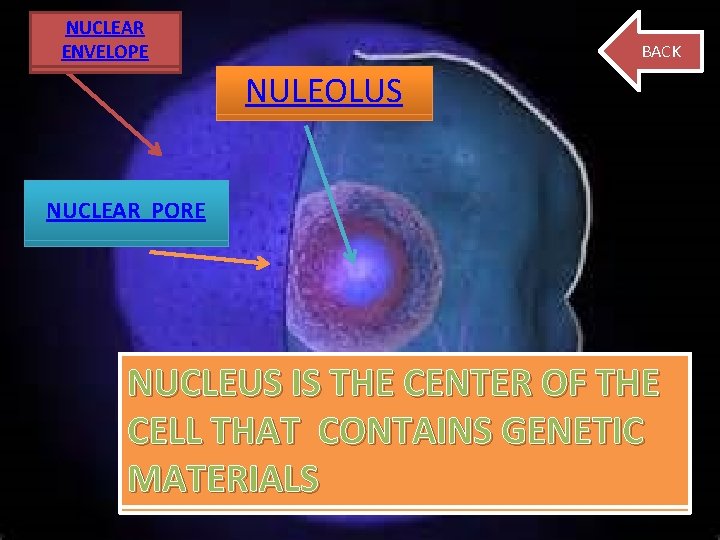
NUCLEAR ENVELOPE BACK NULEOLUS NUCLEAR PORE NUCLEUS IS THE CENTER OF THE CELL THAT CONTAINS GENETIC MATERIALS
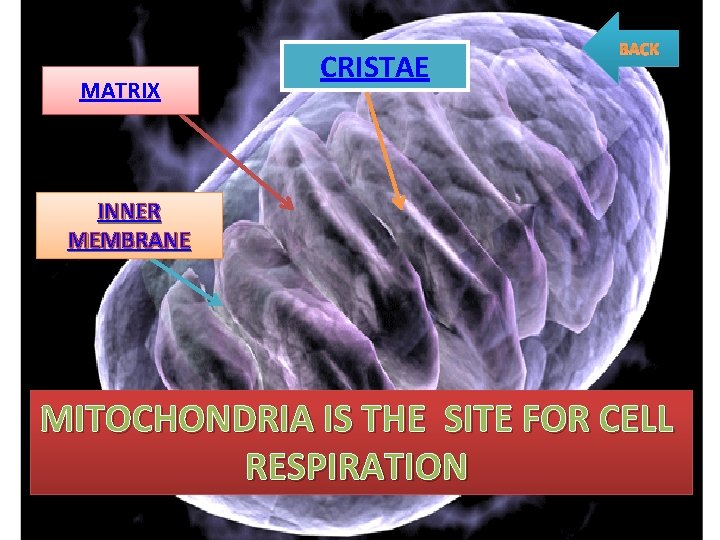
MATRIX CRISTAE BACK INNER MEMBRANE MITOCHONDRIA IS THE SITE FOR CELL RESPIRATION
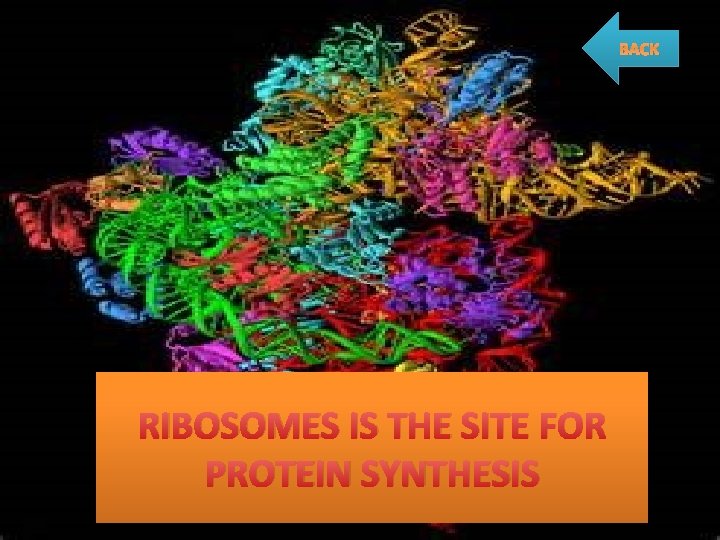
BACK RIBOSOMES IS THE SITE FOR PROTEIN SYNTHESIS
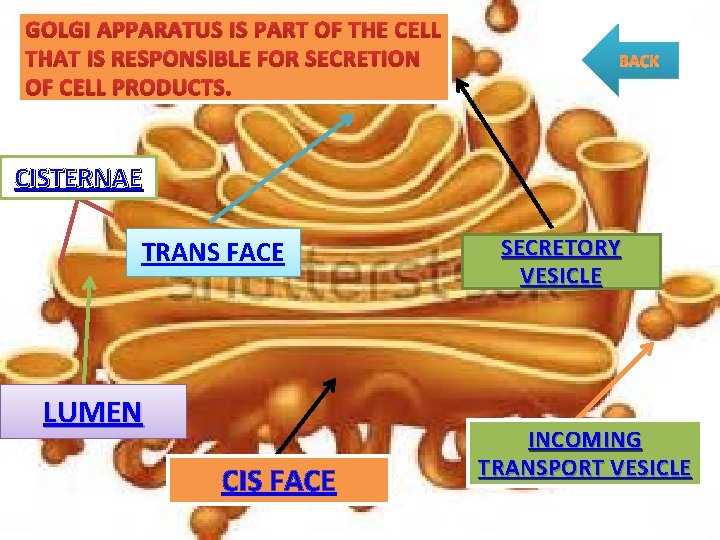
GOLGI APPARATUS IS PART OF THE CELL THAT IS RESPONSIBLE FOR SECRETION OF CELL PRODUCTS. BACK CISTERNAE TRANS FACE LUMEN CIS FACE SECRETORY VESICLE INCOMING TRANSPORT VESICLE
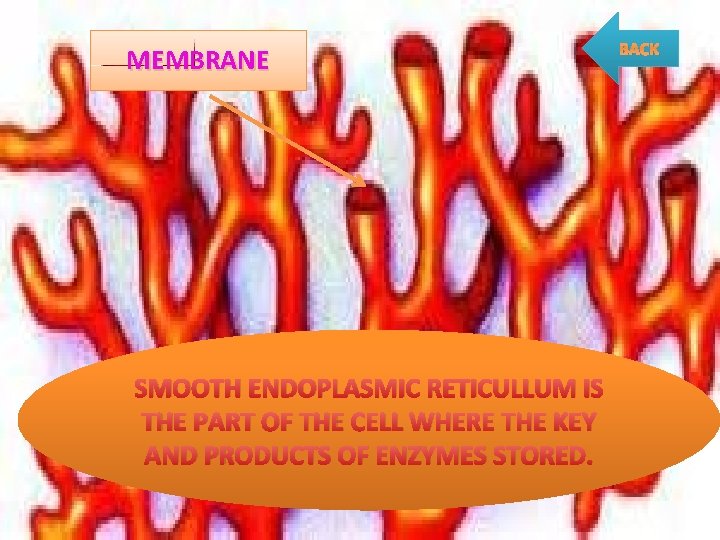
MEMBRANE SMOOTH ENDOPLASMIC RETICULLUM IS THE PART OF THE CELL WHERE THE KEY AND PRODUCTS OF ENZYMES STORED. BACK
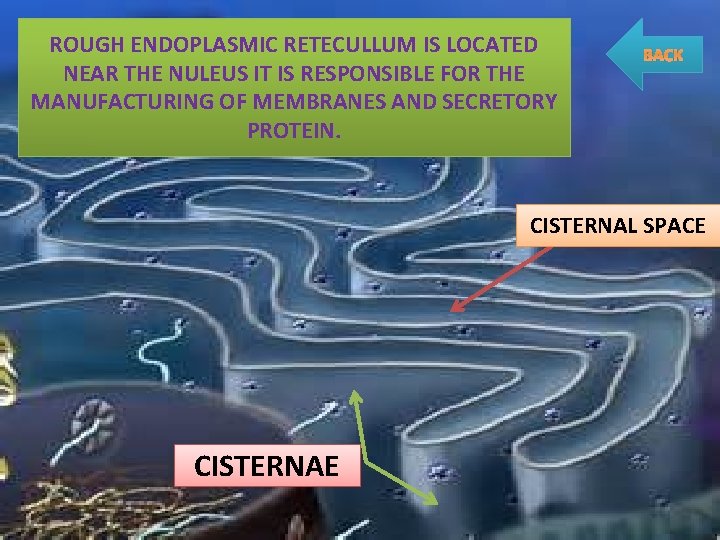
ROUGH ENDOPLASMIC RETECULLUM IS LOCATED NEAR THE NULEUS IT IS RESPONSIBLE FOR THE MANUFACTURING OF MEMBRANES AND SECRETORY PROTEIN. BACK CISTERNAL SPACE CISTERNAE
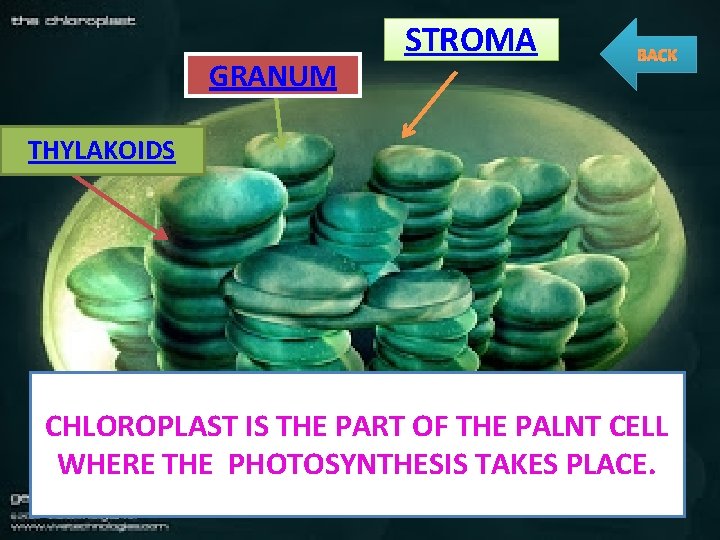
GRANUM STROMA BACK THYLAKOIDS CHLOROPLAST IS THE PART OF THE PALNT CELL WHERE THE PHOTOSYNTHESIS TAKES PLACE.
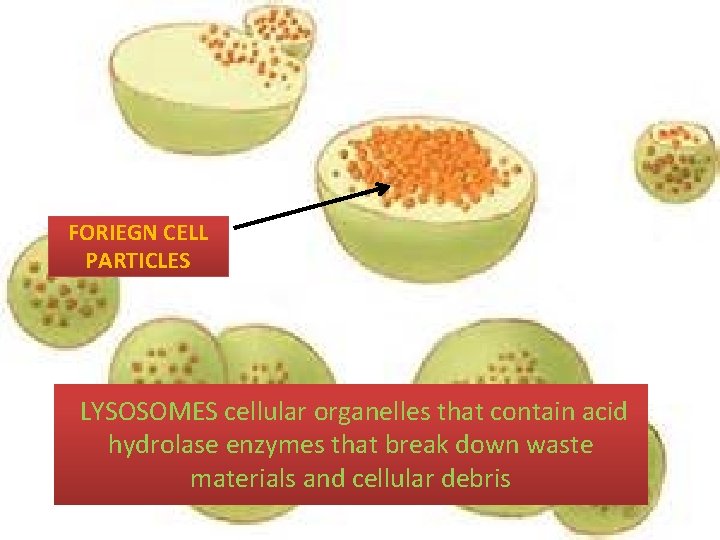
FORIEGN CELL PARTICLES LYSOSOMES cellular organelles that contain acid hydrolase enzymes that break down waste materials and cellular debris
DID YOU ENJOY THE TRAVEL?
CITATIONS • http: //www. youtube. com/watch? v=it. WLa. Lat 8 • http: //ph. images. search. yahoo. com/search/images? _adv_prop=image&fr =sfp&sz=all&va=plant+animal+cells • http: //www. youtube. com/watch? v=ASYG 1 JQy 7 K 4 • http: //www. youtube. com/watch? v=4 DWa. AIVl. W 3 k • http: //www. youtube. com/watch? v=g. Fu. Eo 2 cc. TPA • http: //en. wikipedia. org/wiki/Cisterna • http: //www. enotes. com/homework-help/cis-and-tras-face-golgo-bodies 346969