
Tour of the eukaryotic cell 1 4 Membrane
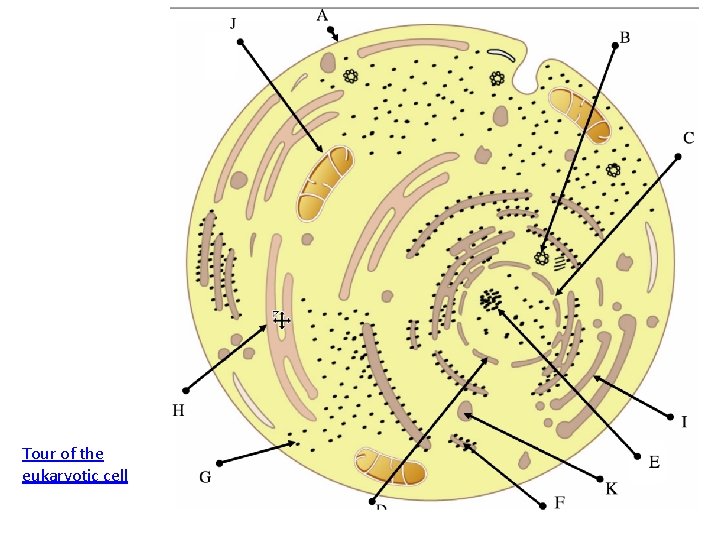
Tour of the eukaryotic cell
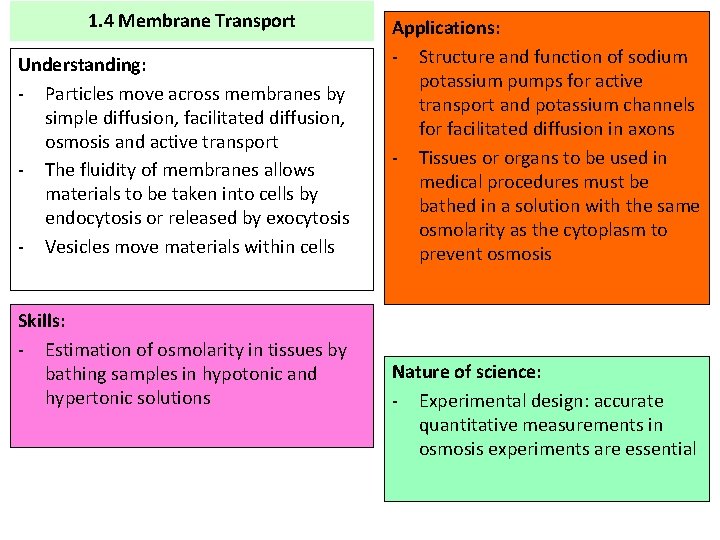
1. 4 Membrane Transport Understanding: - Particles move across membranes by simple diffusion, facilitated diffusion, osmosis and active transport - The fluidity of membranes allows materials to be taken into cells by endocytosis or released by exocytosis - Vesicles move materials within cells Skills: - Estimation of osmolarity in tissues by bathing samples in hypotonic and hypertonic solutions Applications: - Structure and function of sodium potassium pumps for active transport and potassium channels for facilitated diffusion in axons - Tissues or organs to be used in medical procedures must be bathed in a solution with the same osmolarity as the cytoplasm to prevent osmosis Nature of science: - Experimental design: accurate quantitative measurements in osmosis experiments are essential
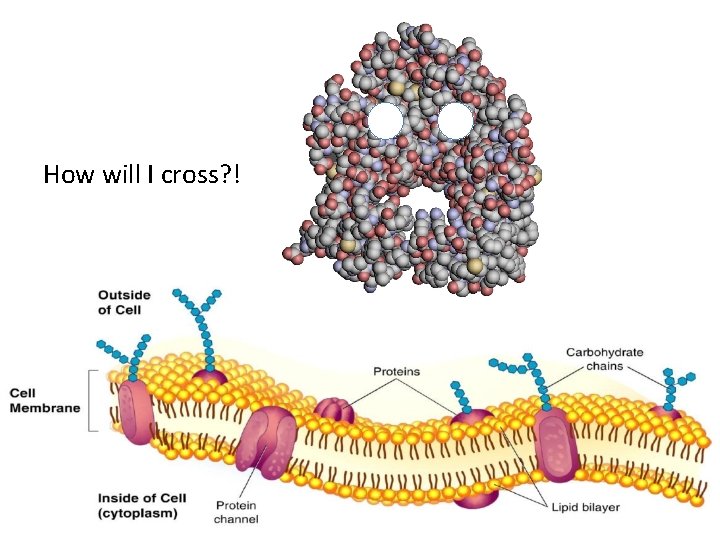
How will I cross? !
Transport across a membrane Exocytosis and Endocytosis • Link membrane structure to bulk transport • Define exocytosis and endocytosis • Describe vesicle movement within cells

Vesicle

Endocytosis – large molecules entering cells • Annotate the diagram to describe endocytosis
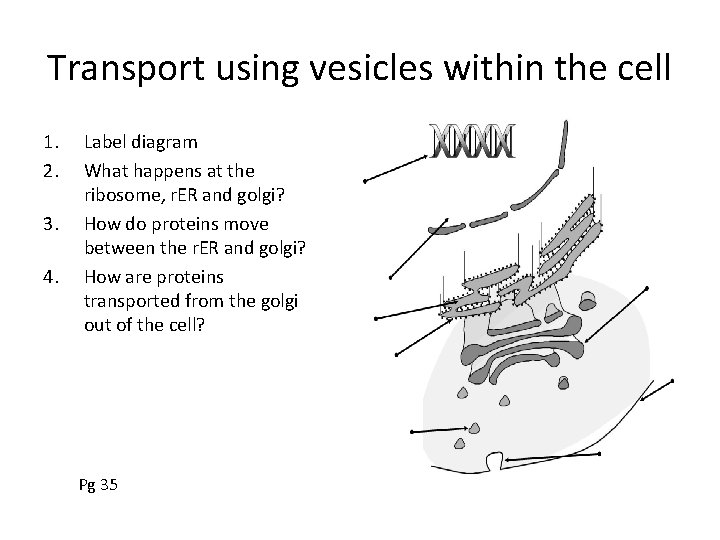
Transport using vesicles within the cell 1. 2. 3. 4. Label diagram What happens at the ribosome, r. ER and golgi? How do proteins move between the r. ER and golgi? How are proteins transported from the golgi out of the cell? Pg 35
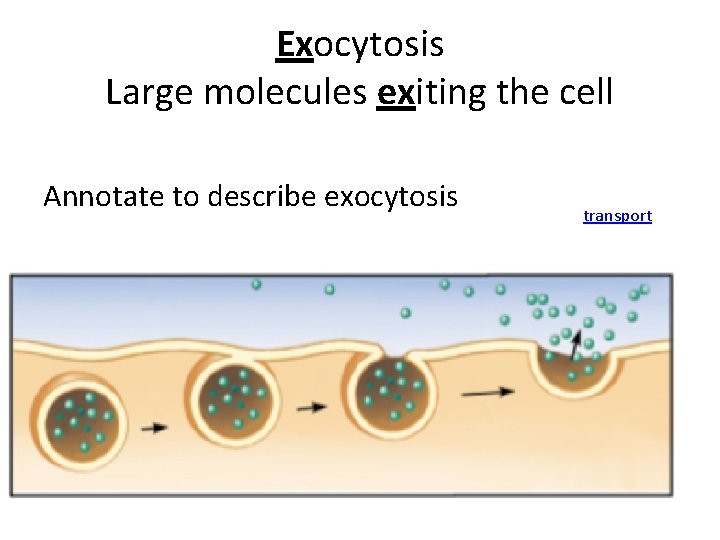
Exocytosis Large molecules exiting the cell Annotate to describe exocytosis transport
Q 1 - Describe the process of endocytosis. • a. (plasma) membrane encloses/engulfs/folds in solid particles/fluid/molecules; • b. fluidity of the membrane allows endocytosis; • c. plasma membrane pulls inwards; • d. membrane pinches off/seals back on itself/edges fuse; • e. vesicle/vacuole formed; • f. vesicle breaks away from plasma membrane/moves into cytoplasm; • g. active process / endocytosis/vesicle formation requires energy/ATP;
- Slides: 10