
Tour of the Cell 3 Ch 6 Cells

- Slides: 21
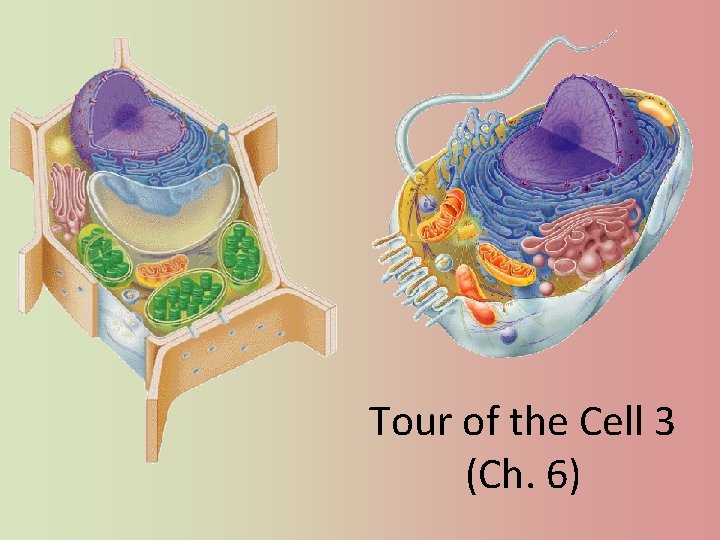
Tour of the Cell 3 (Ch. 6)
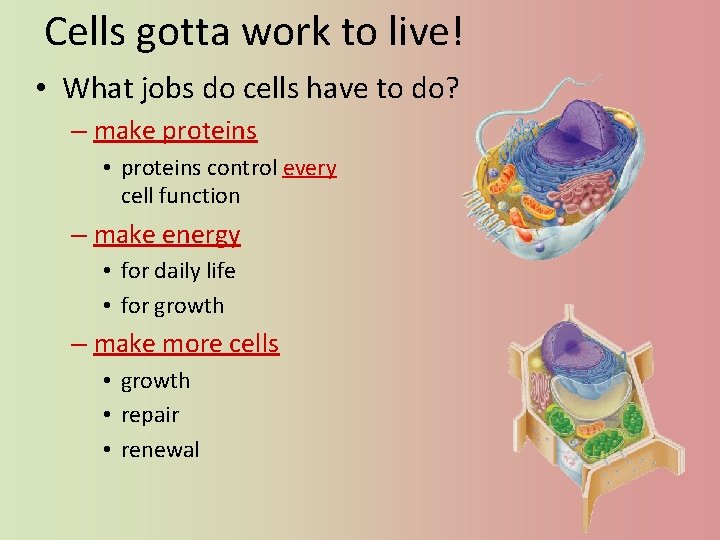
Cells gotta work to live! • What jobs do cells have to do? – make proteins • proteins control every cell function – make energy • for daily life • for growth – make more cells • growth • repair • renewal
Making New Cells
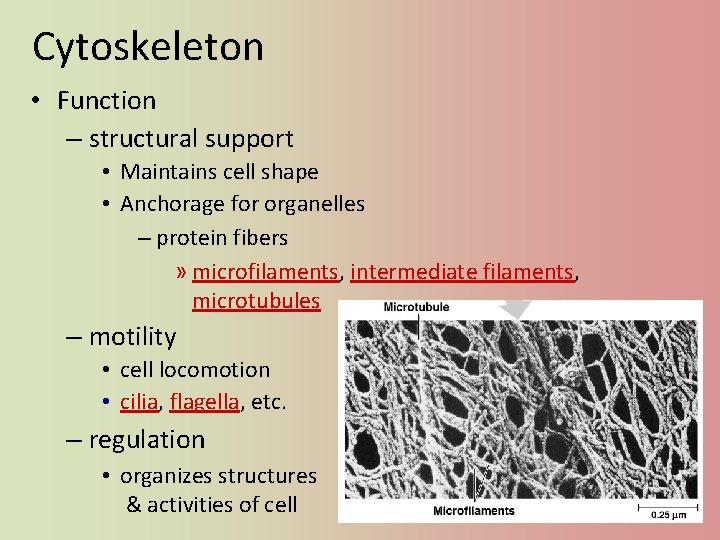
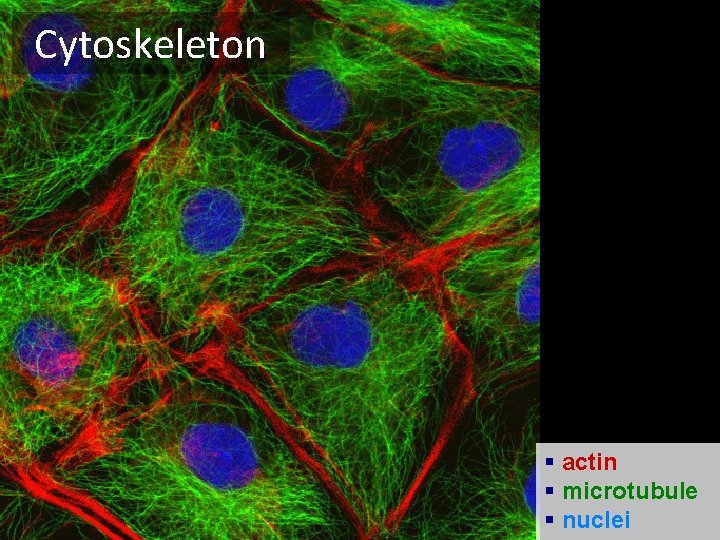
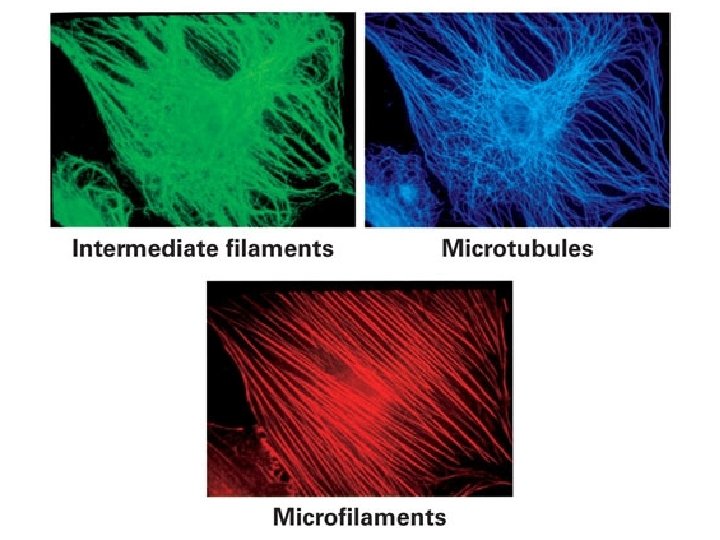
Cytoskeleton • Function – structural support • Maintains cell shape • Anchorage for organelles – protein fibers » microfilaments, intermediate filaments, microtubules – motility • cell locomotion • cilia, flagella, etc. – regulation • organizes structures & activities of cell
Cytoskeleton § actin § microtubule § nuclei
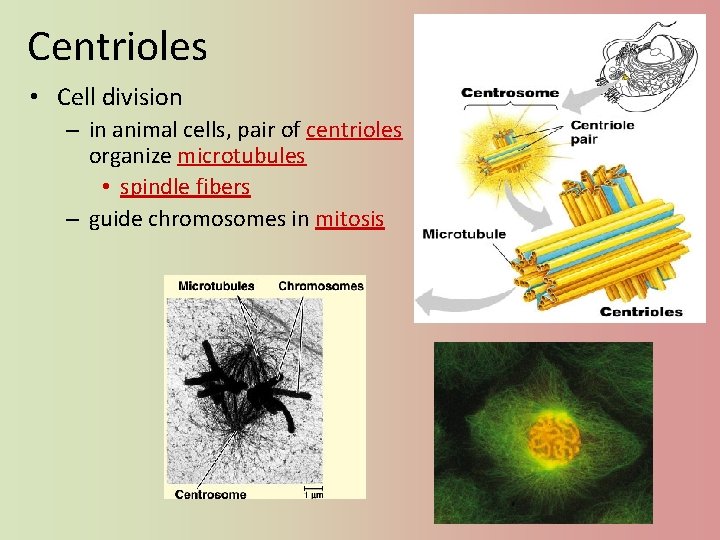
Centrioles • Cell division – in animal cells, pair of centrioles organize microtubules • spindle fibers – guide chromosomes in mitosis
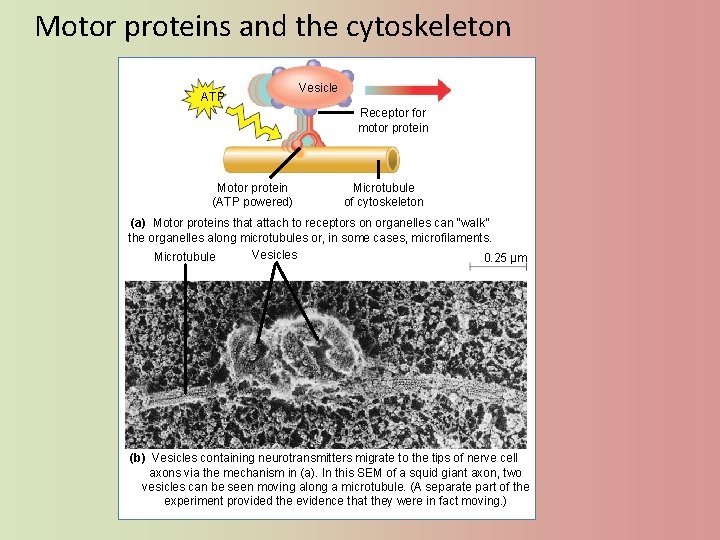
Motor proteins and the cytoskeleton ATP Vesicle Receptor for motor protein Motor protein (ATP powered) Microtubule of cytoskeleton (a) Motor proteins that attach to receptors on organelles can “walk” the organelles along microtubules or, in some cases, microfilaments. Vesicles Microtubule 0. 25 µm (b) Vesicles containing neurotransmitters migrate to the tips of nerve cell axons via the mechanism in (a). In this SEM of a squid giant axon, two vesicles can be seen moving along a microtubule. (A separate part of the experiment provided the evidence that they were in fact moving. )
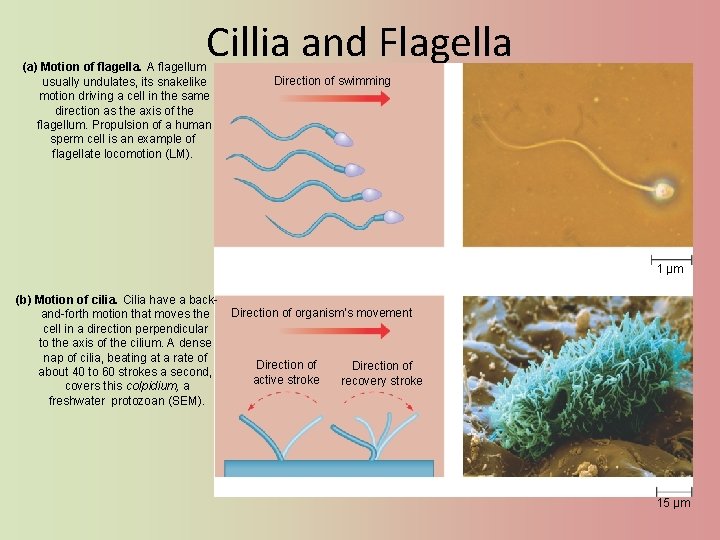
Cillia and Flagella (a) Motion of flagella. A flagellum usually undulates, its snakelike motion driving a cell in the same direction as the axis of the flagellum. Propulsion of a human sperm cell is an example of flagellate locomotion (LM). Direction of swimming 1 µm (b) Motion of cilia. Cilia have a backand-forth motion that moves the cell in a direction perpendicular to the axis of the cilium. A dense nap of cilia, beating at a rate of about 40 to 60 strokes a second, covers this colpidium, a freshwater protozoan (SEM). Direction of organism’s movement Direction of active stroke Direction of recovery stroke 15 µm
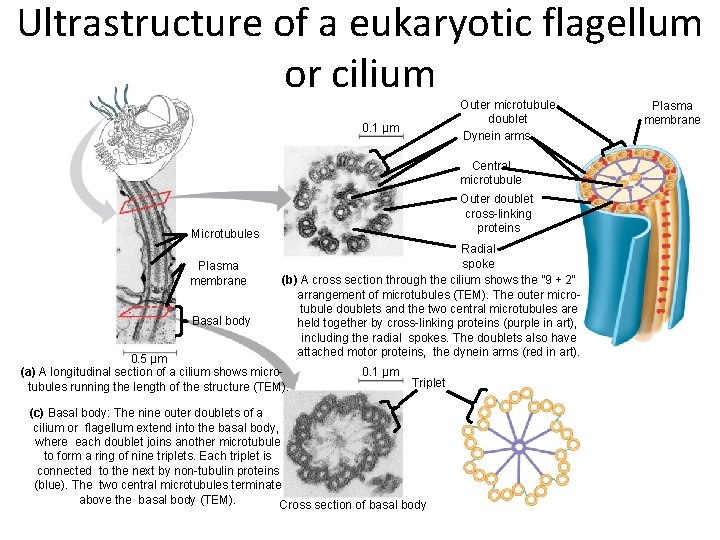
Ultrastructure of a eukaryotic flagellum or cilium Outer microtubule doublet Dynein arms 0. 1 µm Central microtubule Outer doublet cross-linking proteins Microtubules Plasma membrane Basal body Radial spoke (b) A cross section through the cilium shows the ” 9 + 2“ arrangement of microtubules (TEM). The outer microtubule doublets and the two central microtubules are held together by cross-linking proteins (purple in art), including the radial spokes. The doublets also have attached motor proteins, the dynein arms (red in art). 0. 5 µm (a) A longitudinal section of a cilium shows microtubules running the length of the structure (TEM). 0. 1 µm Triplet (c) Basal body: The nine outer doublets of a cilium or flagellum extend into the basal body, where each doublet joins another microtubule to form a ring of nine triplets. Each triplet is connected to the next by non-tubulin proteins (blue). The two central microtubules terminate above the basal body (TEM). Cross section of basal body Plasma membrane
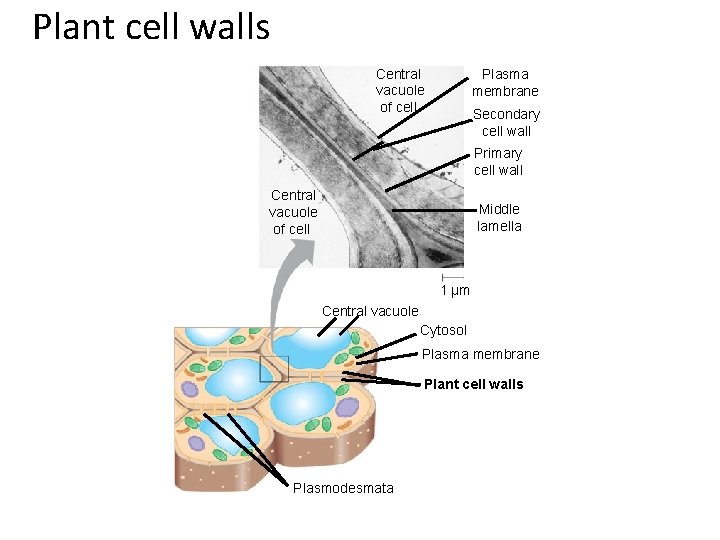
Plant cell walls Central vacuole of cell Plasma membrane Secondary cell wall Primary cell wall Central vacuole of cell Middle lamella 1 µm Central vacuole Cytosol Plasma membrane Plant cell walls Plasmodesmata
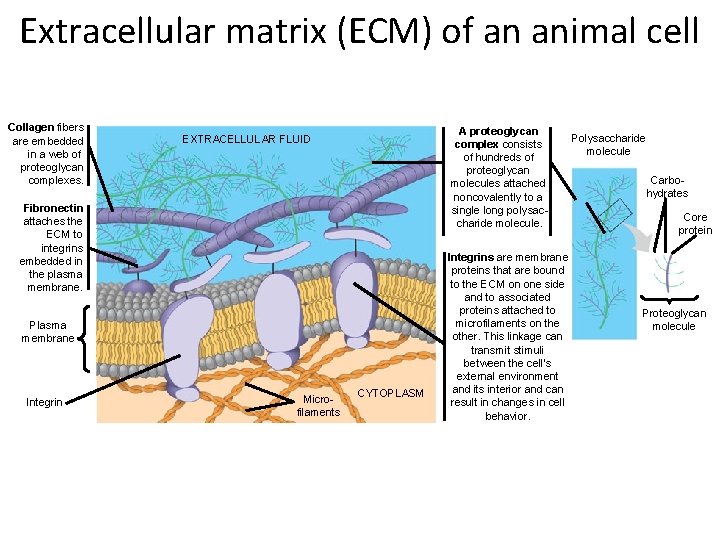
Extracellular matrix (ECM) of an animal cell Collagen fibers are embedded in a web of proteoglycan complexes. A proteoglycan complex consists of hundreds of proteoglycan molecules attached noncovalently to a single long polysaccharide molecule. EXTRACELLULAR FLUID Fibronectin attaches the ECM to integrins embedded in the plasma membrane. Plasma membrane Integrin Microfilaments CYTOPLASM Integrins are membrane proteins that are bound to the ECM on one side and to associated proteins attached to microfilaments on the other. This linkage can transmit stimuli between the cell’s external environment and its interior and can result in changes in cell behavior. Polysaccharide molecule Carbohydrates Core protein Proteoglycan molecule
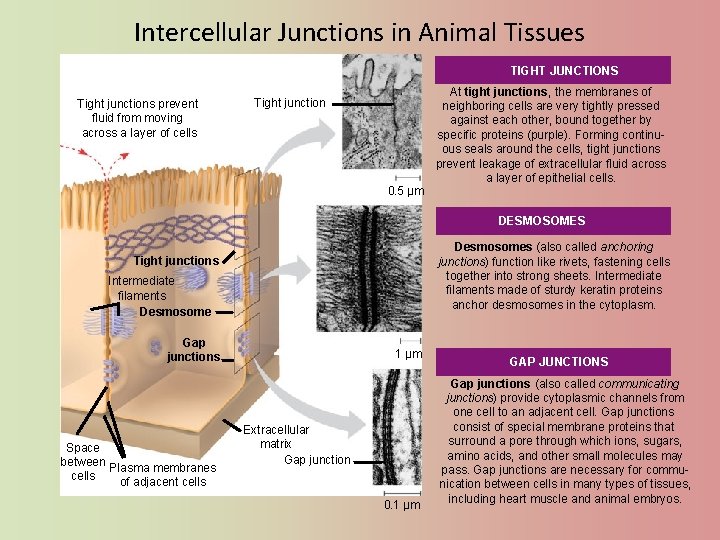
Intercellular Junctions in Animal Tissues TIGHT JUNCTIONS Tight junctions prevent fluid from moving across a layer of cells Tight junction 0. 5 µm At tight junctions, the membranes of neighboring cells are very tightly pressed against each other, bound together by specific proteins (purple). Forming continuous seals around the cells, tight junctions prevent leakage of extracellular fluid across a layer of epithelial cells. DESMOSOMES Desmosomes (also called anchoring junctions) function like rivets, fastening cells together into strong sheets. Intermediate filaments made of sturdy keratin proteins anchor desmosomes in the cytoplasm. Tight junctions Intermediate filaments Desmosome Gap junctions Space between Plasma membranes cells of adjacent cells 1 µm Extracellular matrix Gap junction 0. 1 µm GAP JUNCTIONS Gap junctions (also called communicating junctions) provide cytoplasmic channels from one cell to an adjacent cell. Gap junctions consist of special membrane proteins that surround a pore through which ions, sugars, amino acids, and other small molecules may pass. Gap junctions are necessary for communication between cells in many types of tissues, including heart muscle and animal embryos.
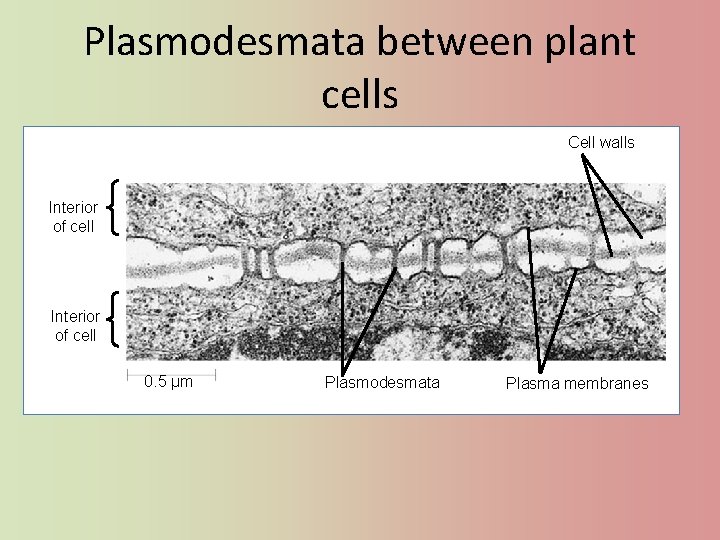
Plasmodesmata between plant cells Cell walls Interior of cell 0. 5 µm Plasmodesmata Plasma membranes
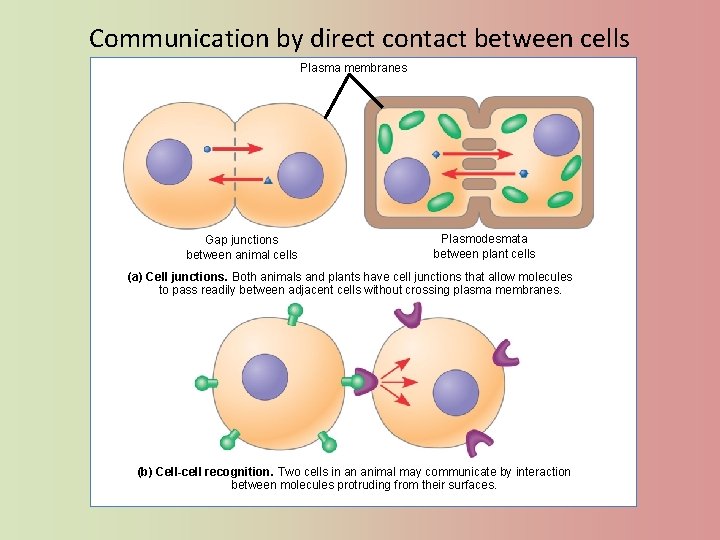
Communication by direct contact between cells Plasma membranes Gap junctions between animal cells Plasmodesmata between plant cells (a) Cell junctions. Both animals and plants have cell junctions that allow molecules to pass readily between adjacent cells without crossing plasma membranes. (b) Cell-cell recognition. Two cells in an animal may communicate by interaction between molecules protruding from their surfaces.
Any Questions!!
Review Questions
1. . In which cell would you expect to find the most tight junctions? A. Muscle cell in the thigh muscle of a long-distance runner B. Pancreatic cell that manufactures digestive enzymes C. Macrophage (white blood cell) that engulfs bacteria D. Epithelial cells lining the digestive tract E. Ovarian cell that produces estrogen (a steroid hormone)
2. Which of the following cytoskeletal elements forms the centrioles within a cell? A. B. C. D. E. Collagen Microfillaments Microtubules Pseudopodia Intermediate Fillaments
3. In human cells, the cell wall is A. B. C. D. E. Composed of polysaccharides Composed of peptidoglycan Responsible for limiting the absorption of water Involved in controlling mitosis Not present.
Now let’s look at something old. . . with new eyes!