
Touchscreens in embedded applications Shaun Levin Joe Quesada
Touchscreens in embedded applications Shaun Levin Joe Quesada Dru Steeby
Agenda • • Explain Resistive Touchscreens Explain Capacitive Touchscreens Surface Acoustic Wave Touchscreens How to Pick a Touchscreen
Resistive Touchscreens
Resistive Touchscreens Advantages: Cost Effective and durable, can be used in most environments. Screen responds with any type of object • • o fingernail, naked finger, pen, stylus, gloved finger, etc Disadvantages: No Multitouch. Less transparency (~80%) than capacitive screens (~90%). • •
Resistive Touchscreens How do they work? General Idea: Two planes separated by a "microdot" surface. This makes it so that the planes are separated when not being touched, but when they are touched the planes make contact. This sits on top of a separate LCD screen.
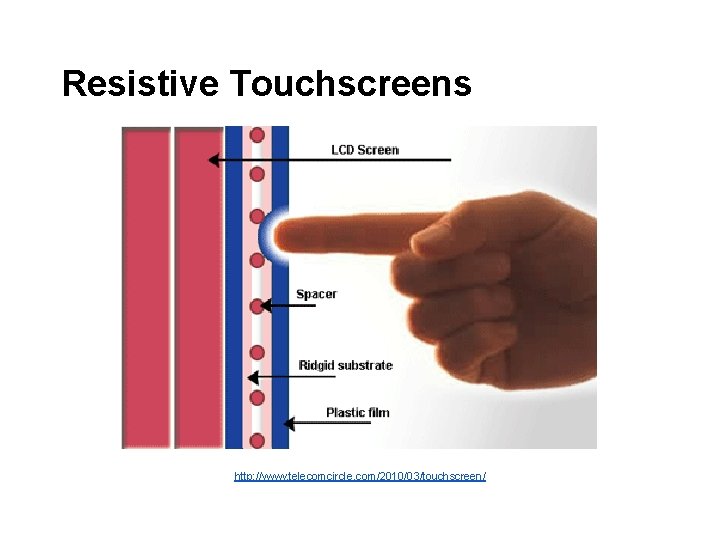
Resistive Touchscreens http: //www. telecomcircle. com/2010/03/touchscreen/
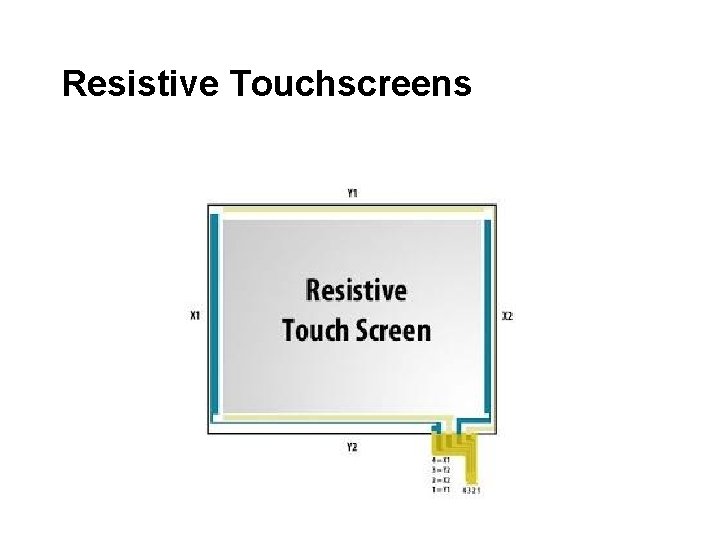
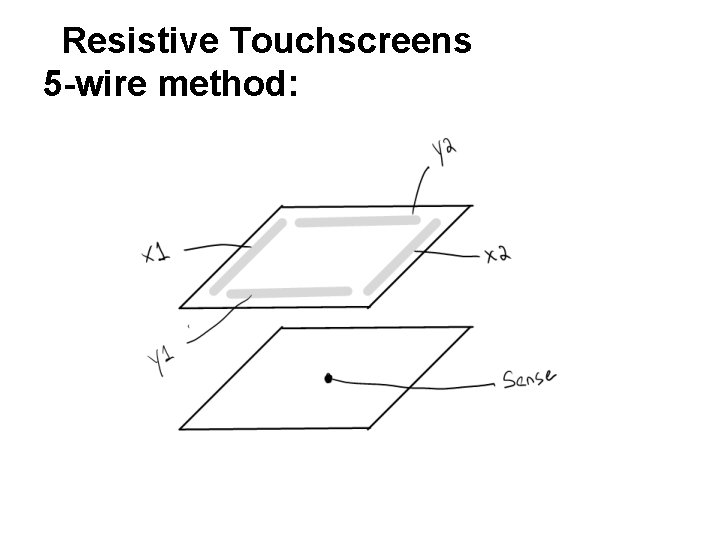
Resistive Touchscreens But how does that determine the coordinates? There are several different methods to determine where on the screen your finger has touched. 4 -wire and 5 -wire among them, with each getting more complicated and more expensive as you add more wires.
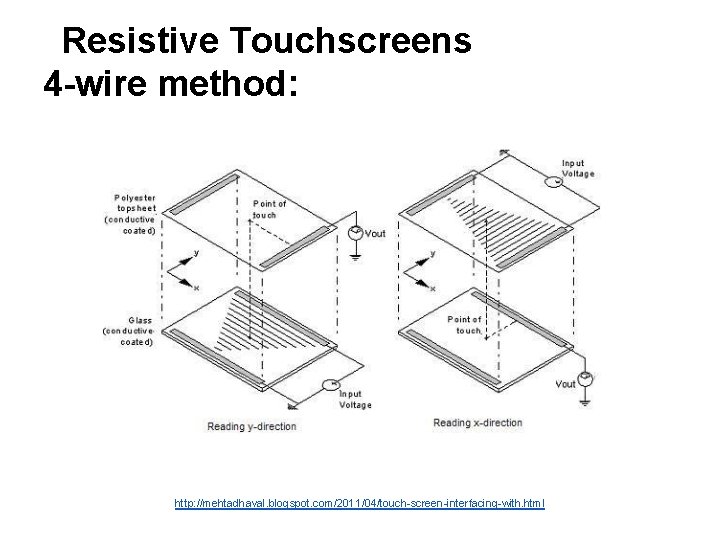
Resistive Touchscreens 4 -wire method: http: //mehtadhaval. blogspot. com/2011/04/touch-screen-interfacing-with. html
Resistive Touchscreens
Resistive Touchscreens 5 -wire method:
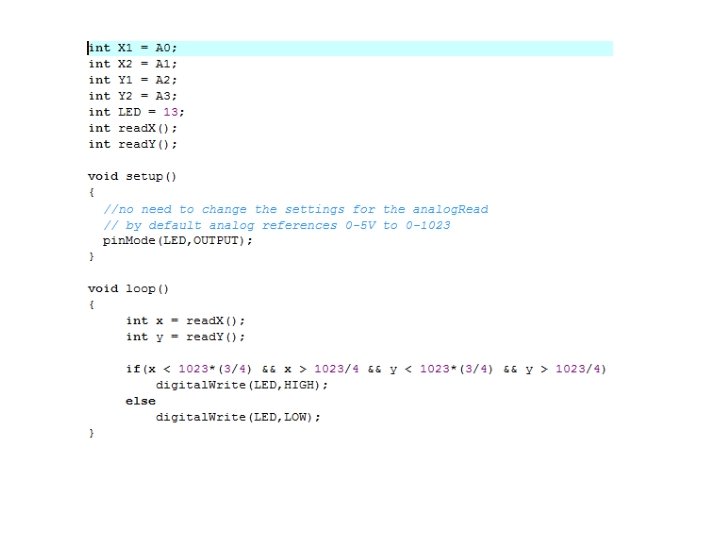
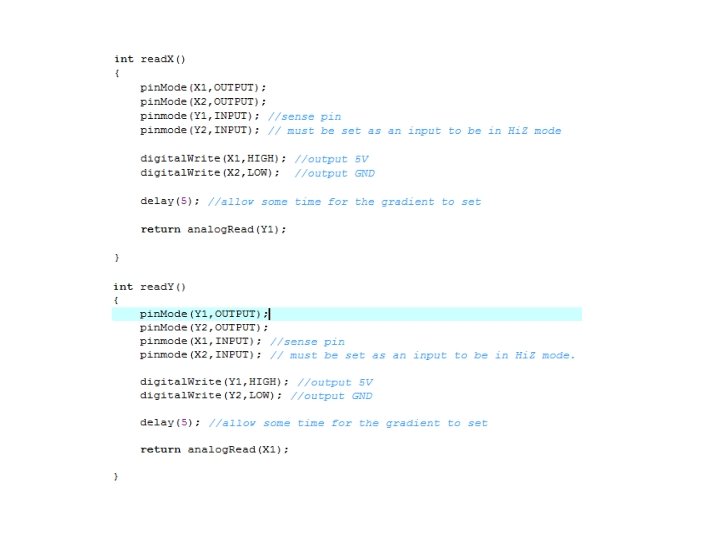
Resistive Touchscreens Interfacing with a microcontroller: Arduino Uno makes this really easy!
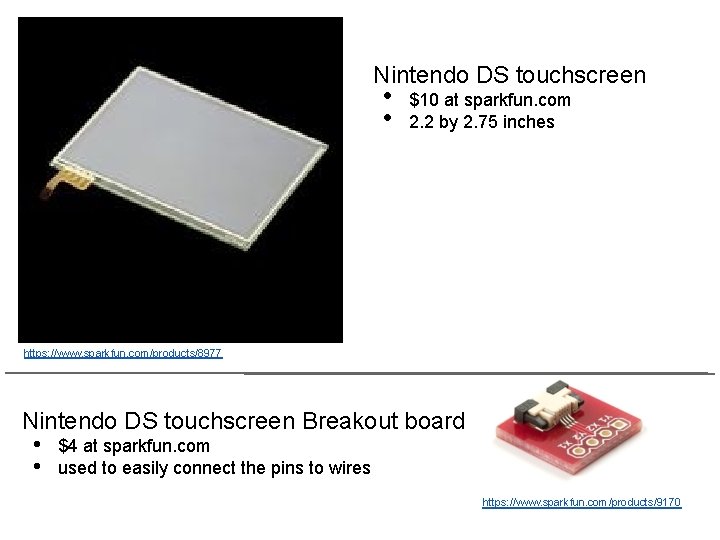
Nintendo DS touchscreen • • $10 at sparkfun. com 2. 2 by 2. 75 inches https: //www. sparkfun. com/products/8977 Nintendo DS touchscreen Breakout board • $4 at sparkfun. com • used to easily connect the pins to wires https: //www. sparkfun. com/products/9170
Capacitive Touchscreen
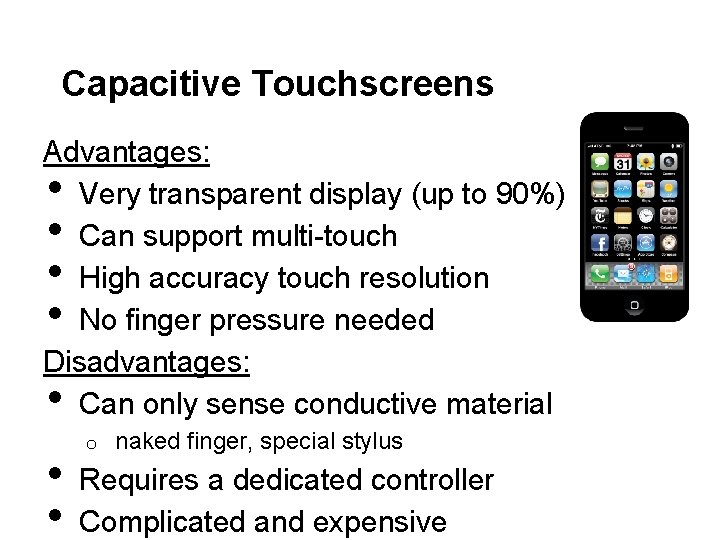
Capacitive Touchscreens Advantages: Very transparent display (up to 90%) Can support multi-touch High accuracy touch resolution No finger pressure needed Disadvantages: Can only sense conductive material • • o naked finger, special stylus Requires a dedicated controller Complicated and expensive
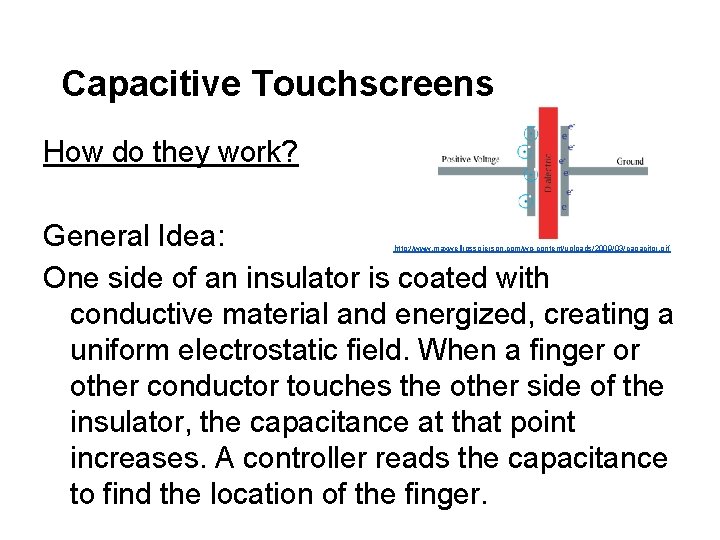
Capacitive Touchscreens How do they work? General Idea: One side of an insulator is coated with conductive material and energized, creating a uniform electrostatic field. When a finger or other conductor touches the other side of the insulator, the capacitance at that point increases. A controller reads the capacitance to find the location of the finger. http: //www. maxwellrosspierson. com/wp-content/uploads/2009/03/capacitor. gif
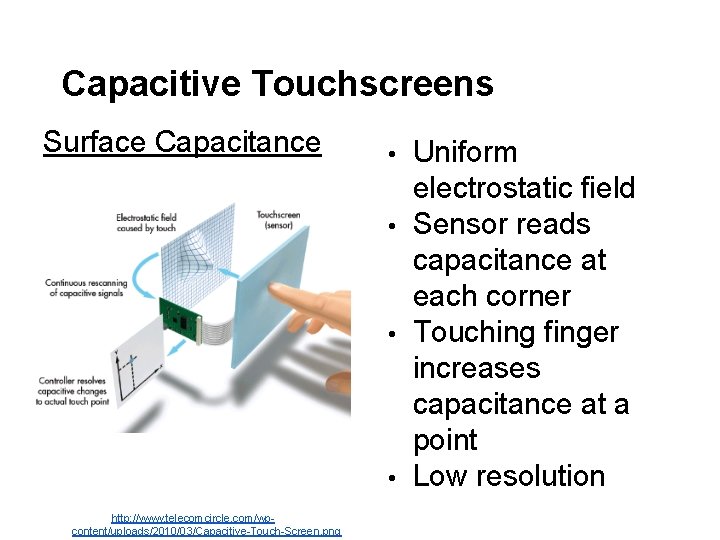
Capacitive Touchscreens Surface Capacitance • • http: //www. telecomcircle. com/wpcontent/uploads/2010/03/Capacitive-Touch-Screen. png Uniform electrostatic field Sensor reads capacitance at each corner Touching finger increases capacitance at a point Low resolution
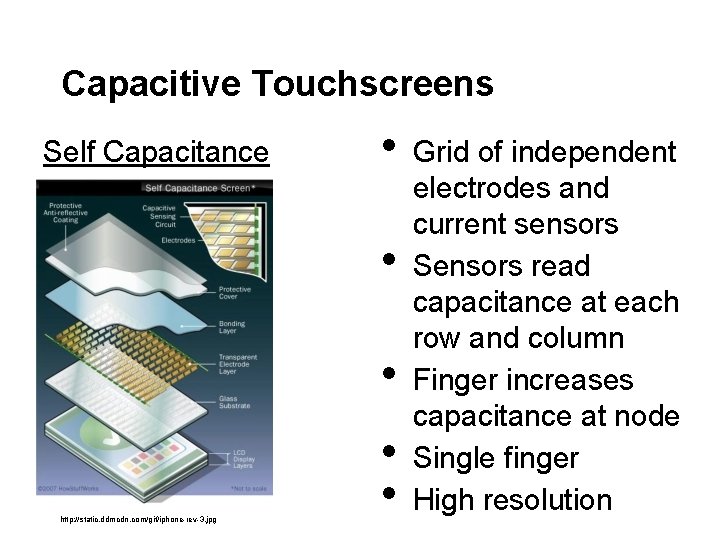
Capacitive Touchscreens Self Capacitance • • • http: //static. ddmcdn. com/gif/iphone-rev-3. jpg • • Grid of independent electrodes and current sensors Sensors read capacitance at each row and column Finger increases capacitance at node Single finger High resolution
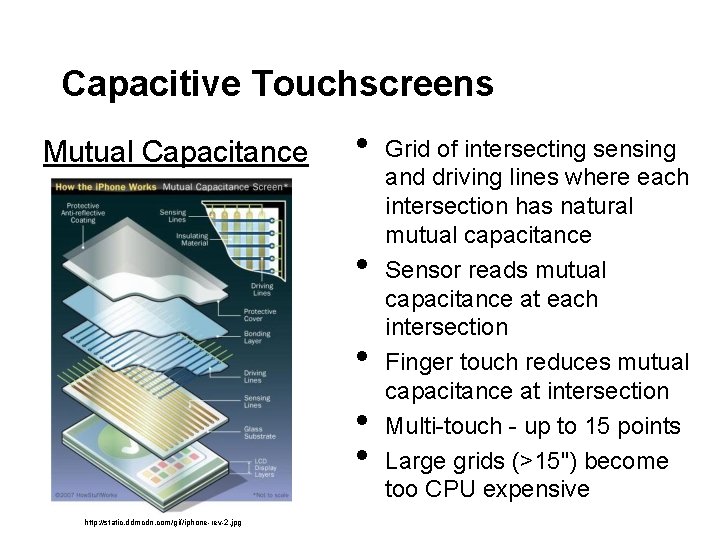
Capacitive Touchscreens Mutual Capacitance • • • http: //static. ddmcdn. com/gif/iphone-rev-2. jpg Grid of intersecting sensing and driving lines where each intersection has natural mutual capacitance Sensor reads mutual capacitance at each intersection Finger touch reduces mutual capacitance at intersection Multi-touch - up to 15 points Large grids (>15") become too CPU expensive
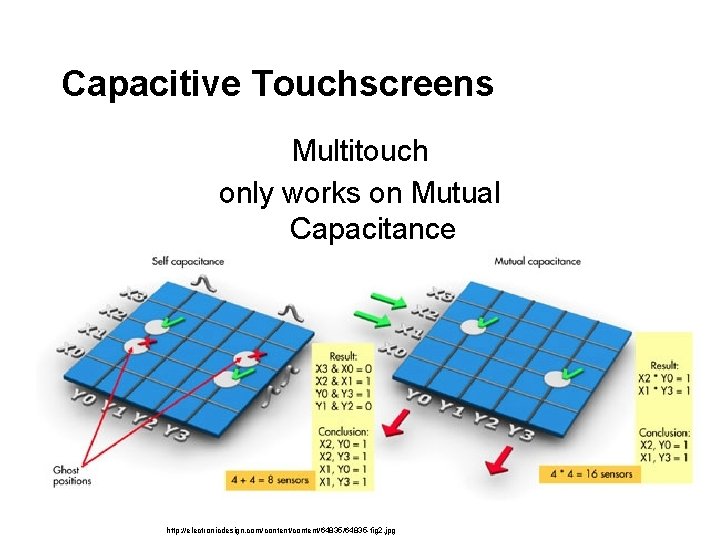
Capacitive Touchscreens Multitouch only works on Mutual Capacitance http: //electronicdesign. com/content/64835 -fig 2. jpg
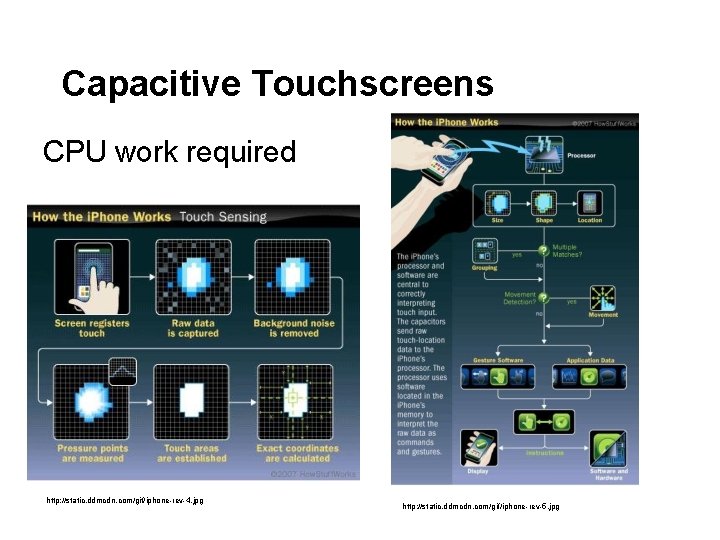
Capacitive Touchscreens CPU work required http: //static. ddmcdn. com/gif/iphone-rev-4. jpg http: //static. ddmcdn. com/gif/iphone-rev-5. jpg
Capacitive Touchscreens Interfacing with a microcontroller: • • • Either have to buy the touchscreen and controller separately (difficult to match) or buy them bundled together Can also buy LCD, touchscreen, and controllers all bundled together Controllers use standard protocols: I 2 C, SPI
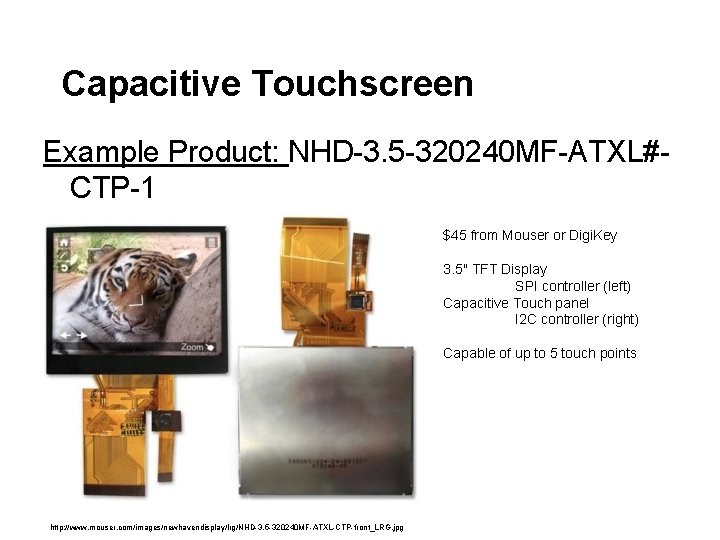
Capacitive Touchscreen Example Product: NHD-3. 5 -320240 MF-ATXL#CTP-1 $45 from Mouser or Digi. Key 3. 5" TFT Display SPI controller (left) Capacitive Touch panel I 2 C controller (right) Capable of up to 5 touch points http: //www. mouser. com/images/newhavendisplay/lrg/NHD-3. 5 -320240 MF-ATXL-CTP-front_LRG. jpg
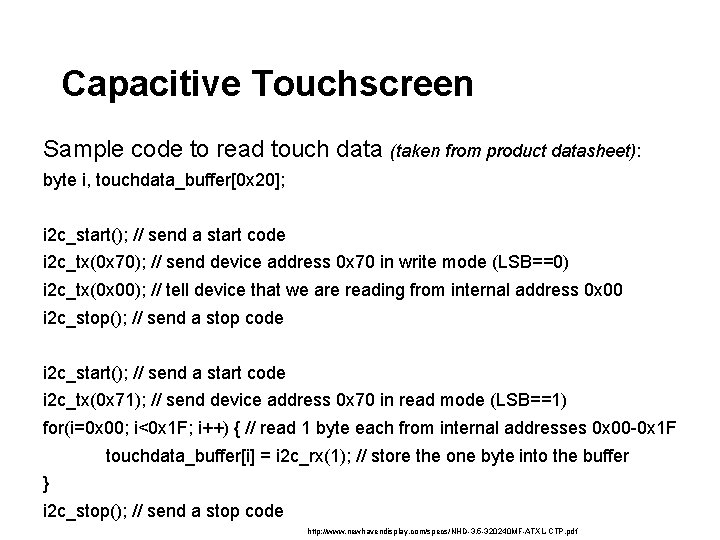
Capacitive Touchscreen Sample code to read touch data (taken from product datasheet): byte i, touchdata_buffer[0 x 20]; i 2 c_start(); // send a start code i 2 c_tx(0 x 70); // send device address 0 x 70 in write mode (LSB==0) i 2 c_tx(0 x 00); // tell device that we are reading from internal address 0 x 00 i 2 c_stop(); // send a stop code i 2 c_start(); // send a start code i 2 c_tx(0 x 71); // send device address 0 x 70 in read mode (LSB==1) for(i=0 x 00; i<0 x 1 F; i++) { // read 1 byte each from internal addresses 0 x 00 -0 x 1 F touchdata_buffer[i] = i 2 c_rx(1); // store the one byte into the buffer } i 2 c_stop(); // send a stop code http: //www. newhavendisplay. com/specs/NHD-3. 5 -320240 MF-ATXL-CTP. pdf
Surface Acoustic Wave Touchscreen
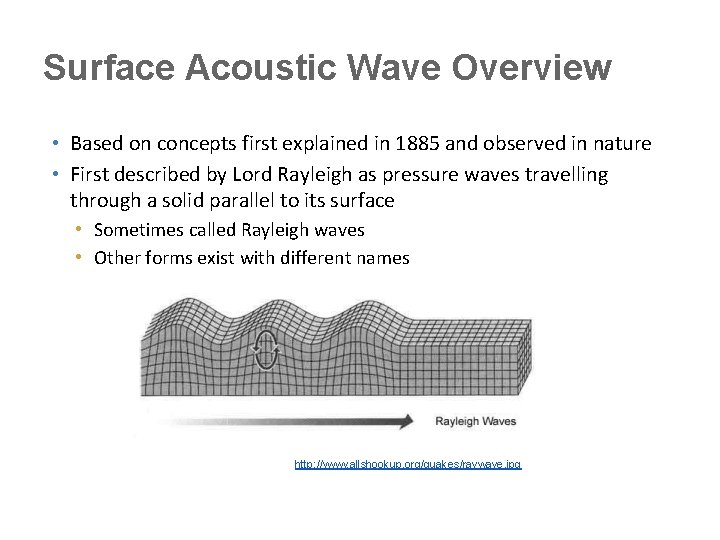
Surface Acoustic Wave Overview • Based on concepts first explained in 1885 and observed in nature • First described by Lord Rayleigh as pressure waves travelling through a solid parallel to its surface • Sometimes called Rayleigh waves • Other forms exist with different names http: //www. allshookup. org/quakes/raywave. jpg
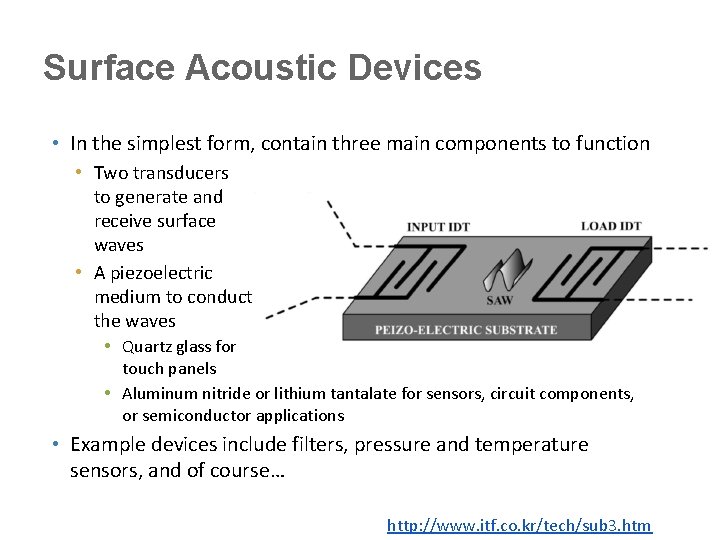
Surface Acoustic Devices • In the simplest form, contain three main components to function • Two transducers to generate and receive surface waves • A piezoelectric medium to conduct the waves • Quartz glass for touch panels • Aluminum nitride or lithium tantalate for sensors, circuit components, or semiconductor applications • Example devices include filters, pressure and temperature sensors, and of course… http: //www. itf. co. kr/tech/sub 3. htm
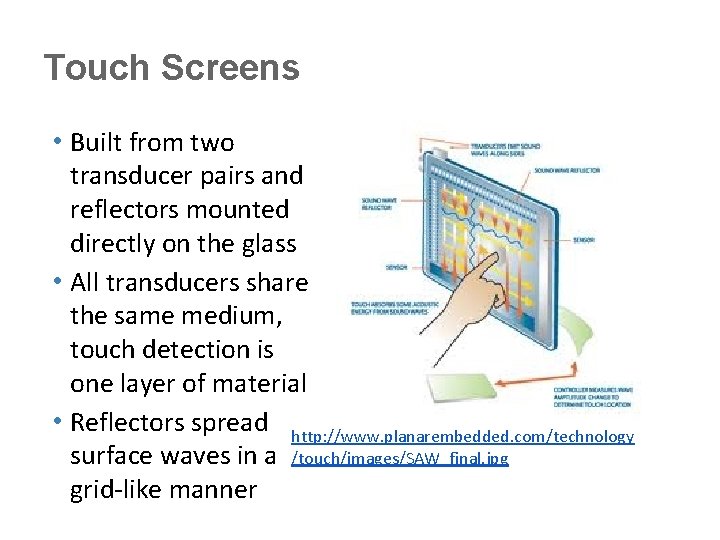
Touch Screens • Built from two transducer pairs and reflectors mounted directly on the glass • All transducers share the same medium, touch detection is one layer of material • Reflectors spread http: //www. planarembedded. com/technology surface waves in a /touch/images/SAW_final. jpg grid-like manner
Touch Detection • Reflector arrays spread and direct the waves over the glass in a grid-like manner • Detection based on changes in wave amplitude when a soft object touches the screen • Bare finger, gloves, soft tip stylus, etc. absorb some wave energy • Hard objects like pens do not register a touch. • Onboard control circuitry detects the amplitude change and computes the coordinates • Detection generally limited to a single point of contact
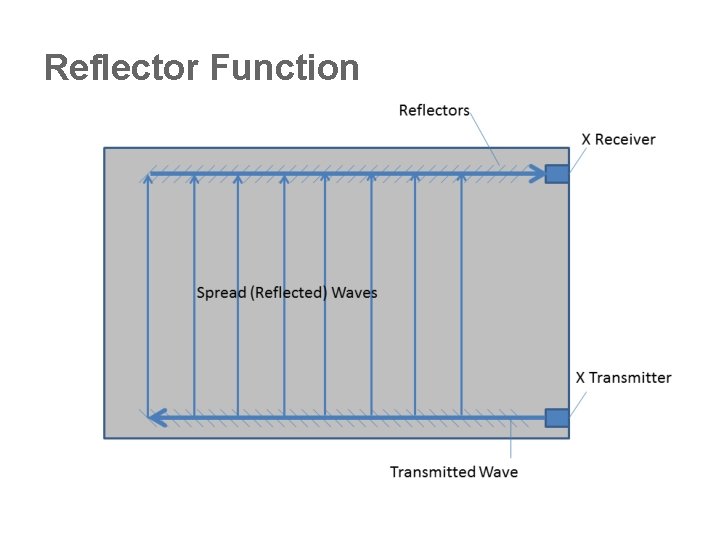
Reflector Function
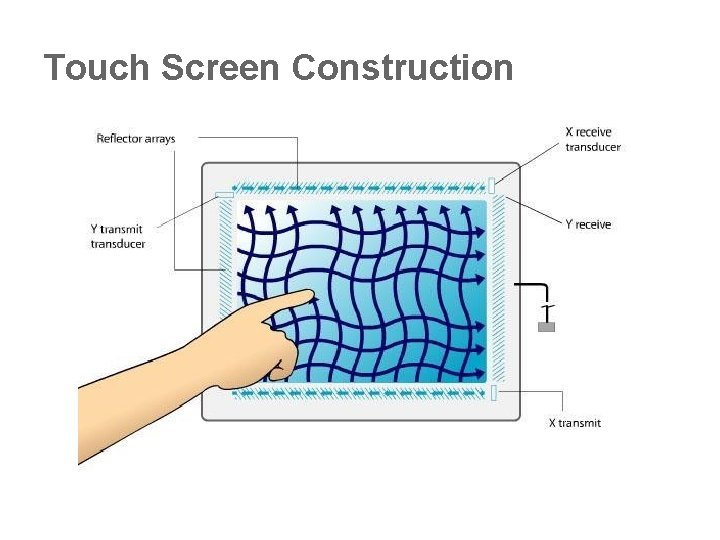
Touch Screen Construction
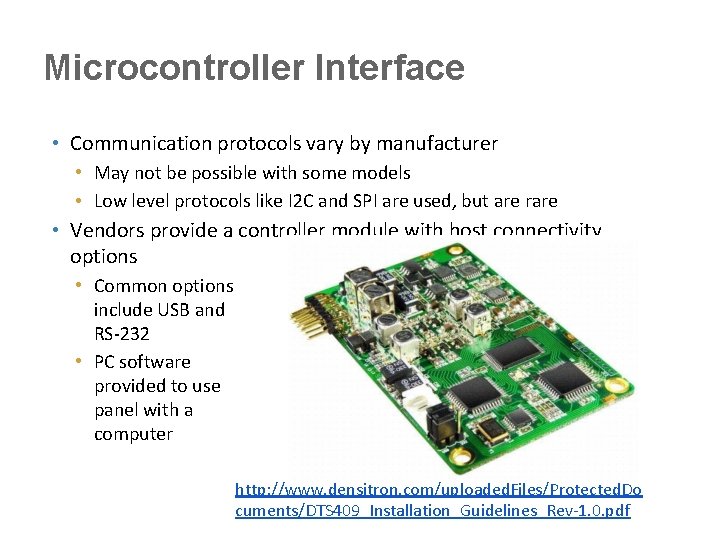
Microcontroller Interface • Communication protocols vary by manufacturer • May not be possible with some models • Low level protocols like I 2 C and SPI are used, but are rare • Vendors provide a controller module with host connectivity options • Common options include USB and RS-232 • PC software provided to use panel with a computer http: //www. densitron. com/uploaded. Files/Protected. Do cuments/DTS 409_Installation_Guidelines_Rev-1. 0. pdf
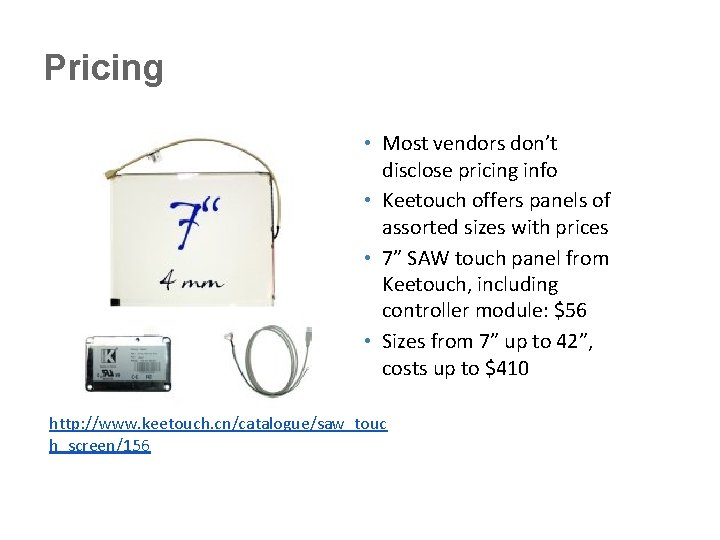
Pricing • Most vendors don’t disclose pricing info • Keetouch offers panels of assorted sizes with prices • 7” SAW touch panel from Keetouch, including controller module: $56 • Sizes from 7” up to 42”, costs up to $410 http: //www. keetouch. cn/catalogue/saw_touc h_screen/156
Why Choose Surface Acoustic • Very durable • Up to 50 million touches on a single point • No film or coating that can be worn out with heavy use • Superior image quality • Up to 92% transmittance for some models • Only a single layer of glass, so distortion is minimal • High Resolution and Accuracy • Up to 4096 x 4096 resolution • Touches accurate to within 1% tolerance • Scalable • Made in larger sizes than capacitive or resistive panels • Larger panels requires almost no additional circuitry
Drawbacks and Common Uses • Pricing and availability • Most vendors don’t disclose component prices • Resellers often perform custom installations and require a quote • When prices are given, surface acoustic panels are much more expensive than other types • Susceptible to dead spots caused from dirt and other contaminants • Despite these restrictions, these panels are used in high traffic environments where durability is required • Industrial control systems, medical devices, kiosks • Touch screen computer monitors in consumer sector
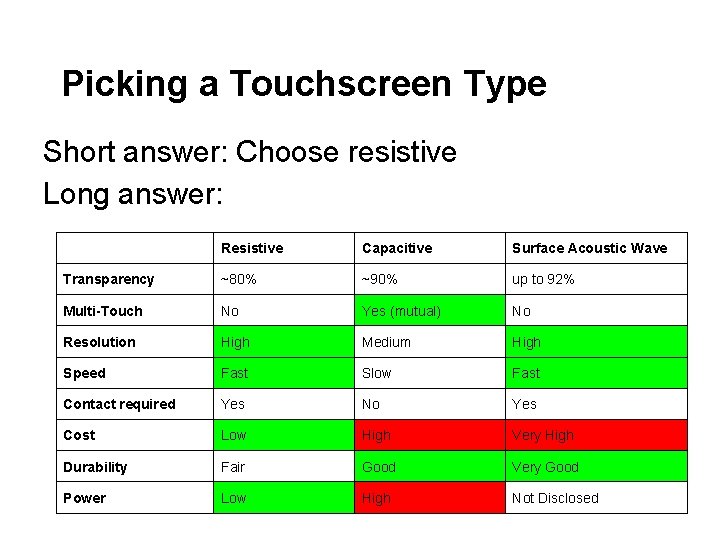
Picking a Touchscreen Type Short answer: Choose resistive Long answer: Resistive Capacitive Surface Acoustic Wave Transparency ~80% ~90% up to 92% Multi-Touch No Yes (mutual) No Resolution High Medium High Speed Fast Slow Fast Contact required Yes No Yes Cost Low High Very High Durability Fair Good Very Good Power Low High Not Disclosed
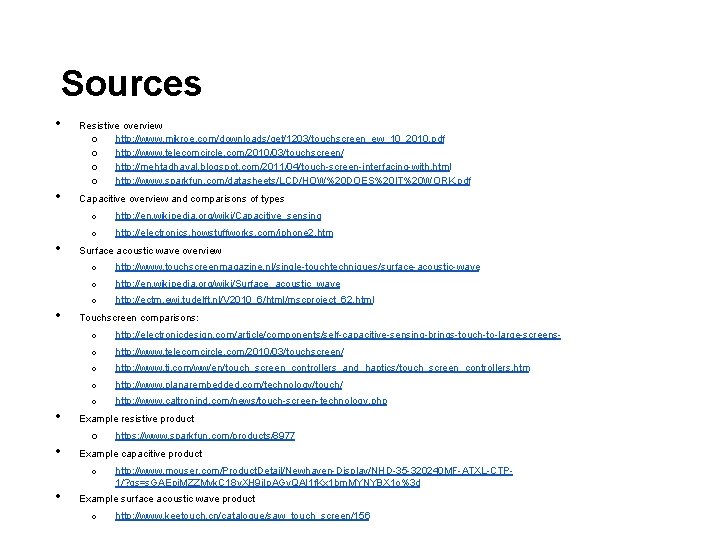
Sources • • • Resistive overview o http: //www. mikroe. com/downloads/get/1203/touchscreen_ew_10_2010. pdf o http: //www. telecomcircle. com/2010/03/touchscreen/ o http: //mehtadhaval. blogspot. com/2011/04/touch-screen-interfacing-with. html o http: //www. sparkfun. com/datasheets/LCD/HOW%20 DOES%20 IT%20 WORK. pdf Capacitive overview and comparisons of types o http: //en. wikipedia. org/wiki/Capacitive_sensing o http: //electronics. howstuffworks. com/iphone 2. htm Surface acoustic wave overview o http: //www. touchscreenmagazine. nl/single-touchtechniques/surface-acoustic-wave o http: //en. wikipedia. org/wiki/Surface_acoustic_wave o http: //ectm. ewi. tudelft. nl/V 2010_6/html/mscproject_62. html Touchscreen comparisons: o http: //electronicdesign. com/article/components/self-capacitive-sensing-brings-touch-to-large-screens- o http: //www. telecomcircle. com/2010/03/touchscreen/ o http: //www. ti. com/ww/en/touch_screen_controllers_and_haptics/touch_screen_controllers. htm o http: //www. planarembedded. com/technology/touch/ o http: //www. caltronind. com/news/touch-screen-technology. php Example resistive product o Example capacitive product o • https: //www. sparkfun. com/products/8977 http: //www. mouser. com/Product. Detail/Newhaven-Display/NHD-35 -320240 MF-ATXL-CTP 1/? qs=s. GAEpi. MZZMvk. C 18 y. XH 9 i. Ip. AGv. QAI 1 f. Kx 1 bm. MYNYBX 1 o%3 d Example surface acoustic wave product o http: //www. keetouch. cn/catalogue/saw_touch_screen/156
- Slides: 38