
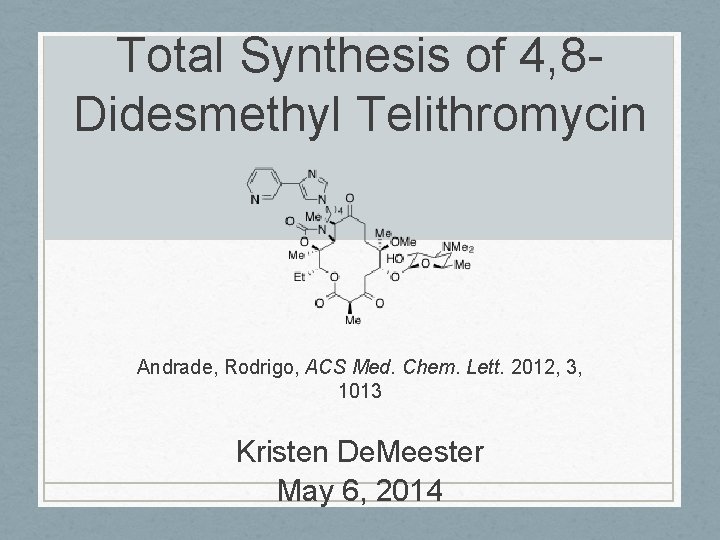
Total Synthesis of 4 8 Didesmethyl Telithromycin Andrade
- Slides: 10
Total Synthesis of 4, 8 Didesmethyl Telithromycin Andrade, Rodrigo, ACS Med. Chem. Lett. 2012, 3, 1013 Kristen De. Meester May 6, 2014
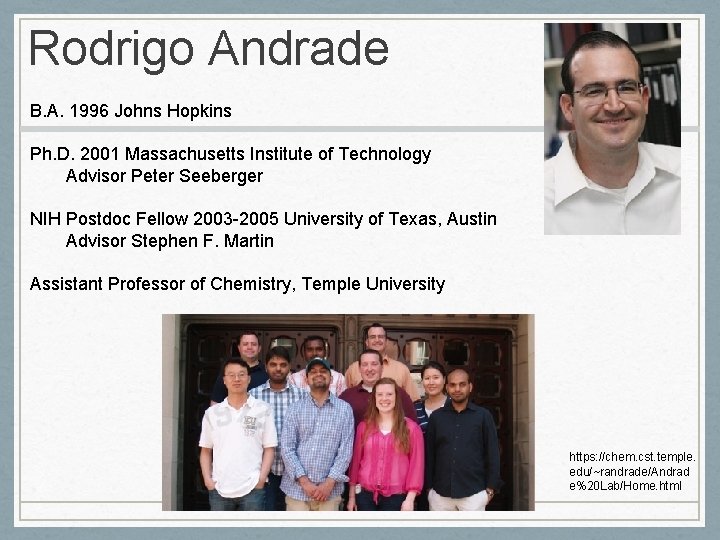
Rodrigo Andrade B. A. 1996 Johns Hopkins Ph. D. 2001 Massachusetts Institute of Technology Advisor Peter Seeberger NIH Postdoc Fellow 2003 -2005 University of Texas, Austin Advisor Stephen F. Martin Assistant Professor of Chemistry, Temple University https: //chem. cst. temple. edu/~randrade/Andrad e%20 Lab/Home. html
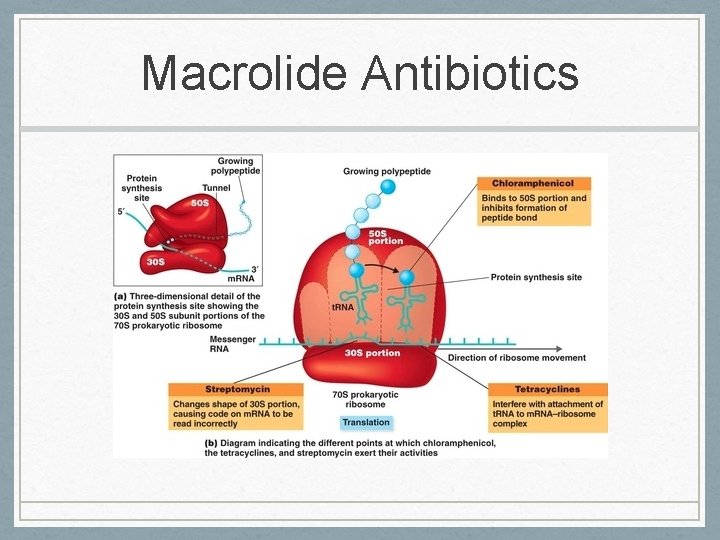
Macrolide Antibiotics
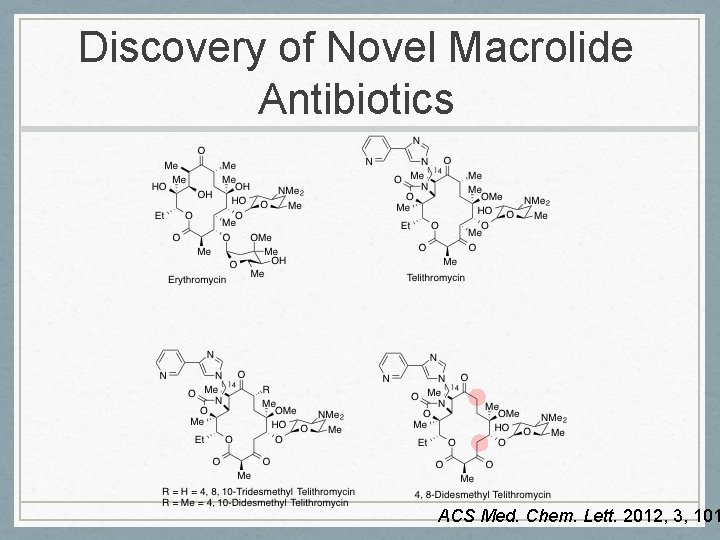
Discovery of Novel Macrolide Antibiotics ACS Med. Chem. Lett. 2012, 3, 101
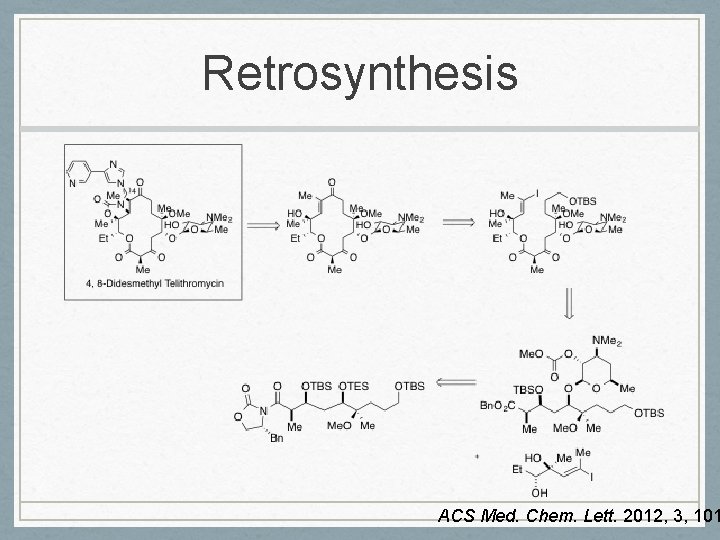
Retrosynthesis ACS Med. Chem. Lett. 2012, 3, 101
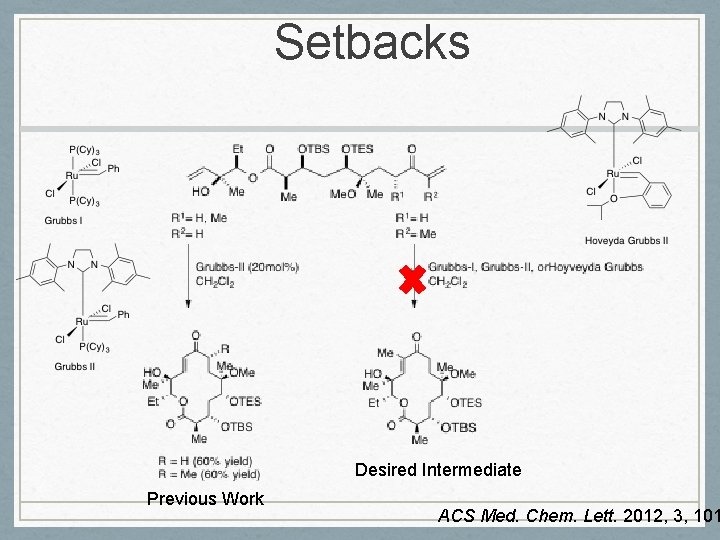
Setbacks Desired Intermediate Previous Work ACS Med. Chem. Lett. 2012, 3, 101
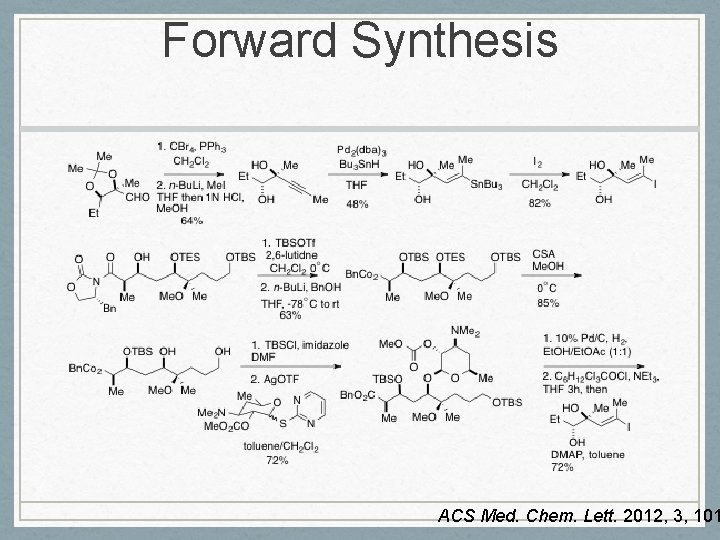
Forward Synthesis ACS Med. Chem. Lett. 2012, 3, 101
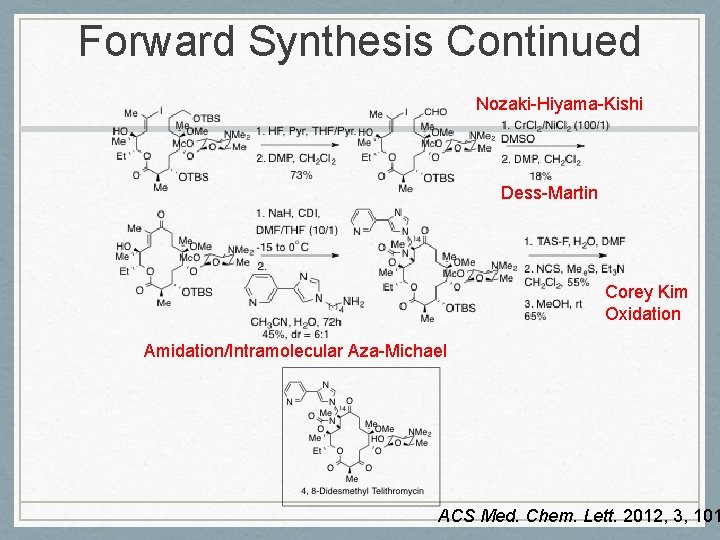
Forward Synthesis Continued Nozaki-Hiyama-Kishi Dess-Martin Corey Kim Oxidation Amidation/Intramolecular Aza-Michael ACS Med. Chem. Lett. 2012, 3, 101
Biochemical Results • Third-generation ketolide antibiotic • Less potent than Telithromycin • 8 times more active than 4, 8, 10 -Tridesmethyl Telithromycin • 2 times more active than 4, 10 Didesmethyl Telithromycin ACS Med. Chem. Lett. 2012, 3, 101
Conclusions • 4, 8 -Didesmethyl Telithromycin was prepared using intramolecular NHK in 36 steps (26 linear) • 4, 8 -Didesmethyl Telithromycin analog was more potent than other synthetic derivatives synthesized in Andrade’s lab, which directly addresses antibacterial resistance to Telithromycin