
Total recall Revision What the Research Tells Us


- Slides: 18
Total recall Revision: What the Research Tells Us With thanks to Alex Quigley
“ When it comes to retaining information, not all methods are created equal. ”
Highlighting
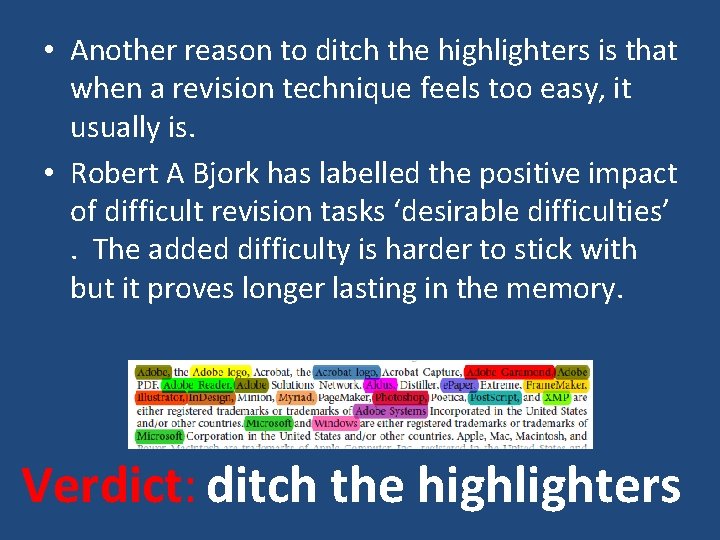
John Dunlosky et al (2013) • Highlighting is, they suggest, a relatively ineffectual tool. • One of the main problems is that it is already a very familiar strategy and so is employed in an unthinking fashion • No real strategy evident and evidence shows that how much is highlighted is wildly variable given the same text.
• Another reason to ditch the highlighters is that when a revision technique feels too easy, it usually is. • Robert A Bjork has labelled the positive impact of difficult revision tasks ‘desirable difficulties’. The added difficulty is harder to stick with but it proves longer lasting in the memory. Verdict: ditch the highlighters
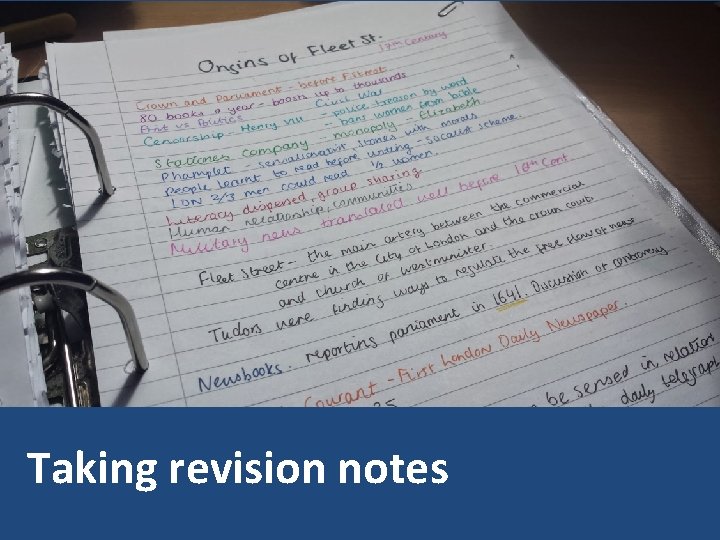
Taking revision notes
“It ain’t what you do, it’s the way that you do it. ” • Simply copying out chunks of text is likely to prove an ineffective strategy. • Research indicates that elaboration is the key to effective revision notes. • Interpreting what we read and more actively connecting it together, drawing out questions and patterns from the information.
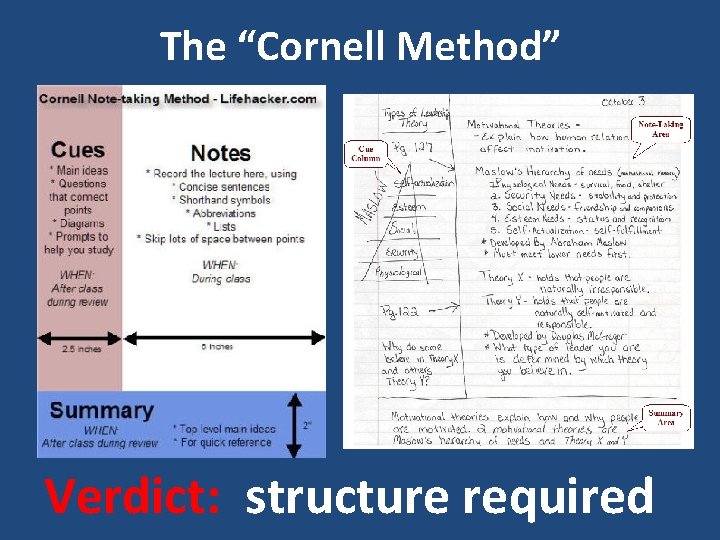
The “Cornell Method” Verdict: structure required
Reciting
Facts, facts and more facts? • Cognitive psychology has shown that the working memory of students is limited. Under the stress and pressure of exam conditions, short term memory can falter. • By reciting crucial knowledge pertinent to an exam topic and learning it by rote, help makes the recall of that knowledge almost automatic • Reciting is also a valuable revision tool that can be deployed freely at any time
Mark A Mc. Daniel et al (2009) • Relying on reciting won’t prove the most effective method of revision • Read-Recite-Review offers an enhancement that works • Simply reading the information is never enough but this active addition can prove more memorable. A little reciting, and a little checking, go a long way. Verdict: if it is good enough for great actors
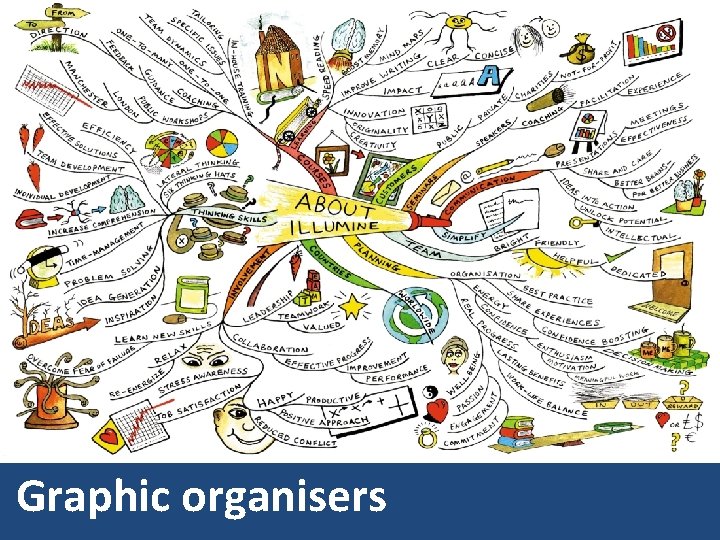
Graphic organisers
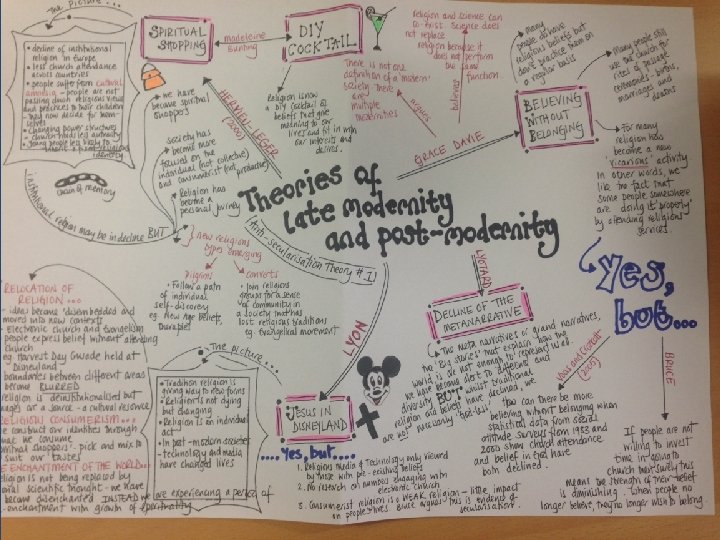
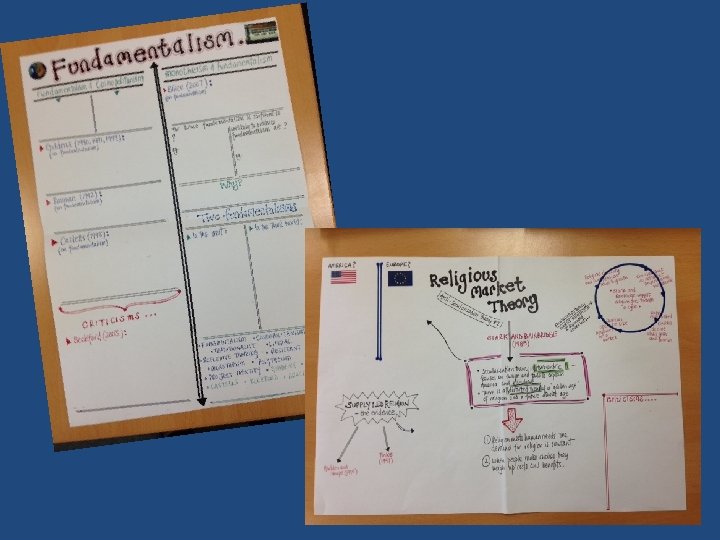
Graphic organisers • One of the strengths of graphic organisers is their ability to help clarify and organise often haphazard thinking. • There is a whole host of diagrams for different modes of thinking. • Venn diagrams, concept maps, spider diagrams, fishbone diagrams. • Concept maps have been shown to be an excellent device for testing knowledge on a given topic. Verdict: it isn’t just pretty pictures – restructuring topics using graphic organisers makes its mark in the memory
Flashcards
Testing