
TOTAL QUALITY MANAGEMENT TQM W Edwards Demings Principles


- Slides: 72
TOTAL QUALITY MANAGEMENT (TQM)
W. Edwards Deming’s Principles of Total Quality Management are noted by many to be very successful within the private sector.
DEMMING’S 14 POINTS n n n n Constancy New philosophy Cease dependence Minimize total costs Improve process Institute training Leadership n n n n Drive out fear Break down barriers Eliminate slogans Eliminate quotas Remove barriers Vigorous education Transformation
While TQM has begun to take hold in American policing, some police departments have found success using TQM, while others have not.
- a success story in implementing TQM.
VISION MISSION CORE VALUES
Guiding Principles SYSTEMS LEADERSHIP TEAMS
Omaha Police Department “To serve and Protect” - an unsuccessful implementation of TQM
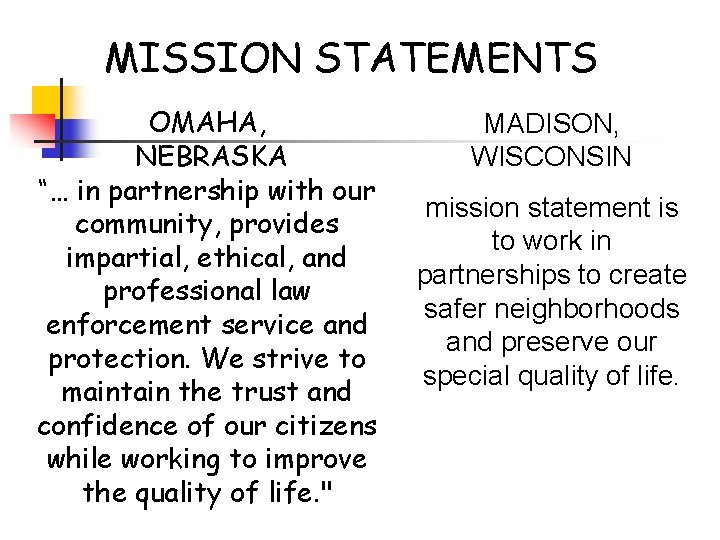
MISSION STATEMENTS OMAHA, NEBRASKA “… in partnership with our community, provides impartial, ethical, and professional law enforcement service and protection. We strive to maintain the trust and confidence of our citizens while working to improve the quality of life. " MADISON, WISCONSIN mission statement is to work in partnerships to create safer neighborhoods and preserve our special quality of life.
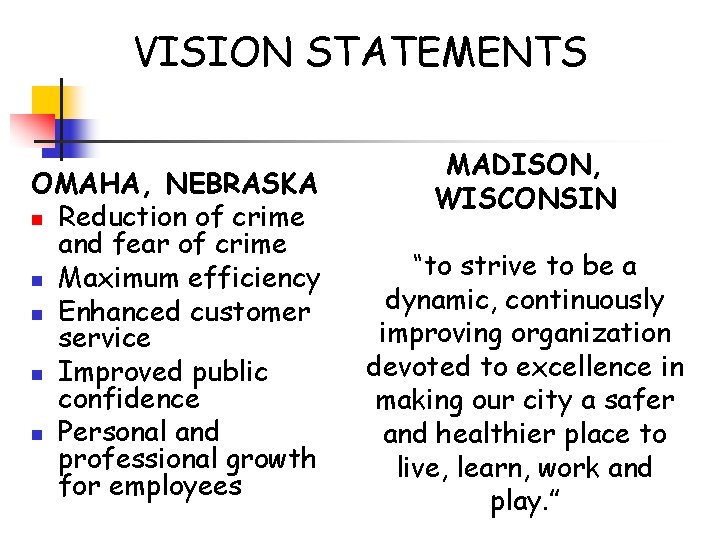
VISION STATEMENTS OMAHA, NEBRASKA n Reduction of crime and fear of crime n Maximum efficiency n Enhanced customer service n Improved public confidence n Personal and professional growth for employees MADISON, WISCONSIN “to strive to be a dynamic, continuously improving organization devoted to excellence in making our city a safer and healthier place to live, learn, work and play. ”
Omaha Police Department To serve and Protect POLICING VALUES “Maintain service as our primary goal, while vigorously pursuing those who commit crimes… Provide courteous police service with respect for the rights and dignity of all the people we serve… Involve the community in all policing activities that directly affect the quality of community life. Structure police service in a manner as to reinforce the strengths of the city's neighborhoods… Remain committed to a shared and open relationship of involvement with all segments of our community. ”
Deming’s 14 Points Broken-out for Additional Review
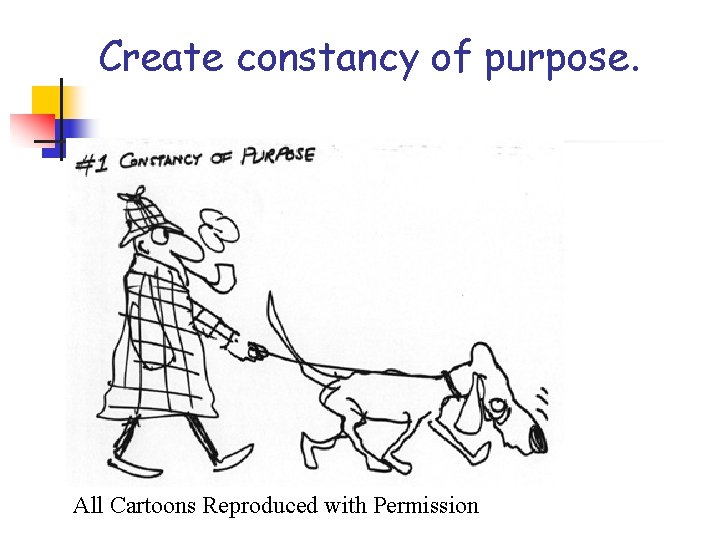
Create constancy of purpose. All Cartoons Reproduced with Permission
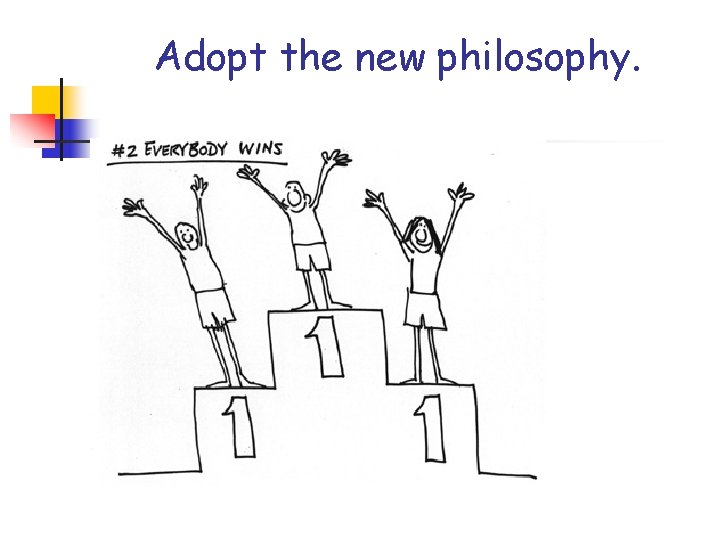
Adopt the new philosophy.
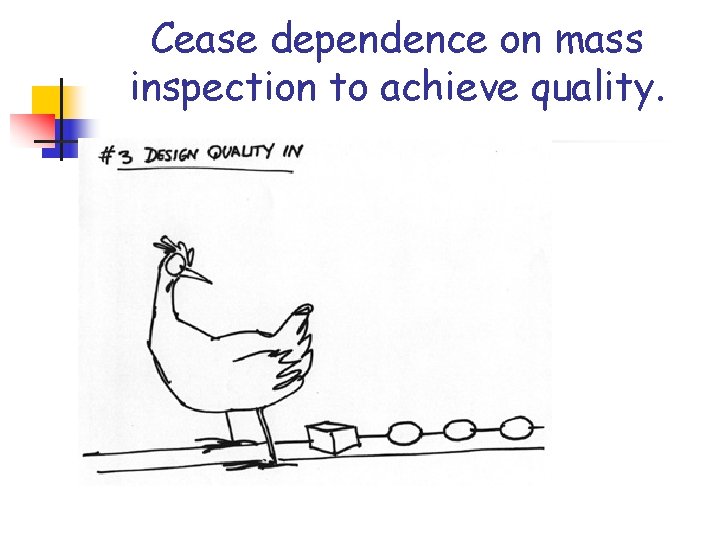
Cease dependence on mass inspection to achieve quality.
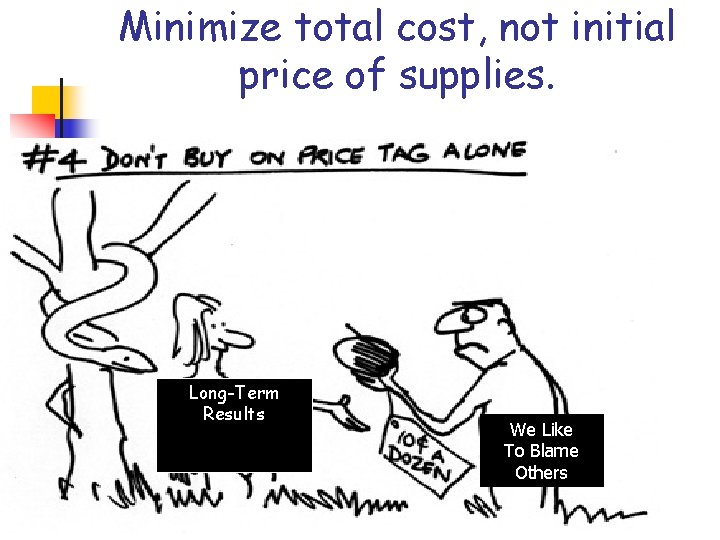
Minimize total cost, not initial price of supplies. Long-Term Results We Like To Blame Others
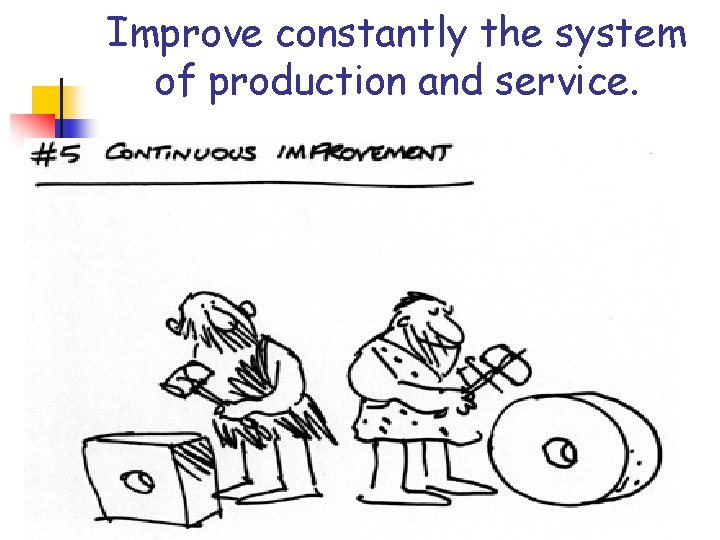
Improve constantly the system of production and service.
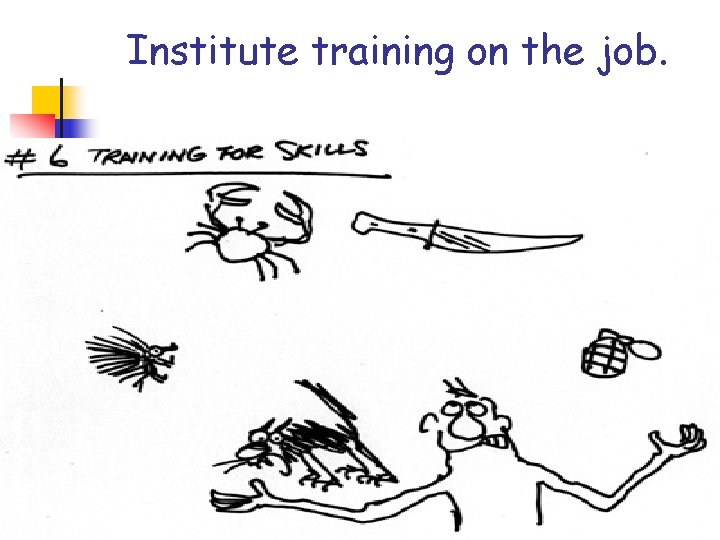
Institute training on the job.
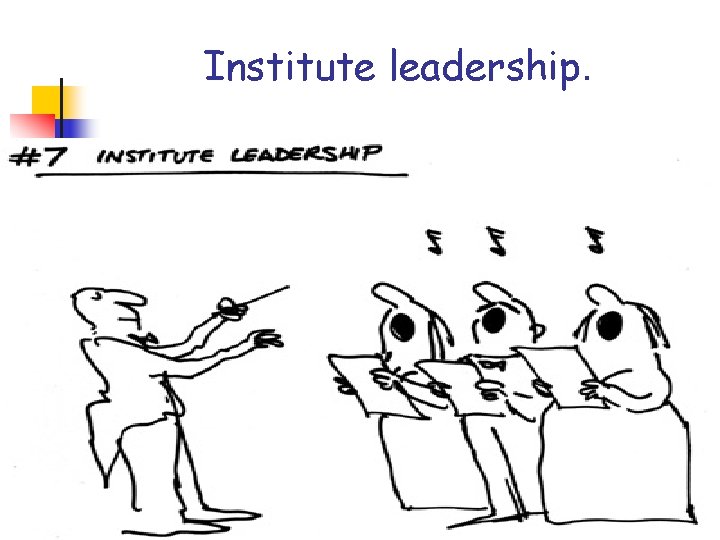
Institute leadership.
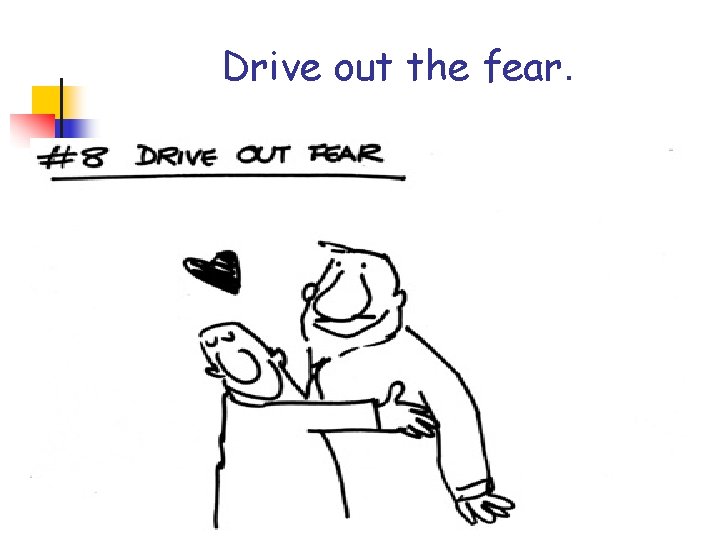
Drive out the fear.
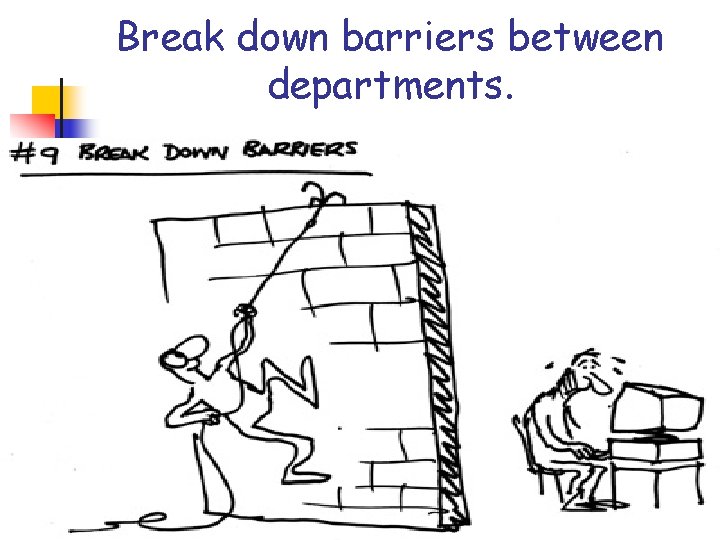
Break down barriers between departments.
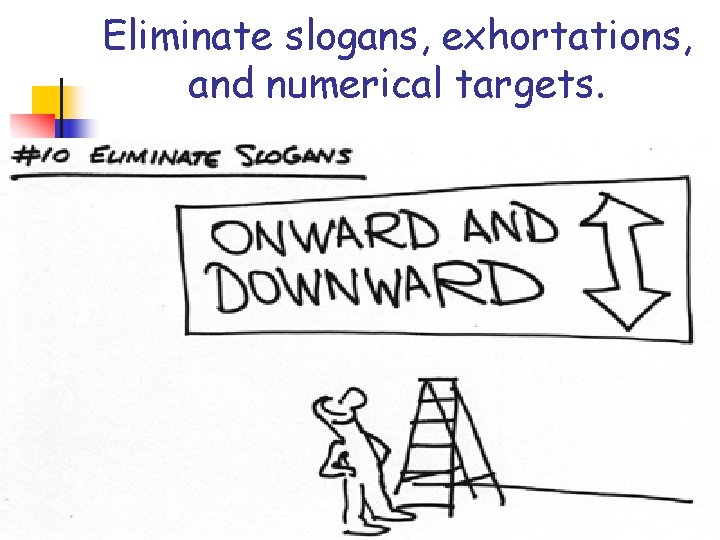
Eliminate slogans, exhortations, and numerical targets.
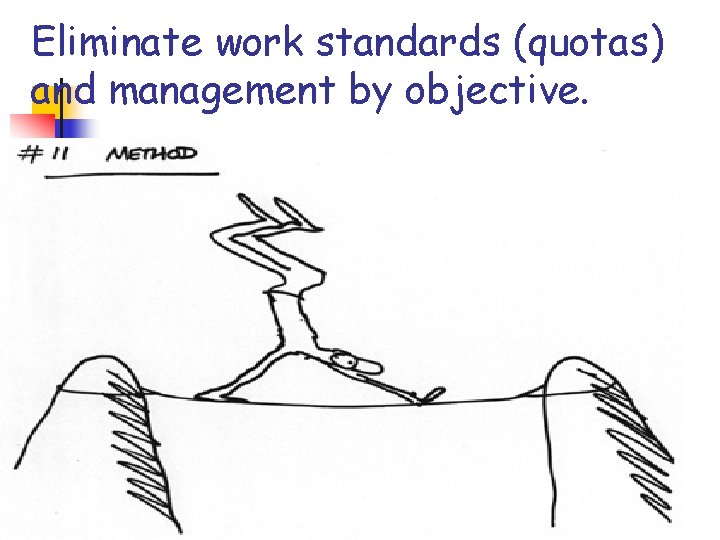
Eliminate work standards (quotas) and management by objective.
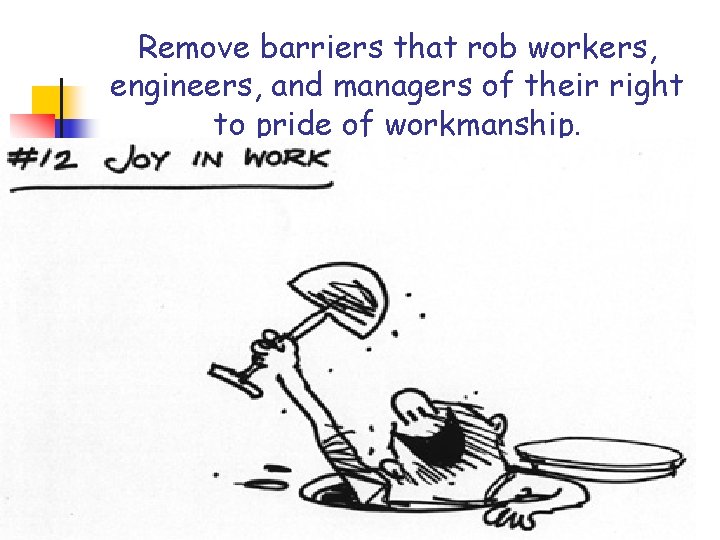
Remove barriers that rob workers, engineers, and managers of their right to pride of workmanship.
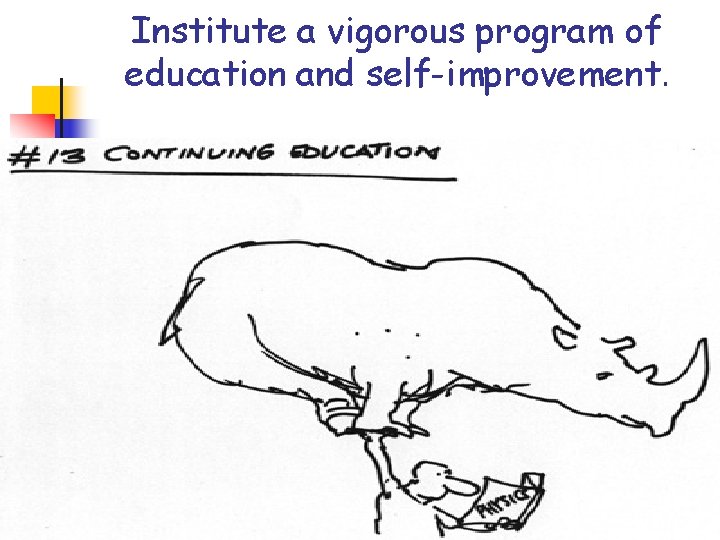
Institute a vigorous program of education and self-improvement.
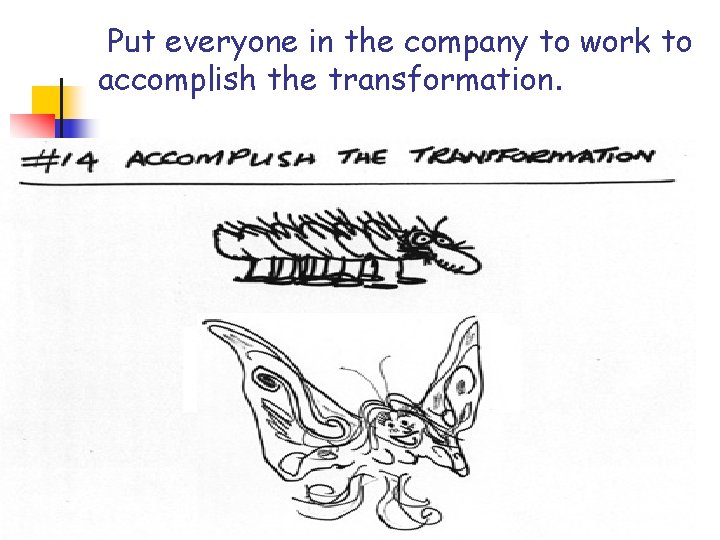
Put everyone in the company to work to accomplish the transformation.
Transition to Objectives 1. Explain Why TQM & CQI Are Important and Explain the History of TQM 2. Explain the General Principles of TQM 3. Describe How to Use 3 TQM Tools for Getting Started 4. Describe How to Use 3 TQM Tools for Defining a Process 5. Describe How to Use 3 TQM Tools for Setting Priorities
Why Do We Have TQM? Total Quality Management
Total Quality Management Key Components: n n n Customer Focus: client & customer is the most important ingredient in the feedback loop. Alignment: is both internal & external. Total Involvement: leadership must remove barriers to getting work done effectively & efficiently.
Total Quality Management Key Components Continued: n n Continuous improvement: means that people in every part of the organizations must believe that it is part of their job to continuously improve all they do. Leadership commitment: requires people who can see the big picture & work for their people.
Total Quality Management: n n n The basics of T. Q. M. have been applied numerous government agencies & they have started – Offices of Quality. Directors of Quality Services. Offices of Excellence. Quality Institutes. Quality Networks.
Total Quality Management Reengineering Government n n n Hottest term in public management & is accomplished through the TQM concept. Quality assurance Using the creativity of all employees Managers & employees continuously striving to “do the right thing the first time”. Achieve higher standards of quality, timeliness and efficiency.
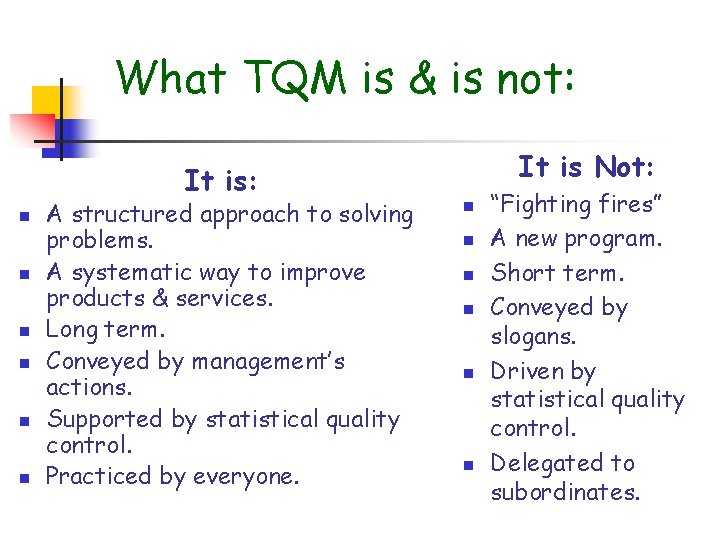
What TQM is & is not: It is Not: It is: n n n A structured approach to solving problems. A systematic way to improve products & services. Long term. Conveyed by management’s actions. Supported by statistical quality control. Practiced by everyone. n n n “Fighting fires” A new program. Short term. Conveyed by slogans. Driven by statistical quality control. Delegated to subordinates.
Total Quality Management Principal Elements: The Customer n Decentralization n A Long Term Commitment n Internal Communication n Measurement n Training n Rewards & Recognition n These principles embrace a common-sense approach to management.
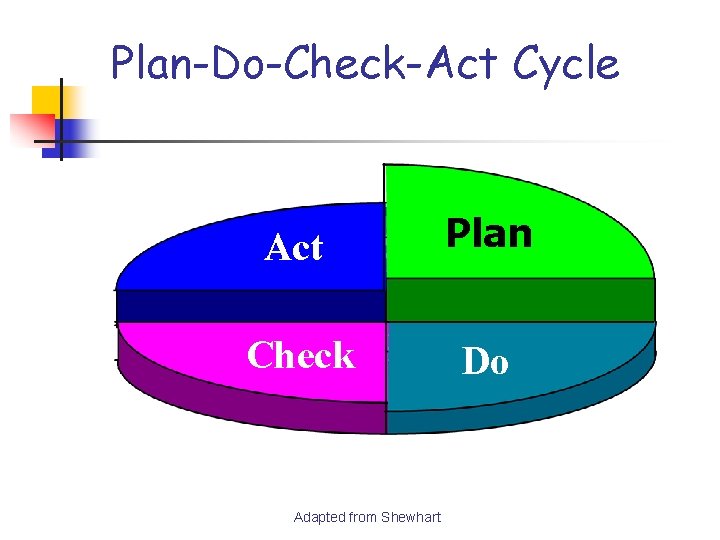
T. Q. M. Problem Solving Concept: The general principals of Deming, Juran, Crosby, and Ishikawa And Shewhart’s “Plan-Do-Check-Act Cycle. ”
T. Q. M. Problem Solving Concept: n n n Plan – Do – Check – Act (PDCA): Plan: Discussions with customers, data collection, available resources, coordinate work functions, etc. (as with S. A. R. A. – scanning & analysis stage, go slow in this stage) Do: Empowerment to the lowest level. Be creative, as with the response phase of SARA.
T. Q. M. Problem Solving Concept Continued: n Check: Have an open view toward customer feedback & use the feedback to improve the operation. Also, look back to the “plan” phase to see if performance targets are being met!
T. Q. M. Problem Solving Concept Continued: n n Act: Often confused with “do” phase. Lessons learned during the “check” phase are standardized and build into future plans, to ensure future actions & activities are more focused on customers & effectives in meeting their needs.
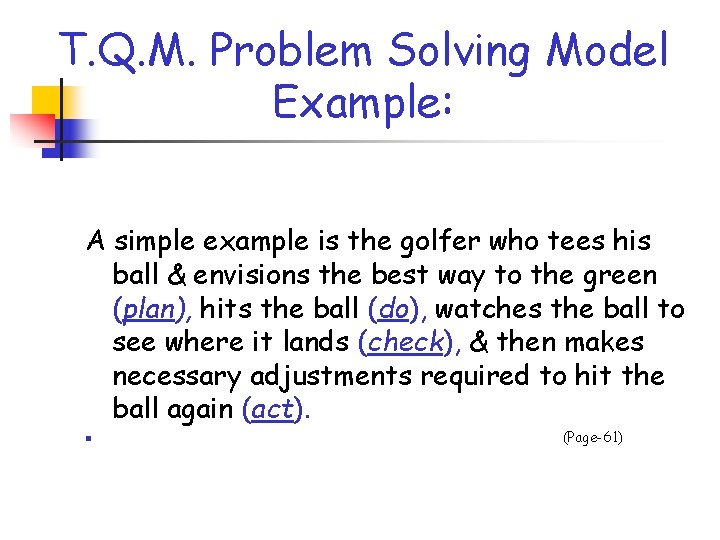
T. Q. M. Problem Solving Model Example: A simple example is the golfer who tees his ball & envisions the best way to the green (plan), hits the ball (do), watches the ball to see where it lands (check), & then makes necessary adjustments required to hit the ball again (act). n (Page-61)
Plan-Do-Check-Act Cycle Act Plan Check Do Adapted from Shewhart
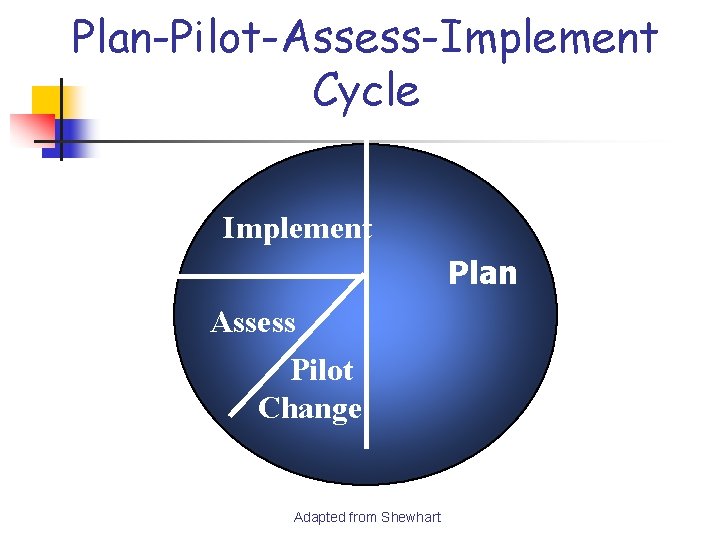
Plan-Pilot-Assess-Implement Cycle Implement Plan Assess Pilot Change Adapted from Shewhart
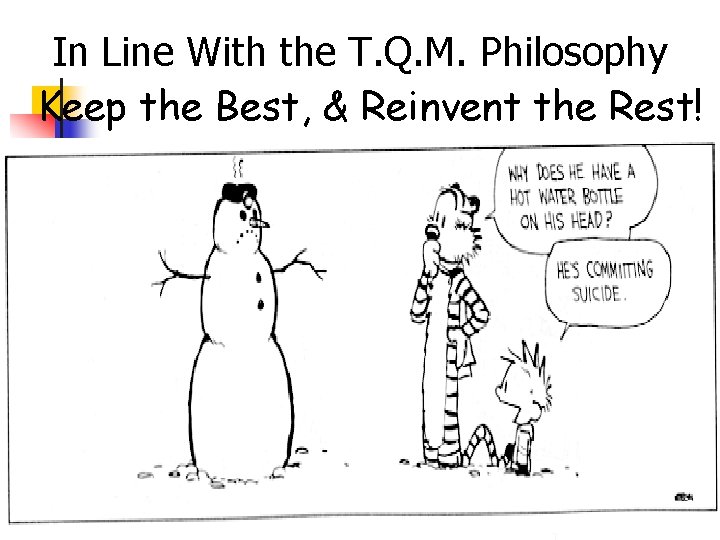
In Line With the T. Q. M. Philosophy Keep the Best, & Reinvent the Rest!
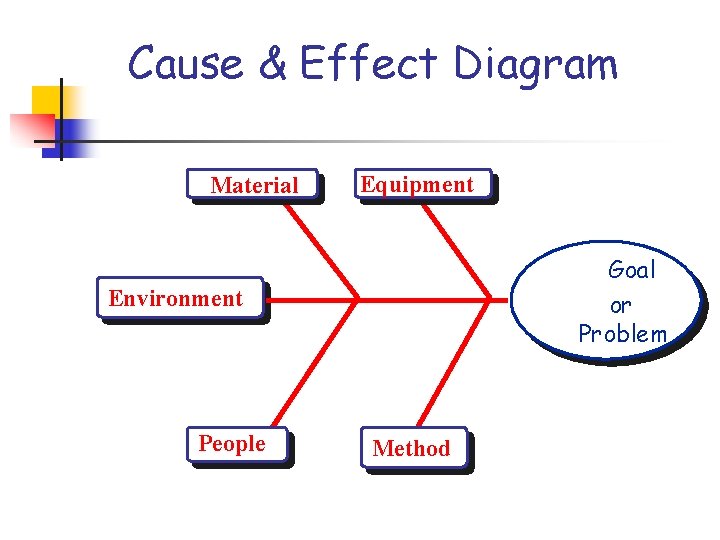
Cause-and-Effect Diagram Is Used When 1. Root cause of a defined problem or goal is sought 2. A complex problem or goal must be segregated into logical categories.
Cause & Effect Diagram Material Equipment Goal or Problem Environment People Method
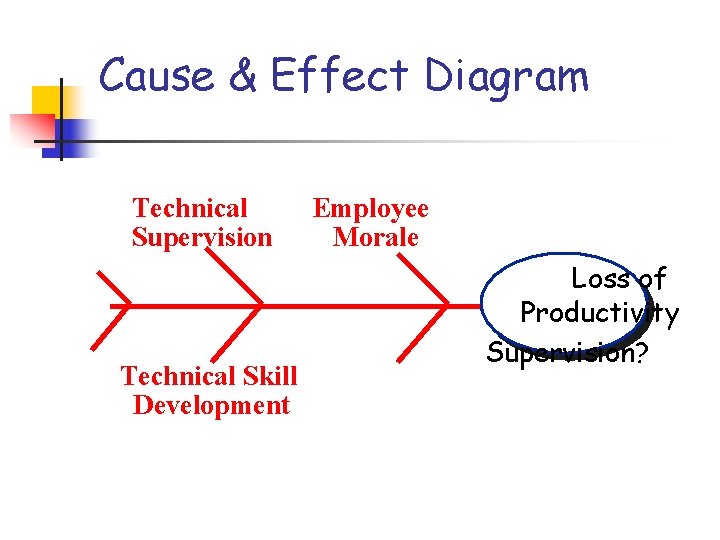
Cause & Effect Diagram Technical Supervision Technical Skill Development Employee Morale Loss of Productivity Supervision?
Cause & Effect Diagram Practical Application “What are the causes of poor quality in the workplace? ”
-1 - 5 Major Forces of Change 1. Globalization
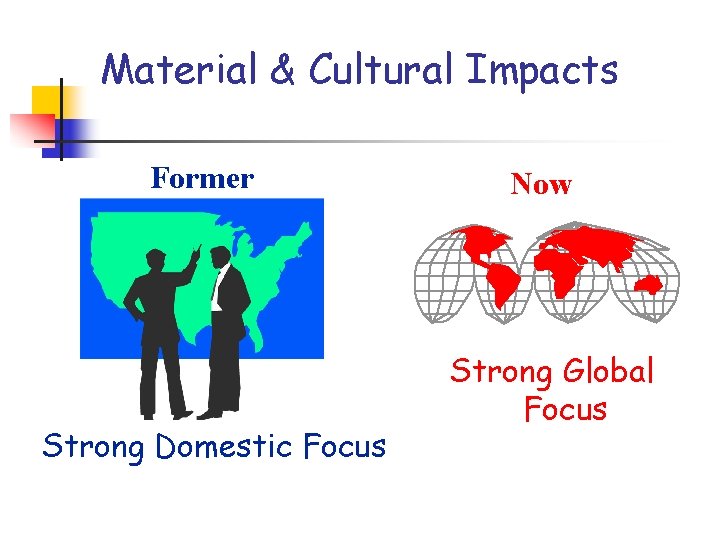
Material & Cultural Impacts Former Strong Domestic Focus Now Strong Global Focus
Global Competition Means 1. Quality 2. Competitive Price 3. Timely Delivery 4. Strong Vendor Relationships
-1 - 5 Major Forces of Change 1. Globalization 2. Technology 3. Workforce Diversity
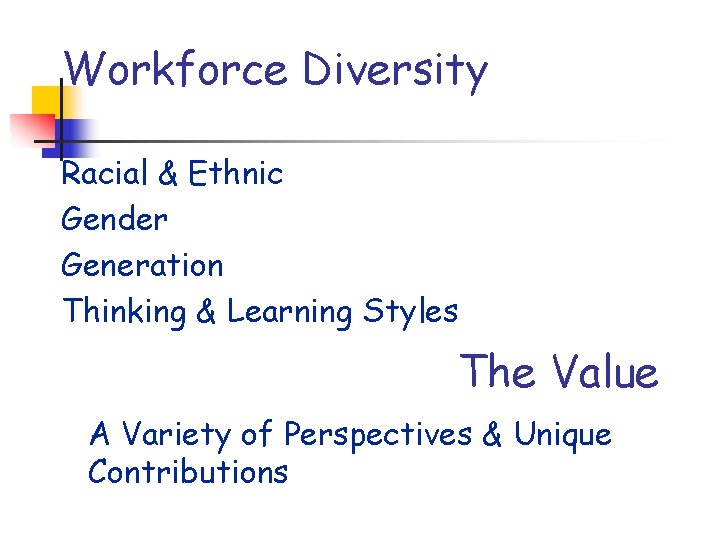
Workforce Diversity Racial & Ethnic Gender Generation Thinking & Learning Styles The Value A Variety of Perspectives & Unique Contributions
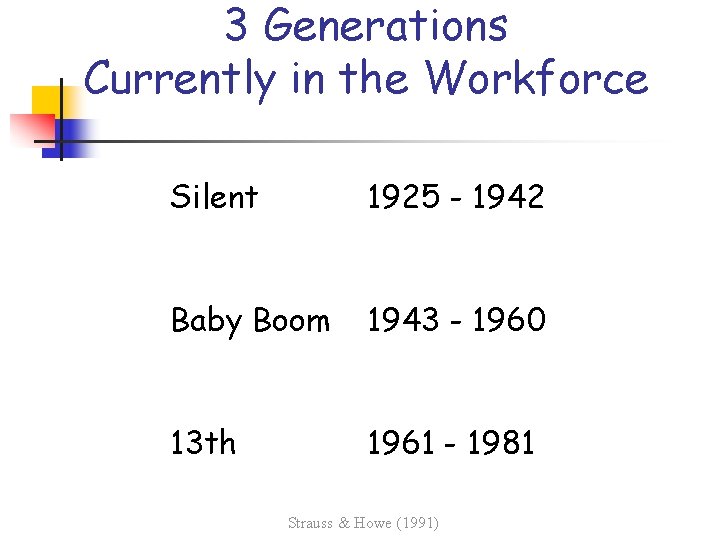
3 Generations Currently in the Workforce Silent 1925 - 1942 Baby Boom 1943 - 1960 13 th 1961 - 1981 Strauss & Howe (1991)
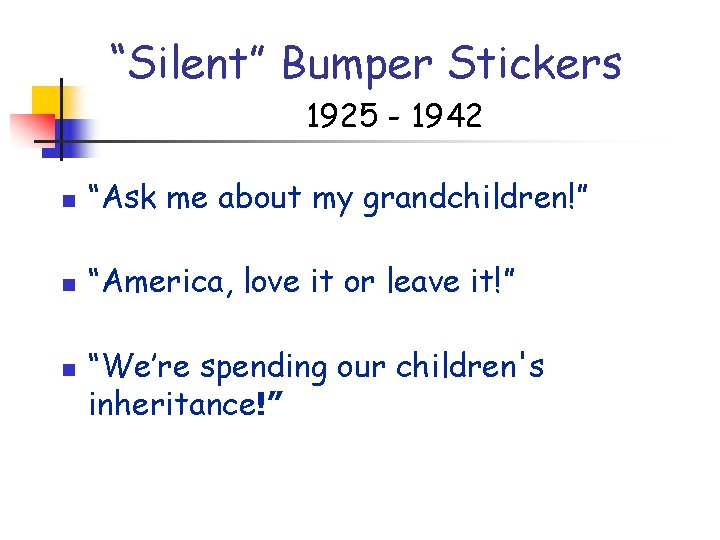
“Silent” Bumper Stickers 1925 - 1942 n “Ask me about my grandchildren!” n “America, love it or leave it!” n “We’re spending our children's inheritance!”
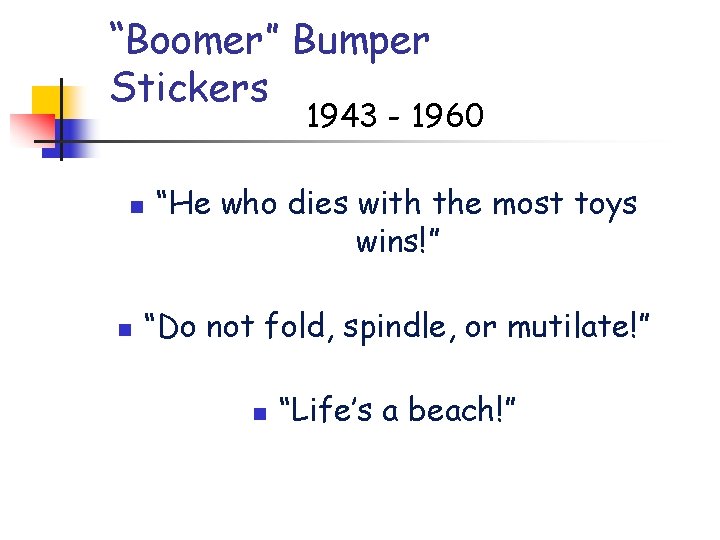
“Boomer” Bumper Stickers 1943 - 1960 n n “He who dies with the most toys wins!” “Do not fold, spindle, or mutilate!” n “Life’s a beach!”
“ 13’er” Bumper Stickers 1961 - 1981 n “Not!” n “Skateboarding is not a crime!” n “No fear!” n “Die, yuppie scum!”
Traditional Cohortia Central Roles n n Midlife Adults (44 - 65): Teaching (Parenting, teaching, directing institutions) Rising Adults (22 - 43): Activity (working, starting families, starting careers, serving institutions, testing values) Adapted from Strauss & Howe (1991)
-1 - 5 Major Forces of Change 1. Globalization 2. Technology 3. Workforce Diversity 4. Economy
U. S. Balance of Trade Has been at a negative balance since 1978! 1996 deficit = $114. 2 billion
-1 - 5 Major Forces of Change 1. 2. 3. 4. Globalization Technology Workforce Diversity Economy 5. Greater Life Expectancy
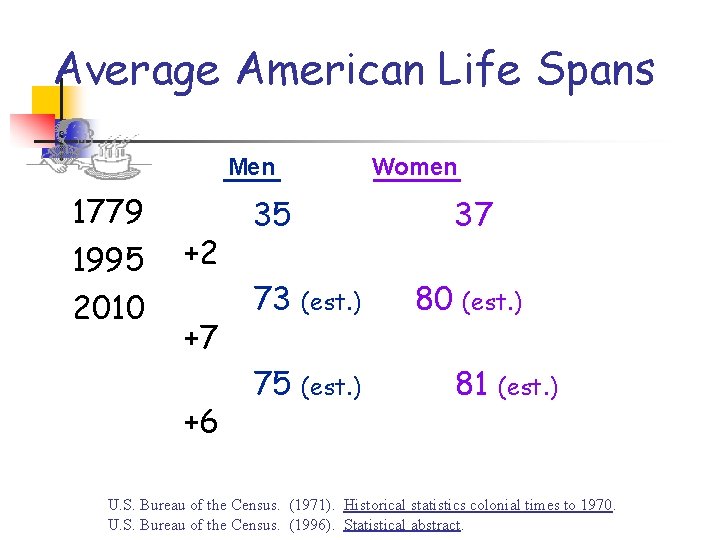
Average American Life Spans Men 1779 1995 2010 +2 +7 +6 Women 35 73 (est. ) 75 (est. ) 37 80 (est. ) 81 (est. ) U. S. Bureau of the Census. (1971). Historical statistics colonial times to 1970. U. S. Bureau of the Census. (1996). Statistical abstract.
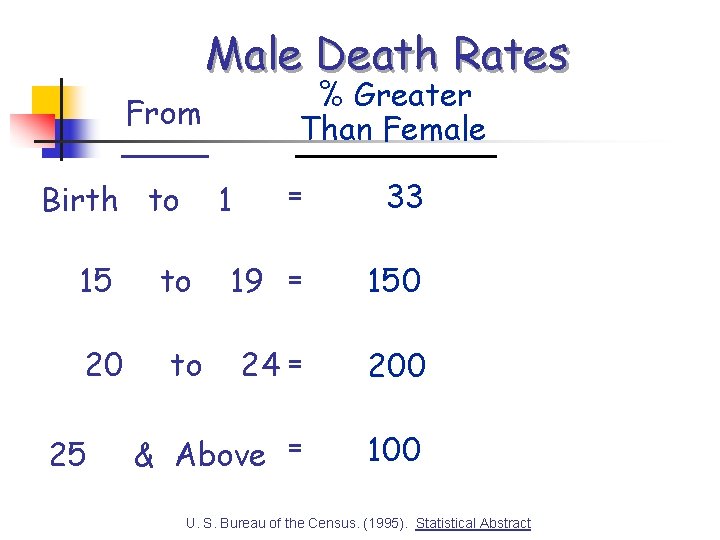
Male Death Rates % Greater Than Female From Birth to 15 20 25 = 33 = 150 24 = 200 1 to to 19 & Above = 100 U. S. Bureau of the Census. (1995). Statistical Abstract
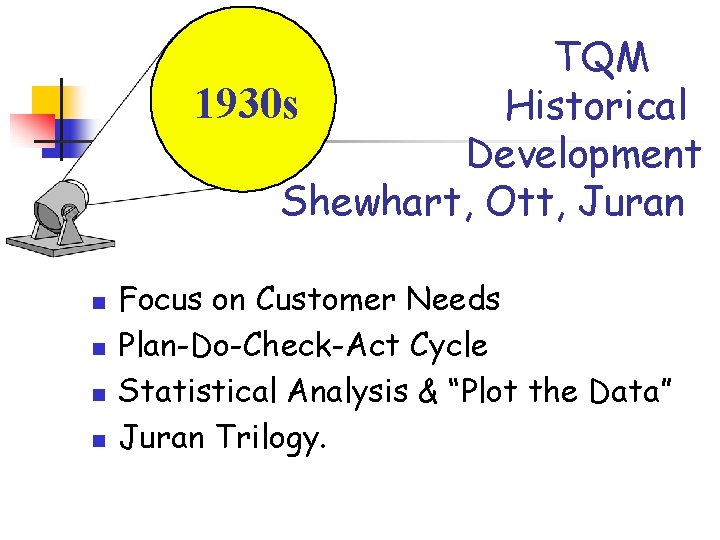
TQM 1930 s Historical Development Shewhart, Ott, Juran n n Focus on Customer Needs Plan-Do-Check-Act Cycle Statistical Analysis & “Plot the Data” Juran Trilogy.
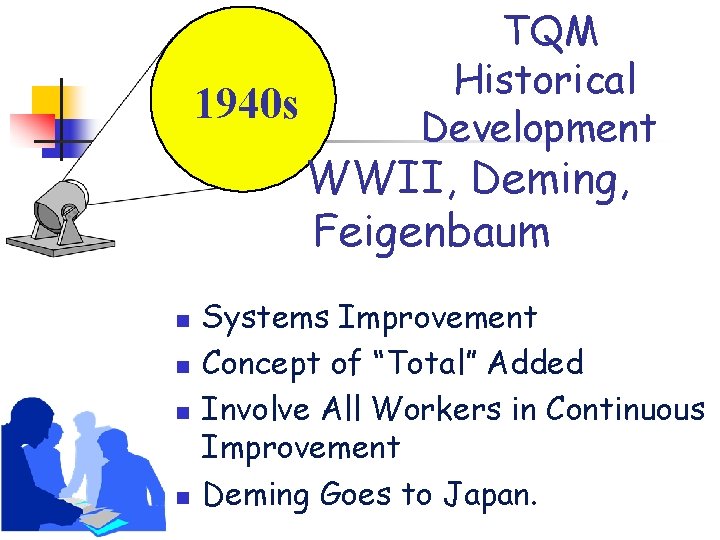
1940 s TQM Historical Development WWII, Deming, Feigenbaum n n Systems Improvement Concept of “Total” Added Involve All Workers in Continuous Improvement Deming Goes to Japan.
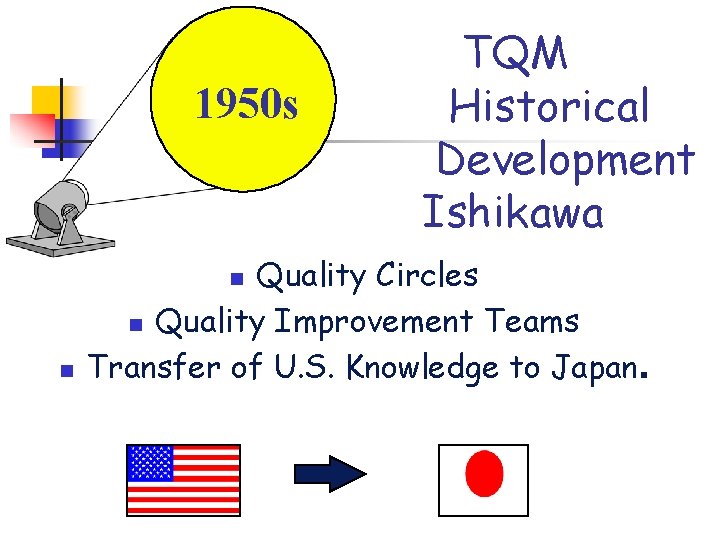
1950 s Quality Circles n Quality Improvement Teams Transfer of U. S. Knowledge to Japan. n n TQM Historical Development Ishikawa
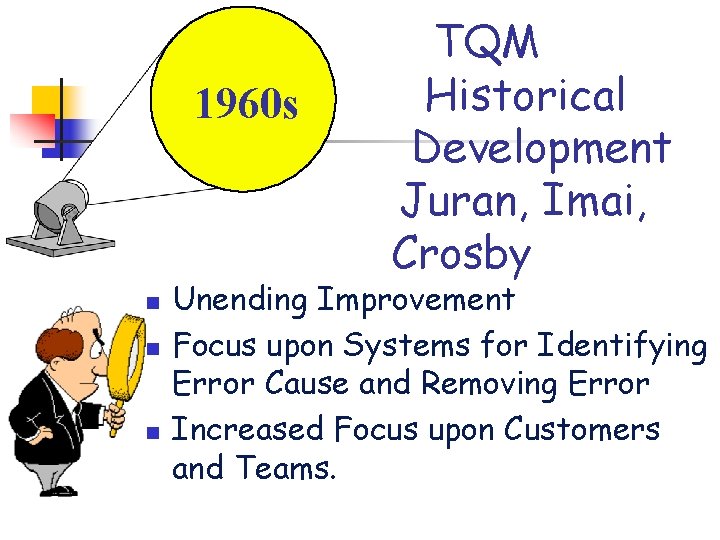
1960 s n n n TQM Historical Development Juran, Imai, Crosby Unending Improvement Focus upon Systems for Identifying Error Cause and Removing Error Increased Focus upon Customers and Teams.
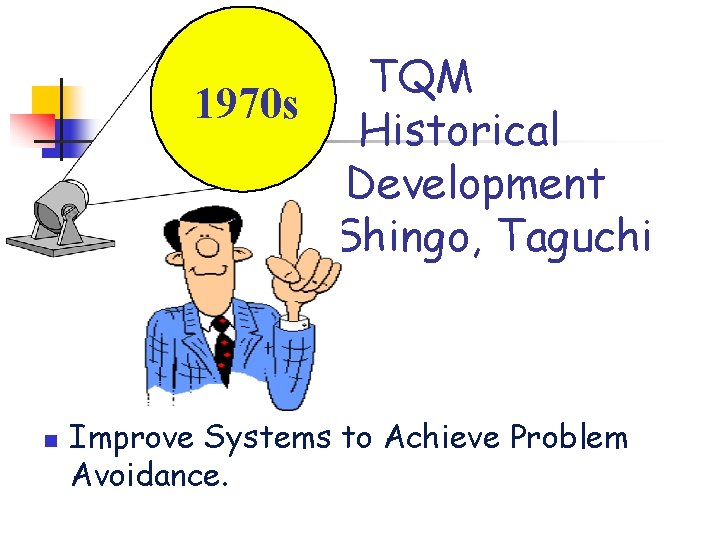
TQM 1970 s Historical Development Shingo, Taguchi n Improve Systems to Achieve Problem Avoidance.
1980 s 1990 s n n n TQM Historical Development Strong U. S. Focus If Japan Can, Why Can’t We? (1981) Malcolm Baldridge Award Established (1987) All Fortune 500 Companies Incorporate Aspects.
TQM & CQI Are Known By Many Names n n There is no “right way!” Most companies adopt TQM and CQI aspects best suited to their business and existing corporate culture. Converting to a TQM/CQI corporate culture requires strong and continuous management commitment. It takes approximately 3 to 5 years.
-2 - 7 General TQM Principles 1. Trust must be established and maintained. 2. Recognize that the person doing the job has vital input toward process improvement. 3. All workers must participate in the improvement process. 4. Recognize and respect all customers (external and internal).
-2 - 7 General TQM Principles 5. Teamwork accomplishes a higherquality product. 6. A structured process, using data, produces better solutions than an unstructured process. 7. Attack the process, not the person.
-3 - TQM Represents 1. A focus upon improving product quality by improving systems and processes 2. A focus upon the use of crossfunctional and vertically integrated teams 3. A focus upon a structured process 4. A focus upon process “tools. ”
References n http: //www. opd. ci. omaha. ne. us/ n http: //www. ci. madison. wi. us/police n n Walker, Samuel & Katz, Charles M. (2002). The Police in America, An Introduction. New York, Mc. Graw-Hill Fyfe, James J. et. al. , (5 th ed. ) (1997). Police Administration. Mc. Graw-Hill