
TOTAL PRODUCTIVE MAINTENANCE Failure prevention LEARNING OUTCOMES to

- Slides: 12
TOTAL PRODUCTIVE MAINTENANCE ‘Failure prevention’
LEARNING OUTCOMES …to understand the concept of Total Productive Maintenance (TPM) …to understand the impact of failure for a fashion operation
DEFINITION OF TPM “Total Productive Maintenance recognises the importance of reliability, maintenance and economic efficiency in plant design” “Accepting that sometimes failure will occur is not the same as ignoring it” (Slack et al, 2007)
THE FIVE GOALS OF TPM 1. 2. 3. 4. Improve equipment effectiveness Achieve autonomous maintenance Plan maintenance Train all staff in relevant maintenance skills 5. Achieve early equipment management
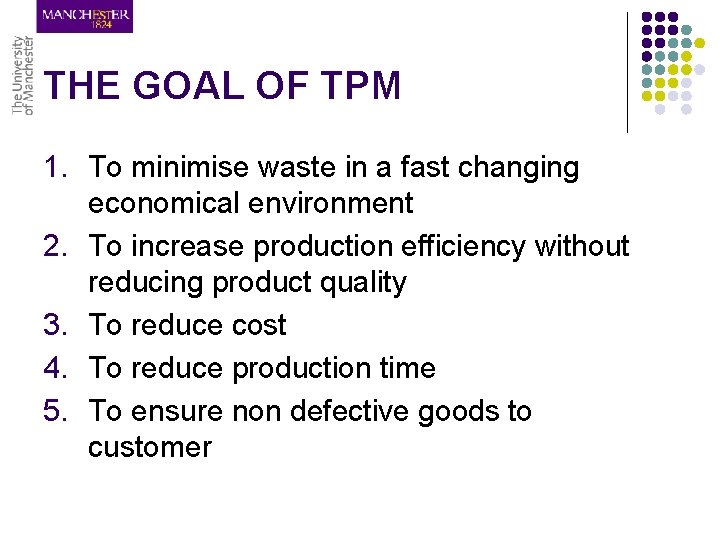
THE GOAL OF TPM 1. To minimise waste in a fast changing economical environment 2. To increase production efficiency without reducing product quality 3. To reduce cost 4. To reduce production time 5. To ensure non defective goods to customer
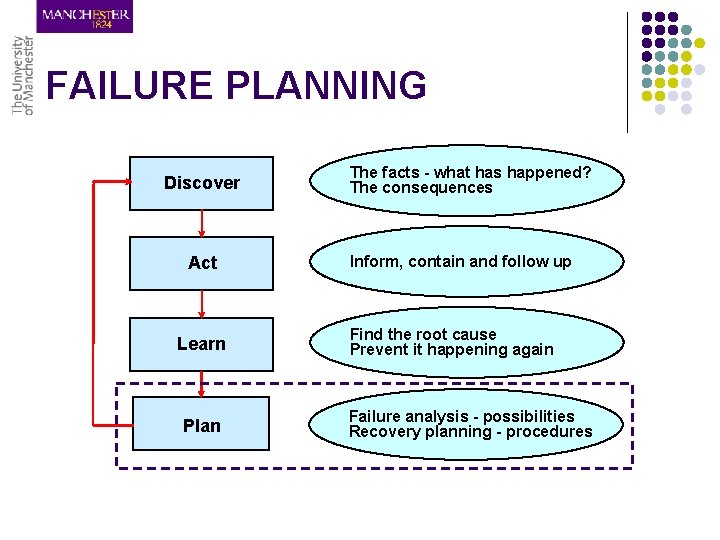
FAILURE PLANNING Discover Act Learn Plan The facts - what has happened? The consequences Inform, contain and follow up Find the root cause Prevent it happening again Failure analysis - possibilities Recovery planning - procedures
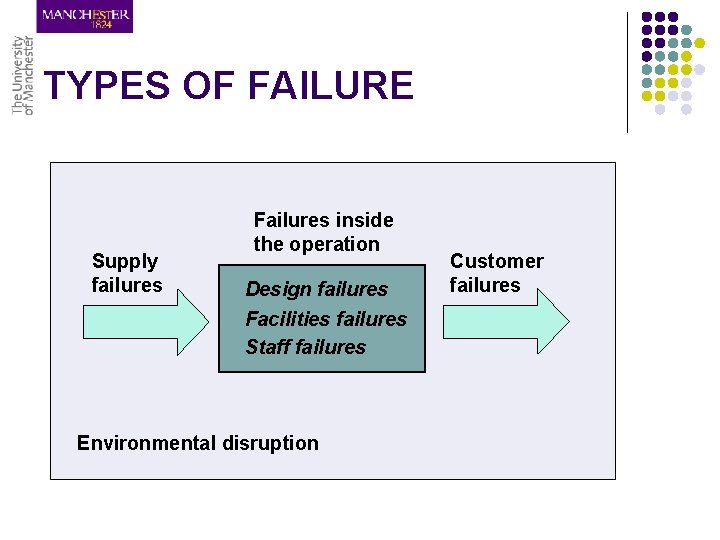
TYPES OF FAILURE Supply failures Failures inside the operation Design failures Facilities failures Staff failures Environmental disruption Customer failures
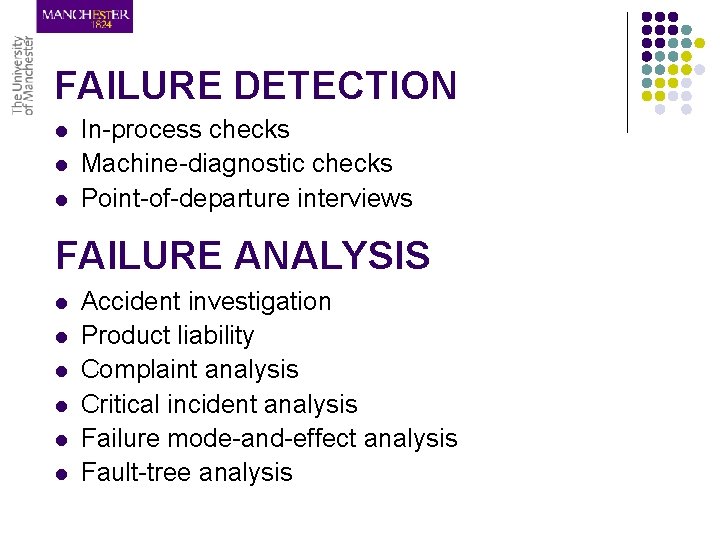
FAILURE DETECTION l l l In-process checks Machine-diagnostic checks Point-of-departure interviews FAILURE ANALYSIS l l l Accident investigation Product liability Complaint analysis Critical incident analysis Failure mode-and-effect analysis Fault-tree analysis
FAILURE MEASUREMENTS l l l Failure Rate (FR) Reliability Availability
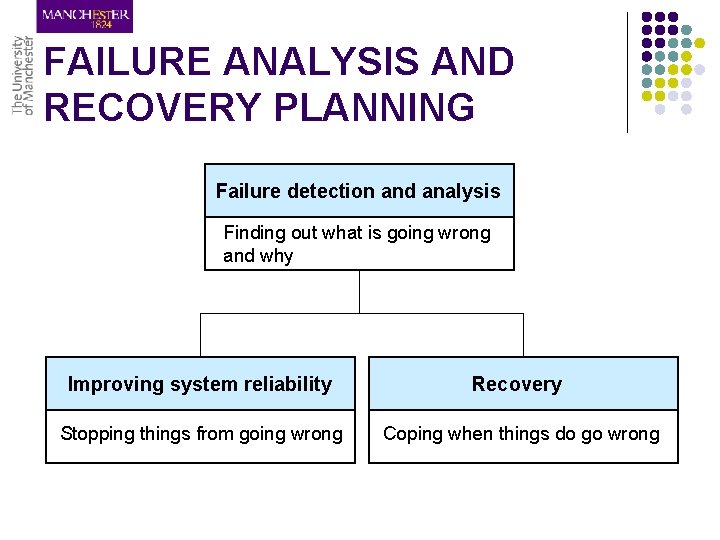
FAILURE ANALYSIS AND RECOVERY PLANNING Failure detection and analysis Finding out what is going wrong and why Improving system reliability Recovery Stopping things from going wrong Coping when things do go wrong
BENEFITS WITH TPM • • Improved system reliability Increases productivity (by 1. 5 to 2 times) Resolves customer complaints Reduces manufacturing cost (by 30%) Satisfy customer needs (by 100%) • Right quantity, time, quality Reduce accidents Follow pollution and control measures
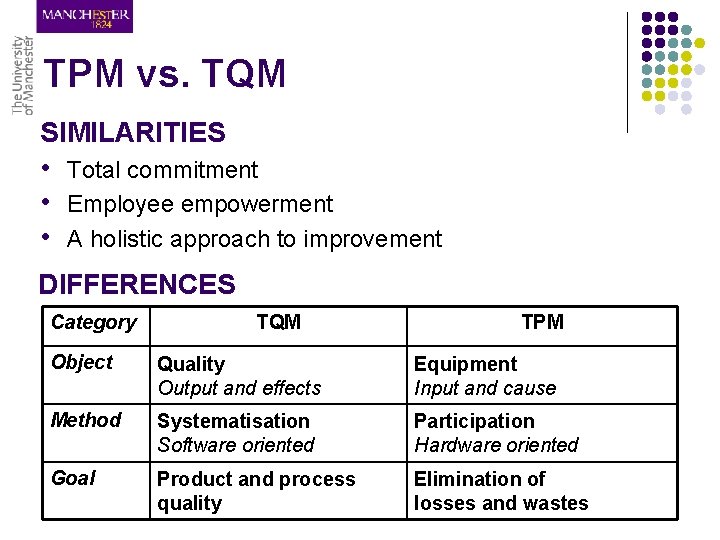
TPM vs. TQM SIMILARITIES • Total commitment • Employee empowerment • A holistic approach to improvement DIFFERENCES Category TQM TPM Object Quality Output and effects Equipment Input and cause Method Systematisation Software oriented Participation Hardware oriented Goal Product and process quality Elimination of losses and wastes