
Total Physical Response TPR Storytelling Lisa Venable TESOL
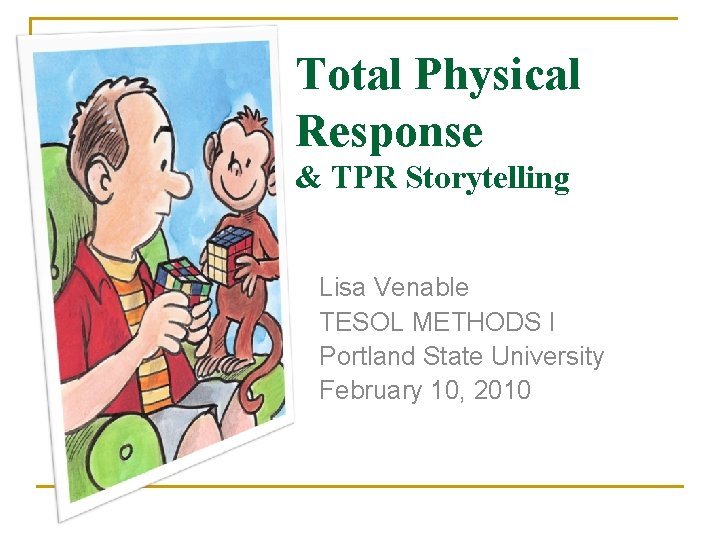
Total Physical Response & TPR Storytelling Lisa Venable TESOL METHODS I Portland State University February 10, 2010
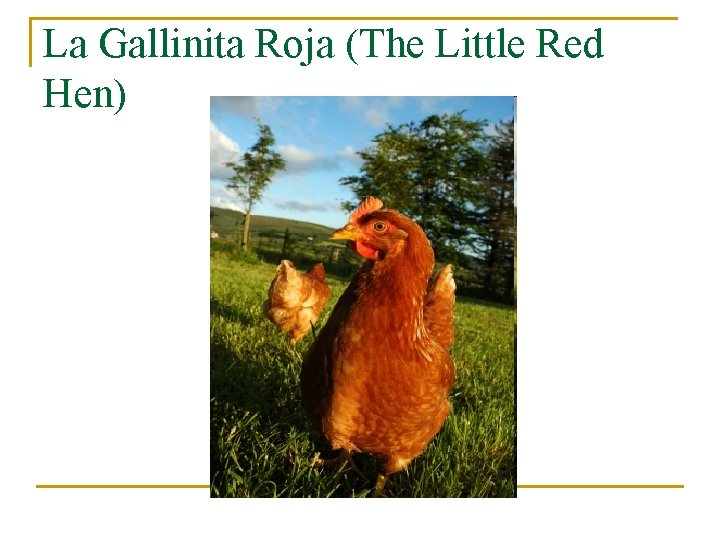
La Gallinita Roja (The Little Red Hen)
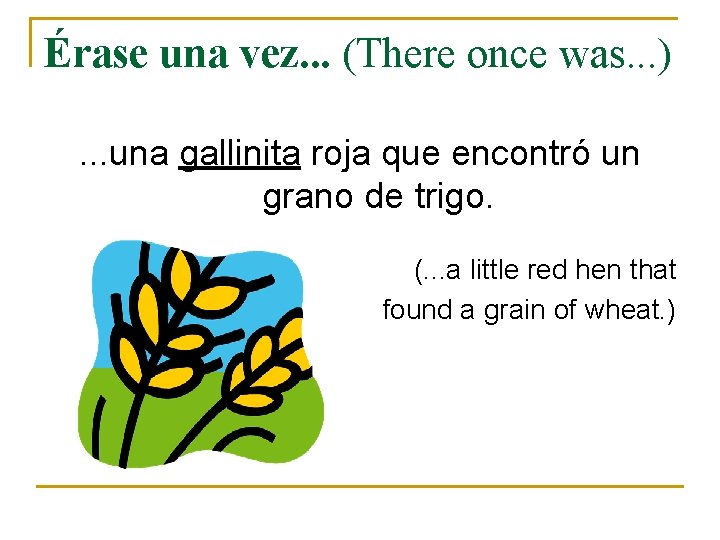
Érase una vez. . . (There once was. . . ). . . una gallinita roja que encontró un grano de trigo. (. . . a little red hen that found a grain of wheat. )
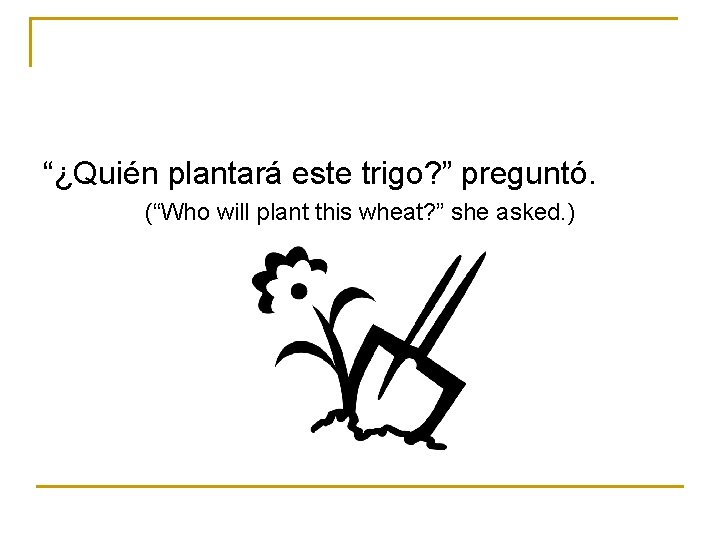
“¿Quién plantará este trigo? ” preguntó. (“Who will plant this wheat? ” she asked. )
“¡Yo No!” (“Not I!”) Dijo = said
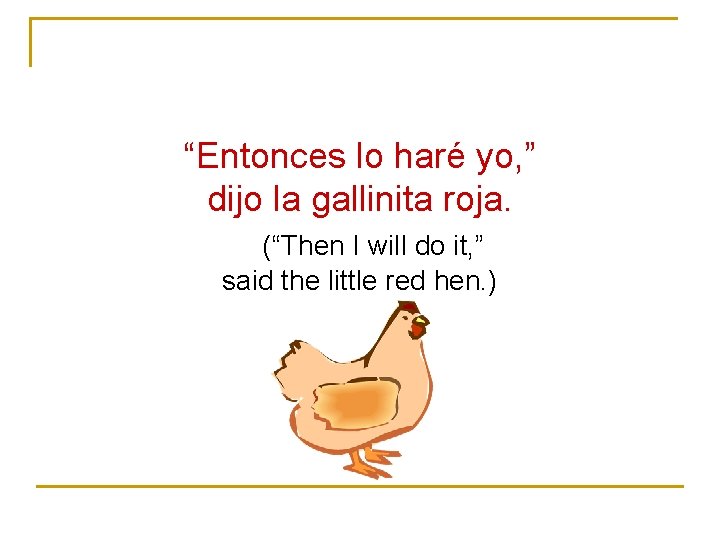
“Entonces lo haré yo, ” dijo la gallinita roja. (“Then I will do it, ” said the little red hen. )
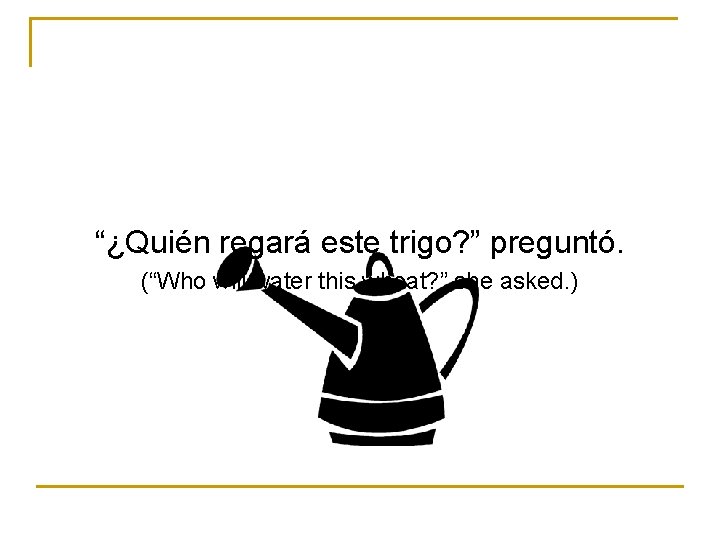
“¿Quién regará este trigo? ” preguntó. (“Who will water this wheat? ” she asked. )
“¡Yo No!” (“Not I!”) Dijo = said
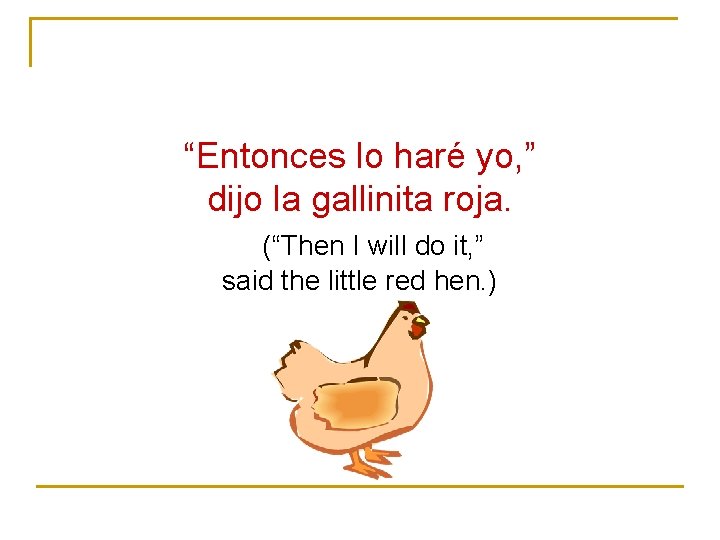
“Entonces lo haré yo, ” dijo la gallinita roja. (“Then I will do it, ” said the little red hen. )
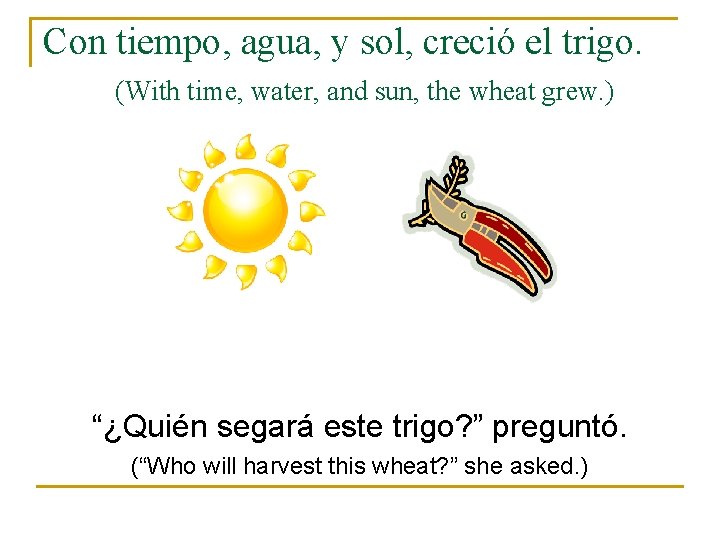
Con tiempo, agua, y sol, creció el trigo. (With time, water, and sun, the wheat grew. ) “¿Quién segará este trigo? ” preguntó. (“Who will harvest this wheat? ” she asked. )
“¡Yo No!” (“Not I!”) Dijo = said
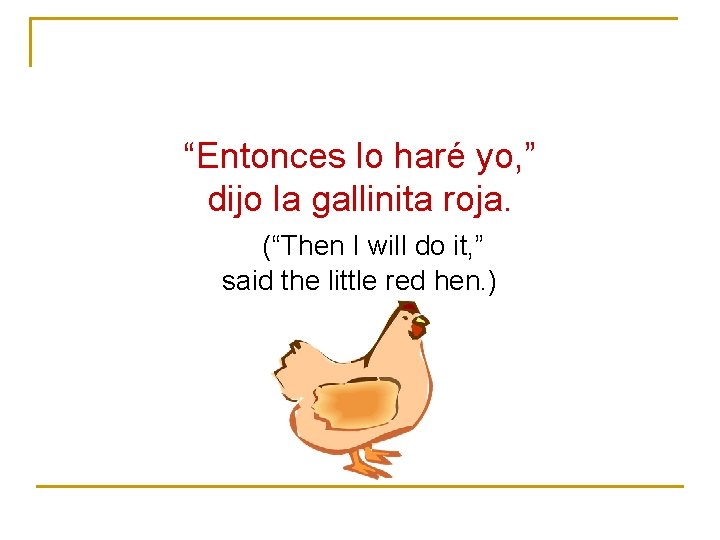
“Entonces lo haré yo, ” dijo la gallinita roja. (“Then I will do it, ” said the little red hen. )
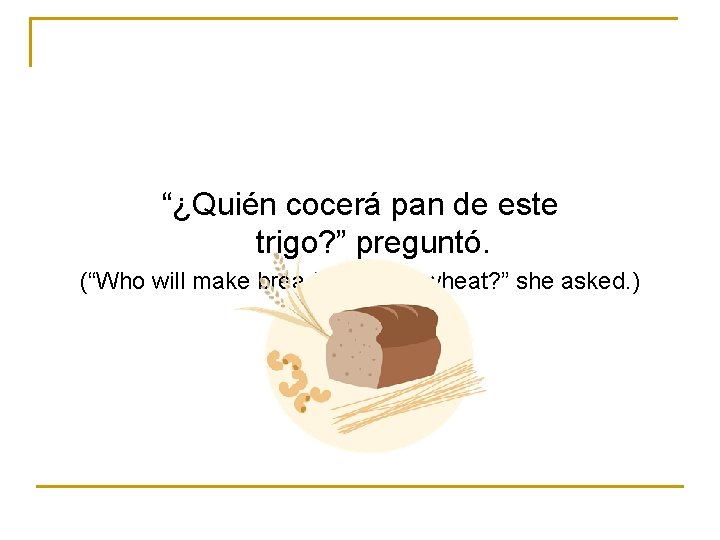
“¿Quién cocerá pan de este trigo? ” preguntó. (“Who will make bread from this wheat? ” she asked. )
“¡Yo No!” (“Not I!”) Dijo = said
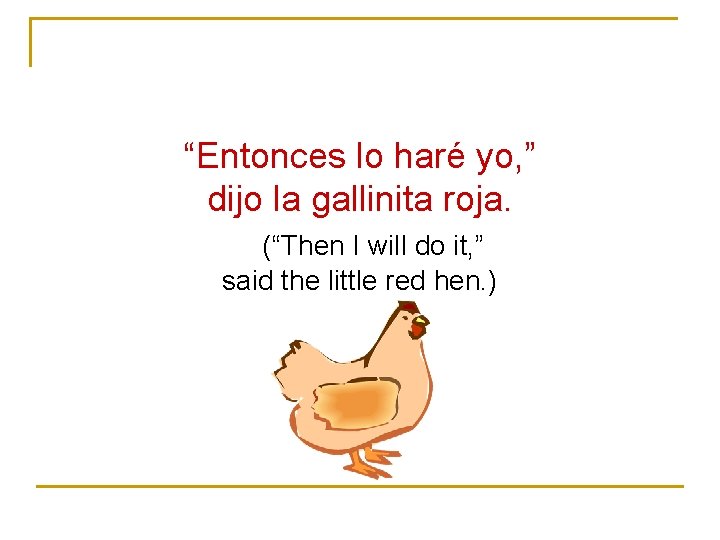
“Entonces lo haré yo, ” dijo la gallinita roja. (“Then I will do it, ” said the little red hen. )
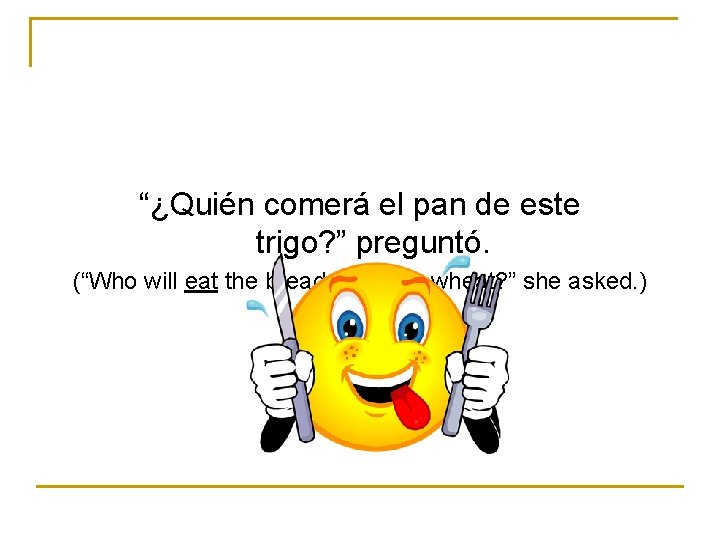
“¿Quién comerá el pan de este trigo? ” preguntó. (“Who will eat the bread from this wheat? ” she asked. )
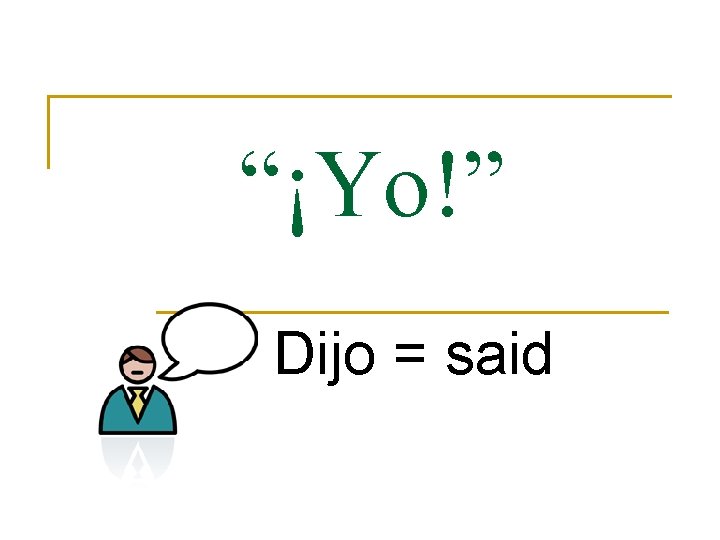
“¡Yo!” Dijo = said
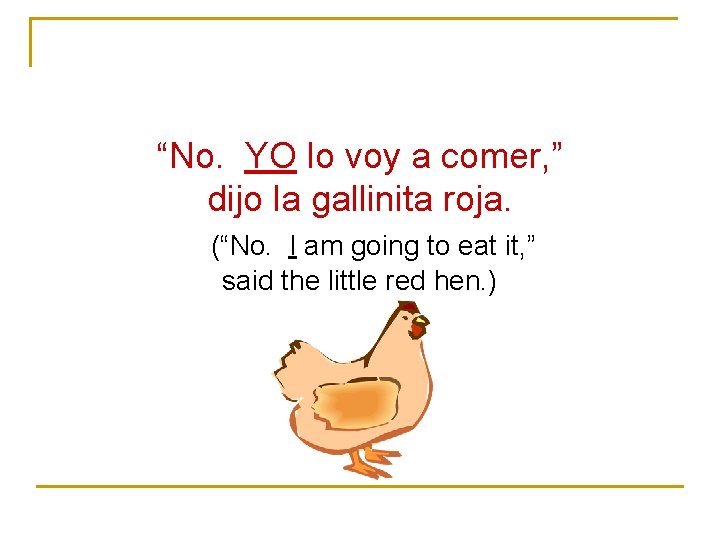
“No. YO lo voy a comer, ” dijo la gallinita roja. (“No. I am going to eat it, ” said the little red hen. )
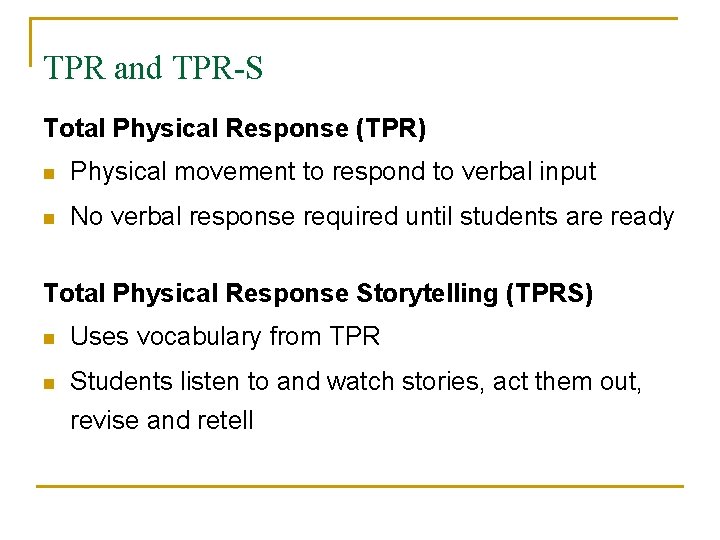
TPR and TPR-S Total Physical Response (TPR) n Physical movement to respond to verbal input n No verbal response required until students are ready Total Physical Response Storytelling (TPRS) n Uses vocabulary from TPR n Students listen to and watch stories, act them out, revise and retell
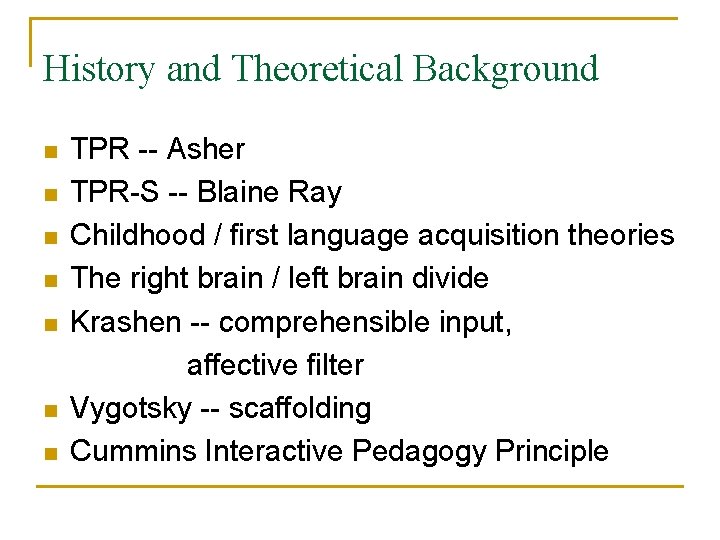
History and Theoretical Background n n n n TPR -- Asher TPR-S -- Blaine Ray Childhood / first language acquisition theories The right brain / left brain divide Krashen -- comprehensible input, affective filter Vygotsky -- scaffolding Cummins Interactive Pedagogy Principle
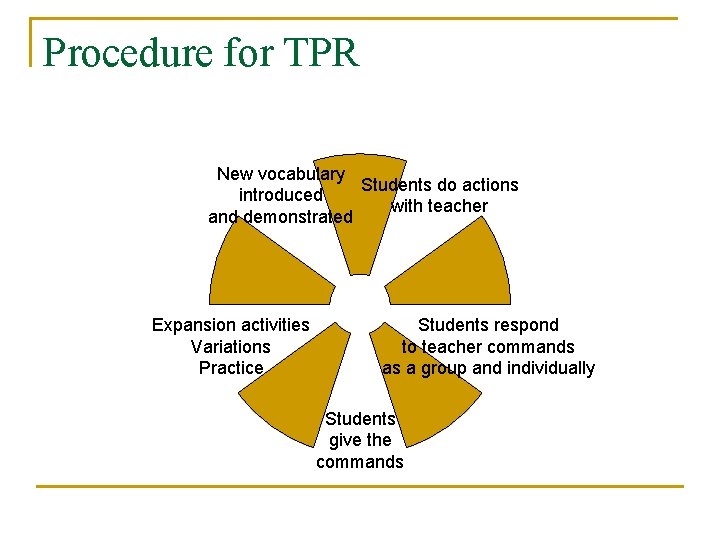
Procedure for TPR New vocabulary Students do actions introduced with teacher and demonstrated Expansion activities Variations Practice Students respond to teacher commands as a group and individually Students give the commands
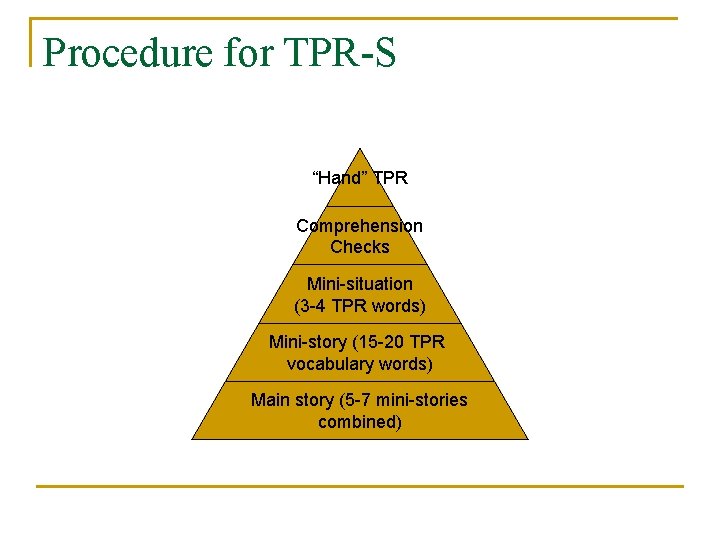
Procedure for TPR-S “Hand” TPR Comprehension Checks Mini-situation (3 -4 TPR words) Mini-story (15 -20 TPR vocabulary words) Main story (5 -7 mini-stories combined)
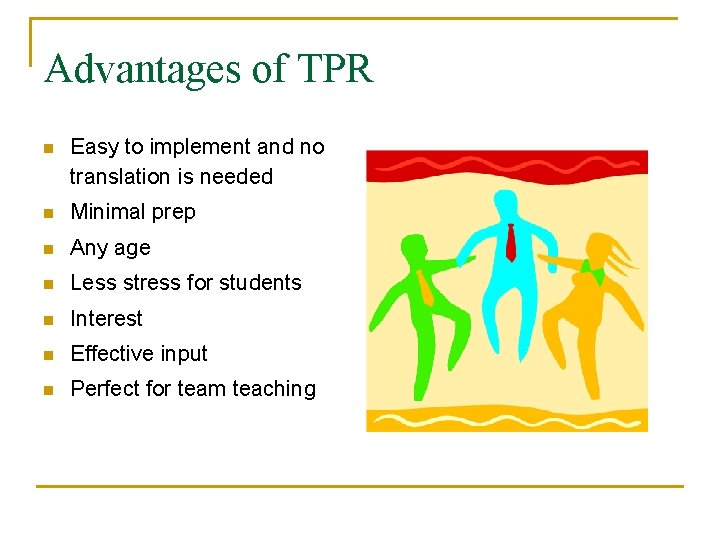
Advantages of TPR n Easy to implement and no translation is needed n Minimal prep n Any age n Less stress for students n Interest n Effective input n Perfect for team teaching
Disadvantages n Not ideal for more advanced learners or shy students n Use of the imperative may lead learners to use inappropriate or rude language in the future n Largely teacher-directed without attention to individual interests
Questions or Comments?
- Slides: 25