
Total Internal Reflection Acrylic to Air When light

- Slides: 20
Total Internal Reflection
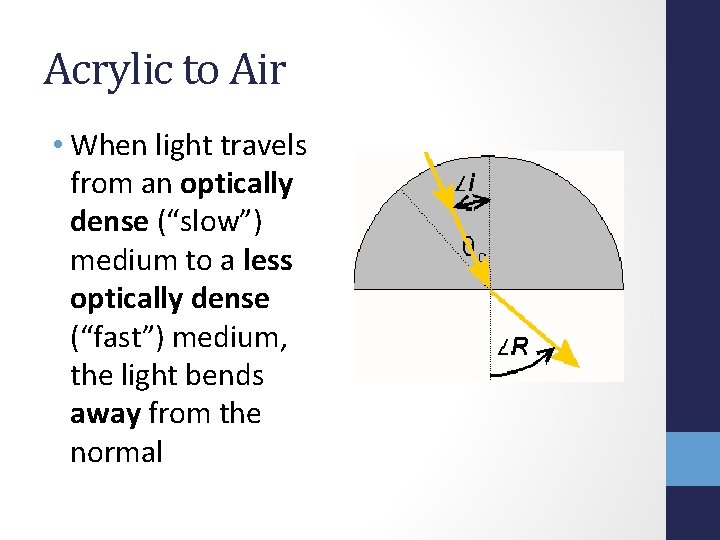
Acrylic to Air • When light travels from an optically dense (“slow”) medium to a less optically dense (“fast”) medium, the light bends away from the normal
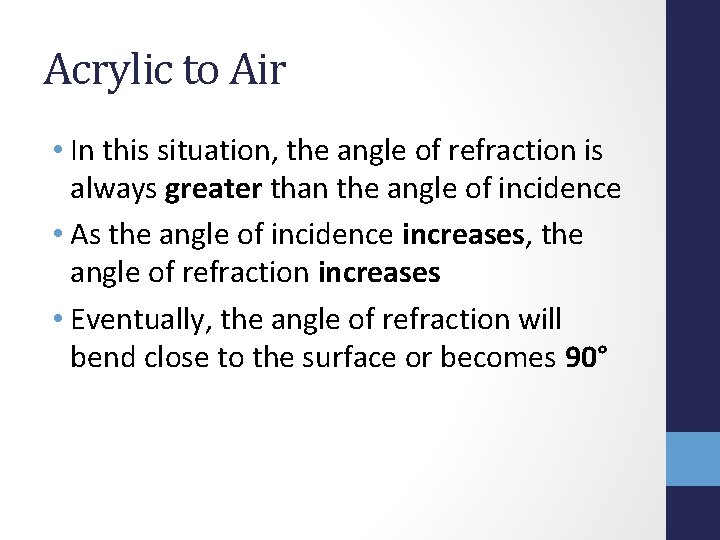
Acrylic to Air • In this situation, the angle of refraction is always greater than the angle of incidence • As the angle of incidence increases, the angle of refraction increases • Eventually, the angle of refraction will bend close to the surface or becomes 90°
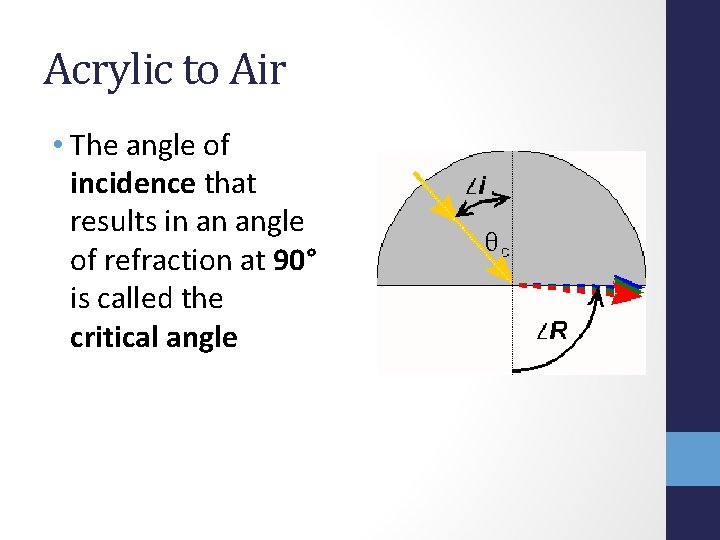
Acrylic to Air • The angle of incidence that results in an angle of refraction at 90° is called the critical angle
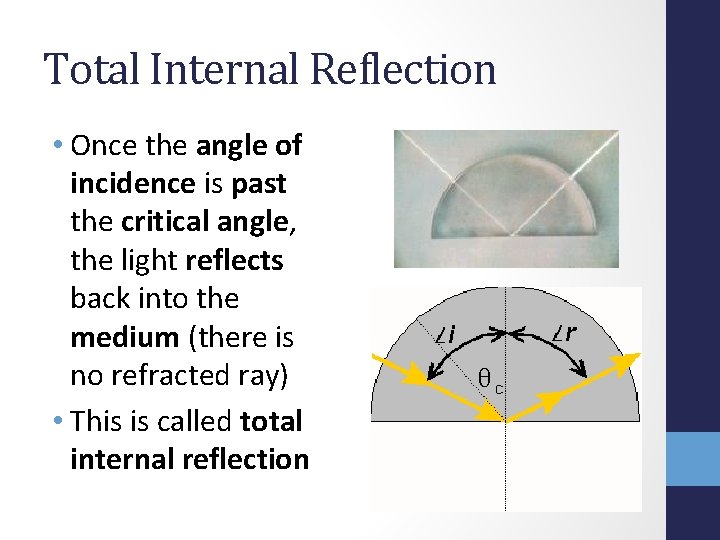
Total Internal Reflection • Once the angle of incidence is past the critical angle, the light reflects back into the medium (there is no refracted ray) • This is called total internal reflection
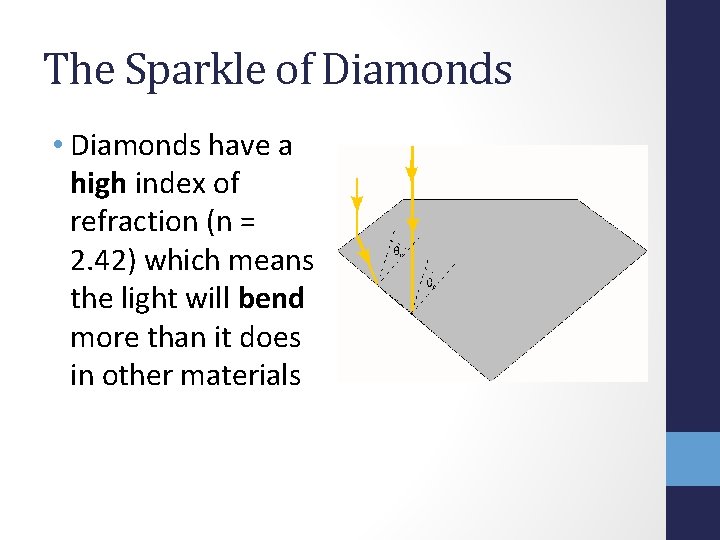
The Sparkle of Diamonds • Diamonds have a high index of refraction (n = 2. 42) which means the light will bend more than it does in other materials
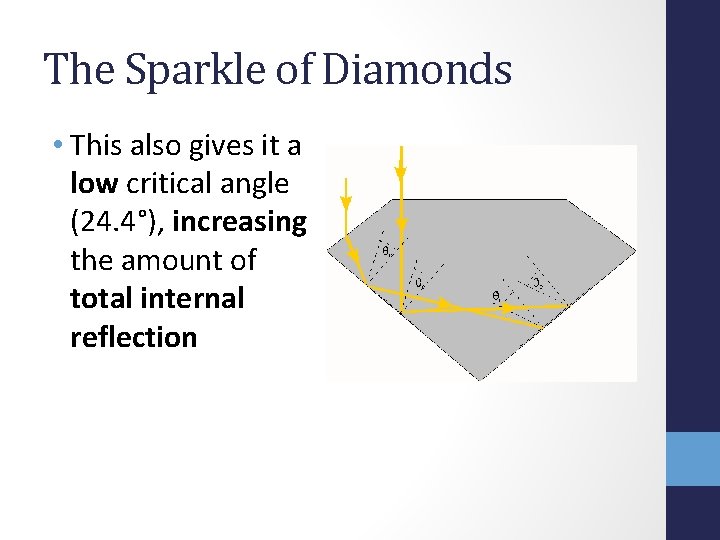
The Sparkle of Diamonds • This also gives it a low critical angle (24. 4°), increasing the amount of total internal reflection
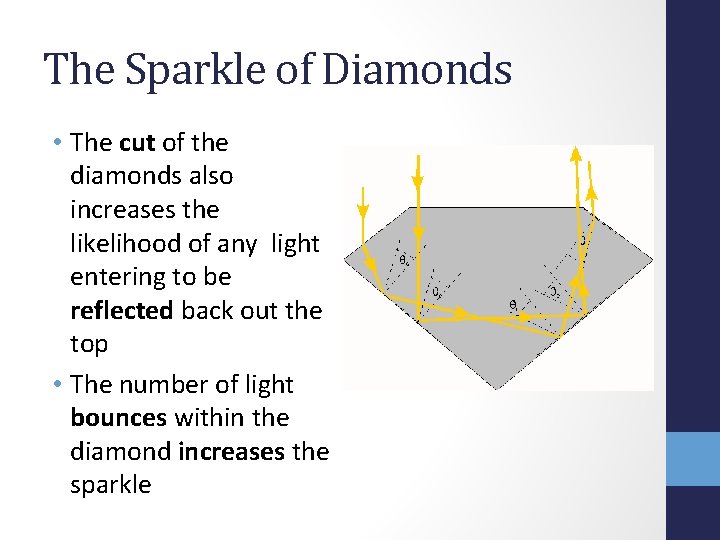
The Sparkle of Diamonds • The cut of the diamonds also increases the likelihood of any light entering to be reflected back out the top • The number of light bounces within the diamond increases the sparkle
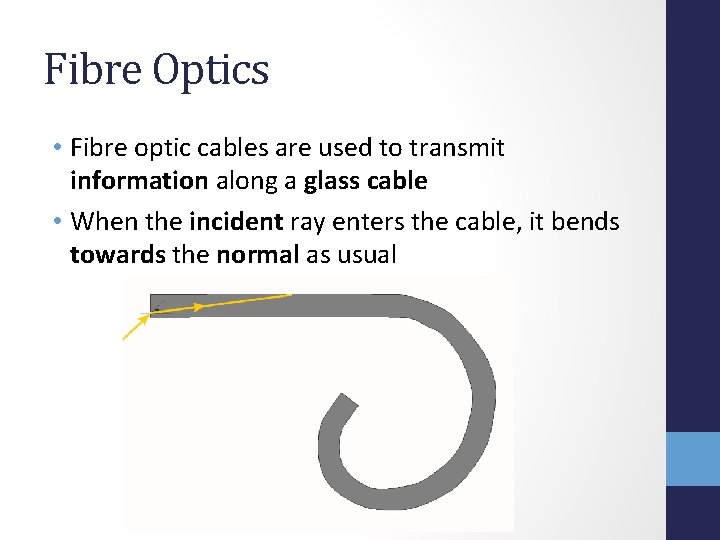
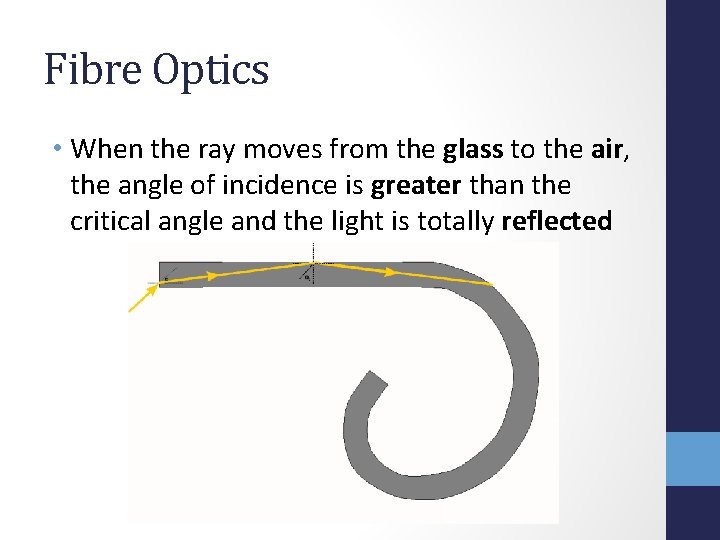
Fibre Optics • Fibre optic cables are used to transmit information along a glass cable • When the incident ray enters the cable, it bends towards the normal as usual
Fibre Optics • When the ray moves from the glass to the air, the angle of incidence is greater than the critical angle and the light is totally reflected
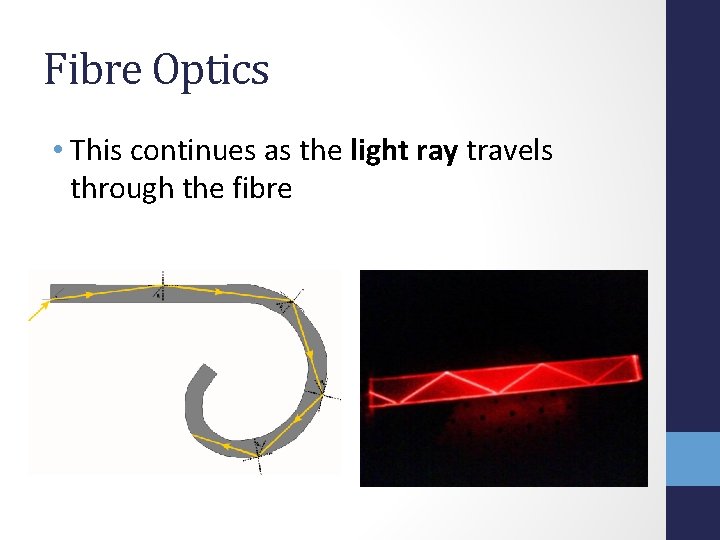
Fibre Optics • This continues as the light ray travels through the fibre
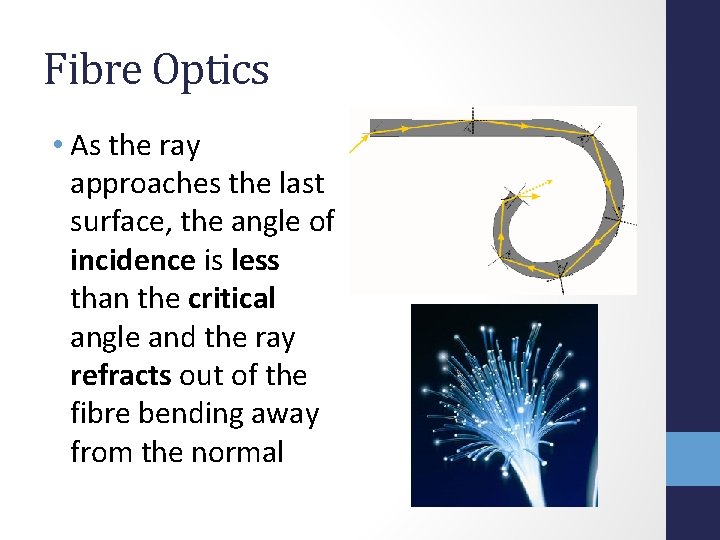
Fibre Optics • As the ray approaches the last surface, the angle of incidence is less than the critical angle and the ray refracts out of the fibre bending away from the normal
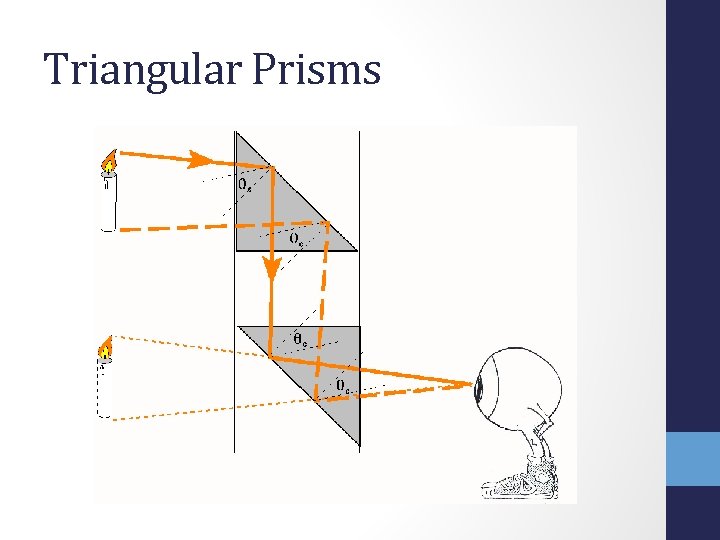
Triangular Prisms • Also exhibit total internal reflection and are used in binoculars, periscopes, and cameras • Are useful in low light conditions because no light is lost from reflection, which happens with mirrors • Also, the silvered surface of mirrors will deteriorate over time
Triangular Prisms
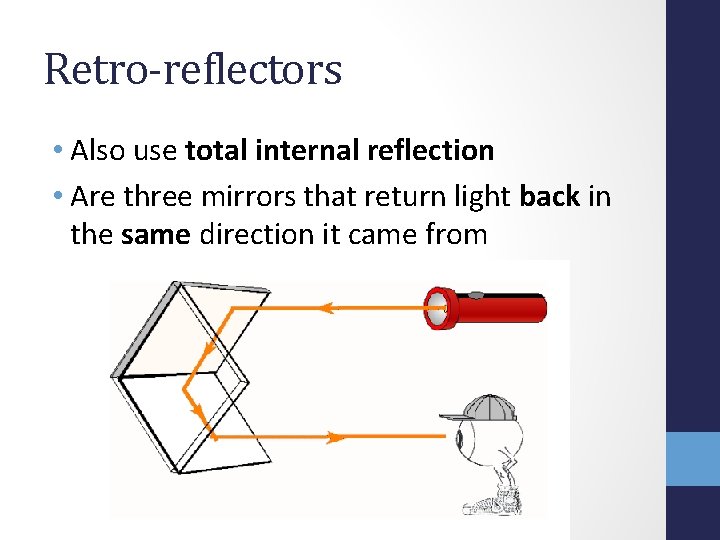
Retro-reflectors • Also use total internal reflection • Are three mirrors that return light back in the same direction it came from
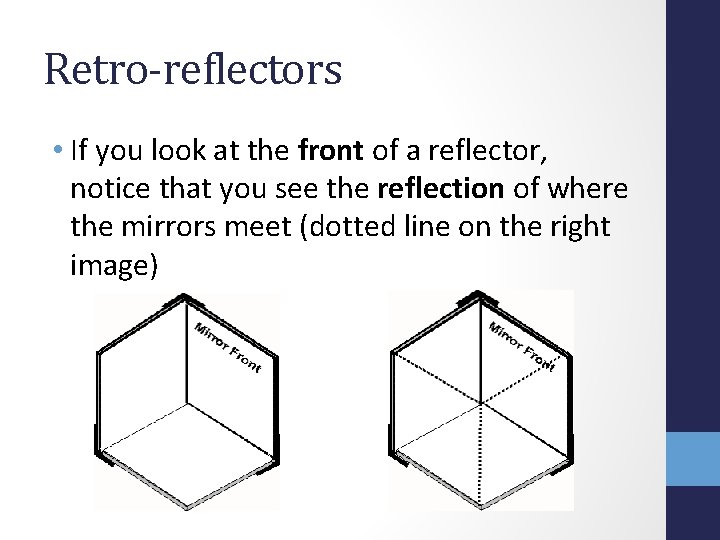
Retro-reflectors • If you look at the front of a reflector, notice that you see the reflection of where the mirrors meet (dotted line on the right image)
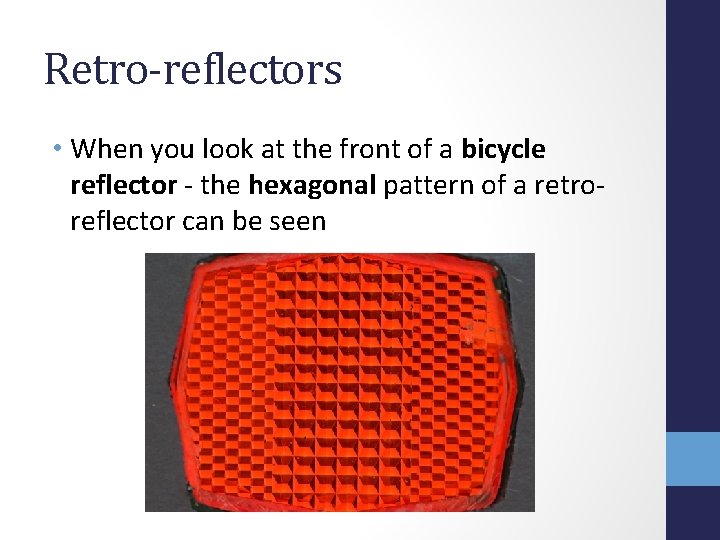
Retro-reflectors • When you look at the front of a bicycle reflector - the hexagonal pattern of a retroreflector can be seen
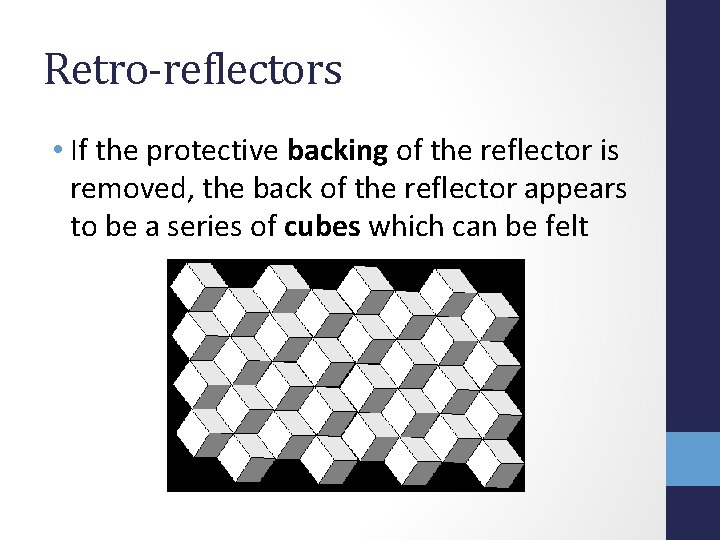
Retro-reflectors • If the protective backing of the reflector is removed, the back of the reflector appears to be a series of cubes which can be felt
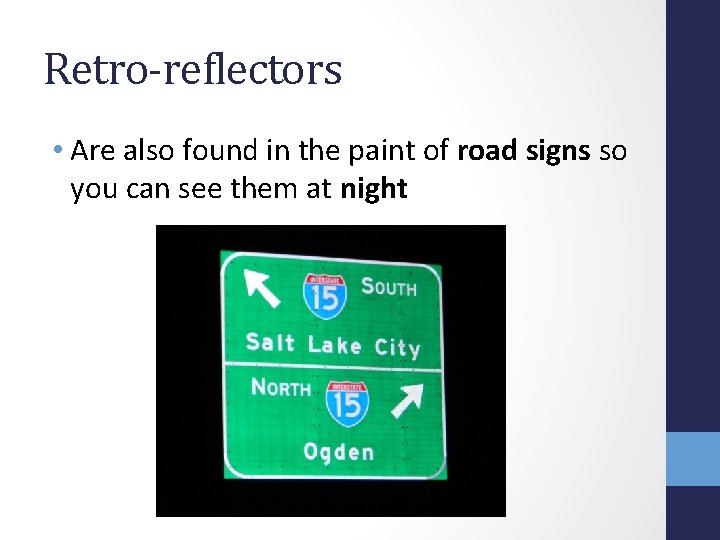
Retro-reflectors • Are also found in the paint of road signs so you can see them at night
Your turn • Read pp. 526 → 531 • Answer Q# 1 → 5, 8, 9 on pg. 531 • Read pp. 535 → 539 • Answer Q# 1 → 7 on pg. 539