
Torsional fibrosis in the anterior capsule following lens
Torsional fibrosis in the anterior capsule following lens implantation Kavita Gala David Spalton James Boyce Anish Dhital ST THOMAS’S HOSPITAL, LONDON No financial or proprietary interest
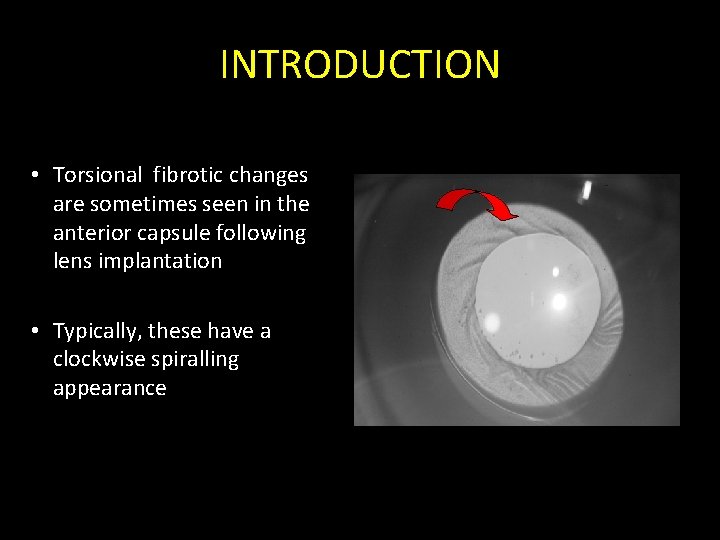
INTRODUCTION • Torsional fibrotic changes are sometimes seen in the anterior capsule following lens implantation • Typically, these have a clockwise spiralling appearance
AIM To study the evolution of spiralling changes and analyze their relation to patient factors
METHODS • Retrospective study • Screened 5000 images from our database of retroillumination images for eyes with typical spiralling • The sequences of the images for each eye obtained • For every image, the next non spiralling image from the database taken as control • Images of the other eye extracted
METHODS • Changes in spiralling over time observed • POCO software used to measure PCO • POCOman software used to measure rhexis area IOL power Capsulorrhexis size PCO percentage at 2 years Compared to control eyes
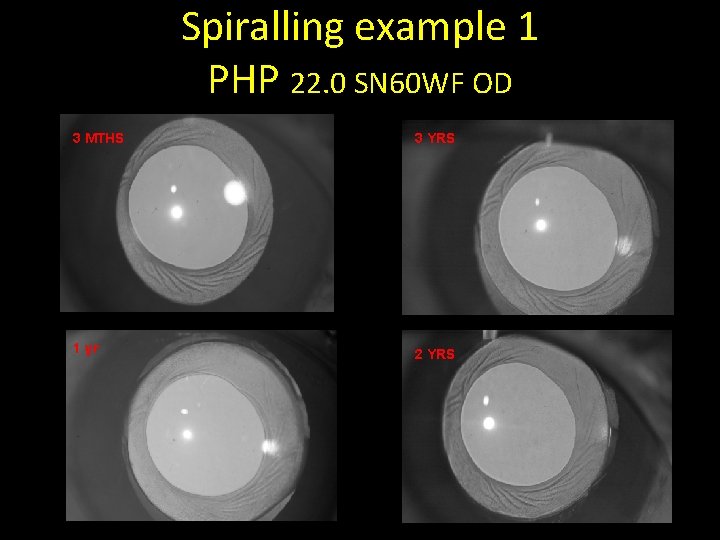
Spiralling example 1 PHP 22. 0 SN 60 WF OD 3 MTHS 3 YRS 1 yr 2 YRS
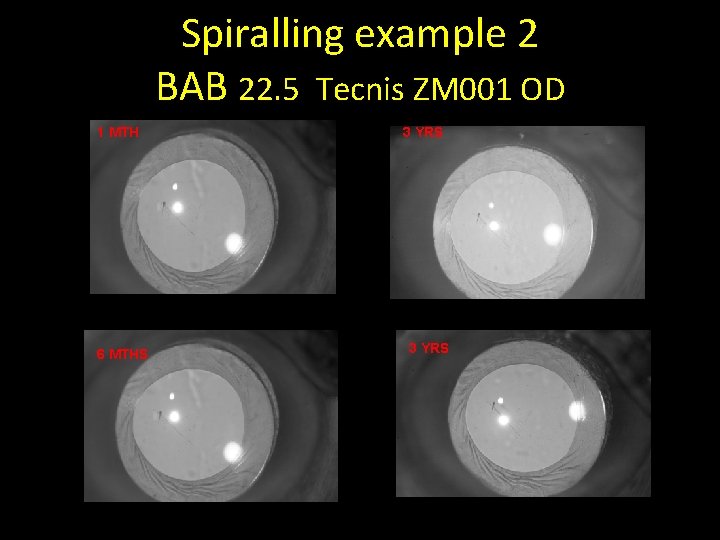
Spiralling example 2 BAB 22. 5 Tecnis ZM 001 OD 1 MTH 6 MTHS 3 YRS
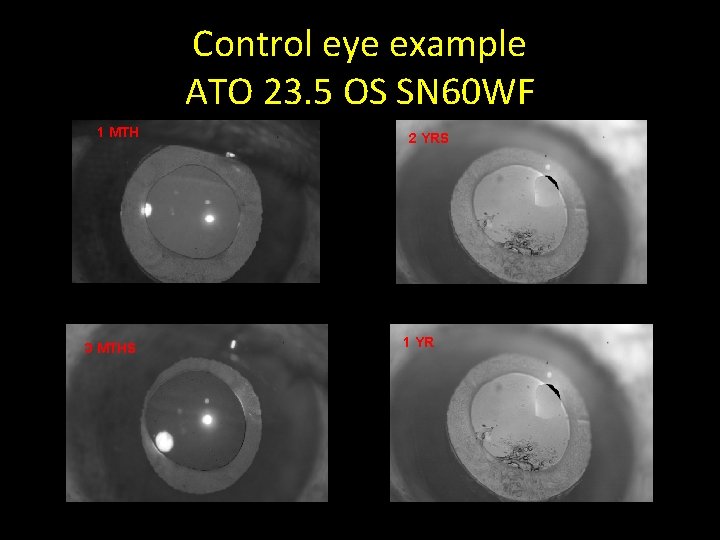
Control eye example ATO 23. 5 OS SN 60 WF 1 MTH 3 MTHS 2 YRS 1 YR
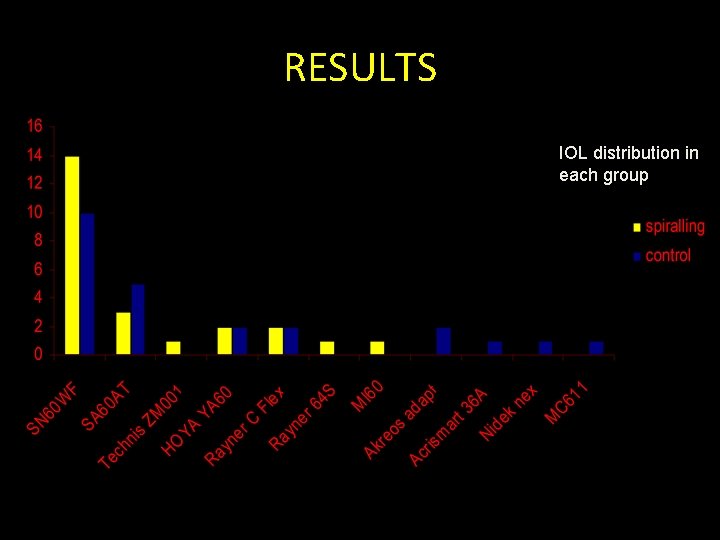
RESULTS IOL distribution in each group
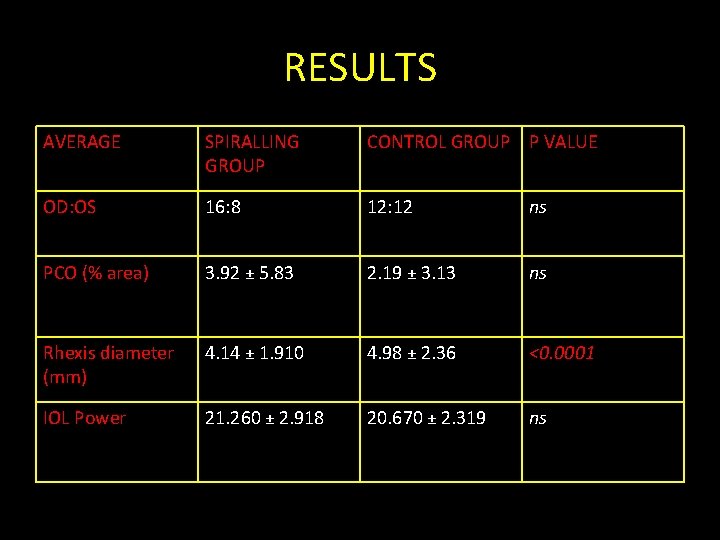
RESULTS AVERAGE SPIRALLING GROUP CONTROL GROUP P VALUE OD: OS 16: 8 12: 12 ns PCO (% area) 3. 92 ± 5. 83 2. 19 ± 3. 13 ns Rhexis diameter (mm) 4. 14 ± 1. 910 4. 98 ± 2. 36 <0. 0001 IOL Power 21. 260 ± 2. 918 20. 670 ± 2. 319 ns
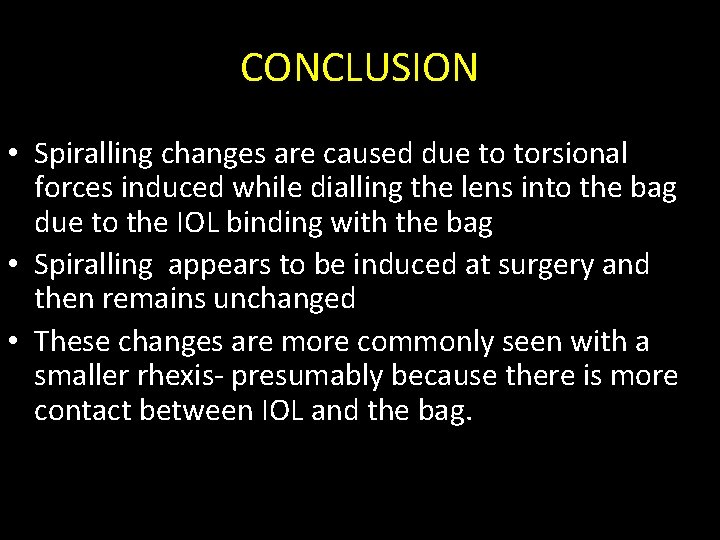
CONCLUSION • Spiralling changes are caused due to torsional forces induced while dialling the lens into the bag due to the IOL binding with the bag • Spiralling appears to be induced at surgery and then remains unchanged • These changes are more commonly seen with a smaller rhexis- presumably because there is more contact between IOL and the bag.
- Slides: 11