
Tornadoes Tornados Smallest most violent storms in the
- Slides: 21
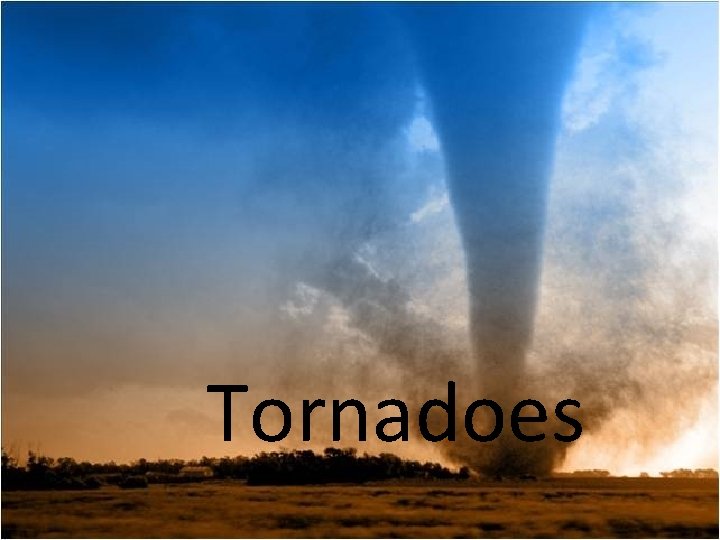
Tornadoes
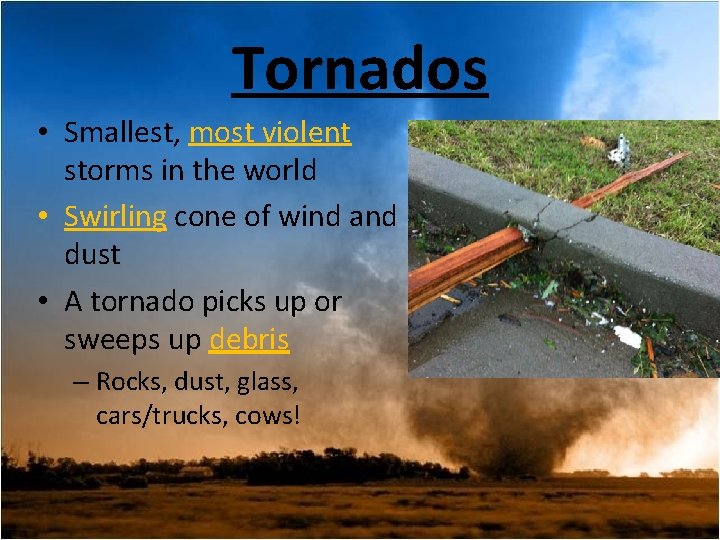
Tornados • Smallest, most violent storms in the world • Swirling cone of wind and dust • A tornado picks up or sweeps up debris – Rocks, dust, glass, cars/trucks, cows!
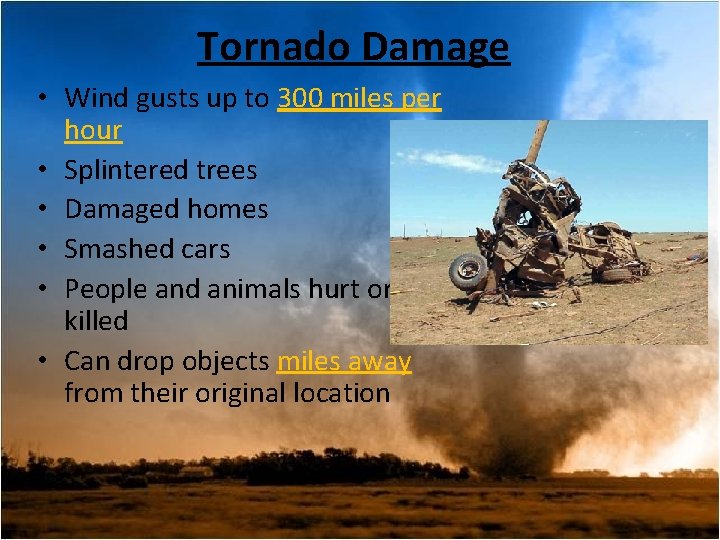
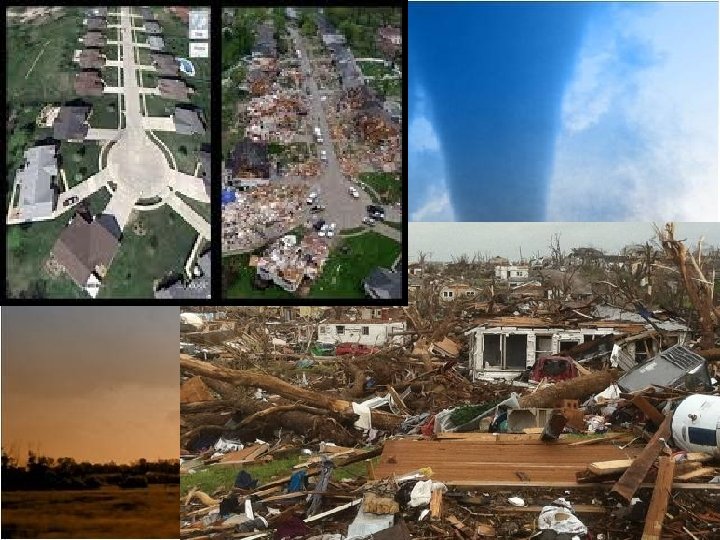
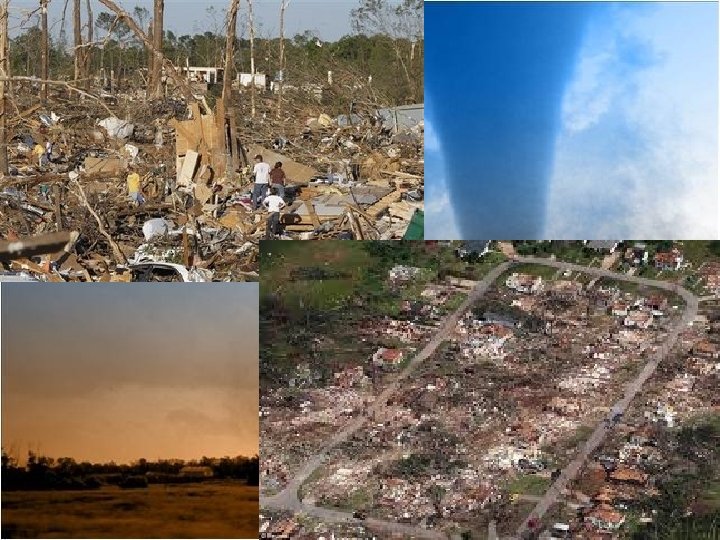
Tornado Damage • Wind gusts up to 300 miles per hour • Splintered trees • Damaged homes • Smashed cars • People and animals hurt or killed • Can drop objects miles away from their original location
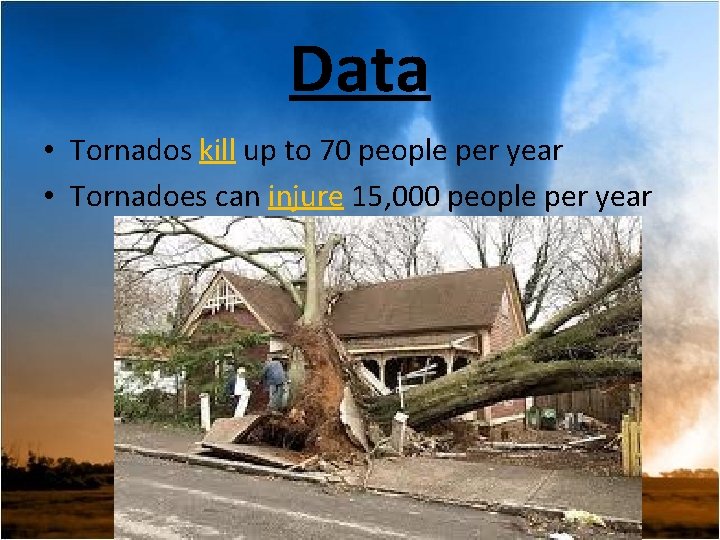
Data • Tornados kill up to 70 people per year • Tornadoes can injure 15, 000 people per year
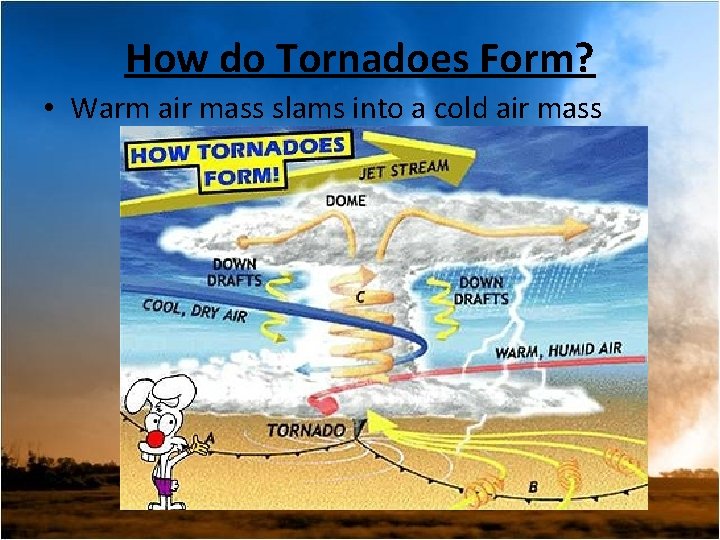
How do Tornadoes Form? • Warm air mass slams into a cold air mass
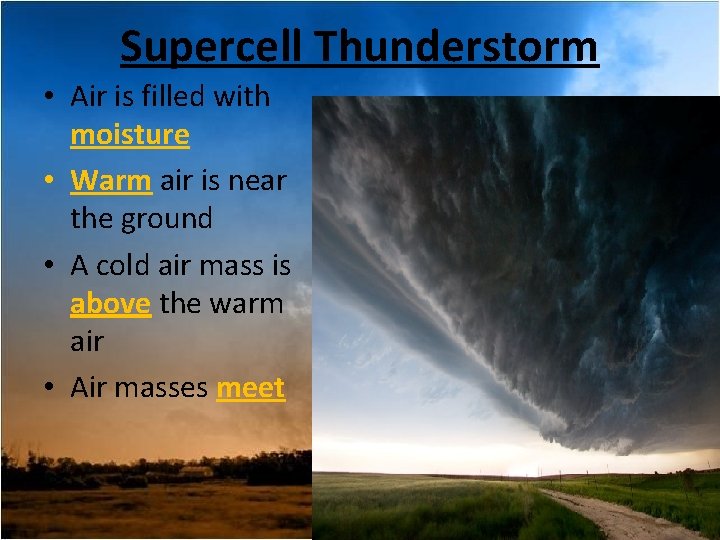
Supercell Thunderstorm • Air is filled with moisture • Warm air is near the ground • A cold air mass is above the warm air • Air masses meet
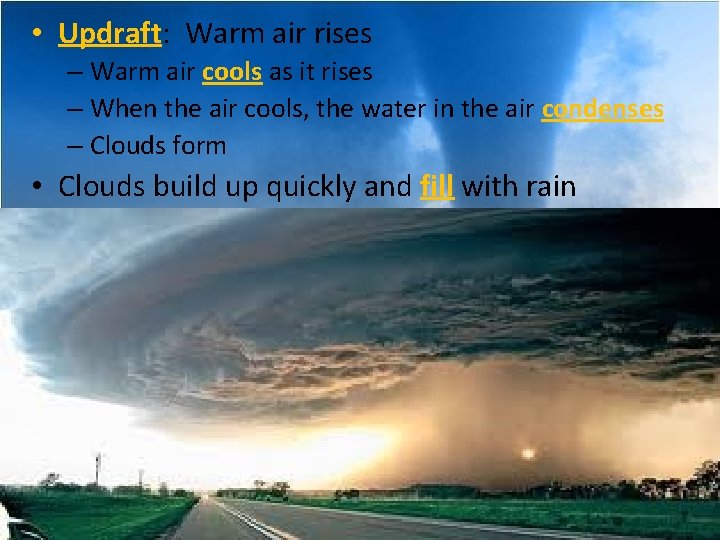
• Updraft: Warm air rises – Warm air cools as it rises – When the air cools, the water in the air condenses – Clouds form • Clouds build up quickly and fill with rain
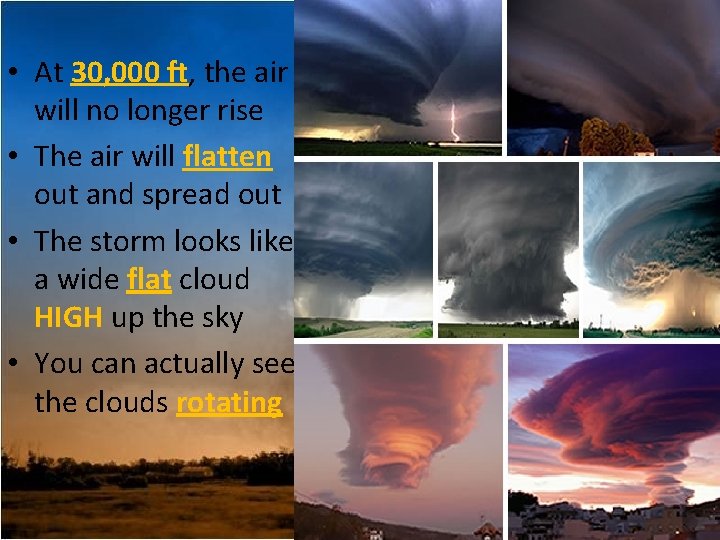
• At 30, 000 ft, the air will no longer rise • The air will flatten out and spread out • The storm looks like a wide flat cloud HIGH up the sky • You can actually see the clouds rotating
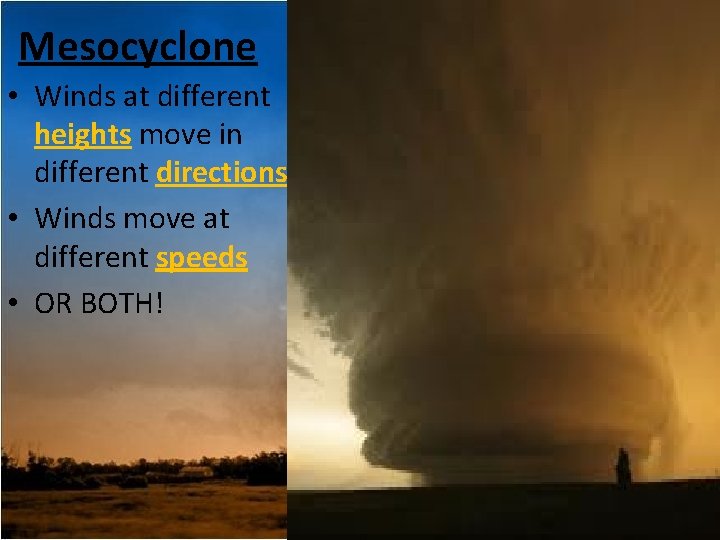
Mesocyclone • Winds at different heights move in different directions • Winds move at different speeds • OR BOTH!
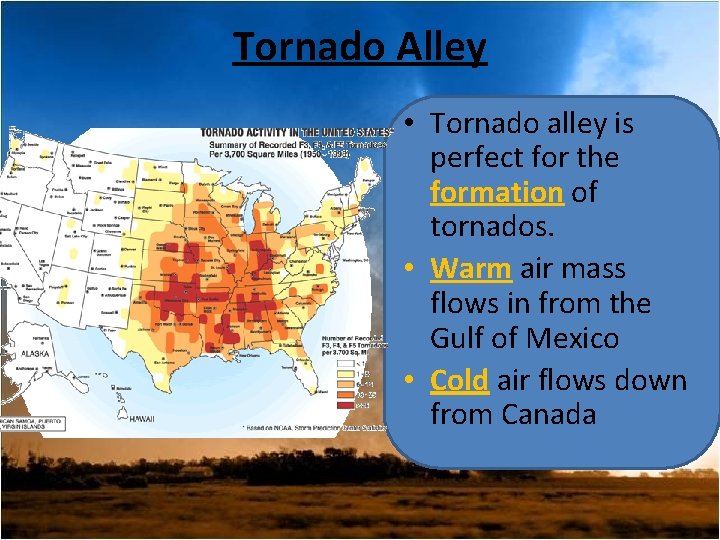
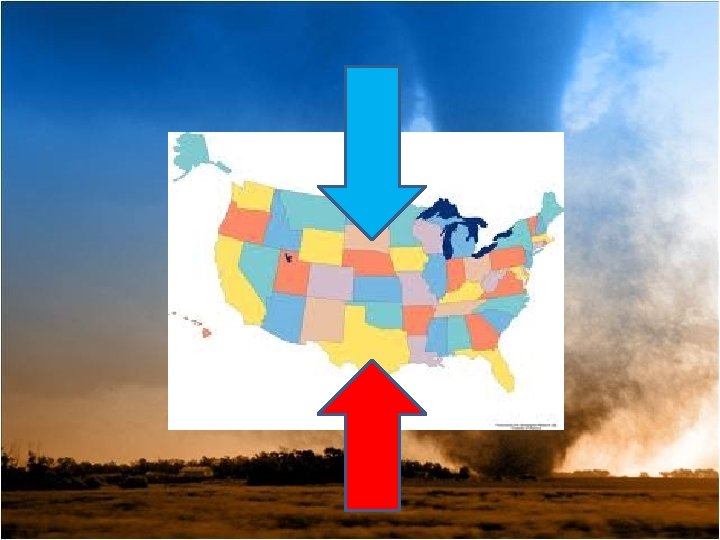
Tornado Alley • Tornado alley is perfect for the formation of tornados. • Warm air mass flows in from the Gulf of Mexico • Cold air flows down from Canada
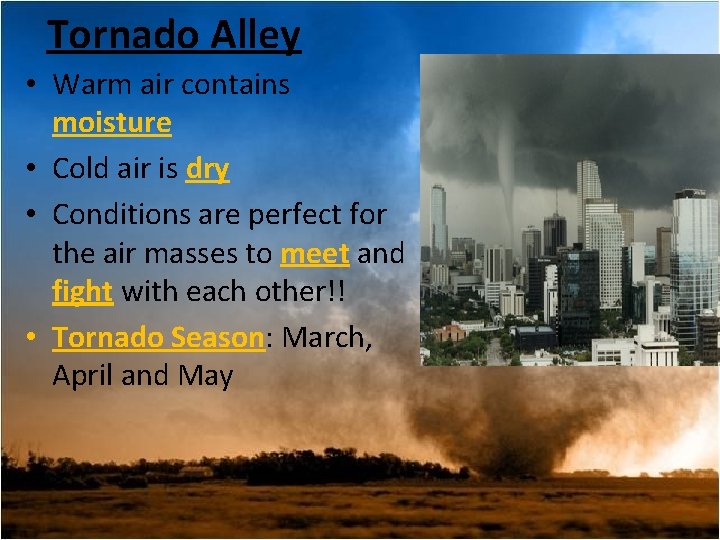
Tornado Alley • Warm air contains moisture • Cold air is dry • Conditions are perfect for the air masses to meet and fight with each other!! • Tornado Season: March, April and May
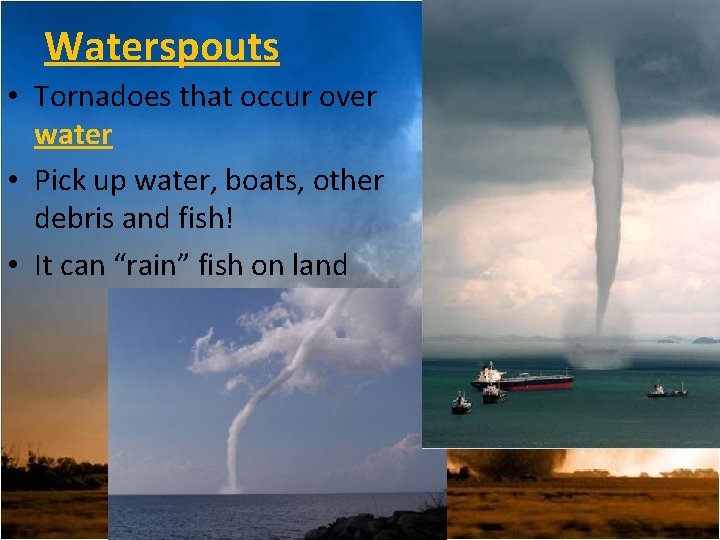
Waterspouts • Tornadoes that occur over water • Pick up water, boats, other debris and fish! • It can “rain” fish on land
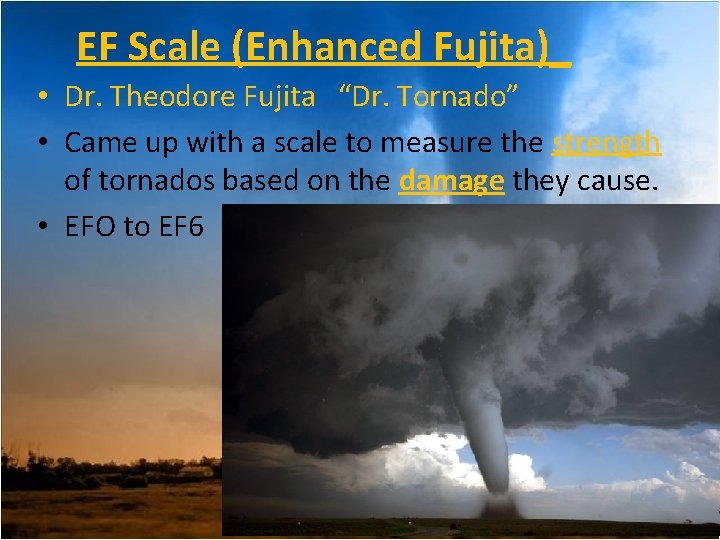
EF Scale (Enhanced Fujita)_ • Dr. Theodore Fujita “Dr. Tornado” • Came up with a scale to measure the strength of tornados based on the damage they cause. • EFO to EF 6
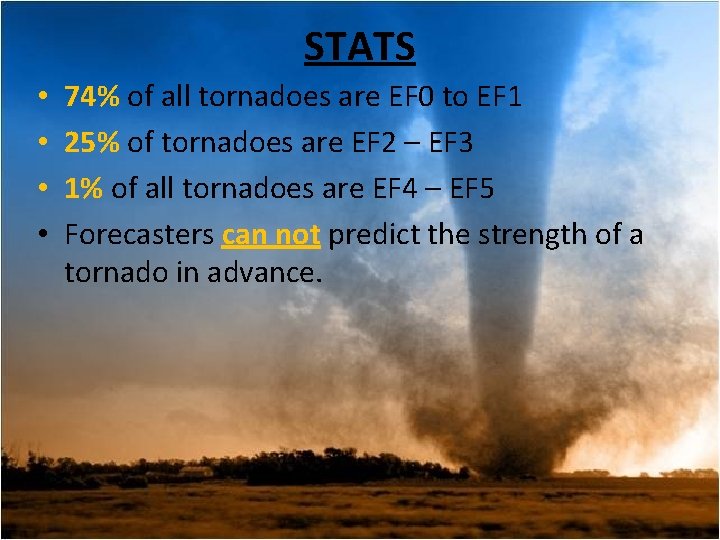
STATS • • 74% of all tornadoes are EF 0 to EF 1 25% of tornadoes are EF 2 – EF 3 1% of all tornadoes are EF 4 – EF 5 Forecasters can not predict the strength of a tornado in advance.
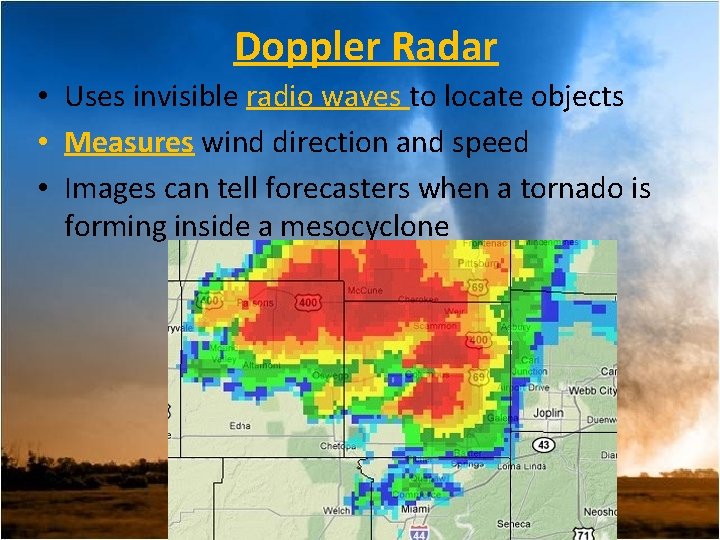
Doppler Radar • Uses invisible radio waves to locate objects • Measures wind direction and speed • Images can tell forecasters when a tornado is forming inside a mesocyclone
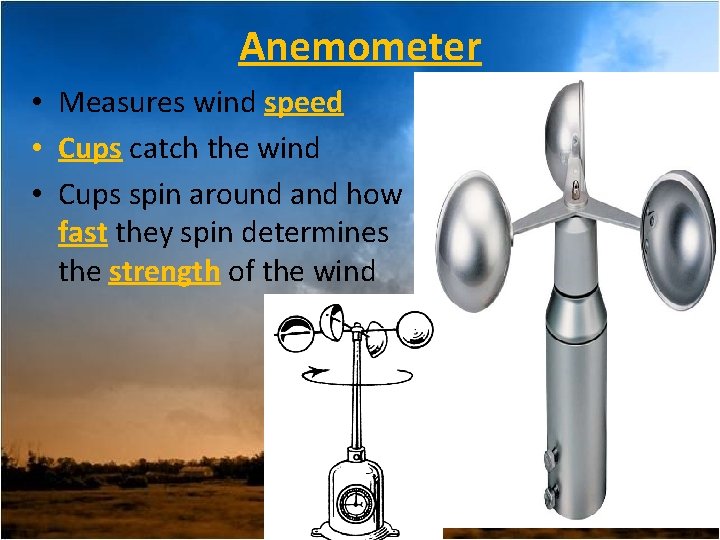
Anemometer • Measures wind speed • Cups catch the wind • Cups spin around and how fast they spin determines the strength of the wind
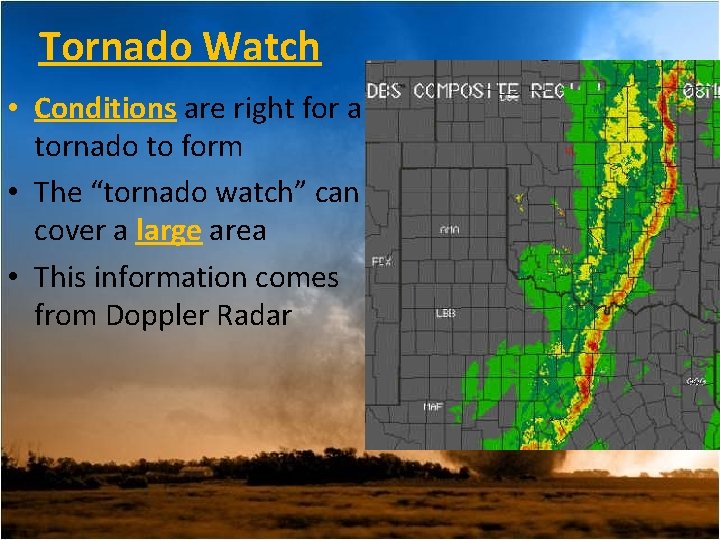
Tornado Watch • Conditions are right for a tornado to form • The “tornado watch” can cover a large area • This information comes from Doppler Radar
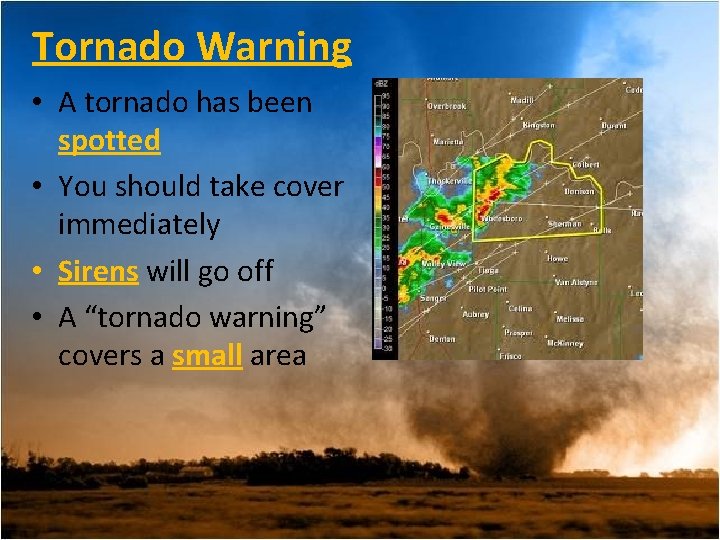
Tornado Warning • A tornado has been spotted • You should take cover immediately • Sirens will go off • A “tornado warning” covers a small area