
Tornado Detection Algorithm TDA By Jeffrey Curtis and
Tornado Detection Algorithm (TDA) By: Jeffrey Curtis and Jessica Mc. Laughlin
Build 9 n n n Typically triggered after a tornado event occurred Linked to the Mesocyclone Detection Algorithm Smaller rotations missed by algorithm
Build 10 n n n Aimed to address low probability of detection by the Build 9 TDA separated from the Mesocyclone Detection Algorithm Built to detect significant regions of shear Higher probability of detection Distinguishes between tornadic and non-tornadic shear
The Algorithm n n 1 -D pattern vectors identified Gate to gate shear – velocity difference between two adjacent range bins Minimum shear value Detects only cyclonic rotation
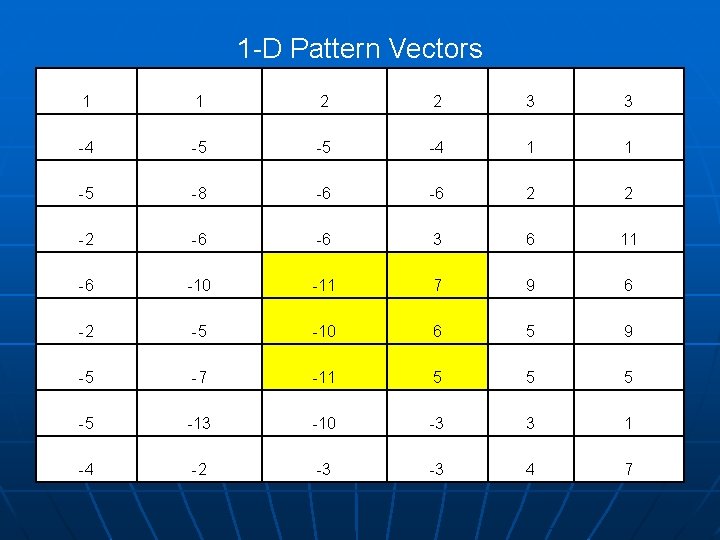
1 -D Pattern Vectors 1 1 2 2 3 3 -4 -5 -5 -4 1 1 -5 -8 -6 -6 2 2 -2 -6 -6 3 6 11 -6 -10 -11 7 9 6 -2 -5 -10 6 5 9 -5 -7 -11 5 5 5 -5 -13 -10 -3 3 1 -4 -2 -3 -3 4 7
The Algorithm (cont. ) n n n 2 -D features created by the combination of three or more 1 -D pattern vectors Classifies features in order of shear values 35, 30, 25, 20, 15 and 11 m s-1 Sorts 2 -D features by increasing height
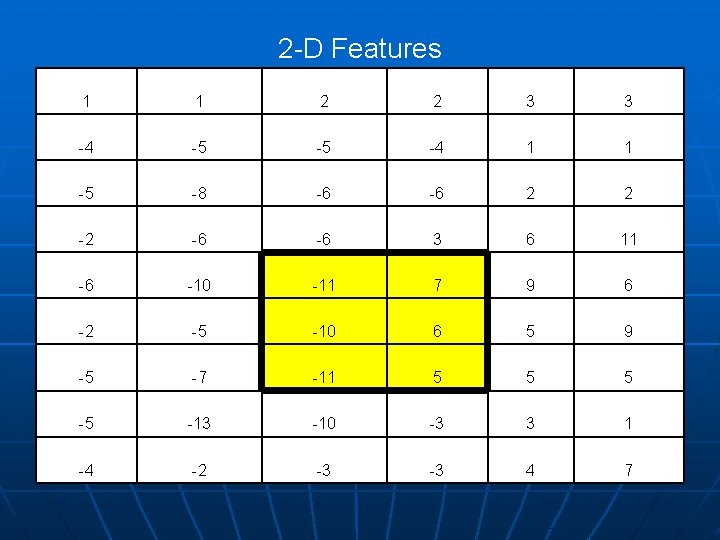
2 -D Features 1 1 2 2 3 3 -4 -5 -5 -4 1 1 -5 -8 -6 -6 2 2 -2 -6 -6 3 6 11 -6 -10 -11 7 9 6 -2 -5 -10 6 5 9 -5 -7 -11 5 5 5 -5 -13 -10 -3 3 1 -4 -2 -3 -3 4 7
The Algorithm (cont. ) n Checks vertical continuity of 2 -D features § Strongest circulation declared base n 3 -D features composed of a minimum of three 2 -D features § Ideal case of no gaps within elevation sweeps § No more than one elevation scan gap
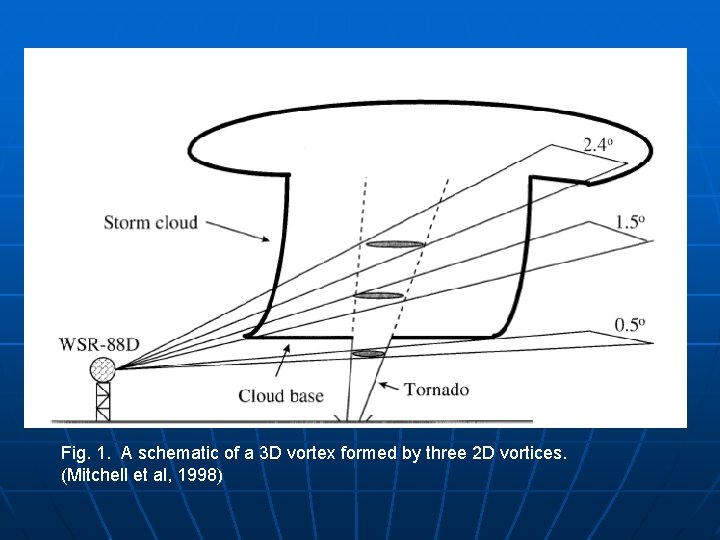
Fig. 1. A schematic of a 3 D vortex formed by three 2 D vortices. (Mitchell et al, 1998)
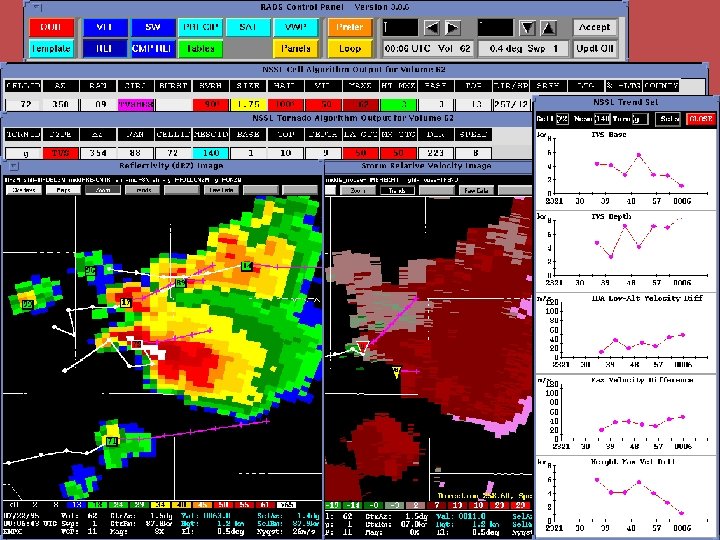
Tornado Vortex Signature (TVS) n n n 3 dimensional circulation Base extends to the 0. 5 radar elevation height or has a base below 2000 ft. (600 m) above radar level Shown by a red triangle and is coded red in the table
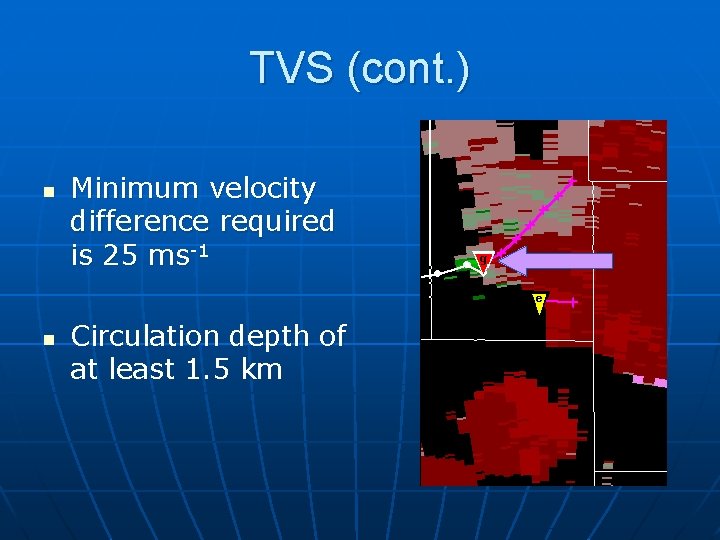
TVS (cont. ) n n Minimum velocity difference required is 25 ms-1 Circulation depth of at least 1. 5 km
Elevated Tornado Vortex Signature (ETVS) n n n 3 dimensional circulation Base does not extend to the 0. 5 radar elevation height and has a base above 2000 ft. (600 m) above radar level Shown by a yellow triangle and is coded yellow in the table
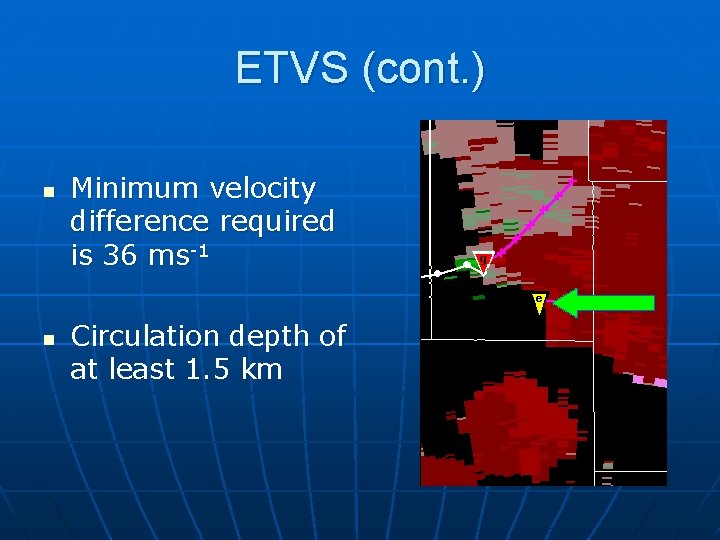
ETVS (cont. ) n n Minimum velocity difference required is 36 ms-1 Circulation depth of at least 1. 5 km
Positives of TDA n Uses gate to gate instead of only strong shear values n n gate to gate is more closely related to tornadic circulation Mesocyclone does not need to be present to search for strong velocities n Searches all velocity pairs
Positives (cont. ) n More information given to the observer Can determine shear type (TVS or ETVS) n Can determine base or depth of the circulation n n Parameters can be changed to allow for better performance n Can allow for a higher probability of detecting significant regions of shear
Negative of TDA n n Doesn’t detect areas of anti-cyclonic rotation High FAR (False Alarm Rate) Can cause too many warnings to be made to the public n Build 9 had lower FAR n
Negatives (cont. ) n n Relationship between tornadoes and ETVS is not fully researched Must fully complete radar scan before TVS/ETVS is resolved
Using the Tornado Detection Algorithm n Important features to look for: Position of the algorithm in relationship to the storm n Length of time that the TVS has been present n Distance from radar n Environmental winds n
References n n n Mitchell, E. D. , 1998: The National Severe Storms Laboratory Tornado Detection Algorithm. Wea. Forecasting, 9, 352 -366. The National Severe Storms Laboratory Tornado Detection Algorithm: Documentation. http: //www. nssl. noaa. gov/wrd/swat/mitchell/nssl _tda. html The NSSL Tornado Detection Algorithm (TDA), and Its Use for the 1996 Warning Decision Support System (WDSS) Proof-of-Concept (Po. C) Tests. http: //www. nssl. noaa. gov/wrd/swat/mitchell/tda wdss 96 user 2. html
- Slides: 20