
Topology Optimization for Localizing Design Problems An Explorative
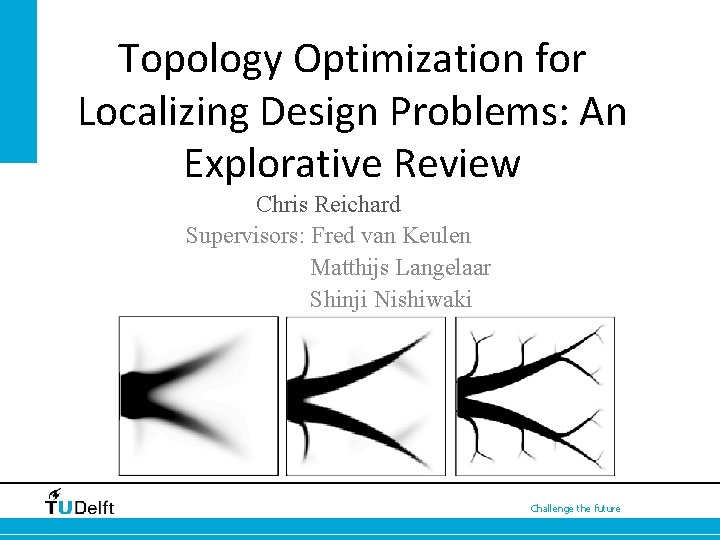
Topology Optimization for Localizing Design Problems: An Explorative Review Chris Reichard Supervisors: Fred van Keulen Matthijs Langelaar Shinji Nishiwaki Challenge the future
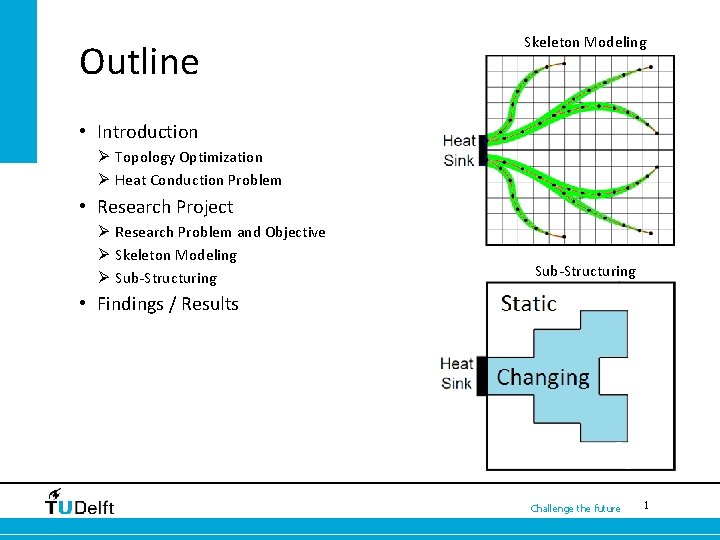
Outline Skeleton Modeling • Introduction Ø Topology Optimization Ø Heat Conduction Problem • Research Project Ø Research Problem and Objective Ø Skeleton Modeling Ø Sub-Structuring • Findings / Results Challenge the future 11

What is Topology Optimization? Topology optimization is a tool to optimize a layout of a structure in a given design space based on: • Applied loads • Boundary Conditions • Performance Criteria Automotive Control Arm Heat Conduction Source: Example by Abaqus software Challenge the future 22
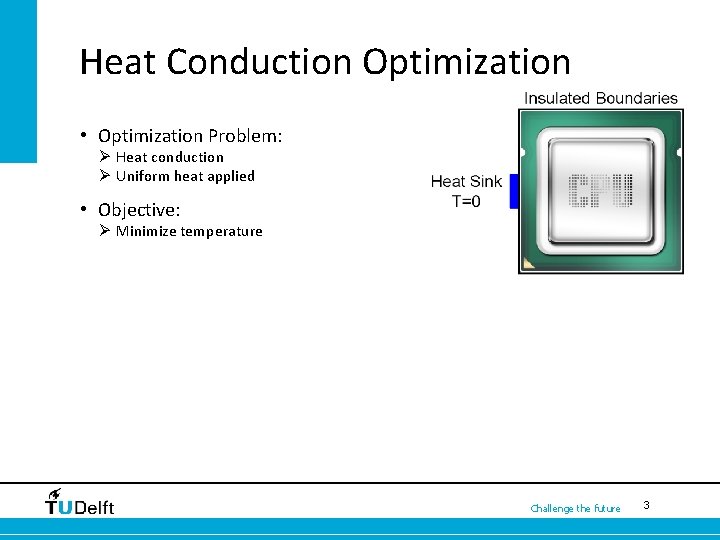
Heat Conduction Optimization • Optimization Problem: Ø Heat conduction Ø Uniform heat applied • Objective: Ø Minimize temperature Challenge the future 33
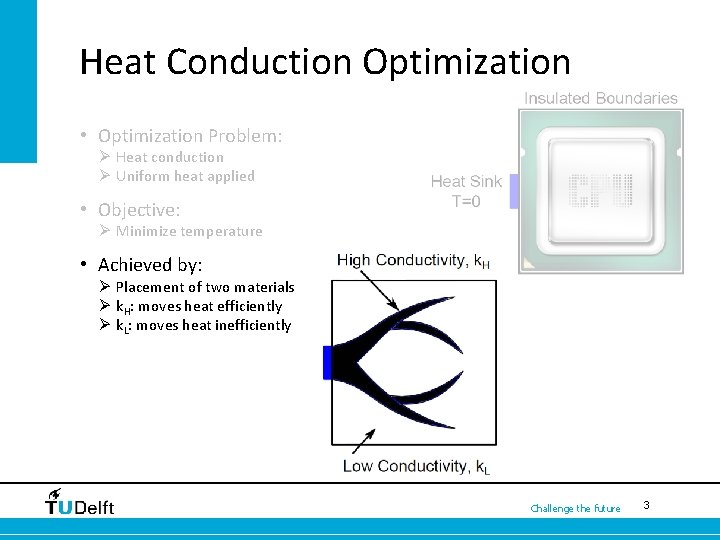
Heat Conduction Optimization • Optimization Problem: Ø Heat conduction Ø Uniform heat applied • Objective: Ø Minimize temperature • Achieved by: Ø Placement of two materials Ø k. H: moves heat efficiently Ø k. L: moves heat inefficiently Challenge the future 43
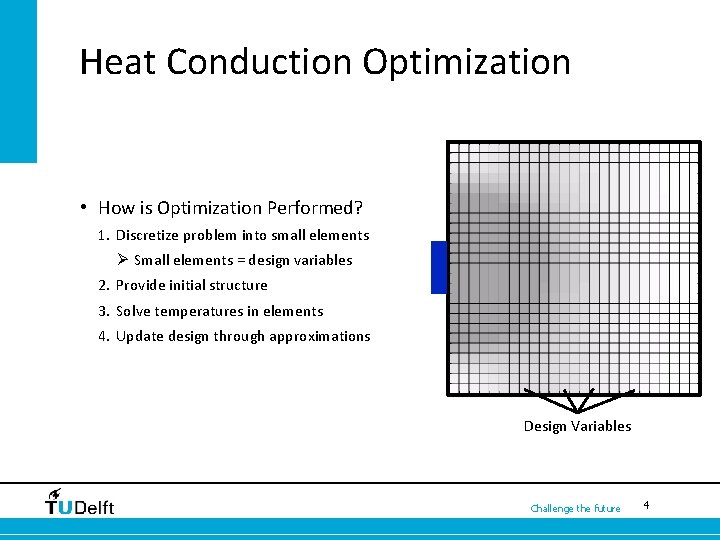
Heat Conduction Optimization • How is Optimization Performed? 1. Discretize problem into small elements Ø Small elements = design variables 2. Provide initial structure 3. Solve temperatures in elements 4. Update design through approximations Design Variables Challenge the future 54
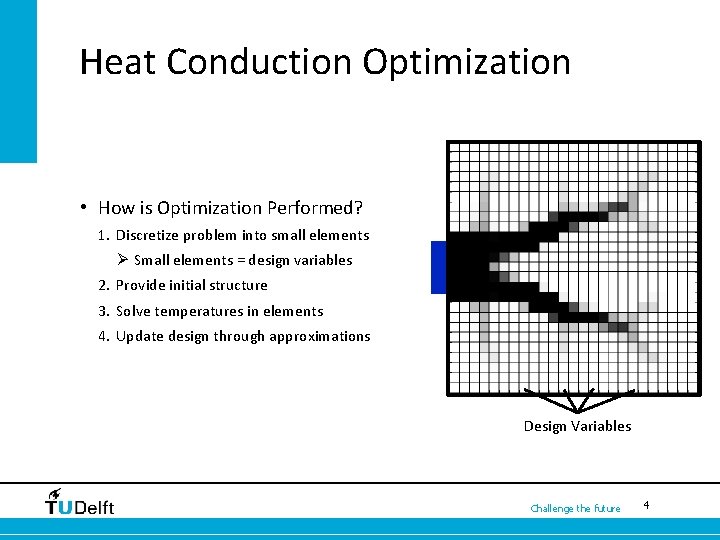
Heat Conduction Optimization • How is Optimization Performed? 1. Discretize problem into small elements Ø Small elements = design variables 2. Provide initial structure 3. Solve temperatures in elements 4. Update design through approximations Design Variables Challenge the future 64
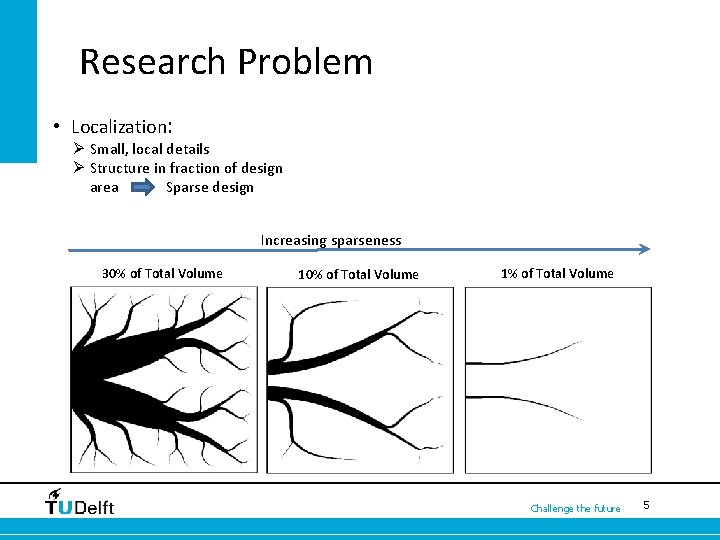
Research Problem • Localization: Ø Small, local details Ø Structure in fraction of design area Sparse design Increasing sparseness 30% of Total Volume 1% of Total Volume Challenge the future 75
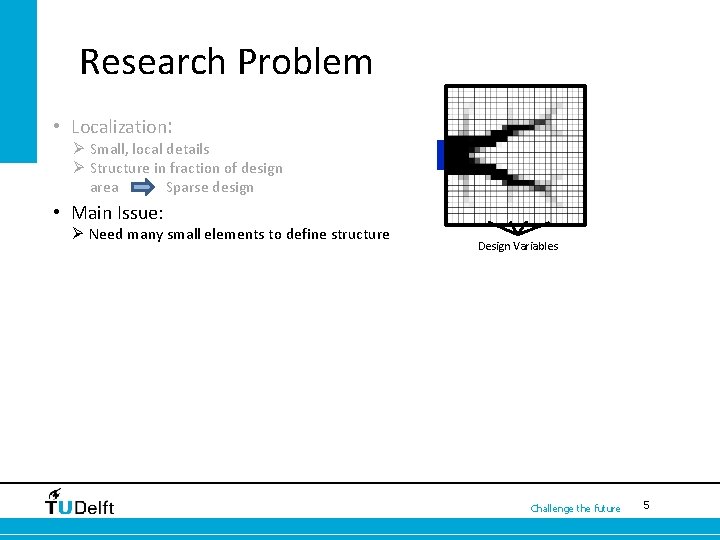
Research Problem • Localization: Ø Small, local details Ø Structure in fraction of design area Sparse design • Main Issue: Ø Need many small elements to define structure Design Variables Challenge the future 85
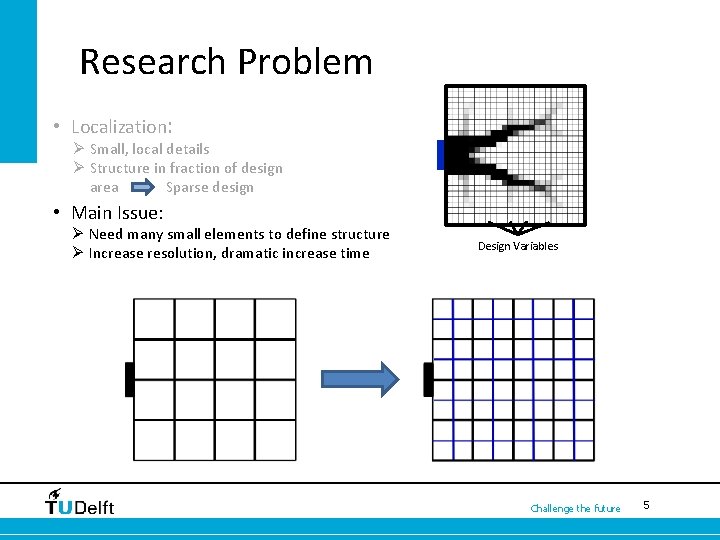
Research Problem • Localization: Ø Small, local details Ø Structure in fraction of design area Sparse design • Main Issue: Ø Need many small elements to define structure Ø Increase resolution, dramatic increase time Design Variables Challenge the future 95
Research Objective Improve the implementation of the optimization process for the design of sparse structures based on: • • • Improved efficiency by reducing number of design variables Exploit local features of sparse problem Assess feasibility of developed methods Challenge the future 106
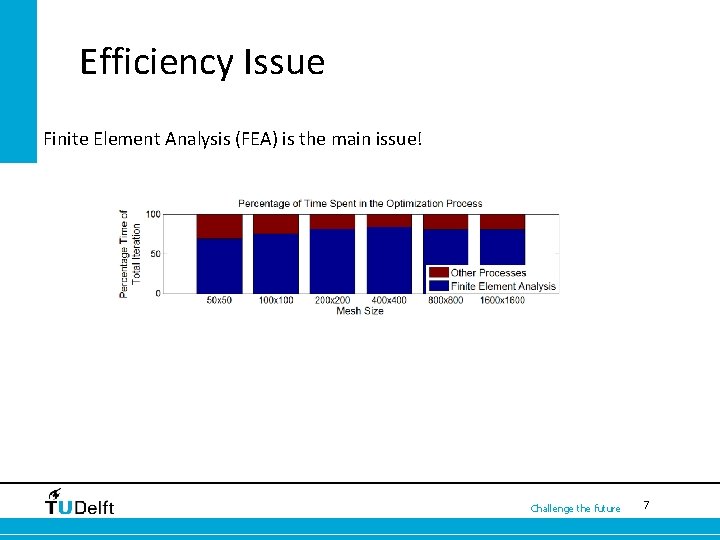
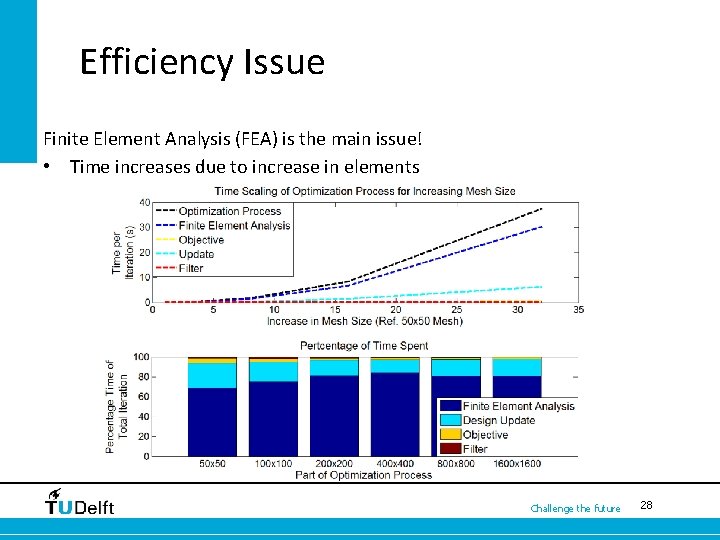
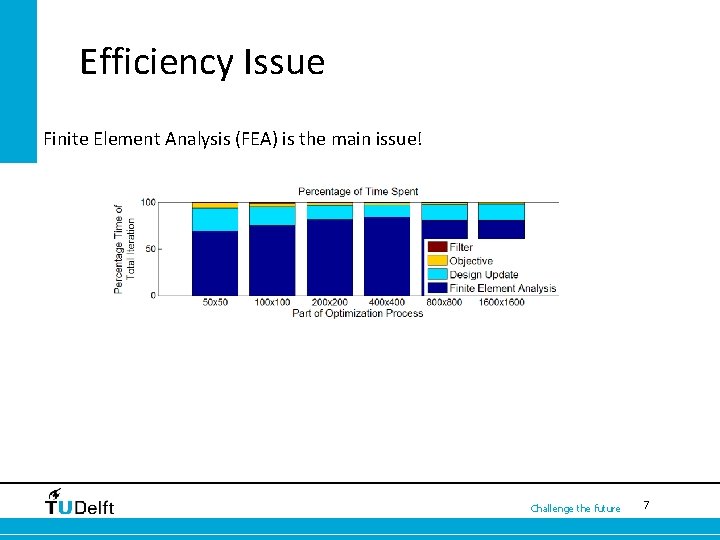
Efficiency Issue Finite Element Analysis (FEA) is the main issue! Challenge the future 117
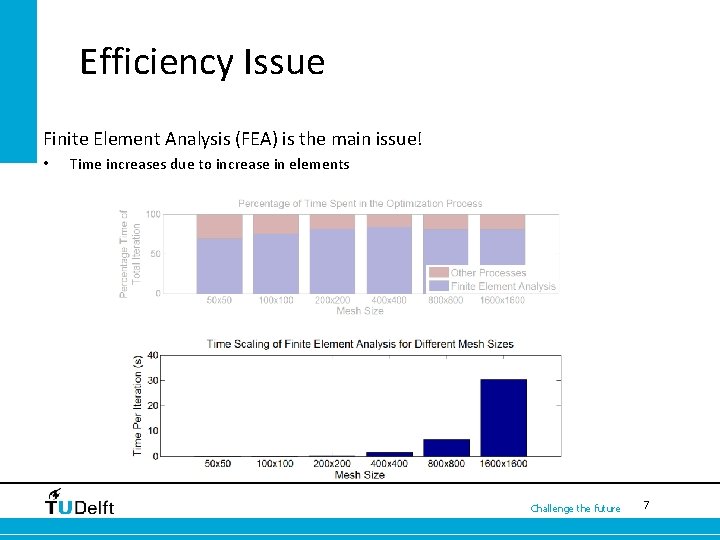
Efficiency Issue Finite Element Analysis (FEA) is the main issue! • Time increases due to increase in elements Challenge the future 127
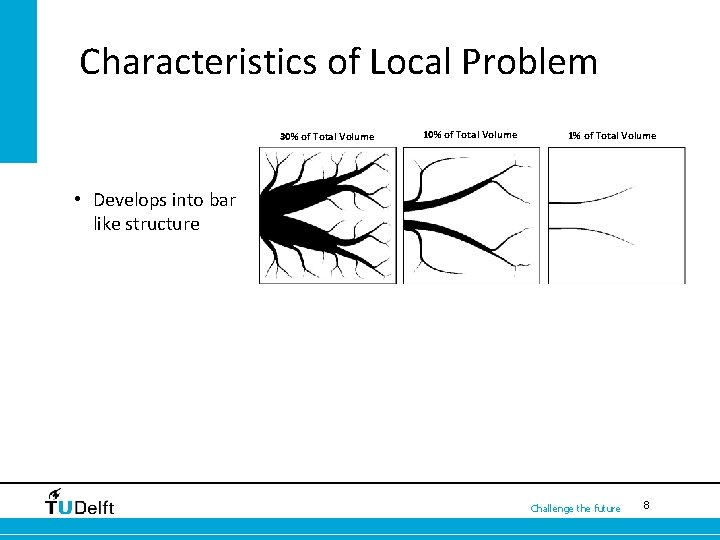
Characteristics of Local Problem 30% of Total Volume 1% of Total Volume • Develops into bar like structure Challenge the future 138
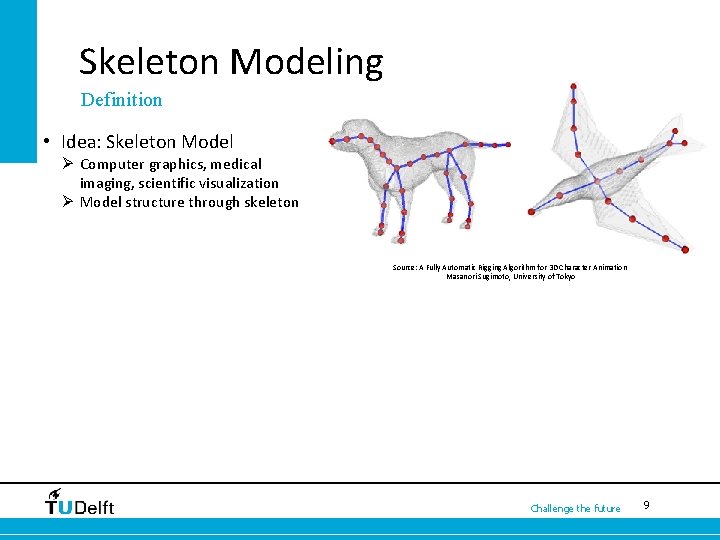
Skeleton Modeling Definition • Idea: Skeleton Model Ø Computer graphics, medical imaging, scientific visualization Ø Model structure through skeleton Source: A Fully Automatic Rigging Algorithm for 3 D Character Animation Masanori Sugimoto, University of Tokyo Challenge the future 149
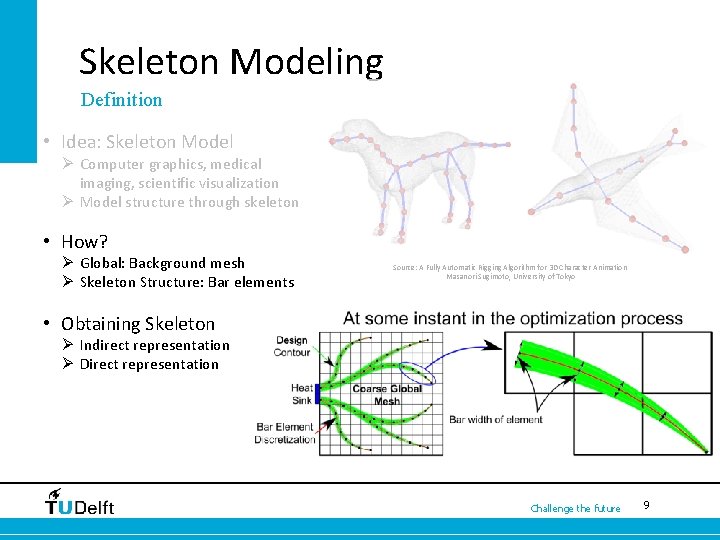
Skeleton Modeling Definition • Idea: Skeleton Model Ø Computer graphics, medical imaging, scientific visualization Ø Model structure through skeleton • How? Ø Global: Background mesh Ø Skeleton Structure: Bar elements Source: A Fully Automatic Rigging Algorithm for 3 D Character Animation Masanori Sugimoto, University of Tokyo • Obtaining Skeleton Ø Indirect representation Ø Direct representation Challenge the future 159
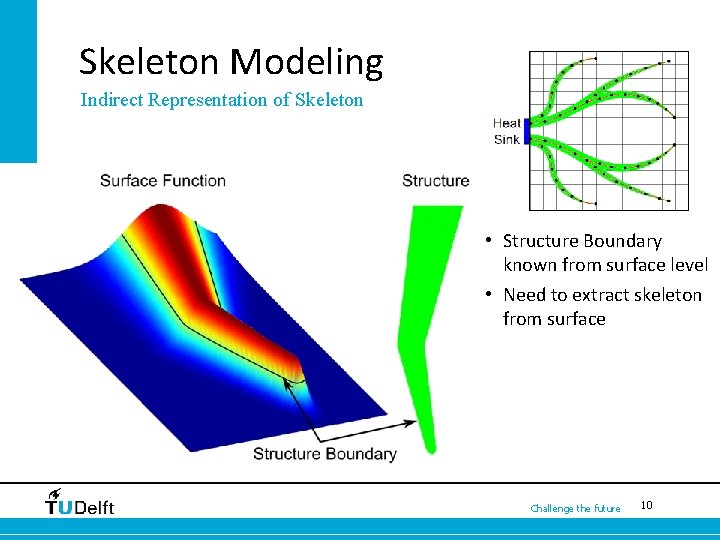
Skeleton Modeling Indirect Representation of Skeleton • Structure Boundary known from surface level • Need to extract skeleton from surface Challenge the future 1610
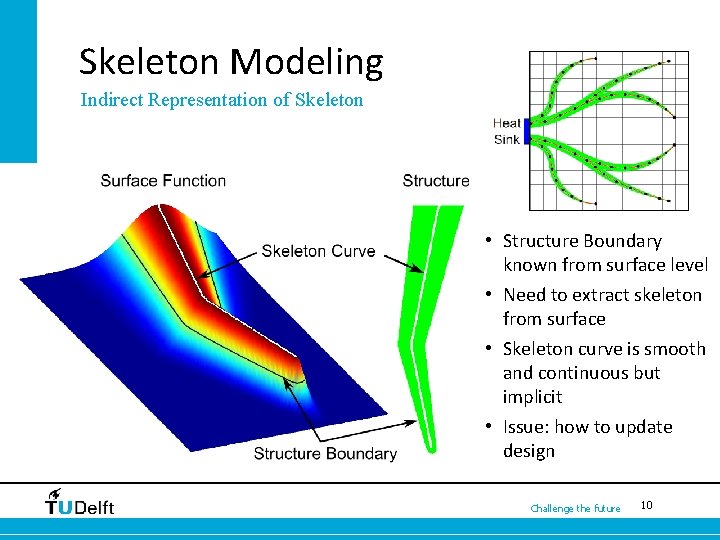
Skeleton Modeling Indirect Representation of Skeleton • Structure Boundary known from surface level • Need to extract skeleton from surface • Skeleton curve is smooth and continuous but implicit • Issue: how to update design Challenge the future 1710
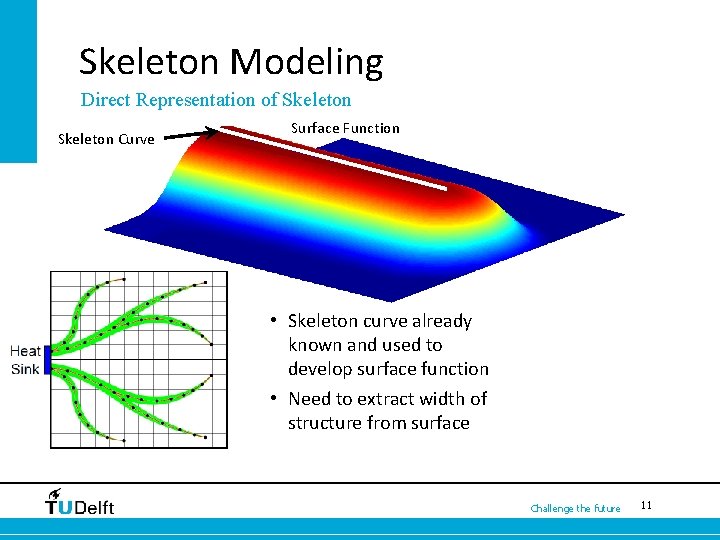
Skeleton Modeling Direct Representation of Skeleton Curve Surface Function • Skeleton curve already known and used to develop surface function • Need to extract width of structure from surface Challenge the future 1811
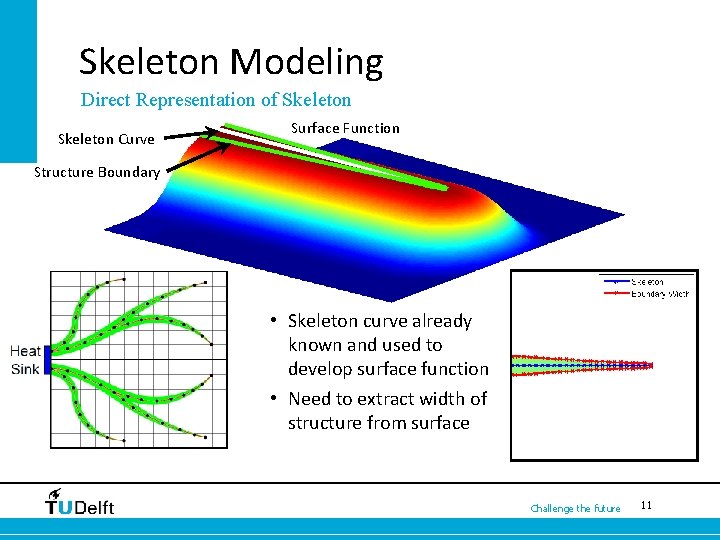
Skeleton Modeling Direct Representation of Skeleton Curve Surface Function Structure Boundary • Skeleton curve already known and used to develop surface function • Need to extract width of structure from surface Challenge the future 1911
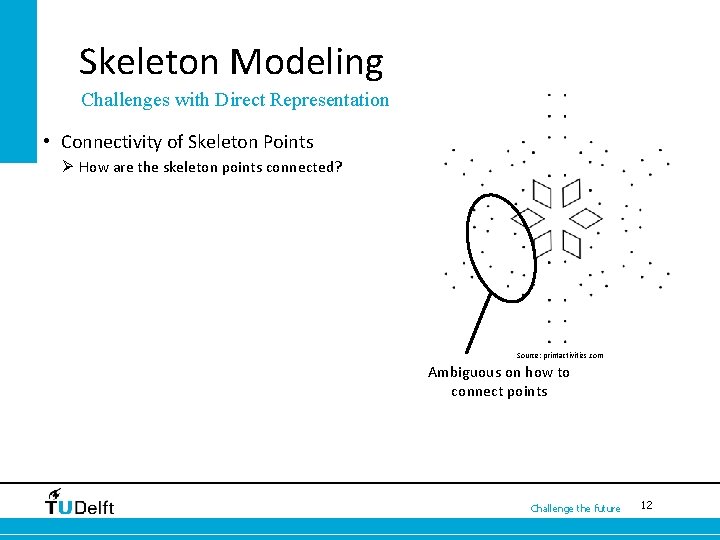
Skeleton Modeling Challenges with Direct Representation • Connectivity of Skeleton Points Ø How are the skeleton points connected? Source: printactivities. com Ambiguous on how to connect points Challenge the future 2012
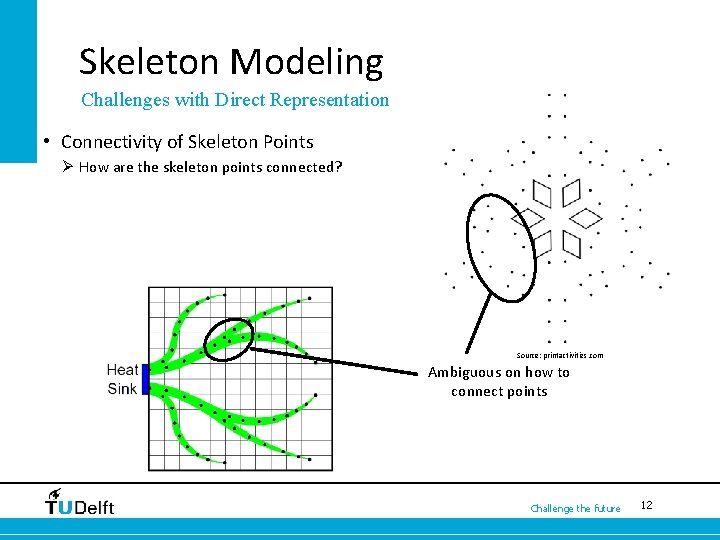
Skeleton Modeling Challenges with Direct Representation • Connectivity of Skeleton Points Ø How are the skeleton points connected? Source: printactivities. com Ambiguous on how to connect points Challenge the future 2112
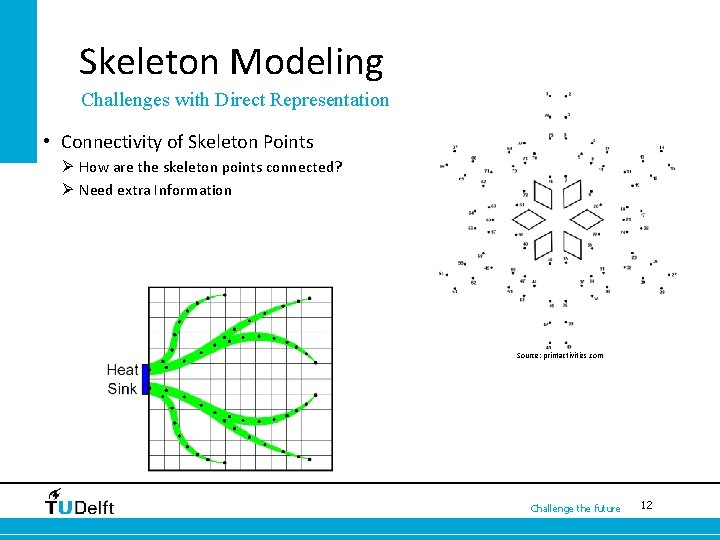
Skeleton Modeling Challenges with Direct Representation • Connectivity of Skeleton Points Ø How are the skeleton points connected? Ø Need extra Information Source: printactivities. com Challenge the future 2212
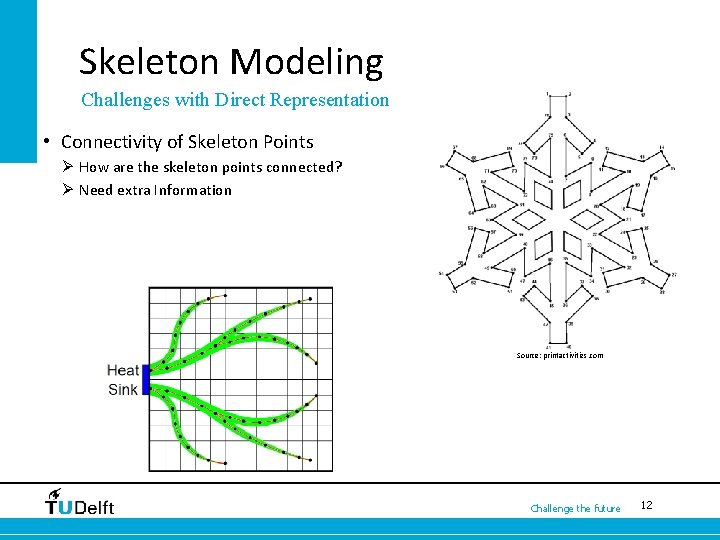
Skeleton Modeling Challenges with Direct Representation • Connectivity of Skeleton Points Ø How are the skeleton points connected? Ø Need extra Information Source: printactivities. com Challenge the future 2312
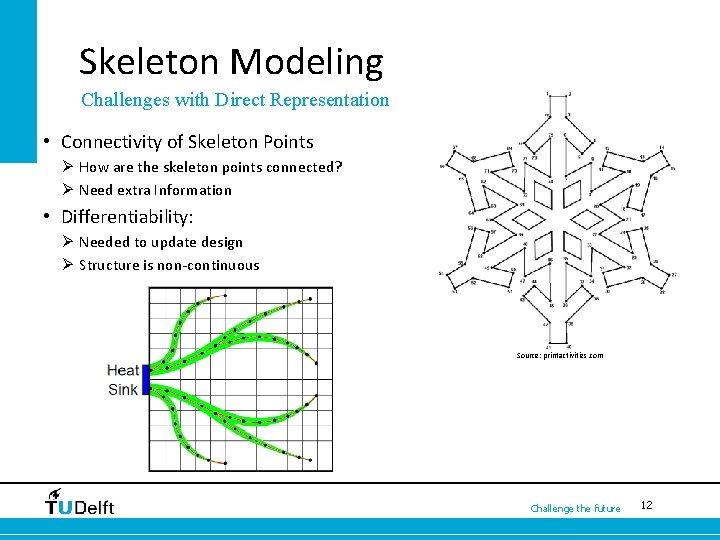
Skeleton Modeling Challenges with Direct Representation • Connectivity of Skeleton Points Ø How are the skeleton points connected? Ø Need extra Information • Differentiability: Ø Needed to update design Ø Structure is non-continuous Source: printactivities. com Challenge the future 2412
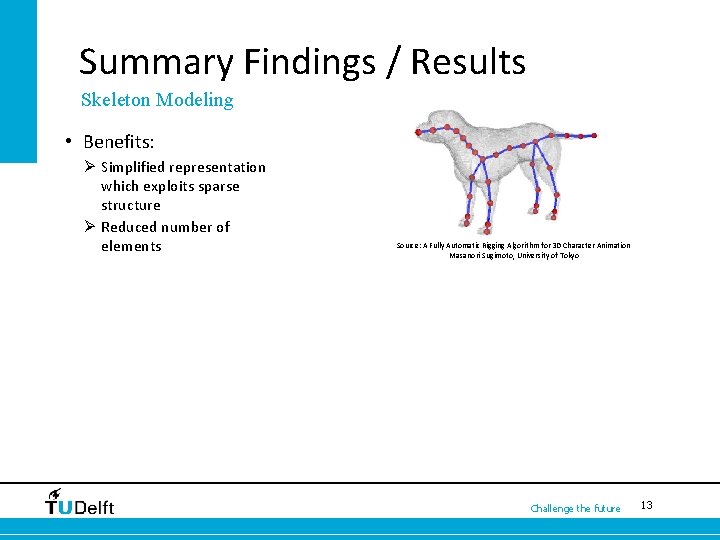
Summary Findings / Results Skeleton Modeling • Benefits: Ø Simplified representation which exploits sparse structure Ø Reduced number of elements Source: A Fully Automatic Rigging Algorithm for 3 D Character Animation Masanori Sugimoto, University of Tokyo Challenge the future 2513
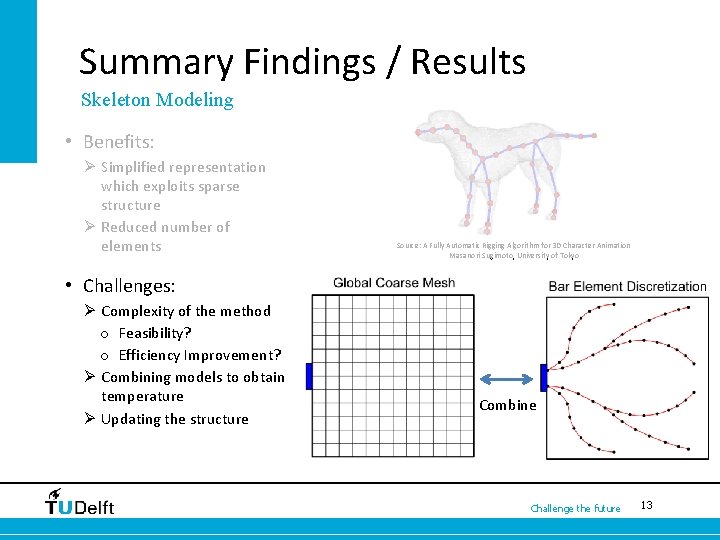
Summary Findings / Results Skeleton Modeling • Benefits: Ø Simplified representation which exploits sparse structure Ø Reduced number of elements Source: A Fully Automatic Rigging Algorithm for 3 D Character Animation Masanori Sugimoto, University of Tokyo • Challenges: Ø Complexity of the method o Feasibility? o Efficiency Improvement? Ø Combining models to obtain temperature Ø Updating the structure Combine Challenge the future 2613
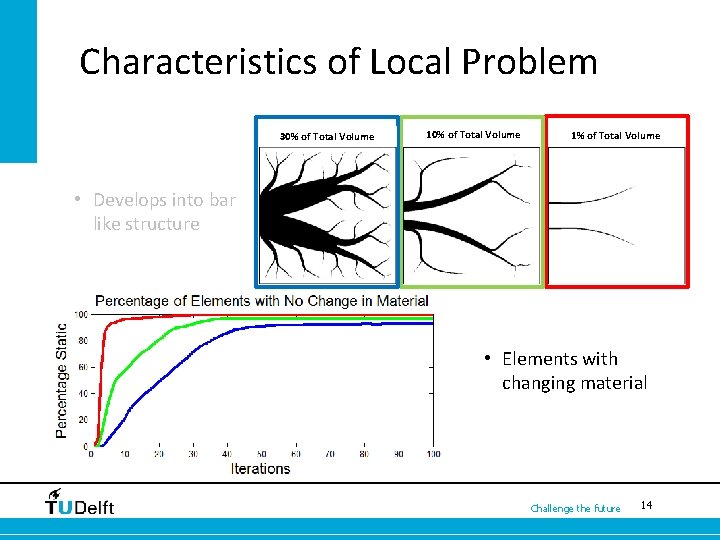
Characteristics of Local Problem 30% of Total Volume 1% of Total Volume • Develops into bar like structure • Elements with changing material Challenge the future 2714
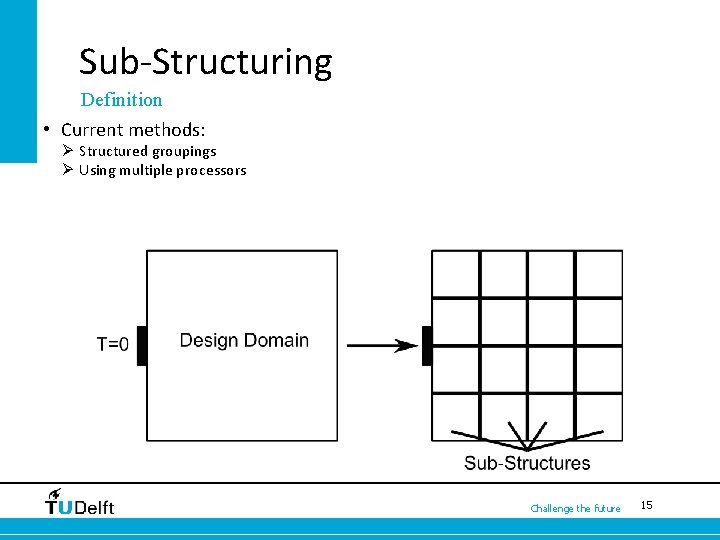
Sub-Structuring Definition • Current methods: Ø Structured groupings Ø Using multiple processors Challenge the future 2815
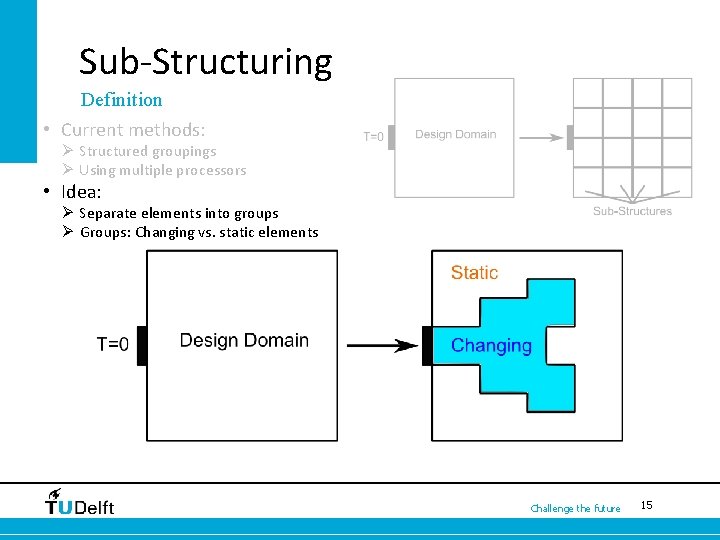
Sub-Structuring Definition • Current methods: Ø Structured groupings Ø Using multiple processors • Idea: Ø Separate elements into groups Ø Groups: Changing vs. static elements Challenge the future 2915
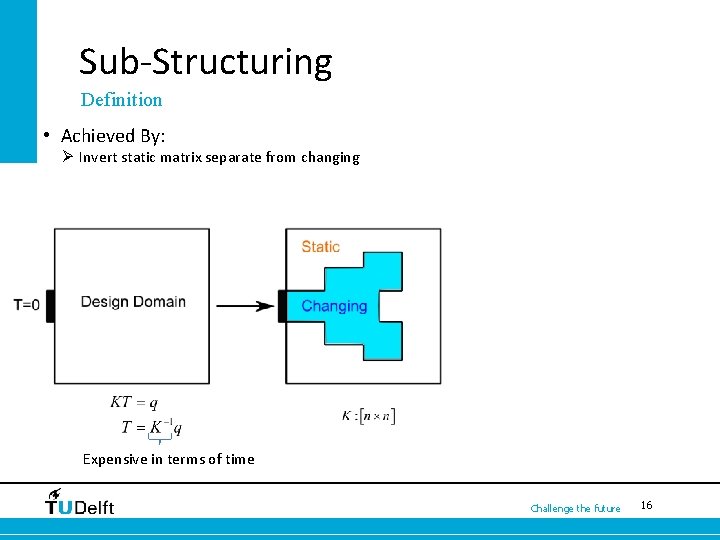
Sub-Structuring Definition • Achieved By: Ø Invert static matrix separate from changing Expensive in terms of time Challenge the future 3016
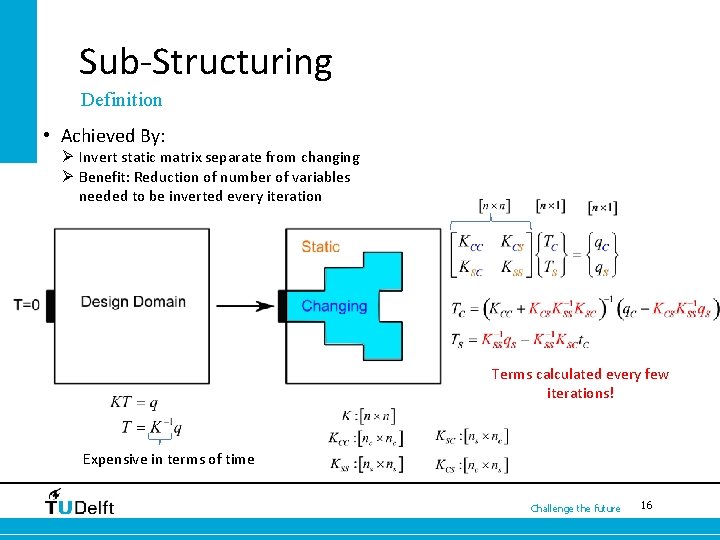
Sub-Structuring Definition • Achieved By: Ø Invert static matrix separate from changing Ø Benefit: Reduction of number of variables needed to be inverted every iteration Terms calculated every few iterations! Expensive in terms of time Challenge the future 3116
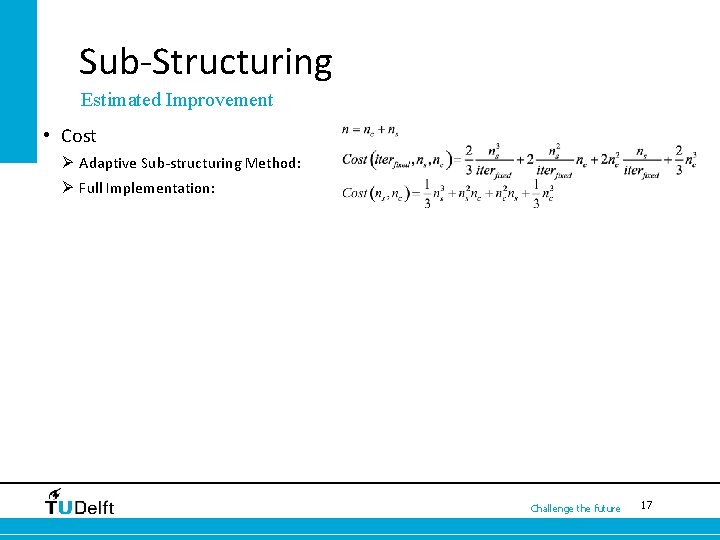
Sub-Structuring Estimated Improvement • Cost Ø Adaptive Sub-structuring Method: Ø Full Implementation: Challenge the future 3217
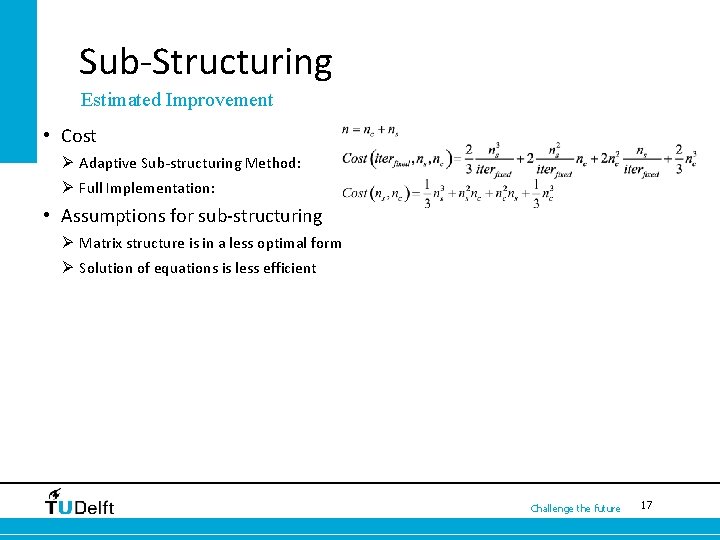
Sub-Structuring Estimated Improvement • Cost Ø Adaptive Sub-structuring Method: Ø Full Implementation: • Assumptions for sub-structuring Ø Matrix structure is in a less optimal form Ø Solution of equations is less efficient Challenge the future 3317
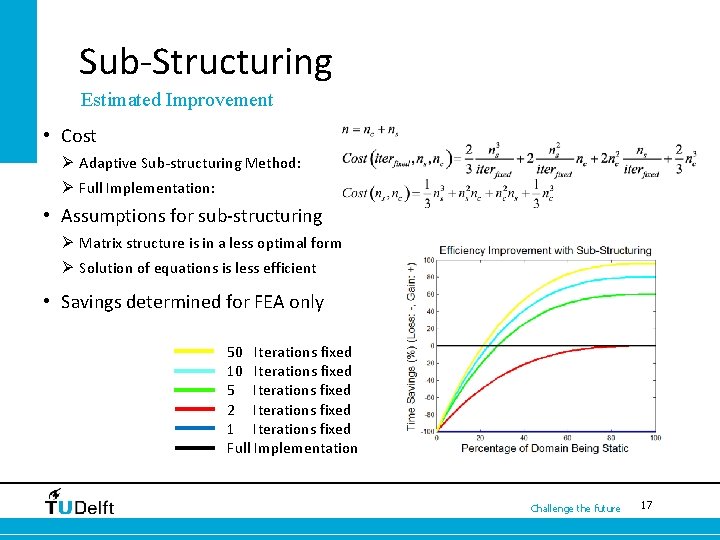
Sub-Structuring Estimated Improvement • Cost Ø Adaptive Sub-structuring Method: Ø Full Implementation: • Assumptions for sub-structuring Ø Matrix structure is in a less optimal form Ø Solution of equations is less efficient • Savings determined for FEA only 50 Iterations fixed 10 Iterations fixed 5 Iterations fixed 2 Iterations fixed 1 Iterations fixed Full Implementation Challenge the future 3417
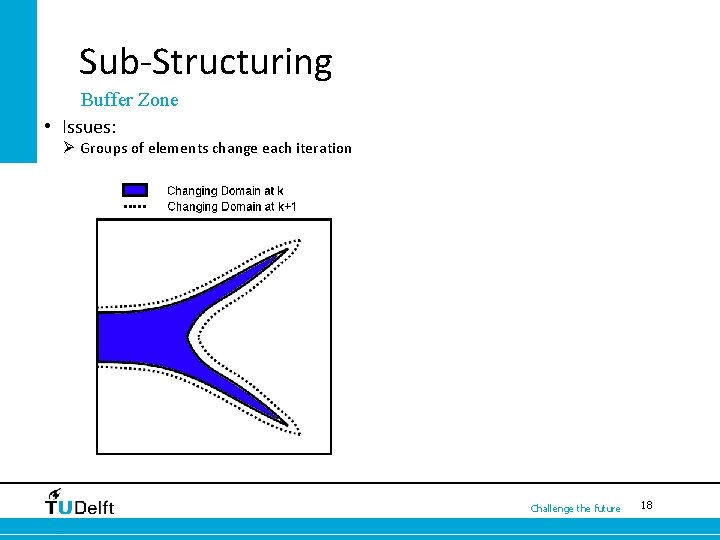
Sub-Structuring Buffer Zone • Issues: Ø Groups of elements change each iteration Challenge the future 3518
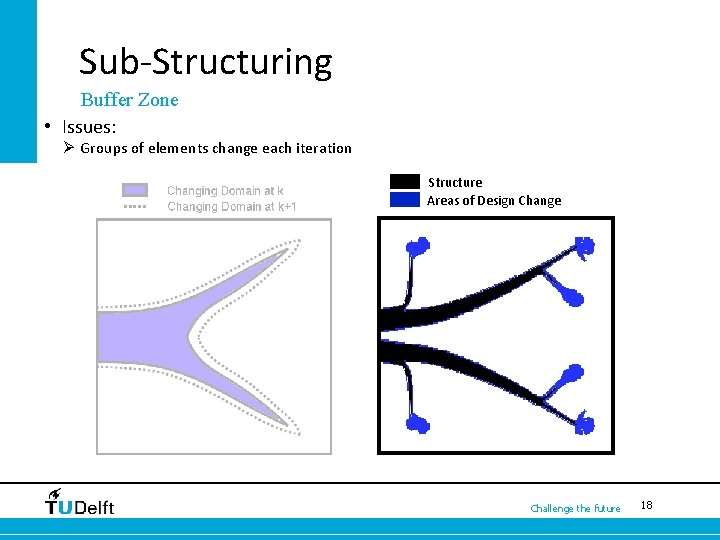
Sub-Structuring Buffer Zone • Issues: Ø Groups of elements change each iteration Structure Areas of Design Change Challenge the future 3618
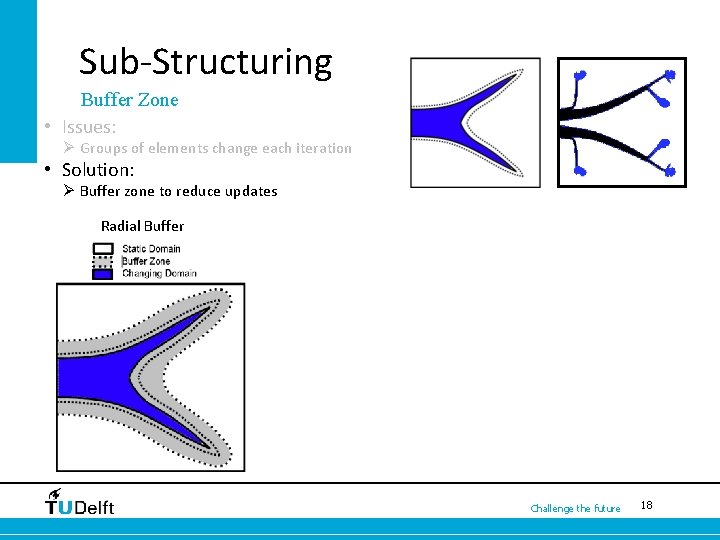
Sub-Structuring Buffer Zone • Issues: Ø Groups of elements change each iteration • Solution: Ø Buffer zone to reduce updates Radial Buffer Challenge the future 3718
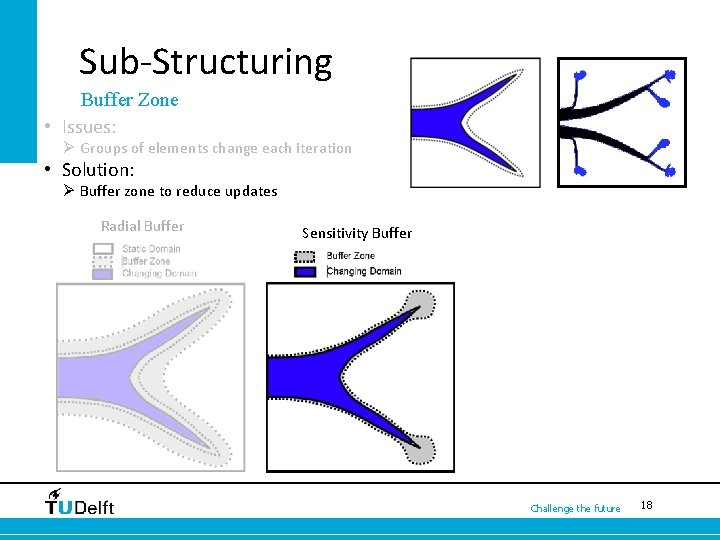
Sub-Structuring Buffer Zone • Issues: Ø Groups of elements change each iteration • Solution: Ø Buffer zone to reduce updates Radial Buffer Sensitivity Buffer Challenge the future 3818
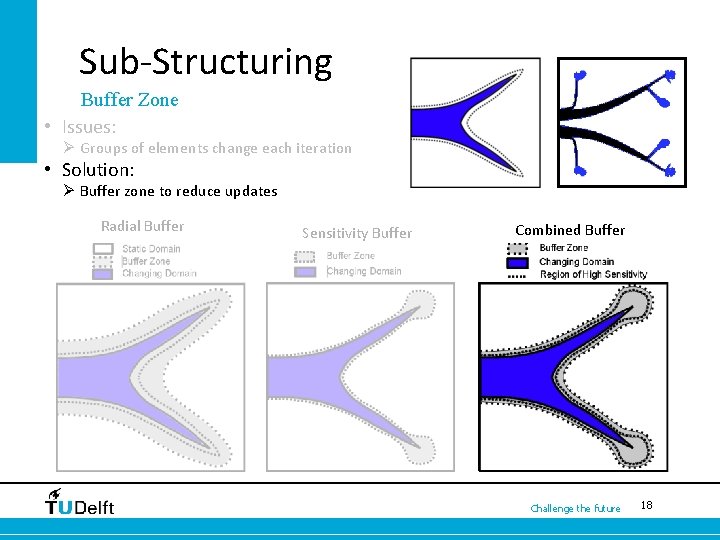
Sub-Structuring Buffer Zone • Issues: Ø Groups of elements change each iteration • Solution: Ø Buffer zone to reduce updates Radial Buffer Sensitivity Buffer Combined Buffer Challenge the future 3918
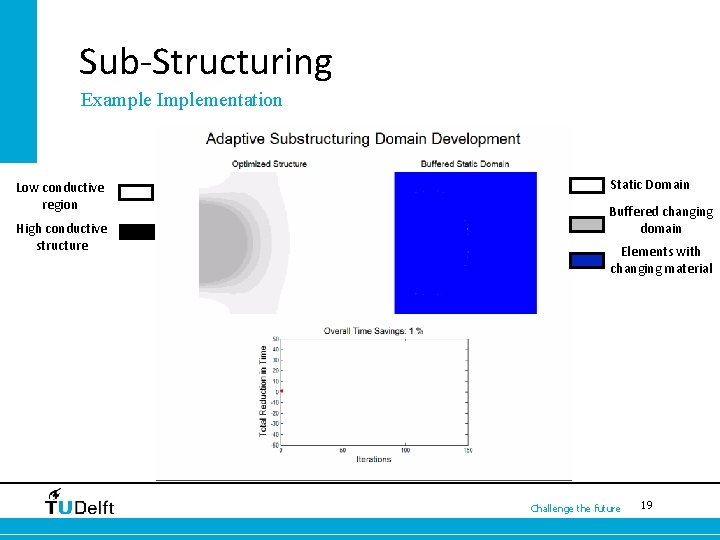
Sub-Structuring Example Implementation Low conductive region High conductive structure Static Domain Buffered changing domain Elements with changing material Challenge the future 4019
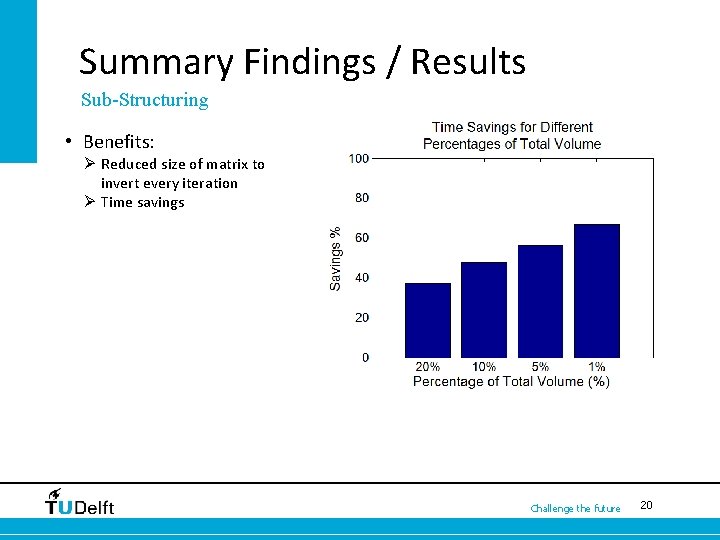
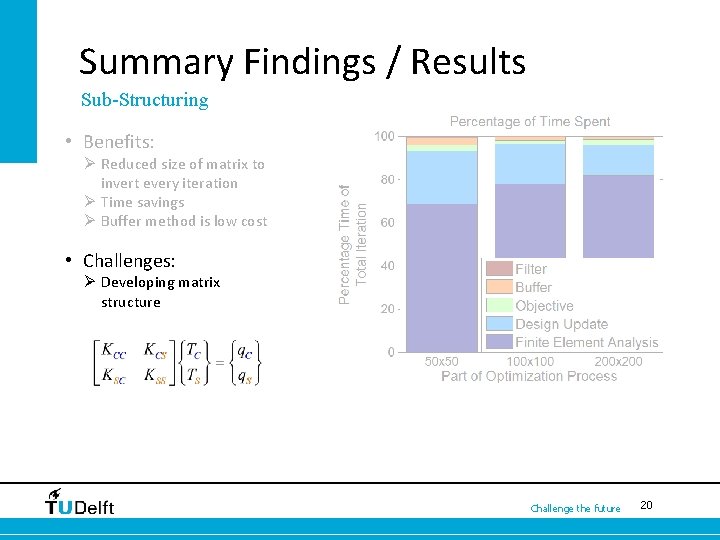
Summary Findings / Results Sub-Structuring • Benefits: Ø Reduced size of matrix to invert every iteration Ø Time savings Challenge the future 4120
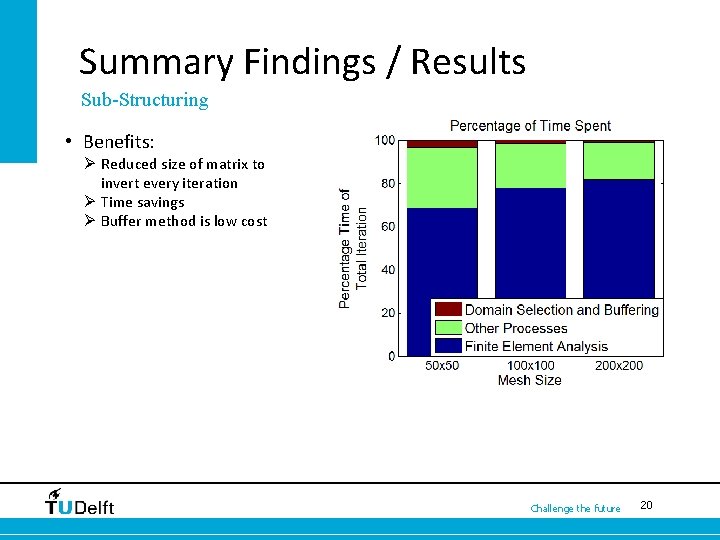
Summary Findings / Results Sub-Structuring • Benefits: Ø Reduced size of matrix to invert every iteration Ø Time savings Ø Buffer method is low cost Challenge the future 4220
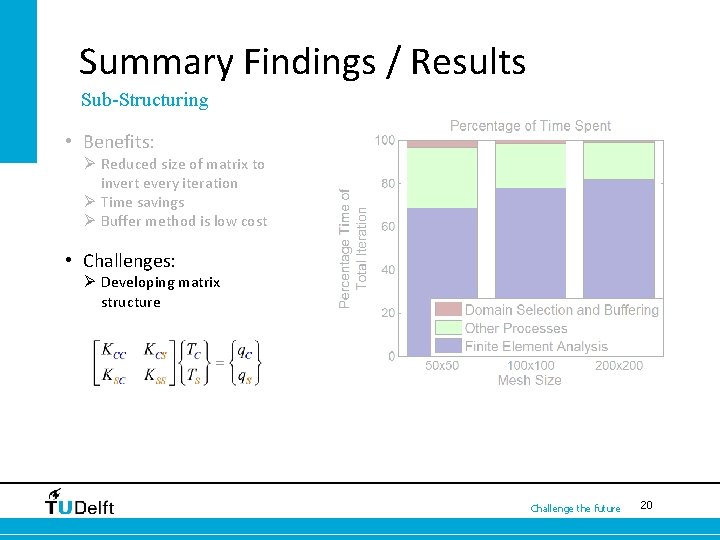
Summary Findings / Results Sub-Structuring • Benefits: Ø Reduced size of matrix to invert every iteration Ø Time savings Ø Buffer method is low cost • Challenges: Ø Developing matrix structure Challenge the future 4320
Recommendations Skeleton Modeling Sub-Structuring • Obtaining skeleton • Determine efficient methods to formulate Matrices • Investigate efficient methods to combine models • Ideas to update structure • Optimal sizing of buffer zone Challenge the future 4421
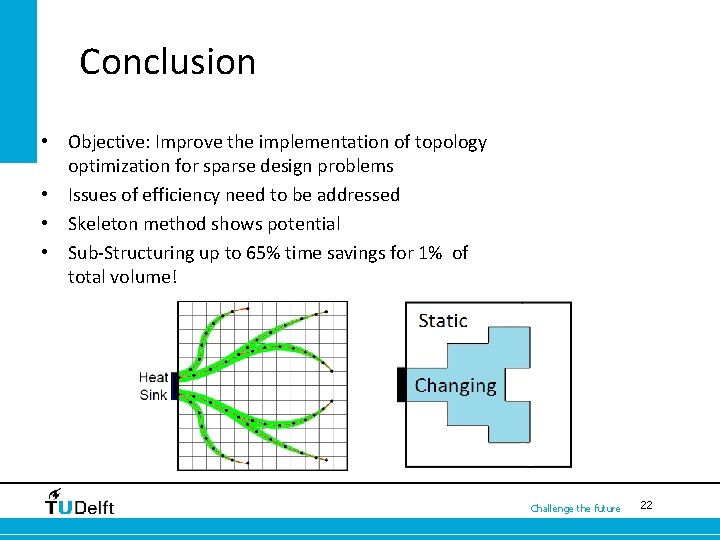
Conclusion • Objective: Improve the implementation of topology optimization for sparse design problems • Issues of efficiency need to be addressed • Skeleton method shows potential • Sub-Structuring up to 65% time savings for 1% of total volume! Challenge the future 4522
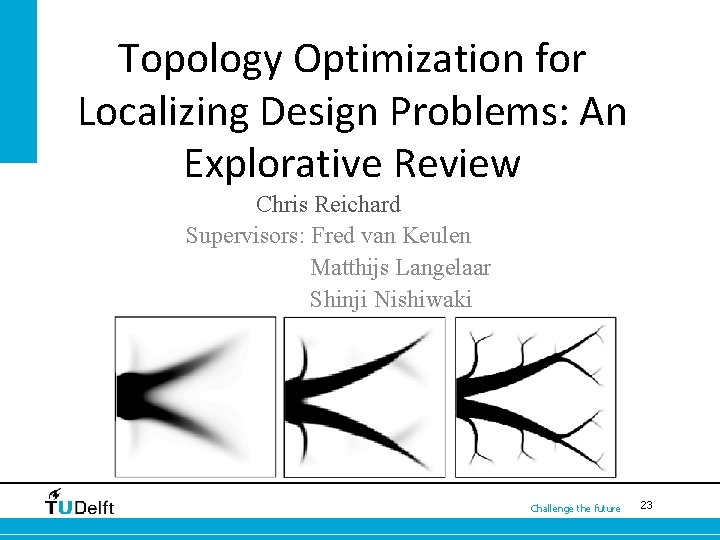
Topology Optimization for Localizing Design Problems: An Explorative Review Chris Reichard Supervisors: Fred van Keulen Matthijs Langelaar Shinji Nishiwaki Challenge the future 23
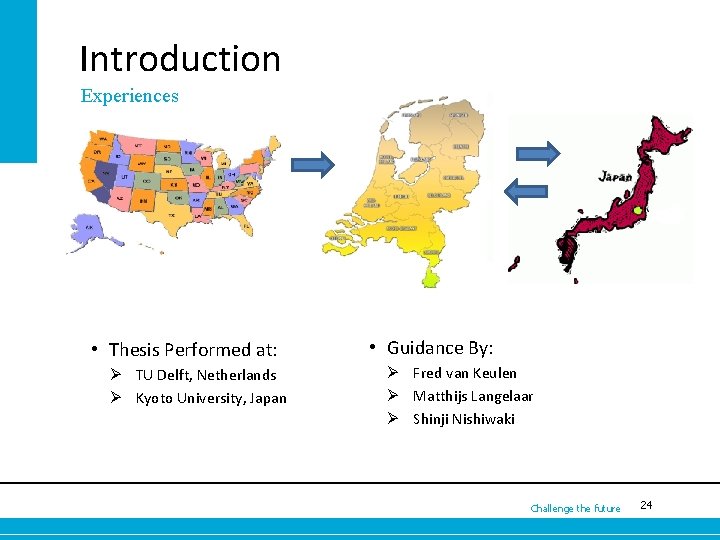
Introduction Experiences • Thesis Performed at: Ø TU Delft, Netherlands Ø Kyoto University, Japan • Guidance By: Ø Fred van Keulen Ø Matthijs Langelaar Ø Shinji Nishiwaki Challenge the future 4724
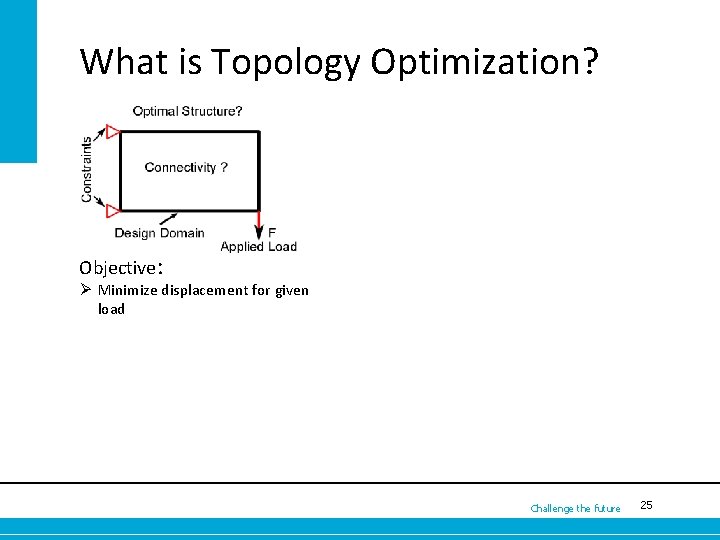
What is Topology Optimization? Objective: Ø Minimize displacement for given load Challenge the future 4825
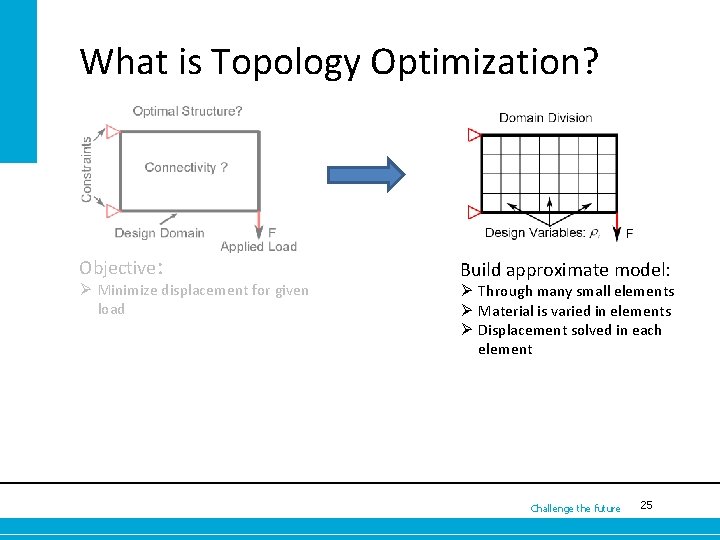
What is Topology Optimization? Objective: Ø Minimize displacement for given load Build approximate model: Ø Through many small elements Ø Material is varied in elements Ø Displacement solved in each element Challenge the future 4925
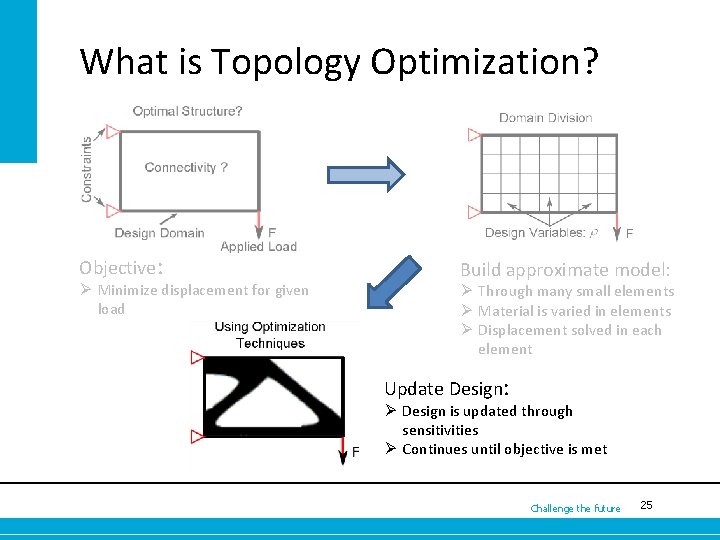
What is Topology Optimization? Objective: Ø Minimize displacement for given load Build approximate model: Ø Through many small elements Ø Material is varied in elements Ø Displacement solved in each element Update Design: Ø Design is updated through sensitivities Ø Continues until objective is met Challenge the future 5025
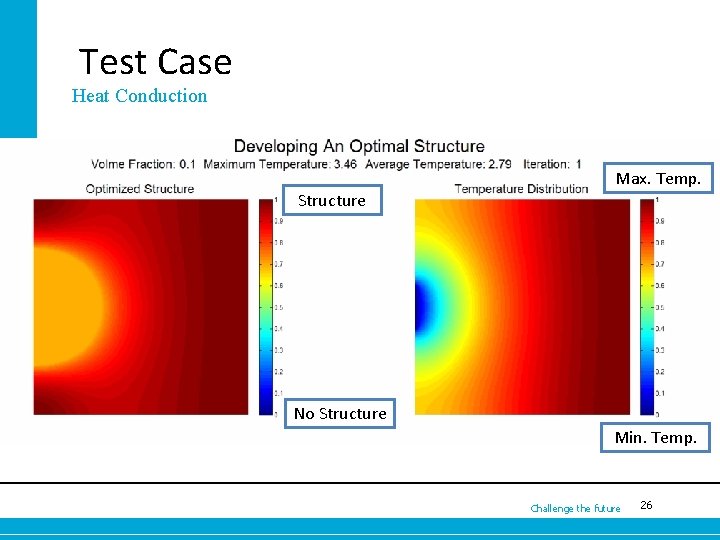
Test Case Heat Conduction Structure Max. Temp. No Structure Min. Temp. Challenge the future 5126
Research Plan • Investigate research problem Ø Examine how structure develops Ø Determine characteristics of localization • Research known techniques Ø Optimization Ø Modelling • Develop ideas to exploit problem Ø Investigate ideas Ø Assess feasibility Challenge the future 5227
Efficiency Issue Finite Element Analysis (FEA) is the main issue! • Time increases due to increase in elements Challenge the future 5328
Efficiency Issue Finite Element Analysis (FEA) is the main issue! Challenge the future 547
Summary Findings / Results Sub-Structuring • Benefits: Ø Reduced size of matrix to invert every iteration Ø Time savings Ø Buffer method is low cost • Challenges: Ø Developing matrix structure Challenge the future 5520
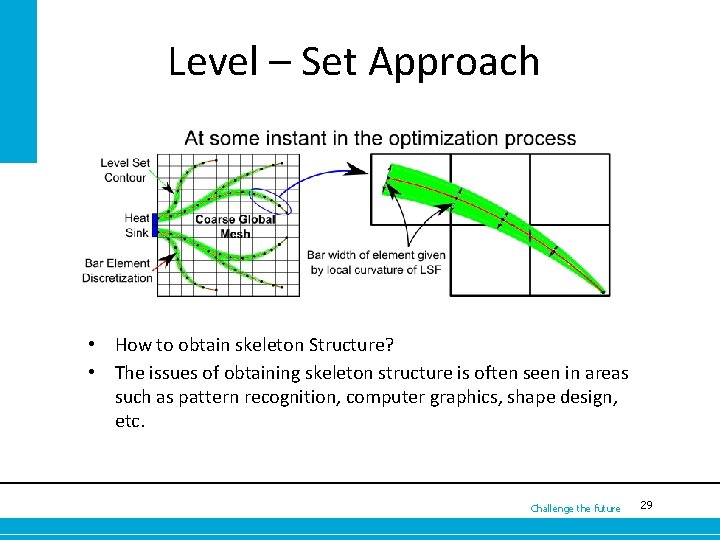
Level – Set Approach • How to obtain skeleton Structure? • The issues of obtaining skeleton structure is often seen in areas such as pattern recognition, computer graphics, shape design, etc. Challenge the future 5629
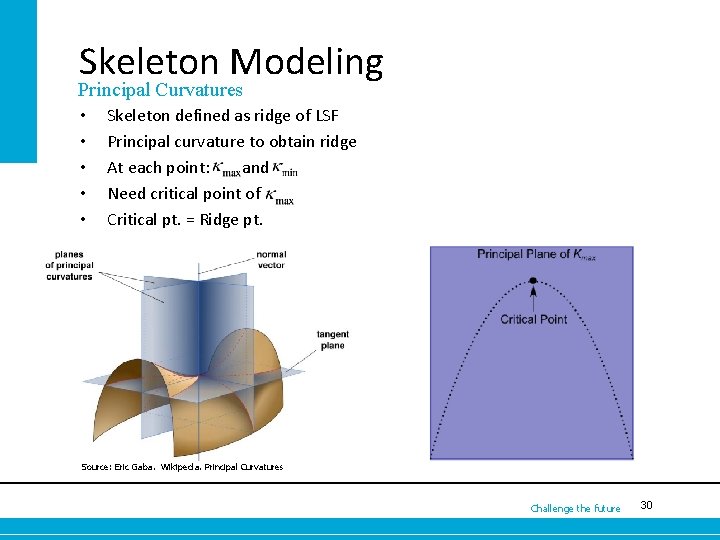
Skeleton Modeling Principal Curvatures • • • Skeleton defined as ridge of LSF Principal curvature to obtain ridge At each point: and Need critical point of Critical pt. = Ridge pt. Source: Eric Gaba. Wikipedia. Principal Curvatures Challenge the future 5730
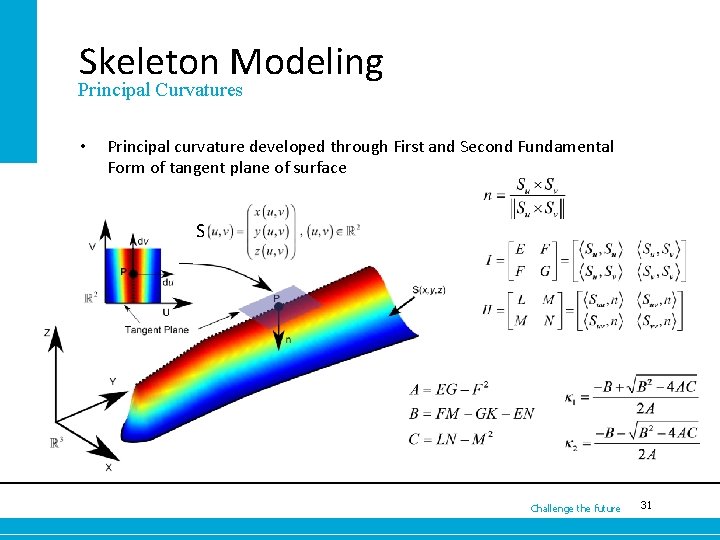
Skeleton Modeling Principal Curvatures • Principal curvature developed through First and Second Fundamental Form of tangent plane of surface S Challenge the future 5831
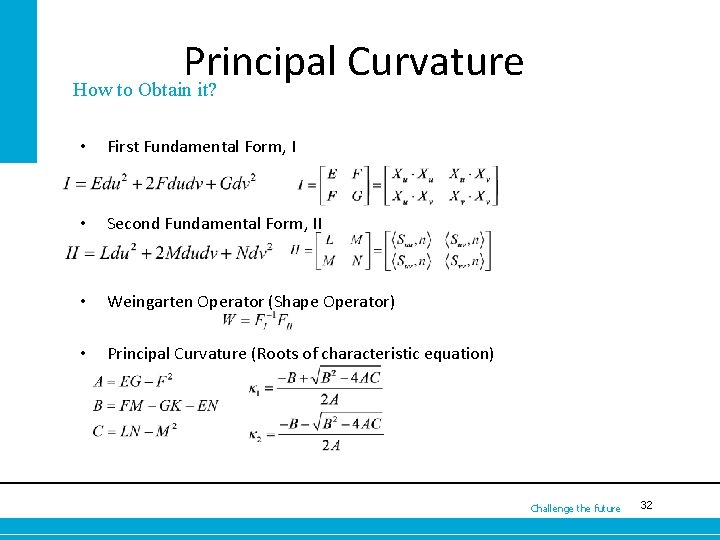
Principal Curvature How to Obtain it? • First Fundamental Form, I • Second Fundamental Form, II • Weingarten Operator (Shape Operator) • Principal Curvature (Roots of characteristic equation) Challenge the future 5932
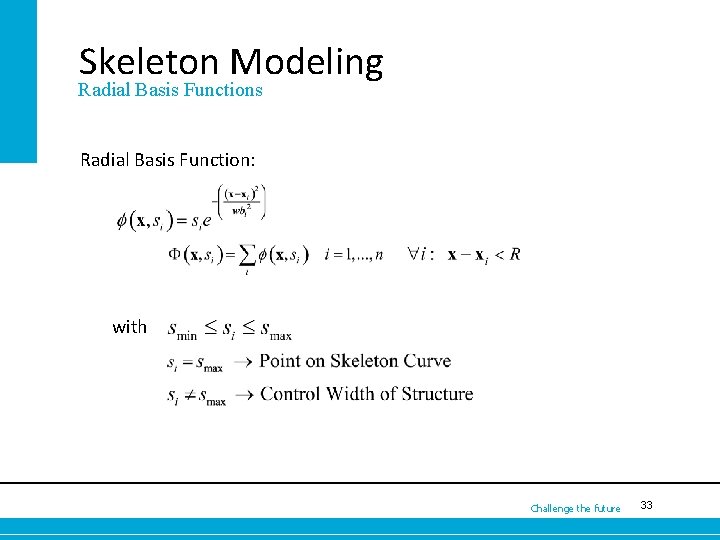
Skeleton Modeling Radial Basis Functions Radial Basis Function: with Challenge the future 6033
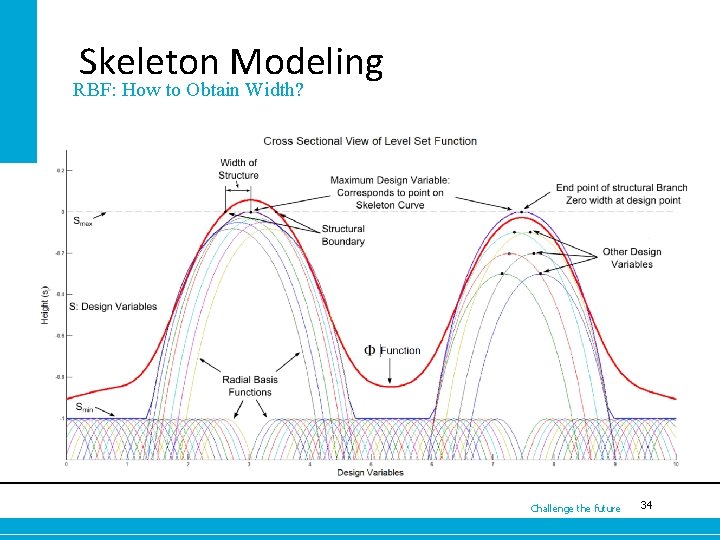
Skeleton Modeling RBF: How to Obtain Width? Challenge the future 6134
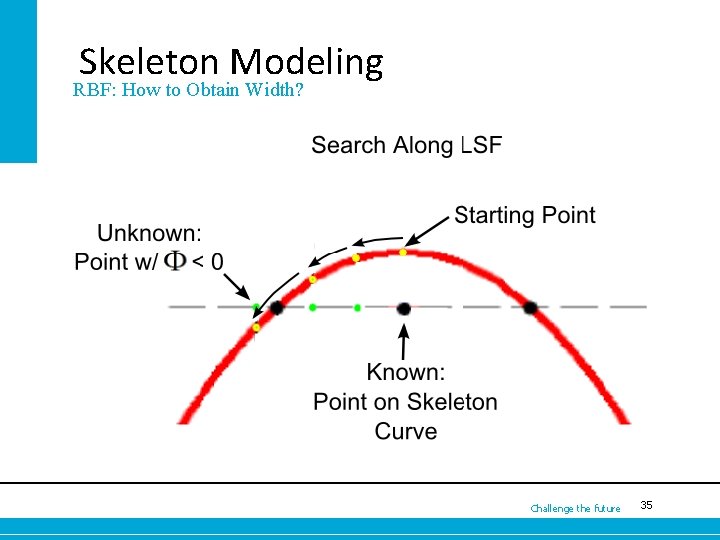
Skeleton Modeling RBF: How to Obtain Width? Challenge the future 6235
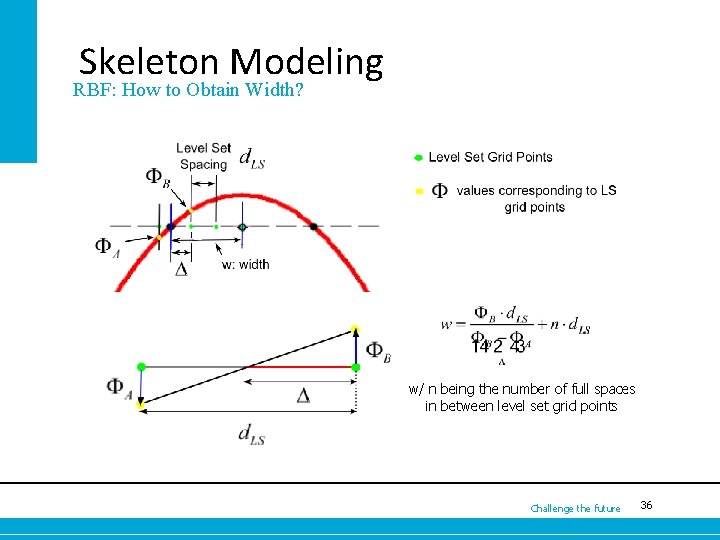
Skeleton Modeling RBF: How to Obtain Width? w/ n being the number of full spaces in between level set grid points Challenge the future 6336
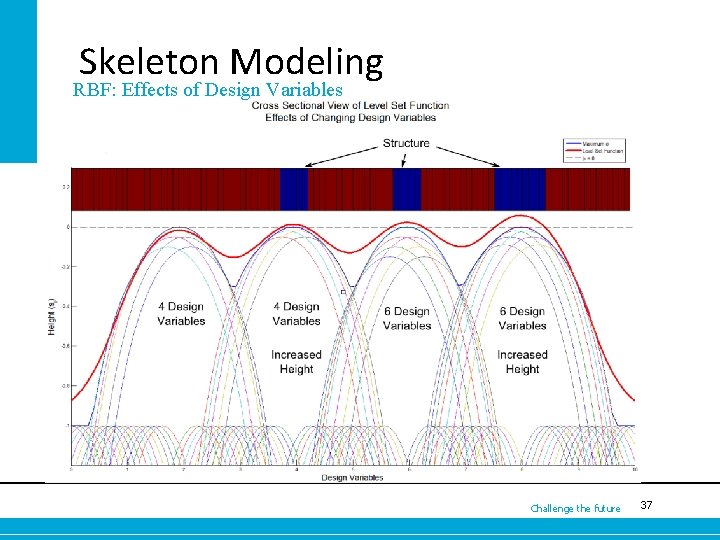
Skeleton Modeling RBF: Effects of Design Variables Challenge the future 6437
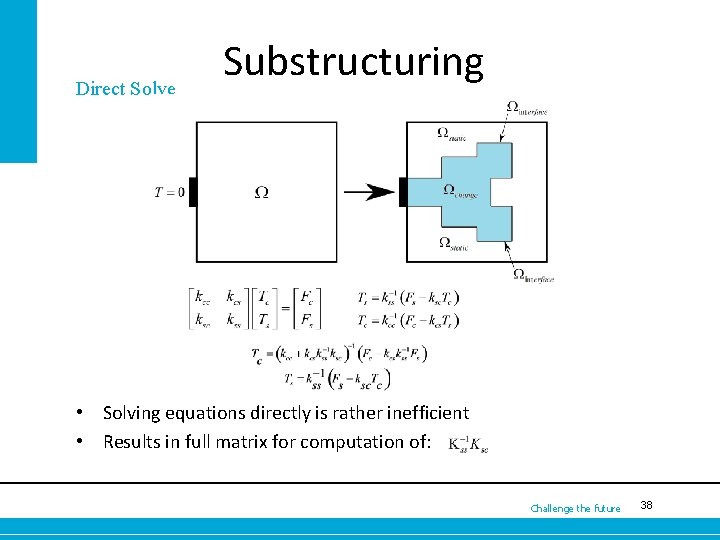
Direct Solve Substructuring • Solving equations directly is rather inefficient • Results in full matrix for computation of: Challenge the future 6538
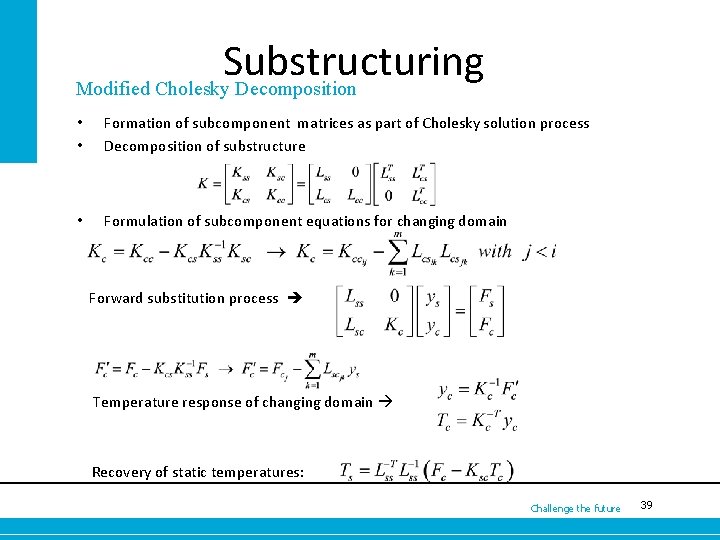
Substructuring Modified Cholesky Decomposition • • Formation of subcomponent matrices as part of Cholesky solution process Decomposition of substructure • Formulation of subcomponent equations for changing domain Forward substitution process Temperature response of changing domain Recovery of static temperatures: Challenge the future 6639
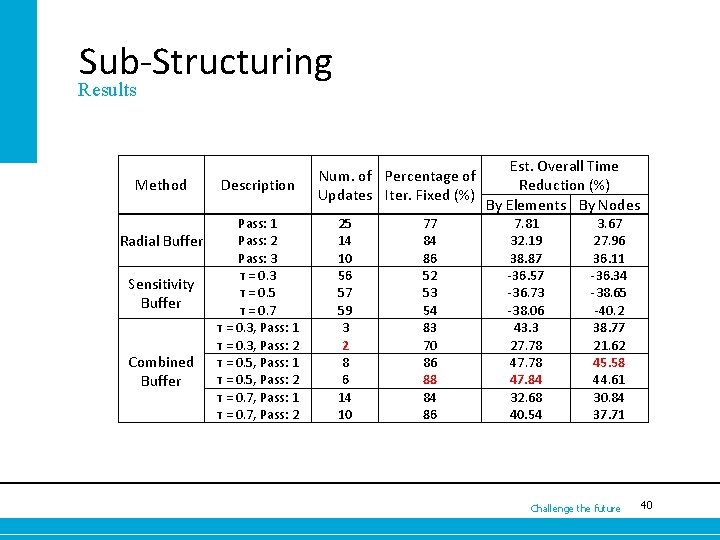
Sub-Structuring Results Method Description Pass: 1 Pass: 2 Radial Buffer Pass: 3 τ = 0. 3 Sensitivity τ = 0. 5 Buffer τ = 0. 7 τ = 0. 3, Pass: 1 τ = 0. 3, Pass: 2 Combined τ = 0. 5, Pass: 1 τ = 0. 5, Pass: 2 Buffer τ = 0. 7, Pass: 1 τ = 0. 7, Pass: 2 Num. of Percentage of Updates Iter. Fixed (%) 25 14 10 56 57 59 3 2 8 6 14 10 77 84 86 52 53 54 83 70 86 88 84 86 Est. Overall Time Reduction (%) By Elements By Nodes 7. 81 32. 19 38. 87 -36. 57 -36. 73 -38. 06 43. 3 27. 78 47. 84 32. 68 40. 54 3. 67 27. 96 36. 11 -36. 34 -38. 65 -40. 2 38. 77 21. 62 45. 58 44. 61 30. 84 37. 71 Challenge the future 6740
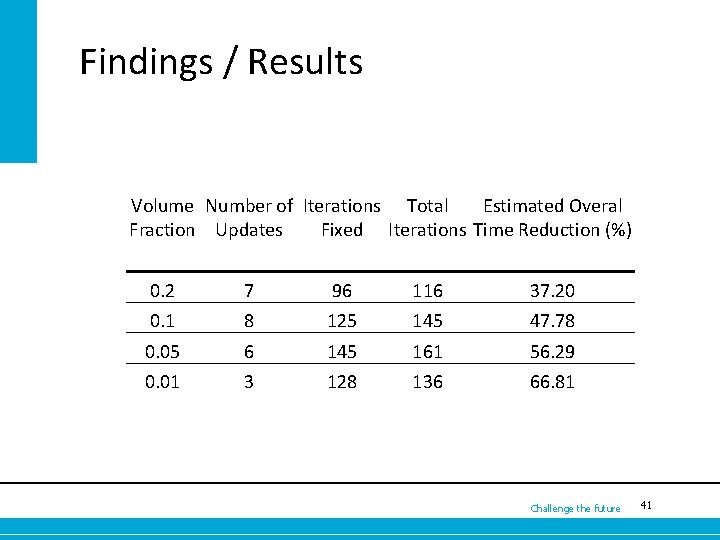
Findings / Results Volume Number of Iterations Total Estimated Overal Fraction Updates Fixed Iterations Time Reduction (%) 0. 2 7 96 116 37. 20 0. 1 8 125 145 47. 78 0. 05 6 145 161 56. 29 0. 01 3 128 136 66. 81 Challenge the future 6841
- Slides: 69