
Topics spatial saturation TOF imaging chemical saturation magnetization
- Slides: 48
Topics • • spatial saturation TOF imaging chemical saturation magnetization transfer
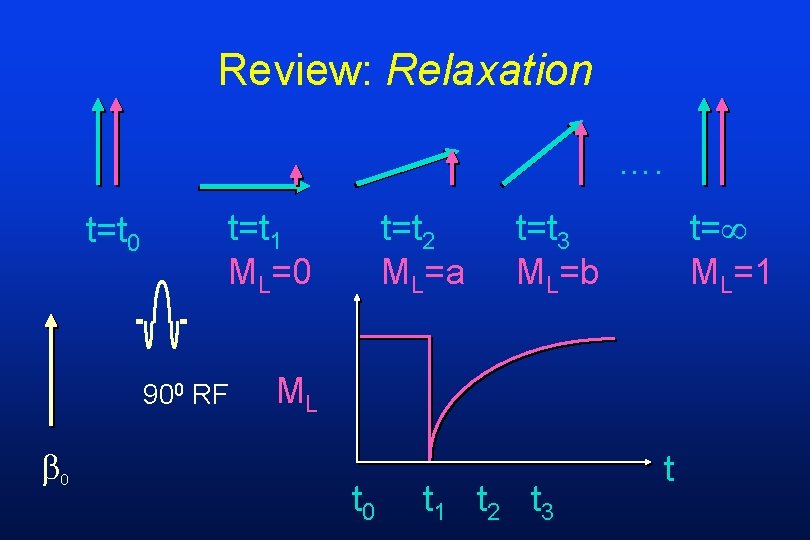
Review: Relaxation …. t=t 0 t=t 1 ML=0 900 RF t=t 2 ML=a t=t 3 ML=b t= ML=1 ML t 0 t 1 t 2 t 3 t
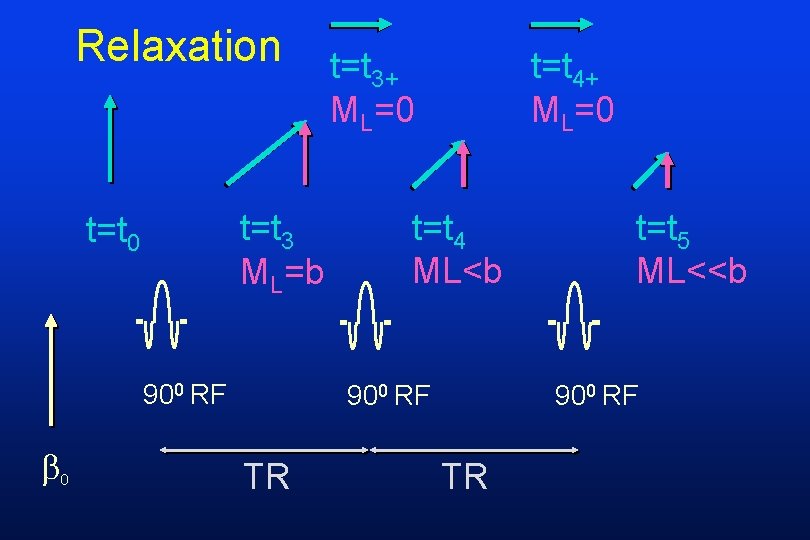
Relaxation t=t 3 ML=b t=t 0 900 RF t=t 3+ ML=0 t=t 4 ML<b 900 RF TR t=t 5 ML<<b 900 RF TR
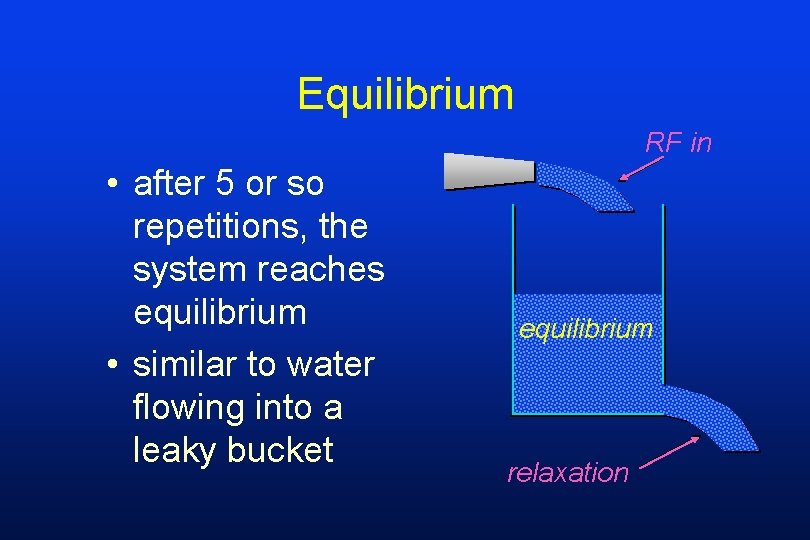
Equilibrium RF in • after 5 or so repetitions, the system reaches equilibrium • similar to water flowing into a leaky bucket equilibrium relaxation
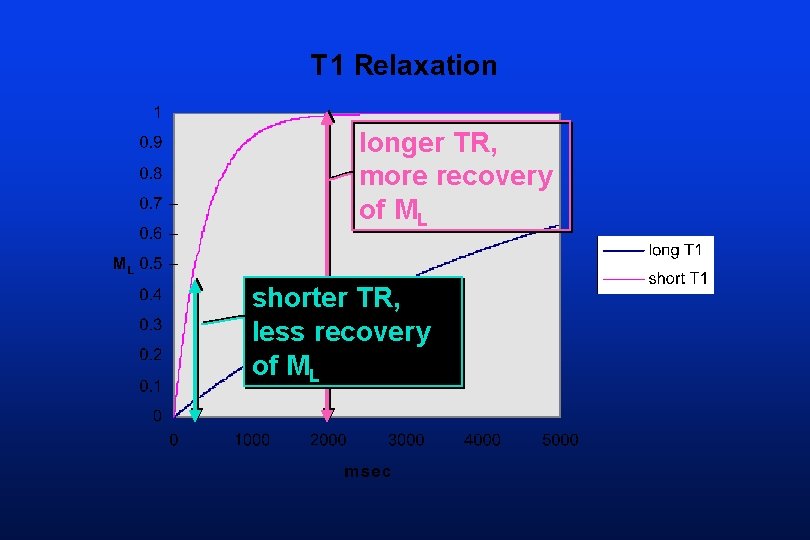
longer TR, more recovery of ML shorter TR, less recovery of ML
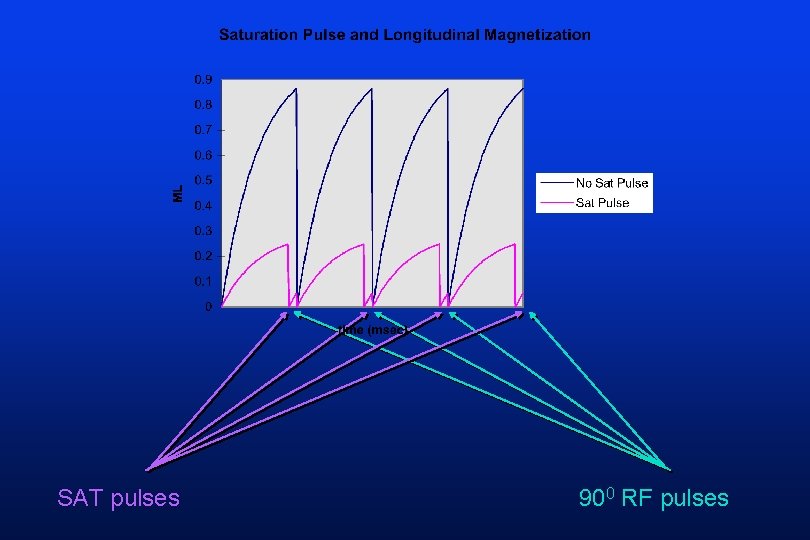
TR and ML • prolonged TRs allow for more recovery of ML • shorter TRs allow for less recovery of ML – condition referred to as “partial saturation”
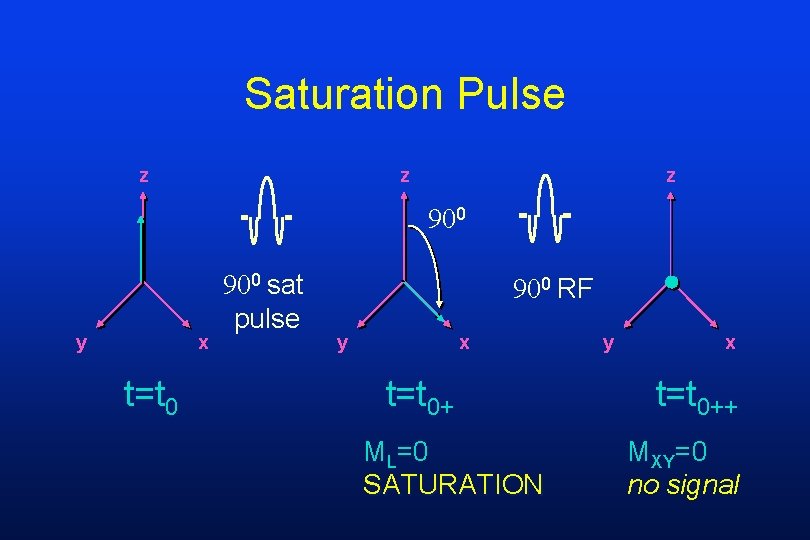
Saturation • “total” magnetization – application of additional RF pulses has no effect on proton orientation • saturation exists only briefly – net magnetization recovers longitudinal relaxation immediately after protons are “saturated”
Types of Saturation • • spatial fat water magnetization transfer (1 st cousin)
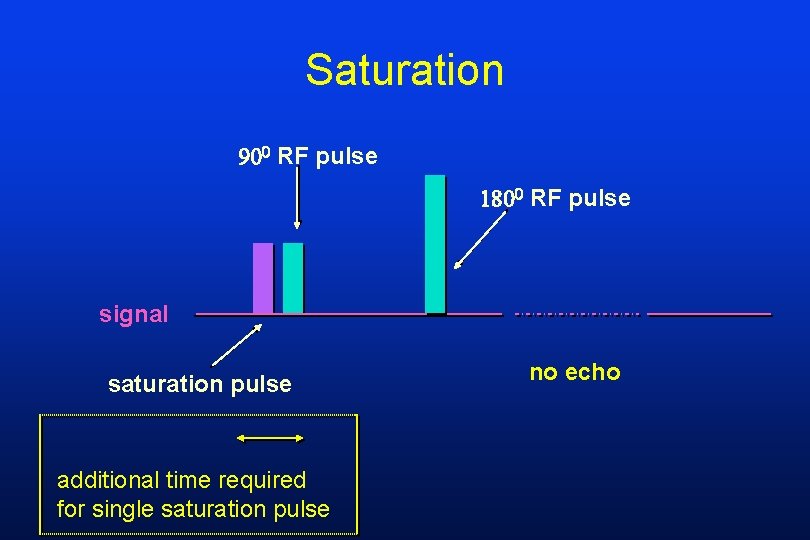
Spatial Saturation • application of an RF pulse immediately prior to the imaging sequence saturates all of the protons under the influence of that pulse
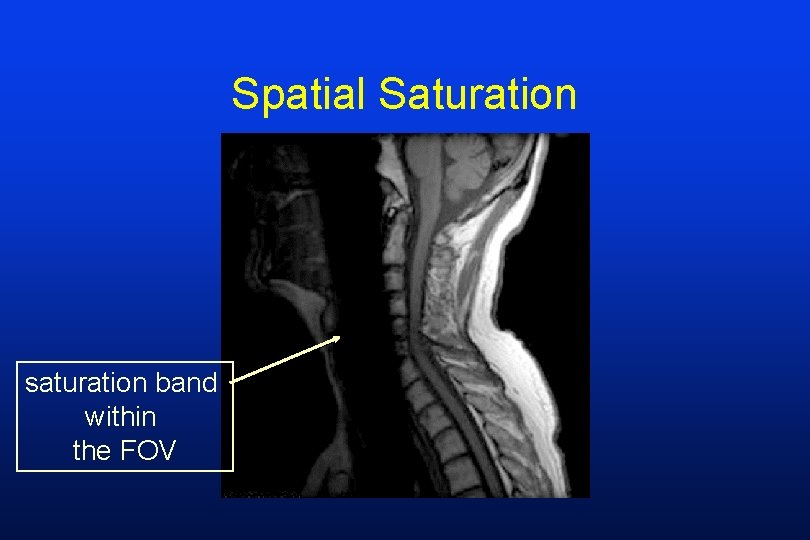
Spatial Saturation purpose/advantages • reduce motion artifacts in the phase encoding direction – swallowing – CSF pulsation – respiratory motion • reduce signal from flowing blood • facilitate angiography/venography
Spatial Saturation disadvantages • fewer slices per TR – timing of saturation pulse prolongs effective TR interval • higher SAR
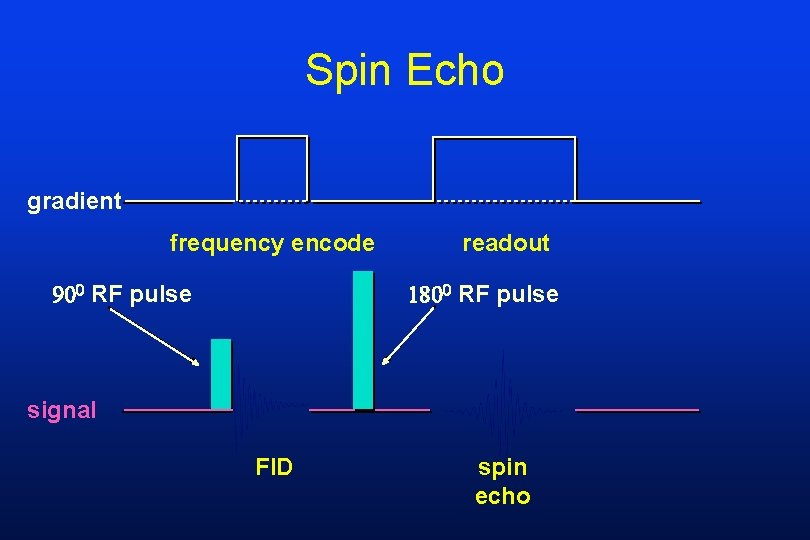
Spin Echo gradient frequency encode RF pulse readout RF pulse signal FID spin echo
Saturation RF pulse signal saturation pulse additional time required for single saturation pulse no echo
Saturation Pulse z z z 0 x y t=t 0 0 sat pulse 0 RF x y t=t 0+ ML=0 SATURATION y x t=t 0++ MXY=0 no signal
SAT pulses 900 RF pulses
Spatial Saturation saturation band within the FOV
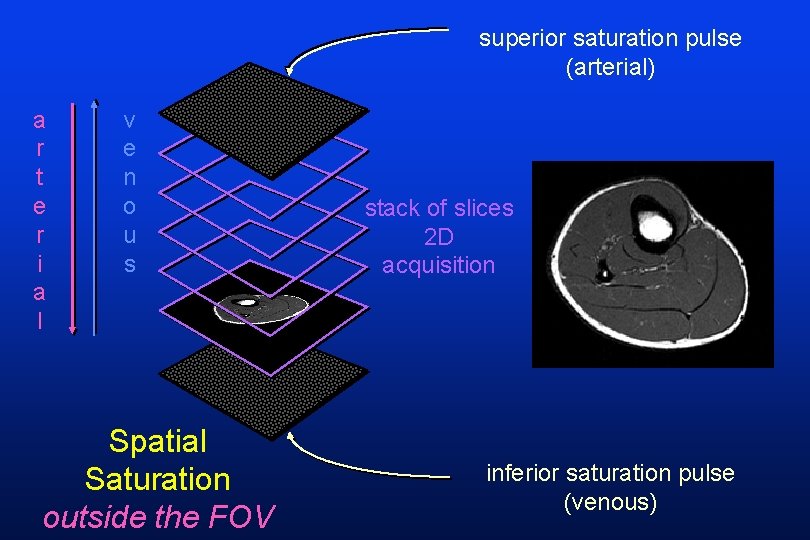
superior saturation pulse (arterial) a r t e r i a l v e n o u s Spatial Saturation outside the FOV stack of slices 2 D acquisition inferior saturation pulse (venous)
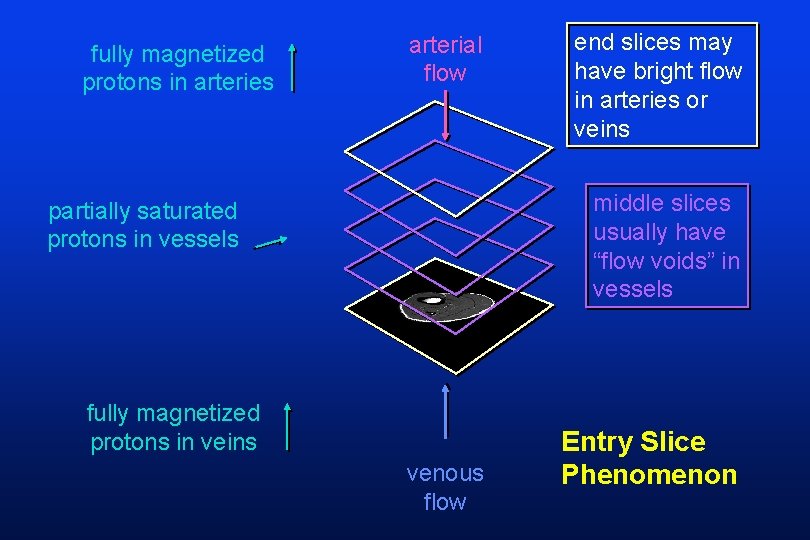
fully magnetized protons in arteries arterial flow end slices may have bright flow in arteries or veins middle slices usually have “flow voids” in vessels partially saturated protons in vessels fully magnetized protons in veins venous flow Entry Slice Phenomenon
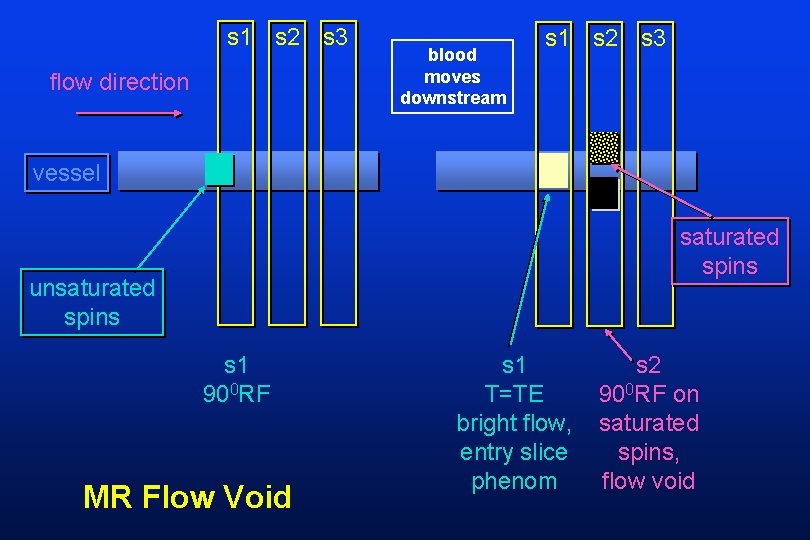
s 1 s 2 s 3 flow direction blood moves downstream s 1 s 2 s 3 vessel saturated spins unsaturated spins s 1 900 RF MR Flow Void s 1 T=TE bright flow, entry slice phenom s 2 900 RF on saturated spins, flow void
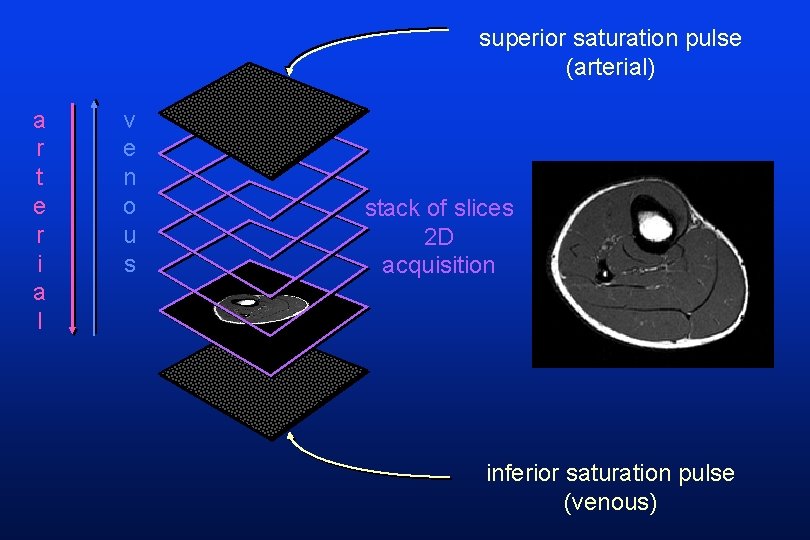
superior saturation pulse (arterial) a r t e r i a l v e n o u s stack of slices 2 D acquisition inferior saturation pulse (venous)
Summary: Flow Effects • entry slice phenomenon due to unsaturated spins • flow void due to saturation of previous slice coupled with downstream migration of spins • spatial presaturation bands can reduce (eliminate) signal from flowing blood
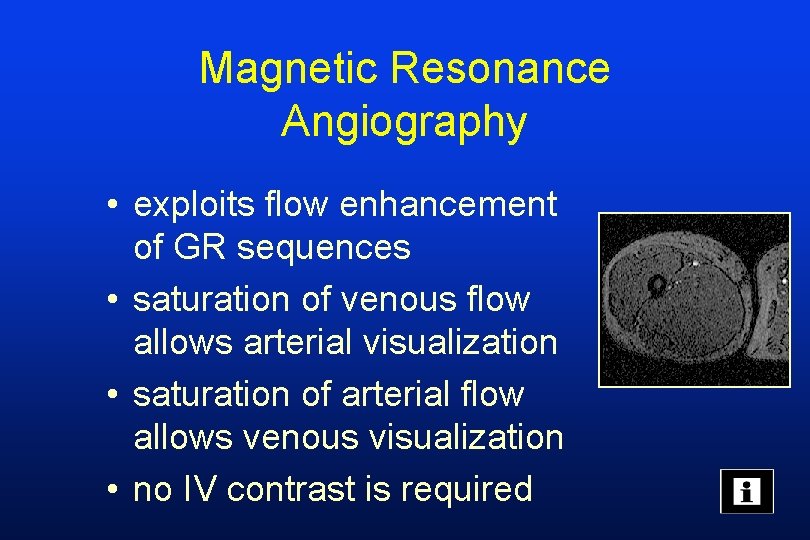
Magnetic Resonance Angiography • exploits flow enhancement of GR sequences • saturation of venous flow allows arterial visualization • saturation of arterial flow allows venous visualization • no IV contrast is required
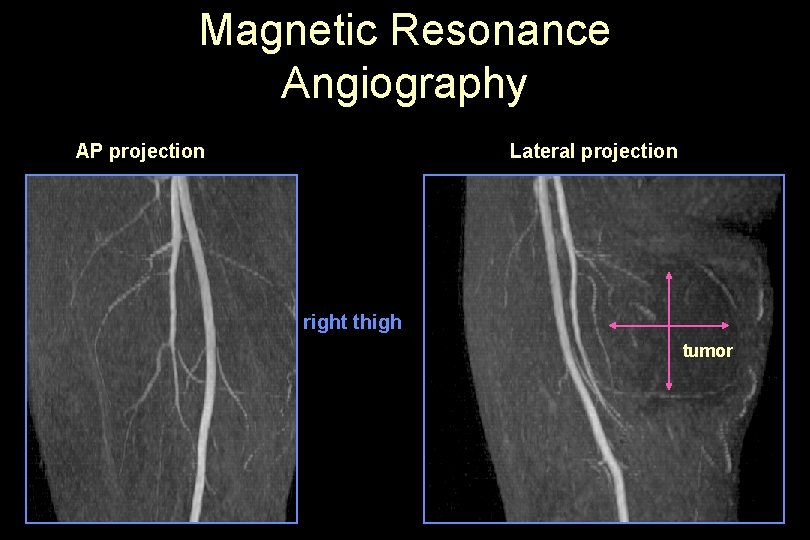
Magnetic Resonance Angiography AP projection Lateral projection right thigh tumor
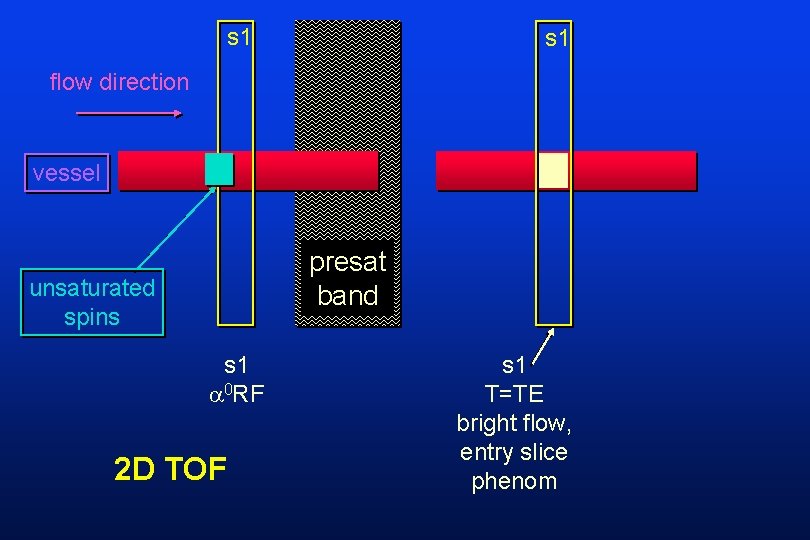
2 D TOF Angiography • anatomy imaged using a series of gradient echo images – each image is acquired separately – all slices experience entry slice phenomenon • saturation pulse placed proximal for venous imaging, distal for arterial imaging
s 1 flow direction vessel presat band unsaturated spins s 1 0 RF 2 D TOF s 1 T=TE bright flow, entry slice phenom
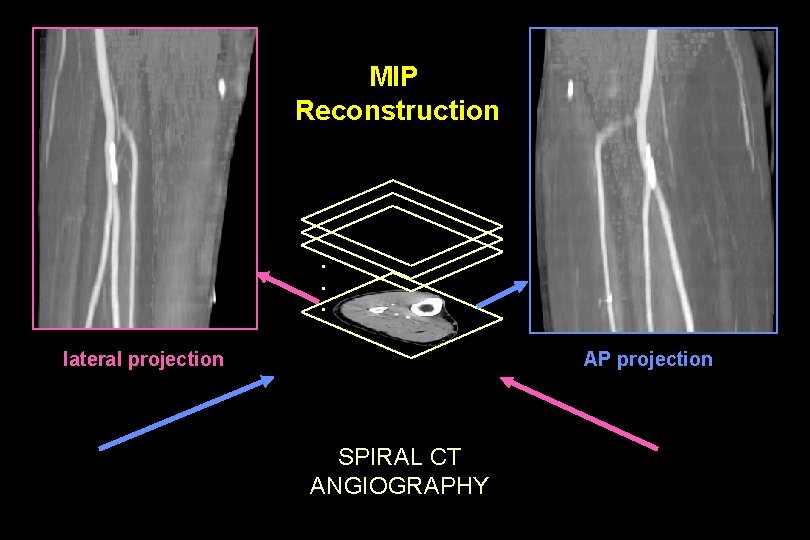
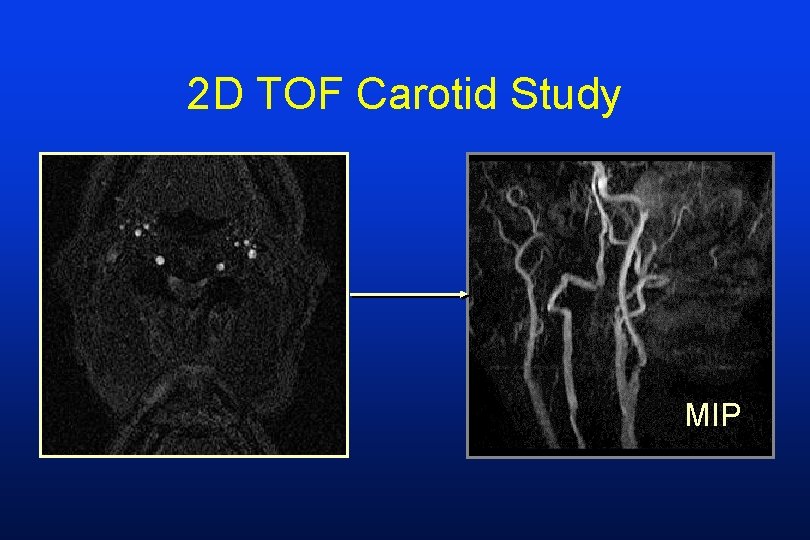
2 D TOF Angiography • saturation band is located the same distance from each slice to maximize its effect – “walking presat” • vascular images reconstructed using maximum intensity projection technique
MIP Reconstruction . . . lateral projection AP projection SPIRAL CT ANGIOGRAPHY
2 D TOF • GR images used – short TR (~ 20 -40 msec) – very short TE • shortest TE times minimize intravoxel dephasing resulting in maximum flow effects – small to medium flip angles
2 D TOF Carotid Study MIP
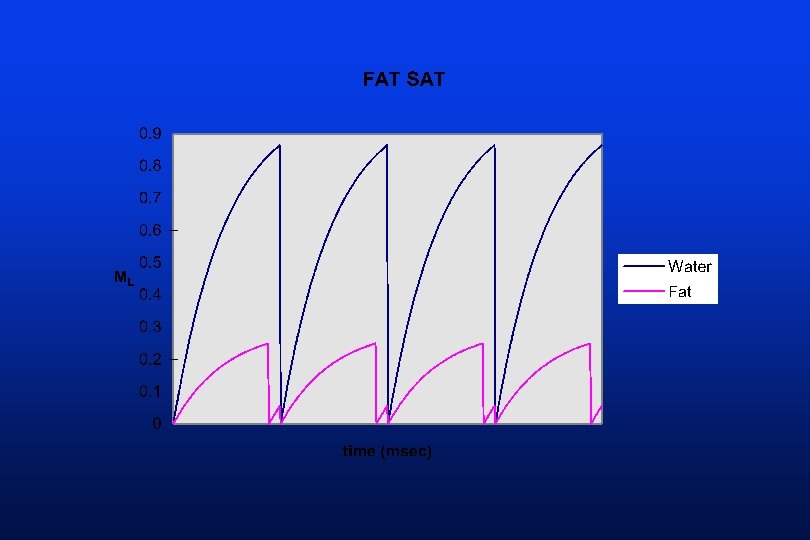
Chemical Saturation • similar to spatial saturation • narrow band RF pulse causes selective saturation of water or fat protons – “chem sat” – “fat sat” • compatible with many imaging sequences
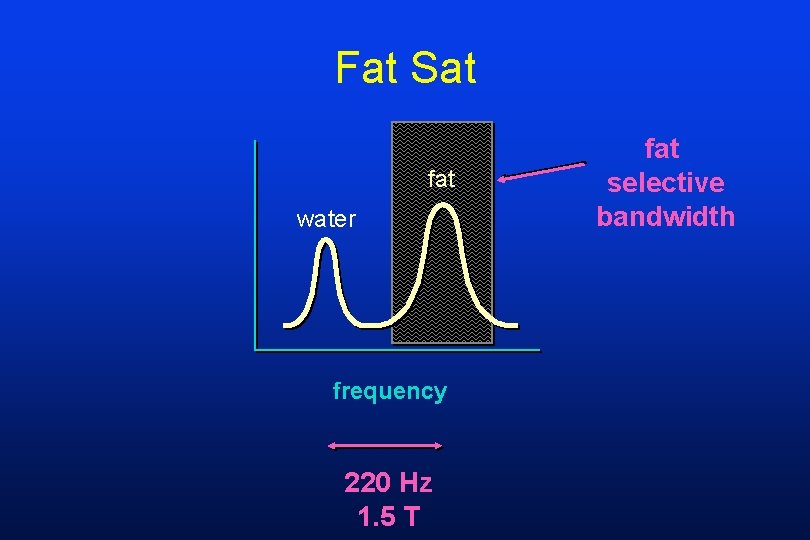
Fat Sat fat water frequency 220 Hz 1. 5 T fat selective bandwidth
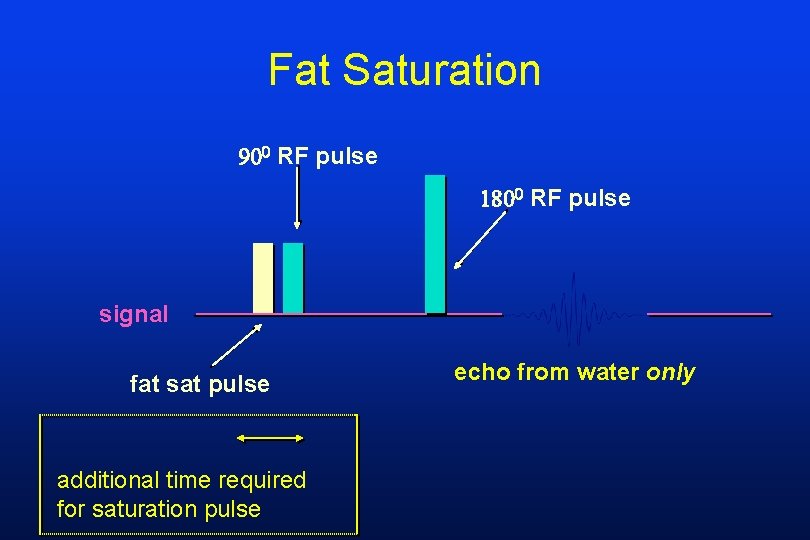
Fat Saturation RF pulse signal fat sat pulse additional time required for saturation pulse echo from water only
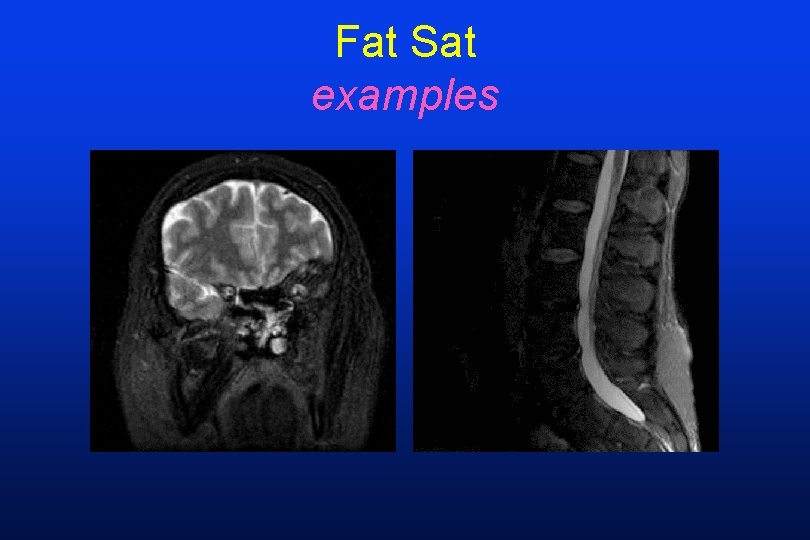
Fat Sat examples
Fat Sat advantages • increase conspicuity of fluid on T 2 weighted images – widens dynamic range • addresses FSE fat-fluid isointensity problem • post-gadolinium T 1 weighted fat sat • reduced respiratory motion artifact
Fat Sat disadvantages • fewer slices per TR – timing of saturation pulse prolongs effective TR interval • higher SAR • requires homogenous magnet – shimming
Fat Sat disadvantages • requires uniformly shaped body part – doesn’t work well at base of neck, crook of ankle, etc. • not recommended with FOV > 30 cms – unreliable • works poorly at lower fields • S/N ratio drops
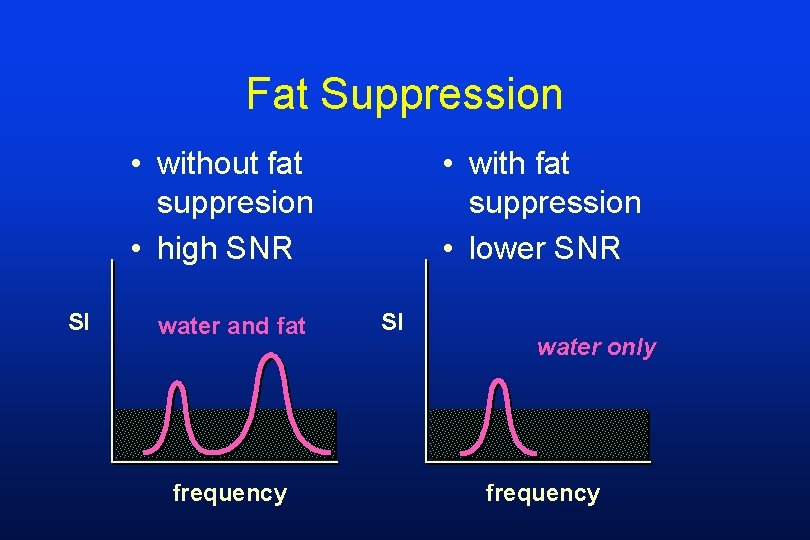
Fat Suppression and SNR • non fat-suppressed image – each image pixel comprised of signal from water and fat in the imaging voxel • fat-suppression – reduces total signal by suppression of fat from the voxel – reduces SNR
Fat Suppression • without fat suppresion • high SNR SI water and fat frequency • with fat suppression • lower SNR SI water only frequency
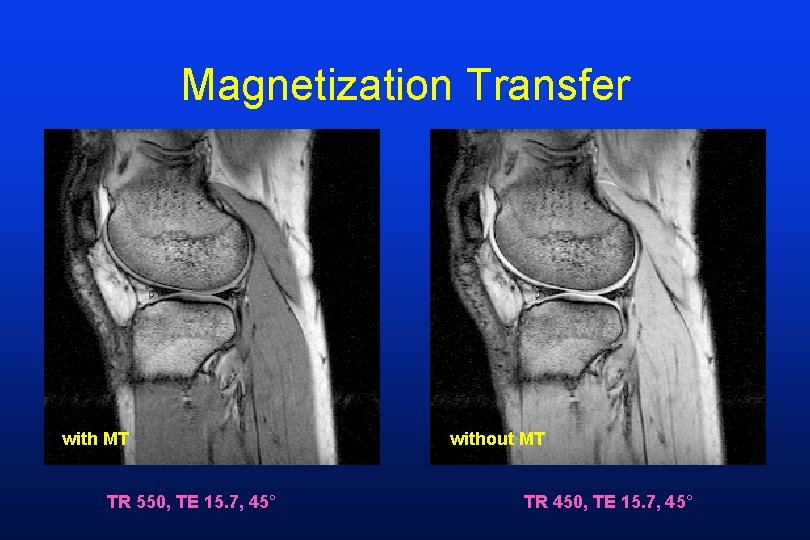
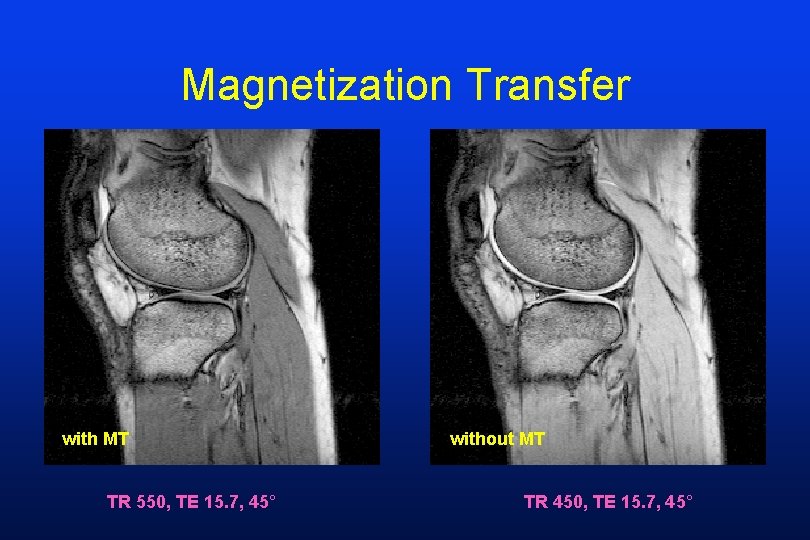
Magnetization Transfer with MT TR 550, TE 15. 7, 45° without MT TR 450, TE 15. 7, 45°
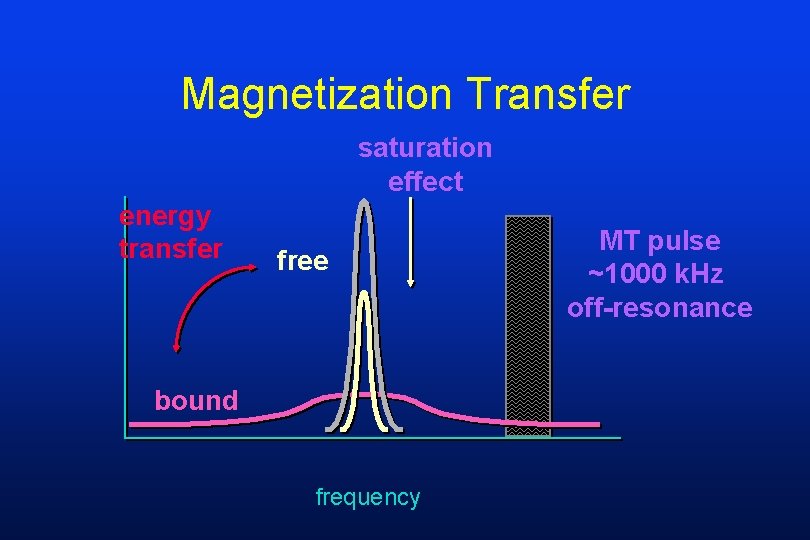
Magnetization Transfer • first cousin of Fat Sat • off-resonance RF pulse applied similar to Fat Sat pulse • “bound water” proton pool absorbs the RF energy – energy is transferred to “unbound” proton pool
Magnetization Transfer • think of as “tissue SAT” • tissues high in proteins (brain, muscle) become darker – MT pulse causes a selective saturation effect • tissues low in proteins relatively unaffected – fat – free fluid/water/edema
Magnetization Transfer saturation effect energy transfer free bound frequency MT pulse ~1000 k. Hz off-resonance
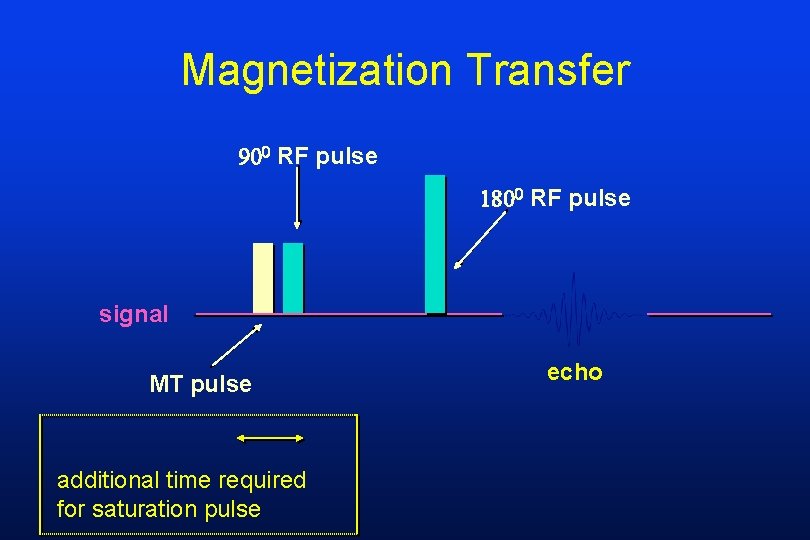
Magnetization Transfer RF pulse signal MT pulse additional time required for saturation pulse echo
Magnetization Transfer advantages • generates T 2 -like weighting with GR images – good cartilage sequence • suppresses background tissues – improved TOF angiography – increased contrast (gadolinium) visualization
Magnetization Transfer advantages • magnetic field homogeneity not critical • generates images with new contrast relationships • compatible with many sequences; also compatible with fat sat
Magnetization Transfer disadvantages • fewer slices per TR – timing of saturation pulse prolongs effective TR interval • higher SAR
Magnetization Transfer with MT TR 550, TE 15. 7, 45° without MT TR 450, TE 15. 7, 45°