
TOPIC XIII INTERPRETING GEOLOGIC HISTORY How Old Absolute
TOPIC XIII INTERPRETING GEOLOGIC HISTORY
How Old? ? • Absolute Dating – Determine the actual age • Relative Dating – Determine which thing is older
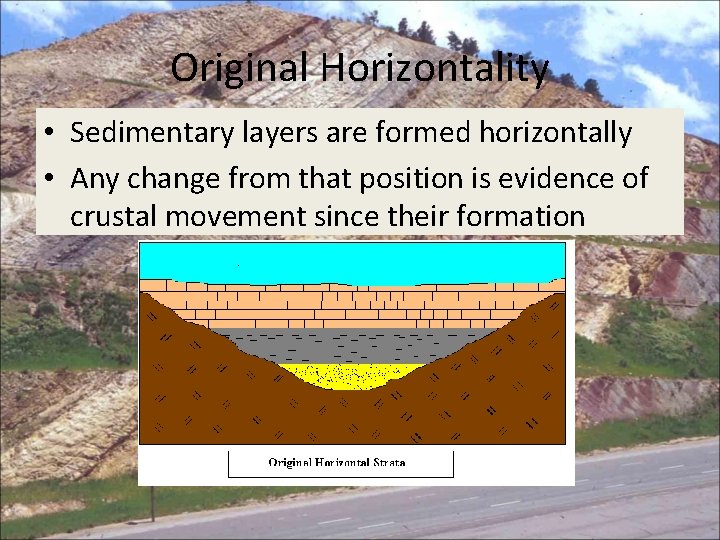
Original Horizontality • Sedimentary layers are formed horizontally • Any change from that position is evidence of crustal movement since their formation
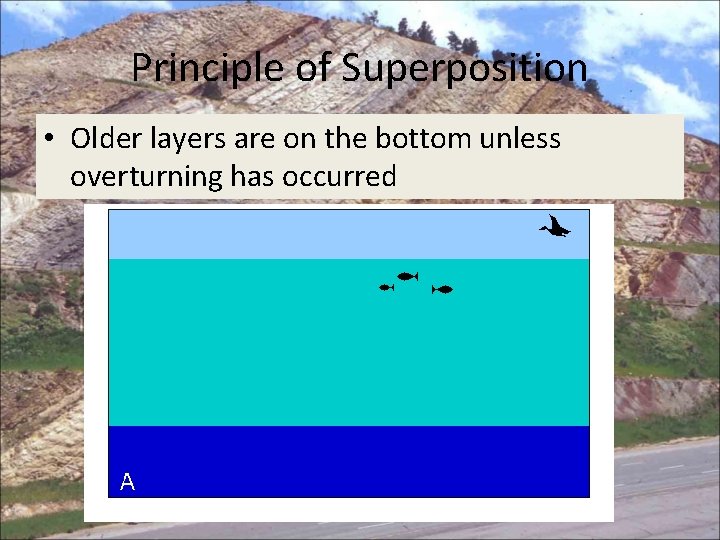
Principle of Superposition • Older layers are on the bottom unless overturning has occurred
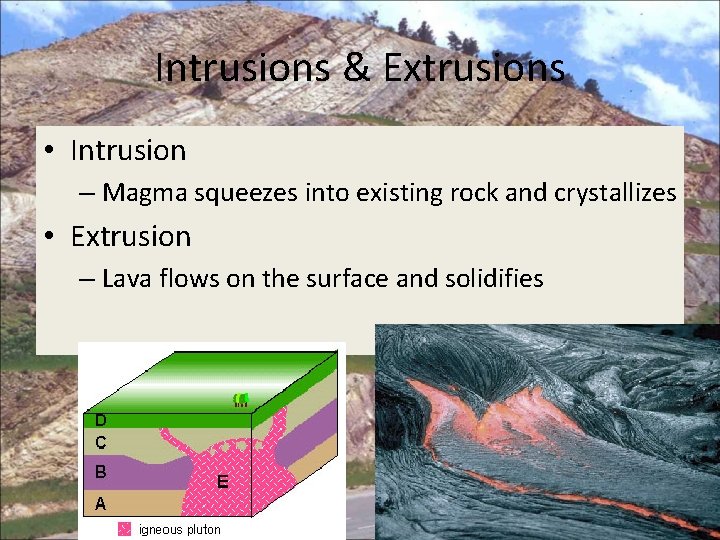
Intrusions & Extrusions • Intrusion – Magma squeezes into existing rock and crystallizes • Extrusion – Lava flows on the surface and solidifies
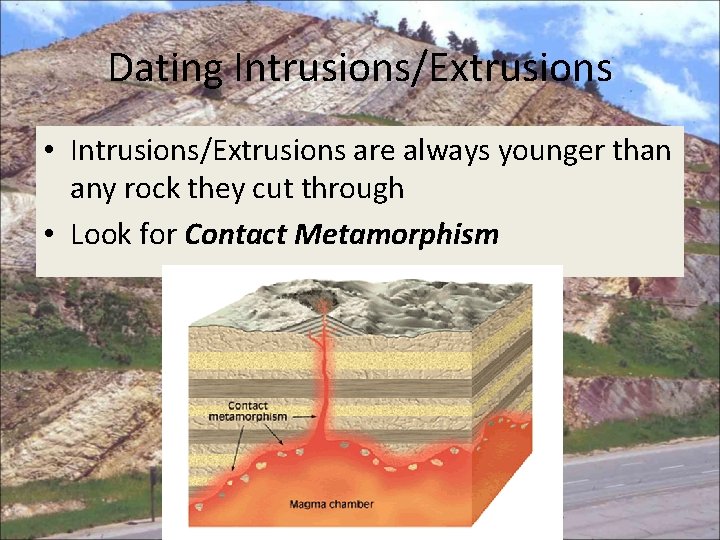
Dating Intrusions/Extrusions • Intrusions/Extrusions are always younger than any rock they cut through • Look for Contact Metamorphism
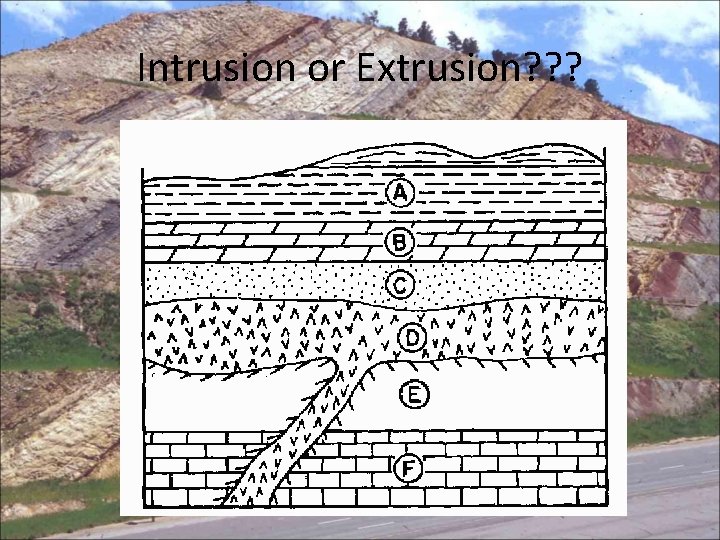
Intrusion or Extrusion? ? ?
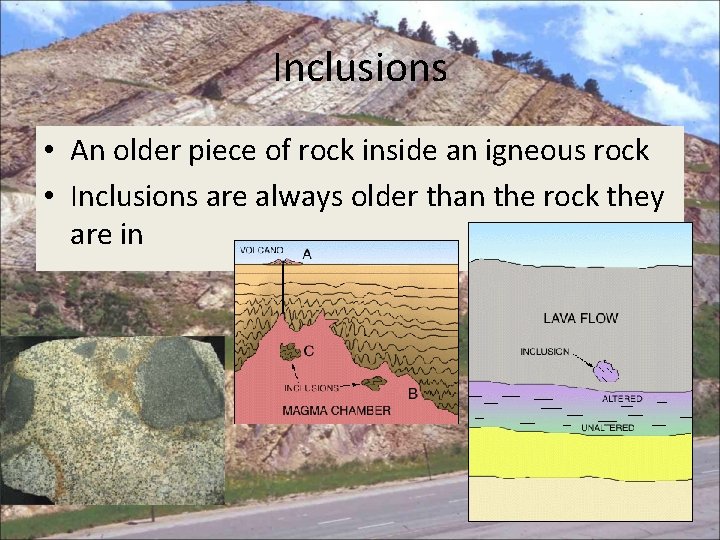
Inclusions • An older piece of rock inside an igneous rock • Inclusions are always older than the rock they are in
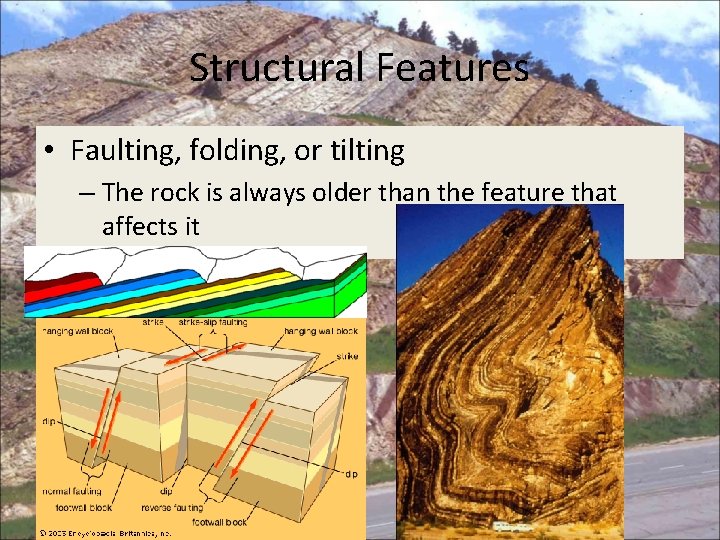
Structural Features • Faulting, folding, or tilting – The rock is always older than the feature that affects it
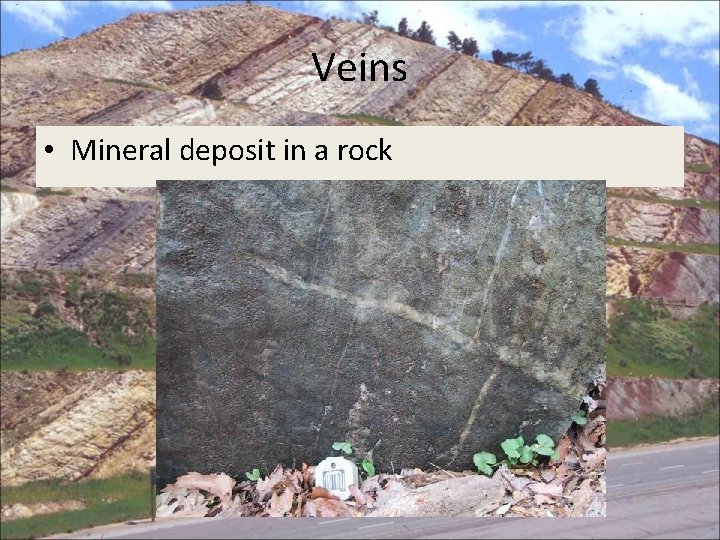
Veins • Mineral deposit in a rock
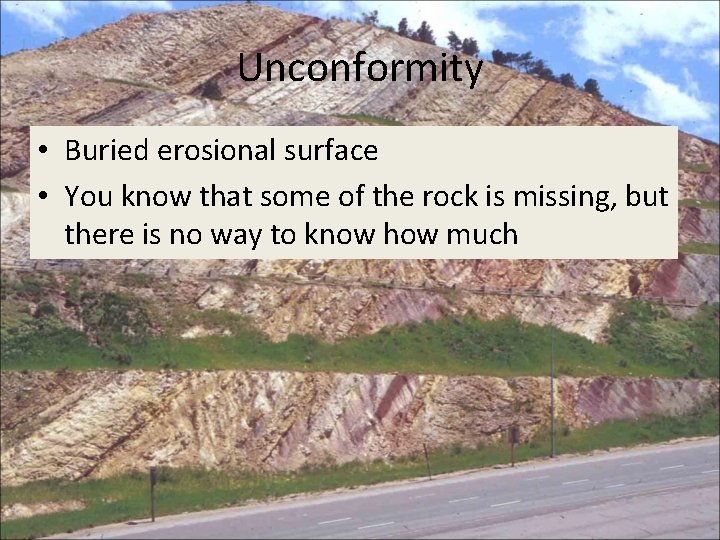
Unconformity • Buried erosional surface • You know that some of the rock is missing, but there is no way to know how much
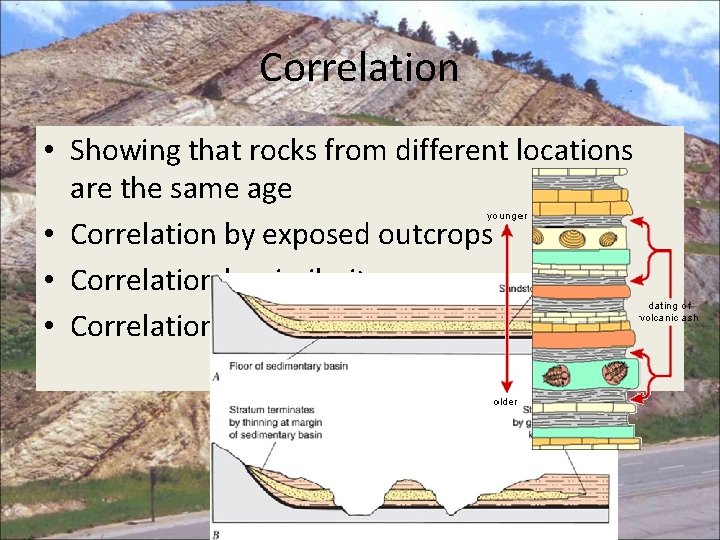
Correlation • Showing that rocks from different locations are the same age • Correlation by exposed outcrops • Correlation by similarity • Correlation by use of fossils
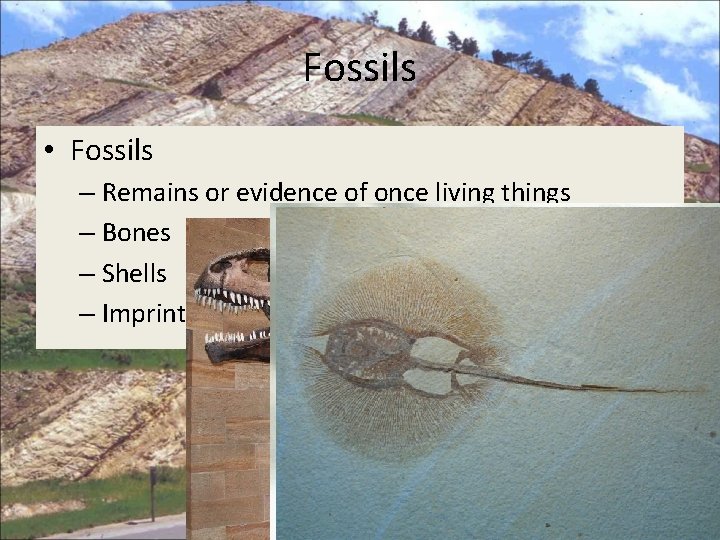
Fossils • Fossils – Remains or evidence of once living things – Bones – Shells – Imprints
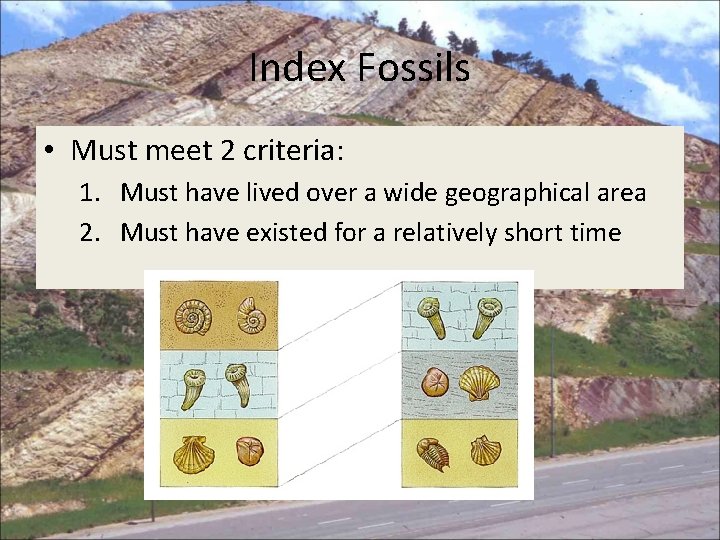
Index Fossils • Must meet 2 criteria: 1. Must have lived over a wide geographical area 2. Must have existed for a relatively short time
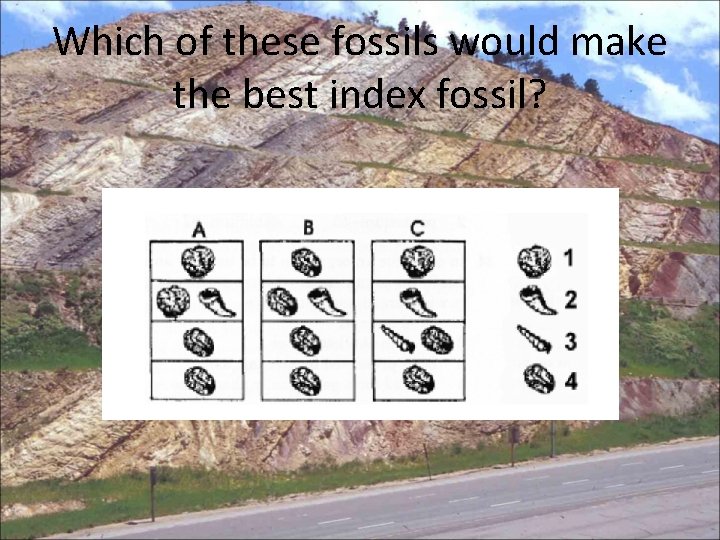
Which of these fossils would make the best index fossil?
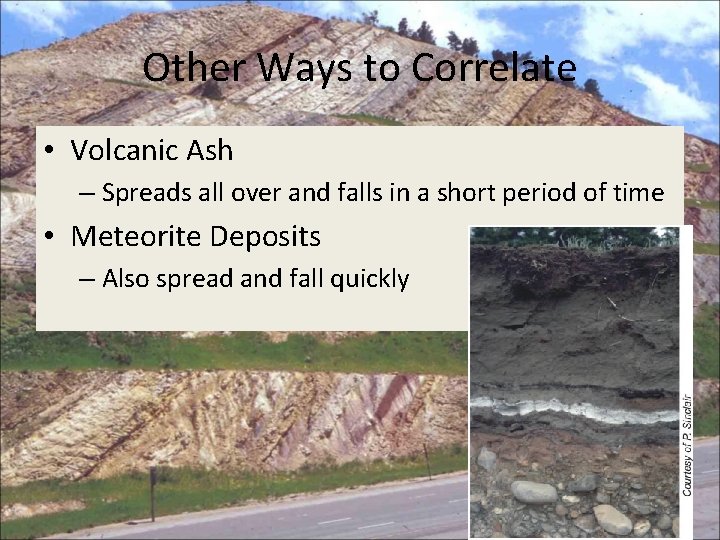
Other Ways to Correlate • Volcanic Ash – Spreads all over and falls in a short period of time • Meteorite Deposits – Also spread and fall quickly
- Slides: 16