
Topic Variation L 1 Genetic Variation Learning Objectives
Topic: Variation L 1: Genetic Variation Learning Objectives: 1. Describe the two types of variation, genetic and environmental. 2. Explain how genetic information is passed from parent to offspring. 3. Compare and contrast different forms of reproduction.
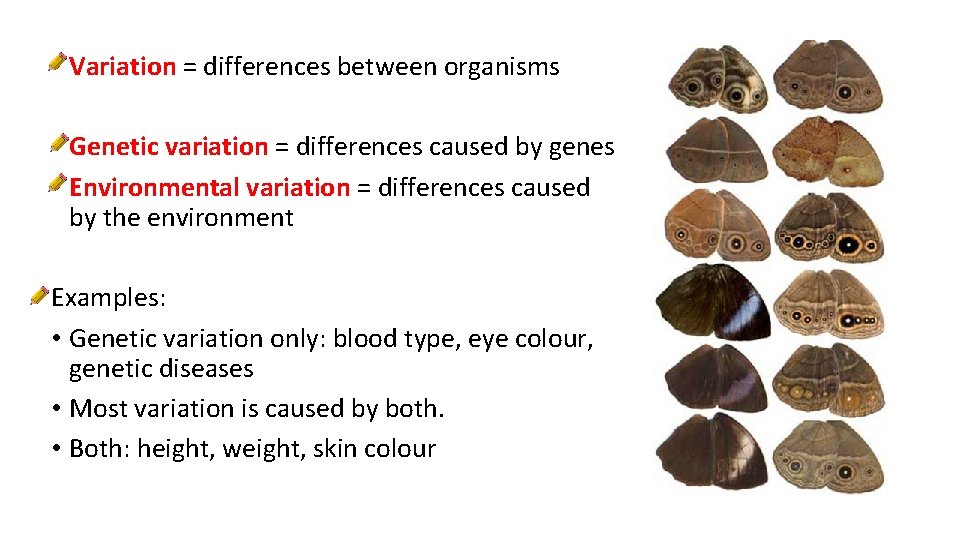
• Variation = differences between organisms • Genetic variation = differences caused by genes • Environmental variation = differences caused by the environment Examples: • Genetic variation only: blood type, eye colour, genetic diseases • Most variation is caused by both. • Both: height, weight, skin colour
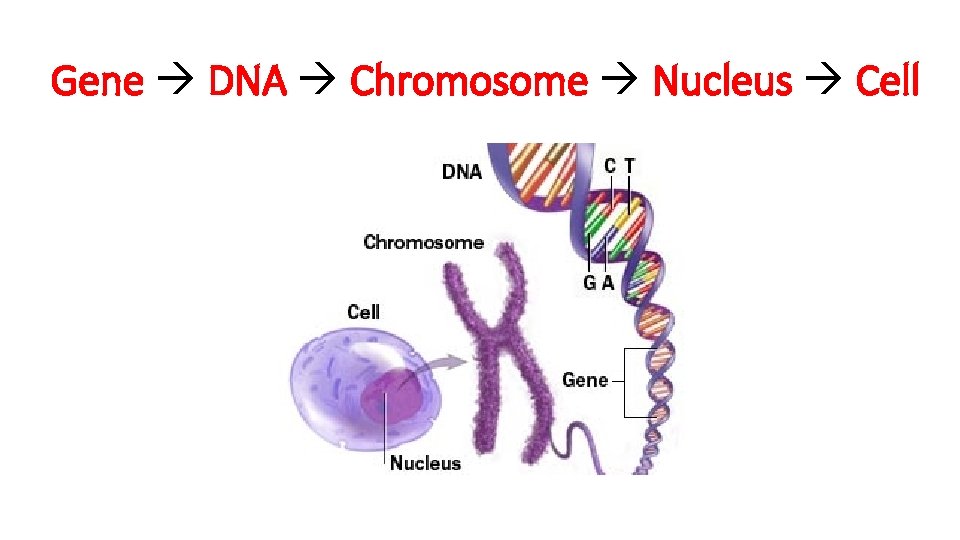
How is genetic information transferred? • DNA • Chromosome • Nucleus • Gene • Cell Can you put these in order from smallest to largest?
How is genetic information transferred? Gene DNA Chromosome Nucleus Cell • A gene is a section of your DNA. It contains the instructions to control one feature (eg. eye colour). • DNA is the name of the chemical that carries genetic information. • Chromosomes are long molecules coiled together made of DNA. • Chromosomes are stored inside the nucleus of the cell.
Gene DNA Chromosome Nucleus Cell
Half of the genes comes from each parent • Chromosomes come in pairs. • One chromosome is from the father and one is from the mother. • Each chromosome carries the same genes. • This means that you get two sets of each gene. • The unique combination of these genes makes you unique!

Different forms of the same gene • Allele = different forms of the same gene • Example: • The gene for eye colour can come in two different forms (alleles), one for blue eyes and one for brown eyes. • Genes can be represented by a letter and the different alleles are represented by either an uppercase letter (B) or a lowercase letter (b).
One allele come from each parent • You receive one allele from each parent, forming a two allele combination (BB, Bb, or bb). • Dominant allele = this allele will always cause the dominant trait • Recessive allele = this allele will only show the recessive trait if both alleles are recessive (rare trait) • Example: • BB and Bb shows the dominant trait. bb shows the recessive trait.
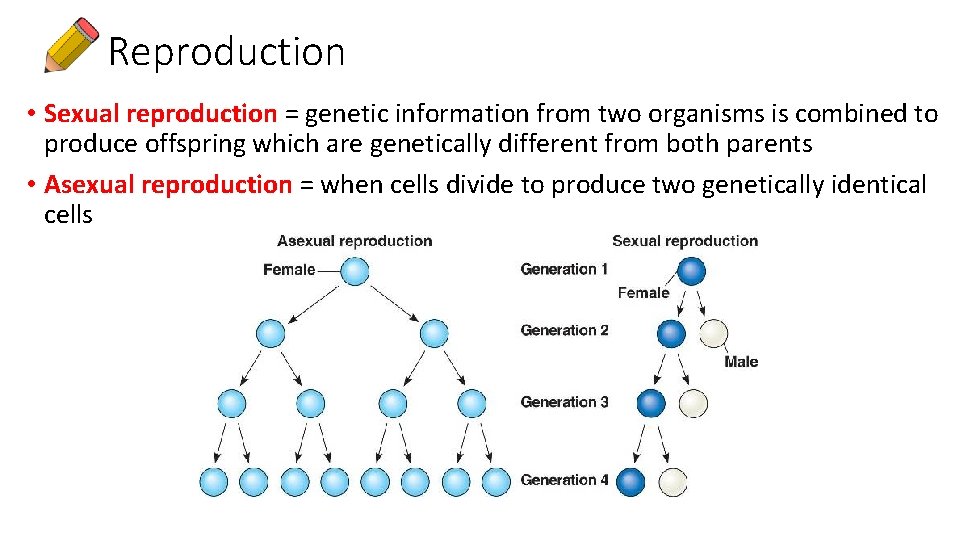
Reproduction • Sexual reproduction = genetic information from two organisms is combined to produce offspring which are genetically different from both parents • Asexual reproduction = when cells divide to produce two genetically identical cells
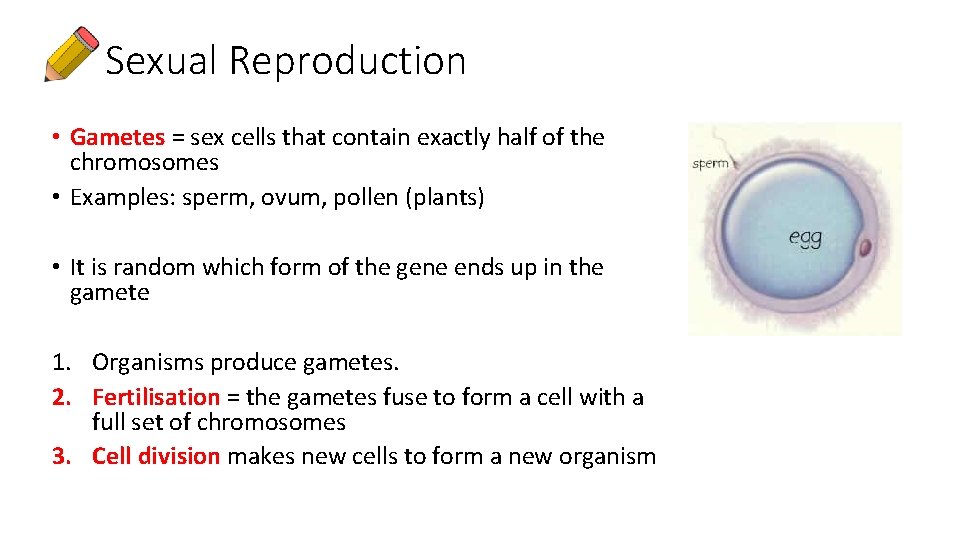
Sexual Reproduction • Gametes = sex cells that contain exactly half of the chromosomes • Examples: sperm, ovum, pollen (plants) • It is random which form of the gene ends up in the gamete 1. Organisms produce gametes. 2. Fertilisation = the gametes fuse to form a cell with a full set of chromosomes 3. Cell division makes new cells to form a new organism

Asexual Reproduction • Asexual reproduction produces cells that are identical. • This is how plants and animals grow and repair. • Some organisms can reproduce to produce offspring that are genetically identical to the parent.
- Slides: 11