
TOPIC SENTENCES Organization of Informational Writing DEFINITION A
- Slides: 8
TOPIC SENTENCES Organization of Informational Writing
DEFINITION §A topic sentence tells the main idea of the paragraph as well as what the author wants to say about the topic.
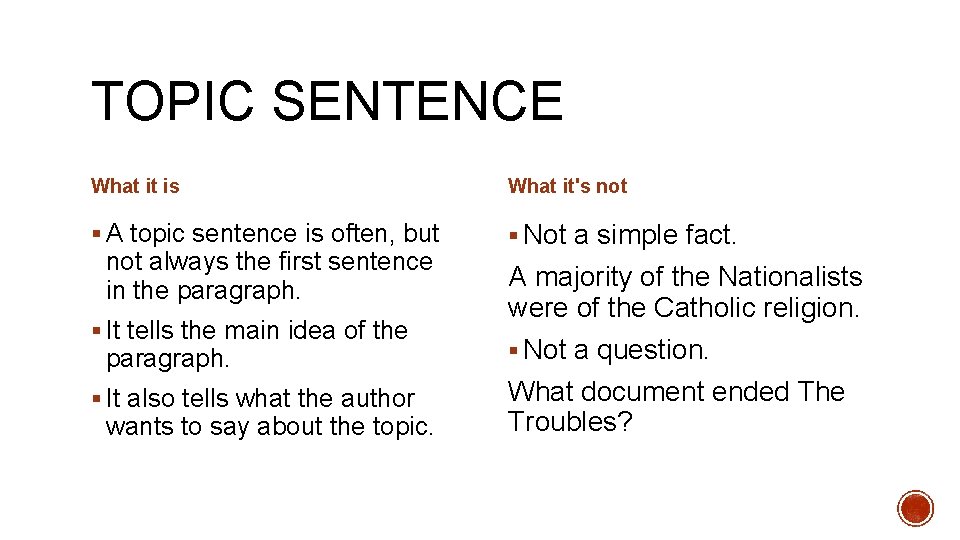
TOPIC SENTENCE What it is What it's not § A topic sentence is often, but § Not a simple fact. not always the first sentence in the paragraph. § It tells the main idea of the paragraph. § It also tells what the author wants to say about the topic. A majority of the Nationalists were of the Catholic religion. § Not a question. What document ended The Troubles?
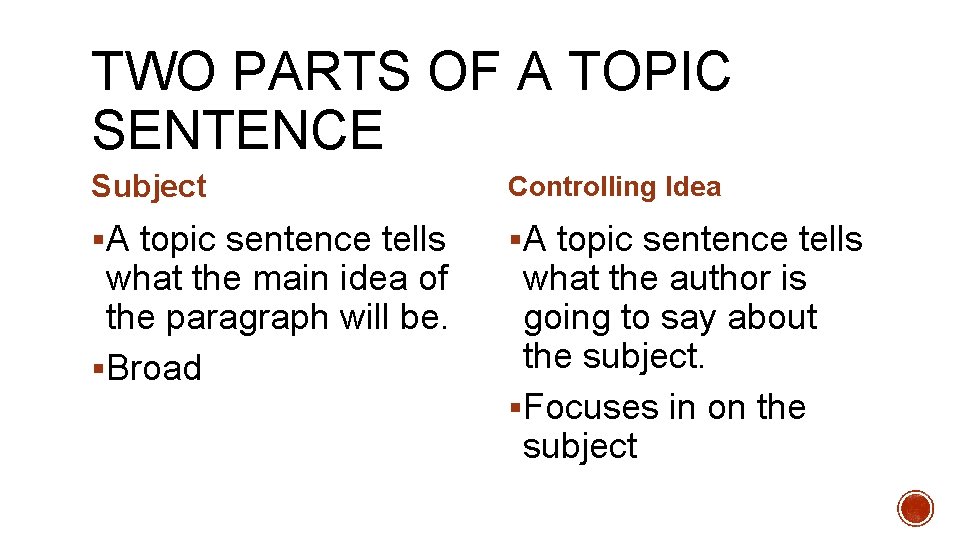
TWO PARTS OF A TOPIC SENTENCE Subject Controlling Idea §A topic sentence tells what the main idea of the paragraph will be. §Broad what the author is going to say about the subject. §Focuses in on the subject
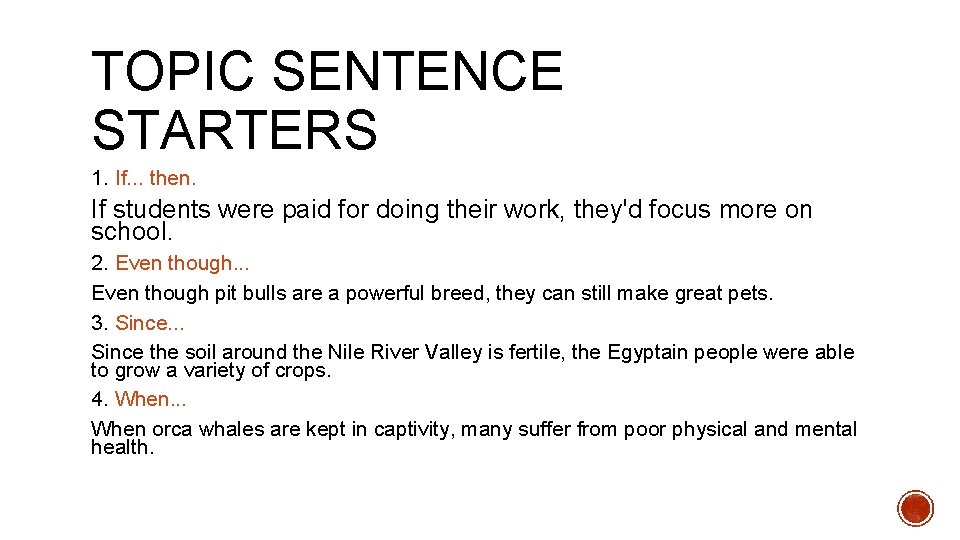
TOPIC SENTENCE STARTERS 1. If. . . then. If students were paid for doing their work, they'd focus more on school. 2. Even though. . . Even though pit bulls are a powerful breed, they can still make great pets. 3. Since. . . Since the soil around the Nile River Valley is fertile, the Egyptain people were able to grow a variety of crops. 4. When. . . When orca whales are kept in captivity, many suffer from poor physical and mental health.
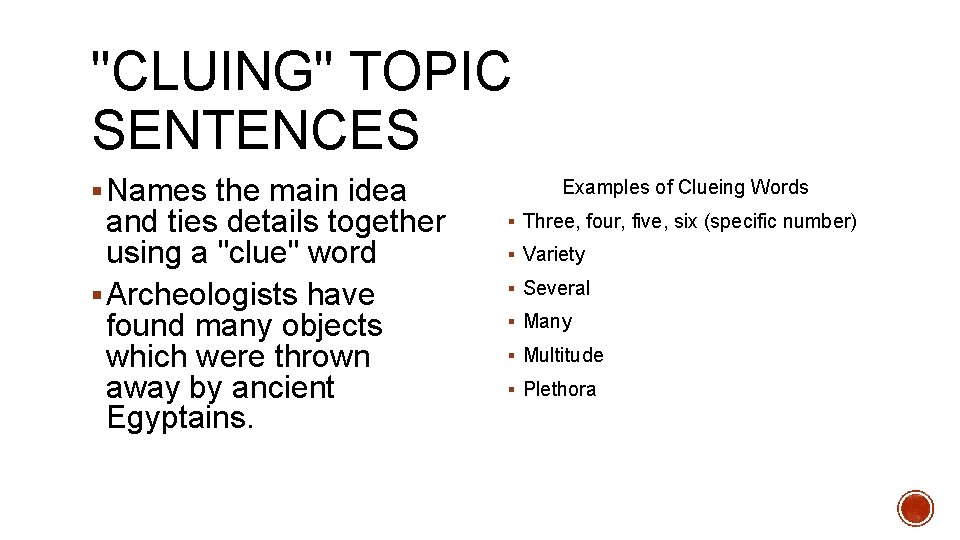
"CLUING" TOPIC SENTENCES § Names the main idea and ties details together using a "clue" word § Archeologists have found many objects which were thrown away by ancient Egyptains. Examples of Clueing Words § Three, four, five, six (specific number) § Variety § Several § Many § Multitude § Plethora
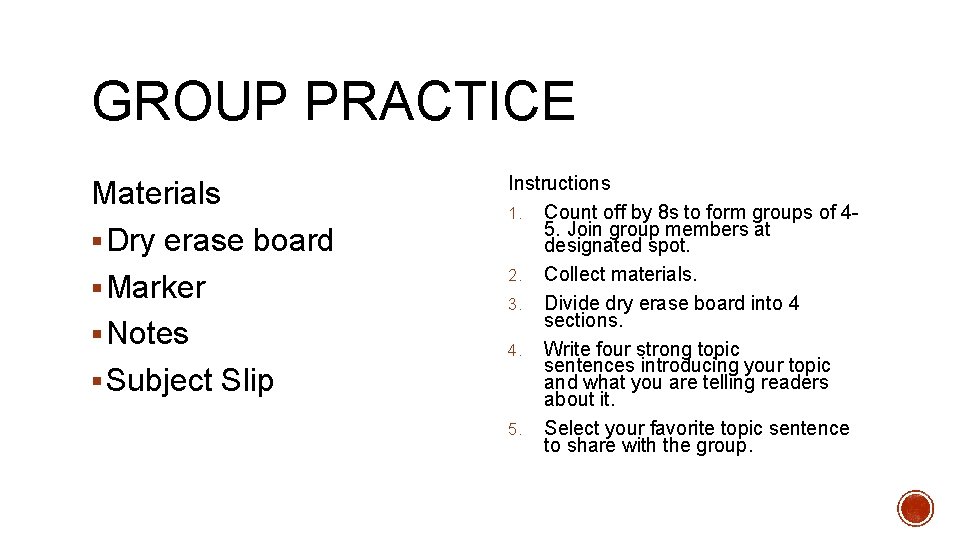
GROUP PRACTICE Materials § Dry erase board § Marker § Notes § Subject Slip Instructions 1. Count off by 8 s to form groups of 45. Join group members at designated spot. 2. Collect materials. 3. Divide dry erase board into 4 sections. 4. Write four strong topic sentences introducing your topic and what you are telling readers about it. 5. Select your favorite topic sentence to share with the group.
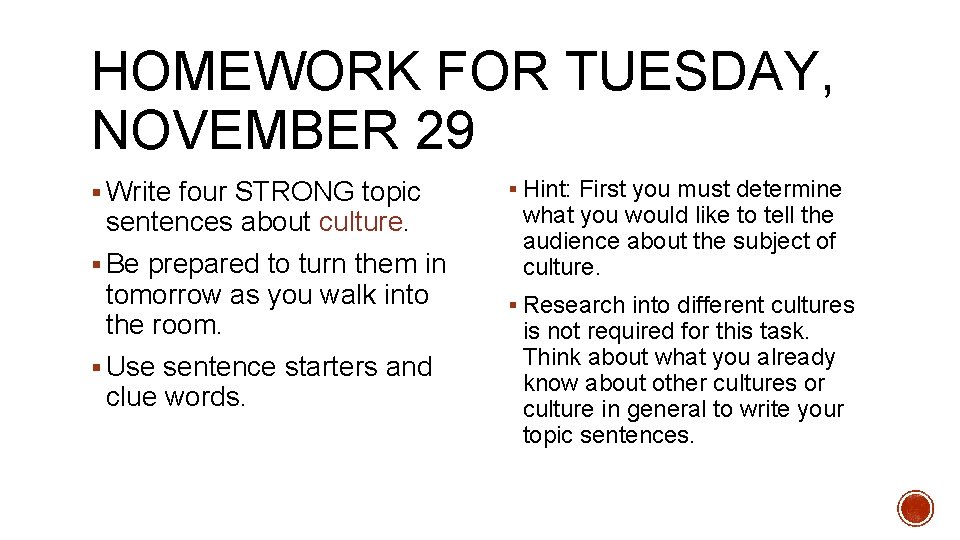
HOMEWORK FOR TUESDAY, NOVEMBER 29 § Write four STRONG topic sentences about culture. § Be prepared to turn them in tomorrow as you walk into the room. § Use sentence starters and clue words. § Hint: First you must determine what you would like to tell the audience about the subject of culture. § Research into different cultures is not required for this task. Think about what you already know about other cultures or culture in general to write your topic sentences.