
Topic Rivers The journey of a river Last
- Slides: 10
Topic Rivers
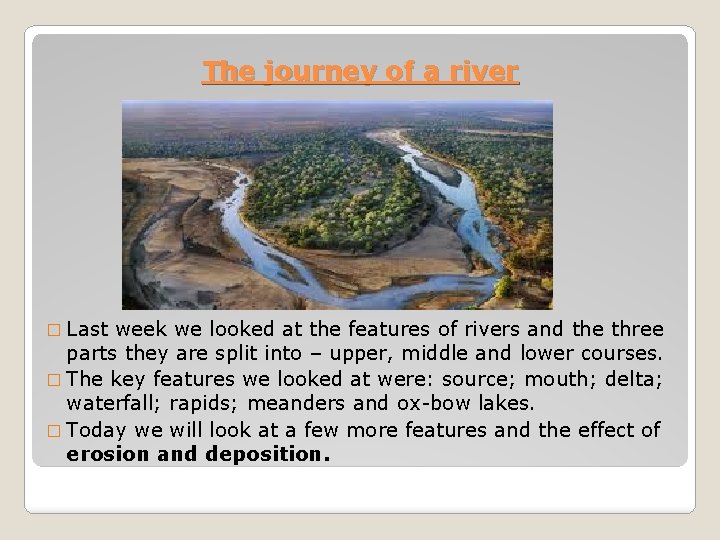
The journey of a river � Last week we looked at the features of rivers and the three parts they are split into – upper, middle and lower courses. � The key features we looked at were: source; mouth; delta; waterfall; rapids; meanders and ox-bow lakes. � Today we will look at a few more features and the effect of erosion and deposition.
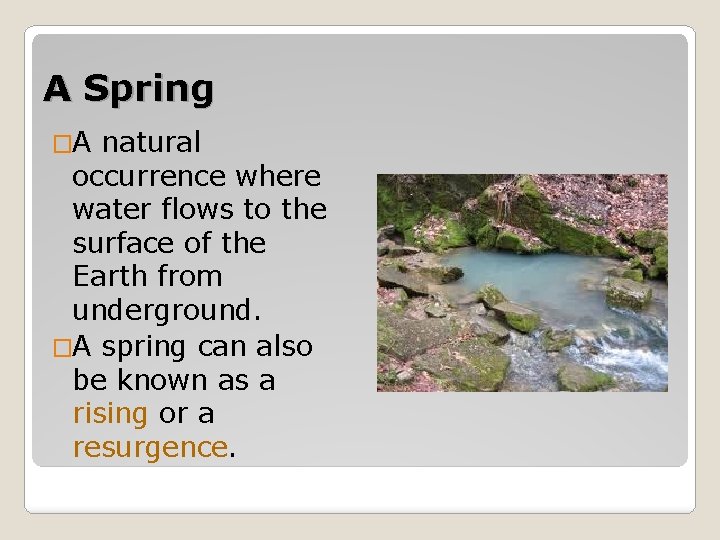
A Spring �A natural occurrence where water flows to the surface of the Earth from underground. �A spring can also be known as a rising or a resurgence.
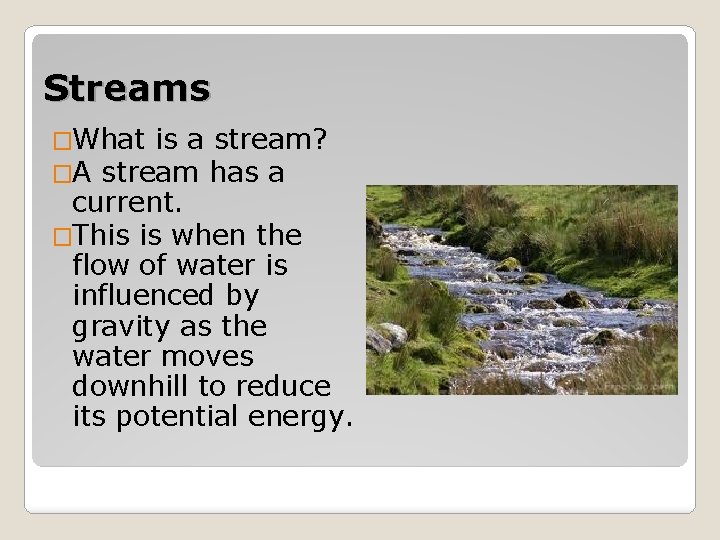
Streams �What is a stream? �A stream has a current. �This is when the flow of water is influenced by gravity as the water moves downhill to reduce its potential energy.
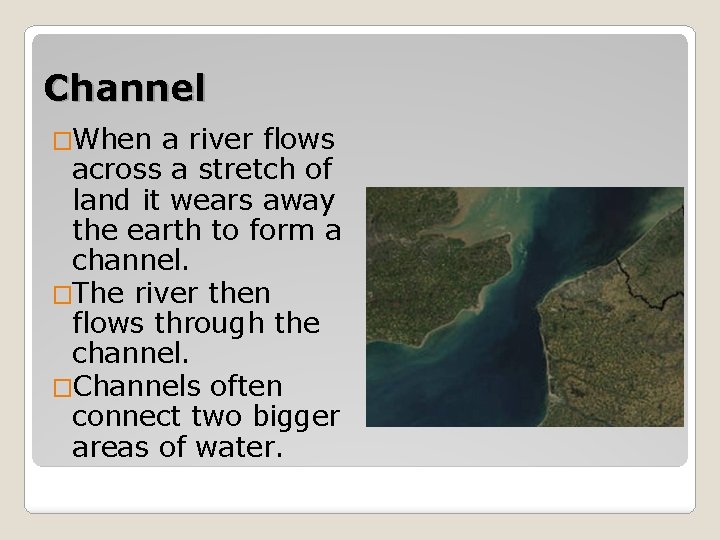
Channel �When a river flows across a stretch of land it wears away the earth to form a channel. �The river then flows through the channel. �Channels often connect two bigger areas of water.
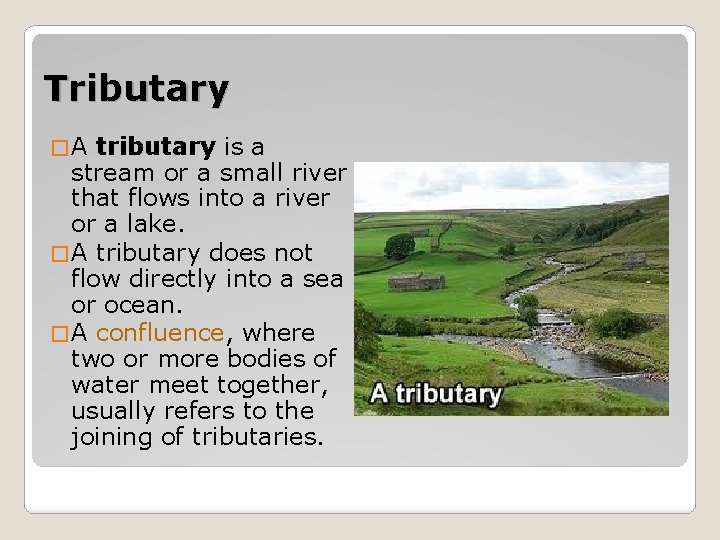
Tributary �A tributary is a stream or a small river that flows into a river or a lake. � A tributary does not flow directly into a sea or ocean. � A confluence, where two or more bodies of water meet together, usually refers to the joining of tributaries.
Erosion and Deposition Erosion � � � The river erodes rocks, mud and soil by the water wearing them down into smaller pieces. The rocks are dragged away from the bed and banks by the force of the running water. When water from a fast moving stream enters tiny cracks in a rock, the pressure exerted weakens and eventually breaks up the rock. A river carries or transports eroded materials on it’s journey. These materials are known as its load. Erosion creates rapids, waterfalls and meanders. � � � Deposition A river drops its load of soil and rocks when the speed or volume of the river slows down. The load, which it carries, is deposited. The heavier material is deposited first and the finer material carried further. Some of the load is deposited in the bend of a meander which slows the river down. Rivers reduce their speed in the lower course when they enter flat land, enter a lake or the sea or reach an arid area. This helps to create river banks and deltas.
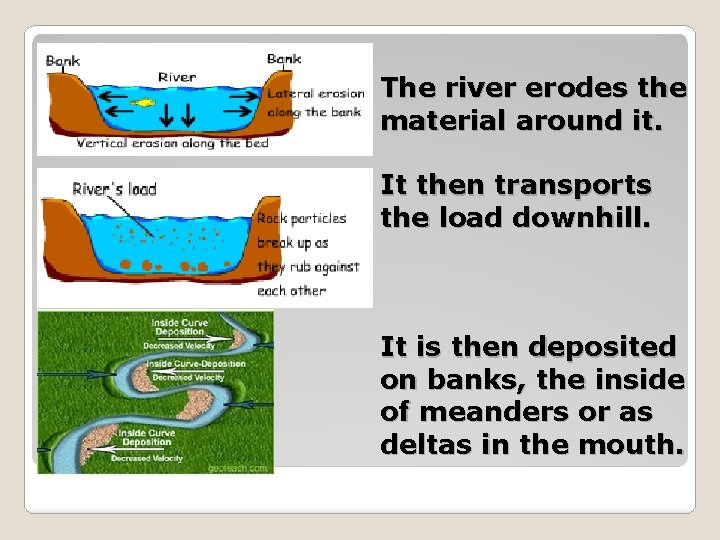
The river erodes the material around it. It then transports the load downhill. It is then deposited on banks, the inside of meanders or as deltas in the mouth.
Activity – Create a Glossary You will create your own river glossary. A glossary is a collection of key words from a topic. You write the key word and then write it’s definition. Think of it like being a dictionary, but just for rivers! Here is an example: River – A large stream of water that flows into a sea or lake. These are the key words to create a glossary for: Mouth, source, tributary, delta, ox-bow lake, meander, stream, spring, erosion, deposition Extension – illustrate each key word in your glossary.
How did you do? Glossary of key words River – A large stream of water that flows into a sea or lake. Mouth – Where the river enters a lake or sea. Source – The place where a river begins. Tributary – A smaller stream that flows into a bigger stream/river. Delta – land in a river created by deposited soil and rock. Ox-bow lake – a u-shaped lake that breaks off of a meander. Meander – a bend in the river caused by erosion and deposition. Stream – a small body of water which banks which flows into a river. Spring – a natural occurrence where water flows from underground to the Earth’s surface. • Erosion – process in which earthen materials are worn away and transported by natural forces such as wind or water. • Deposition – when the load a river is transporting is deposited. • • •